View this email in your browser


This is a newsletter created by the Gender Team of the UNFCCC

Following COP 30? 

Image: Sergio Alcântara - @serzi.o - Filmmaker

To support our audience in finding useful information on COP 30 and gender and climate change, we provide below a compilation of useful links: 


In social media channels follow the hashtag #ActOnTheGAP

Gender and climate change at COP 30 in Belém 

Negotiations

At COP 29, Parties agreed (Decision 7/CP.29) to extend the enhanced Lima Work Programme on Gender for a further ten years.


At SB 62, the SBI initiated the development of a new gender action plan (GAP) taking into account the inputs to and outcome of the review of the enhanced Lima work programme on gender and its gender action plan in 2024 and the discussions at the in-session technical workshop to facilitate the design of gender action plan activities held in June 2025.


At CW2, an additional Technical Workshop to facilitate the design of gender action plan activities took place. The informal summary of this workshop is available on the workshop webpage.


The SBI will continue consideration of this matter at SBI 63 (November 2025) on the basis of the informal note prepared by the co-facilitators at SB 62, with a view to adopting a new GAP at COP 30.


How to stay updated on negotiations during COP?

The COP 30 event platform mobile app focuses on virtual participation in meetings and is available only to registered participants. You can create your personal schedule and stay up-to-date with schedule changes and when official documents are issued via push up notifications.

Key Events

The COP 30 Presidency is organizing the High Level gender event Towards a people-centered climate action: recognizing the role of women and girls of African descent, on November 20th, from 10:00 to 12:00, in Special event room Parnaíba.


Climate change disproportionately affects marginalized communities. Women and girls of African descent face intersecting barriers that include racism and historical inequalities. Yet, they are key actors in climate action. This event aims to highlight their work, in light of the UN Second Decade for People of African Descent (2025–2034), while also exploring solidarity among Afrodescendant, Indigenous, and local community women and girls as a strategy to advance climate justice.

The Gender and Environment Data Alliance’s (GEDA) is hosting the event Transforming climate action at COP 30 and beyond: accelerating inclusive progress through gender data on 18 November from 17:30 to 19:00 in Special event room Paraná.


This interactive side event will highlight innovative data practices at the intersection of gender and the environment that can inform decisions around policy, financing, and monitoring progress. Through a panel discussion, flash presentations, and interactive dialogues, this event will demonstrate how data is essential to advancing every aspect of the Paris Agreement and is critical for inclusive and evidence-informed climate action. 


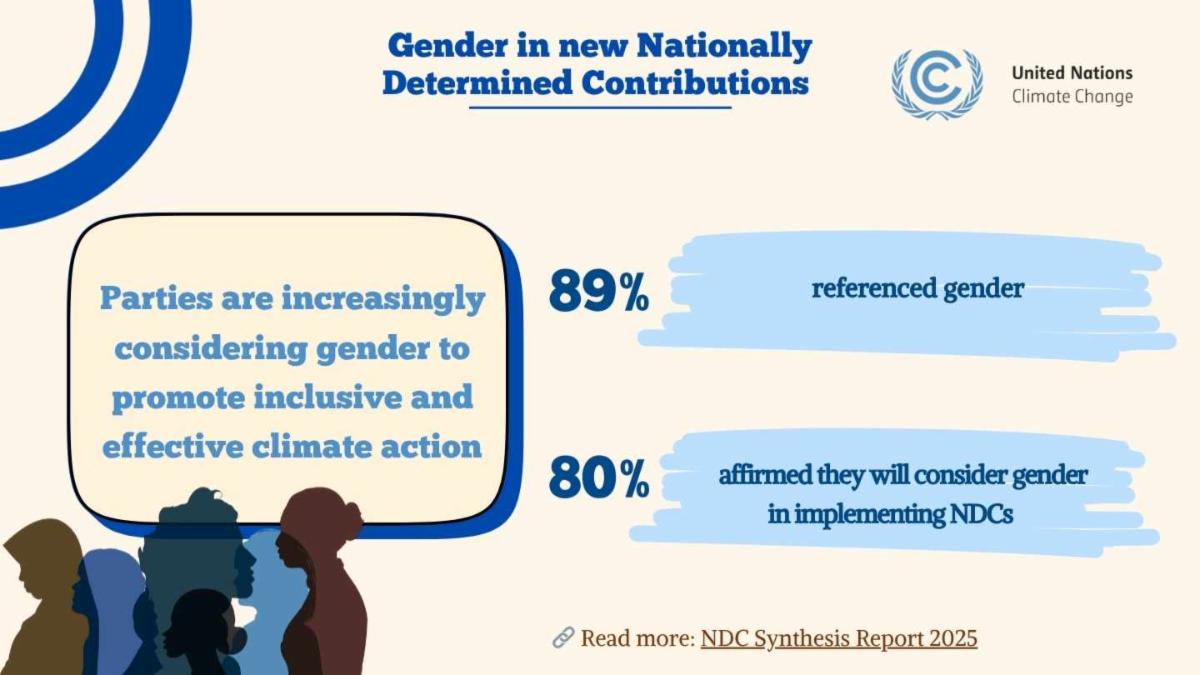
Gender in NDCs

Image: UNFCCC

This year’s synthesis report on national climate plans (Nationally Determined Contributions, or NDCs) shows that more countries are integrating gender into their climate policies as a way to promote inclusive and effective climate action.


From agriculture and energy to just transition, health, and transport, Parties are increasingly committing to considering gender equality when implementing their national climate plans.


Parties are also increasingly emphasizing the importance of gender-responsive capacity-building, finance and technology.

Gender in Biennial Transparency Reports

Image: UNFCCC

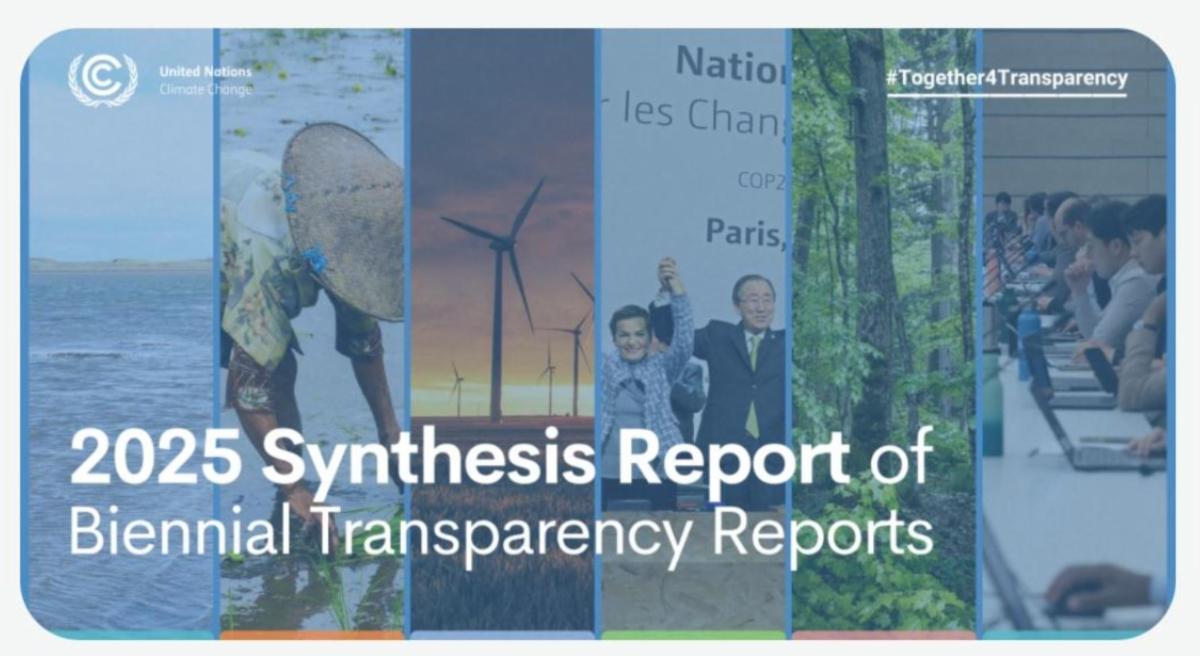
This report provides a synthesis of information reported by Parties in their first biennial transparency report submissions, including their national inventory reports.


71% of Parties explicitly referred to considering gender in their climate actions and 25% demonstrated progress in formulating and adopting gender and climate action plans and advanced on conducive institutional arrangements, such as gender working groups, to facilitate mainstreaming. The report contains more information on how countries report on gender in the context of adaptation, a whole-of-society approach, nature-based solutions, capacity-building and further includes some reporting highlights as well as references to barriers.

National Adaptation Plan Progress Report

Countries are embedding gender-responsiveness and adopting whole-of-society approaches in NAPs.


Almost all NAPs include mention of gender considerations, with some mentioning the importance of equitable participation in the NAP process as well as in decision-making processes, and others identifying specific gender-responsive adaptation actions.


#ActOnTheGAP

Promote best practices, share resources and foster knowledge exchange focused on the nexus of Gender and Climate Change with our LinkedIn Community. Join us here.

Web  Email  LinkedIn  YouTube  Instagram  Facebook  TikTok

UNFCCC Gender Team