|
Product Stewardship Updates
March 13, 2026
| | |
A NOTE FROM OUR CEO
THE PAINTCARE JOURNEY CONTINUES IN ILLINOIS
| | |
Last month marked an exciting milestone for product stewardship: the launch of the PaintCare program in Illinois, now the 13th such program operating in the United States. Although I couldn’t attend the press event in person due to a wicked Boston blizzid (aka a major snowstorm), I felt a deep sense of appreciation in seeing PSI members and partners gather to celebrate a program that represents decades of collaboration and persistence.
The PaintCare program has become a national success story, but its roots go back more than 30 years to conversations I had with Carl Minchew and Van Stogner of Benjamin Moore about paint recycling. Carl and Van were industry pioneers who were seeking a better way to manage leftover paint. Back then, I was the director of waste policy for the Massachusetts Executive Office of Environmental Affairs and had funded paint recycling projects and purchased recycled paint for use by our parks department.
Those early discussions with Carl and Van grew into a statewide paint recycling pilot project in Massachusetts and eventually into a PSI mediated national agreement with the American Coatings Association, state and local governments, manufacturers, recyclers, and the US Environmental Protection Agency. Today, the PaintCare program makes it easy for residents to reuse and recycle hundreds of millions of gallons of leftover paint while reducing waste and saving local governments millions of dollars in management costs.
Illinois’ new program is the result of strong leadership and collaboration from many PSI members, including Marta Keane (formerly with Will County, IL and now with the Battery Recycling Network), Walter Willis (Executive Director, Solid Waste Association of Lake County, IL), and others at the Illinois Product Stewardship Council, James Jennings, director of the Illinois Environmental Protection Agency, and PSI partners like Heidi McAuliffe, Senior Vice President of the American Coatings Association and Sanjeev Bagaria, CEO of GDB International, which operates North America’s largest paint recycling facility in Nashville, IL. And it is particularly due to IL State Senator Linda Holmes, who was a steadfast champion of the bill.
The collective work of all these people, along with PSI’s continuous facilitative and technical support, reflects what has always made product stewardship successful: bringing diverse stakeholders together to solve problems that none of us can solve alone.
At a time when collaboration can sometimes feel in short supply, PSI’s long-standing relationships with ACA, PaintCare, GDB, IEPA, and IL local governments remain a powerful example of what is possible when industry, government, and nonprofits work together toward a shared goal. Thank you to everyone who helped make the Illinois program a reality and to the broader PSI community for continuing to advance product stewardship solutions across the country.
— Scott Cassel, CEO & Founder, Product Stewardship Institute
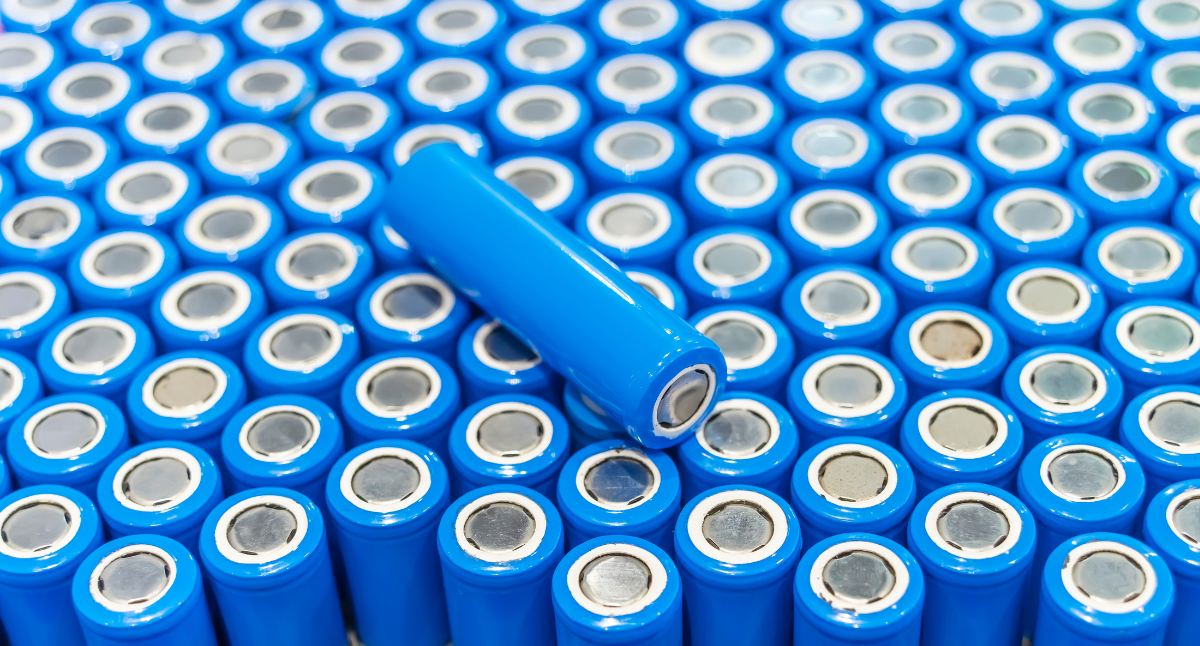
| | OREGON BATTERY PRODUCER RESPONSIBILITY BILL AWAITS GOVERNOR’S SIGNATURE | | On March 5, the Oregon legislature passed HB 4144 A, which would establish a battery producer responsibility bill in the state. HB 4144 A passed without opposition in the House and by a strong majority in the Senate. The governor is expected to sign the bill. Once enacted, Oregon will join California, Colorado, the District of Columbia, Illinois, Nebraska, New York, and Vermont in passing producer responsibility bills with an expanded scope of covered batteries. The Oregon bill covers portable batteries, batteries contained in products that are intended to be removable, and medium-format rechargeable batteries, such as those that power e-bikes and other micromobility devices, and also includes a disposal ban on batteries. PSI Members—Metro and Lane County in Oregon—spearheaded the initiative to develop the bill in 2024. Metro and Lane County engaged PSI to facilitate multi-stakeholder policy development workshops, which resulted in a consensus bill with broad support from the battery industry, municipal governments, transporters, recyclers, and other key stakeholders in Oregon. | | |
ACC VOLUNTARILY DISMISSES
LAWSUIT AGAINST CDPHE
| |
In February, the American Chemistry Council (ACC) voluntarily dismissed its lawsuit against the Colorado Department of Public Health and Environment (CDPHE) over implementation of the Producer Responsibility for Statewide Recycling Act (HB 22-1355). The case, filed in November 2025, challenged CDPHE’s decision to not allow certain certification methodologies for determining post-consumer recycled (PCR) content in products sold into the state, which ACC argued unfairly disadvantaged chemical recycling technologies.
In reviewing the program’s first five-year plan, CDPHE determined that several proposed chain-of-custody approaches—including mass balance polymer-only and mass balance free allocation with fuel exclusion methodologies—did not align with the statutory definition of PCR content under the Act. The Department found that these approaches did not sufficiently demonstrate that fuel produced through advanced chemical recycling would not be counted as recycled content, and therefore did not meet the law’s requirements for verifying post-consumer recycled content.
The issue was discussed thoroughly through the Advisory Board for the implementation of the state’s packaging EPR law, with participation from Circular Action Alliance, CDPHE, producers, recyclers, local governments, nonprofits, and other stakeholders. As facilitator of the Advisory Board, PSI supported the process by helping stakeholders understand the methodologies proposed, the statutory questions involved, and potential implications for program implementation, and to support the group in making a recommendation in conjunction with the Advisory Board chair.
ACC’s lawsuit sought to challenge CDPHE’s interpretation of allowable certification methodologies, arguing that the decision could disadvantage certain advanced recycling technologies. In February 2026, ACC voluntarily dismissed its lawsuit against CDPHE. As recycling technologies and certification systems continue to evolve, CDPHE has indicated that certification methodologies and program requirements may be revisited in the future.
| CALIFORNIA SELECTS LANDBELL USA AS TEXTILE PRO | |
On February 27, CalRecycle officially selected Landbell USA as the producer responsibility organization (PRO) to operate the state’s first-in-the-nation textiles extended producer responsibility program. Landbell USA is a subsidiary of Landbell Group of Germany, which operates the textile PROs European Recycling Platform (ERP) Italy and ERP Netherlands. Circular Textile Alliance and Textile Renewal Alliance also submitted PRO applications.
The Responsible Textiles Recovery Act (SB 707), enacted in September 2024, was championed by the California Product Stewardship Council and was supported by brands including H&M Group, IKEA, and Marmot and many other organizations including PSI. The law mandates that producers of household textiles, including clothing, footwear, and hospitality items, finance and manage a statewide program to collect, encourage reuse, fund repair, or recycle post-consumer textiles.
Producers of covered materials must register with Landbell USA by July 1, 2026, which begins a multi-year program development and implementation process. The PRO must conduct an initial needs assessment, due to CalRecycle by March 1, 2027. CalRecycle will hold an informational workshop on April 7, 2026, to provide a statutory overview of the needs assessment. People can attend in person or over Zoom. Additional details are included in the Public Notice. CalRecycle is scheduled to adopt regulations by July 1, 2028. The PRO must submit the full program plan to CalRecycle by July 1, 2029. The program must launch by July 1, 2030.
Three other state legislatures have introduced textiles stewardship bills, including New York (S3217A), Minnesota (HF3713), and Washington (SB 6174 / HB 1420). PSI Members and Partners can track the progress of these bills online at PSI’s 2026 Legislative Updates page.
| WASHINGTON ECOLOGY SELECTS CAA AS PACKAGING PRO, AUTHORIZES INTERCHANGE 360 TO OPERATE AN ALTERNATIVE COLLECTION PROGRAM | |
On March 4, the Washington Department of Ecology selected Circular Action Alliance (CAA) as the producer responsibility organization (PRO) to implement the state’s packaging and paper products EPR program under the Recycling Reform Act (SB 5284). This designation brings the total number of states in which CAA is the PRO responsible for implementing packaging EPR programs to six: Oregon, Colorado, California, Maryland, Minnesota, and Washington. CAA’s role in packaging EPR programs is “…to help producers meet their obligations under the law by building a coordinated, efficient program that supports innovation, accountability and responsible packaging stewardship,” said Jeff Fielkow, CEO of CAA in an interview with Waste Today. Enacted in May 2025, SB 5284 requires producers of covered packaging and paper products to develop, implement, and finance a statewide program for the collection, transportation, and processing of covered materials that also reduces waste by encouraging redesign, reuse and refill, recycling, and composting of covered materials. Producers must register with CAA by July 1, 2026.
Ecology also approved Interchange 360 to operate a sector-specific alternative collection program for lubricant, petroleum, and automotive packaging. Interchange 360 is also authorized to provide an alternative collection program in Colorado, providing producers in the automotive sector with a sector-specific compliance pathway for collecting and recycling packaging associated with automotive products.
Next Steps for the Recycling Reform Act
By October 2026, Ecology will publish an initial list of materials that must be collected for recycling statewide. It will complete an initial needs assessment by December 31, 2026 and a full needs assessment by December 31, 2027. The needs assessments will provide information that CAA and Interchange 360 will use to develop program plans, which they must submit for review and approval to Ecology by October 1, 2028. The approved program must be implemented statewide beginning January 1, 2030.
| |
PSI SUPPORTS US EPA’S NATIONAL
BATTERY EPR FRAMEWORK
| | U.S. EPA continues to develop a voluntary national battery EPR framework intended to guide states in developing battery stewardship programs. The framework, on which EPA has sought PSI’s continual consulting advice, highlights key program design elements, such as covered materials, collection convenience, performance goals, and reporting requirements. The framework integrates best practices learned from implementation of existing state battery EPR programs. The blueprint signals an important step toward aligning state EPR programs and recycling infrastructure and address growing challenges with battery fires and material recovery. For more than two decades, PSI has supported the development of battery EPR programs, including the first single-use and rechargeables battery EPR law in the nation in the District of Columbia. PSI Members interested in joining our national workgroup on battery EPR should contact Darla Arians, director of policy and programs. | | TENNESSEE PACKAGING BILL EVOLVES TO ADDRESS SMALL BUSINESS CONCERNS | Lawmakers in Tennessee referred a packaging EPR proposal on March 11, effectively sidelining the bill for the year. The bill had been amended to include exemptions for small businesses and counties with fewer than 200,000 residents, reflecting an effort to address local government and small business concerns. Discussions around landfill capacity and recycling policy are expected to continue. Advocates plan to reintroduce the bill next year. | | CALL2RECYCLE REBRANDS AS THE BATTERY NETWORK | Call2Recycle recently announced a refreshed brand identity, including an updated logo, positioning statement, and redesigned website at BatteryNetwork.org. The rebrand aims to strengthen the organization’s outreach and improve battery recycling. | SOLARCYCLE STARTS UP GEORGIA RECYCLING PLANT | Solarcycle officially launched solar panel recycling operations at its 255,000-square-foot recycling facility in Cedartown, Georgia, according to Resource Recycling. The facility, which will recover materials such as silver, copper, aluminum, and glass, has begun processing thousands of panels per week and is expected to process an estimated one million panels annually by the end of 2026. A solar glass manufacturing facility is planned to be located adjacent to the plant to produce new panel glass from recovered materials. Continued growth in solar panel sales and decommissioning of early solar installations has increased demand for end-of-life solutions such as EPR. |
| |
Massachusetts EPR Education Workshops | Hybrid
The City of Newton, Mass., in partnership with the Product Stewardship Institute (PSI) and Massachusetts Department of Environmental Protection (MassDEP), is hosting a series of professional development workshops designed to show municipalities how EPR strategies can reduce waste, increase recycling, and save taxpayers money, while improving overall waste management services to residents. Designed for elected officials and municipal staff, the sessions will highlight practical tools that communities can use to manage rising recycling costs. PSI policy experts Darla Arians and Jennifer Schultz will host all three upcoming sessions. See below for more details and to register.
Details:
Tuesday, March 17 | 1:00 PM – 4:00 PM ET, Northampton In-person or Virtual
Wednesday, March 18 | 1:00 PM – 4:00 PM ET, Malden In-person or Virtual
Thursday, March 19 | 1:00 PM – 4:00 PM ET, Taunton In-person or Virtual
Register
MassRecycle Conference & Trade Show | In-Person
Join Scott Cassel, PSI’s CEO and Founder, at the 2026 MassRecycle Conference & Trade Show on March 24. Scott will offer insights on how EPR can benefit local governments and businesses at a time when the Massachusetts EPR legislative commission has issued its final report. Scott will join John Beling, Deputy Commissioner of the MA Department of Environmental Protection, and Waneta Trabert, Sustainability Director of Newton, MA and chair of the MA Product Stewardship Council. See below for more details and to register.
Details:
Tuesday, March 24 | 8:00 AM – 6:00 PM ET
Boxboro Regency Hotel
Boxboro, MA
Register
Interstate Vapor and Other Tobacco Product Waste (VOTPW) Workgroup | Virtual
Hanz Atia, PSI Senior Associate for Policy and Programs, will present on vape stewardship and policy at the March 26 meeting of the VOTPW Workgroup, an initiative of the Washington Department of Health. See below for more details and to register.
Details:
Thursday, March 26 | 1:00 – 2:00 PM PT
Register
New Hampshire Solid Waste Working Group Meeting | Hybrid
Join Scott Cassel, PSI CEO and Founder, at the March meeting of the Solid Waste Working Group, a legislative commission, in Concord, NH. Scott will present on EPR for paint, batteries, mattresses, vapes, and medical sharps. Attendance is available in-person and via a remote participation option. See below for more details and to register.
Details:
Friday, March 27 | 9:30 AM – 11:30 AM ET
NHDES Office, 29 Hazen Drive
Concord, NH
Register
NH Recycles Recycling Conference & Expo | In-Person
Join Scott Cassel, PSI CEO and Founder, at the NH Recycles conference for a look at the emergence of product stewardship policy in New Hampshire. Solid waste professionals from across the region will be in attendance for a full day of practical workshops and real-world conversations focused on the day-to-day realities of municipal recycling and waste management. From safety and compliance to equipment, markets, and policy updates, this conference delivers information you can put to work immediately. See below for more details and to register.
Details:
May 18, 2026
Grappone Conference Center
Concord, NH
Register - Early Bird Registration Now Open
SPC IMPACT 2026 | In-Person
SPC Impact 2026 is the Sustainable Packaging Coalition’s premier annual conference bringing together hundreds of packaging sustainability, and materials management professionals from across the value chain to explore actionable strategies for designing, sourcing, producing, and recovering more sustainable packaging. The event features more than 40 sessions and tours focused on collaboration, innovation, and regulatory trends such as EPR, providing a platform for thought leadership and partnership that can help reshape the future of sustainable packaging. See below for more details and to register.
Details:
April 21-23
Omni Nashville Hotel, Rep. John Lewis Way South
Nashville, TN
Register
Federation of New York Solid Waste Conference with Trade Show | In-Person
Join Hanz Atia, PSI senior associate for policy and programs, at the Federation of New York Solid Waste Conference on May 18. Hanz will share their work developing a vape waste collection pilot for New York State in partnership with the Center for Sustainable Materials Management and NY DEC. The presentation is part of the breakout session, Don’t Get Burned: Preventing Battery Fires Before They Spark, which is just one of over 60 technical sessions at this don’t-miss annual conference at The Sagamore. See below for more details and to register.
Details:
May 17-20
The Sagamore
Bolton Landing, NY
Register - Early Bird Registration ends April 15
SWANA RCon 2026 | In-Person
Join SWANA RCon 2026 for technical training, keynote and concurrent sessions, roundtable discussions, and networking to advance “waste as a resource.” See below for more details and to register.
Details:
September 29-October 2
St. Louis, MO
Register
| | (StudioThreeDots / Canva Teams) | |
-
Battery fires stoking EPR bill movement. The Resource Recycling article highlights how the increasing prevalence of batteries in consumer products and the safety risks posed by fires are helping drive a wave of new EPR legislation targeting battery recycling across U.S. states. Read More
-
Landbell to launch California’s nation-leading textile EPR program by 2030. On February 27, CalRecycle selected Landbell USA from among three applicants to be the producer responsibility organization that implements a textile stewardship program under SB 707. Read More
-
SWANA, Fire Rover develop fire incident reporting tool. The Solid Waste Association of North America (SWANA), Silver Spring, Maryland, has partnered with Farmington Hills, Michigan-based Fire Rover to launch a collaborative webpage dedicated to improving battery safety and preventing fires caused by lithium-ion batteries that are improperly disposed of in waste and recycling streams. Read More
-
With EPR, aerosol can groups push for recycling acceptance. A new industry playbook outlines how material recovery facilities (MRFs) can safely accept and recycle empty aerosol cans, while highlighting the role of consumer education and EPR in expanding recycling access. Read More
-
Regulators, PROs sort through responsible end market complexities. At the Plastics Recycling Conference, speakers discussed the growing importance of defining responsible end markets under packaging EPR laws. Read More
| | The Product Stewardship Institute is a policy expert and consulting nonprofit that pioneered product stewardship in the United States. Since 2000, PSI has helped enact 146 extended producer responsibility (EPR) laws across 21 product categories in 34 states and D.C. — the bedrock on which the circular economy is built. We work with businesses, nonprofits, academia, and governments to ensure that products are responsibly managed from design to end of life. Join us at www.productstewardship.us. | | |
The Product Stewardship Institute, Inc. is an equal opportunity employer and provider. Persons with disabilities who require alternatively formatted materials to ensure effective communication should contact Amanda Nicholson at info@productstewardship.us or 617.236.4855.
| | | | |