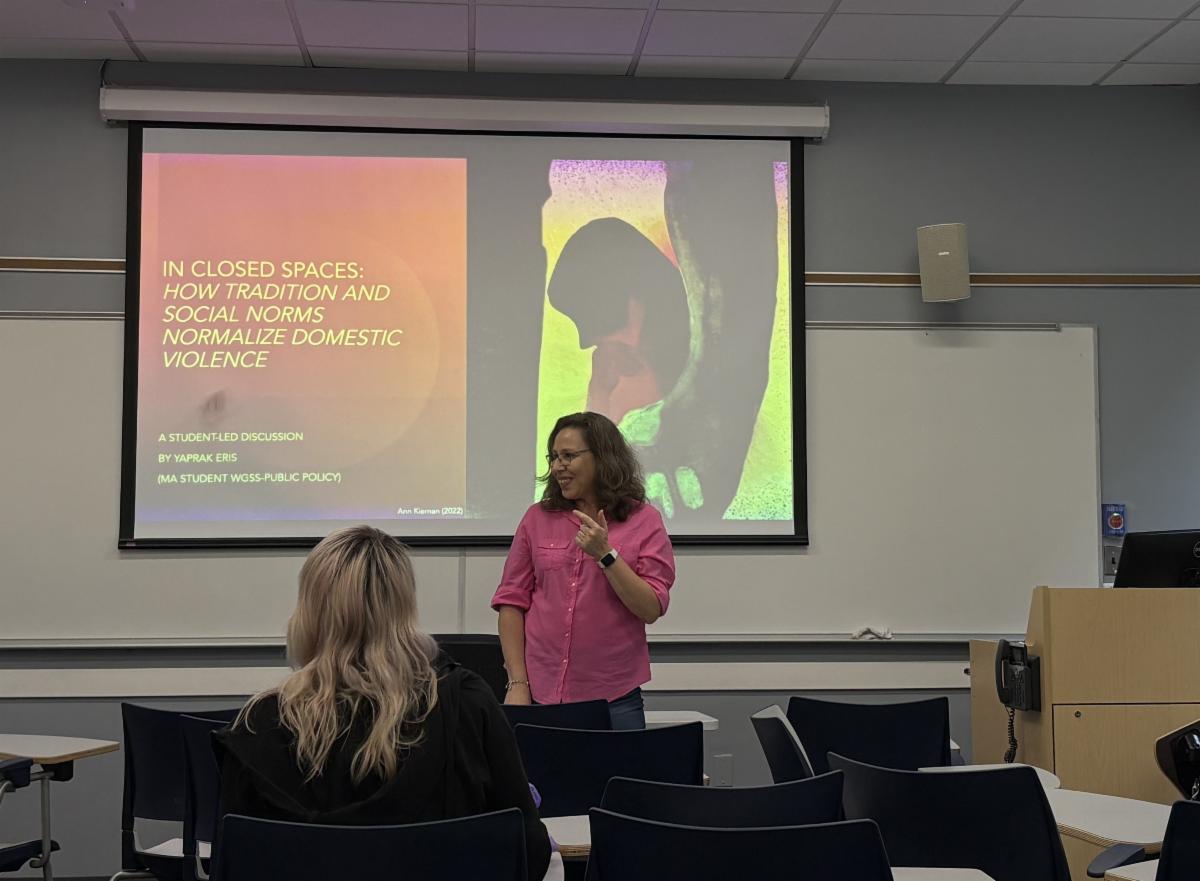
Volume 308 | September 22, 2025 | | Photo caption: Orange and yellow tree leaves along the D.C. Tidal Basin pathway during fall. | | Are you excited for cooler weather and fall foliage? If you can't make it to Vermont for an all-out fall photoshoot, try visiting some of these scenic places around D.C. for beautiful trees and cozy vibes! | | Photo Caption: WGSS MA student Yaprak Eris wearing a pink button-down shirt, standing in front of her PowerPoint presentation slide. | | |
In Closed Spaces: How Tradition And Social Norms Normalize Domestic Violence Recap
In our student-led discussion by MA student, Yaprak Eris, we discussed the many ways violence is prevalent in women's lives, and how healing, time, and community support play a role in recovery from abuse. We reflected on how different forms of violence are often left unseen beyond physical and sexual abuse, including: financial, emotional, verbal, cultural, digital, and more. The discussion also highlighted the roles played by patriarchal traditions, gender roles, religious practices, and community (in)tolerance in perpetuating the harmful patterns of abuse. Challenging these norms and raising awareness of abuse that is occurring, even in our families, we agreed, can help to break these patterns.
| | |
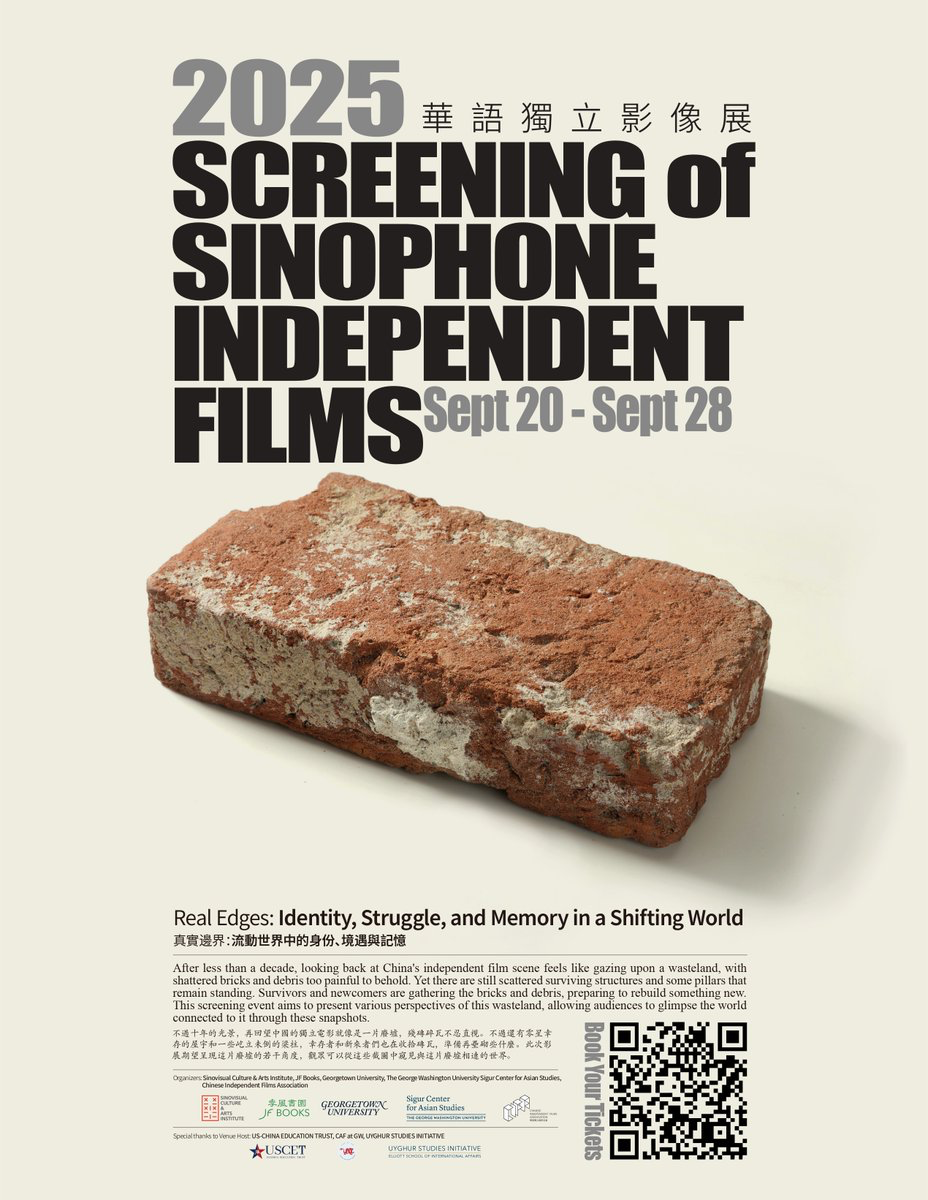
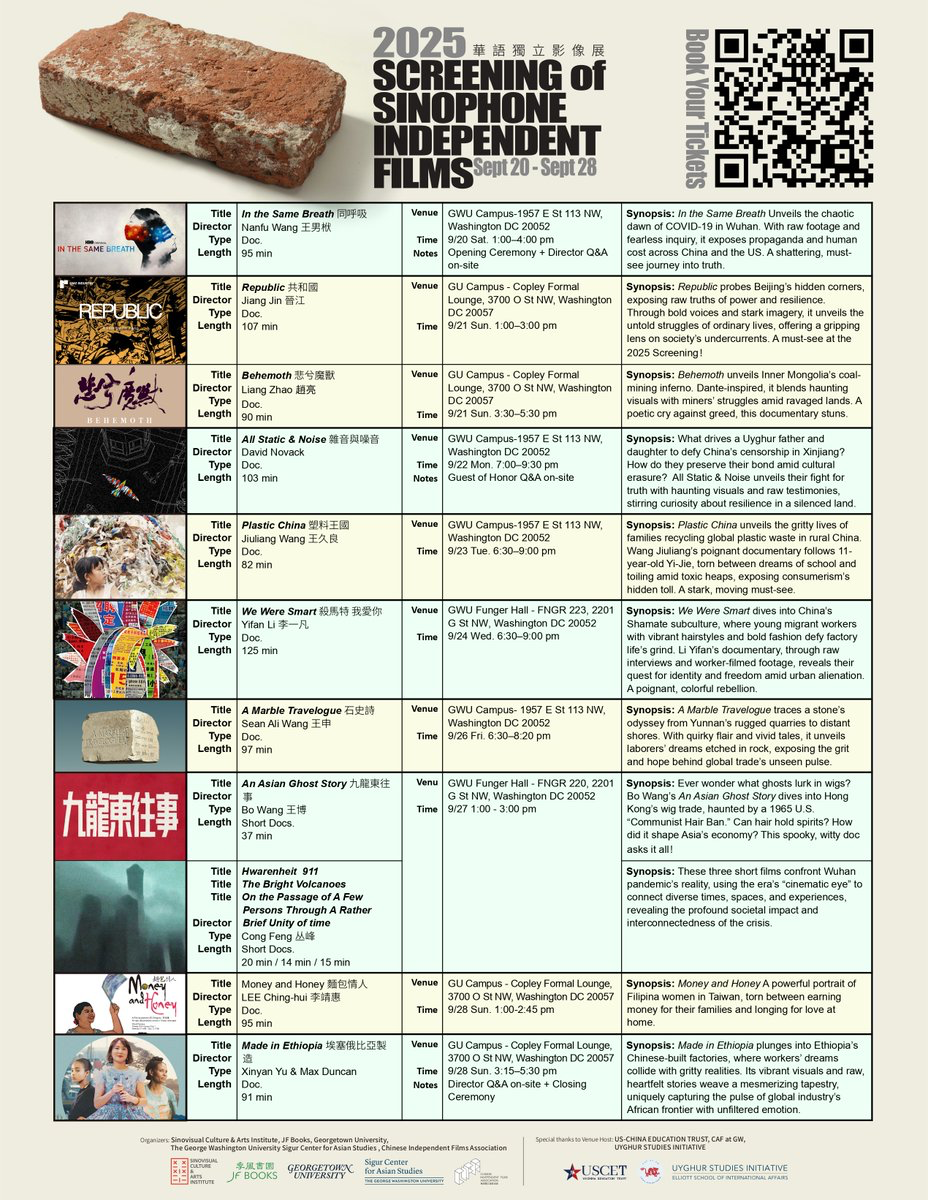
The Sinophone Independent Film Screening Festival
September 20 - 28th
The Sinophone Independent Film Screening Festival is a ten-film program showcasing new voices in Sinophone cinema. Six screenings will take place at the George Washington University and four at Georgetown University. Ticket and screening information can be found here.
| | |
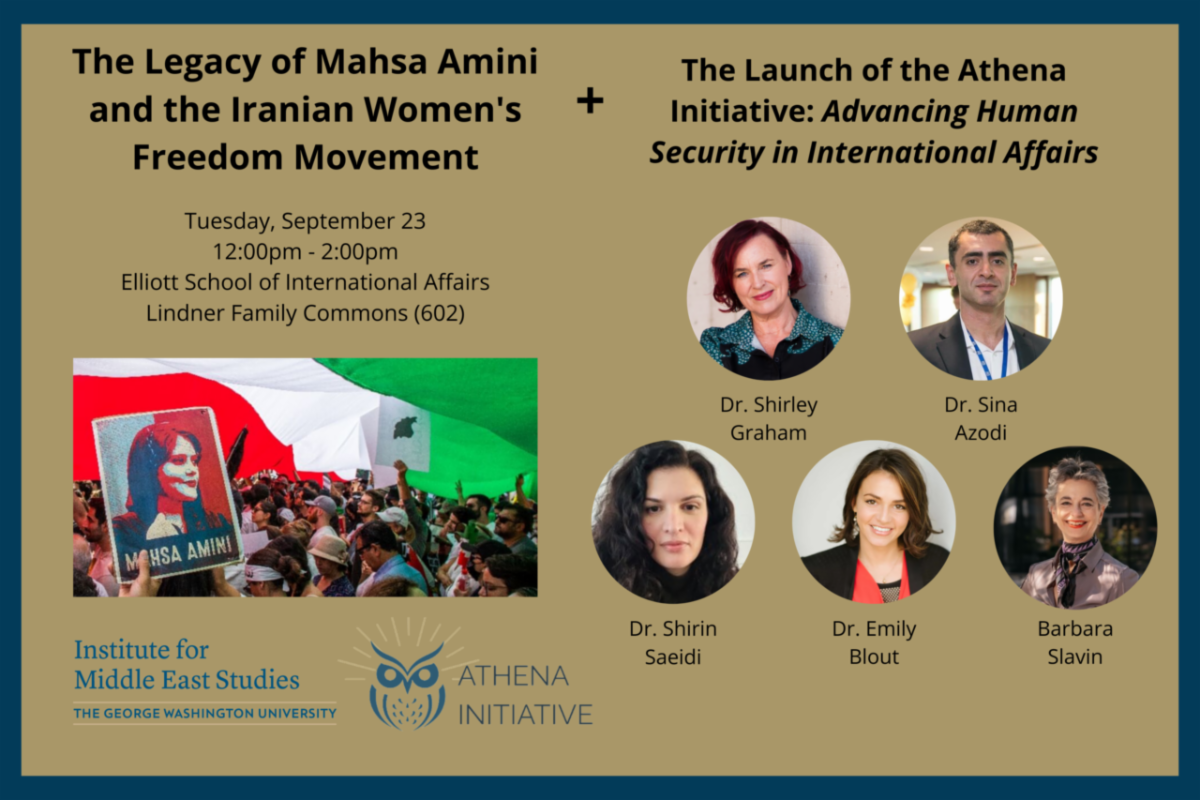
Advancing Human Security in International Affairs
September 23rd | 12pm - 2pm
Please join the Athena Initiative and the Institute for Middle East Studies for the launch and inaugural event of the Athena Initiative: Advancing Human Security in International Affairs, with Director Shirley Graham.
September 2025 marks three years since the death of Iranian citizen Mahsa Amini which sparked one of the largest Iranian protest movements since the 1979 Revolution. To discuss the legacy of Mahsa Amini, the movement she inspired, and the current state of the Iranian Women’s Freedom Movement, Dr. Sina Azodi will moderate an in-depth conversation with experts Barbara Slavin, Dr. Shirin Saeidi, and Dr. Emily Blout.
Our panelists will examine the successes and setbacks of the Mahsa Movement, highlighting its lasting impacts on Iranian society and politics. The discussion will also explore the effects of current U.S. policy on Iranian women and the extensive repression carried out by the Iranian government in response to the movement.
The event will take place on September 23rd from 12:00-2:00 PM both in-person at the Elliott School and virtually through zoom. Click here to register.
| | |
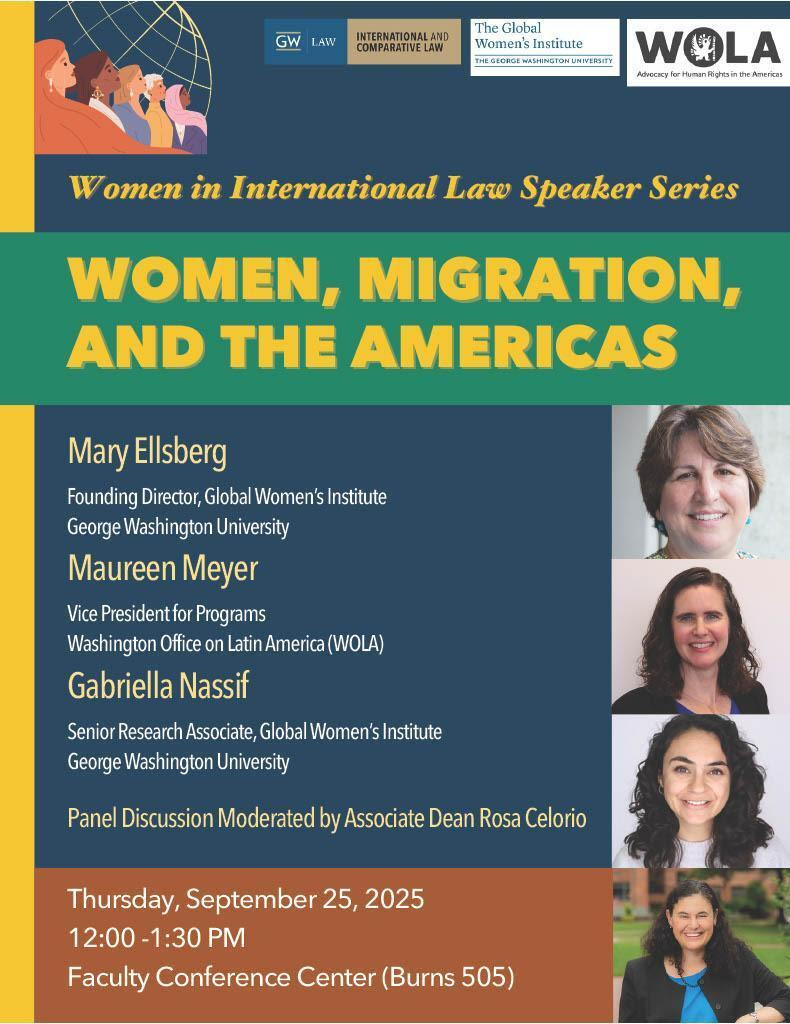
Women, Migration and the Americas: The Women in International Law Speaker Series
September 25th | 12-1:30pm | Burns 505
Come listen to GWI's founder Mary Ellsberg and one of our researchers, Gabriella Nassif, in discussion with Maureen Meyer (Washington Office on Latin America) and Rosa Celorio (Associate Dean, GW Law School) about the realities of women migrants in the Americas.
The panel discussion will take place on September 25 from 12:00-1:30pm in the Faculty Conference Center (Burns 505) on GW's Foggy Bottom campus.
Curious about GWI's work on women and migration? You can read our recent article in the Georgetown Journal of International Affairs on the gendered consequences of mass deportation or take a look at our policy brief about immigration reform in the U.S. through the lens of gender equality.
| | |
CCAS Information Session: Women’s, Gender, & Sexuality Studies Graduate Programs
September 30th |12-1pm
Join us for a virtual discussion about our graduate program options. Ask about applying, deadlines, program objectives, and more!
| | |
What Do We Mean By [Mahmoud v. Taylor]?
September 30th | 5pm - 6pm| via Zoom
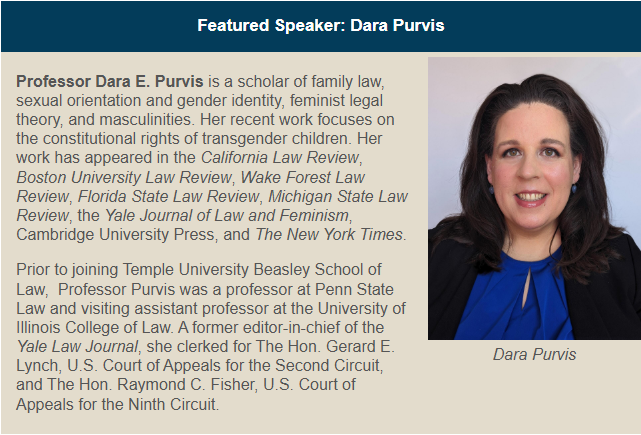
Featuring Professor Dara E. Purvis
James E. Beasley Professor of Law, Temple University
The Supreme Court case Mahmoud v. Taylor began with a familiar story: parents objected to certain books in their children’s school. But the legal questions it raises are far-reaching, touching on core constitutional principles: What does it mean to freely exercise your religion? What alternatives to public education do parents have? Where is the line between teaching and indoctrination? Professor Dara E. Purvis will break down how the Court is reshaping these doctrines—explaining both the immediate implications of Mahmoud and its broader impact on K-12 education.
| | |
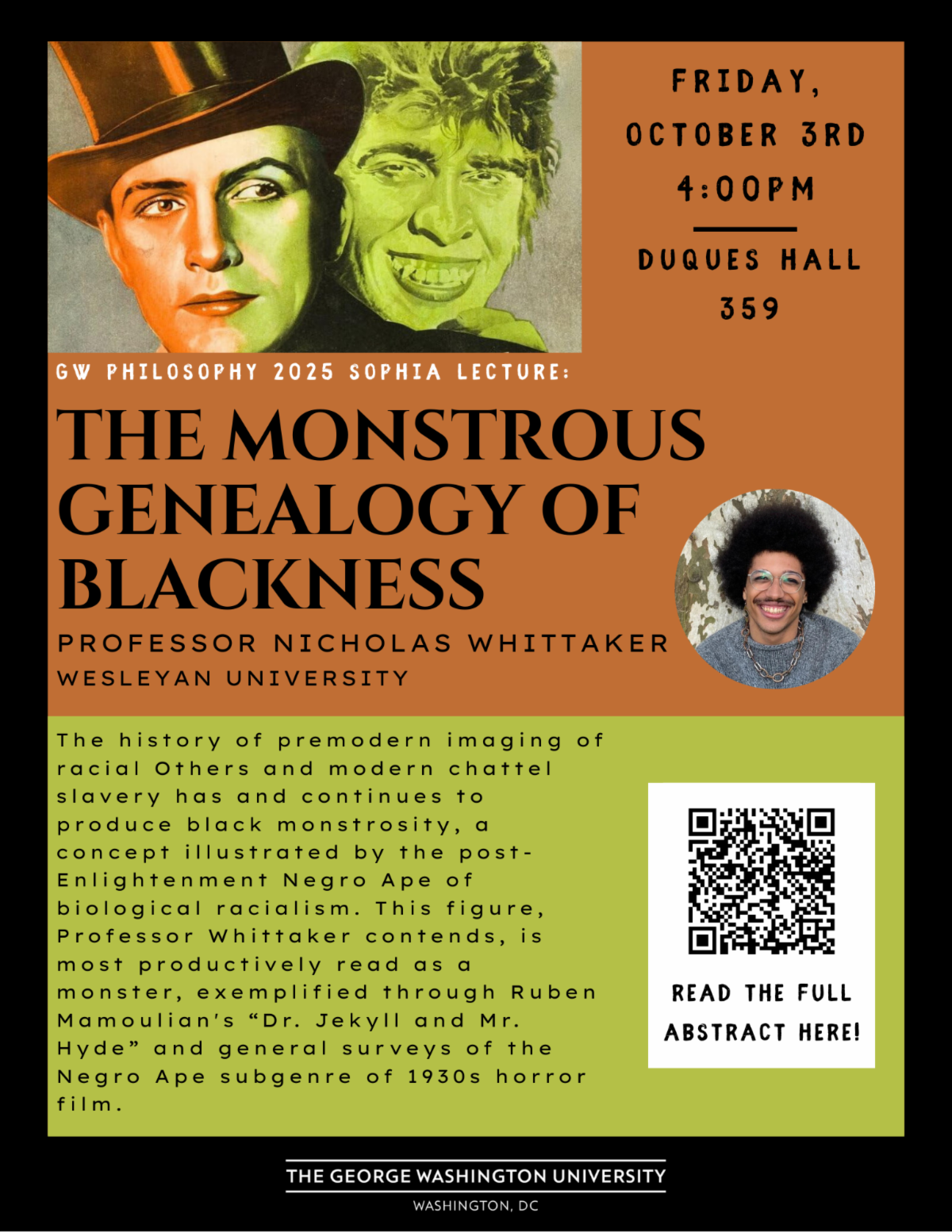
The Monstrous Genealogy of Blackness
October 3rd at 4pm
Duques Hall 359
Abstract: "In this talk, I propose monsterization as a conceptual framework for historicizing and phenomenologizing blackness. To monsterize is to experience (or prepare the conditions of possibility for experiencing) a thing as ontologically liminal and, as a result, threateningly incomprehensible. I begin the talk by reconceptualizing the long history of a) premodern imaging of racial Others and b) modern chattel slavery: both have and continue to work to produce black monstrosity. I then move to a third stage of this evolution: the post-Enlightenment Negro Ape of biological racialism. This figure, I contend, is most productively read as a monster. This intuition becomes difficult to ignore when we recognize––as I argue we must––the central role the Negro Ape played in the development of the modern horror film. I illustrate this by oscillating between close analysis of Ruben Mamoulian's Dr. Jekyll and Mr. Hyde and general surveys of the Negro Ape subgenre of '30s horror film. Finally, this foray into film-philosophy suggests that analysis of the Monstrous Negro is inseparable from a phenomenology of its "world," the old dark swamp of Africa: reality as an unintelligible, incoherent, uncanny environment. As such, a philosophy of blackness structured around monsterization must consider not merely black objects, but the diffuse atmosphere of a black world; this allows us to recognize ways in which monstrous blackness can be deployed underneath ostensibly raceblind or problack images and phenomenologies."
| | |
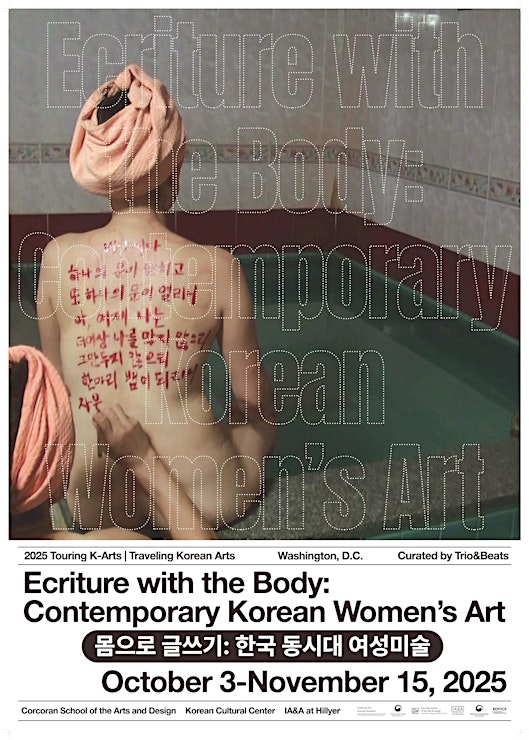
Ecriture with the Body: Contemporary Korean Women's Art
Exhibit Open: October 3rd - November 15th
Opening Reception: Oct 3rd | 3pm - 5pm
Center Atrium, Flagg Building, Corcoran School of the Arts & Design
Écriture with the Body brings together the work of 18 Korean and Korean American women artists who engage with writing, language, and text-based practices as powerful means of articulating subjectivity and resisting entrenched gender and racial inequalities. Rooted in Korean traditions historically shaped by patriarchy—such as calligraphy and literati painting—the exhibition reclaims these forms through an embodied feminist lens. Here, writing is not merely a tool of communication but a visceral assertion of presence, memory, and identity. By inscribing bodily expression into text, the artists generate transformative encounters for audiences. Their works interrogate and transcend formal conventions, offering renewed perspectives and forging empowering narratives that reclaim space within a historically patriarchal artistic lineage.
| | Support Groups from GW Counseling & Psychological Services (CAPS) | | |
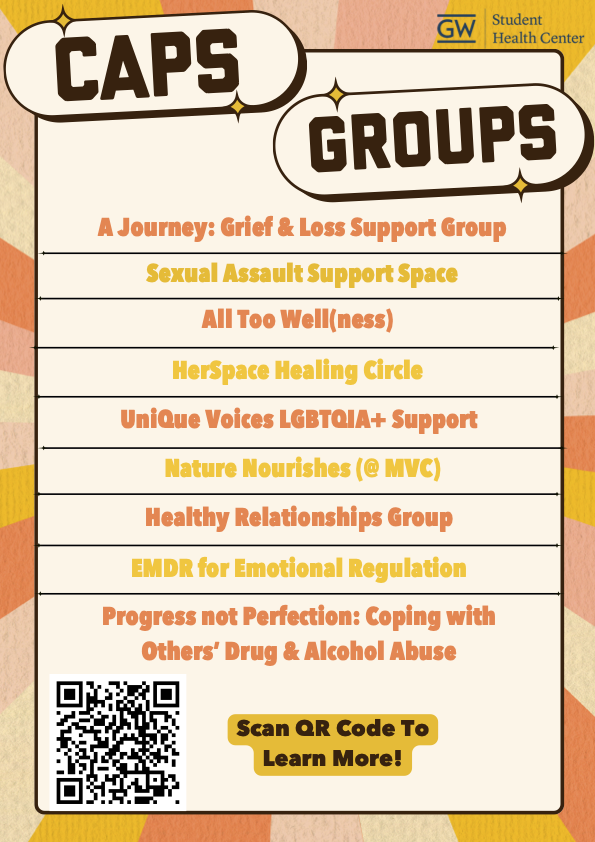
At CAPS, we offer group therapy as a valuable opportunity for self-discovery and addressing concerns in a supportive and collaborative environment. Our group sessions typically consist of 4-10 students who meet weekly throughout the semester, all under the expert guidance of our CAPS clinicians. Joining a group allows you to gain valuable insights into yourself and others, fostering personal growth and understanding in a nurturing setting.
For more information or questions, please:
Email our Group Coordinator Kortnie Parks, LPC at kortniep@gwu.edu
Fill out the Group Registration Form
Schedule an Initial Consultations with CAPS
| | Support for GW LGBTQ+ Students | | |
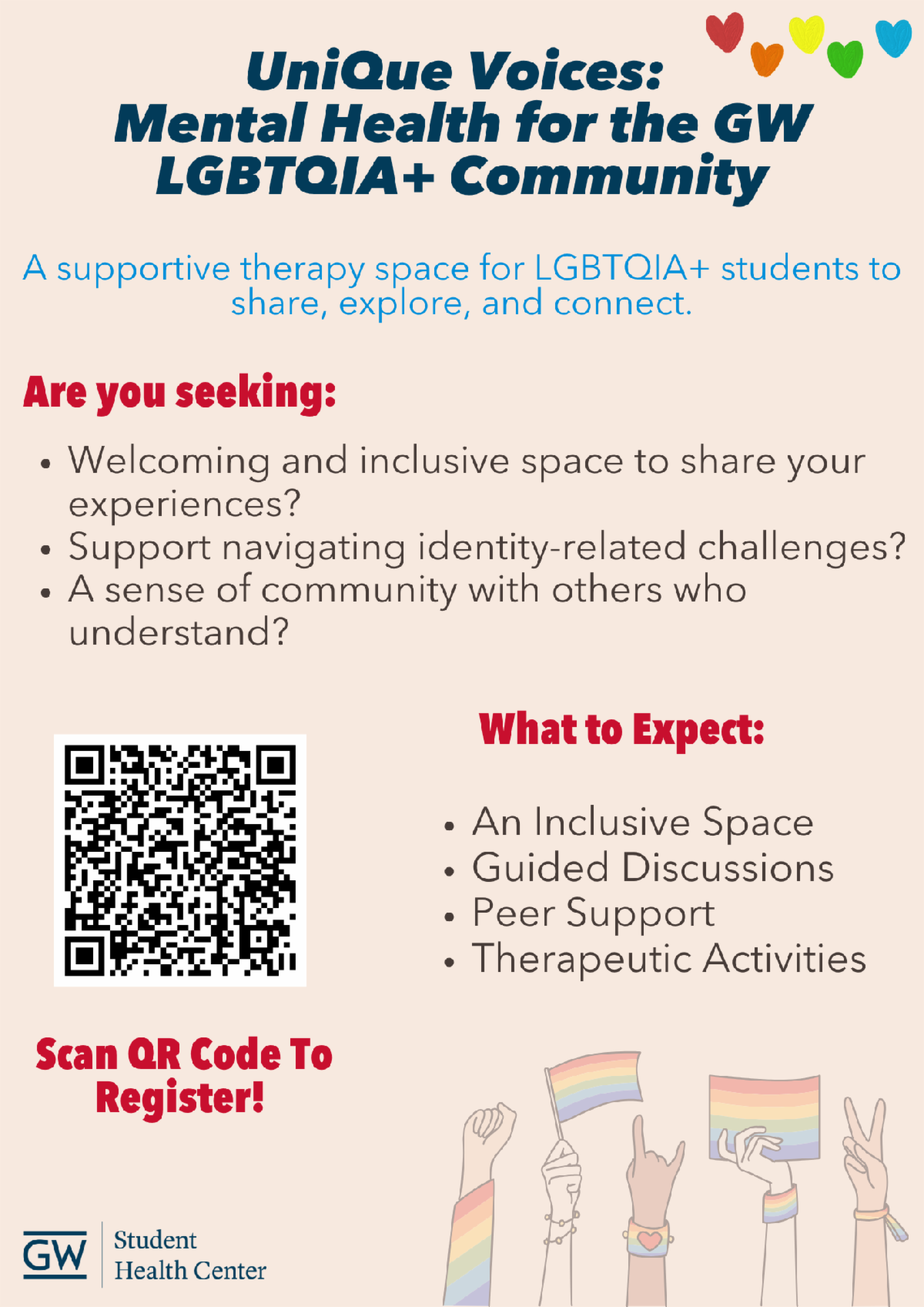
UniQue Voices: Mental Health for the GW LGBTQ+ Community
This supportive therapy group is tailored specifically for LGBTQIA+ students, providing a safe and inclusive space to share experiences, explore identities, and enhance mental well-being.
| | |
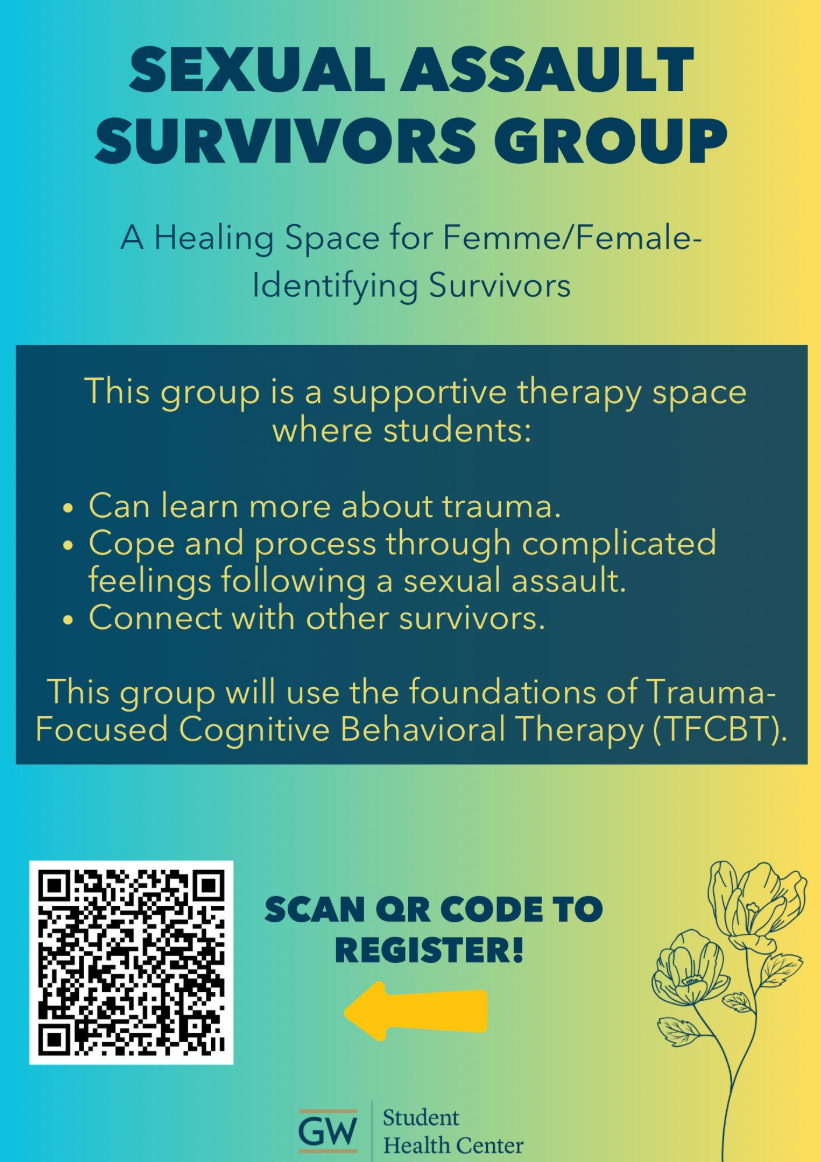
Sexual Assault Survivors Group
A support and healing space for femme/female-identifying individuals who have experienced sexual assault. This group offers a collaborative space to learn about trauma, process complex emotions, and integrate the experience into a healthier self.
| | |
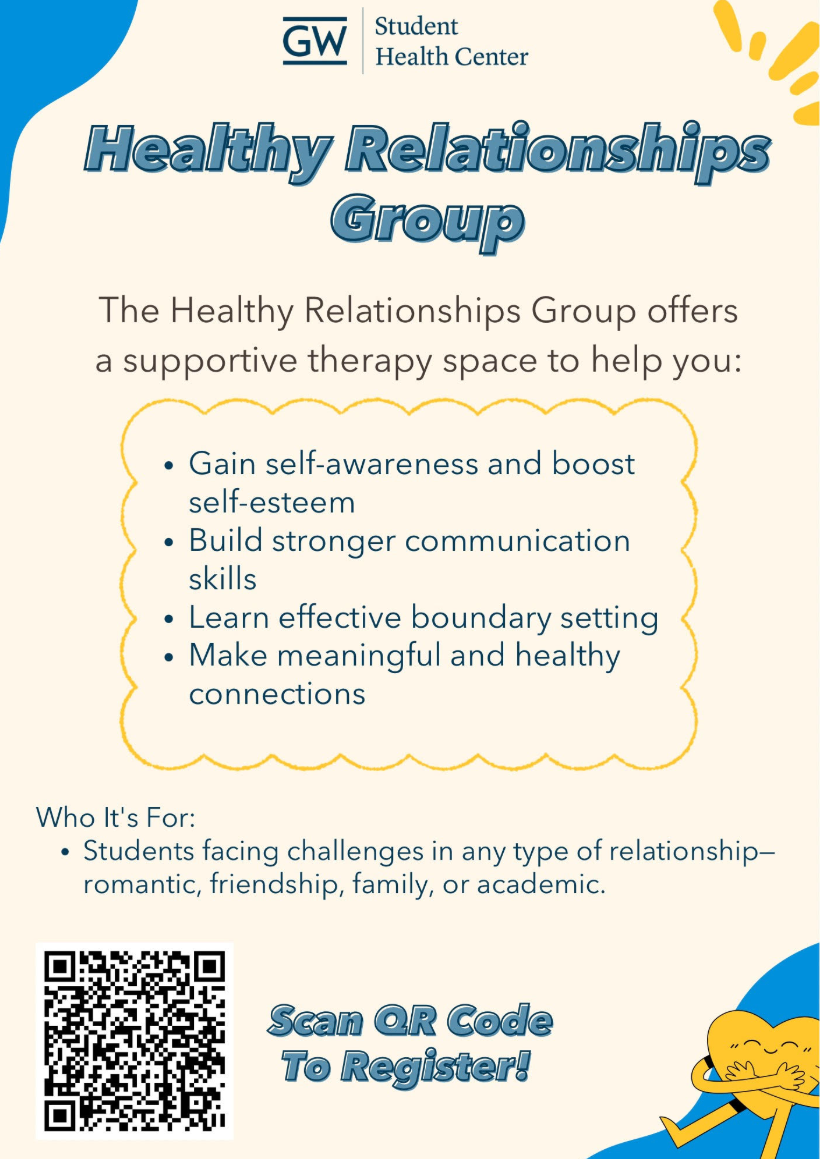
Healthy Relationships Group
A processing space to help students gain insight and tools to improve all types of relationships.
| | Feminist Campus: Quad Talk is a platform to share bold opinions, fresh takes, and thoughtful reflections on the world we’re navigating. Whether you’re tackling the latest social issue or cracking a joke about the chaos, this is where your voice matters. Submit a piece (500 words or less) to be part of the weekly collection on the Feminist Campus Website of young people’s perspectives on the political and social issues shaping our lives today. Let’s talk about it—your way. | | Gender Policy Research Program Newsletter | | |
Sign up for the monthly newsletter! The GPRP newsletter, sent out on the last Friday of the month, will include updates from GPRP, community spotlights, featured events and resources, and funding, publication, and job opportunities.
Sign up today!
| | Save Foreign Assistance from Cuts | | |
CARE is a humanitarian organization that fights global poverty empowers women and girls around the world. This organization is asking individuals to call elected officials and share support for foreign assistance, knowing just how much these critical investments save lives and promote U.S. and global stability, peace, and prosperity.
Individuals can make a phone call and connect to members of Congress. This organization has included four main points below to make this as quick and easy as possible:
- I am a constituent, and I strongly support U.S investments in foreign assistance.
- U.S. foreign assistance saves lives and promotes U.S. and global stability, peace, and prosperity.
- The consequences of cutting foreign assistance will be devastating – and in some cases deadly – for millions of people worldwide while also jeopardizing American progress.
-
Supporting foreign assistance does not come at the expense of domestic priorities. U.S. leadership can do both, it’s not an either or.
If interested, call using this form.
| | The Developmental Social Neuroscience Lab is recruiting adults aged 18-40 to participate in a paid research study! This study includes one online portion (1 hour) and one in-person visit to their lab at George Washington University (3 hours). You can make up to $80 ($20/hr) for completing online surveys and in-person computer games at GW. Please go to their website or email them for more information. | | |
Online Therapy Resources for the LGBTQ+ Community
Online therapy is a resource that offers a plethora of different types of virtual therapy for the LGBTQ+ community. Online therapy makes it easier to access mental health care and to engage in therapy on your own terms. Find more resources that can be helpful for navigating the coming-out process, strengthening your relationships, and learning how to be true to yourself as an LGBTQ+ individual.
| |
Contribute to the WGSS News Digest | | |
Would you like your event, announcement, or news to be featured in our news digest? There is a process! Please fill out the below form by Thursdays at 4:00 PM to have your event featured in our upcoming digests.
Submit additions to the digest. We look forward to hearing from you!
| | | | |