Presented by the U.S Department of Health and Human Services
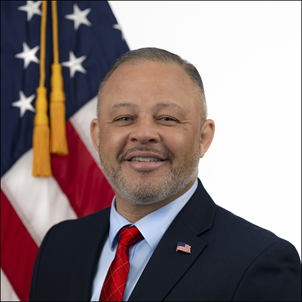
Letter from the Director
I hope that your Fourth of July celebrations were fun and festive! All over the country, communities are celebrating America 250 throughout the year with engaging retrospectives and promising hopes for the future.
Speaking of the future, many of you have begun your back-to-school activities with your families and community. We wish the learners in your care a very successful school year!
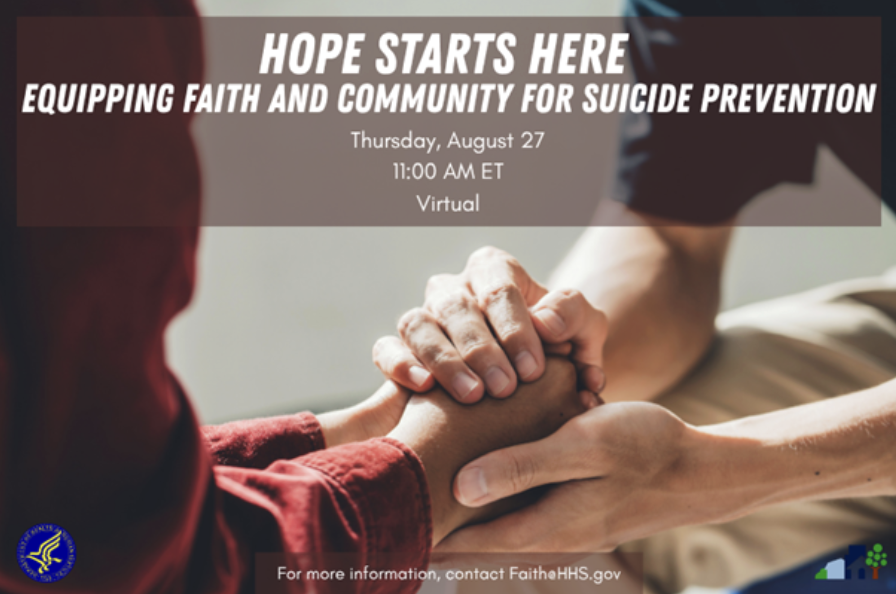
The HHS Center for Faith will present a webinar, 'Hope Starts Here: Equipping Faith and Community for Suicide Prevention ', on Thursday, August 27th, 11:00AM ET . The event will prepare faith and community leaders for the 988 Day of Action. Learn more and register for this timely conversation below.
On September 8th, many of our communities will mark 988 Day. 988 Day is a Day of Action held annually on 9/8 with the goal to raise awareness about the 988 Suicide & Crisis Lifeline through a variety of creative activities spearheaded by communities, organizations, and individuals.
I encourage you to stay informed by signing up for the White House Faith Office mailing list, as well as the HHS Intergovernmental and External Affairs (IEA) mailing list. If you were forwarded this newsletter and would like to receive our monthly content, please email Faith@HHS.gov.
'Hope Starts Here: Equipping Faith and Community for Suicide Prevention' Webinar
Join the U.S. Department of Health and Human Services Center for Faith for 'Hope Starts Here: Equipping Faith and Community for Suicide Prevention ' on Thursday, August 27, at 11:00 AM ET on Zoom. This webinar will equip faith leaders with practical tools to reduce stigma surrounding mental health and connect individuals and families with lifesaving resources such as the 988 Suicide & Crisis Lifeline.
On September 8th, many of our communities will mark 988 Day and faith leaders are invited to join us and prepare for the 988 Day of Action. SAMHSA and the HHS Center for Faith continue to encourage collaboration with faith-based organizations to increase awareness of the 988 Suicide & Crisis Lifeline, reduce stigma surrounding mental health, and strengthen community-based support for individuals experiencing mental health, substance use, or suicide-related crises.
Participants will leave with practical examples of how faith communities can participate in 988 Day, promote suicide prevention discussions, build partnerships with local behavioral health providers, and access a variety of resources to empower and support the ways they care for individuals, families, and communities.
Strengthened Religious Liberty Protections provided by Justice Department
The Department of Justice recently updated their guidance to strengthen religious liberty protections for all people of faith. These updates are nothing less than historic. The full updated guidance is well worth the read.
The full updated guidance includes several wins for people of faith, such as:
Integration of recent Supreme Court precedent.
Protection of parental rights.
Reaffirmation of church autonomy.
Expanded direction for federal agencies.
Clarified protections in federal employment.
Safeguards for religious organizations in federal contracting and grant programs.
Attorney General Blanche recently provided an update on this guidance on an event hosted by the White House Faith Office. You and your congregations, family, friends, and communities are welcome to sign-up for updates from the White House Faith Office team. For other inquiries for the White House Faith Office, including requests for a recording of the recent National Conference Call, please email: WhiteHouseFaithOffice@who.eop.gov.
Webinar Recap: 'How Faith Communities Are Leading in the Recovery Movement'
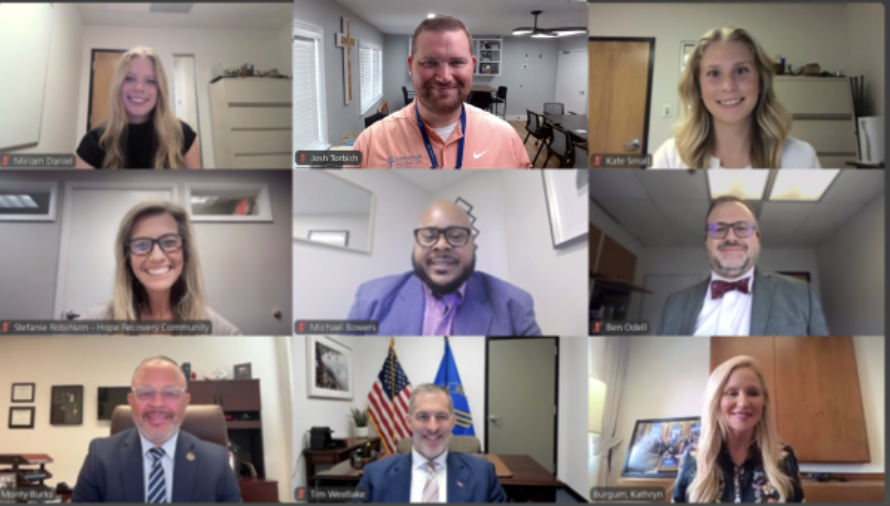
Director Monty Burks delivered opening remarks and was followed by a slate of panelists that had inspiring recovery journeys and positive impacts in their communities.
White House Senior Advisor Addiction Recovery and Co-Chair of the Great American Recovery, Kathryn Burgum, provided opening remarks about how her faith helped her overcome alcohol addiction. During his discussion, Tim Westlake, Chief of Staff at SAMHSA, remarked 'addiction is a disease, but it's got a spiritual cure'. The Hope Recovery Center strives to provide an addiction recovery atmosphere where people are welcome without judgment and are reminded that they have value, said Executive Director Stefanie Robinson. The next panelist, Michael Bowers , Vice President of Government & Public Affairs at Centric Health discussed partnering with faith-based organizations, which are looked to as trusted community messengers. Finally, the CEO of Christian Recovery Centers, Inc., Josh Torbich, provided insight into their recovery program featuring residential beds, reentry services, pastoral support, and much more as part of the 'bio-psycho-social-spiritual ecosystem'.
The HHS Center for Faith sincerely appreciates our interns Miriam Daniel and Katherine Small, and HBCU fellow Demar Richards for their professionalism, insight, and contributions on this webinar and throughout the summer!
Watch the recording and share with your colleagues.
Strengthening Faith-Based and Community Health Services Globally
The Trump Administration recently announced nearly $2 billion in partnerships with faith-based and community organizations that provide global health and humanitarian assistance. The funding is the largest allocation of global health foreign assistance to faith-based organizations in over 20 years.
$1.4 billion from the Department of State to support the delivery of integrated, life-saving health services through faith and community-based hospitals and clinics in more than 20 countries
$850 million over five years through the Faith and Community Initiative (FCI) Award to World Vision and a consortium of local faith-based implementers, strengthening over 2,500 faith-based hospitals, clinics and community hubs delivering care to 17 countries, and training, paying, and equipping with supplies more than 30,000 community health workers
$570 million to faith-based and community hospitals and clinics directly Memorandums of Understanding signed with country governments under the AFGHS.
The US announced $538 million in humanitarian response funding which will reach 7 million people with critical, lifesaving assistance across 16 humanitarian crises. Over $100 million will be made immediately available to respond to natural disasters around the world.
In many of the countries where the United States provides foreign assistance, faith-based healthcare providers represent 40% or more of all health facilities. By leveraging faith-based hospitals and clinics, the Department of State is strengthening health service delivery that prevents illness, saves lives, and ensures a path toward self-reliance.
Addressing Homelessness and Addiction through “Treatment First”
The HHS Center for Faith joined the White House’s announcement of a new “Treatment First” Best Practices Toolkit from HHS, the Office of National Drug Control Policy (ONDCP), and U.S. Department of Housing and Urban Development (HUD). The three entities are joining forces to help communities respond to the connected challenges of homelessness, addiction, and mental illness. The toolkit focuses on helping people move beyond crisis toward treatment, recovery, stable housing, employment, self-sufficiency, and stronger connections to family and community.
For faith and community leaders, this is a resource worth exploring. The toolkit specifically recognizes faith-based organizations and houses of worship as important partners because of the trust, relationships, hope, spiritual support, and practical assistance they can provide. It encourages communities to bring together treatment providers, housing organizations, healthcare, law enforcement, employers, peer recovery groups, and faith and community organizations so people receive coordinated support rather than being passed from one disconnected service to another.
A few ideas faith and community leaders will find in the toolkit include:
Build strong local partnerships. Know the treatment providers, shelters, recovery programs, healthcare organizations, employers, and other resources in your community—and identify where people are falling through the gaps.
Help make “warm handoffs.” Rather than simply giving someone a phone number or referral, help connect them personally to the next organization or service and follow up.
Combine compassion with a path toward long-term recovery. The toolkit emphasizes evidence-based treatment along with peer support, housing, education, employment, life skills, relationships, and community connection.
Recognize the role of faith and spirituality. The toolkit calls for faith-based communities and evidence-based treatment to work together when it is meaningful to the individual, and highlights faith communities as sources of hope, purpose, belonging, and ongoing support.
The toolkit also includes real-world examples, ideas for measuring results, community asset-mapping questions, partnership strategies, and information about funding opportunities, including programs that can support community and faith-based organizations. Even if your organization does not provide addiction treatment or housing directly, the toolkit offers practical ways to become a stronger partner in helping neighbors move from crisis toward recovery, stability, and renewed connection to community.
Grants
Listed in order of closing dates. Visit Grants.gov to search for additional grants. Please note that the HHS Center for Faith does not sponsor grants.
TITLE: Community Cooking Demonstrations
DESCRIPTION: Through a coordinated network of regional and local implementation partners, the initiative will deliver recurring community cooking demonstrations and hands-on nutrition education designed to help individuals and families develop practical skills for selecting, preparing, and enjoying nutritious meals aligned with the Dietary Guidelines for Americans.
DESCRIPTION: The Street Outreach Program (SOP) provides street-based services to runaway, homeless, and street youth who have been subjected to, or are at risk of being subjected to, sexual abuse, prostitution, sexual exploitation, and severe forms of human trafficking in persons
TITLE: Title V Competitive Sexual Risk Avoidance Education
DESCRIPTION: The Title V Competitive SRAE program competitively funds projects to implement sexual risk avoidance education that teaches youth ages 10-19 how to voluntarily refrain from non-marital sexual activity.
DESCRIPTION: The Basic Center Program (BCP) provides temporary, emergency shelter; and counseling services to youth who have left home without permission of their parents or guardians, have been forced to leave home, or other homeless youth who might otherwise end up in the law enforcement or in the child welfare, mental health, or juvenile justice systems.
TITLE: Personal Responsibility Education Innovative Strategies (PREIS)
DESCRIPTION: PREIS funds rigorous impact evaluations of innovative youth pregnancy prevention interventions that target services to high-risk, vulnerable, and culturally under-represented youth populations, including youth in foster care/child welfare settings, juvenile justice, victims of trafficking, youth who have runaway or experience homelessness, youth with HIV/AIDS, expectant youth who are under 21 years of age and their partners, parenting youth who are under 21 years of age and their partners, and youth residing in areas with high birth rates for youth.
DESCRIPTION: Grant will help address increasing mental health needs among teens, aiming to support an additional 200,000 youth nationwide. Funding will first expand programs in California, Maryland, and Oregon before scaling to other states.
*Please note: Links to non-federal sites are included for your convenience and information. HHS cannot attest to the accuracy of information provided by non-federal links. Linking to a non-federal site does not constitute an endorsement by HHS or any of its employees of the sponsors, information, or products presented on the site. Also, the linked content may not comply with all U.S. government guidance for websites.
COPPERTINO AND ASSOCIATES CONSULTING GROUP | 9100 WILSHIRE BOULEVARD EAST TOWER SUITE 333 | BEVERLY HILLS, CA 90212 US