California Asphalt Pavement Association
Vol. 15, Issue 37 || Sept. 12, 2022
|
|
Greetings!
This weekly report contains news and information of interest to the asphalt pavement industry, customers and agency partners in California. Please feel free to distribute this newsletter to others who may be interested in asphalt pavements. To provide feedback or story ideas click HERE. Having difficulty viewing this newsletter? View as Webpage
|
|
State Water Board adopts Storm Water General Permit for Construction over industry objections |
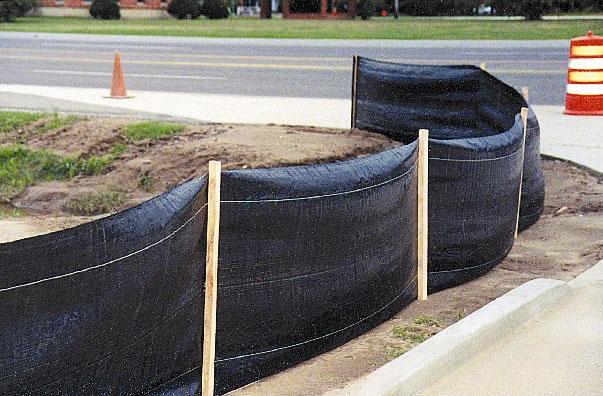
As expected, the State Water Board last week approved a sweeping new set of regulations covering how storm water is handled on construction projects in California despite industry objections that some of the requirements are not based in science and could be difficult to implement.
The Sept. 8 hearing in Sacramento and on-line was also a fresh reminder of clashing policy priorities in California that often result in the construction industry being caught in the middle. Case in point: As much of the state was baking in a record-breaking heat wave, and under a threat of rolling power blackouts, representatives of California utilities testified that the new permit could hamper their ability to advance important projects to protect and improve California's power-delivery systems.
And representatives from the California Department of Transportation, which is under enormous pressure to fast-track a "middle mile" broadband internet access program across the state expressed worry that a compression of the implementation timeline for the permit could hamper those projects as well as nearly a quarter of highway maintenance and safety projects collectively known as the State Highway Operation and Protection Program (SHOPP) that is the bread-and-butter of the asphalt pavement industry in California. Testifying for the department as Hardeep Takhar, Acting Broadband Program Director for Caltrans. The department plans to construct a 10,000-mile broadband "middle mile" network within the state right-of-way by 2026. The open-access, state-owned high-capacity fiber optic lines will carry large amounts of data at higher speeds over longer distances, which is expected to greatly improve internet service to homes and businesses.
Equity, too, was at cross purposes. On the one hand, environmental advocates were strident in demanding that poor and disadvantaged communities have access to the cleanest possible water possible, but on the other hand, projects to implement "middle mile" broadband internet initiative, meant to bring high-speed internet services to underserved communities, could be in in jeopardy due to the "use it or lose it" restrictions on the funding.
And then there were the eye-popping estimates for implementing the new regulations, formally known as the Construction Stormwater General Permit. Representatives from the construction industry said one study found the cost to conduct sampling and analysis ranged from $4,800 to $75,000 under the current permit to $214,800 to $943,000 based on a study of 10 locations.
Perhaps more troubling, however, is the State Water Board stuck with a provision to use Numeric Effluent Limits (NELs) over Numeric Action Levels (NALs) in the current permit as a key metric above the objections of construction industry experts. In addition, the use of total Suspended Solids (TSS) Surrogate was deemed inadequate as an "apples to oranges" comparison not backed by sound science. Dr. Susan Paulsen, testifying on behalf of the Building Industry Association of Southern California, called the current permit language in this area "impractical and inappropriate." None of the studies referenced by the Water Board staff, she noted, included data from construction sites, which everyone acknowledged are dynamic. "There are a whole lot of unknowns that, in my scientific opinion, merit more study."
The Water Board did seem to concede this point, and accepted an amendment to the permit language to conduct more study and report the findings back to the board.
As its name implies, the general permit regulates storm-water runoff from construction sites, and the current permit, in effect since 2009, already contains strict requirements for monitoring, testing and established best-practices for storm-water runoff control. The new permit language is twice as long as the previous version. Although the permit is intended as a statewide document, the NEL language, applies to specific locations. Staff acknowledged that there are "fundamental tensions within this permit of the Numeric Effluent Limits as opposed to the Numeric Action Levels, and the balance between regional boards and the state board."
Board Member Sean Maguire also acknowledged the enormity of the task of updating the permit, saying, "It's incredibly complex. There's a lot of nuance to it. We're dealing with very dynamic sites when you are talking about construction sites, and a big state, with lots of different hydrogeological conditions, different issues, lots of different water quality requirements."
Another source of frustration for many participants: Staff was offering up amendments in the days leading up to the board vote, including one that was posted the day prior. Ultimately the Board voted unanimously to adopt the permit, with an implementation date of Sept. 1, 2023 that includes a transition period between the old and new permit. Yes votes were cast by Board Chairman E. Joaquin Esquivel, Sean Maguire, Laurel Firestone and Nichole Morgan. Board Vice Chair Dorene D'Adamo was not present and did not vote.
Additional information on the reissuance of the Construction Stormwater Permit, include the various last-minute changes to the permit language, can be found HERE. A recording of the board meeting is posted on-line HERE. A previous Asphalt Insider report on this topic is HERE. To download a brochure produced by the CalAPA-funded Asphalt Pavement Alliance titled "Cleaner Water with Asphalt Pavements," click HERE.
This issue was ranked as one of the Top 10 stories of 2021 by Asphalt Insider editors, and also
made the list of Top 10 issues expected to have a major impact on the industry in 2022 and beyond. CalAPA will continue to provide updates on this issue going forward, and guidance on compliance.
|
|
A rough week out on the highway |
California's record-breaking heat wave last week drew important attention, as it should, to the importance of heat illness prevention to working safely on a highway job. But a more sinister threat that is ever-present visited tragedy on Interstate 5 in Sacramento.
"I have the unfortunate responsibility to inform you of a contractor fatality on a Caltrans construction project on I-5 in Sacramento," began a note to construction industry representatives sent last Thursday by Ray Hopkins, Chief of the Caltrans Division of Construction.
"Yesterday at approximately 6:30 pm, a contractor was fatally struck by an errant vehicle while placing a CMS on the shoulder of I-5 in preparation for a lane closure. A second contractor employee was transported to UC Davis hospital with serious injuries. We do not know the extent of the injuries to the second employee at this time. The driver stayed on scene and cooperated with CHP. Drugs and alcohol are not suspected to have been factors at this time but the incident is still under investigation."
At times like this, anyone who dons a hard hat and vest to work near live traffic, whether they be a public works or industry representative, can attest to the knowledge that tragedy can strike at any time. Earlier this year, a Caltrans maintenance worker was killed by a motorist, also near Sacramento.
Hopkins took the opportunity to remind all Caltrans and industry personnel to review the updated Construction Procedure Directives, CPD 21-16 "Traffic Control System Installation and Removal" (which is on-line HERE), and CPD 21-23 "COZEEP for Traffic Control System Installation and Removal" (which is on-line HERE).
The National Asphalt Pavement Association, a CalAPA partner, also offers a "CrewSafety" Work Zone Safety Training. More information about that program is HERE. It's been said in this space many times: everyone wants good roads, but they are not worth dying for. Please drive safety at all times, but in particular in highway work zones.
And although it appears the worst of this year's heat wave is behind us, the CalOSHA Heat Illness Prevention Page is always a good resource to have at hand. It is HERE.
|
|
Free webinar Sept 13 to cover the high points of asphalt production and construction |
The National Asphalt Pavement Association, a CalAPA partner, will be hosting a free educational webinar on Tuesday, Sept. 13 from 11 a.m. to 12:30 p.m. PDT titled "Asphalt Production & Construction." Details and on-line registration can be found HERE.
Civil and geotechnical engineers often specify asphalt for projects but don’t always get the opportunity to learn about production and construction of the product. This 90-minute webinar will take attendees behind the scenes using drone video to explore the asphalt production process leading up to delivery on-site. Furthering this educational opportunity, engineers will learn about the construction process by watching asphalt placement and hearing tips to specify and design high-quality jobs presented by experienced asphalt experts.
Following the webinar, attendees will have a greater understanding of:
- How asphalt is produced
- How asphalt is constructed
- Ways to improve the end product through design considerations
The webinar is being conducted by Steve McReynolds, Director of Operations, Asphalt Testing Solutions & Engineering, and TJ Young, Production Manager, Duval Asphalt. Professional engineers are eligible for up to 1.5 Professional Development Hours (PDHs) for successful completion of this webinar.
For more information or to learn about other upcoming NAPA webinars, click HERE.
|
|
Each week we highlight a word, acronym or other term commonly used in the asphalt pavement industry in California.
IDLING: “Idling” means the vehicle engine is running at any location while the vehicle is stationary. Under California law, diesel-fueled trucks with gross vehicle weight ratings over 10,000 pounds shall not idle for more than 5 consecutive minutes at any location. (13 CCR § 2485(c)(1)(B)(1)). The California Air Resources Board page with the specific law language is HERE.
|
|
Paving Pointer of the Week |
Each week we highlight a key point or best practice of interest to asphalt paving crews, inspectors and others working in the field. We welcome suggestions. More tips can be found in our "Asphalt Parking Lot Construction Checklist" HERE. Information on the CalAPA "Quality Paving Certificate" program is HERE.
PREPARING FOR ASPHALT DELIVERY: Ask yourself: Has a pre-paving meeting been held with the paving foreman to inspect the sub-base? Have you checked the site for possible safety issues?
|
|
Each week we highlight a term that is specific to climate-change issues related to the asphalt pavement industry. This feature is intended to raise awareness of the asphalt industry's climate-change initiatives and the specialized terminology that goes with them. More information on "The Road Forward" asphalt industry climate initiative can be found HERE.
SEQUESTRATION: Storage or removal of carbon dioxide within a product.
|
|
"The quieter you become, the more you can hear.”
– Baba Ram Dass
|
|
CALAPA CALENDAR:
View all CalAPA events HERE.
*
Gourmet food and wine-tasting event
Sept. 21, Pechanga
Resort Casino, Temecula
*
Golf Tournament at Journey at Pechanga, Temecula
Sept. 22
Details and on-line registration HERE.
*
Registration open!
Fall Asphalt Pavement Conference
Oct. 26-28, 2022
Hilton Sacramento Arden West Hotel, 2200 Harvard Street, Sacramento.
For exhibitor and sponsor information, contact Sophie You at (916) 791-5044.
*
Topgolf networking event
Wednesday, Oct. 26, 6 p.m. to 9 p.m.
Topgolf Sports & Entertainment Complex, 1700 Freedom Way, Roseville, CA
|
|
There's never been a better time to join the California Asphalt Pavement Association! Members receive insight and advanced notice on critical issues that impact every company's bottom line. CalAPA members also receive invitations to exclusive member-only events, in-depth "Member Alerts," our comprehensive asphalt market forecast for California, discounts and industry-specific networking opportunities not available anywhere else. CalAPA's new searchable on-line membership directory helps connect potential customers with member companies. Click HERE to download our Member Service brochure. Click HERE to view Vol. 1 of recent testimonials. Not convinced? Click HERE to view Vol. 2 of recent testimonials. With so much changing in the asphalt pavement industry, what you don't know can cost you! Click HERE to send us an e-mail inquiry, or contact Russell Snyder with CalAPA at (916) 791-5044. |
|
We hope you enjoy CalAPA's Asphalt Insider newsletter. We are committed to providing you with the most up-to-date information on technical issues, regulation, news, analysis, events and trends in California that is of interest to the asphalt pavement industry and our various agency partners. Click HERE to contact us with any comments or suggestions.
Sincerely,
Russell W. Snyder, CAE
Executive Director
California Asphalt Pavement Association (CalAPA)®
|
|
The "Asphalt Insider" is an official publication of the California Asphalt Pavement Association. For more information or to inquire about membership, call (916) 791-5044, or click HERE to contact us. Copyright © 2022 California Asphalt Pavement Association -- All Rights Reserved. The CalAPA name (No. 5,621,794) and logo (No. 5,621,795) are registered trademarks with the U.S. Patent & Trademark Office.
|
|
P.O. Box 981300, West Sacramento, CA 95798
1550 Harbor Blvd., Suite 211, West Sacramento, CA 95691
|
|
|
|
|
|
|
|