|
Monthly Newsletter
August 2026
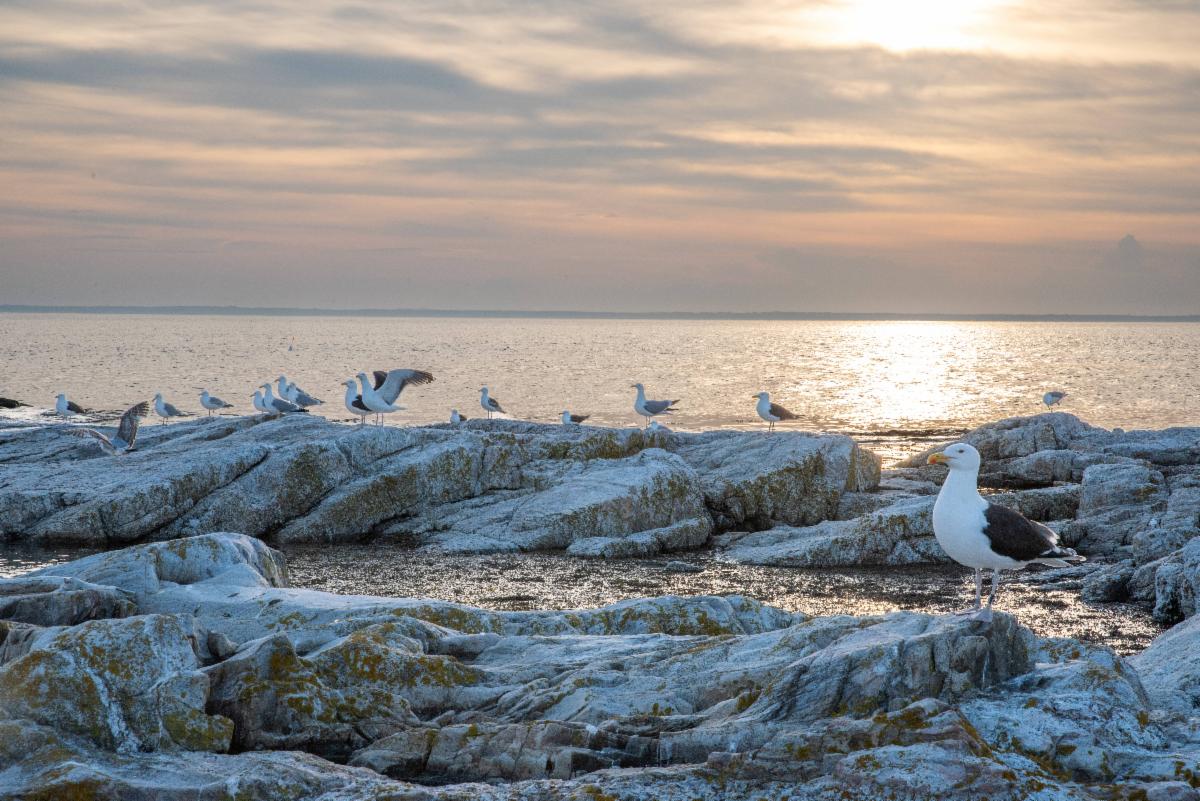
| | photo: Sasha Fishman, Artist-in-Residence 2026 | | |
This newsletter includes the following topics:
- Director's Note
- Cornell's Provost Visits SML
- Appledore Moments
- Shoals Leaves a Mark
- Shoals Undergraduate Research Symposium
- AFA
| | |
Greetings from Appledore!
Now that I am in my third season as executive director of Shoals, August is both an exciting time and a difficult time for me. It is exciting because we have so many classes coming and going, including several for advanced high school students; there are more whales, sharks, seabirds, and ocean sunfish (Mola mola) on our excursions; and the songbird banding station reopens. It is difficult because I see the end of our on-island time approaching quickly and there are more painful goodbyes.
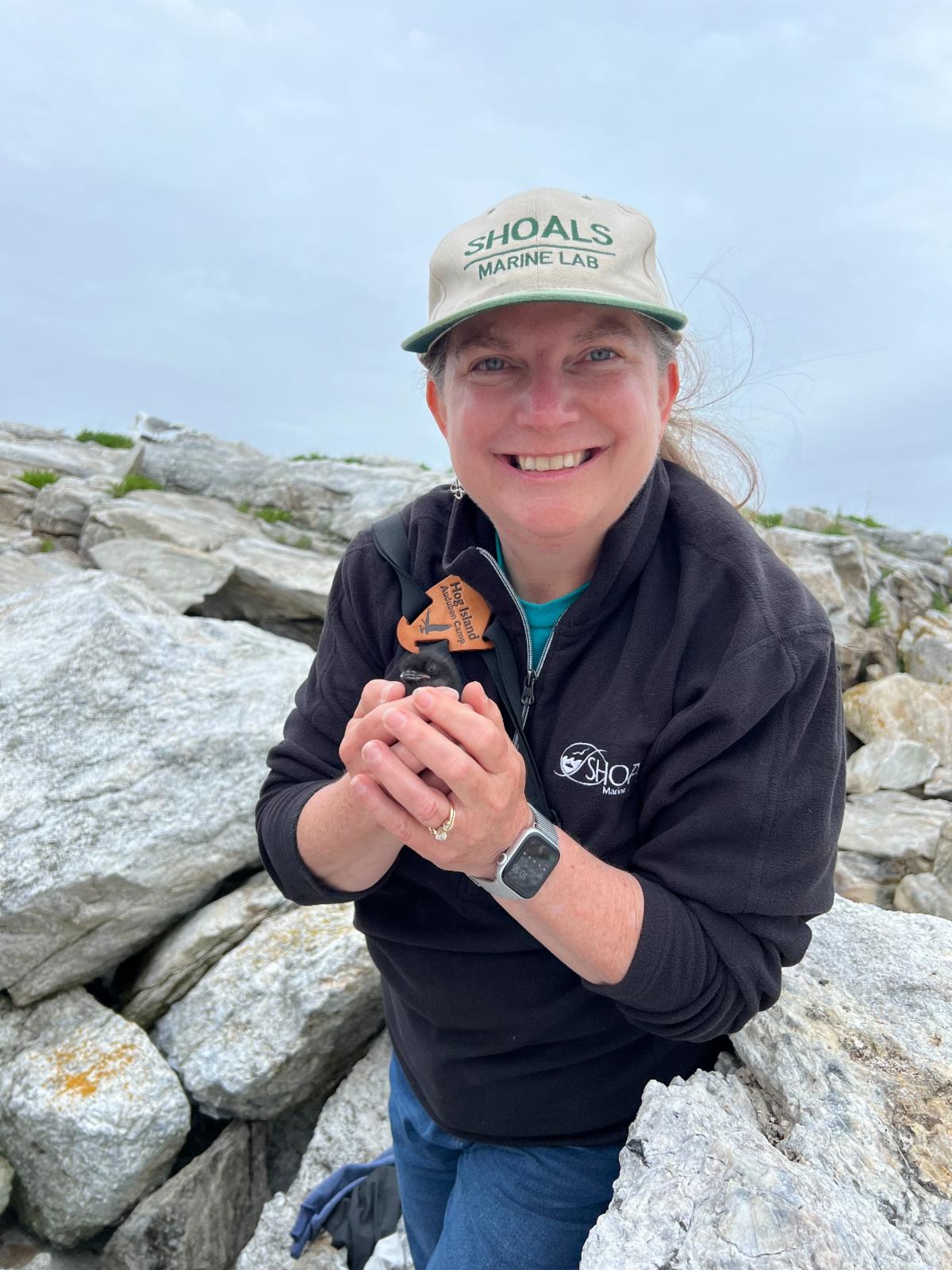
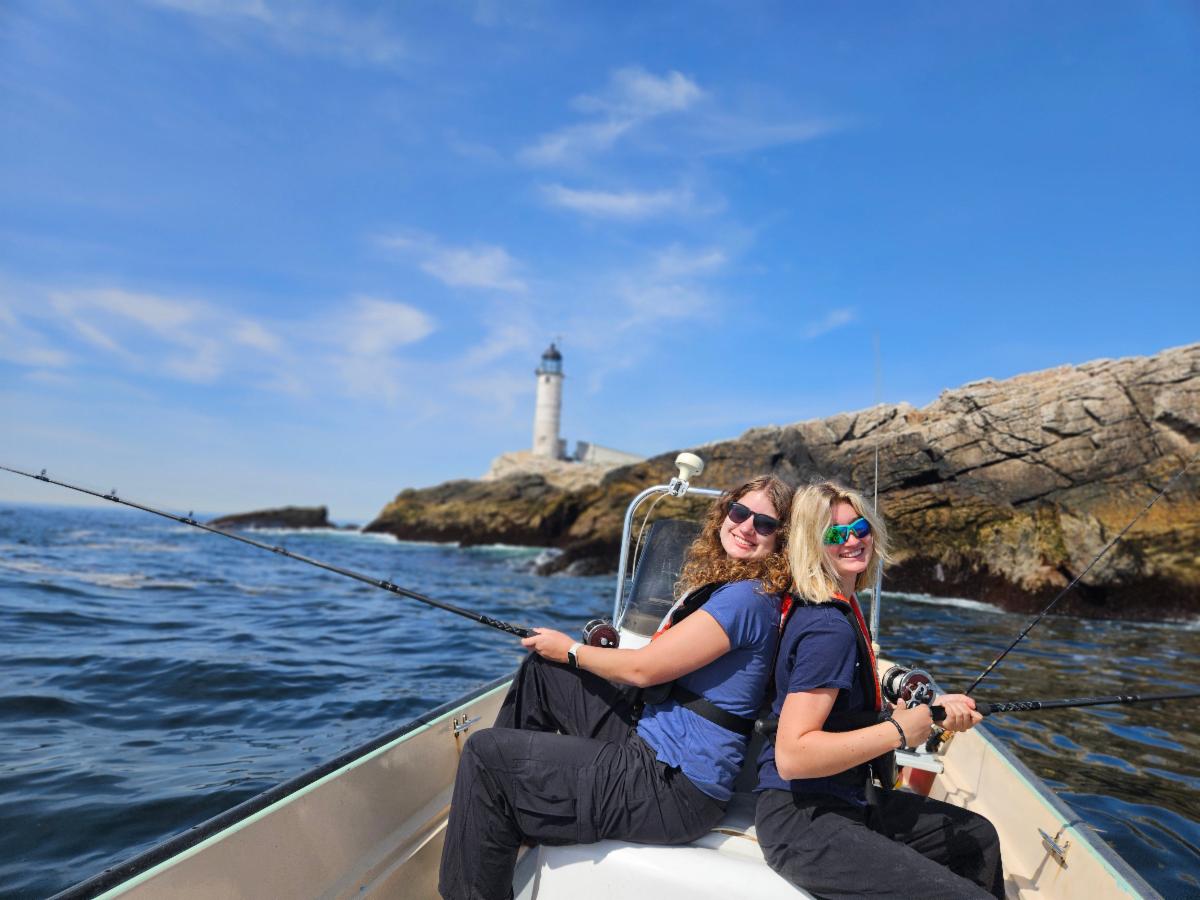
This summer will always be special because it was the first time I had the opportunity to be one of the lead faculty for an SML class while being the executive director of the lab. It was even more special because Dave Buck (the Associate Director of SML) was my co-instructor and Marshall Mumford was our teaching assistant. We had an absolute blast! We went hagfishing, rod and reel fishing, and whale (and seabird) watching. We banded American Herring Gull young and looked at gull distributions in the intertidal zones. In one week, our students learned so much about the vertebrates in the Gulf of Maine. Dave and I loved teaching together, going on boat trips, and working with Marshall to provide unusual and impactful opportunities for our students.
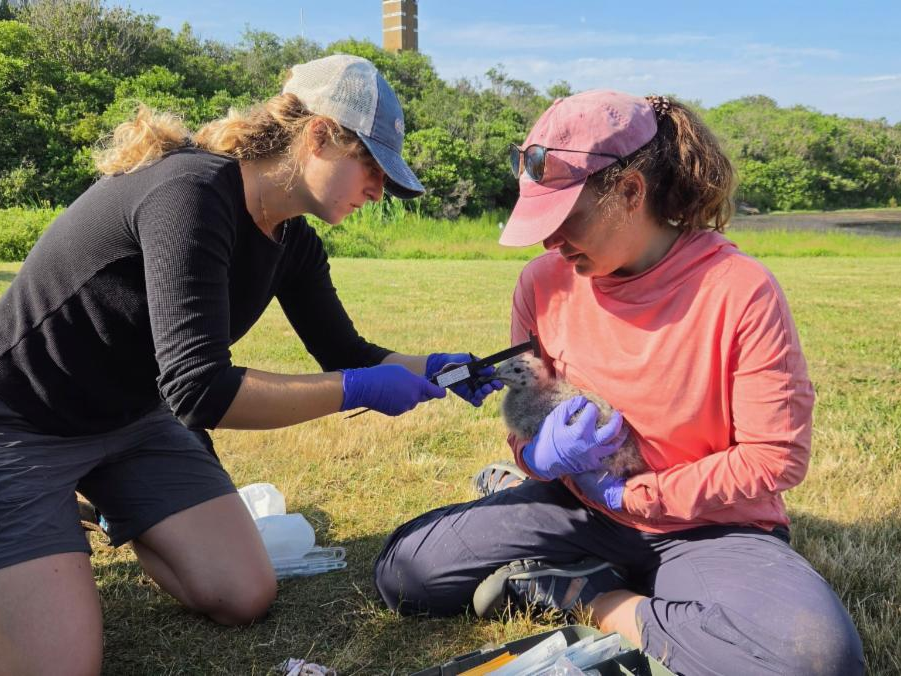
It was gratifying that other faculty who saw us banding gulls asked if that could be done with their students. Kudos to Mads Ellms for providing many experiences for several courses (and even visitors) to help band a bunch of herring gull chicks on campus. He managed to band 44 additional gulls as part of our classes and visiting groups. While most were young birds, this total included an adult he caught on the Kiggins porch, and that gull returned quickly to watch for unattended plates of food during meals. With plastic field readable bands placed on so many seabirds, I am excited to watch for our young Great Black-backed Gulls, American Herring Gulls, Common and Roseate Terns, and Black Guillemots to return in future years.
Another of my personal highlights this year is being granted the title of “Honorary Shark Faculty.” I love contributing in any way possible to different classes, and joining the sharks class fishing trips has become an anticipated tradition. The team of faculty teaching both the undergraduate course in “Shark Biology and Conservation” and the course open to high school students in “Introduction to Sharks, Skates, and Rays” is outstanding (as are all of our teaching faculty). This year we caught (and sampled and successfully released) two blue sharks and two porbeagles. We also saw basking sharks on several of our trips. One of the trips didn’t catch any sharks (although a small porbeagle took bites out of our bait and we watched it play with the float), but it was some of the best whale watching of the summer.
August also marks the end of our Shoals Undergraduate Research Group (SURG). This summer we had 11 members in our SURG program studying fish, parasites, algae, muskrats, seals and seabirds. Not only do they collect their own data, but this year they made a “bingo card” encouraging each student to assist other students in the field or lab to better understand the range of projects. After more than 10 weeks on the island, our research interns present the results of their independent projects at their annual symposium. They have spent weeks honing their research questions, collecting data, performing a variety of analyses, preparing and practicing their presentations, and finally presenting all of their research to the island, their mentors, and their family and friends. Each year it is harder to say goodbye to the students who join our community and support each other completely in their work.
Hoping you have enjoyed the summer as much as we have on Appledore,
| | |
Sara Morris
John M. Kingsbury
Executive Director
Shoals Marine Laboratory
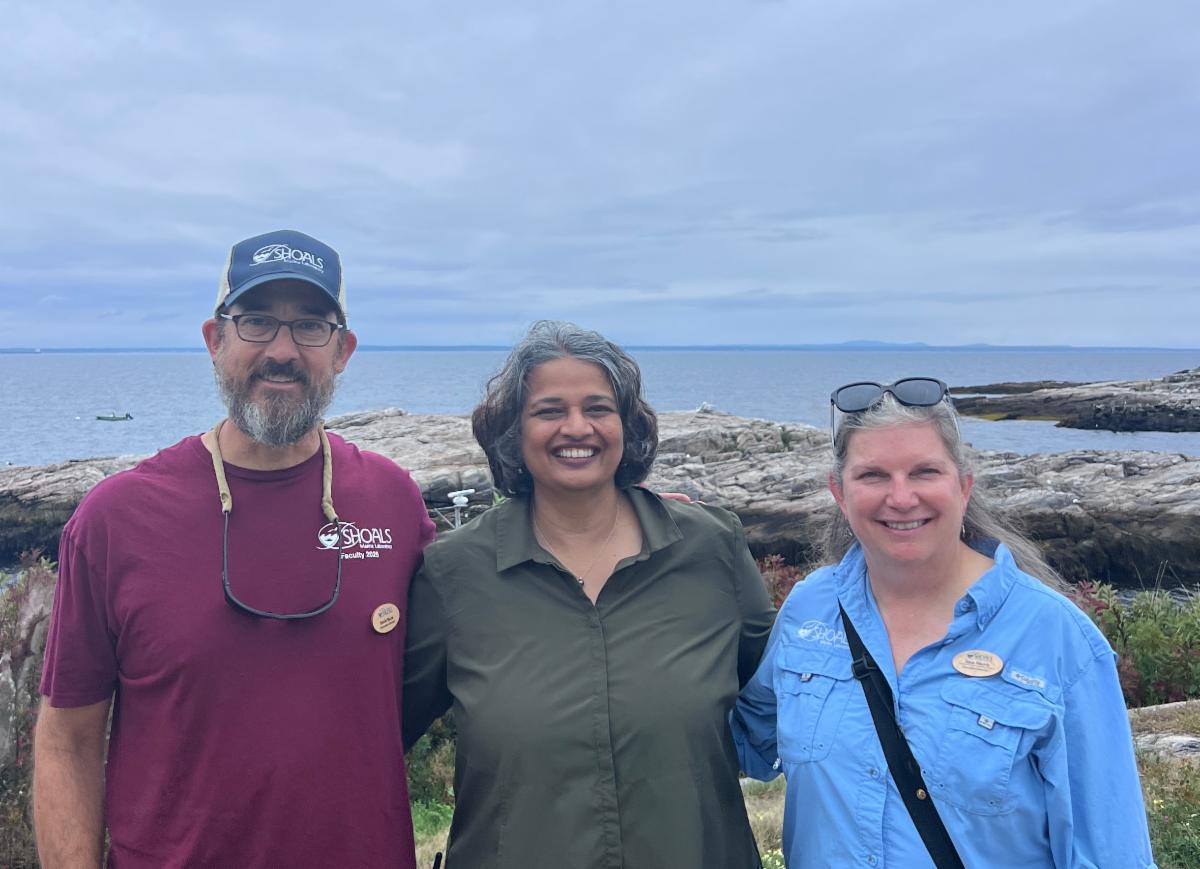
| | Cornell's Provost Visits SML | | Earlier this month, Shoals hosted Dr. Kavita Bala, the current Provost of Cornell University. She and her husband arrived in time for our end-of-class lobster dinner (all of our lobsters this summer have been purchased from the Foy family who are based on Cedar Island in the Isles of Shoals). We showed them our teaching facilities and labs, offered a sustainability tour, provided an island history tour including time at Celia’s garden, and watched the sunset on the K-House porch while talking about ways to deepen the connections between Cornell and SML. Her son had taken two of our classes this summer, so we were excited that she would have both our overview and a student’s perspective of the Shoals experience. | | Shark research and conservation at SML | |
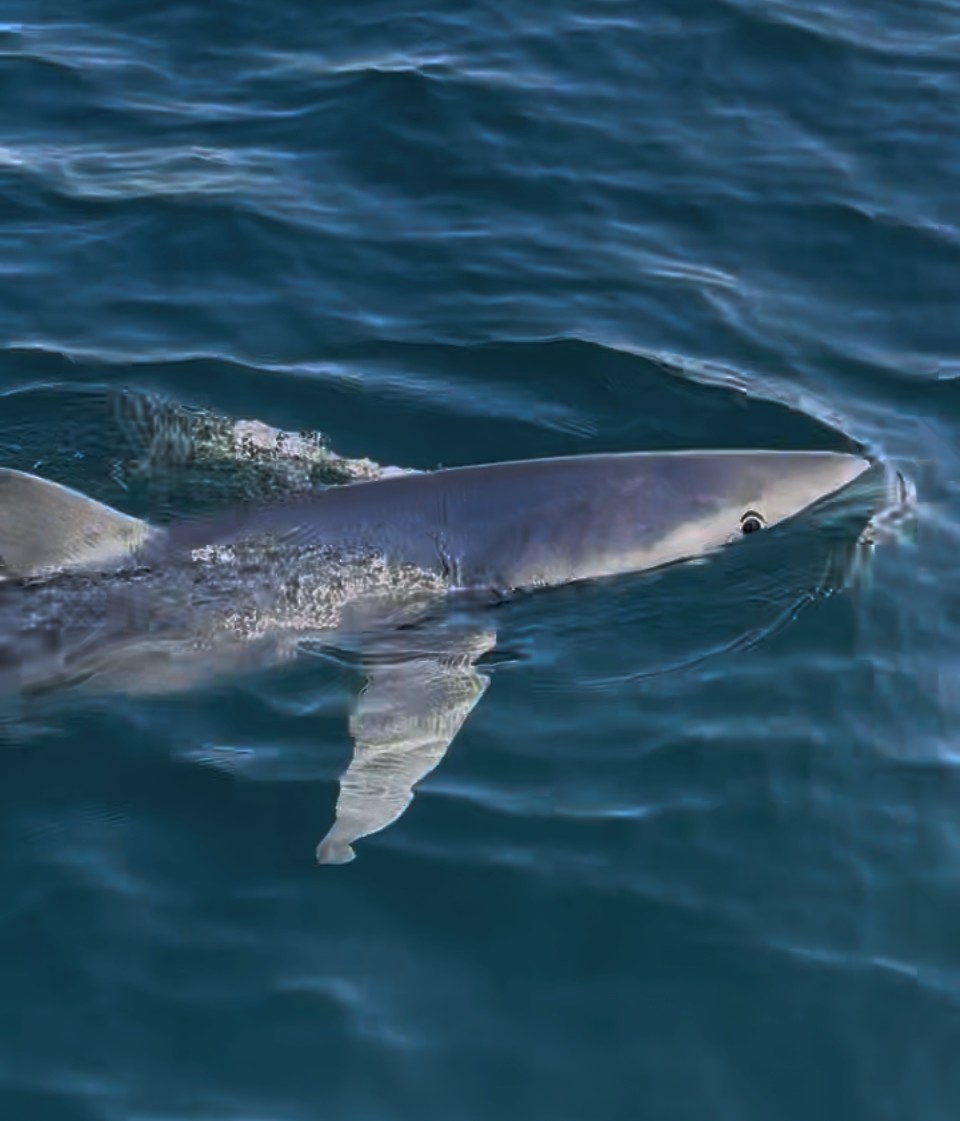
| |  | Last year, we shared the excitement of a shark fishing trip in our newsletter. A community member wrote that we shouldn’t be killing sharks, and we realized that we hadn’t been clear about these trips. The shark faculty are teaching about shark research methods that aid in conservation, and they respect and appreciate sharks. Our work is with live sharks, and does not involve killing or harvesting them. We have protocols to ensure each shark is treated humanely and ethically, and the sharks are released alive and swim away from the experience. In preparation for the trip, students are readily prepared and are assigned tasks so that if we do catch a shark, we can quickly gather the data needed and then release the shark. When we have a shark on deck, we begin with a timekeeper who lets us know exactly how long the shark has been out of the water, which ensures any shark is released within a short amount of time. We have saltwater hoses of different sizes that we put in a shark’s mouth to ensure it is getting an appropriate amount of fresh seawater over its gills, ensuring proper ventilation (that’s how they get oxygen). Students are prepared to receive blood samples to be used in several tests including measuring the stress associated with capture and handling (faculty sample for blood to do it quickly). Other students use swabs to sample the microbiome on the shark’s skin (microbes living on the shark). Students help collect standard measurements which help provide an estimate of the animal’s age and determine the sex of the shark. Often one lucky student gets to attach a NOAA tag that contributes data to the National Marine Fisheries Service long-term tagging database. A data recorder ensures that all the data are collected legibly and available for use in shark research, also contributing to the Shoals longterm shark capture database. Then we release the shark back into the water and watch it swim away. This picture is from the last shark fishing trip of the season, and it shows the 10-foot blue shark swimming away from the R/V John M Kingsbury (our boat) after it was released. All of the work we do is approved by Institutional Animal Care and Use Committee (IACUC), as well as permitted by both state and federal authorities.
| | |
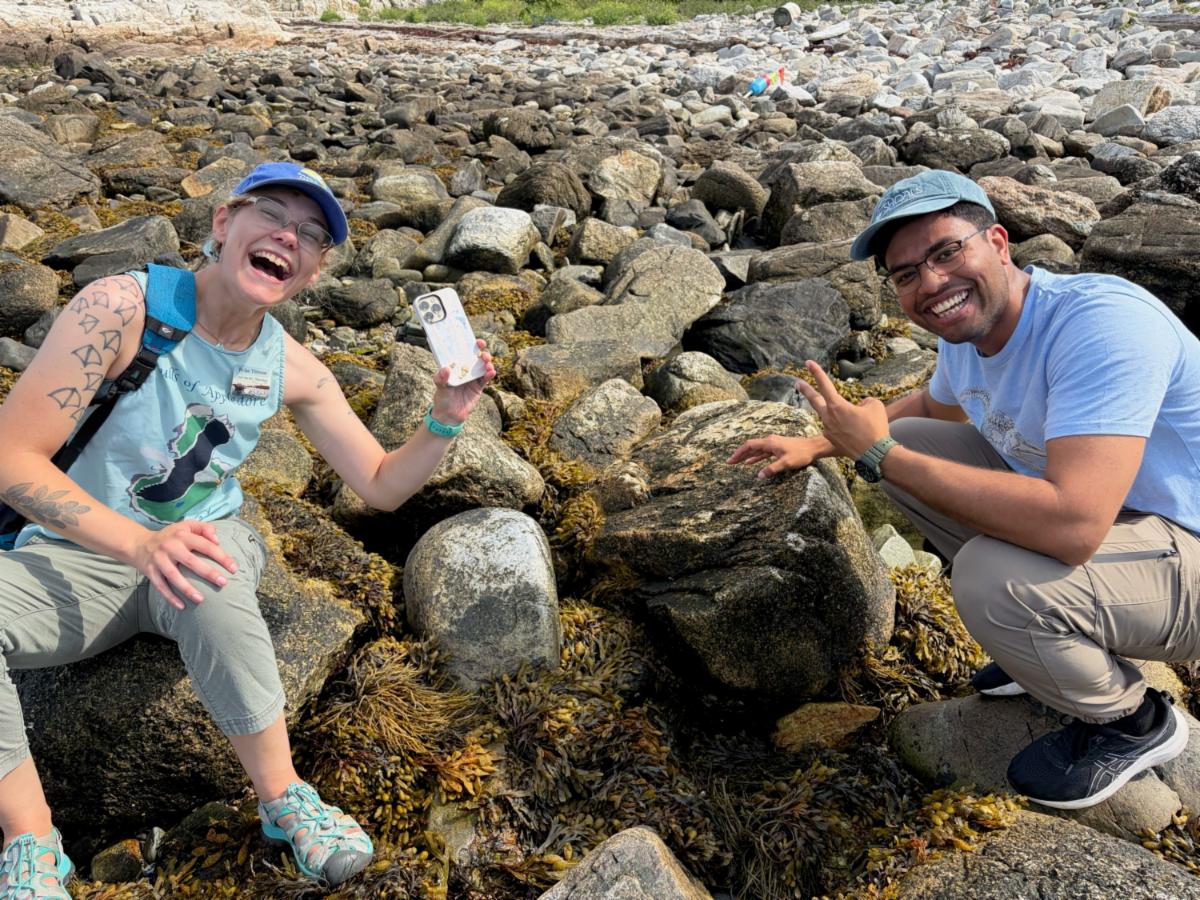
Each summer a team of researchers comes to the island to band some of the Great Black-backed Gulls on the island. Because of several of the research questions, the team tries to capture unbanded members of mated pairs that will be focal nests for their work and later the chicks from those nests. Nest traps are used in May to capture the adults, and in July the chicks are hand captured. This takes a team to find and carefully corral the young. During one of these chick banding sessions, the lead bander, Dylan Titmuss, lost their phone and was unable to locate it. When they returned two weeks later, the team found it in the intertidal. Despite almost 30 tide cycles, the phone charged and worked when it was turned on. In case you were wondering, it was an iPhone.
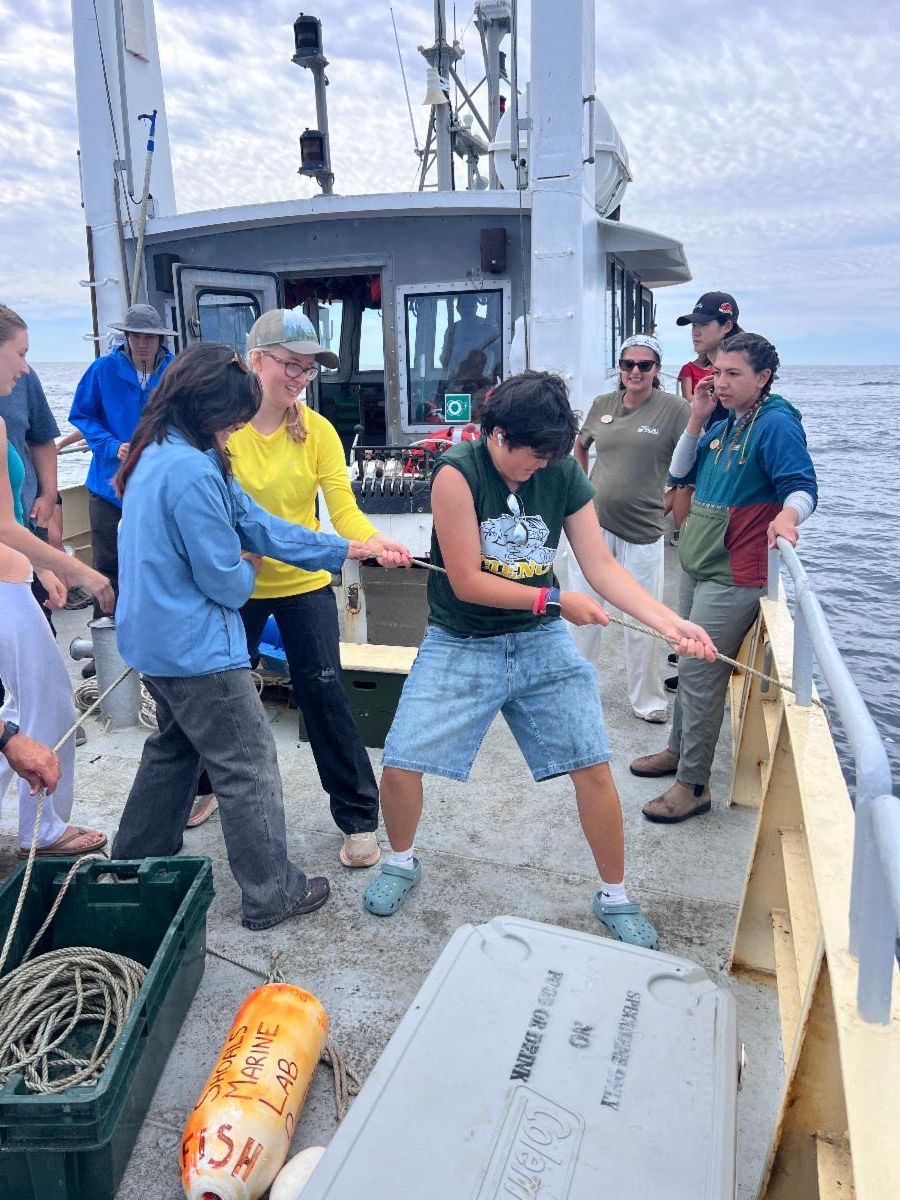
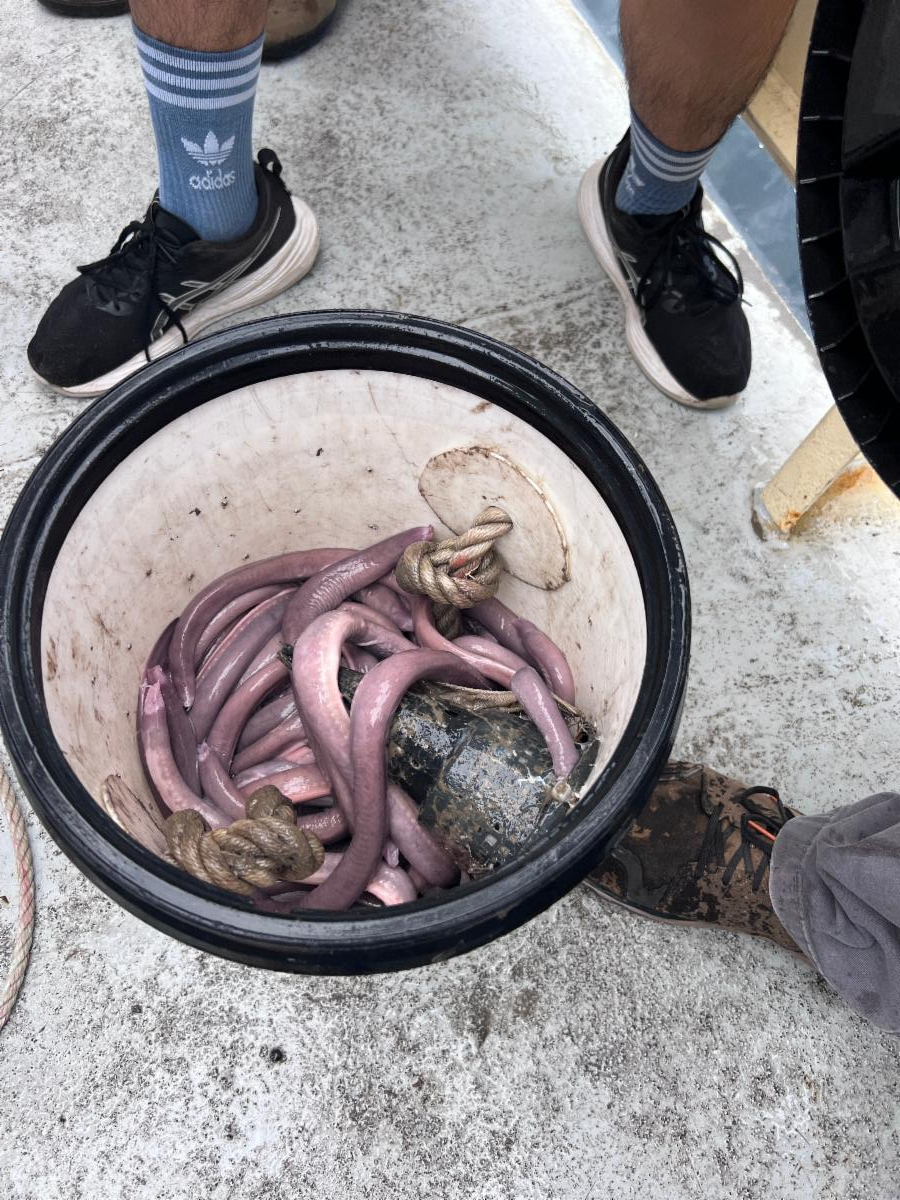
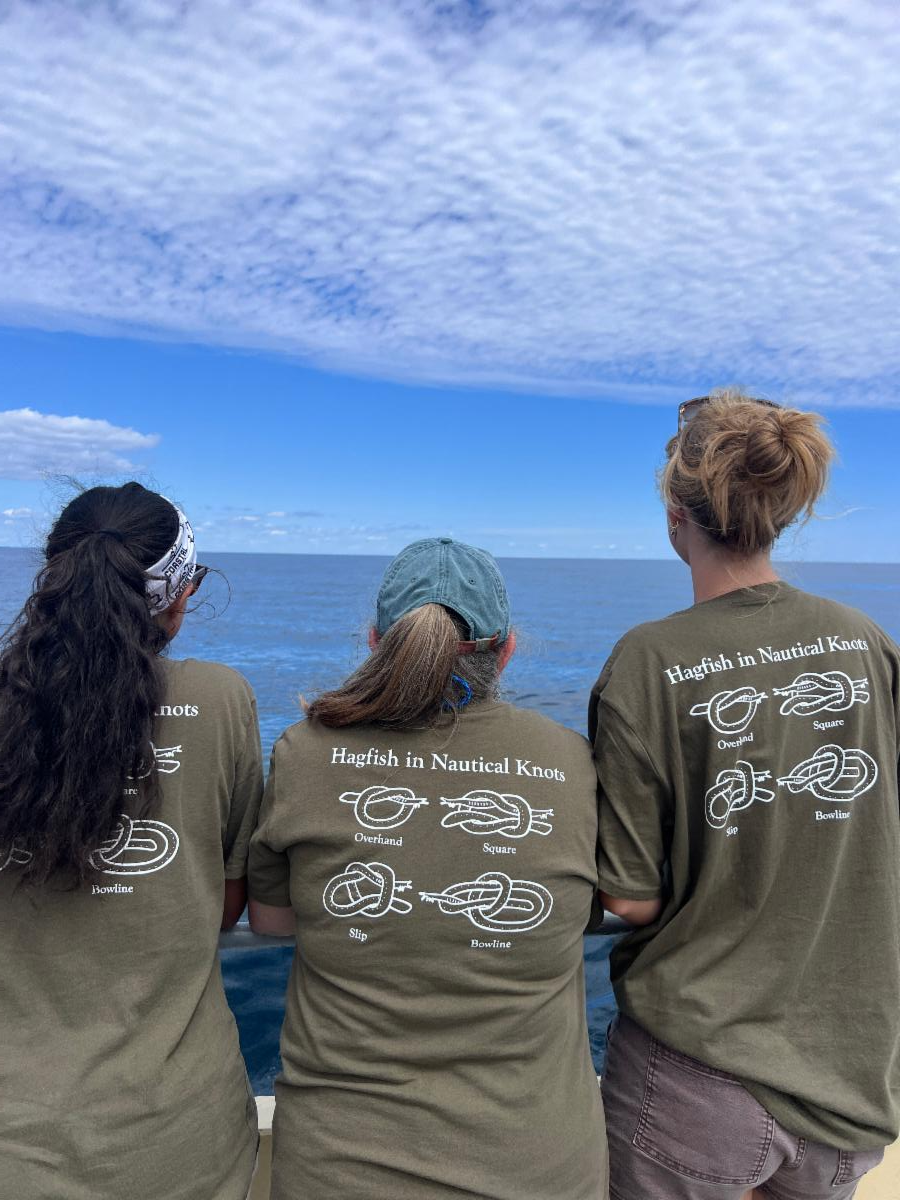
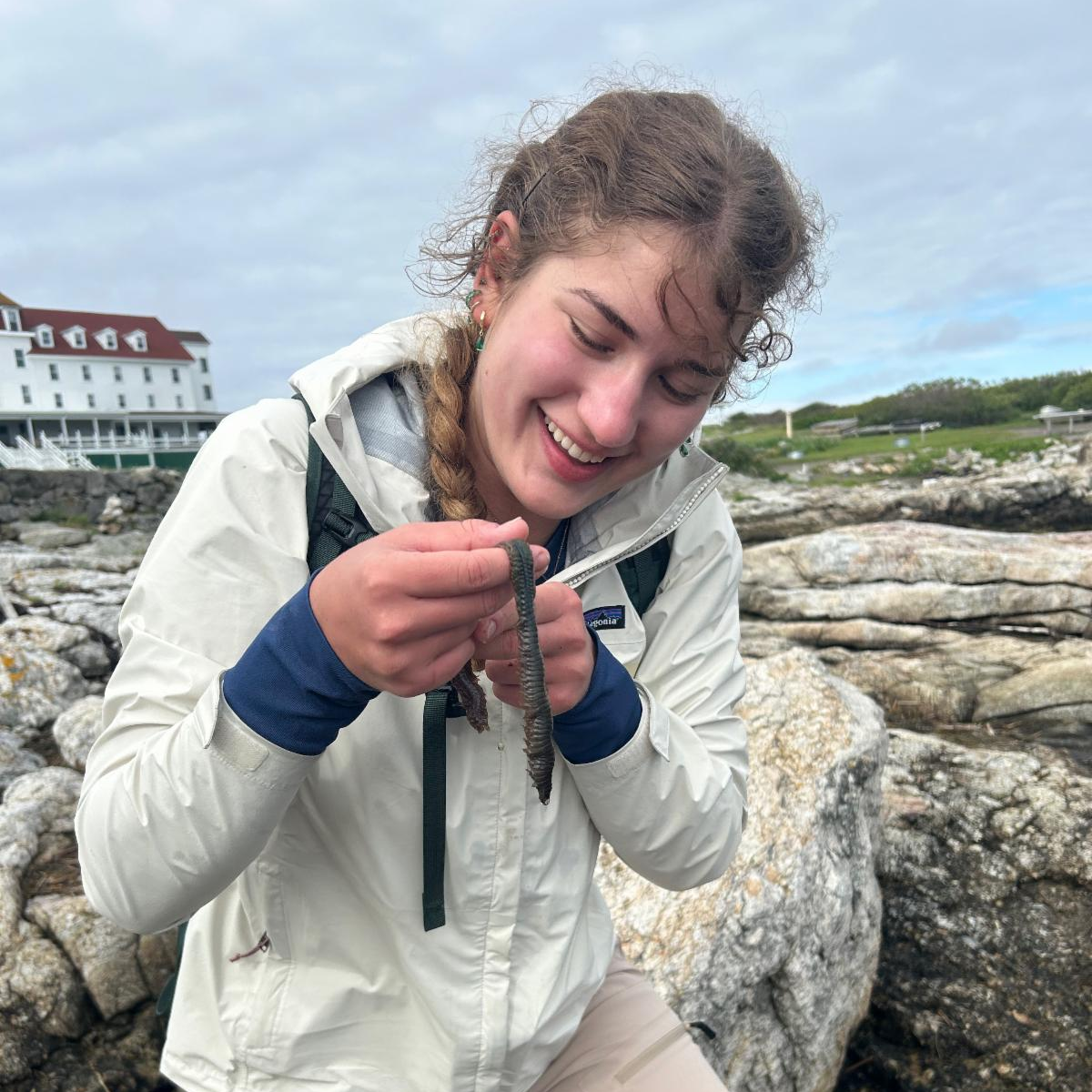
| | We try to provide students with unique experiences at Shoals. One of them is to see hagfish, which are at the base of the vertebrate evolutionary tree. Hagfish are adapted to live at depth, which means cold, salty water with no light. The students are pulling up the trap by hand, and we caught these in over 350 feet of water. Hagfish are scavengers, living on dead and dying organisms on the ocean floor. They are sometimes called slime eels because their defense against predation is deploying a massive amount of slime from their slime pores (feel free to google this and look for our own Doug Fudge explaining it). Many Shoalers know hagfish from our (back by popular demand) hagfish in nautical knots t-shirt. Now these students have seen the real thing, and, yes, we saw them in knots. | | Hammock anyone? Hammock everyone? | | |
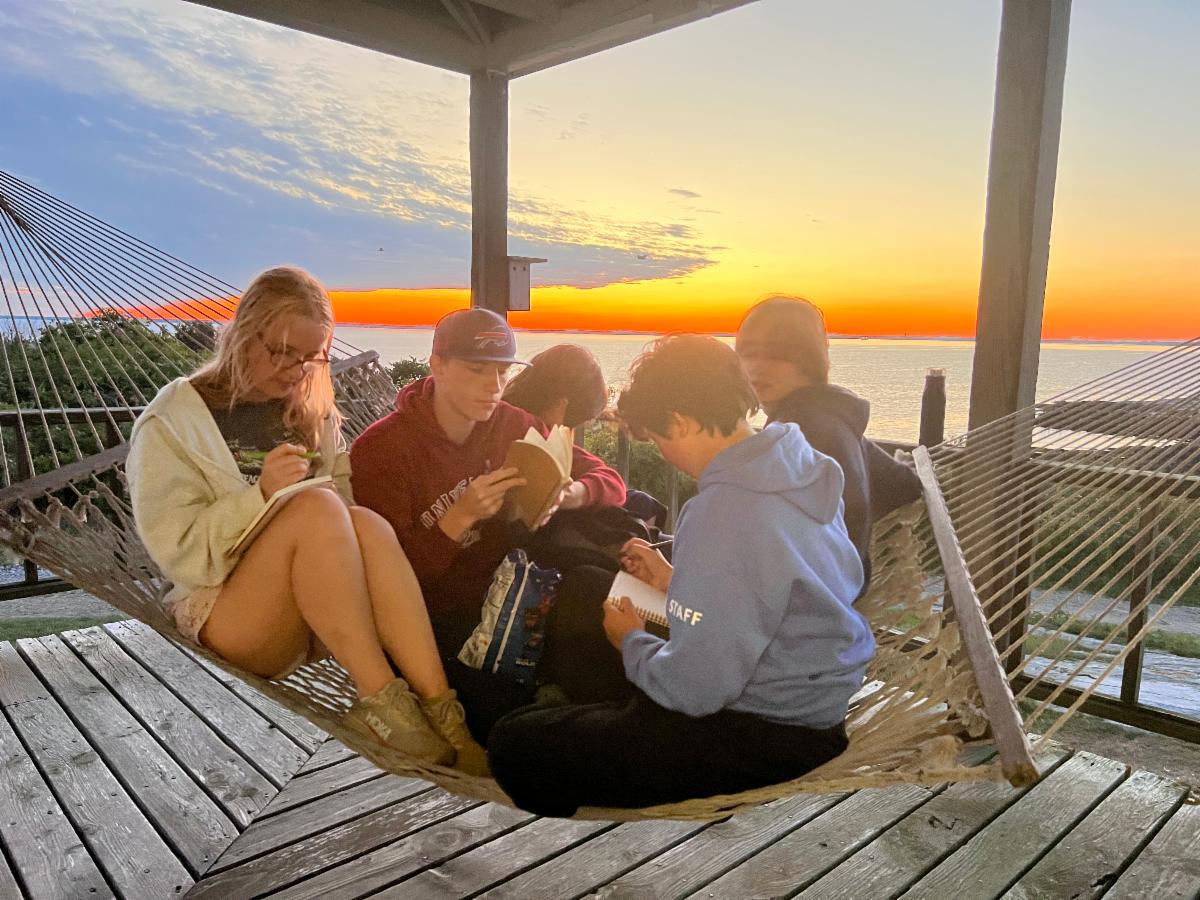
Anyone who has taken or taught a class on Appledore knows that learning opportunities abound and that the days are long. When Dave and Sara taught a section of Marine Vertebrates of the Gulf of Maine, their students spent as much time as possible in the hammock on the porch of Laighton. We now know that at least 6 students can enjoy the hammock simultaneously. We also know that students don’t have to leave the hammock to add items to their field journals. And, like countless students before them, these students loved to watch the sunset from any porch on the island.
| |
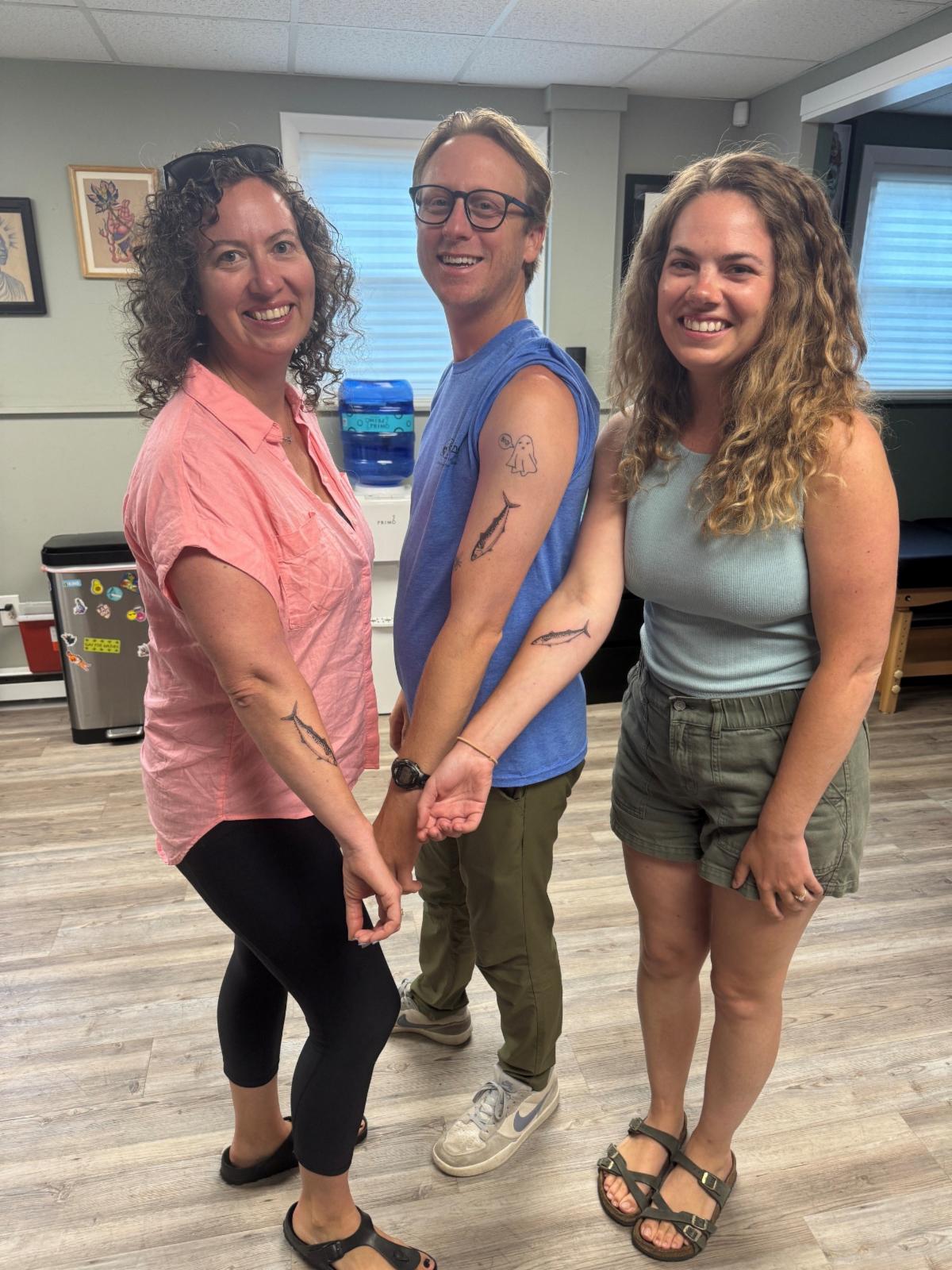
| | | We often talk about how transformative the Shoals’ classes are. We are proud of the immersive, hands-on experiences we provide students; the community we create; and the behaviors we encourage to live more sustainably. While we hope that students’ lives will be changed in some way when they leave, we often don’t talk about how Shoals leaves a mark for our faculty and staff. This year, the faculty teaching the Shark Biology and Conservation class chose to get matching mackerel tattoos after their class. Mackerel are a core component of their course. The faculty assess how well students will do on a 12-hour shark fishing excursion during a short mackerel fishing trip, teach students how to draw blood and practice determining stress hormone levels using mackerel, use mackerel for bait during shark fishing, and always eat some of Eugene Won’s excellent smoked mackerel while they are on the island. Heather, Maggie, and Jake form a (small) school during their two weeks on the island, they work extremely closely together preparing for their field work and it is always clear how incredibly close they are, which is now even more evident with their mackerel tattoos. Truly, Shoals leaves a mark, and, when you see them next, please say “School up!” and they will.
| | Shoals Undergraduate Research Group | | |
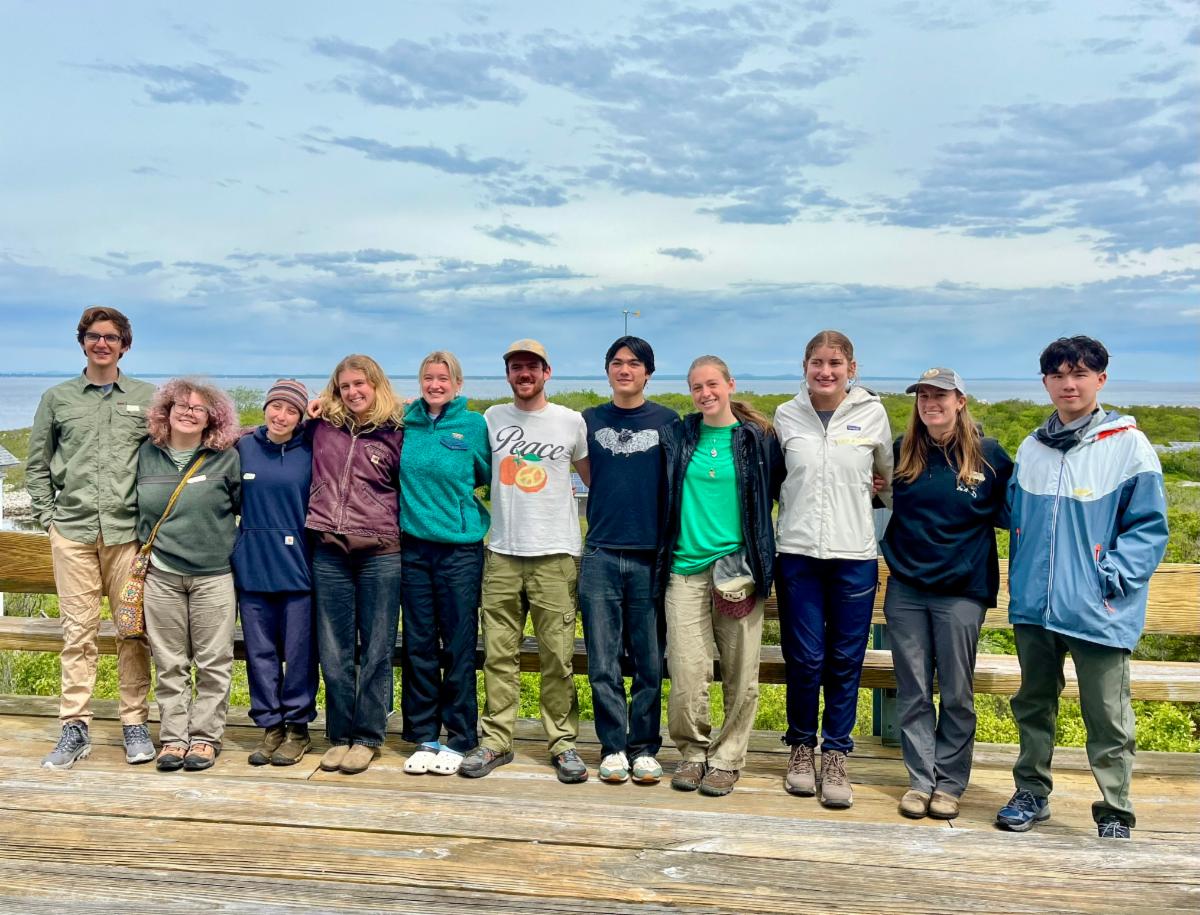
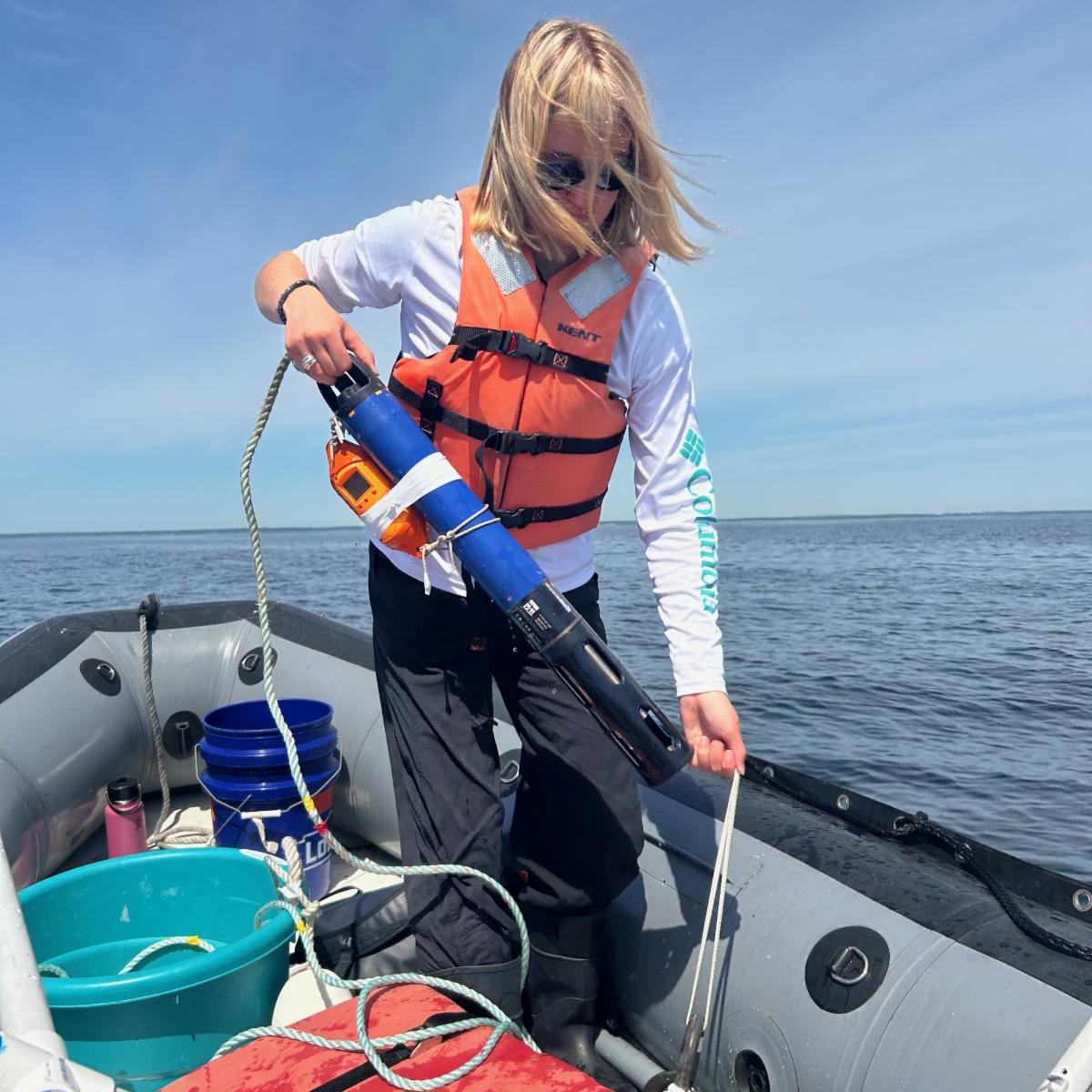
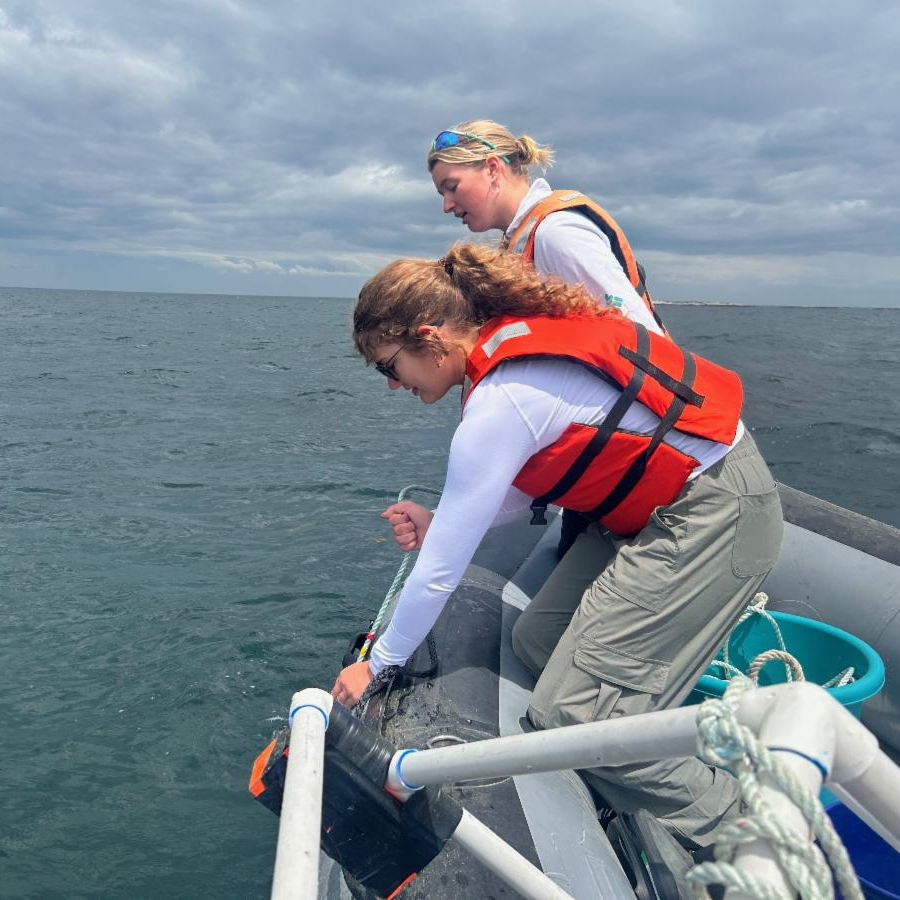
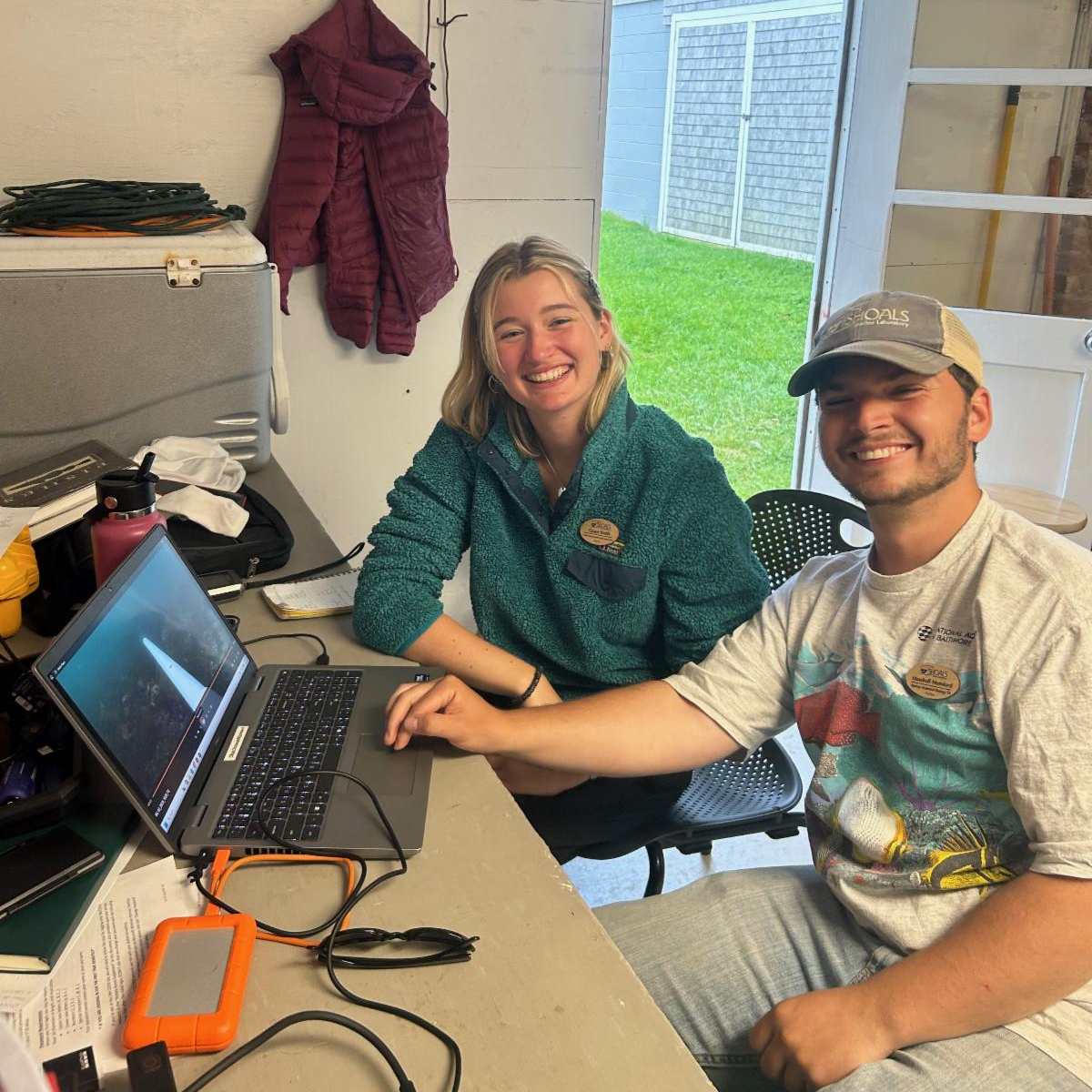
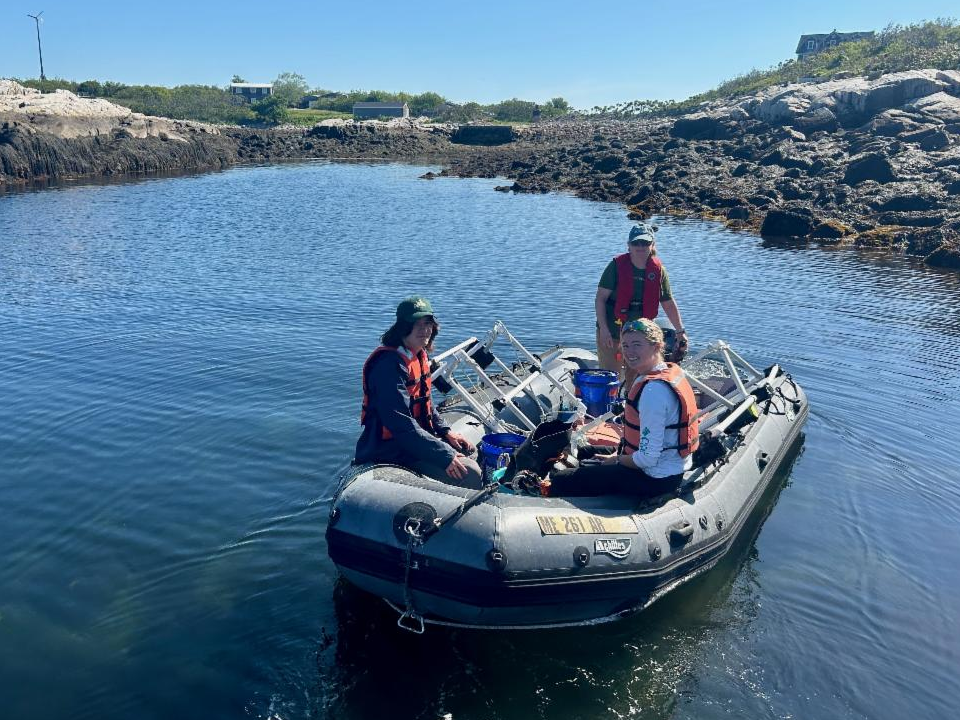
On May 29, our SURG program began with an orientation weekend when the SURG interns and their subject matter mentors spent time together on the island. They learned about how Shoals operates, and they developed their own community agreement to set how they would work and live together. Over the following 10 weeks, they met daily with our Scientists-in-Residence, Drs. Mike Sigler and Rebecca Atkins, who ensured that they were making progress, had assistance in the field when needed, and could trouble-shoot quickly. Each week they had a longer meeting where they learned a range of common skills, including generating testable hypotheses, data analysis, data visualization, presentation skills, and even effective resumes and CVs. The students quickly shifted from trainees to trainers, sharing their knowledge and skills with each other, students in SML classes, and visitors to the lab. In the blink of an eye, they started giving presentations, first as lightning talks that gave an overview of their project and then as practice talks for their presentations. Their practice talks were given on Star Island, accompanied by the opportunity to get ice cream there. Then on August 8, we held our annual SURG symposium. Each student gave a 12-minute talk about the research they had completed and how their work fit into Shoals’ ongoing, long-term research program. Two days later, they left the island. Liza had brought a pocket trumpet and played pomp and circumstance as the Kingsbury left Appledore.
It is important to recognize all the people who contribute to the SURG program. Individual students are mentored by subject matter experts, including Nadine Lysiak, Andrea Bogomolni, Taylor Lindsay, Jennifer Dijkstra, Kylla Benes, Lisa Sette, Liz Craig, Gemma Clucas, Olivia Smith, Brittany Jellison, Kristen Covino, Nichola Hill, Dylan Titmuss, Tom Lippmann, Melanie Carolan, Alexis Mychajliw, Amy Fowler, April Blakeslee, Carrie Keogh, Matthew Ayers, Celia Chen, and Andrea Graham. Shoals’ engineers, captains, and programs team provide a range of logistical and field assistance. The kitchen team provides special snacks and opportunities to create fun food in the kitchen. Dave Buck ensures that the students work hard, learn a lot, have needed field assistance (including his own regular pre-breakfast stints helping different interns), and also have a lot of fun and special experiences on Appledore. We are grateful to all who support this amazing program and these special students.
| | | Grace Webb,
Connecticut College, 2027 | Investigating the Spatial Distributions of Benthic Communities and Oceanographic Conditions around the Isles of Shoals | | Ida Landecker,
Reed College, 2027 | Growth and Survival in the Great Black-backed Gull | | Erin Karas,
Dartmouth College, 2027 | Respiration Changes in Blue Mussels Under Pressure of Two Invasive Species | | Ethan Hsieh
Emory University, 2028 | Measuring the Weight of a Relationship: The Entangled Ecology of Vertebrata lanosa and Ascophyllum nodosum | | Matthew Monroe,
Dartmouth College, 2027 | Infection or Appetizer? Trematode Parasite Dynamics in Barnacles and Mussels | | Belin Tate,
Middlebury College, 2027 | Muskrats on the Move!: How the Landscape of Fear Shapes Muskrat Movement on Appledore Island | | Aurora Wackford,
Dartmouth College, 2026 | Seal Diet and Haul Outs on Duck Island | | Liza Walker,
University of Tampa, 2028 | Tag! You’re it: A Look into Potential Biological Tags of Scomber scombrus | | Alex Harris,
Dartmouth College, 2027 | Black Guillemot Chick Provisioning and Colony Density | | Maya Cabrera,
Princeton University, 2027 | A Tale of Two Crabs: Host Susceptibility and Immune Responses to Microphallus similis | | Charles Rogers,
Cornell University, 2028 | What Makes a Hole in One for Black Guillemots? Assessing Carrying Capacity and Occupancy on Appledore Island | | |
On-Shore Gathering of the SML
Alumni & Friends Association
| | |
Saturday, September 26, 2026
Portsmouth, New Hampshire
Tours 10 am-1 pm
Gathering 1-4 pm
This year we are trying something different! The Council of the Alumni and Friends Association thought it would be nice to give all Alumni and Friends the chance to enjoy a bit of Portsmouth during the Fall season, see old friends, make new friends…. and not have to worry about catching a boat!
The On-Shore Gathering of SML Alumni and Friends will be held from 1 to 4 pm on Saturday, Sept. 26, 2026 at The Hammer (formerly The Rusty Hammer), 49 Pleasant St, Portsmouth, NH. Hot and cold appetizers (with veggie options) will be served, and a full bar will be available. The cost (which covers food, two drinks, and gratuity) will be $65/person, or $35/person for course alumni from the past 5 years. Dr. Sara Morris will give a brief summary of the 2026 season.
We have also scheduled two optional pre-event tours from 10 am-1 pm with no addition cost:
1) Walking Tour of Historic Portsmouth conducted by Ron Sher SML ’77 who works with the Portsmouth Historical Society
2) Tour of the Portsmouth Athenaeum (lots of Isles of Shoals artifacts) conducted, via special arrangement, by Athenaeum staff (thank you Wendy Lull SML ’73 for making this connection).
Space is limited for both tours, so register early.
Please fill out the Registration Form (includes payment and an indication of your interest in the Pre-Event Activities). The DEADLINE for Registration is Friday, September 4.
If you have questions, please contact Jackie Webb, AFA Chair, at jfw22@cornell.edu.
| | |
Shoals Marine Laboratory is jointly operated by the
University of New Hampshire and Cornell University.
| | Follow Shoals on Social Media! | | | | |