Newsletter — April 30, 2026 | | |
WR remembers Senator Sam Hunt’s legacy of public service
WR is saddened to learn of the passing of longtime Washington State legislator Sam Hunt. Senator Hunt dedicated decades of service to the people of Washington, and his steady presence in Olympia reflected a deep commitment to thoughtful policymaking and public service.
Throughout his career, he was known for his collaborative approach and his willingness to engage on complex issues impacting communities across the state. WR appreciated his openness to dialogue on matters affecting Washington’s business climate, workforce development, and local economies, as well as his respect for the role of employers and employees in shaping a strong and resilient state economy.
Senator Hunt’s contributions extended well beyond individual policy debates. He was a consistent and respected voice in the Legislature, known for his integrity, institutional knowledge, and dedication to serving his constituents with care and consistency.
WR extends its condolences to his family, friends, colleagues, and all who had the privilege of working with him. His legacy of public service will be remembered throughout Washington.
| | |
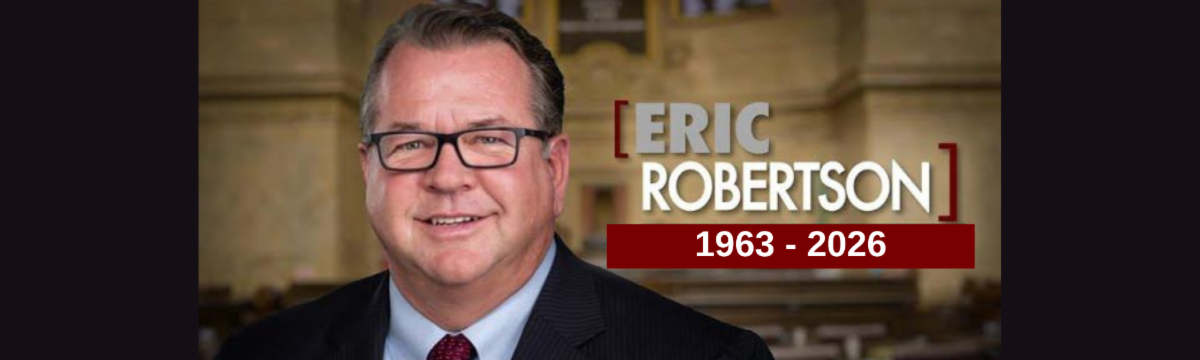
WR Honors the Life and Service of Former Representative Eric Robertson
WR is deeply saddened by the passing of former State Representative Eric Robertson. Throughout his career in public service, as a legislator, law enforcement leader, and advocate for safer communities, Eric brought steady leadership, integrity, and a deep commitment to the people of Washington. WR appreciated his willingness to listen to the concerns of employers, retailers, and the communities they serve, and his understanding that strong local businesses are essential to vibrant neighborhoods.
We extend our heartfelt condolences to Eric’s family, friends, colleagues, and all who served alongside him. His legacy of service will be remembered with gratitude.
| | |
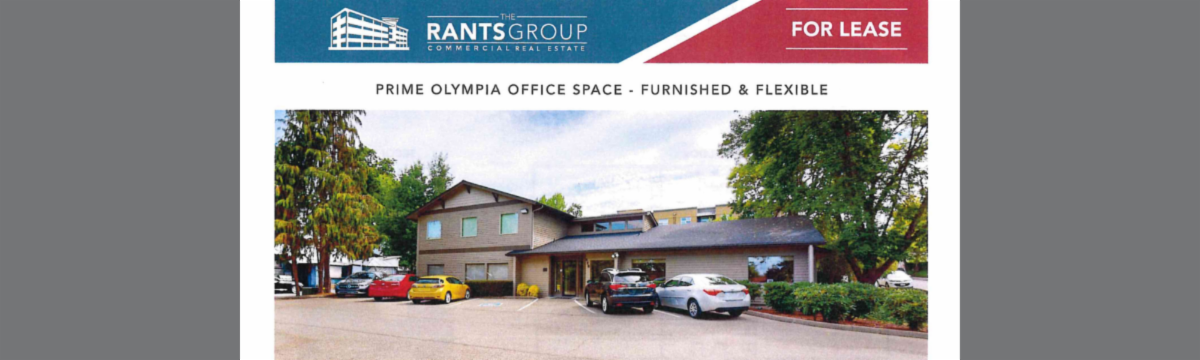
WR offers flexible office space in prime Olympia location
WR is leasing professional office space at its building located at 618 Quince St. SE in Olympia, just minutes from I-5 and Downtown Olympia. The available first-floor offices offer a convenient, flexible option for small businesses, consultants, nonprofit partners, or professionals looking for a well-located workspace in the capital city.
The building currently features three private office suites, ranging from approximately 100 to 120 square feet. Suites are partially or fully furnished, with lease rates from $400 to $600 per month, full service. Each office includes one parking space, and street parking is also available nearby.
The space offers strong visibility, easy access, and a professional setting within the WR Building. Tenants are responsible for their own in-suite internet and janitorial services.
For leasing information, interested tenants may contact Zeke Rehn, Managing Broker with The Rants Group, at (360) 915-5678 or zeke@rantsgroup.com.
Full leasing document
| | |
POLICY
ECONOMY
ON THE LOCAL FRONT
POLITICAL NEWS
RETAIL THEFT & PUBLIC SAFETY
IN THE NEWS
TRENDS
| | |
Expanded Fair Chance Act takes effect July 1 for most employers
The Expanded Fair Chance Act (EHB 1747), passed in 2025, takes effect on July 1, 2026, for employers with 15+ employees. All remaining employers must comply by January 1, 2027.
This law significantly expands restrictions on how employers may use criminal history in employment decisions. Employers should proactively review and update hiring, promotion, discipline, and termination practices to ensure compliance.
Key Prohibitions for Covered Employers:
Employers may not:
- Obtain criminal records before first extending a conditional job offer,
- Taking a tangible adverse action based on
- Arrest record (with a narrow exception for pending adult charges),
- Juvenile conviction record,
- Adult conviction record, unless a legitimate business reason is clearly established.
Expanded Obligations for Employers:
Employers must provide a pre-adverse action notice with information on the record they rely on for the pending decision. In addition, employers must provide:
- An additional two business days for the applicant or employee to correct or explain the record.
- A written decision with specific documentation on the reason(s) for the final adverse tangible decision, including assessment of factors related to the criminal records, duties of the position, and consideration of all relevant records.
Enforcement and Penalties:
The Attorney General may use a stepped enforcement approach for the first three violations. Penalties are applied per aggrieved job applicant or employee for each violation.
Additional Allowances and Exception:
- Employers may disclose their intent to provide a conditional job offer subject to a criminal background check.
- Applicants/employees may voluntarily disclose their criminal background at any point during the application process.
- Employers subject to federal contracts requiring criminal background checks are exempt.
| | |
L&I invites input on Pregnancy-Accommodation Expansion rulemaking
SB 5217 (Healthy Start Act under RCW 49.92) passed in 2025 will take effect Jan 1, 2027. L&I is inviting input for rulemaking.
Key Changes Under SB 5217 (Effective Jan. 1, 2027)
-
Enforcement: Moves to L&I and adds a private right of action, allowing employees to file lawsuits directly
-
Employer Coverage: Expands from 15+ employees to all employers
-
Paid Breaks: Requires paid time (including travel time) to express milk if no on-site space is available
-
Unfair Practices Defined: Prohibits denying reasonable accommodation, forcing usage of leave instead, or taking adverse action
-
Medical Certification Limits: Employers cannot require documentation for milk expression or lifting limits under 17 lbs
L&I is inviting input to assist in their development of the scope of rules for this legislation.
- How should L&I clarify or further define the requirements for pregnancy-related accommodation in this rule?
- What factors should L&I consider in determining whether an accommodation causes “undue hardship” for an employer?
- What obligations or prohibited actions for employers should L&I define or clarify in this rule?
L&I will hold a virtual public feedback session on May 1, 2026, at 10:00 a.m. You can join the feedback session here.
| | |
Washington CEMA litigation expands after court ruling
One year after the Washington Supreme Court decision in Brown v. Old Navy LLC, litigation under Washington’s Commercial Electronic Mail Act has grown significantly. The court interpreted the 1998 statute to prohibit any false or misleading information in a commercial email subject line, not just deception about the nature of the message. This interpretation has led to a surge in class action filings.
Since the ruling, more than 100 lawsuits have been filed in Washington, often targeting retailers but also reaching hospitality, beauty, and other consumer brands. Plaintiffs frequently challenge promotional subject lines such as limited-time offers, free gifts, or discounted pricing claims. Statutory damages of $500 per email per recipient have created substantial exposure, with some claims reaching into the millions depending on distribution size.
Defendants have argued that these claims are preempted by the federal CAN-SPAM Act, but early court decisions have largely allowed cases to proceed. Key legal questions, including materiality and consumer reliance, remain unresolved.
In response, Washington enacted HB 2274, signed March 23, 2026, which will take effect June 11, 2026. The law reduces statutory penalties to $100 per violation and adds a scienter requirement for false or misleading claims.
While litigation continues and courts have not yet resolved key issues such as federal preemption and materiality, WR and its partners continue to monitor implementation and advocate for clarity in email marketing standards across Washington.
BallardSpahr.com
| | |
Retail trends show resilience amid policy and workforce shifts
Recent updates from the National Retail Federation (NRF) highlight both opportunities and challenges shaping the retail sector.
A new federal tariff refund portal opened in mid-April, allowing importers to file claims related to certain IEEPA tariffs. Early feedback from retailers has been varied as businesses work through the process. U.S. Customs and Border Protection is addressing technical and administrative issues as they emerge, while NRF continues providing guidance to retailers navigating the system.
Consumer spending also remains strong in key seasonal categories. NRF projects Mother’s Day spending will reach a record $38 billion this year, up from $34.1 billion in 2024 and above the previous high of $35.7 billion in 2023. While many consumers remain mindful of fuel prices and broader economic uncertainty, spending tied to family celebrations and personal connections continues to show resilience.
Workforce development remains another major focus across the industry. NRF recently convened senior talent leaders from 25 retail brands in Phoenix to discuss workforce planning, talent mobility, and hiring strategies. Leaders also explored how artificial intelligence is increasingly influencing retail operations, strategy, and long-term workforce needs.
| | |
Mother’s Day spending projected to reach record $38 billion
Mother’s Day spending in the United States is expected to reach a record $38 billion this year, according to a National Retail Federation (NRF) and Prosper Insights & Analytics survey. This surpasses last year’s $34.1 billion and the previous record of $35.7 billion set in 2023.
An estimated 84% of U.S. adults plan to celebrate the holiday, with average spending reaching $284.25 per person, also a record high. Shoppers are primarily purchasing gifts for mothers and stepmothers (54%), followed by wives (22%) and daughters (13%).
Top shopping destinations include online retailers and department stores, both at 33%, followed by specialty and discount stores. Popular gift categories remain consistent, led by flowers (75%), greeting cards (74%), and special outings such as dining experiences (63%). Gift cards and clothing are also common choices.
Total spending is highest on jewelry at $7.5 billion, followed by experiences at $6.4 billion and electronics at $4.4 billion. Experience-based gifts continue to grow, with about one-third of consumers planning to give event-based experiences.
WR notes that these trends reflect continued consumer willingness to prioritize meaningful and experience-driven gifts despite broader economic uncertainty.
| | |
Washington receives fiscal warning from Moody’s
Washington’s long-held top-tier credit rating remains intact, but a recent outlook revision from Moody’s signals growing concern about the state’s financial path. The credit rating agency changed Washington’s outlook from stable to negative, citing increased reliance on reserve funds, one-time budget solutions, and uncertainty around future revenue sources.
While Moody’s reaffirmed the state’s AAA bond rating and noted Washington’s strong economy, it warned that continued structural budget imbalances could reduce the state’s ability to respond to economic downturns or unexpected expenses.
State leaders recently approved a $79.4 billion spending plan that includes the use of $880 million from rainy day reserves and a $375 million transfer from infrastructure-related accounts to help balance the budget. At the same time, reserve levels are projected to decline significantly over the next several years.
A lower credit rating could carry real financial consequences. State officials estimate that even a modest downgrade could raise borrowing costs, adding about $60 million annually in debt expenses based on Washington’s typical $4 billion in annual bond issuances.
For businesses and taxpayers alike, the warning highlights the importance of long-term fiscal stability, sustainable budgeting practices, and maintaining the financial flexibility needed to support Washington’s economy in the years ahead.
| | |
Tariffs continue to shape retail outlook in late April
As April 2026 comes to a close, tariffs remain one of the most significant forces influencing the retail sector. While the U.S. Supreme Court struck down broad tariffs imposed under emergency powers earlier this year, trade policy has continued to evolve through narrower authorities, including targeted tariffs on steel, aluminum, copper derivatives, solar imports, and select manufactured goods. Those changes have kept import costs elevated across many retail categories.
For retailers, the biggest challenge is navigating uncertainty. Many businesses had anticipated relief following the court ruling and the launch of a federal refund system for previously collected tariffs. However, newly imposed duties and ongoing trade investigations have created a shifting landscape that continues to complicate pricing, sourcing, and inventory planning.
The impact on consumers has been uneven. Some retailers have absorbed higher costs to remain competitive, while others have passed portions of those costs in the form of higher prices on goods such as appliances, electronics, apparel, and home products. Economists note that tariffs often act as a cost burden on importers first, with downstream effects varying by product category and supply chain flexibility.
Looking ahead, retailers are expected to continue diversifying suppliers, reworking logistics networks, and closely monitoring trade policy developments. As of late April, tariffs are no longer just a trade issue. For retail businesses, they are a day-to-day operational consideration that affects margins, planning, and long-term strategy in a still-evolving economic environment.
| | |
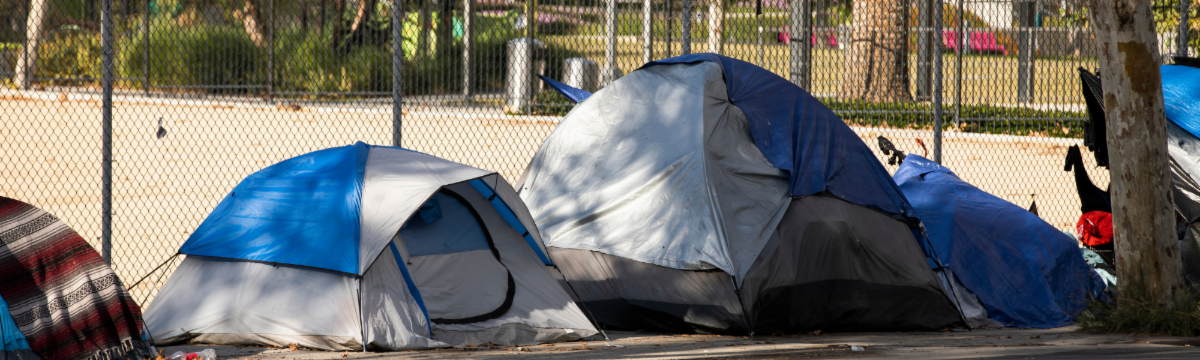
Regional Homelessness Authority on the rocks
After its creation with much fanfare a mere 7 years ago, the Regional Homelessness Authority (“RHA”) could be dismantled if Seattle City Councilmember Maritza Rivera and King County Councilmember Rod Dembowski have their way. “Cats get nine lives . . . This organization has had 10 — one more than it should have,” Councilmember Dembowski declared.
The push to eliminate the agency was triggered by a recent audit that found the $200 million RHA to be $48 million in debt, with another $8 million in spending without meaningful documentation. The audit also questioned $4 million in administrative expenses.
Much of the debt appears to flow from the RHA’s dubious accounting system. The agency makes payments to housing developers but often delays invoicing for reimbursement by as much as 16 months. The audit also found that agency staffers were approving contracts even though they did not have the authority to do so.
Perhaps tellingly, both Seattle Mayor Katie Wilson and King County Executive Girmay Zahilay have announced their own plans to build emergency shelter for the homeless. Neither Wilson nor Zahilay have weighed in on the fate of the RHA.
The RHA has had its skeptics over the years. Three years ago, in his column entitled “What’s the Point of the Regional Homelessness Authority?”, Danny Westneat observed:
“Something’s just off about the whole enterprise . . . There’s a chance to reset its work and direction. I’m also wondering: Should we keep this agency at all?”
With Seattle and King County providing 99.85% of the RHA funding, the agency has fallen far short of being a “regional” organization, as most suburban cities have refused to join.
| | |
Assistance available for December storm recovery
Washington residents, businesses, and nonprofit organizations impacted by the December 2025 storms and flooding have several opportunities to apply for recovery assistance through state and federal programs.
The Federal Emergency Management Agency, or FEMA, is accepting applications for Individual Assistance through June 10, 2026. Eligible applicants in designated counties may receive support for temporary housing, essential home repairs, personal property losses, and other disaster-related expenses. Applications can be submitted online at DisasterAssistance.gov, by phone, or through the FEMA mobile app.
Separately, Washington state, in partnership with The Salvation Army, is offering cash assistance to qualifying disaster survivors. Available support may include household needs grants for urgent expenses and home replacement assistance for qualifying recreational vehicles or campers used as primary residences. The deadline to submit a state Needs Assessment Form is April 27, 2026.
In addition, the U.S. Small Business Administration is offering low-interest disaster loans to businesses, private nonprofit organizations, homeowners, and renters affected by the storms. These loans can help cover property damage, economic losses, and rebuilding costs.
WR encourages members in impacted communities to review available programs and apply separately for each source of assistance, as state, federal, and loan programs each have distinct eligibility requirements and application processes.
Three Ways to Apply for FEMA Disaster Assistance – YouTube
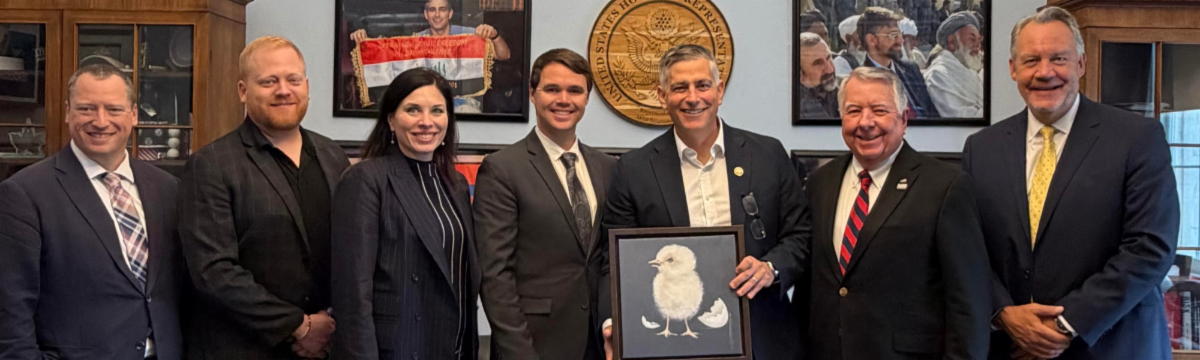
| | WA State Delegation – Chester Baldwin, Kenneth Katzaroff, Alesha Shemwell (WR Interim CEO), Christian Decker, Rep. Michael Baumgartner, Stephen Pohl, Jim Hill (ICSC) | |
ICSC Fly-In spotlights Washington’s retail impact
ICSC’s Federal Fly-In was held April 20–22, 2026, in Washington DC, bringing together members of the marketplace and retail real estate industry for three days of policy engagement on Capitol Hill. The program gave participants opportunities to meet directly with congressional offices, attend legislative briefings, and participate in committee discussions focused on industry priorities.
Alesha Shemwell, Interim CEO of WR, attended alongside other industry leaders to advocate for policies that support retail, marketplaces, and the communities they serve. For Washington state, the industry’s impact is significant: in 2024, Washington had 2,318 marketplaces, 37,011 marketplace tenants, a 96.7% occupancy rate, and 678,593 jobs tied to the sector, representing 13.8% of total jobs statewide. Marketplaces in Washington also generated $174.7 billion in sales, equal to 20.4% of state GDP, along with $11.4 billion in state sales taxes, $655.2 million in property taxes, and $620 million in construction and redevelopment spending. The data also underscores the importance of small businesses, which make up 70% of shopping center tenants.
Delegates engaged federal policymakers on issues affecting the retail and marketplace sector, including economic competitiveness, tax and regulatory impacts, commercial development, and public safety concerns such as organized retail crime. Conversations also included asking for support of CORCA, highlighting ongoing efforts to improve retail crime coordination, prevention strategies, and information sharing among public- and private-sector partners at the federal level.
The Washington data provided a clear backdrop for these discussions, illustrating how marketplace activity supports jobs and local economies across every congressional district. In 2024, Washington’s 10 congressional districts each reflected substantial marketplace employment, including 89,133 jobs in District 5, 76,747 jobs in District 2, 75,343 jobs in District 7, and 71,984 jobs in District 10. District-level data also showed billions in sales-tax activity and millions in property-tax contributions, reinforcing the importance of retail real estate to both state and local government revenues.
Additional sessions explored environmental policy considerations, economic development trends, and the role of marketplaces in strengthening community vitality.
Attendees participated in structured Capitol Hill meetings that emphasized the value of direct advocacy and relationship-building with federal decision makers. The Fly-In concluded with continued dialogue between industry representatives and congressional staff, centered on shared priorities: strengthening local economies, improving safety, supporting small businesses, and advancing sustainable growth across the retail and commercial real estate landscape.
| | |
Retail theft funding veto raises concerns across Washington
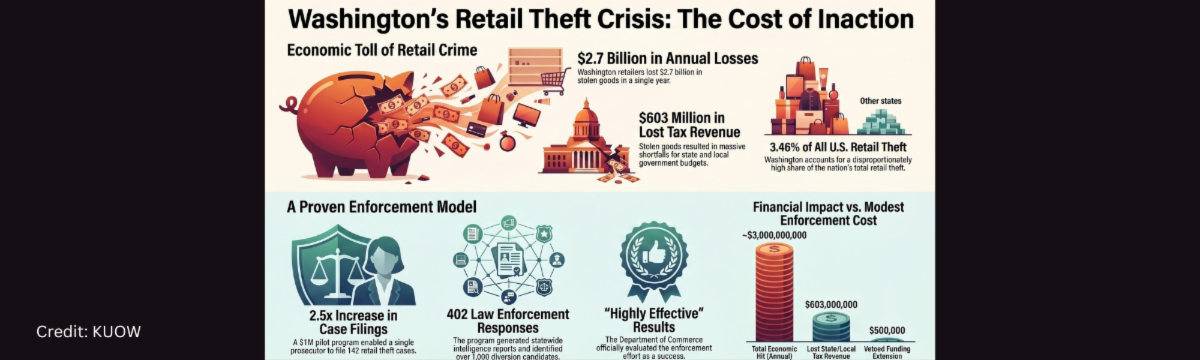
Washington retailers and business leaders are raising concerns after Gov. Bob Ferguson vetoed $500,000 in state funding that was intended to continue a pilot program supporting local efforts to address organized retail theft.
The funding was removed as part of broader budget decisions tied to a reported $2.3 billion state shortfall. The Governor’s office said the veto was necessary to preserve core public services.
Retailers say theft remains a growing challenge for businesses of all sizes. Some stores have adopted new loss prevention strategies, including limiting access to high-demand merchandise, but many report that organized theft groups simply shift their focus to other products.
WR has noted a continued rise in organized retail theft incidents statewide, affecting both independent retailers and larger chains. Business leaders warn that reduced funding for enforcement efforts could make it more difficult for local jurisdictions to investigate and prosecute these crimes.
| |
At the same time, state leaders point to ongoing work through Washington’s Organized Retail Crime Task Force, launched in 2023, which continues to investigate cases and pursue prosecutions tied to large-scale theft operations.
The funding debate highlights the continued need for coordinated solutions to protect retailers, employees, and consumers
King5.com
| | |
WR strengthens local connections in the Tri-Cities and Yakima
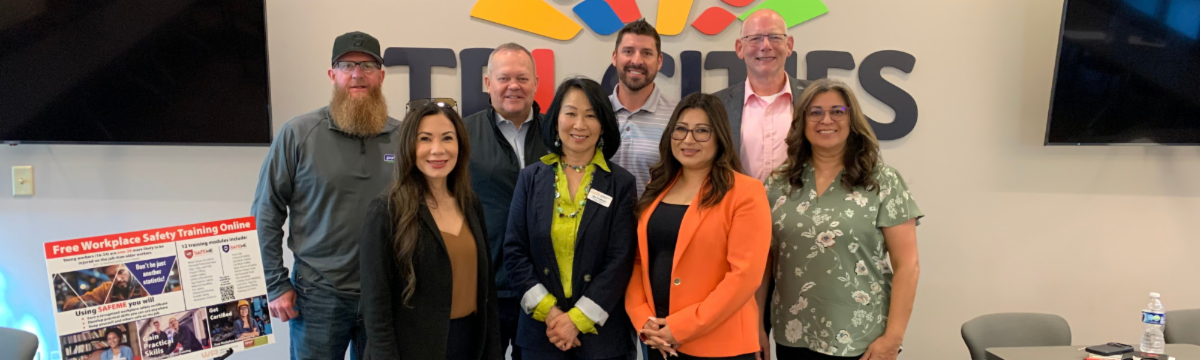
During the legislative interim, WR values opportunities to connect with members, partner organizations, and legislators to hear local perspectives and strengthen relationships across the state. That is why we appreciated the invitation from Tri-City Regional Chamber to present this week on Employment Law: What Just Happened in Olympia, and What It Means for Your Business.
Rose Gundersen, WR’s State & Local Government Affairs Associate, provided an overview of major employment laws passed in 2026 and their potential impact on employers. Matt Boehnke and Nikki Torres also joined the discussion, along with approximately 20 local employer organizations. Together, they shared insights from recent legislative sessions and encouraged continued grassroots advocacy to help shape policymaking that delivers intended benefits without creating unnecessary operational complexity.
The Tri-Cities region continues to demonstrate strong economic momentum and community vibrancy. Retail centers, downtown districts, and new housing developments reflect continued growth across the area’s four major cities. The Tri-Cities Visitor Center has also helped attract tourism through cultural and sporting events. In 2025, the local IRONMAN 70.3 Tri-Cities event received Best Run Course in the World recognition among all IRONMAN® 70.3® races.
Gundersen also spent time in Yakima attending a combined legislator town hall for the 14th and 15th Legislative Districts. She also met with our advocacy members and the Greater Yakima Chamber of Commerce to explore additional partnership opportunities and strengthen the region’s voice in Olympia.
As these important regions continue to grow, WR remains committed to investing in relationships that support effective advocacy and ensure local voices are represented in Olympia.
| | |
Best Buy names next CEO
Best Buy has announced a leadership transition, naming Jason Bonfig as its next Chief Executive Officer, effective October 31, at the close of the company’s third quarter. Bonfig will succeed Corie Barry, who is stepping down after seven years as CEO and will remain in an advisory role for six months to support the transition.
Bonfig becomes the sixth CEO in Best Buy’s 60-year history. A longtime company leader, he joined Best Buy in 1999 and currently oversees key areas of the business, including merchandising, ecommerce, marketing, supply chain operations, Best Buy Canada, and the company’s retail media network. He also recently led the launch of Best Buy’s online Marketplace in the United States, a major part of the retailer’s growth strategy.
During Barry’s tenure, Best Buy navigated major shifts in consumer behavior and broader economic challenges while continuing to expand its services and technology offerings. The company also strengthened employee engagement and advanced initiatives in sustainability, repair, trade-in, and recycling.
Best Buy reported $41.7 billion in revenue for fiscal 2026 and operates more than 1,000 stores across North America with a workforce of more than 80,000 employees.
The leadership change signals continued focus on innovation, customer experience, and long-term growth for one of the nation’s largest consumer electronics retailers.
| | |
Retailers embrace smaller store formats for growth
Retailers around the world are increasingly investing in smaller, community-focused store formats as they adapt to changing consumer preferences and rising operating costs. According to industry insights highlighted by the National Retail Federation’s Top 50 Global Retailers list, many companies are shifting resources away from traditional large footprint stores in favor of compact locations designed to serve neighborhoods more efficiently.
This trend is gaining momentum across North America, Europe, Asia, Latin America, Africa, and India. Retailers are remodeling existing stores into smaller formats or opening new neighborhood locations that offer curated product selections, convenient access, and stronger digital integration. These stores often require lower startup and operating costs while allowing companies to invest more in technology, labor, and streamlined distribution systems.
Major global brands, including Walmart, Carrefour, Sobeys, and Reliance, are among those expanding their small-format strategies. In many markets, discount and convenience-focused chains are also growing rapidly, reflecting strong consumer demand for accessible, value-driven shopping experiences close to home.
For WR members, the global shift signals a broader retail evolution centered on convenience, operational efficiency, and community connection. As economic uncertainty continues, smaller format retail may offer a flexible model for sustainable growth in both urban and suburban markets.
| |
WR diversity statement
WR is committed to the principles of justice, equity, diversity, and inclusion. We strive to create a safe, welcoming environment in which these principles can thrive.
We value all people regardless of race, ethnicity, gender, religion, age, identity, sexual orientation, nationality, or disability, and that is the foundation of our commitment to those we serve.
| | |
Alesha Shemwell, Interim CEO — 360.200.6450 — Email
Crystal Leatherman, Dir of Policy & Government Affairs — 360.200-6453 — Email
Rose Gundersen, State and Local Gov't Affairs Associate — 360.200.6452 — Email
| | | | |