November 2024

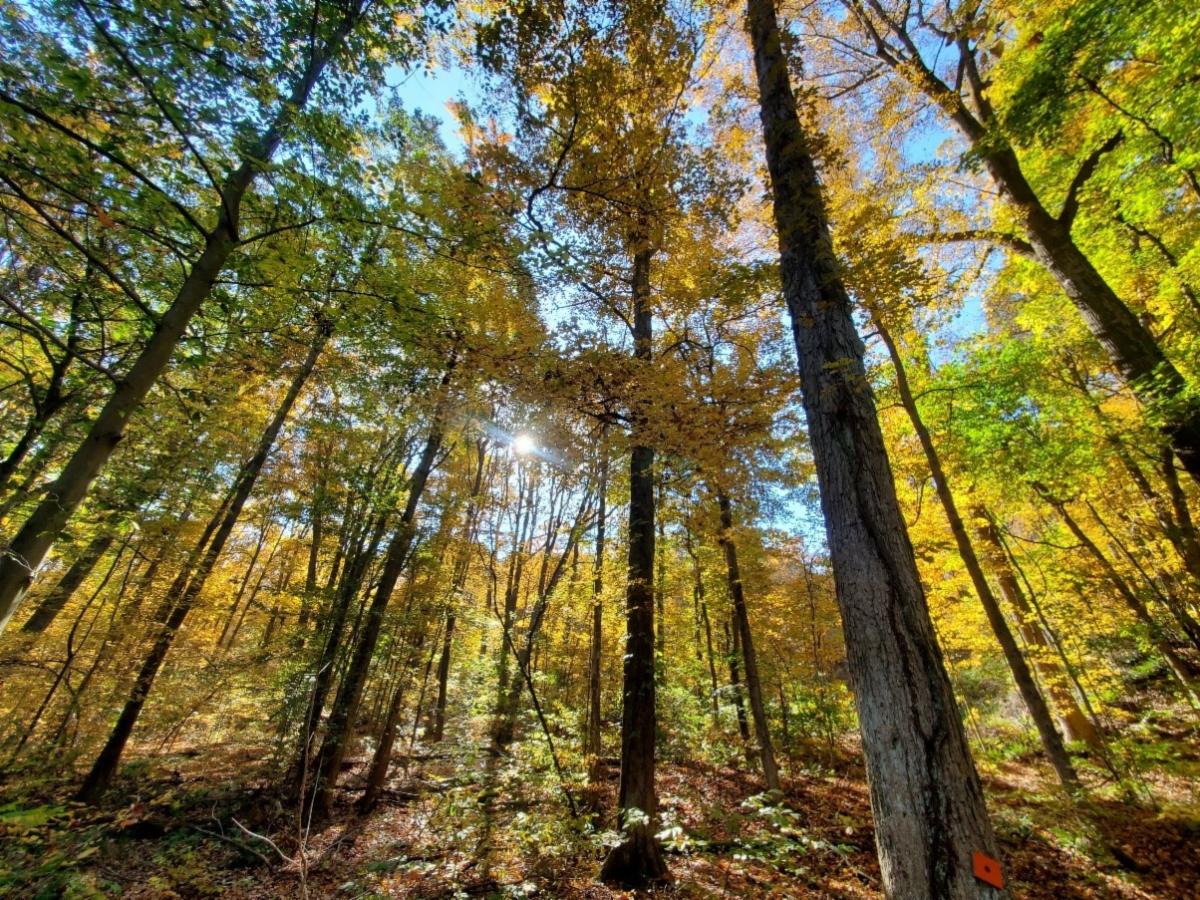
Photo of the autumn forest at Holden Forest & Gardens natural areas. (Photo: R. Kappler) 


Hi all, 


Hope you had a great summer season and are cozying up to autumn nicely. Be sure to keep an eye out for new webinar posts on our website. 


-Rachel Kappler

 
LinkedIn Share This Email
 

The Latest


This annual report summarizes what the GLB FHC and its partners accomplished last year. If you didn’t receive a separate email about this, then you should sign up here for updates.  


American beech updates:

  • Development of an online BLD story map is in progress for future public consumption. If you have any photos or pdfs you’d like to add to it, please contact Dani Martin at danielle.k.martin@usda.gov 


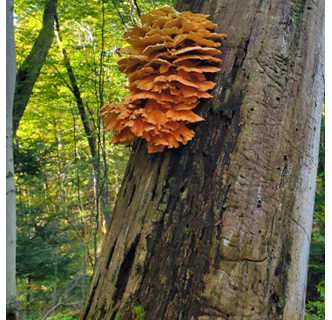
Chicken of the woods fungi on dead ash. (Photo: R. Kappler) 

Ash updates:

  • This winter, collection of lingering ash scion samples for grafting will be happening in Ohio, Pennsylvania, New York, and Michigan. Help may be needed for sample collections in Dec/Jan/Feb. If you have experience with this and are interested in assisting, please let rkappler@holdenfg.org know.  


  • We’re looking for more organizations that can host a long-term fenced lingering ash progeny orchard/planting in the future. Please reach out if you are potentially interested and let us know how much space you have and whether you’d need funding to help get it started. Already-running nurseries and orchards are great contenders, but a fenced-in plot on state land or conservation easement may also be a possibility.
 

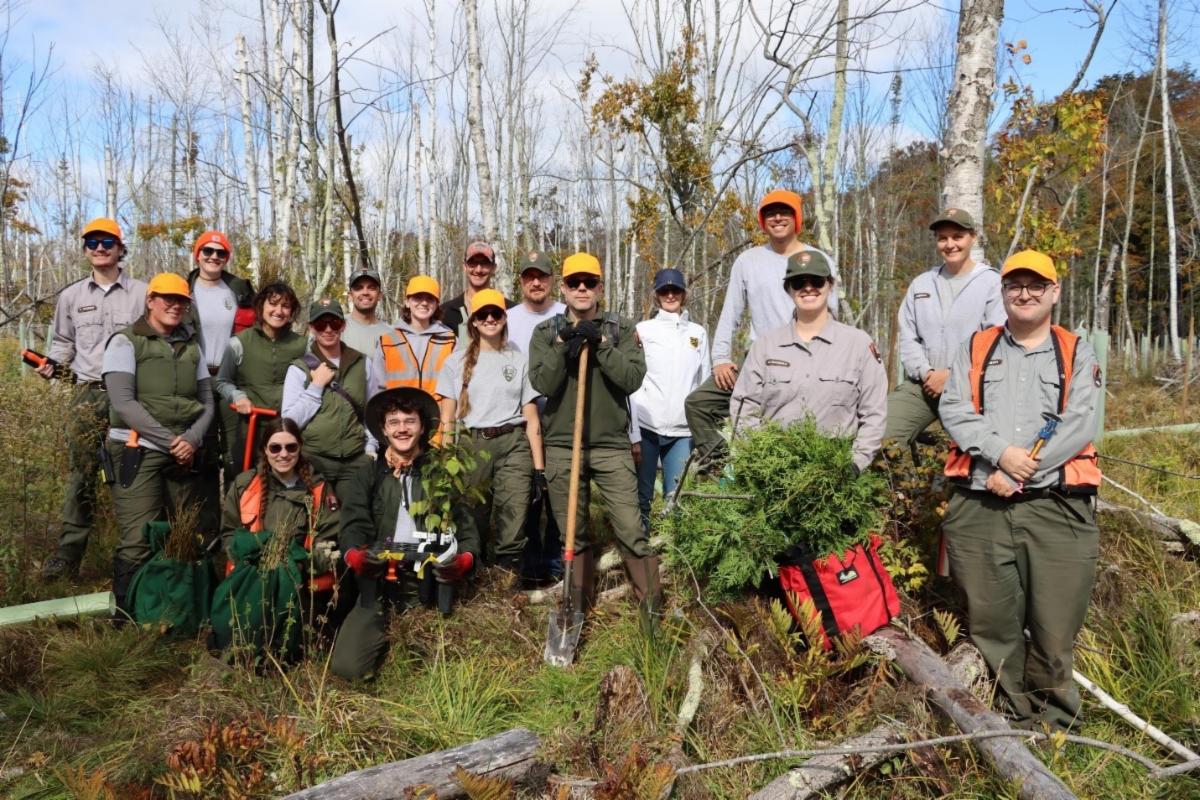
Planting team at Sleeping Bear Dunes National Lakeshore in fall 2024. (Photo: USDA FS)

American elm updates: 

  • During 2024, researchers with the USDA Forest Service Northern Research Station’s American Elm Breeding Partnership and the Sleeping Bear Dunes National Lakeshore collaborated to restore a black ash wetland devastated by the invasive emerald ash borer. Over 1,500 red maple, paper birch, yellow birch, northern white cedar, and experimental American elm (with elevated resistance to Dutch elm disease) were planted to maintain ecosystem function and forest cover. The restoration experiment will be monitored to assess performance. This work provides benefits for ecosystems at Sleeping Bear Dunes National Lakeshore and tests strategies for maintaining forest health and enhancing forest resilience across black ash systems of the Great Lakes. 


  • Report a survivor American elm. Besides using Treesnap to report large (>22 inch DBH) American elms, you can also use ArcGIS survey123.
 

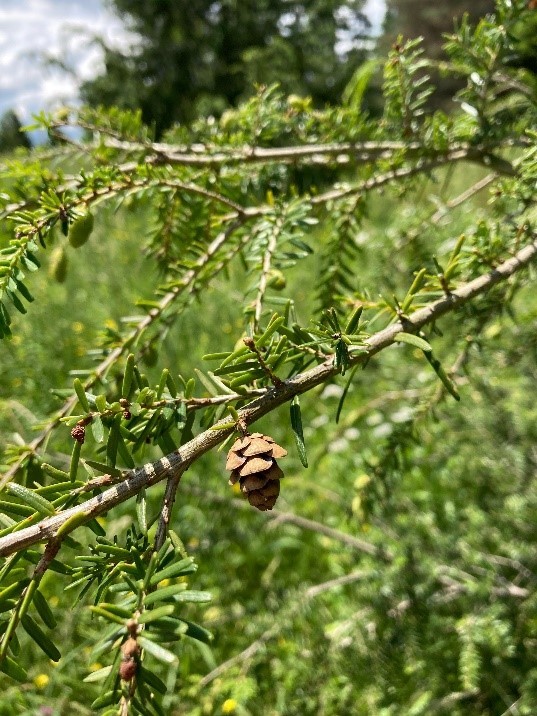
Eastern hemlock with cone in arboretum collection. (Photo: A. Kappler)

Eastern hemlock updates: 

  • Monitoring hemlock: This fall/winter we are encouraging areas that have HWA but low hemlock mortality to set up a monitoring plot that will not receive pesticides. We aim to learn more about the local infestation timeline and gather data on trees that persist after others have died.
 

Have an update to share in the next GLB FHC newsletter? Email us!


Partner Spotlight:

Adventure Scientists 


From Adventure Scientists:


Adventure Scientists’ Volunteers Join the Fight to Save Eastern Hemlocks 


This winter, Holden Forests & Gardens is partnering with Adventure Scientists on an exciting project to help save the iconic eastern hemlock. Adventure Scientists is an NGO that gets conservation partners the data they need to address critical challenges to the environment. Adventure Scientists focus on four impact areas: climate, biodiversity, freshwater, and forests. The "Tracking Eastern Hemlock" initiative aims to identify candidate hemlock trees that may hold the key to combating the invasive hemlock woolly adelgid (HWA).


From January 15th through March 2025, trained Adventure Scientists volunteers will scout national forests in six states, searching for candidate "lingering hemlocks"—trees that have survived HWA infestations while surrounding trees have succumbed. These rare survivors may possess genetic resistance to the pest, offering hope for hemlock conservation. 


After completing online training, Adventure Scientists volunteers will document the location and health of potential lingering hemlocks using the TreeSnap mobile app developed by the University of Tennessee Knoxville. Volunteers will assess factors such as tree diameter, canopy health, and signs of HWA infestation. This valuable data will guide researchers in collecting genetic material for potential breeding of resistant trees. 


The project spans national forests in Kentucky, New York, North Carolina, Tennessee, Virginia, and West Virginia. Adventure Scientists aims to collect 750 observations during the field season, relying on the efforts of outdoor enthusiasts willing to brave winter conditions and challenging terrain. 


Dr. Rachel Kappler, Coordinator of the Great Lakes Basin Forest Health Collaborative at Holden Forests & Gardens, emphasizes the project's importance: "By harnessing the power of Adventure Scientists volunteers, we can cover vast areas and potentially discover hemlock trees that hold the secret to HWA resistance. This project is crucial for the future of our eastern forests." 


Interested volunteers can apply through Adventure Scientists’ website. Selected participants will receive comprehensive online training before venturing into the field. This collaborative effort represents a critical step in the ongoing efforts to conserve the eastern hemlock and the vital ecosystems it supports.


Research Roundup


  • Key lessons from resistant tree breeding programs. Authors from the UK expand upon case studies to synthesize the efforts put towards various tree species dealing with pest/disease issues. (Woodcock et al. 2019 Annals of Forest Science) 


  • BLD nematodes can disperse at least 12 m from a nearby tree. A team out of Penn State studied dispersal vectors of the BLD nematode, confirming a role of both wind and humidity, as well as incidental association with spiderwebs and caterpillars. (Goraya et al. 2024 PLOS One) 


  • Hyperspectral imaging was a dud for remote sensing of beech bark disease. Researchers in Quebec tested an innovative remote sensing approach to see if imaging data could be used to measure disease severity, and concluded that hyperspectral data is not an efficient way to improve BBD monitoring. (Tougas et al. 2024 bioRxiv/preprint) 


  • American elms are locally adapted for cold hardiness. Researchers at the USFS Northern Research Station found that mid-winter cold tolerance varies among American elm genotypes across a climatic gradient, suggesting a potential adaptive capacity worth considering for breeding programs. (Butnor et al. 2024 Forests) 


  • Dutch Elm Disease benefits resident birds but significantly reduces habitat for breeding migrants. In Winnepeg’s urban forests, generalist birds and year-round residents were more abundant around DED-infected trees, while breeding migrants were significantly and negatively affected. Both breeding migrants and year-round residents were significantly less abundant in sites where elms had been recently removed. (Sawchyn 2024 Thesis) 


  • Airborne eDNA can detect HWA. Researchers at the Annis Water Resources Institute (Muskegon, MI) tested detection capabilities of eDNA for HWA. They found that qPCR values and crawler counts are good predictors of HWA infestation levels. (Dunham 2024 Thesis) 


  • Treating HWA? Delay release of Laricobius spp. for one year after treatment with imidacloprid. A team out of Virginia Tech looked at the impact of imidacloprid on the belowground survivorship of HWA biocontrol beetles – the beetles had significantly lower emergence after soil drench or tablet imidacloprid, but were fine after a year. (Hillen et al. 2024 Agricultural and Forest Entomology) 


  • New effort to document distribution of HWA in Canada. Researchers compiled all records of A. tsugae and developed updated range maps, phenologies, and dispersal estimates of the species in Canada. (MacQuarrie et al 2024 bioRvix/preprint) 


  • Defoliation from HWA has big impacts belowground. Highly damaged plots (>75% defoliation) showed increased soil moisture, reduced root biomass, and diminished organic horizon depth. Soil fungal richness and community composition were also affected. Where hemlock was replaced by black birch, soil respiration was lowest. (Pec et al. 2024 SSRN/preprint) 

Have new research to share in the next GLB FHC newsletter? Email us! 


Trees in the News


The Great Lakes Basin Forest Health Collaborative is an initiative co-sponsored by Holden Forests & Gardens and the USDA Forest Service, funded through the Great Lakes Restoration Initiative

USDA is an equal opportunity provider, employer, and lender.

MISSION: Holden Forests & Gardens connects people with the wonder, beauty, and

value of trees and plants, to inspire action for healthy communities

VISION: All communities transformed into vibrant places where trees, plants, and people thrive

Copyright © 2024. All Rights Reserved. "Holden Forests and Gardens" and the related logo is a trademark owned by The Holden Arboretum.