Bright Spot
 

BRIGHT SPOTS


To improve birth outcomes and combat infant mortality, Ohio announced it will expand a partnership model used successfully in Cincinnati to four additional counties around the state.


QUOTABLE & NOTABLE

“According to 2024 data, 40 states and the District of Columbia have adopted major policy measures requiring these practices be incorporated at every stage of literacy education. The fact that so many red and blue states have recently adopted significant — and similar — legislative literacy initiatives shows widespread support. Passing laws is only part of the solution; effectively implementing them is now the major challenge. That being said, education leaders must implement necessary pedagogy and maintain the necessary data to track improvement over the upcoming critical years.”

Who:

Bob Wise and Javaid Siddiqi

Where:

“States have the tools to improve literacy — now they need to use them” opinion piece published in K-12 Dive


FACT OF THE WEEK

 
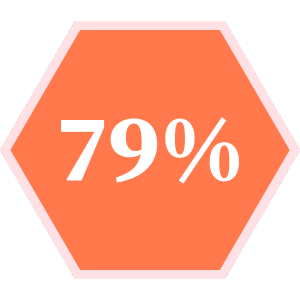
79 percent
 

The polling firm UpONE Insights recently surveyed 1,000 registered voters on behalf of the First Five Years Fund, asking questions about federal investments in early childhood. Four out of five (79%) of voters surveyed across the political spectrum say they support Head Start, with 73% of Republicans and 74% of Trump voters indicating their support. 


POLICY RADAR

Ohio 

Last month, state Sens. Louis W. Blessing III and Jane Timken announced their plan to support child care workers paying for care for their own children — a concept first launched in Kentucky and proposed by several other states. Ohio’s SB 177 would establish the Workforce Investment Now (WIN) for Child Care pilot program for fiscal years 2026 and ’27, funded at $20 million. Qualifying child care employees would receive publicly funded child care (PFCC) assistance through “categorical eligibility” — granted to them for being part of a certain category (child care workers) rather than tied to income eligibility.

Federal


Head Start 

The Associated Press reports that the most recent version of President Donald Trump’s 2026 budget plan does not contain cuts to Head Start funding, as was previously suggested in an internal budget document. Head Start advocates remain poised to defend the program. Below are articles worth reading on Head Start and its impact: 

  • The Center for American Progress outlines five fundamental facts about Head Start, including how it works, who it serves, and what is at stake if disrupted 
  • First Five Years Fund compiles examples of Republican lawmaker support for Head Start 
  • Education Week outlines research on Head Start and its impact on child outcomes and well-being, as well as limitations of certain studies indicating fadeout effects


FYI

The Ohio Department of Children and Youth unveiled a new awareness campaign called “Here for Ohio Kids.” The campaign features a webpage to help families navigate resources, as well as planned advertisements throughout the year about services available for children and families.


EVENTS & HAPPENINGS

The Ohio Legislative Children’s Caucus is hosting a webinar titled “Childcare in Ohio: A Learning Foundation for Children and a Business Imperative” on Monday, May 19, at 2:30 p.m. ET.


BEYOND THE BUCKEYE STATE

Child care is front and center in New York City’s mayoral race, as The New York Times reports. The article discusses concerns of the growing number of “child care voters” in a city where less than half of families with children under age 4 can afford care.

Lawmakers in North Carolina hope to increase flexibility and capacity for child care providers through two bills (House Bill 412, Senate Bill 528) at a time when programs are experiencing teacher shortages and federal stabilization dollars have expired. Both proposals aim to create more flexibility for programs by allowing five years of teaching experience to serve as the equivalent for educators to earn an early childhood credential, and increasing the maximum group size for classrooms without changing teacher-child ratios. HB 412 additionally seeks to “decouple” public child care subsidies from providers’ participation in the state’s quality and improvement rating system (QRIS). It would also require a new market rate study that would set subsidy payment rates so that they are no longer segmented by quality levels. The stated goals for doing so would be to allow more providers to participate in the child care subsidy program, but advocates worry that removing payments linked to provider quality levels would de-incentivize quality improvements.


WHAT WE'RE READING

A brief from the Buffett Early Childhood Institute at the University of Nebraska argues that early childhood educators should be included in the federal income tax deduction allowed for K-12 teachers — a tax break of up to $300 for teachers who spend their own money toward supplies and other classroom expenses. Early Learning Nation discusses the brief and whether the deduction would offer meaningful financial relief — or at the very least, acknowledgement for early childhood educators.

A report from the Center for Children and Families at Georgetown University outlines the critical role played by Medicaid in supporting the early childhood workforce. As federal policy leaders discuss possible cuts to the program, the report highlights that 28% of child care employees across the U.S. receive their health care coverage through Medicaid; in Ohio, this figure is 30.2%. Medicaid also provides important coverage for young children — more than four in 10 children under the age of 6 receive coverage from the program.


RESEARCH ROUNDUP

Two studies from Rice University found positive outcomes for children who attended preschool in Houston. The studies began in 2019, shortly after Texas passed a bill requiring pre-K programs to operate for a full day and set educational standards. The first study, focused on the benefits of preschool, found that children who attended an English-language preschool were 24.3% more likely to be ready for kindergarten than their peers. This percentage nearly doubled for students attending Spanish-language preschool (46.3%). The second study examined preschool enrollment and elementary attendance patterns. Results showed that pre-K attendance was linked with a slightly lower (2.5%) likelihood of being chronically absent in kindergarten.


This edition was written by Jamie O’Leary and Janelle Williamson.

If you like this newsletter, forward to a friend! Subscribe here.


crane.osu.edu

X  LinkedIn