News and information to help journalists serve the public and stay safe.
|
|
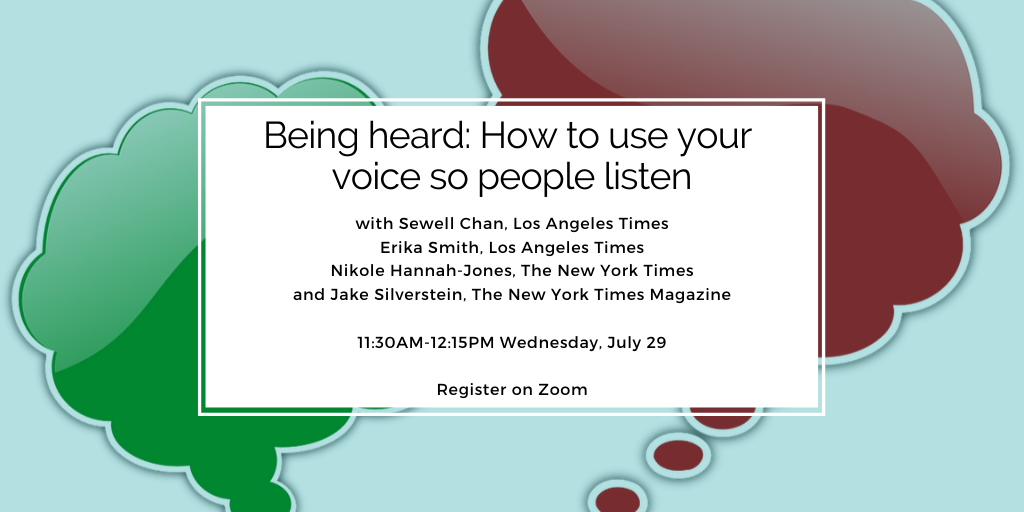
Everyone has an opinion, but not everyone expresses their views with power and impact. Some voices rise and echo, and others never penetrate the noise that surrounds us. Having an important platform — like the New York Times or L.A. Times — can amplify perspectives. In this program from the National Press Club Journalism Institute, L.A. Times editorial page editor
Sewell Chan
, L.A. Times columnist
Erika Smith
, Pulitzer Prize-winning New York Times reporter
Nikole Hannah-Jones
, and New York Times Magazine editor-in-chief
Jake Silverstein
will describe:
- How to make yourself heard
- How to work with an editor or writer to hone a point of view
- How to pitch (& catch) a column or opinion piece
|
|
Armed with confidential data,
The Kansas City Star
last month identified causes and locations of coronavirus outbreaks that state officials had kept under wraps — from the Tyson meatpacking plant near Garden City, Kan., to the keg party west of Topeka.
The effort is an ideal example of journalistic cooperation and use of shared resources. It comes at a crucial time for news organizations, particularly as local newsrooms face shrinking staffs and finances.
“Collaboration is key to survival,” said
Derek Kravitz
, the investigative journalist and Columbia adjunct professor heading the project. “Newsrooms don't have the luxury of spending hundreds or thousands of dollars on FOI fees (and they shouldn't have to). We see a constructive way forward: to provide a FOI clearinghouse, with easily downloadable formats with annotated context, so that these benefit more than a single newsroom.”
We reached out to Kravitz by email to find out how the project got started, how it’s working and what it means for cooperative journalism.
When, where and how did you identify the journalistic need for this essential information?
Kravitz
: In New York, as COVID-19 case and death counts exploded in mid-March, we knew that a full understanding of the pandemic was missing. Public records are a critical component of accountability-focused journalism, and we wanted to provide that resource to large and small newsrooms alike as they rushed to cover this crisis. We've filed more than 600 open-records requests and have posted 57 record sets comprising more than 400,000 pages. And that's just the tip of the iceberg, so to speak.
Can you provide some examples of how local news organizations have or can use your documents and data to tell stories that are pertinent to their audiences?
Kravitz
:
The New York Times
used a collection of records to explain what was happening at meatpacking plants and the tension between those essential businesses and local health departments tasked with managing COVID-19 outbreaks.
The Washington Post
took snippets of email threads and data to report on reopening plans and dubious technology that one Atlanta-area county purchased. Local outlets, such as
Colorado Public Radio
,
The Kansas City Star
and
the
Omaha World-Herald
, have published stories about confidential outbreak lists and evolving hotspots that weren't documented elsewhere. And there are
many more stories to tell
.
|
|
The coronavirus pandemic has forced journalists to collect their stories from afar. Conducting an in-person interview is near impossible. On the telephone or on a video call, the ability to pay attention is crucial. Do you listen, or do you wait to ask? The National Press Club Journalism Institute has invited two of the best interviewers in journalism —
Terry Gross
and
Michael Barbaro
— for a discussion about the challenges and opportunities of interviewing now. Marketplace correspondent
Kimberly Adams
will moderate.
|
|
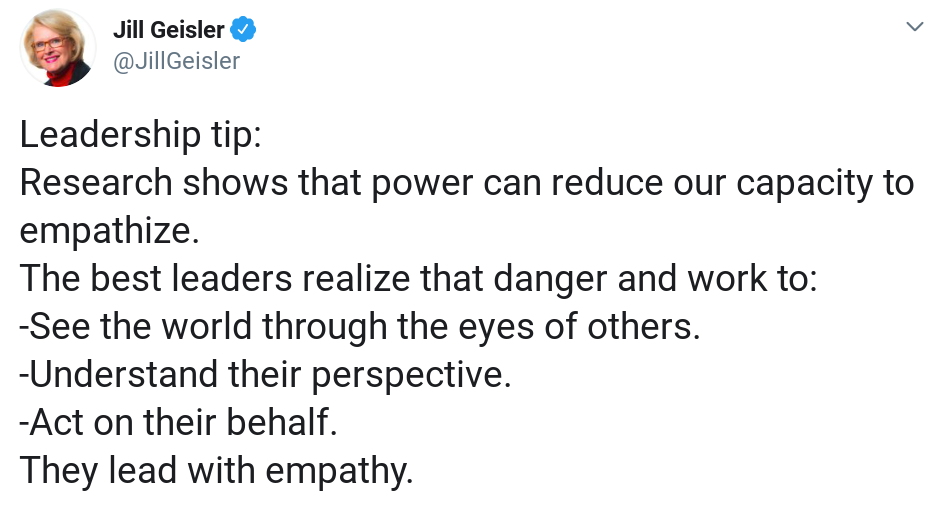
Advice from
Jill Geisler
, Bill Plante Chair in Leadership & Media Integrity, Loyola University Chicago, Freedom Forum Fellow in Women’s Leadership
|
|
|
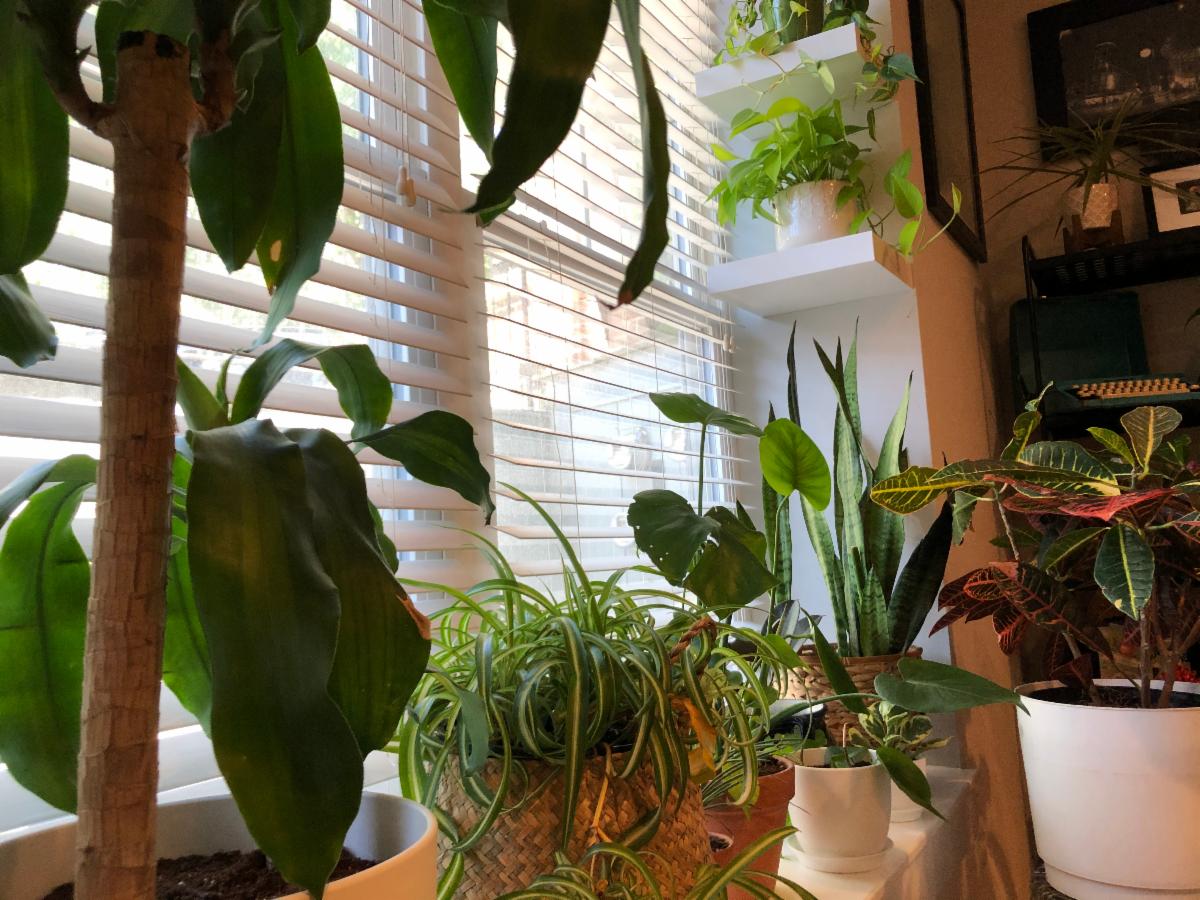
A little greenery can go a long way toward self-care.
Worried, though, that plant care might be more stressful than soothing? Here are some tips:
- Consider your home or outdoor area’s lighting, which should guide your choices. Some plants thrive tucked away in low light, and others demand center stage in your brightest window. Know what you’re working with before you head to the nursery.
- Plants tell you what they need. Dropped or crispy leaves? “I need a drink.” Yellowing or thin leaves? “Help, I’m drowning!” (Watering isn’t one-size-fits all.) Slowed growth? Might be time to prune.
- Plant care is a skill you learn over time. Learning about the plant’s needs, environmental elements and other factors is part of the joy that comes when a new leaf unfolds.
- Plants don’t have to be pricey. Many plant-lovers are open to trading cuttings or sell cuttings via Facebook Marketplace, Etsy or eBay. Investing in one easy-growing plant, like a vining pothos or sansevieria (snake plant), can pay off when you propagate cuttings to make new plants.
Remember: Green thumbs come in all shades.
|
|
This newsletter is written & edited by the National Press Club Journalism Institute staff: Beth Francesco, Holly Butcher Grant, Jim Kuhnhenn, and Julie Moos.
Send us your questions and suggestions
for topics to cover.
|
|
|
|
|
|
|