Advance Your Skills at
ASIPP’s Hands-On Workshops
| | |
Join ASIPP this August at the Medical Education & Research Institute (MERI) in Memphis, Tennessee for three hands-on educational workshops:
Each workshop offers attendees the opportunity to earn 8 CME credits while participating in practical, hands-on instruction. Attendees who participate in the Friday workshop and one Saturday workshop may earn up to 16 CMEs.
ACCOMMODATIONS
The Westin Memphis, Beale Street
170 Lt. George W Lee Ave, Memphis, TN 38103
901-334-5900
Click Here to Book Your Room
Cut-off date for special room rates: August 13, 2026.
In order to ensure you receive the discounted room block rate of $189 plus tax per night let the hotel know you are with the ASIPP workshops.
Space is limited for these workshops.
Early registration is encouraged.
| | | |
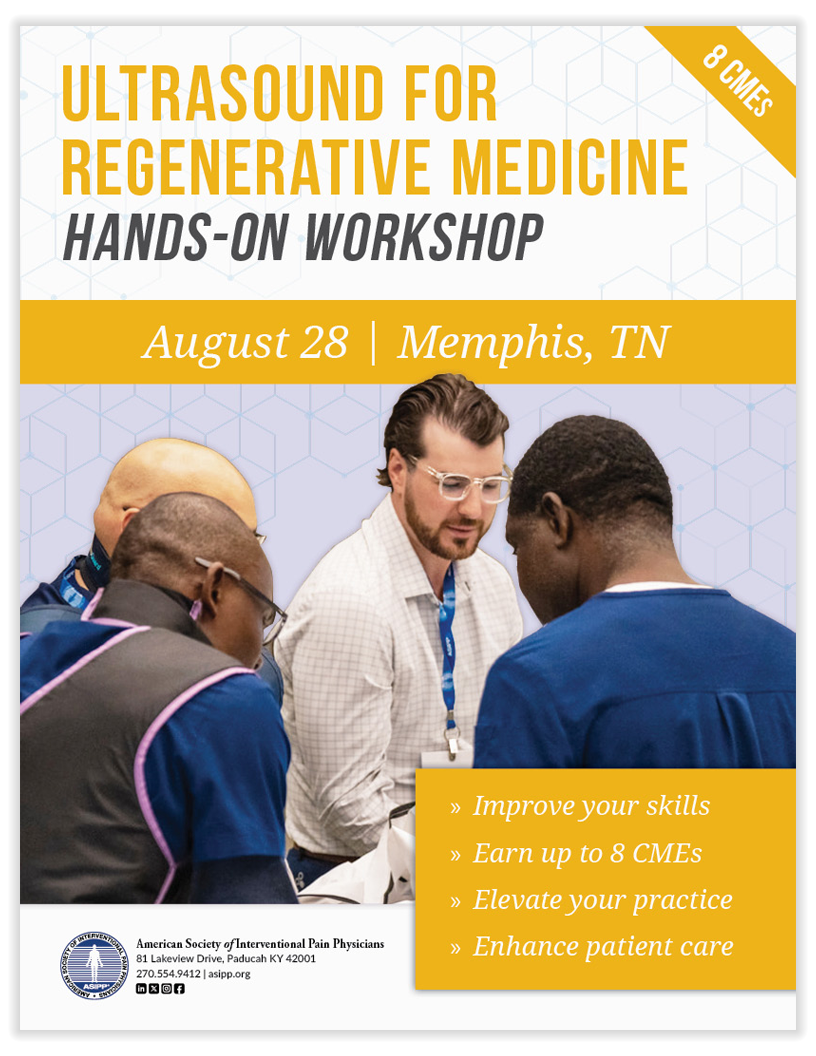
FRIDAY, AUGUST 28
Ultrasound for Regenerative Medicine Hands-On Workshop
Earn 8 CMEs while gaining practical ultrasound experience focused on regenerative medicine applications.
| | | |
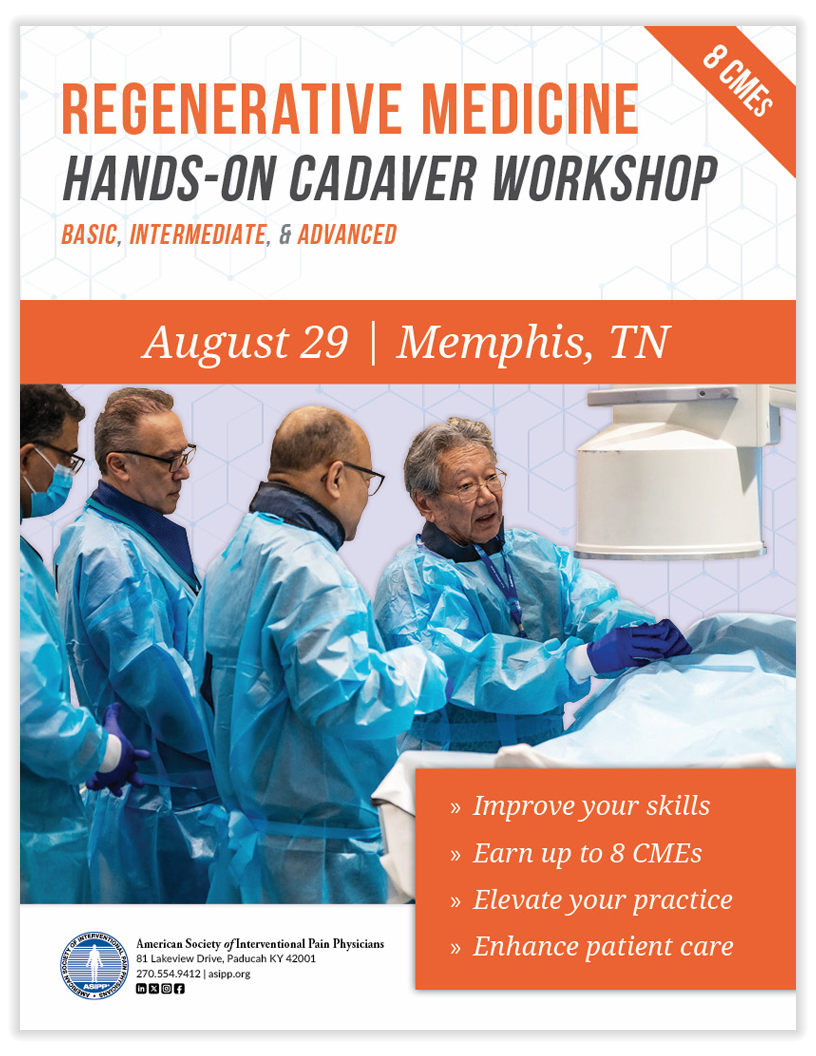
SATURDAY, AUGUST 29
Regenerative Medicine Hands-On Cadaver Workshop
(Basic, Intermediate, & Advanced)
Earn 8 CMEs in this cadaver workshop with hands-on instruction covering regenerative medicine techniques across varying experience levels.
| | | |
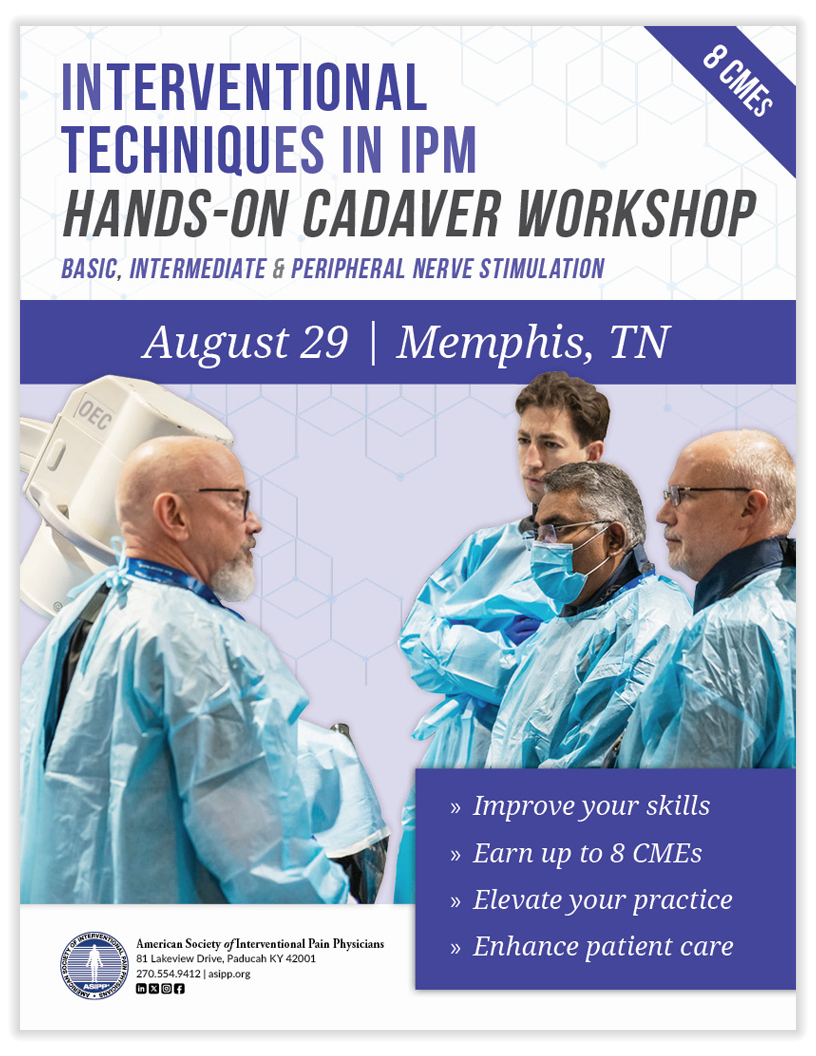
SATURDAY, AUGUST 29
Interventional Techniques in IPM Hands-On Cadaver Workshop
(Basic, Intermediate & PNS)
Earn 8 CMEs in this workshop focused on interventional pain management techniques and peripheral nerve stimulation applications.
| |
Only one-third say that insurer efforts will make a real difference
Physicians remain skeptical that health insurers' pledges to ease prior authorization hassles will result in any meaningful action, an American Medical Association (AMA) survey found.
In June 2025, a group of about 60 insurers said that they would standardize electronic prior authorization by the end of 2026 to help speed up the process. They also said they would reduce the scope of claims subject to medical prior authorization, and would honor the pre-approvals of a previous insurer for a window of time after someone switches plans.
The insurers also said they planned to expand the number of real-time responses, and that they would ensure that claims denied for clinical reasons will continue to get reviews by "medical professionals." But they made no promises that those reviewers will be in the same specialty as the treating doctor, a common complaint from physicians.
"Ahead of the first major [2026] deadline, the AMA surveyed 1,000 practicing physicians to assess whether these commitments are likely to deliver meaningful improvements for patients and physicians," the AMA explained Wednesday in a press release. "Findings from the ... survey show that only one in three physicians (33%) believe the latest insurer pledge will make a meaningful difference."
Click here to read the full article.
| |
Now it's up to clinicians to sort out conflicting evidence
| | |
ASIPP is proud to launch our Resident and Fellow Mentorship Program. This initiative is designed to connect trainees with experienced pain physicians to foster professional growth, provide guidance, and strengthen the future of our specialty.
Each mentor would be paired with one to two trainees, but can take more if interested. Trainees will be responsible for initiating introductions and arranging at least one to two video calls per year. These sessions will provide opportunities for mentees to seek advice on clinical decision-making, career planning, research opportunities, and professional development.
We believe that your experience, expertise, and insight can have a lasting impact on the next generation of pain physicians. By volunteering as a mentor, you will play a critical role in shaping the future of our field and ensuring that ASIPP continues to cultivate excellence in interventional pain medicine.
If you are interested in serving as a mentor, please confirm your participation by filling out the appropriate form below.
| |
ASIPP is pleased to announce the launch of the Regenerative and Longevity Medicine Section!
This section reflects the growing importance of regenerative and longevity medicine—fields dedicated to restoring health, enhancing vitality, and extending the healthy years of life. From stem cell therapies and tissue engineering to gene therapy and orthobiologics, these disciplines are transforming the way we approach pain management and age-related decline.
Section membership offers:
- Access to ASIPP’s physician database and future data registry
- Opportunities for certification and continuing education
- Section-exclusive resources and updates
No additional cost for ASIPP members!
| | |
Schools are one of the easiest, yet most underutilized, entry points for addressing chronic pain
Alongside many others, it is my mission to improve the health and well-being of those who are most vulnerable: kids. As a pain scientist, I am committed to continuing to support youth and specifically, children afflicted with chronic painful conditions. Yet, this has become increasingly difficult.
It was already an extremely competitive process to receive federal funding, and yet, inexplicably, the number and dollar amount of federally funded grants has significantly diminished since President Trump took office; thousands of federal grants have been frozen or cancelled altogether. Scientists are flooding foundational sources for support, making the competition for these limited funds all but out of reach. Furthermore, an estimated 25,000 federal workers left or were removed from their scientific agencies, many of whom were women in their early careers. It is no surprise we are seeing an exodus of early career scientists from our own research labs as well. In this current federal climate, the risks do not outweigh the benefits for many scientists.
And yet, many people in our communities are suffering. People who rely on advancements in their care made possible by science. Consider a child I'll call Johnny, who was once a thriving popular middle schooler, and a starter on his basketball team. That is, until he began to experience debilitating chronic abdominal pain. He stopped playing basketball, missed large stretches of school, and fell behind academically. On the days he did attend, he spent hours in his school nurse's office, in just as much emotional pain as physical discomfort.
One in five children live with chronic pain such as persistent abdominal pain, headaches, or musculoskeletal pain. These young people miss school and opportunities with friends, and are at greater risk of long-term mental health and physical health challenges and substance use disorders. While effective non-pharmacological treatments such as cognitive behavioral therapy (CBT) for pain exist, few children receive them.
Click here to read the full article.
| | |
Mobility assistance devices may be harmful if not prescribed properly
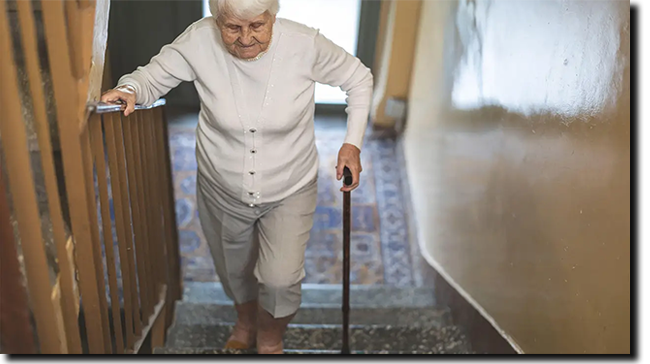
A 74-year-old falls while using a walker. Rather than being a protective factor, the walker could be the culprit in this mishap. Surprisingly, nearly half of all the problems associated with "mobility assistance devices" (MADs) -- products used by approximately one in six older adults -- are related to their difficult-to-use and dangerous nature.
A Commodity or a Medical Device?
The vast majority of older adults using these devices purchase them online from commercial retailers. These sites often advertise hundreds of unvetted, undifferentiated, and under-studied MADs, typically without competent medical advice. To make matters worse, direct-to-consumer marketing of health-related products has exploded in popularity. The majority (58%) of older adults search the Internet for health information. A common behavior is to check online ratings of doctors, hospitals, and devices.
Older adults apply the same techniques when buying MADs, but the trouble is that these devices are pitched to the public as a commodity -- not a medical device. The commercialization of MADs, linked to the habituation to online buying, tends to decrease caution in assessing these products.
Click here to read the full article.
| | |
Apply now for one of the following 2026 dates:
June 27, July 25, September 26, October 24, November 14,
& December 12
Four (4) hour virtual exam
- ABIPP Path – Combined CCPM/ CSM Exam
For those with subspecialty in Pain Medicine
Two (2) hour virtual exam
- ABIPP Competency Exam in IPM
For those without primary board certification
Two (2) hour virtual exam
- ABIPP Competency Exam in Regenerative Medicine
Two (2) hour virtual exam
- Controlled Substance Management Competency Exam
Two (2) hour virtual exam
- Documentation, Coding, Compliance, Practice Management Competency Exam
Two (2) hour virtual exam
August 28, 2026
- ABIPP Part II Oral and Practical Examination
Topics that will be covered:
Caudal epidural injections; Lumbar interlaminar epidural injections; Lumbar/sacral transforaminal epidural injections; Cervical epidural injections; Thoracic epidural injections; Lumbar/sacral medial branch and L5 dorsal ramus blocks; Cervical medial branch blocks; Thoracic medial branch blocks; Lumbar/sacral facet joint nerve radiofrequency neurolysis; Cervical medial branch radiofrequency neurolysis; Thoracic medial branch radiofrequency neurolysis; Sacroiliac joint injections; Cervical sympathetic blocks; Lumbar paravertebral sympathetic blocks; Intercostal nerve blocks; Lumbar discography; Celiac plexus blocks (not Splancnic nerve blocks); Percutaneous epidural adhesiolysis; Spinal cord stimulation lead placement
| |
But main results from sham-controlled trial still outstanding
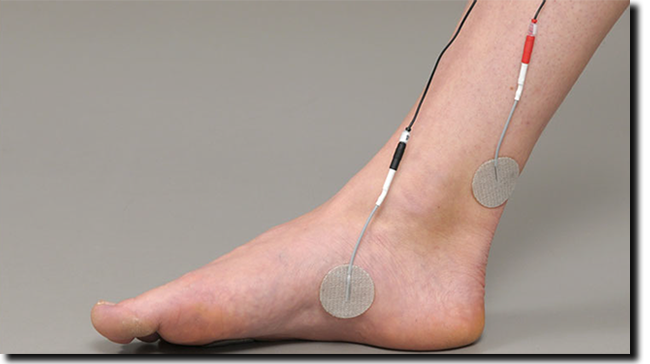
An investigational implantable tibial nerve stimulation (ITNS) device was associated with improved quality of life in patients with urgency urinary incontinence, commonly known as overactive bladder (OAB), data from a randomized trial showed.
More patients in the device group reported feeling "much better" or "very much better" on the Patient Global Impression of Improvement (PGI-I) scale compared with a sham control arm after 3 months (29.2% vs 13.4%, P=0.0133), reported Catherine Matthews, MD, of the Wake Forest University School of Medicine in Winston-Salem, North Carolina, at the American Urological Association annual meeting.
Any improvement in the PGI-I was reported by 57.7% of patients in the device group versus 31.3% in the control group at 3 months (P<0.01). After 3 months, patients were unblinded and sham patients had their devices turned on. At 12 months, 83% of patients reported improvements in the PGI-I.
There were also significant differences in reports of symptom bother and health-related quality of life measured by the Overactive Bladder Questionnaire Short Form (OABq-SF) in favor of the device at 3 months. At 3 and 12 months, patients who had the device met the minimally clinically important difference threshold for improvement in OAB symptoms and health-related quality of life.
Click here to read the full article.
| | |
The Opportunity:
- Well-established group seeking an interventional pain physician with pain fellowship training
- Comprehensive interventional pain management program with physicians, nurse practitioners, and two Ambulatory Surgery Centers
- Established interventional pain management practice with strong clinical and research focus
- High-volume practice that is ethical and fully legally compliant
- Research and publication opportunities available
- Early and generous partnership opportunities in both the practice and ASC
| |  | |
The Community:
- Excellent quality of life in a county of more than 60,000 residents, with a regional drawing area exceeding 200,000
- High standard of living with abundant recreational and social opportunities
- Strong public school system and a private parochial elementary school
- Convenient location: approximately 2.5 hours to Nashville and St. Louis; 3 hours to Memphis, Louisville, and Lexington
- Daily one-hour flights to major international hubs, including Chicago O’Hare and Houston, TX
| | Please email Cindy Jackson at cindy@thepainmd.com with your current CV to schedule an interview or to learn more about this practice. | | |
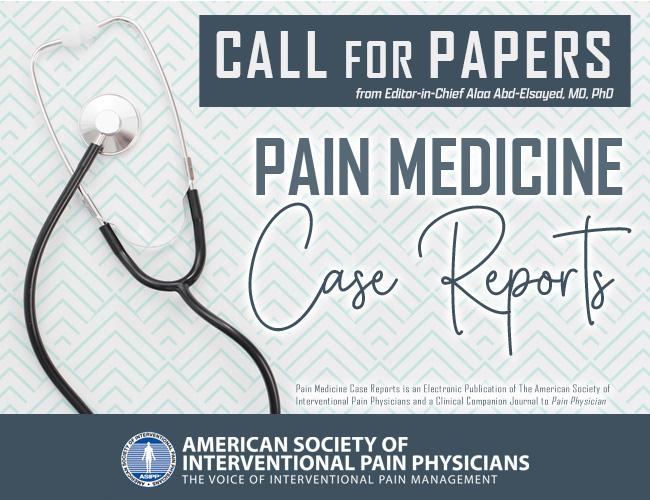
Pain Medicine Case Reports (PMCR) and Editor-in-Chief Alaa Abd-Elsayed, MD, PhD would like to invite you to submit case reports and case series to the PMCR journal. Your article will be published free of charge.
Open access journals are freely available online for immediate worldwide open access to the full text of published articles. There is no subscription fee for open access journals. Open access journals are no different from traditional subscription-based journals: they undergo the same peer review and quality control as any other scholarly journal.
Interested in becoming a member of the PMCR Editorial Board?
Editorial board members are asked to review 2-6 manuscripts per year. Please submit your most up-to-date CV to sgold@asipp.org for consideration.
For more information or to submit your articles, click here.
| | |
We are excited to announce that Pain Medicine Case Reports (PMCR) journal (eISSN 2768-5152) has been accepted for inclusion in MEDLINE and PubMed, the prestigious bibliographic database of the U.S. National Library of Medicine. PMCR, a companion publication to the prestigious Pain Physician journal by ASIPP, joins its counterpart in achieving indexing in both MEDLINE and PubMed, marking ASIPP’s dual presence in these renowned databases.
The inclusion of PMCR journal in MEDLINE signifies a higher level of selectivity, as MEDLINE consists of the top 5,200 biomedical journals. This indexing also means that articles from PMCR will be searchable using NLM Medical Subject Headings (MeSH terms) and other metadata.
The selection for MEDLINE follows a rigorous evaluation process by reviewers from the Literature Selection Technical Review Committee (LSTRC). According to their criteria, the scientific quality of a journal’s content is the primary factor considered for indexing.
We extend our congratulations to the Pain Medicine Case Reports Editor-in-Chief, Deputy Editor-in-Chief, Journal Team, and Editorial Board for this achievement, which underscores the significance and excellence of this esteemed journal.
| | | | |