THE COMPASS WEBSITE

WOW!


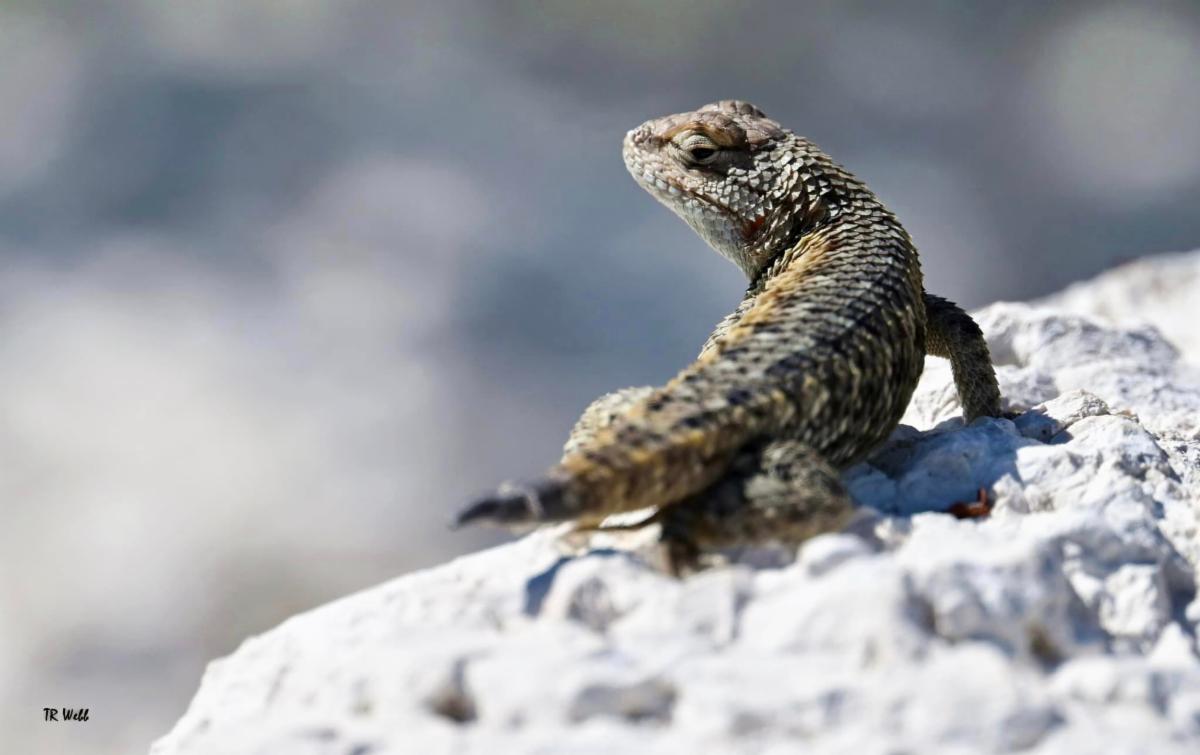
We are deep in the dog day of summer. Sweltering heat has driven most of us — and our furry babies — inside or away to cooler climates. Even reptiles like the yellow-backed spiny lizard photographed by Thane Webb at Corn Creek may reduce their sunbathing time to minimize the dangers of excessive heat and sun exposure.


Southern Nevada's desert creatures possess evolved protective mechanisms that help safeguard them against the threats of weather and predators. The yellow-backed spiny lizard, for example, sports scaly armor on its back and packs a powerful bite. It can also nonchalantly drop its tail to elude assailants. Then, as an example of regeneration and survival, they grow it back as if to say, "Hey, adversity, take my tail. I'll make more!"


Lizards also use their breath for self-preservation. The yellow-backed spiny lizard puffs up its chest with air to appear more intimidating to foes. At the same time, chuckwallas and iguanas, when cornered, will wedge themselves into tight spaces and inhale to expand their lungs and bodies, making it difficult for predators to get them.


Like lizards, we can use deep breathing as a form of self-protection when life challenges us — and to deeply relax into the dog days of August when the world seems to still be in deep contemplation.


MAKE A HUMAN-HABITAT CONNECTION


Deep breaths are like little love notes to your body. — UNKNOWN


Reflect on the quote above or the Rilke poem below and respond to one of the following prompts:


  • Gaze at Thane Webb's photo or an aspect of nature while focusing on your breath. Consider how deep breathing helps when you are between a rock and a hard place.
  • Identify a place in your body that needs tender love and care. Strengthen it by breathing deeply while writing it a mental love note.
  • Ponder when you've dropped a "to do" like a lizard's tail or opted out of an activity. How might it have safeguarded your mental, physical, or spiritual energies?

You who let yourselves feel: enter the breathing

that is more than your own.

Let it brush your cheeks

as it divides and rejoins behind you.

Blessed ones, whole ones,

you where the heart begins:

You are the bow that shoots the arrows

and you are the target.

Fear not the pain. Let its weight fall back

into the earth;

for heavy are the mountains, heavy the seas.

The trees you planted in childhood have grown

too heavy. You cannot bring them along.

Give yourselves to the air, to what you cannot hold.


RAINER MARIA RILKE

translated by Anita Barrows and Joanna Macy

Desert Calm. Treat yourself to a beautiful video of desert landscapes while relaxing and deep breathing. Access the video here.


Wild and Scenic Film Festival. Enjoy the Friends of Nevada Wilderness’s 12th Annual Wild and Scenic Film Festival at Spring Mountain Ranch State Park on Saturday, October 12, 2024. Celebrate the human spirit and outdoor activism while enjoying a festival that helps keep Nevada wild through stewardship, advocacy, and outreach programs. Learn more here.


Learn about Chuckwalla National Monument. The proposed monument, which bears the name of a desert lizard, would protect about 660,000 acres of Southern California's desert habitat. Chuckwalla would hug Joshua Tree National Park’s southern boundary, stretching along Interstate 10 from the edge of the eastern Coachella Valley to the Colorado River. The proposed monument seeks to ensure access to nature for residents and visitors, protect unique biodiversity, safeguard the desert’s rich history, and honor the cultural landscape of the area's indigenous peoples. Find more here. 


Nuwu Pahsats Speaker Series. Join Indigenous Knowledge Givers for The Nuwu Pahsats Speaker Series at 4 pm on Saturday, August 24, at the Springs Preserve. Listen as they share their cultural lifeways, emphasizing sustainable relationships with water, plants, and landscapes. More information here.

THE COMPASS is a geographic, archetypal community asset that supports the mutual thriving of humans, habitats, and economies. It envisions creating places for grounding in and with nature. These places — Compass Points — fashioned of flat rocks etched with core value words like compassion, resilience, hope, and peace, will provide opportunities for rest, reflection, and renewal of our energies while nurturing an appreciation of and attentiveness to the thriving of the natural world.


INVITE OTHERS. Help grow awareness for The Compass by sharing this e-newsletter or web address with friends. https://thecompassrocks.org

Sometimes the most important thing in a whole day

is the rest we take between two deep breaths.

ETTIE HILLESUM

X Share This Email
LinkedIn Share This Email