Checkerboard


November 2026

In This Issue
  • Don Thornton Special Collection
  • The Country Store Collection of Richard and Virginia Girouard: Part 3
  • The Art of the Stencil: Wood Coffee Bins
  • Tobacco Tin Tags
  • Gangs of New York
  • Video: J. R. Jones General Store, Dearborn, Michigan
  • Wanted Items

Don Thornton Special Collection

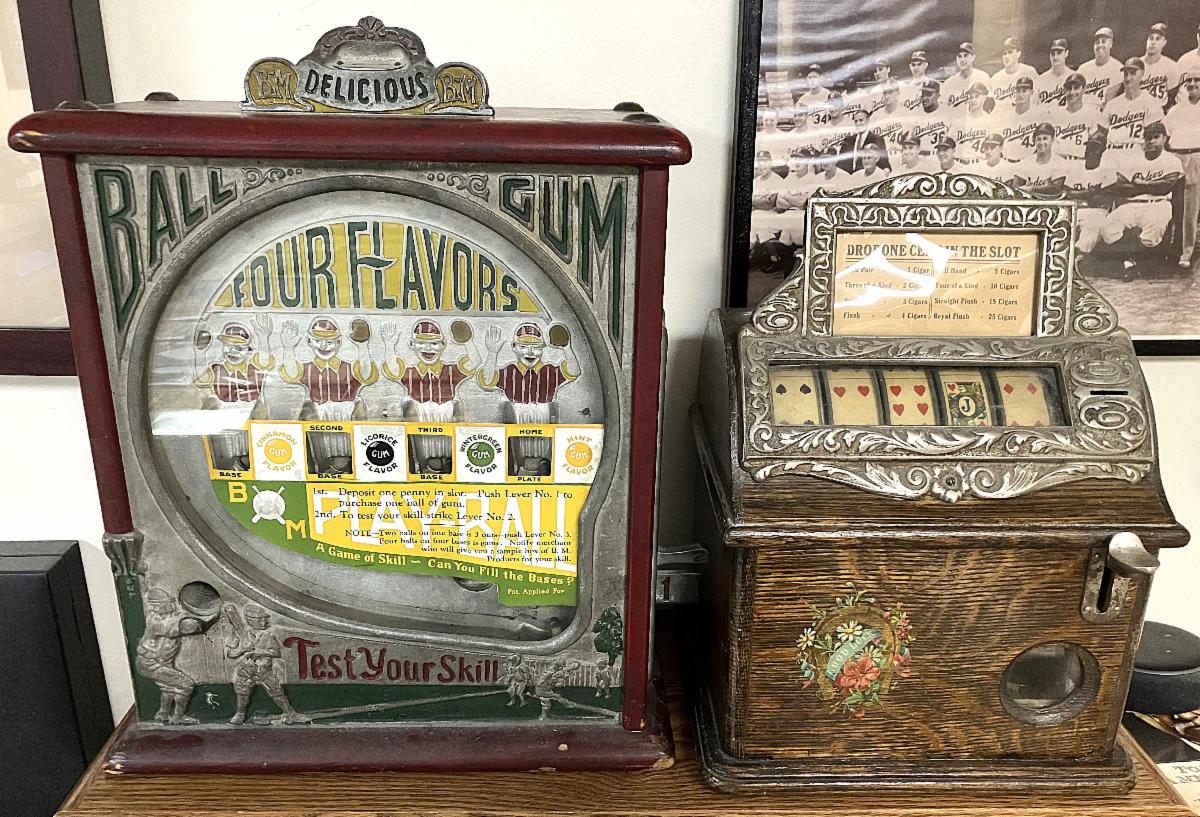
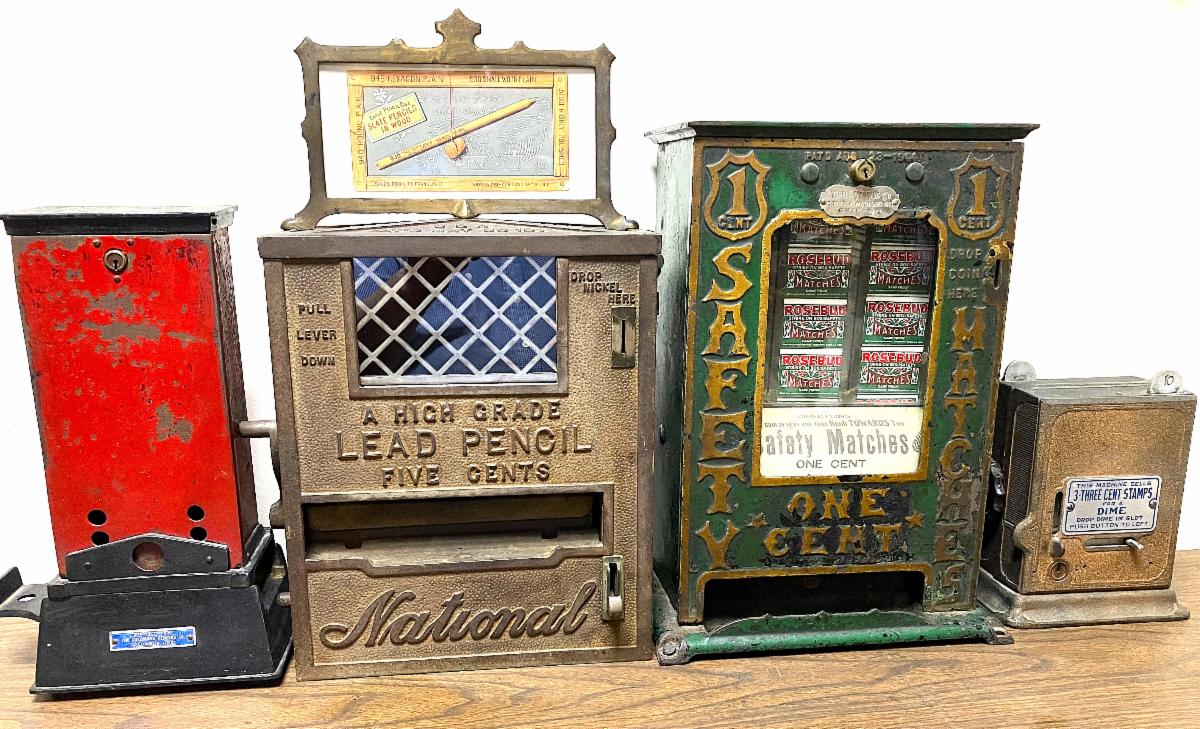
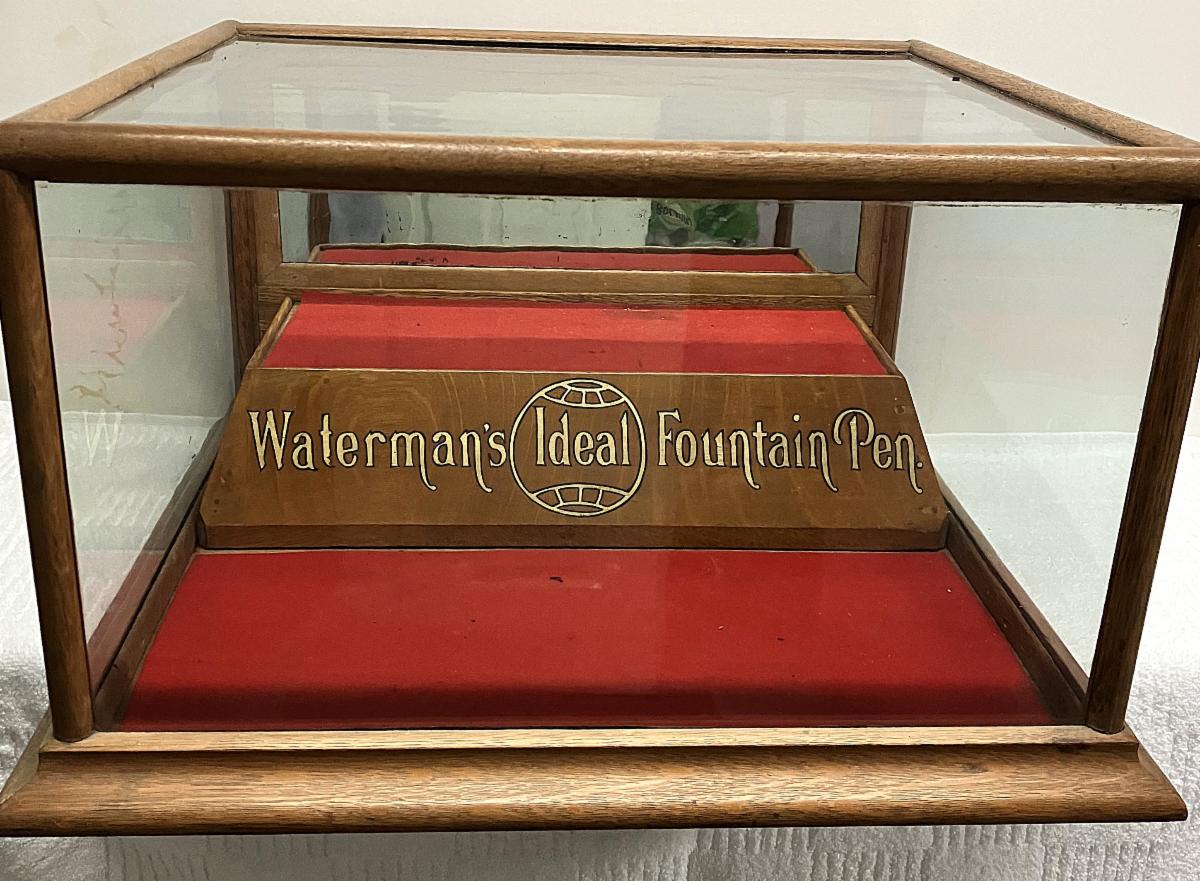
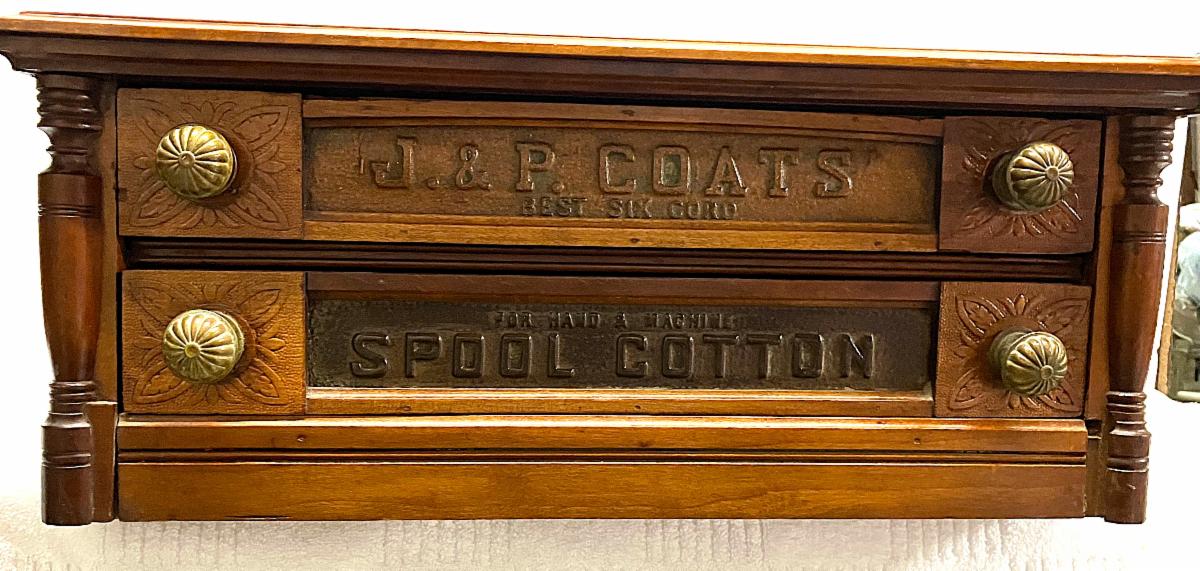
We have discovered that we have a bounty of articles submitted by our talented Correspondent, Don Thornton. To make sure nothing is squandered, we are publishing a compilation of four articles in this issue of the Checkerboard as a bonus to our readers. Click the links below to enjoy this special collection of Don's entertaining articles.


The Country Store Collection of Richard and Virginia Girouard: Part 3

By Richard Girouard

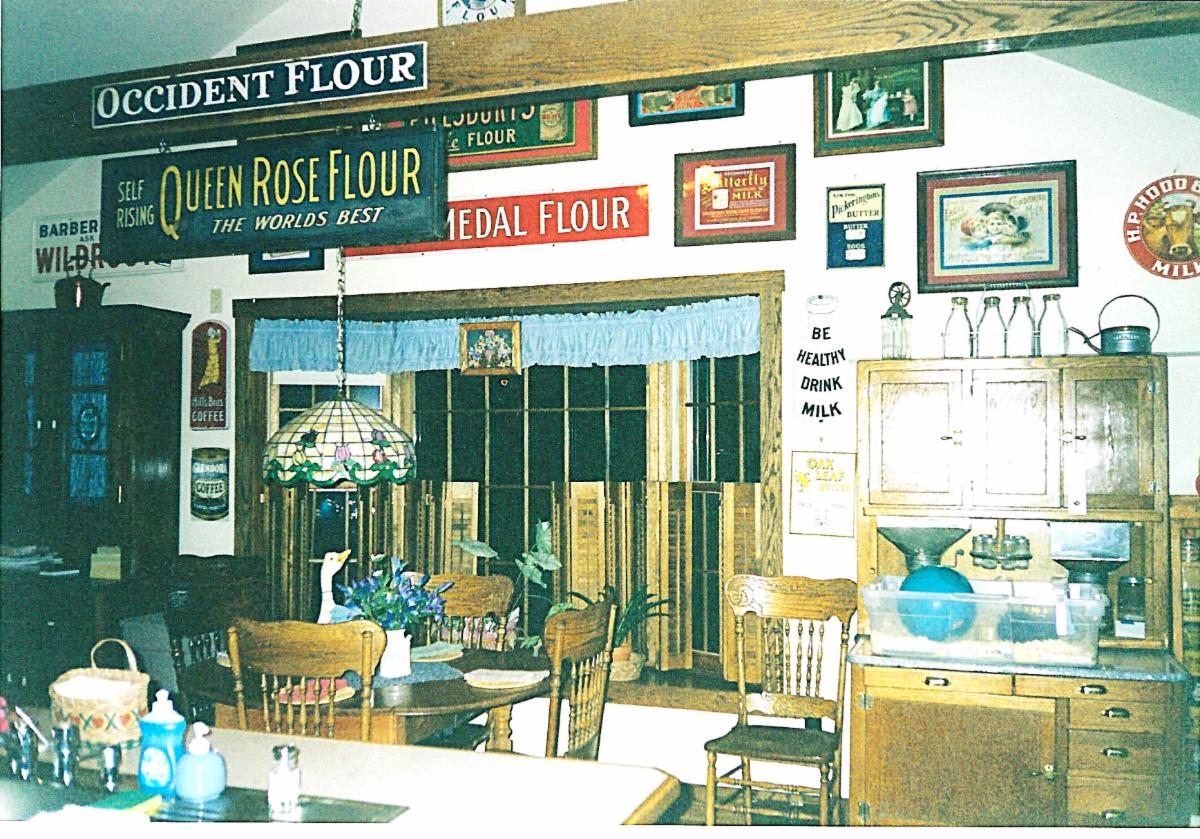
Editor's Note: This article represents the third installment in our ongoing series showcasing the remarkable Country Store Collection of Richard and Virginia Girouard. Images are not presented to scale.

The photo immediately below highlights Virginia's skill at displaying and selecting some of our signs and thermometers in our Westport kitchen. Our collection consisted of 418 signs and 17 thermometers.

Gallery

The Art of the Stencil: Wood Coffee Bins

By Andy Kmiec

This is the second installment in the series titled “The Art of the Stencil.” The first installment focused on the development of stenciling and its various applications. Moving forward, I’ll highlight several different collecting categories known for their use of stenciling, beginning with wood coffee bins.


For a little background, my parents collected antiques for many years, and as a kid, I witnessed their pursuit of a Jersey Coffee bin. I believe it was the excitement of finally finding one in an antique shop in Ligonier, Pennsylvania, that inspired me to begin collecting these displays myself. I purchased my first bin when I was 16—an overpainted Luxury Coffee bin found at a local flea market. My older brother taught me how to carefully use a pocketknife to remove the later paint and reveal the original finish and stencil. Removing overpaint without damaging what lies beneath is an art in itself, and years of practice and hands-on work have taught me a great deal about how these bins were constructed, painted, and stenciled.


Bins or Boxes?


When I was young, an old-time collector told me that if it was used to ship a product, it was a box; if it was used for display, it was a bin. That distinction has always stuck with me. Coffee bins were generally made of inexpensive pine, with boards cut to the required sizes and assembled using round nails and simple tin hinges. Most date from about 1900 through the 1930s, although A&P coffee bins, which often featured paper labels glued to the wood, continued to be used into the 1940s and 1950s.


Red is the most common base color found on coffee bins, followed by yellow. Blue is the rarest and, as a result, is generally the most sought-after color among collectors. Detailed black stenciling stood out particularly well against red and yellow backgrounds, but it was far less effective on blue. Companies such as Pan Handle Coffee and Old Dominion Coffee solved this problem by using mustard-colored or white stenciling on their blue bins, allowing the lettering and designs to remain visible. One interesting exception is the Washburn Halligan Coffee Company of Davenport, Iowa, which grain-painted its bins rather than using the more familiar solid-color finish.


Collectors will also frequently encounter bins with porcelain knobs attached to the lids. These were not factory original. After a bin was completed at the factory, the name of the store and the town where it was being shipped were sometimes freehand-painted or stenciled on the back, typically near the top. The lid was then nailed shut for shipment by railroad. Once the bin arrived at the general store, the lid had to be pried open—a process that sometimes resulted in the cracks seen in surviving examples today. A porcelain knob might then be added to make it easier for the storekeeper or customer to open the lid and access the coffee inside.


The most common capacity is 100 pounds, although 50-, 120-, 130-, and 150-pound bins are also known.


Makers and Distributors


Coffee bins were intended to serve as point-of-purchase displays in general stores, and salesmen traveled far and wide convincing store owners to carry their brands of coffee. Their bright colors and elaborate stenciling were no accident: these bins were advertisements designed to attract attention and, ultimately, sell more coffee beans.


Coffee companies such as Dayton Spice Mills, maker of Jersey Coffee; Canby, Ach & Canby, maker of King Bee; Ohio Spice and Coffee Company, maker of Capital Coffee; and C. F. Ware, maker of Luxury Coffee, worked with regional distributors. Some of the largest distribution centers were located in Pittsburgh, Baltimore, and Philadelphia. As a result, collectors occasionally find coffee bins bearing the name of a regional distributor stenciled on the side of the bin, lid, or the upper section above the lid. These markings provide an interesting variation and can add another layer of history to a bin. Woolson Spice Company, maker of Lion Coffee, produced a number of different roasts. Rather than stencil the individual roast directly onto each bin, the company could apply a paper label beneath its distinctive lion-and-chariot logo on the lid. In other examples, a paper advertisement was placed inside the recessed panel on the front of the bin.


The Collection Continues


Over the years, I’ve owned hundreds of coffee bins, yet I continue to encounter variations and brands I’ve never seen before, thanks to fellow collectors, dealers, and the internet. That continuing discovery is part of what makes collecting them so enjoyable.


The photographs in the gallery below feature examples we’ve owned over the years. I hope you enjoy seeing them and, perhaps, gain a greater appreciation for the craftsmanship, advertising, and history preserved in these colorful pieces of American general-store history.

Gallery

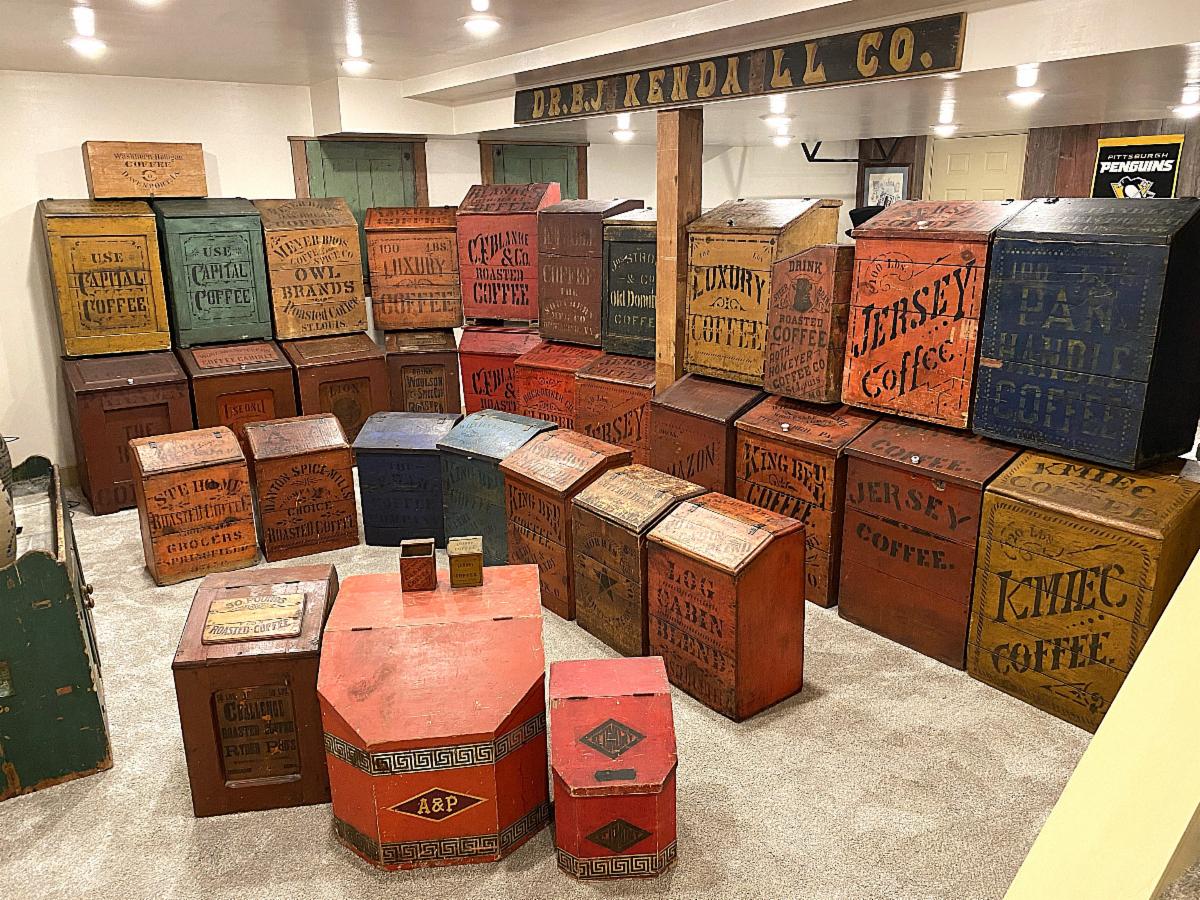
This view features all of the bins we owned a few years ago and demonstrates the different sizes, colors and styles of stencils. 

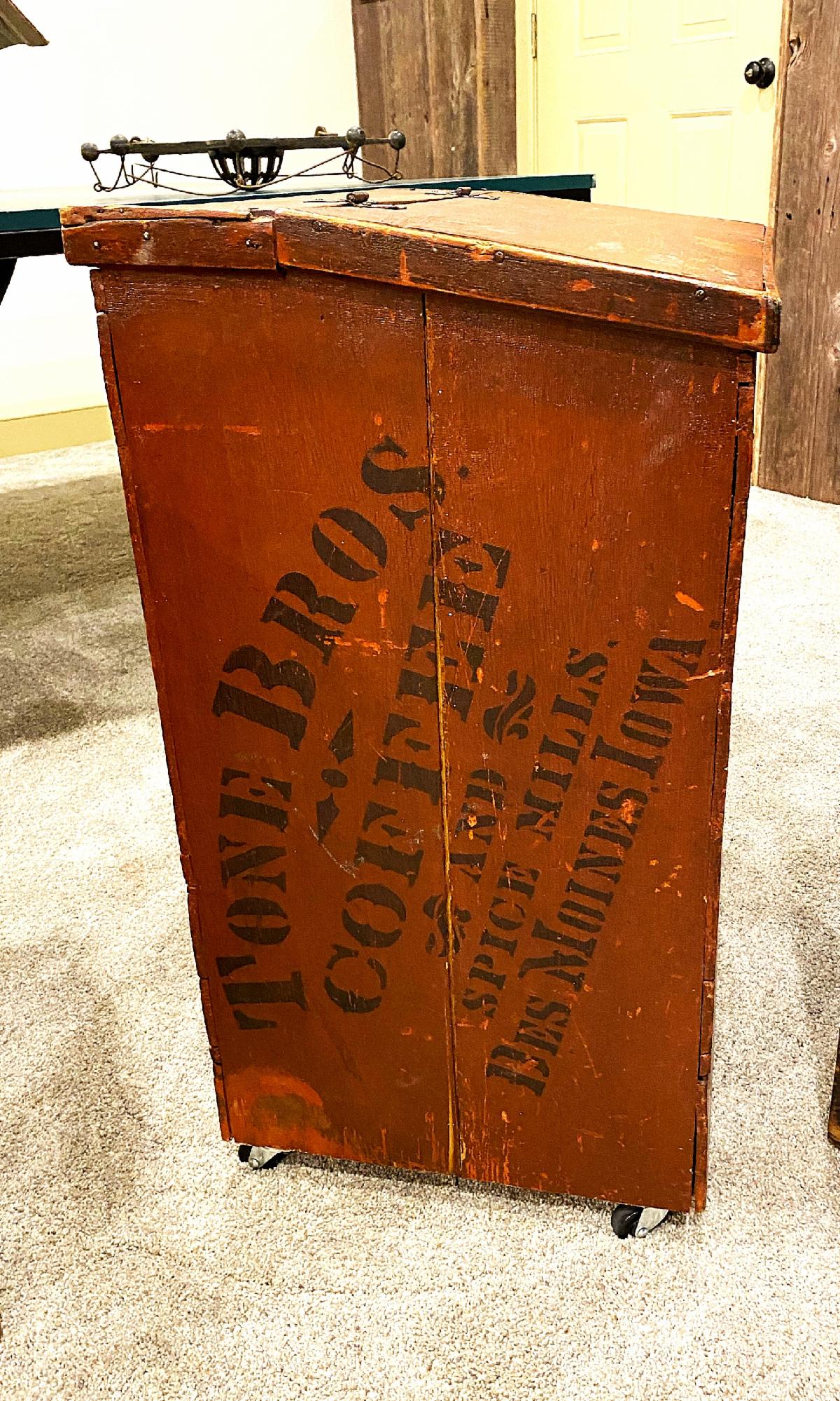
View of the side of a coffee bin with stenciled advertising for Tone Bros. Coffee from Des Moines, IA. Few coffee bins had stenciling on the side. 

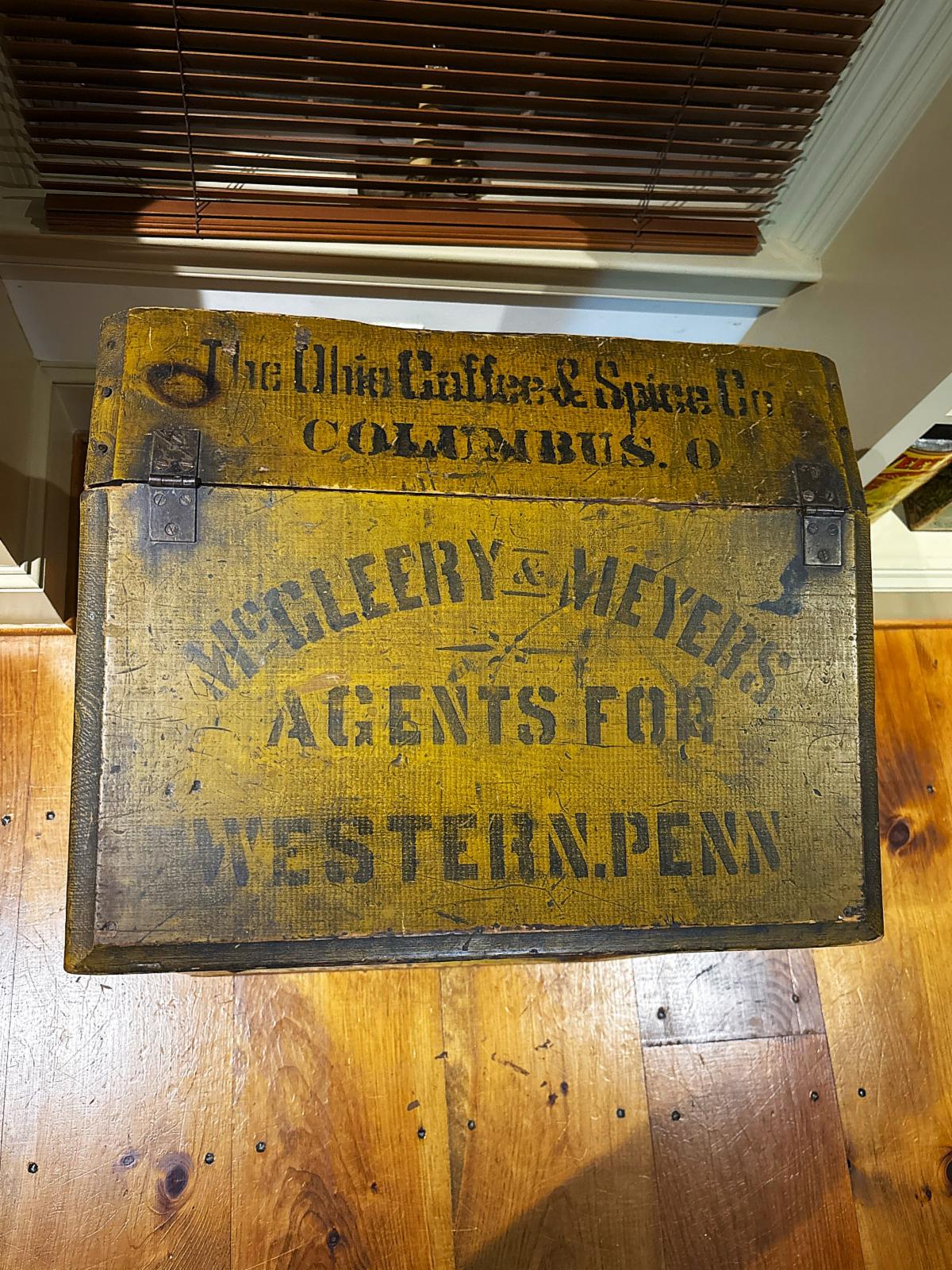
This is the view of the top of a rare mustard painted Capital Coffee bin with stenciling for their distributor out of Western Pennsylvania, McCleery & Meyers. 


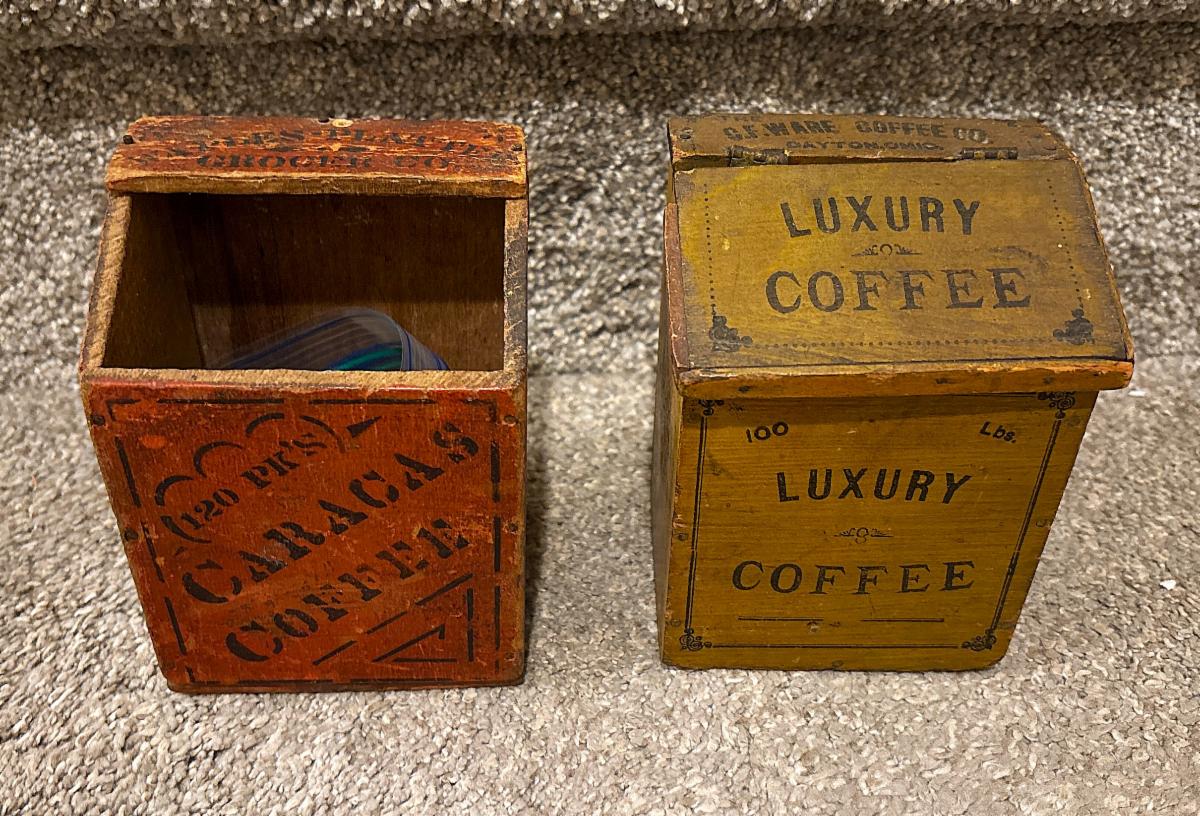
Two exceedingly rare salesman's sample coffee bins. These are the only two examples I've seen in over 35 years of collecting. The Caracas Coffee doesn't appear to have ever had a lid. The Luxury Coffee is in wonderful condition and was found in SW Ohio almost 30 years ago. 

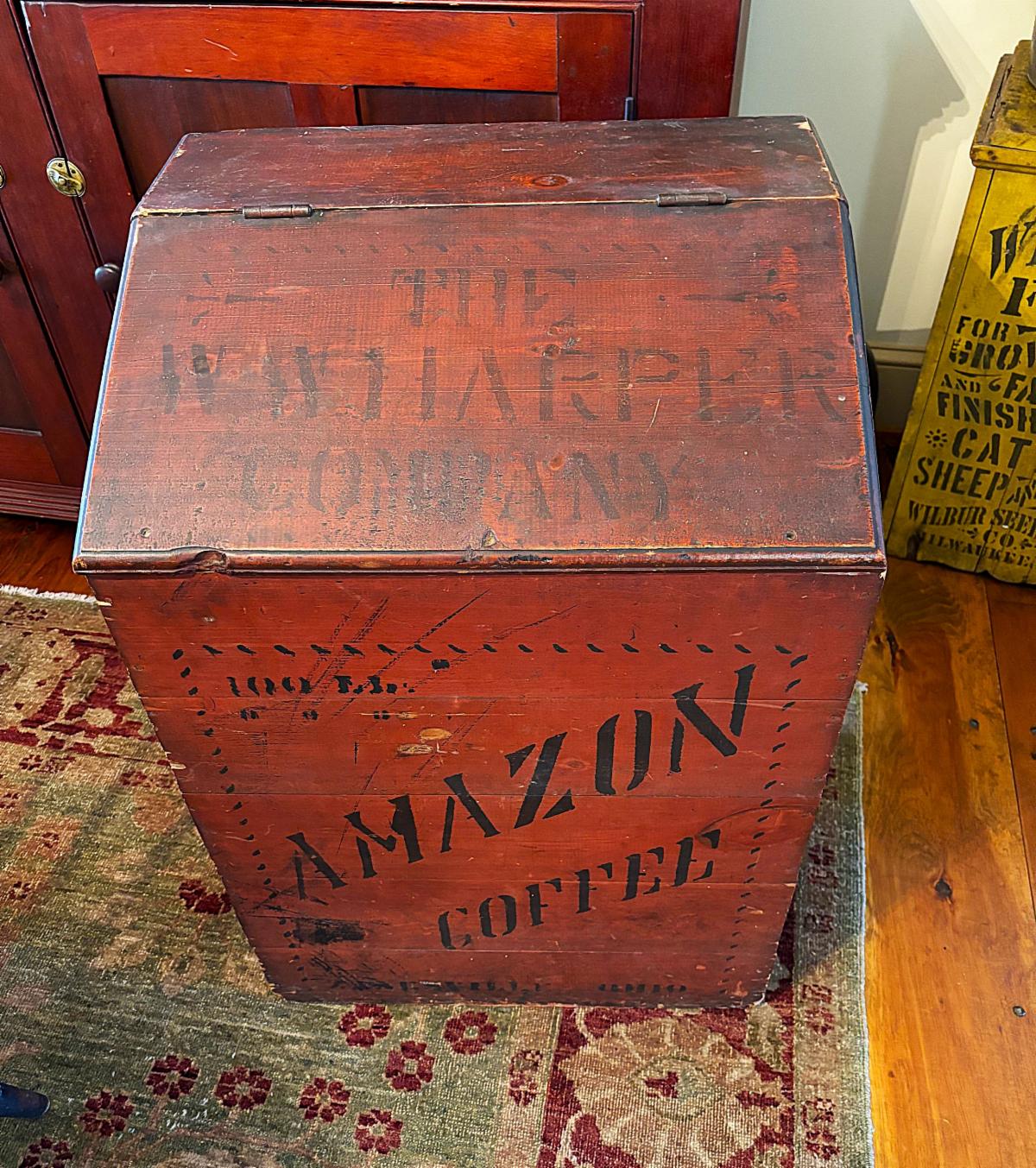
Before there was Amazon, there was Amazon Coffee. This brand was made by the W.W. Harper Coffee Co from Zanesville, Ohio. 

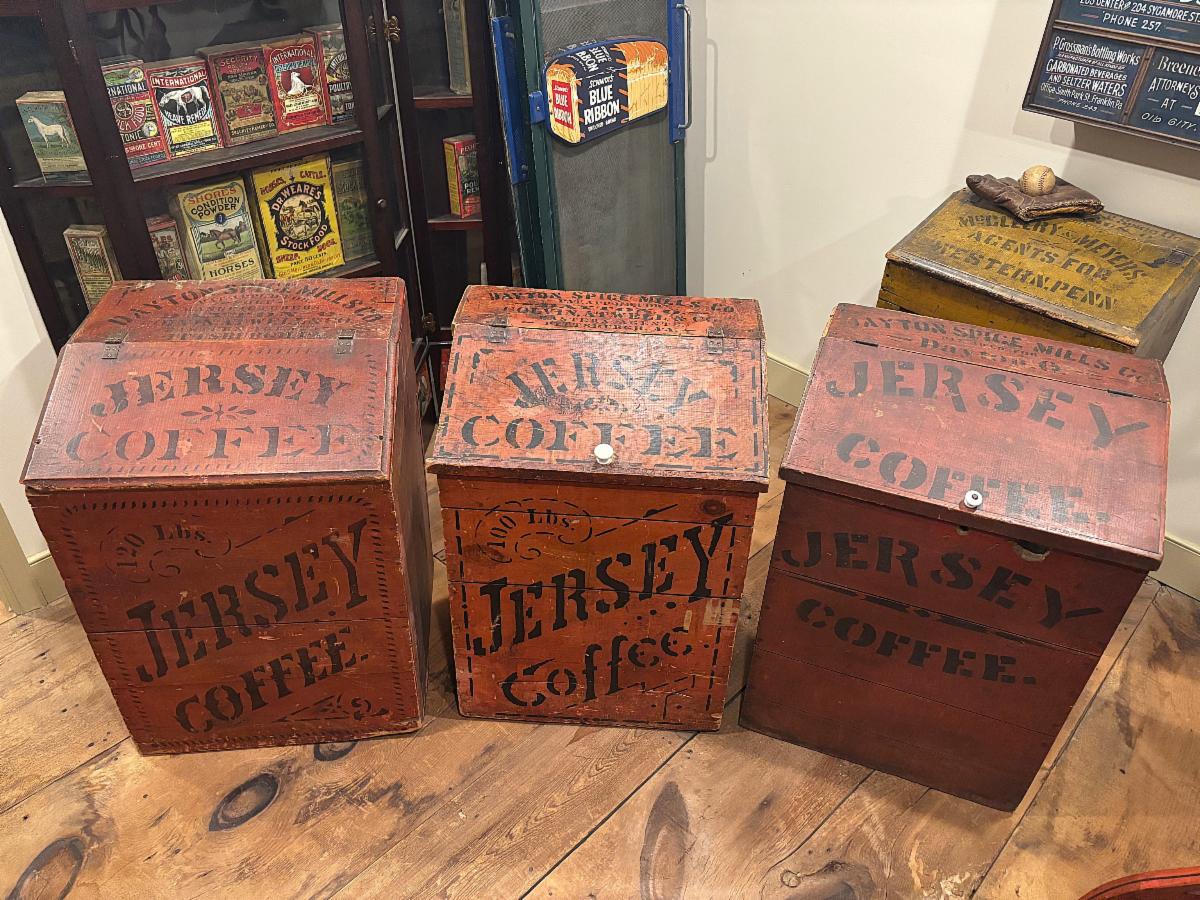
Three different stencils and two different size Jersey Coffee Bins. Note the bins on the left and middle have advertising on the top board for their distributor located in Pittsburgh, PA.

Tobacco Tin Tags

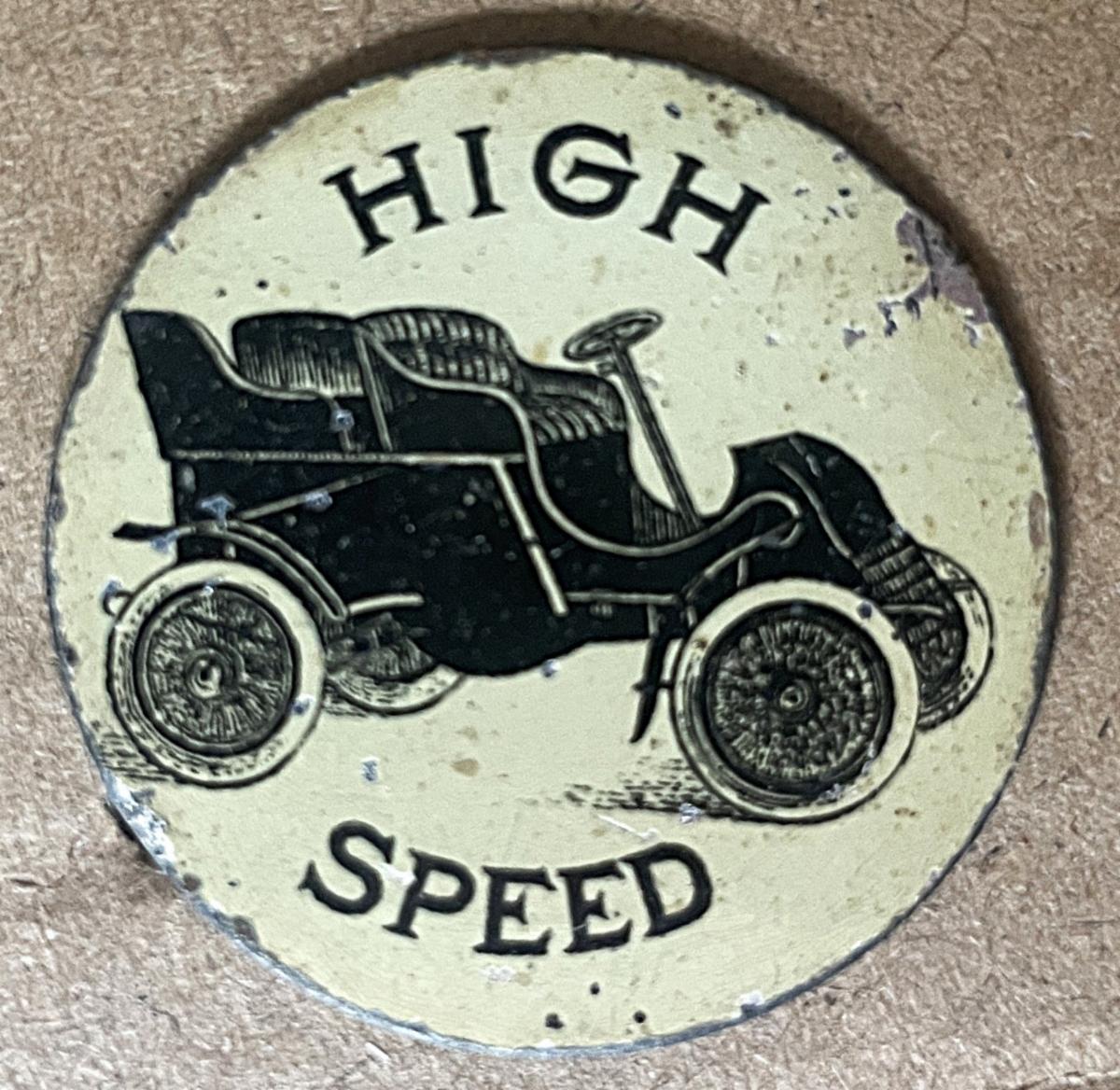
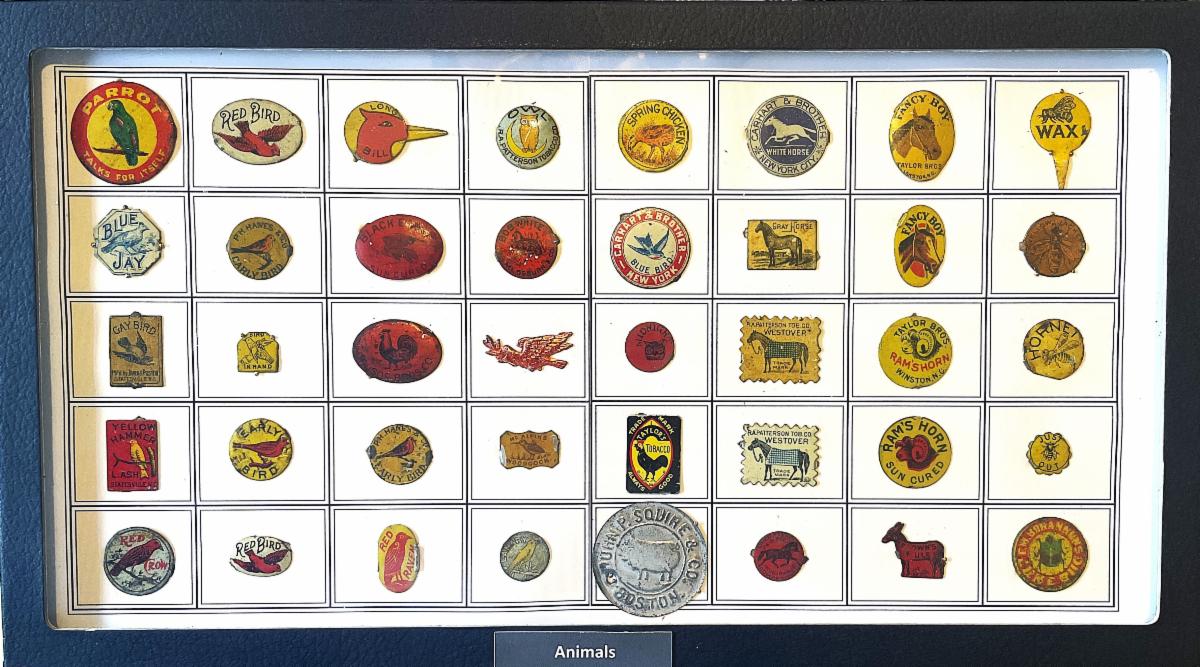
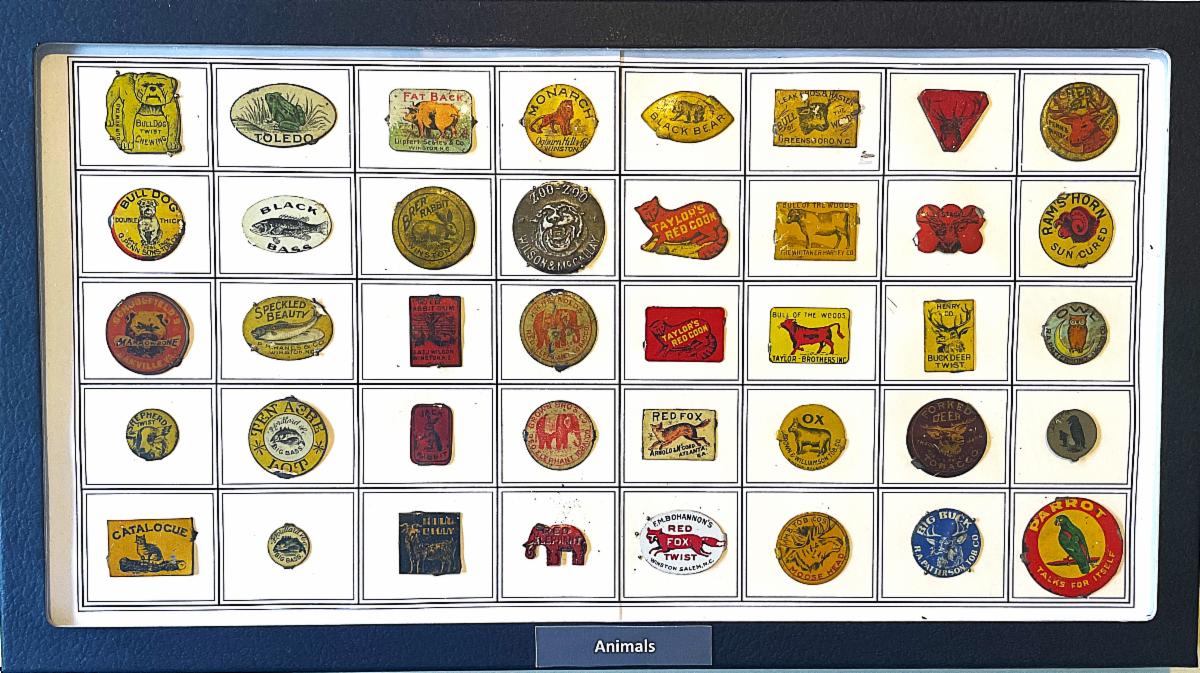
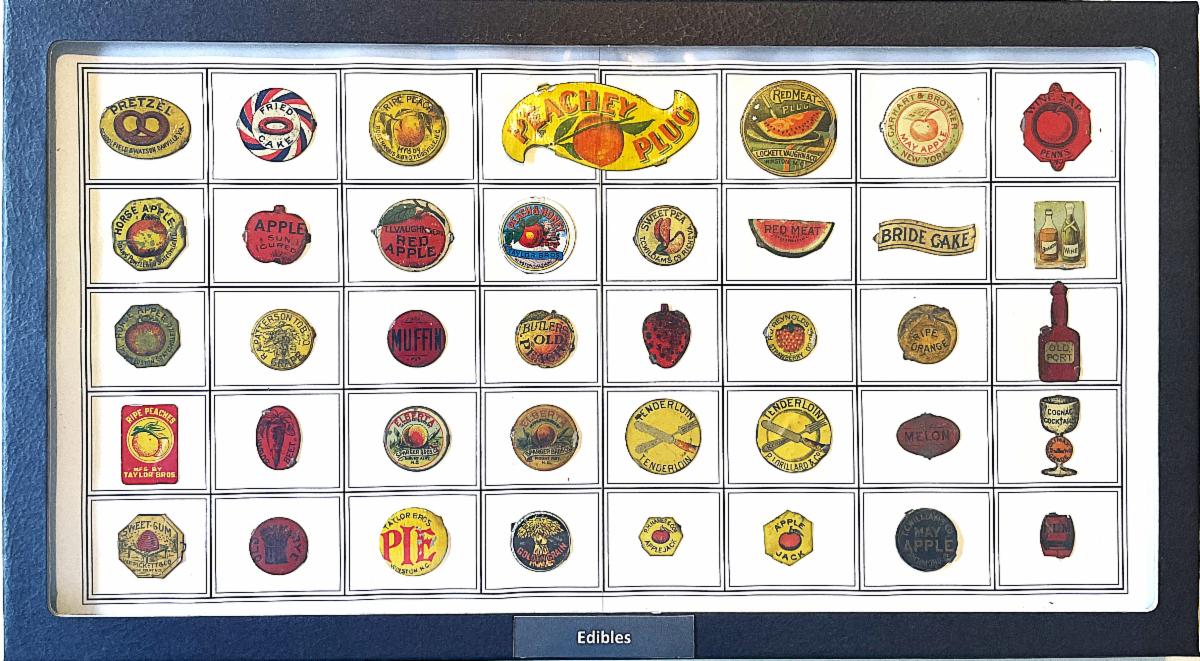
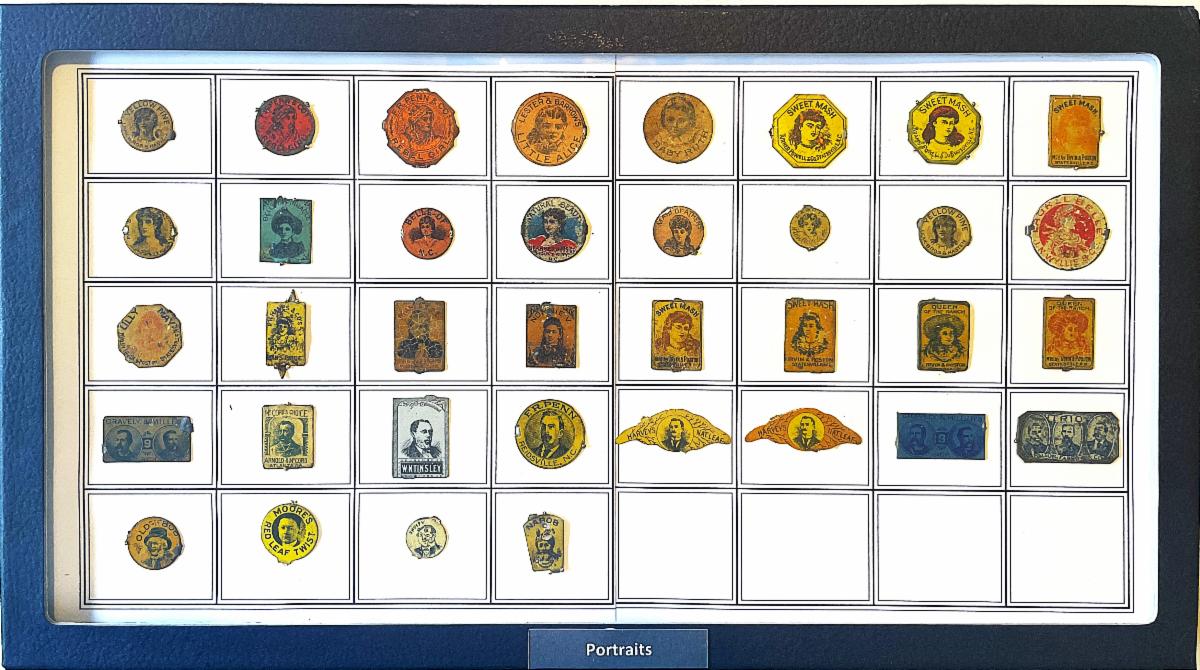
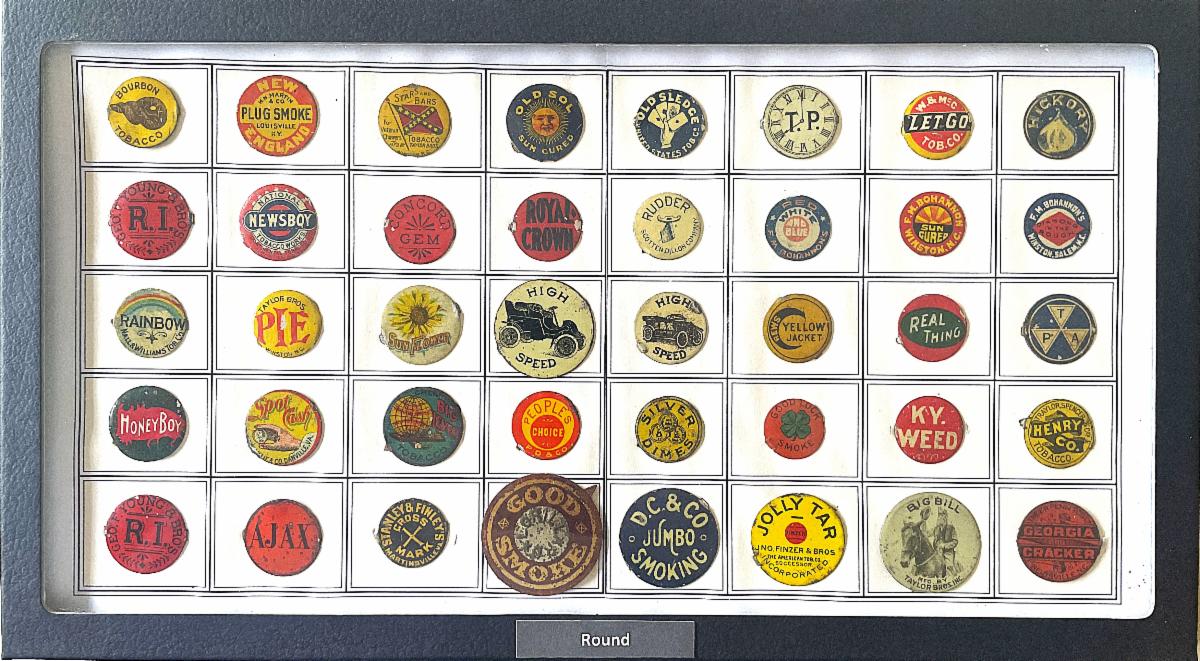
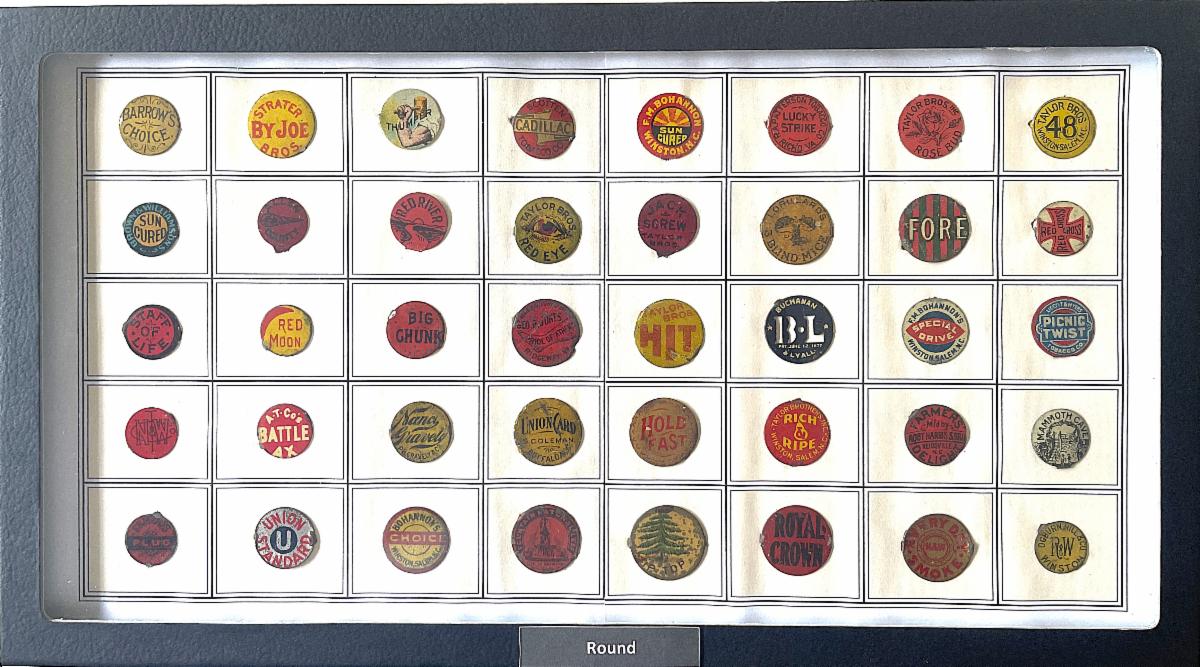
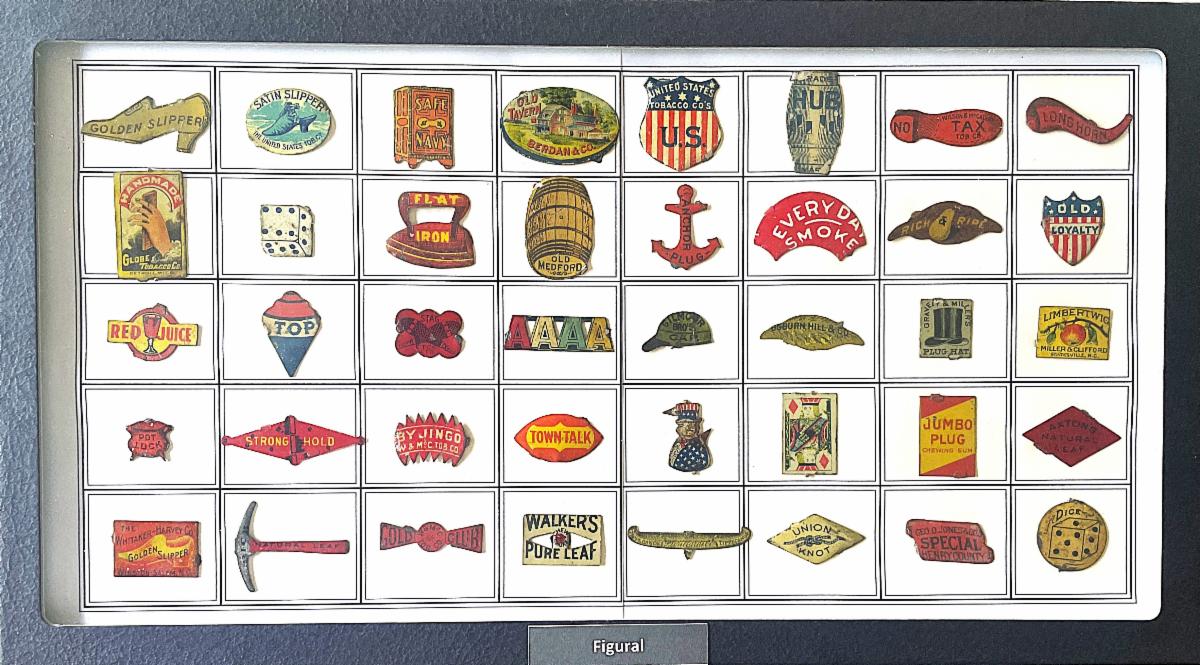
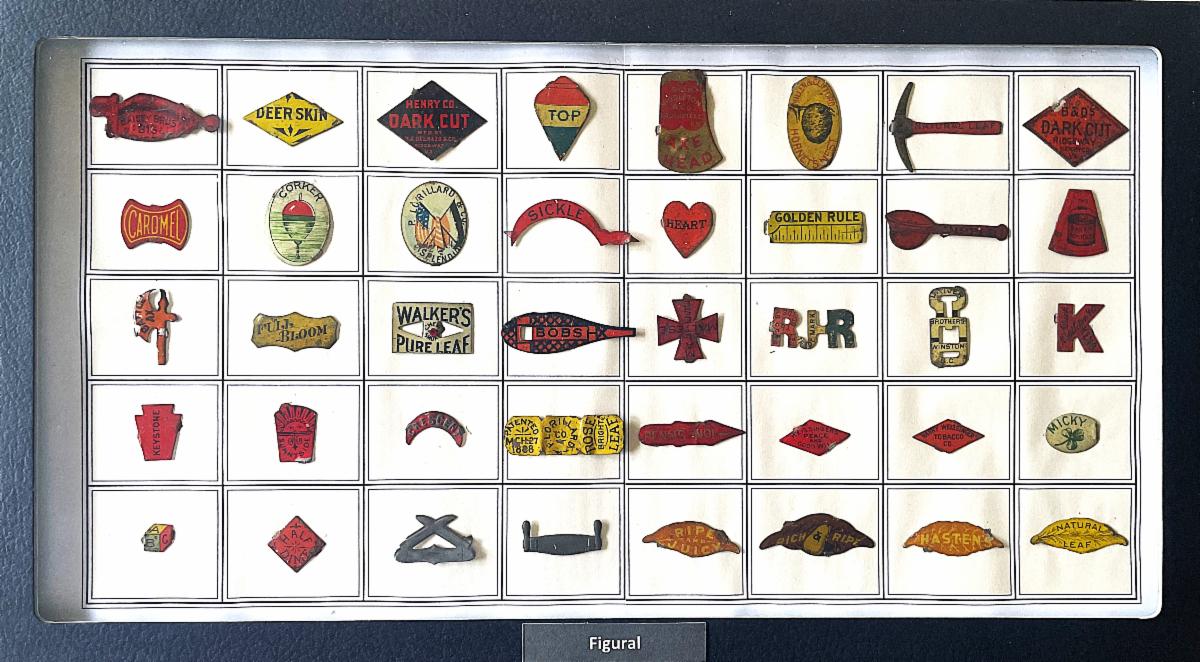
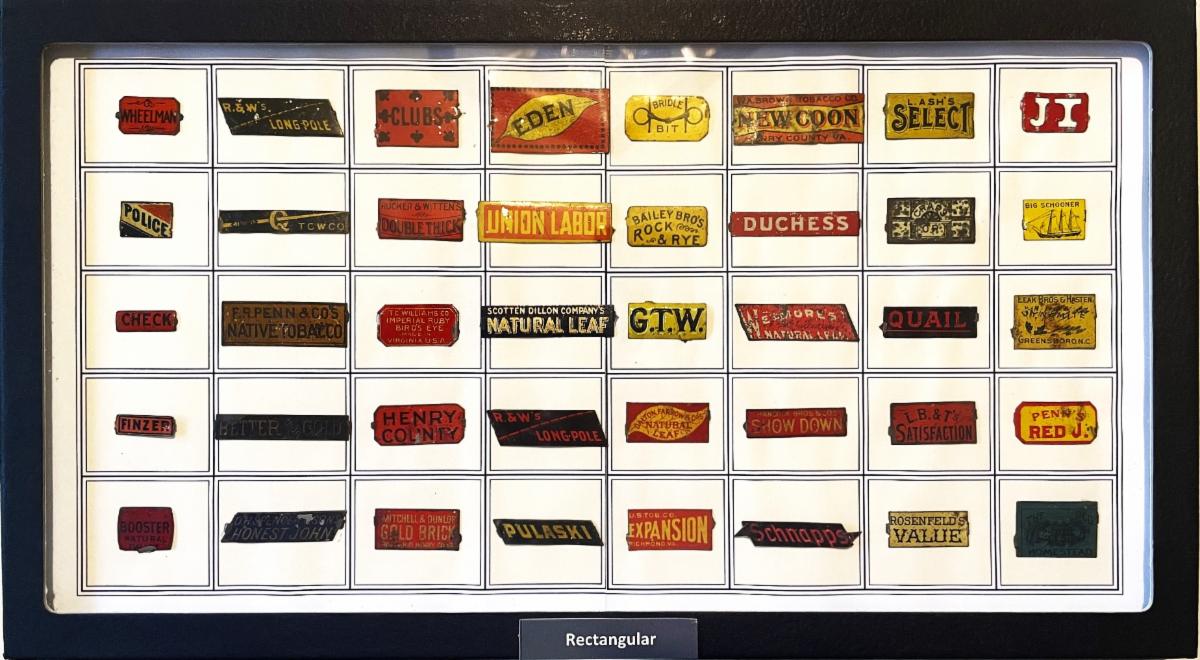
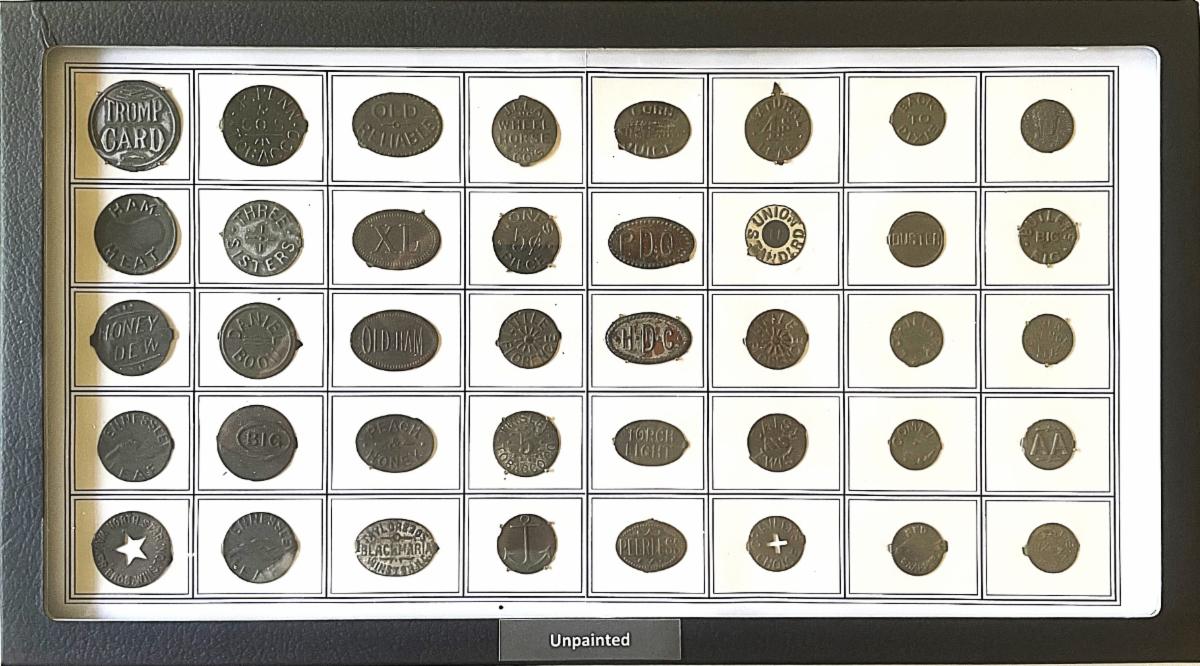
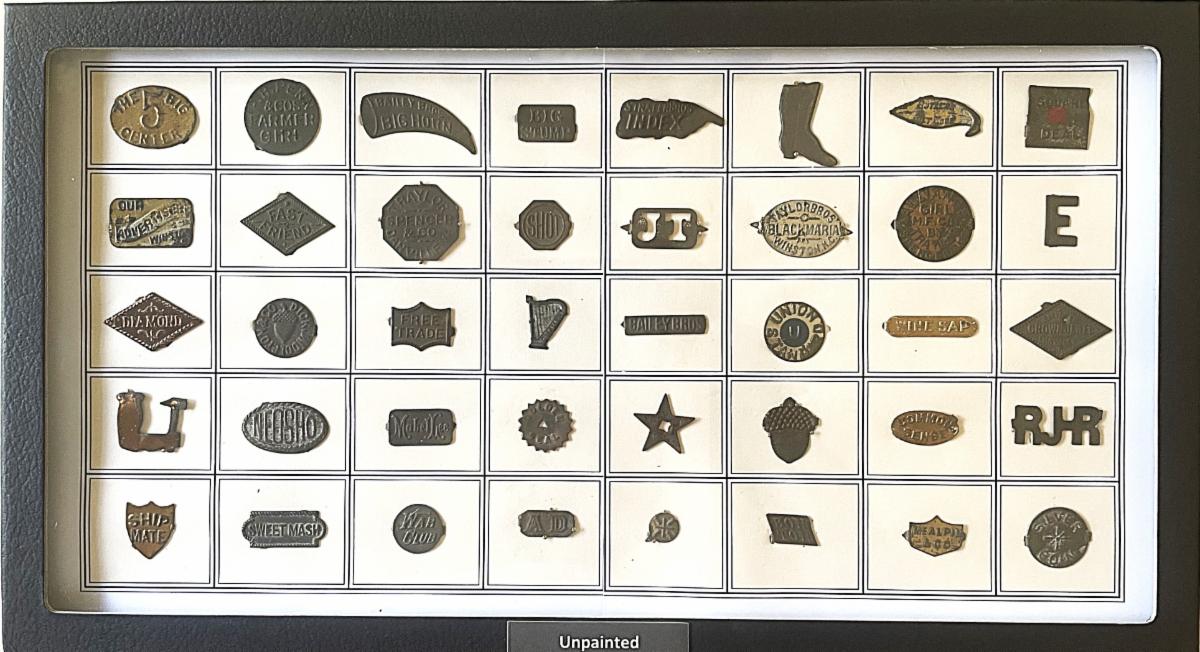
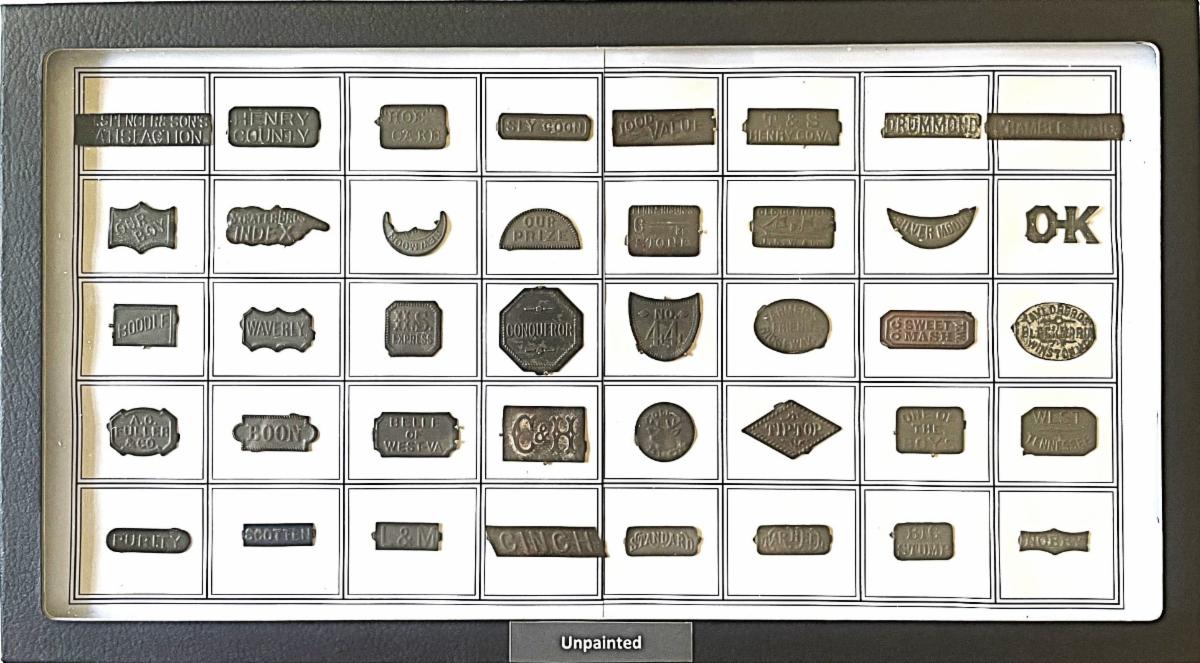
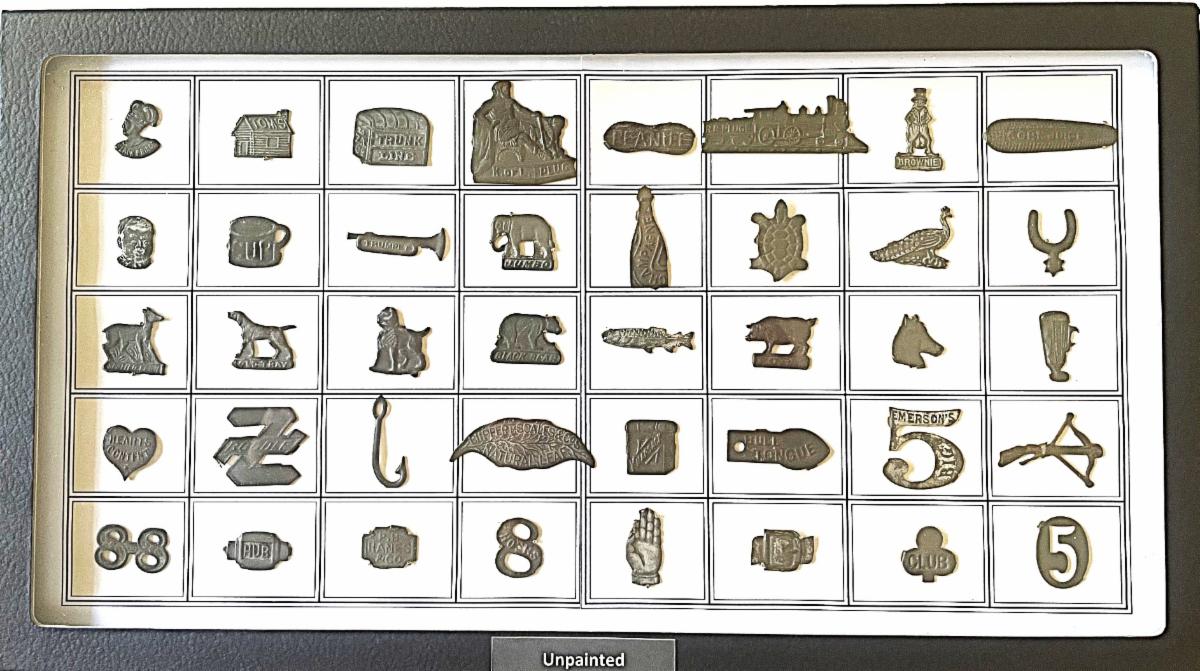
Tobacco tin tags represent a fascinating yet often overlooked chapter in the realm of vintage advertising. During the late nineteenth and early twentieth centuries, plug tobacco—dense blocks of pressed tobacco leaves meant for chewing—surged in popularity across the United States. To prevent counterfeiting and establish brand identity in a crowded market, manufacturers began inserting small, stamped metal tags directly into the tobacco blocks. These miniature artifacts, typically measuring less than an inch across, served as the primary visual signature for hundreds of competing tobacco brands.


The transition to using metal tags was driven by practical economic necessity and legal protection. Before the implementation of these distinct markers, dishonest merchants frequently substituted cheap, inferior tobacco for premium brands. In response, manufacturers patented various styles of tin tags that featured sharp prongs on the back, allowing them to be pressed securely into the face of the tobacco plugs. This innovation guaranteed that consumers could verify the authenticity of their preferred blend up until the moment of consumption.


The sheer variety of designs found on tobacco tin tags reflects the vibrant graphic design style of the Victorian era. Manufacturers utilized an expansive lexicon of imagery to catch the consumer's eye, ranging from animals and political figures to geometric shapes and everyday objects. Popular brands like "Star," "Horseshoe," and "Climax" featured straightforward, recognizable shapes, while others utilized intricate insignias or humorous caricatures. The tags were manufactured using thin sheets of tinplate, which were then lithographed with bright, durable colors or simply stamped to create a raised, embossed effect.

Beyond their role as commercial trademarks, tobacco tin tags inadvertently sparked one of America's earliest corporate loyalty and redemption programs. Recognizing the competitive edge of brand retention, tobacco companies began offering valuable premiums in exchange for returned tags.


Plug chewing tobacco experienced a massive drop in popularity throughout the 1920s. Post-war consumers rapidly shifted their preferences away from chewing tobacco toward mass-produced, pre-rolled cigarettes and loose smoking tobacco. Later that decade, manufacturers could machine-wrap individual portions of tobacco in clear, moisture-resistant film that featured the brand’s logo printed directly on the exterior, obviating the need for tin tags. In response to those factors, tin tags entirely disappeared from view.


The gallery below presents the tobacco tin tag collection of an AAAA member who prefers to remain anonymous. Use your zoom feature to get in close and see the impressive details on these little treasures!

The Gangs of New York

"The Gangs of New York" is a celebrated film starring Daniel Day-Lewis and Leonardo DiCaprio, directed by Martin Scorsese. Set in the infamous Five Points neighborhood of New York in the 1860s, it captures a pivotal era in American history.


Five Points was a notorious 19th-century slum in Lower Manhattan, known as America's first major melting pot where immigrants and free Black Americans lived together. Built over the filled-in Collect Pond, the unstable ground led to rapid decay, turning it into a slum. Named after the five-cornered intersection of Orange (now Baxter), Cross (now Mosco), Anthony (now Worth), Little Water (now Mission), and Mulberry streets, it was a haven for gang members, thieves, and murderers, as well as a refuge for those escaping slavery and a gateway for Irish and Italian immigrants.


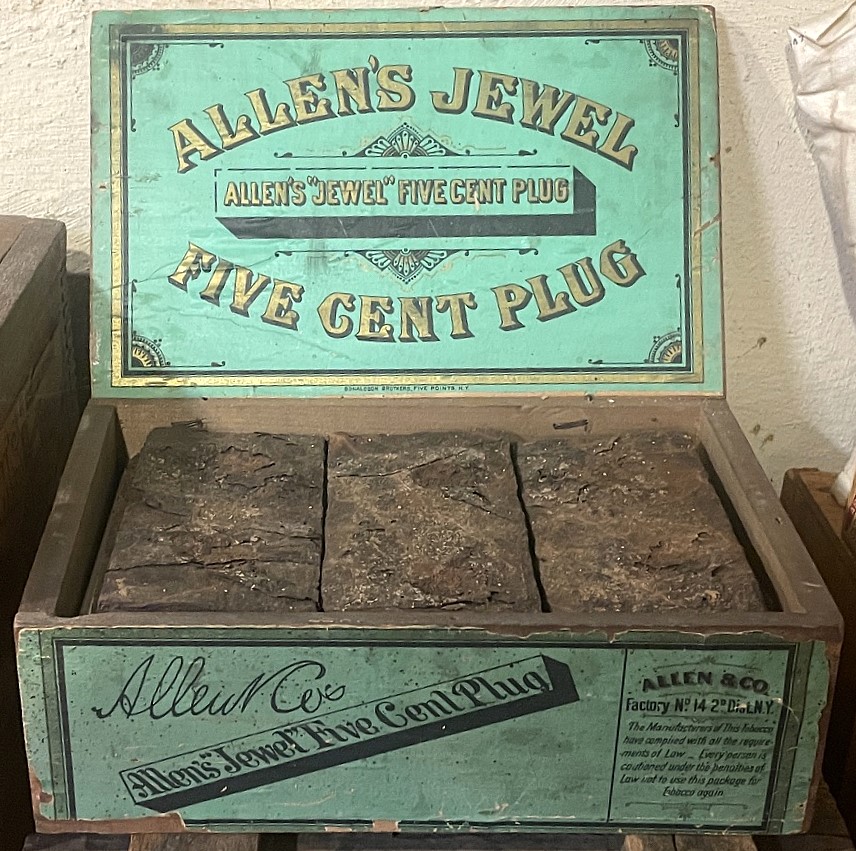
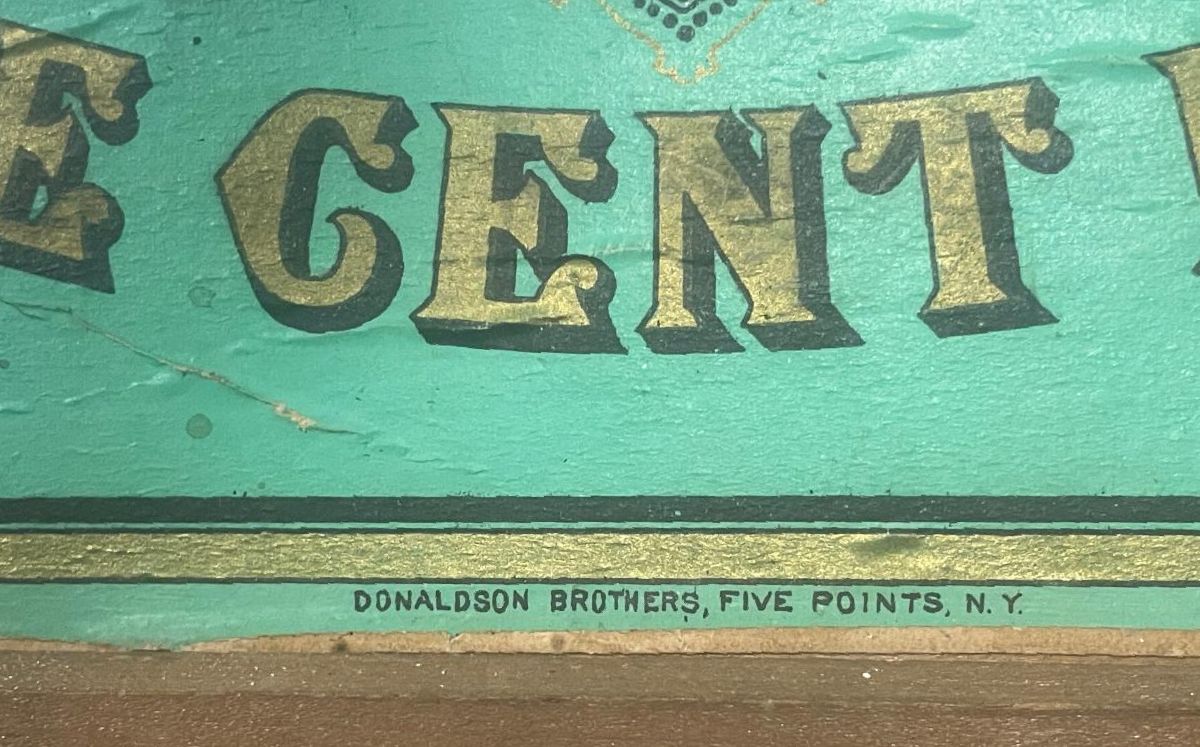
Though the neighborhood no longer exists, artifacts like the 1870's plug tobacco box (image, below--tobacco is not original to the box) is a vestige from the past. On the bottom of the inner label, the manufacturer is identified as "Donaldson Brothers, Five Points, New York" (Second photo). So this tobacco box actually witnessed the place and approximate times portrayed in that film. If you're a fan of the movie and a collector of antiquities, acquiring a memento from this era might intrigue you. However, it could prove to be challenging, as almost all of the hundreds of thousands of local artifacts discovered in an extensive archaeological project were lost in the 9/11 attacks.

Video: J.R. Jones General Store: Dearborn, Michigan

Originally built in Waterford, Michigan, in the 1880s, this store was relocated to Henry Ford's Greenfield Village to serve as a living museum of the era. It features meticulously preserved lithographed tin signs, original wood-pulp-based packaging, and period-correct store fixtures like glass display cases and bulk barrels for flour and sugar. It offers a rare look at how a 19th-century "silent salesman" would have been staged to attract customers. For a visit, click on the You Tube link below.

Wanted Items

In this column are those sought-after items of desire that seem to be elusive. If you know where any of these items can be acquired or if you have one available, please click the link to reply directly to the seeker. To place a listing in this column, plefkov@gmail.com. There is no fee for AAAA members. Up to three listings per member are permitted.


Country store related items wanted for The W. R. Rudy Country Store Museum seeking wooden adverting bins such as Wilbur Animal Feeds, coffee bins etc., advertising signs, clocks, wind up motion displays, wooden signs, early drugstore show globes, cork top patent medicines, early trade signs of all descriptions, also seeking Drugstore and Country Store Collections. Contact Howard Parzow 301-351-6544 email hparzow@aol.com for a quick response.


Bismoline powder tins (before pink/blue container) or any advertisement of Bismoline. Anything antique Lancaster, Pennsylvania. Contact: Marie Emerick, 717-284-4511 leave message or marieemerick38@gmail.com 


Yellow wood Jersey Coffee Bin and other unusual brands wood coffee bins wanted by longtime collector. Please contact Andy Kmiec amkmiec@mail.com


Wood Veterinary painted and stenciled stock food bins wanted. Colonial, Wilbur's, Rochester, Vick's, Stillwagons & other examples. Please contact Andy Kmiec amkmiec@mail.com


Brother Jonathan, yellow Pastime Tobacco and other unusual large tobacco bins wanted. Please contact Andy Kmiec amkmiec@mail.com


Clover Farm Stores (Cleveland, OH headquarters). General store grocery and hardware items, any advertising, displays, signs, tins, boxes, pictures, etc. Anything related to Clover Farm Stores. Dave and Sally Coates, 765-586-9834, dbsjcoat@gmail.com


Early Mr. Peanut/Planters Peanut memorabilia. The older and rarer the better! Please contact at jcamelleri@gmail.com or 864-327-6485. 


Santa Claus bar soap. Call 602 689-7779 or send email to goodfinds31@yahoo.com


"You Pay" Spinners Wanted. Colorful, early, tin litho only. Also known as "Who Pays" Spinners, "Your Turn" Spinners, etc. Used in drinking establishments to determine who pays for the next round. Please contact plefkov@gmail.com.


In search of Raven's Horse, Cattle & Poultry Food poster. Last sold Showtime Auction, April 2013. Dimensions: 13 1/2 x 21 1/2. Motivated buyer. Please call Ken Opengart at 256-520-5211 or email at kenopengart@gmail.com. To see a photo of the poster, click here.


US cigarette boxes, packs and wrappers from 1870-1935 wanted. Please text or email any you might have available for sale. Jon Canfield, joncanfield@gmail.com, 917-841-0275.


Pre-1885 advertising items related to barbed wire and farm fences. I am interested in primary material. Let me know if you have any items including illustrated catalogs, wire company published newspapers, illustrated postal covers and letterheads, flyers, signs, salesman samples, patent models or anything else related to my specific wants. Larry W. Love, wirefence@att.net, 214-497-6787.


Bulldog tobacco oval-top tin. Convention Hall coffee tin (Ridenour-Baker Kansas City) green version. Big Horn 1 lb or 3 lb coffee tin.  Tuxedo tobacco sample pocket tin (top condition). scross1@cox.net.


Philip Morris Tin & Porcelain Advertising Signs, thermometers, door push signs. Excellent to mint condition preferred. Daryl Crawford (804) 721-7294 or email drc4@msn.com


Justrite Pet Foods. The Justrite Company General Office was located in Milwaukee WI. A National Account. Advertising, displays, signs, tins, boxes all with logo on it. Most would come from the 1930s through 1950s. Thanks for the help… Gordon Addington. To reply, click here.


Old Topper Brewery Calendar of the late 1940s featuring a pin up artist nude in large format wanted. Always seeking any Rochester Brewery memorabilia. John DeVolder 585-697-4047 or jcdvette@yahoo.com.


"Jenny" Genesee Brewing Company's girl of the 1950s. Seeking cardboard point of sale-and other items that feature Jenny, who had a ten-year run from 1953 to 1963. Also interested in any cardboard point of sale items from the 1930s through the 1950s from any of the Rochester Breweries. John DeVolder 585-697-4047 or jcdvette@yahoo.com.


Coca-Cola 24" button porcelain sign with bottle in center. Want several in as close to mint condition as possible. Call 336-970-9867.


Books on Oil & Gas Collectibles. Also looking for books on signs. Call 336-970-9867.


Yellow Kid wanted: 50 year collector looking for the unusual. Reply to: yellowkid@tds.net.


Pedal Cars: Photos, postcards, calendars, catalogs and advertising related to pedal cars. To reply, click here.


Beer cans, soda cans, beer and soda tin-over-cardboard signs, cork-backed bottle caps, key-wind coffee cans, quart oil cans. Please email Jeff Lebo at jefflebo@aol.com.


Pedal car related items. To reply, click here.


Matchbook holders. To know what these are, see my articles in Checkerboard

for Nov. 2020 and May 2021. I will consider all items, in any material from plastic to gold, and not necessarily with advertising. Email Andy at matchbookholder@yahoo.com.


Cigarette Packs. Advanced collector looking to purchase vintage packs. Please contact Dheeraj by email: DHEERAJ.KHIYTANI@GMAIL.COM.


Donald Duck Goyer Coffee Cans; One pound can & 3 oz sample size in good condition with lids. Please send email with photos & prices to Jessica_l_Upton@yahoo.com.


Morimura Brothers (Japanese import company operating in NYC from 1880-1941) advertising items wanted: trade cards, pamphlets, catalog pages, salesman sample pages, porcelain items with advertising. To reply email at victdelit@aol.com.


DeLaval Items and Farm Advertising Signs. Always looking for top quality and unique items. Contact Gregg Hillyer at hogs2gregg@aol.com.


Antique advertising pertaining to country store or drug store products or places. Especially those showing women or girls with the product or location shown. I would consider any  antique advertising (paper, cardboard & metal signs). Quality a plus! Dale Peterson at cpeters2@sbcglobal.net.


Unusual one pound peanut butter tins. Tin litho or paper label. To reply, click here.


Marshmallow Tins. Smaller than 5 Pound Size. To reply, click here.


American Cookie, Biscuit and Cracker Tins and Boxes. To reply, click here. 


Banjo related advertising wanted Pre-1940s. Long time collector buying banjo company signage, catalogs, billheads, periodicals, minstrel banjo items such as posters, broadsides, sheet music (pre-1870s) with illustrated banjo covers, early photographs showing banjo players (pre-1915). My main collecting interest is in 19th century material. To reply, click here.


"Antique American Medicine Bottles" by M. Knapp... soft cover book with price guide. Printed in 2012. Cemartinjr@comcast.net or 781-248-8620. Also, see my other want ad for Clarke’s ephemera and bottles.


Looking for 3 Vintage Tins. American Eagle "Oriental Mixture" tobacco (dimensions approx. 6.5" long, 2.75" wide, 1.5" tall); 1 Gal. Indian Head Hydraulic Brake Fluid; and Packham´s Caramel Toffee. Any offer is welcome and any condition considered. To reply, click here.


Morton Salt, older items, and also Pacific Coast Borax, especially a crate or box. Email pego1950@hotmail.com or call Peggy Dailey 612-522-9211.


Comic Book-Related Advertising Items: Must be from before 1980. To reply, click here.


Clarke’s Vegetable Sherry Wine Bitters, Sharon, MA & Rockland, ME: All sizes, variants, smooth/pontil base. Especially need labeled Clarke’s any size! Also, any Clarke’s ephemera…trade cards, almanacs, newspaper ads, etc. Charlie Martin Jr., 781-248-8620. Email: cemartinjr@comcast.net.


George Petty: Advanced collector looking for unique or rare items. Photo’s, store displays and non paper items. NO Esquire pages. Pete Perrault. To reply, click here or call (502) 290-7661.


Stock food, poultry food, veterinary advertising wanted. Posters, medicine packages, give-aways. Email kenopengart@gmail.com or call (256) 520-5211.


Singer Sewhandy Model 20. Green-regular paint, not hammertone. To reply, click here.


National Biscuit Company, Nabisco, Uneeda Biscuit, Uneeda Bakers, Muth Bakery, NBC Bread toys, signage, tins, containers, displays, historical items. Please Email jbarney@ameritech.net or call (937) 205-2232.


Early Cigarette Rolling Papers: Pre-1940s - American, Zig Zag, Braunstein Freres, Bambino, and Ottoman papers wanted. To reply, click here.


Antique/Collectible Banking and Financial System "Giveaway" and advertising items. Specifically from Pennsylvania. Alarm devices and such. To reply, click here.


VITAMINS advertising, displays, signs, bottles, and anything related: Hadacol is an example. Most would come from the 1930s thru the 1970s. Also anything related to cod-liver oil and WEIGHT-LOSS, REDUCING, ANTI-FAT, and OBESITY ITEMS. To reply, click here.


Dwinell-Wright Co. Royal Ground Spice Cardboard Spice Boxes. One side displays horizontally. Approximately 3.75" by 2.25". Any type of spice is OK. To reply, click here.


ENSIGN Perfect and ENSIGN Perfection vertical pocket tobacco tins to enhance my collection. Feel free to contact me at 614-888-4619 or k8pyd@breezelineohio.net to see if you can help fill the voids.


Edmands Coffee Company, Edmands Tea Company, 1776 Coffee, American Beauty Tea, Japan Tea, Devonshire Tea, (imported by Edmands, Boston/Chicago): Any items such as tins, signs, paper, or anything else related to the Edmands family of companies in Boston is desired. To reply, click here.

The AAAA Checkerboard is a monthly e-newsletter that is made available to all AAAA members at no cost. The mission of the Checkerboard is to increase knowledge about antique and collectible advertising among AAAA members. The Checkerboard also provides news and updates about AAAA. It is produced each month with the exception of the four months per year when the award-winning PastTimes print newsletter is published. Paul Lefkovitz (plefkov@gmail.com) serves as AAAA Publications Editor. Jack Dixey, Dheeraj Khiytani, and Alice Muncaster serve as Associate Publications Editors. Copyright 2026, Antique Advertising Association of America.

Facebook