|
Congratulations to our new and newly re-elected board members
New to the WORC board are Andy Smith of King County Solid Waste Division and Liv Johansson of the Woodland Park Zoo.
Re-elected to the WORC board are Nehemias Chamla (Natural Selection Farms), Mary Harrington (Department of Ecology), and Reingard Rieger (Tilth Alliance).
Congratulations and thank you for your service.
|
|
|
International Compost Awareness Week 2022, May 1-7, 2022
International Compost Awareness Week is the largest and most comprehensive education initiative of the compost industry. It is celebrated nationwide and in other countries each year during the first full week of May.
To learn more about how you can get involved with International Compost Awareness Week, plan an event in your community, or check out the event page for more event ideas here
|
|
|
WSRA’s 42nd Annual Conference and Trade Show May 15-18, 2022
Semiahmoo Resort, Blain, WA
|
|
|
WEF Biosolids and Residuals 2022: May 24-May 27, 2022
Columbus Convention Center, Columbus, Ohio
Save the Date for Residuals and Biosolids 2022!
The 2022 WEF Residuals and Biosolids conference will share new technologies, successful innovations, and current best practices to allow industry professionals to achieve long-term success designing and managing biosolids programs.
The conference will include oral presentations, interactive discussions, posters, pre-conference workshops, exhibits, mobile sessions, opportunities for networking in dynamic settings, as well as virtual components.
|
|
|
Compost and Phosphorus Nutrient Claims
American Association of Plant Food Control Officials agree to recognize slowly available phosphorus claims in recycled organic soil amendments.
Phosphorus (P) is a plant essential nutrient that has increasingly become an environmental concern, and its use is limited because if excess phosphorus in the soil migrates to waterways, it can cause problems such as algal blooms and eutrophication. While most phosphorus fertilizers (inorganic) supply P in the form
of orthophosphate, which is water-soluble(highly water-extractable phosphate), compost and most other carbon-based products possess only a small fraction of orthophosphate and other water-soluble forms of phosphate.
|
|
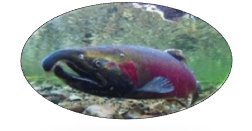
Soils for Salmon: Have scientists have found armor against the killer of Coho?
In the winter of 2021, about one year ago, news broke out across the country that UW and WSU scientists identified a specific chemical found in vehicle tires to be linked to Coho salmon deaths. The culprit is a chemical called 6PPD, which is essentially a preservative used to keep car tires from breaking down too quickly. It remains unclear how exactly this chemical kills Coho salmon, but it may be doing something to the lining of the salmon's vascular system, says Jen McIntyre, an aquatic ecotoxicologist at Washington State University who has been studying this mystery for more than 15years. While storm water coming off roadways contains many pollutants, pinpointing 6PPD as a primary culprit affecting salmon is good news.
|
|
Compost Facility Operator Training returned in 2021 with a hybrid in-person and virtual model
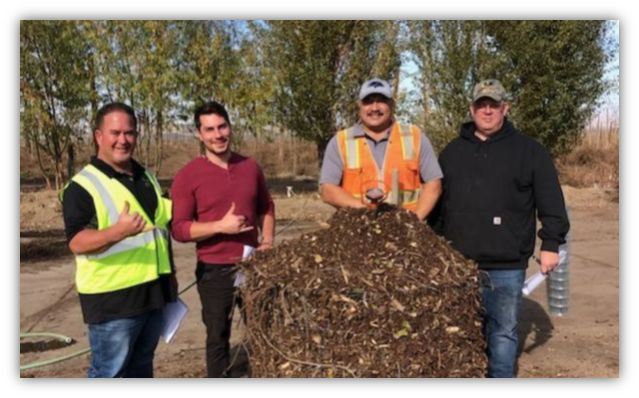
After a two-year-long hiatus, WORC’s Compost Facility Operator Training (CFOT) has returned in 2021. But more importantly, it was a success! Despite the challenges of the pandemic, we were able to hold a ‘hybrid’ class with online and in-person components. This year’s CFOT still had all of the best parts of the training (namely the unofficial pile building contest). Students toured two composting facilities and networked with peers in-person and online. The students got hands-on (and olfactory)experience with compost and compost feedstocks. And they learned about the various aspects of composting: biology, pile-building, regulations, marketing, math, facility design, and much more. The class had 44 students and the group was split into groups to attend the course at 5composting facilities across Washington.
|
|
|
A lot is going on in virtual Olympia related to organics recycling. This is an exciting and also an important time to stay up-to-date as legislation can move fast during a short session this year.
The biggest potential legislation is being discussed in the statewide Organics Management to Reduce Methane and Combat Climate Change Workgroup. This group was convened by Zero Waste Washington along with other stakeholders. The purpose of this endeavor is to improve the organics management system in Washington. This group is using California SB1383 law as a starting point and gathering stakeholder input to inform policy tailored to fit Washington. Some policy provisions being discussed include:
- Statewide, mandatory organics collection programs with diversion targets
- Edible food recovery programs and how that ties to Ecology’s new Use Food Well Washington Plan
- Procurement requirements for jurisdictions
- Significant capacity planning and regulatory improvements
- Increased education and outreach
- Contamination reduction strategies
|
|
 |
|
Nominate your organization for a member spotlight!
Every newsletter, WORC features one of our member organizations, and yours could be in the ‘spotlight’ next!
Not everyone may know about what you do, so let us know and we can feature you. If you’ve been featured in the past, you can be featured again!
Let us know if you have a cool new project or awesome staff you want to highlight.
|
|
|
|
|
If you are interested in becoming more involved with WORC this year, consider submitting a spotlight or even joining a committee. |
|
|
|
|
Check out the latest news, view past newsletters, and see legislative updates on the WORC website
|
|
|
|
|
|
|