|
Amboseli Trust for Elephants
April - June 2025
| |
30th June 2025 | Newsletter | |
Note from our Director
Dear Cynthia,
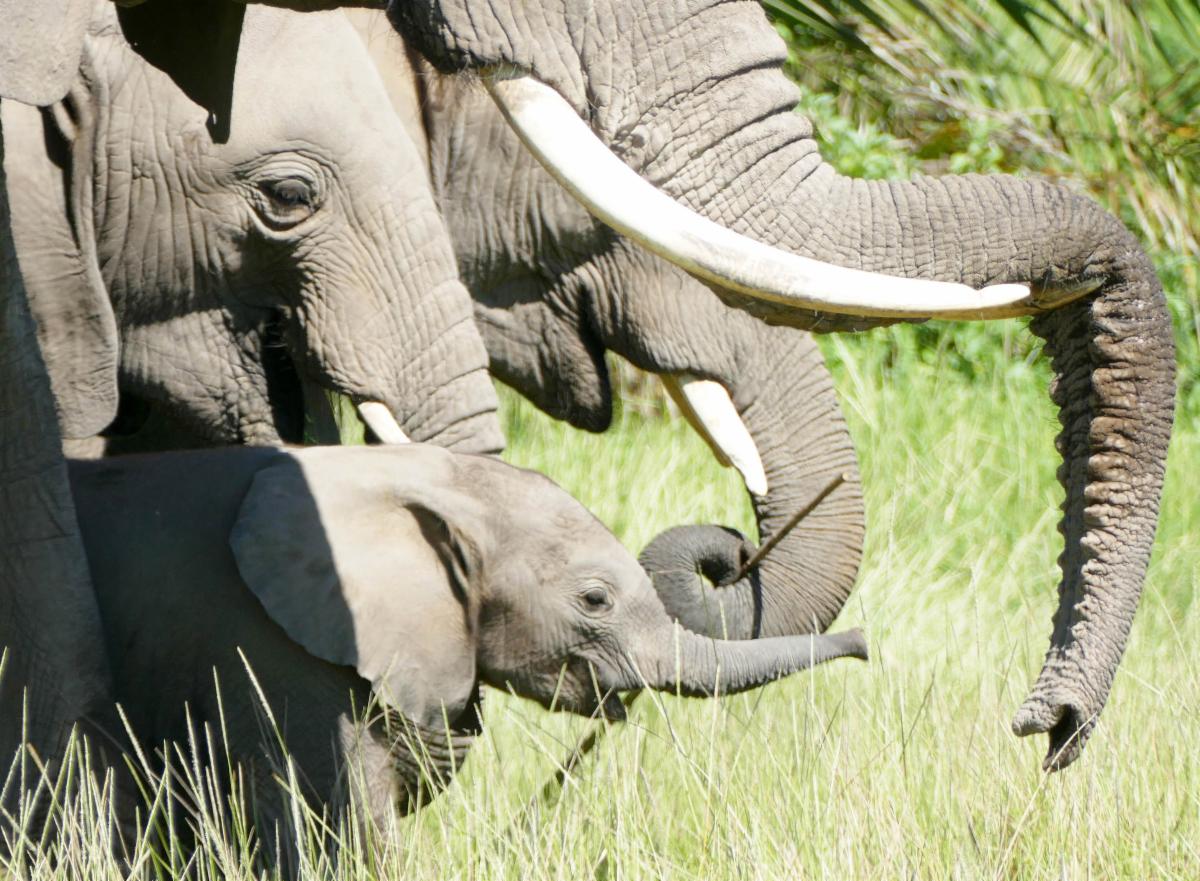
We mentioned in the last newsletter that we were expecting an elephant baby boom in Amboseli, and I am happy to report that we are in the midst of one. Since the beginning of March, 108 calves have been born, and we can see that many more elephants are pregnant. It is a joy to be out with the elephants with so many tiny calves playing and exploring and learning to use their trunks. I just wish it could always be this way.
There are so many threats to the complex lives of elephants. Left in peace with intact families, wise matriarchs, and older experienced musth males, elephants can thrive and express their full repertoire of behaviors within that amazing and rich life. Poaching, sport hunting, culling (we have just heard that Zimbabwe plans to kill elephants to give meat to people), conflict, and habitat loss are disrupting elephant lives in most of Africa.
Although Amboseli is a haven and in some ways a paradise for elephants, it has not been spared. Habitat loss and the change of land use from pastoralism to farming has caused conflict between elephants and people. We and our dedicated conservation colleagues from other organizations are working hard to solve some of the problems and most important to secure elephant range in the greater Amboseli ecosystem. We get discouraged at times, but we don’t give up. Elephants deserve our persistence.
Cynthia Moss
Director
| | | | |
How Much is Craig Worth?
by Tal Manor
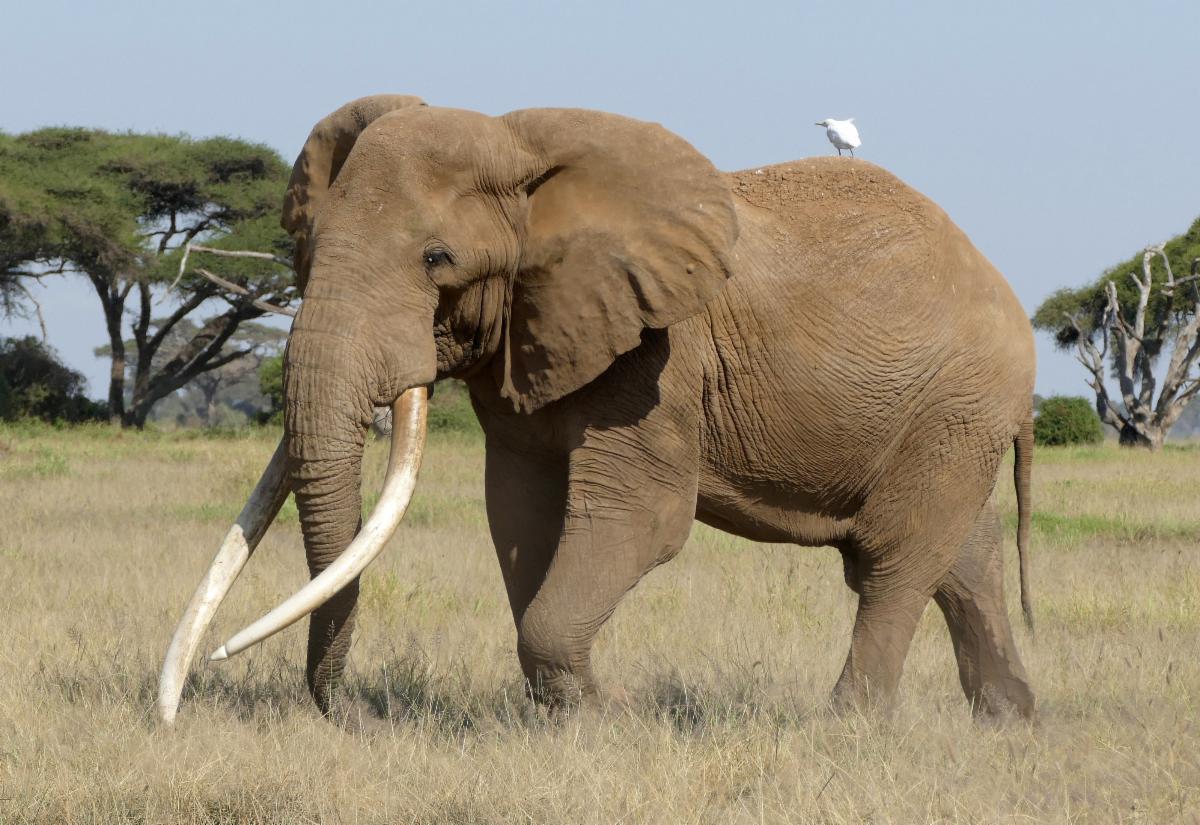
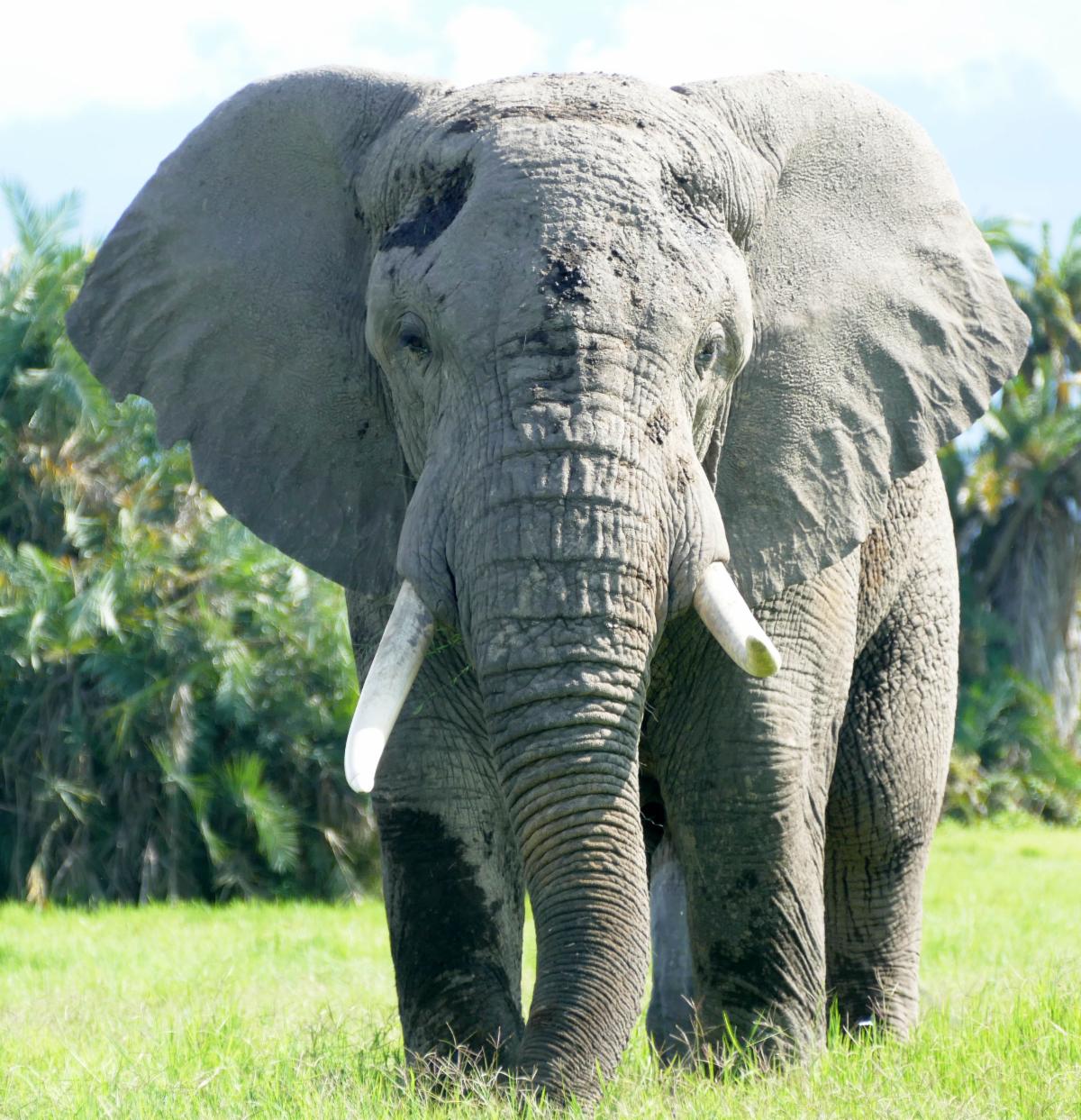
Right now, living in Amboseli there is an elephant with probably the largest tusks in all of Africa. He is called Craig, and he is 53 years old. A gentle giant, Craig is very tolerant of the people who come from all around the world to see him. Professional photographers and filmmakers spend hours and even days with him and he just ignores them and goes about his elephant life. Recently, he came into musth, a period of intense activity, when males leave their home area and search for females in oestrus and fight with any males who might challenge them. We and his many fans were terrified that he was going to cross into Tanzania where the sport hunters might be waiting for him. He got close but fortunately, he didn’t cross the border.
How much is Craig worth to Kenya? It would be hard to calculate but it is millions of shillings, perhaps even millions of dollars. Five years ago, ATE in partnership with the Amboseli Ecosystem Trust, commissioned a report on the financial benefits of wildlife to the people in the Amboseli ecosystem. It was published in 2018, and it showed considerable economic benefits to local people. We recently followed up with a second report which has just been released.
The latest report found that tourism, conservation, and related activities brought in over 2.36 billion Kenya shillings (close to $19 million) to the local economy in just one year. This includes jobs for over 1,500 full-time staff—many of them from the Maasai community—as well as major contributions to education, healthcare, and local businesses. Visitors who come to see elephants like Craig help fund land leases, scholarships, and essential services, demonstrating that wildlife is not just a national treasure, but a powerful economic engine for communities.
The findings also showed how investment in conservation supports peaceful human–wildlife coexistence. More than Ksh 54 million ($415,000) was paid out in compensation for wildlife-related losses, and nearly Ksh 400 million ($3 million) was spent on local procurement. These numbers help protect elephants like Craig by aligning local development with conservation priorities, ensuring that Amboseli remains a place where people and wildlife can thrive together. Craig is not just an iconic figure—he is part of a living economy that supports thousands of people.
It’s worth noting that this report represents only a partial view of the full picture. With a 54% response rate, many stakeholders did not provide data. The report also excludes Kenya Wildlife Service data which would include Park entrance fees. The actual economic value of wildlife and conservation in Amboseli is therefore far greater than what the report captures. To read the full report, please access it from our website on this link.
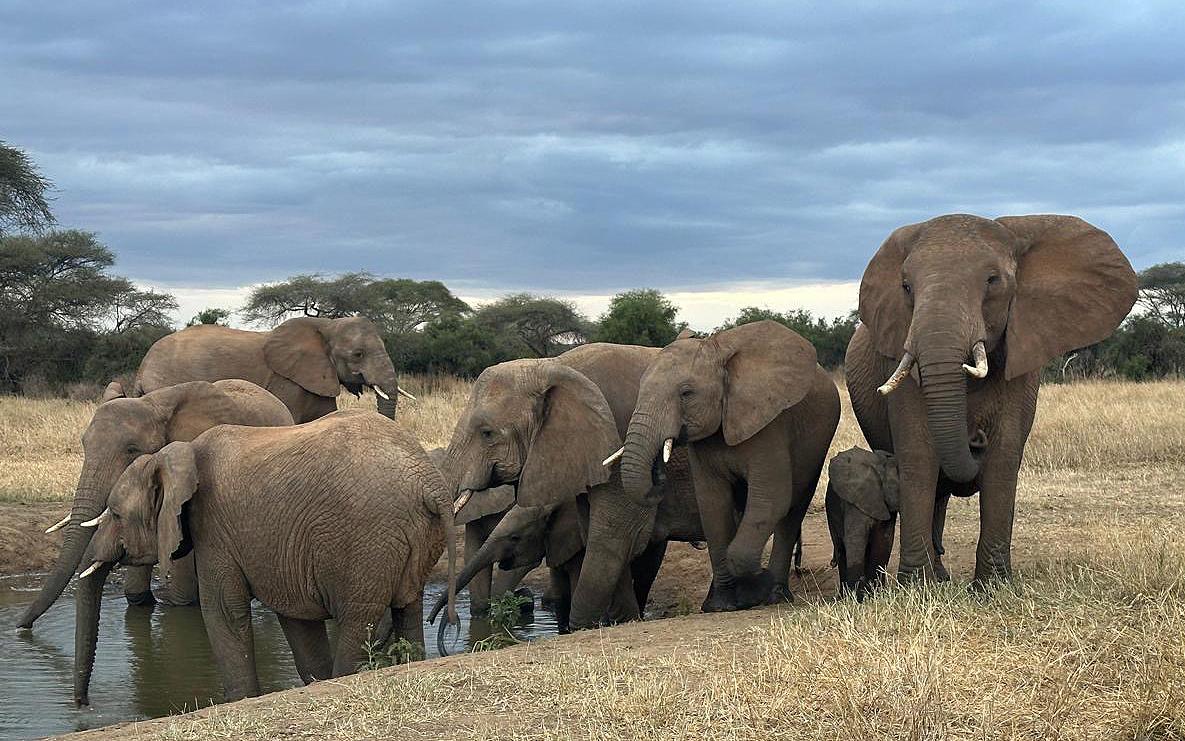
| | Part of the BB family (with Bodiaf and a new calf on the right) at a waterhole in the Selenkay Conservancy; this family moved to Selenkay several years ago and only visits the Park once or twice a year | | |
Shifting Elephant Ranges
by Vicki Fishlock
One of the most hopeful elephant traits is their flexibility. It allows them to live in habitats from deserts to rainforests, and to adapt to changes humans impose on their environments. Paired with intelligence and sociability, elephant flexibility builds into resilience, which is key for their survival in the face of habitat and climate change.
Conversely, conservation science and policy often seeks some form of rigidity – hard and fast rules that can scale across landscapes and regions, giving a structure for action. That’s why community-led conservation actions are so important, because the rules need to be locally sensitive and relevant.
Elephants, with their big bodies, big ecological impacts and big impact on a coexistence space, are a crucial component of landscape health. Changes or restrictions in how they move, can have cascading impacts on vegetation dynamics, livestock, livelihoods and communities. For example, if elephants stop using an area, plant communities become denser and bushier, reducing grazing for other species. Or, where elephants are restricted and their engineering is concentrated in a small space, vegetation struggles to regenerate and species diversity reduces.
Wildlife in Amboseli is still able to move freely across most of the landscapes, with connections to neighbouring ecosystems in South Rift, Tanzania and Tsavo. Our recent research has focused on understanding how exploring males move across landscapes and settle on their adult ranging strategies. Now we are looking at our long-term data on families, examining generational shifts in how and when families move across the ecosystem. For a small number of families we have collars; but for most of our population we can look at the time they use the central study zone, which formed a safe haven for Amboseli’s elephants in the 1970s and 1980s. For 13 families, classfied as “shifters” visibility in the central study zone dropped from ~40% to less than 10% of observation time, despite those families being large and successful (more than 30 members at the end of 2024). We look forward to presenting these results to Kenyan colleagues in September at the 2nd International Wildlife Conference hosted by the Wildlife Research and Training Institute.
| | The History of the EB Family - Updated | | |
I first met the EBs in August 1973. I was with my colleague Harvey Croze, who helped set up the Project. At the time we were based in Nairobi and working part-time on the study. On that trip we photographed several families, and among them was a female with bony shoulders who carried her head low. We found this "head-low female" again in November of that year and photographed her along with an older female who had two U-shaped tears out of her right ear. I saw these two females together several more times over the next months. It appeared that they belonged to a small family consisting of about seven members.
In April 1974 Harvey and I put radio-collars on three adult females in the population. At that time, we did not know the population well and thus we simply chose the animals opportunistically, trying to find matriarchs from different parts of the Park to determine their movements and distribution. We decided to start in the East. We went to the Longinye Swamp and the first group we came upon happened to be the family with the "head-low" and "U-nicks right" females. We chose the oldest female, the matriarch, and Harvey shot her with a dart containing an immobilizing drug. The collar was quickly secured, some measurements taken, and then she was given an antidote, which took affect very rapidly. In a few minutes she was up on her feet and in less than half an hour she was back with her family. We were fascinated to see that the family, although very frightened, would not leave the scene but rather waited about 200 meters away watching nervously.
| | Strengthening Human-Elephant Coexistence in Amboseli | |
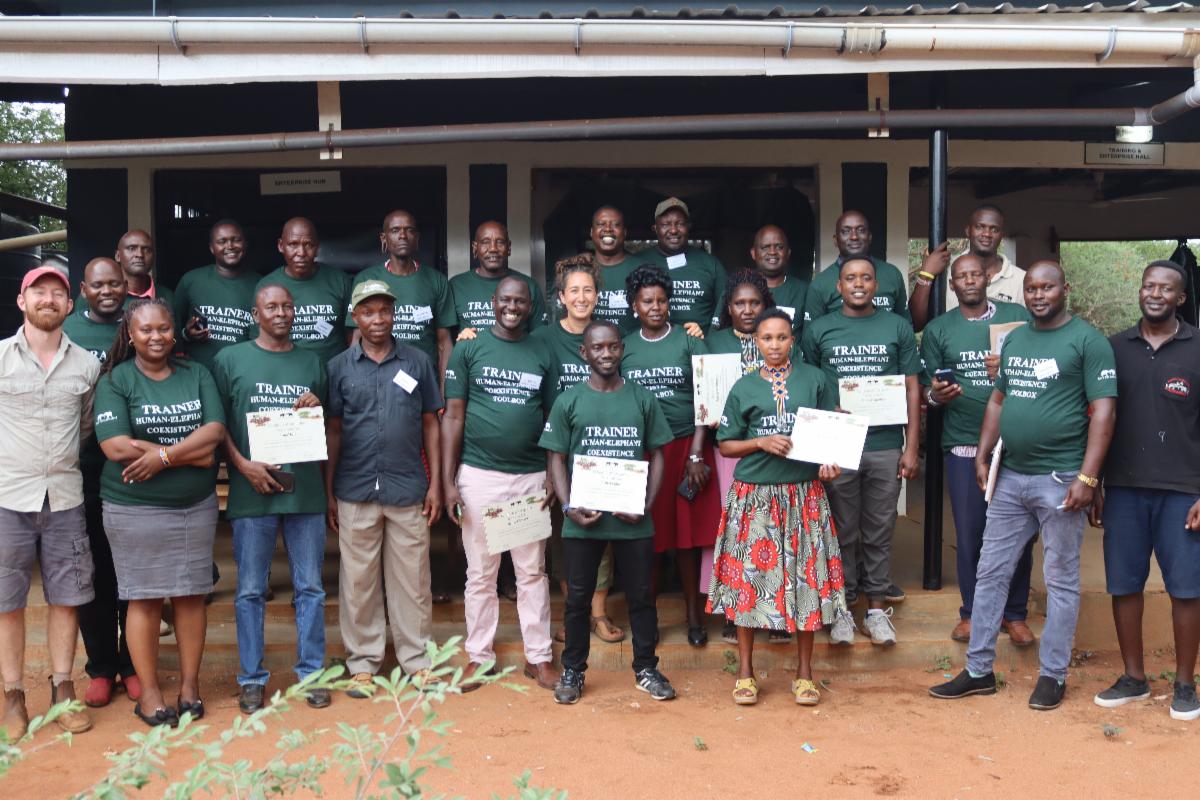
In March and May, ATE sent a total of 40 Amboseli community members to Save the Elephants' (STE) Human-Elephant Coexistence (HECx) Toolbox Trainer of Trainers’ Workshops in Voi, Tsavo. These trainings were a direct response to the ecosystem-wide survey conducted by ATE last year, which reached over 3,000 people across Amboseli to understand the challenges of living alongside elephants. The survey results highlighted farm protection as a top community priority, prompting ATE to partner with STE to deliver practical, field-based training on coexistence strategies.
The workshop introduced participants to over 80 mitigation methods from STE’s HEC Toolbox, ranging from low-cost deterrents to innovative, community-based solutions. The three-day training workshops offered participants hands-on experience and exposure to a variety of deterrent techniques. Key community leaders from Eselenkei, Imbirikani, Kimana, Kuku, Nasaru, Olgulului and Rombo attended, along with representatives from Big Life Foundation, Amboseli Ecosystem Trust, Lion Guardians and WildAid. The workshops empowered attendees to bring practical solutions back to their communities. By strengthening local capacity to manage human-elephant conflict, this initiative represents an important step forward for ATE’s HECx programme. A special thank you to Save The Elephants for running these insightful and impactful workshops.
| |  | Bridging Science and Tradition to Promote Coexistence | |
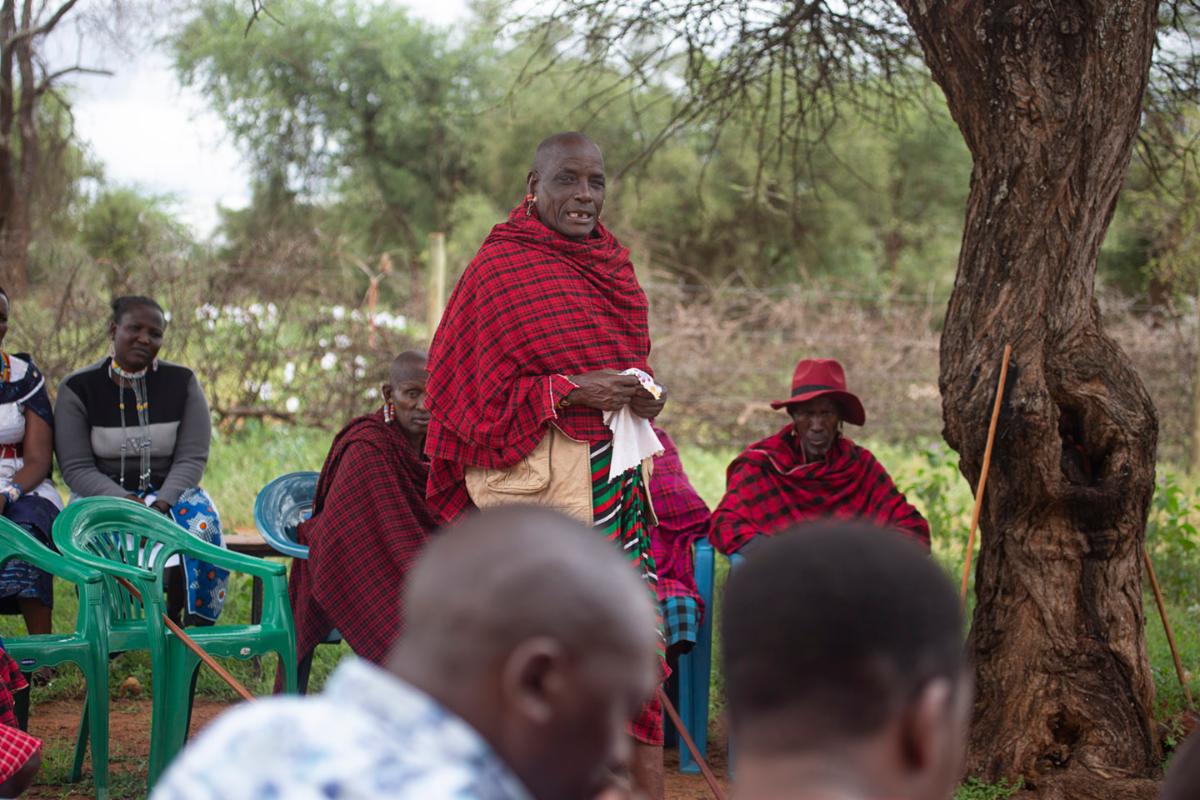
In May we carried out meeting with elders from across the Amboseli region to launch the first phase of a new Elephant Awareness Campaign. This initiative responds to findings from ATE’s 2024 survey, which revealed that many elephant-related injuries stem from a lack of knowledge on how to respond during encounters.
The survey also highlighted the loss of traditional knowledge as a contributing factor. In response, we are working with Maasai elders to document and integrate traditional approaches to living safely alongside elephants. By combining this indigenous wisdom with scientific research, the campaign aims to deliver practical, culturally relevant messages that promote peaceful coexistence.
This effort places local voices and values at the heart of conservation, ensuring that both tradition and science guide the future of human-elephant relations in Amboseli. We are working in collaboration with Standup Shoutout (SUSO), whose wide network of wildlife ambassadors will play a vital role in spreading this message. We are grateful to SUSO for their partnership.
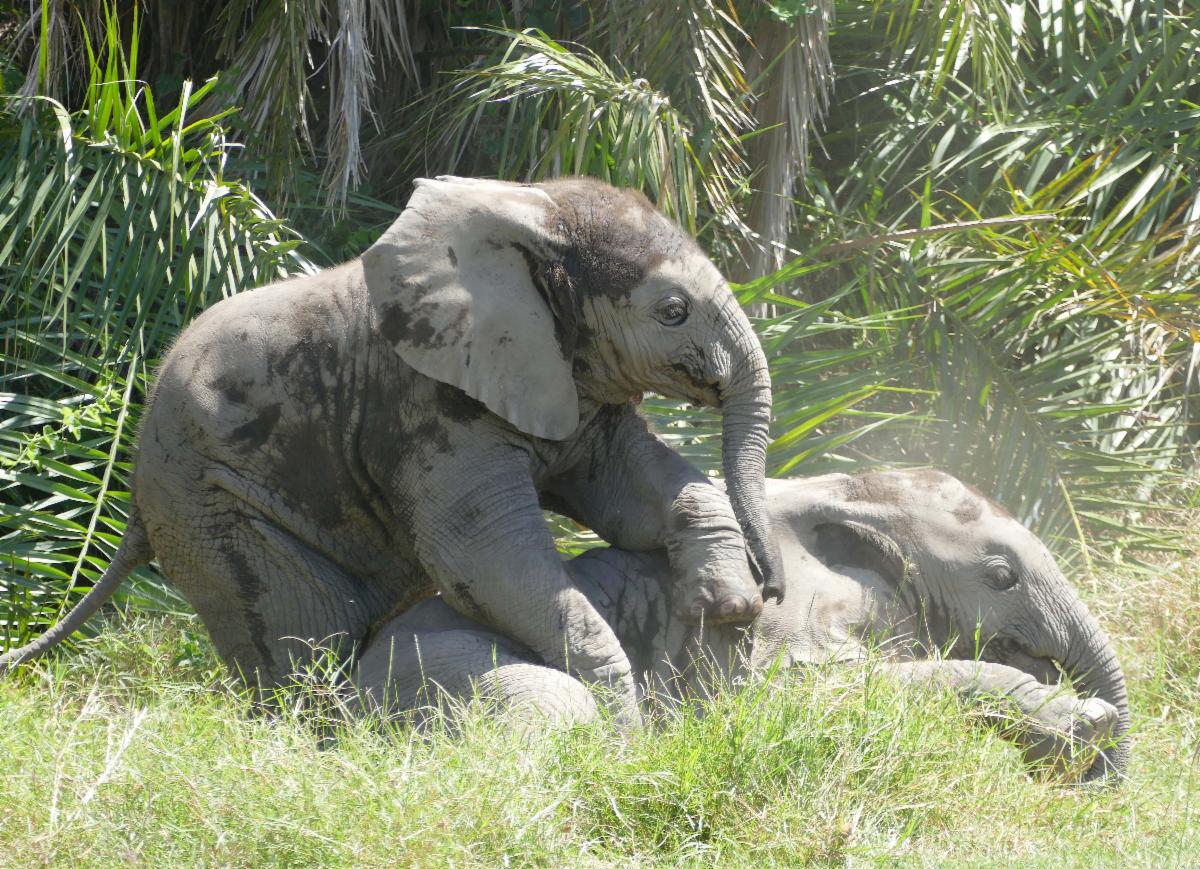
| | | Two of the new calves in the GB family playing. The GBs are one of six families you can follow in our Elatia program.You can choose one or more of the families to join the program. You will receive regular updates, which include photos and videos and news of what is going on in the family. To learn more about Elatia go to: this link or contact us directly on: info@elephanttrust.org | | | This is Donner. He was named by a donor when he was four years old. Born in 1990, Donner is now 32 years old, and his namer has been able to follow him for 28 years. You too can name an elephant calf. The name you give "your calf" forms a part of the Amboseli dataset for all time. For more information write to us at: info@elephanttrust.org | | | Give a Gift that Lasts Forever | |
Rusinga’s new calf is surrounded by her very caring family. You can assure that her world remains secure by designating ATE as a beneficiary of your will, individual retirement account, or life insurance policy. To learn more about planned giving, contact Betsy Swart: eswart@elephanttrust.org
Tel: +1-508-783-8308
| | | Elfrida is one of the wise, old matriarchs in Amboseli. At 55 years old she has been the leader of the EA family for the last eight years. Help us keep her in charge by making your online purchases through iGive. If you sign up the Amboseli Trust for Elephants as your recipient organization, we will get a small percentage of the sale. www.igive.com | | |
Make a Donation
We use a secure online system on which you can make your donation with a credit or debit card. All donations exclusively support our not-for-profit organization.
| | | | |