|
Over the past few months, NACD has brought you opportunities to learn more about your NACD membership, check-in with NACD's President, find out how staff and our volunteer leadership support your work, and provided additional resources to help you understand the organization. Now, we have a chance for you to learn more about how you can use your own leadership skills to further engage as an individual in the organization!
On January 15, at 3:00 p.m. ET, join NACD’s Presidents Association, a group of former NACD and State Association Presidents, for a Conservation Coffee on Leadership Tips and Tricks! NACD’s Secretary-Treasurer (and former President of the South Dakota Association of Conservation Districts) Karl Jensen will be joined by Dr. Carol Knight, current NACD Southeast Executive Board Member and former President of the Alabama Association of Conservation Districts. They’ll share information on relationship building at the national level, like how to seek out mentorship from others, supporting the next generation of leaders, opportunities to lead at the national level and how to plan for next steps, and how to manage time as a volunteer board member while staying happy and motivated.
Registration is free online; registrants will receive a Zoom link after registering. The session will be recorded and available on our YouTube channel after the event.
| BREAKOUT SESSIONS OFFER LEARNING AND CONTINUING EDUCATION CREDITS | |
NACD invites you to join us in San Antonio, Texas, for the 2026 Annual Meeting! Hosted in partnership with the Association of Texas Soil and Water Conservation Districts, our 80th meeting will take place on February 15-19, 2026, at the San Antonio Marriott Rivercenter.
Earn Continuing Education Credits at Breakout Sessions
NACD will host close to 60 breakout sessions this year, providing all attendees opportunities to learn and network across a wide variety of themes! New this year, we are proud to offer opportunities for certified professionals in agronomy, soils, and forestry to continue their education to maintain their certifications. For select Annual Meeting breakout sessions, we will offer Continuing Education Units (CEUs) through the Science Societies and Continuing Forestry Education (CFEs) through the Society of American Foresters.
The sessions eligible for continuing education credits have a CEU, CFE, or both next to the session title on our agenda. They cover diverse topics such as the role of cover crops in nutrient management, agroforestry, media training, the use of biochar as a soil amendment, precision agriculture and the use of unmanned aerial systems, and more. To receive continuing education credits, certified participants can document their attendance by completing the session sign-in sheet onsite or use the Certified Crop Advisor app (Apple | Android) for CEUs through the Science Societies.
| |
Become a Designated NRCS Conservation Planner
Also in San Antonio, the National Conservation Planning Partnership (NCPP) is piloting a streamlined training approach to make the NRCS Conservation Planner designation more achievable. This training series combines required courses into a coordinated hybrid experience, blending online and in-person learning.
Class size is limited to 40 students, and the application deadline is December 5. Participants will be selected through an application process, and applications will be prioritized based on readiness, commitment, need, and organizational support.
Learn more and apply here. Contact Jan Thomas at training@ncpp.info with any questions.
Ready to make 2026 your year for professional learning and development at the 80th NACD Annual Meeting? Registration is open with special early-bird discounted rates through December 19.
Find all the details on registration, exclusive hotel and travel discounts, breakout sessions, and more on NACD's website. If you have any questions, please contact events@nacdnet.org.
| WHAT'S UP IN WASHINGTON? GOVERNMENT AFFAIRS UPDATE | |
Congress has returned to the Hill with a full agenda and a very brief work period. As of today, the House of Representatives has ten days left before heading home for the holiday recess, and the Senate has 13. Most of that time will be spent preparing for the Affordable Care Act subsidy deadline on December 31, a key issue in the recent federal shutdown.
While the 2018 Farm Bill has been extended and Fiscal Year 2026 Agriculture Appropriations have been approved, committees are still hosting various conservation-related events in the coming days, including:
Senate Public Lands, Forests, and Mining Subcommittee hearing to receive testimony on over 20 related bills, addressing multiple priorities for the conservation community. The meeting was held this afternoon, you can access a full recording here.
Next Monday, December 8, at 8:00 p.m. ET, the USDA will hold a meeting of the Tribal Advisory Council to review administration priorities and allow for member deliberations. Meeting attendance requires registration, found here.
| BUILDING WILDFIRE-READY COMMUNITIES IN CALIFORNIA | |
By Sonoma Resource Conservation District
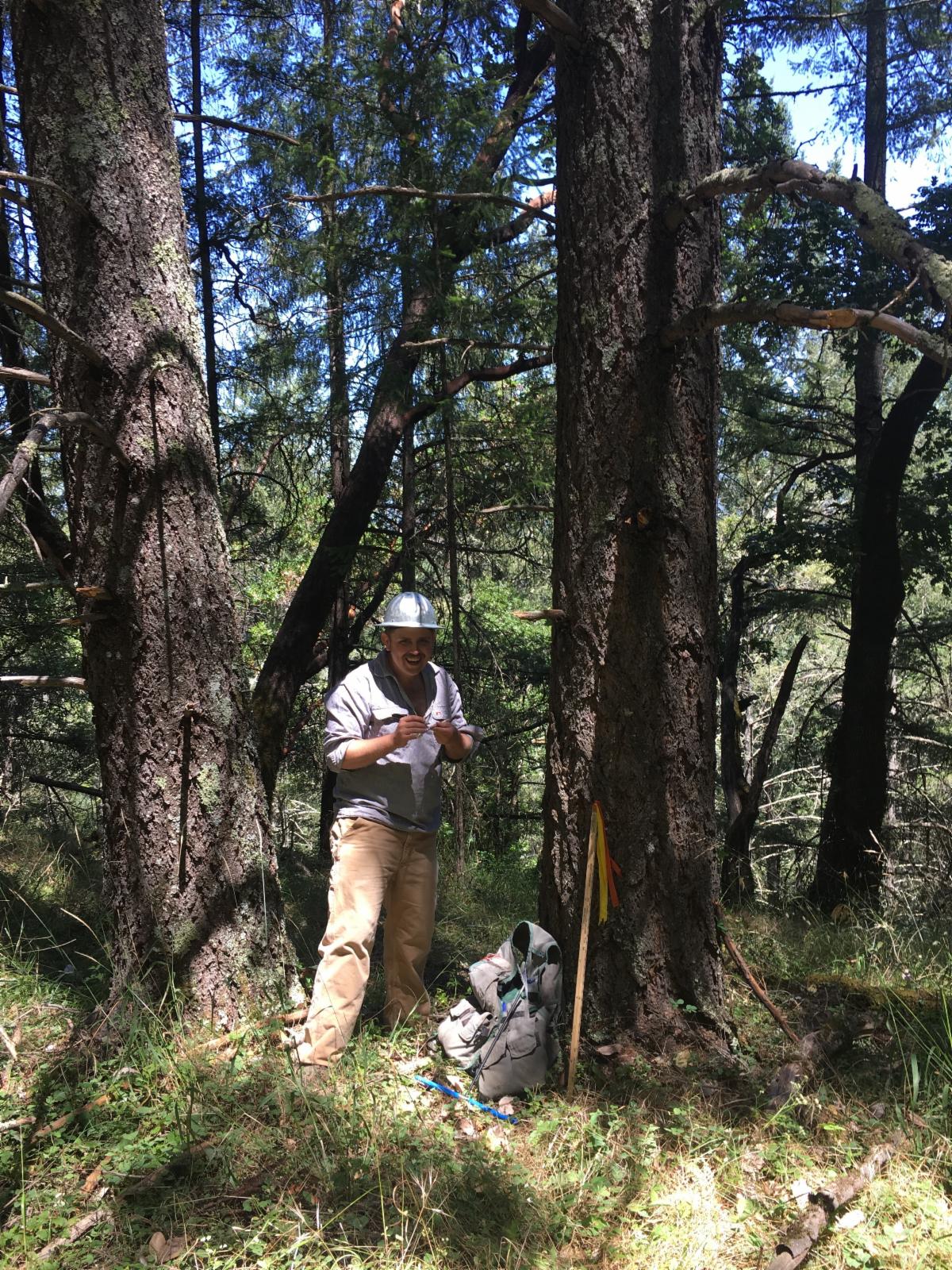
Jason Wells never thought he’d return to Sonoma County, California, as no forestry positions existed. But after the 2017 Tubbs Fire tore through Santa Rosa, destroying over 5,000 homes, everything changed. Not only is Jason back where he grew up, he is busier than ever. His role as the Director of Forestry with the Sonoma Resource Conservation District (RCD) has evolved beyond just writing Environmental Quality Incentive Program (EQIP) management plans.
Following the devastation of 2017 and a succession of subsequent fire seasons, public interest in proactive management soared, and the RCD’s first NACD Technical Assistance (TA) grant created a dedicated forester position to meet the surge in landowner questions. Today, his work resembles community and urban forestry in the wildland–urban interface. His focus now spans fuels reduction, forest health, community-scale planning, and prescribed fire.
Wells frames his program around three gaps: why work matters, how to do it safely and effectively, and how to pay for it.
California’s wildfires have changed the why in Sonoma County. The old management of forested landscapes for timber harvest has transitioned to new efforts in home hardening and wildfire prevention, taking on a sense of urgency.
In terms of how to do it safely and effectively, Sonoma County’s prescribed burn culture is growing. Partner organization All Hands Ecology helps residents become more comfortable with prescribed fire, from pile-burn workshops to broadcast burns after initial treatments.
| |
On the funding side, the North Bay Forest Improvement Program (NB FIP), a four-county RCD collaboration, mirrors EQIP with forestry-focused incentives for thinning, planting, and pruning. The RCD is now exploring ways to braid NB FIP dollars with EQIP so out-of-pocket costs to landowners are manageable.
Markets remain a stubborn barrier. Outside of redwood sawlogs, options are thin. Douglas-fir often pencils out to break, even after regulatory and hauling costs. That limits the ability to offset treatment costs through utilization, increasing reliance on grants—an unsustainable model in the long run, Wells notes.
Funding through NACD's TA Grant Program made the project possible, and stands out for its flexibility. Reporting systems have shifted over the years and can be murky, Wells said, but the freedom to meet a community’s evolving needs, while still hitting outreach and planning metrics, has been pivotal. That flexibility helped the Sonoma RCD expand beyond plan-writing into coalition-building, burn training, and multi-owner project design.
For other conservation districts who are launching or expanding similar work, Wells offers some advice: “If you can connect the why with the how—and provide funds to get it done—people will do the work. The challenge is scaling that across many small parcels.”
Read the full interview with Wells on NACD's blog. For forestry stories like this delivered directly to you each month, subscribe to our Forestry Notes newsletter.
| | Save the Date for NACD Spring Fly-In: March 25, 2026 | |
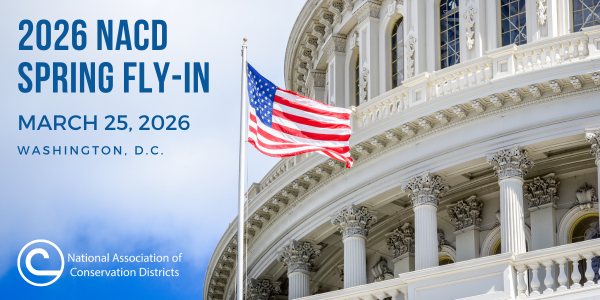
Each year, conservation district leaders from across the country travel to our nation’s capital to meet with their legislators and advocate for conservation funding and programs. Be a part of this annual event! Join us in Washington, D.C. for NACD's 2026 Spring Fly-In on March 25!
Stay tuned to our Spring Fly-In page for a detailed agenda, virtual advocacy training sessions, and 2026 issue papers.
| Poster & Photo Contests Deadline Extended | |
We're giving you extra time to submit your posters and photos!
Share your creativity on a national level and show off what Home is Where The Habitat Is means for you with our 2025 annual poster and photo contests.
Sumbit your entries now through January 15, 2026.
Remember, submissions should be for the 2025 topic—habitats. Stay tuned for more information on the 2026 contests in the new year!
| Support NCF with a Donation to the Live Auction | |
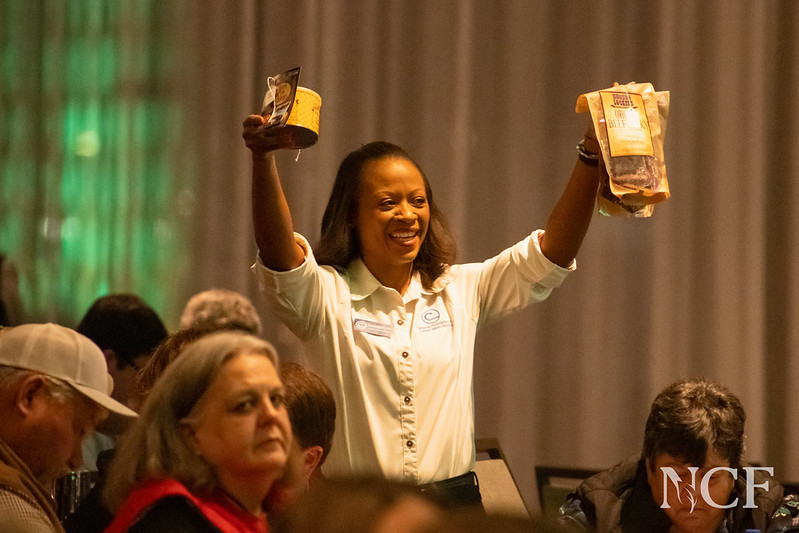
During the 2026 NACD Annual Meeting, NACD's sister organization, the National Conservation Foundation (NCF) will host their Live Auction on February 17 in support of the NCF-Envirothon program and the Next Generation Leadership Institute.
Individuals, conservation districts, and state associations are encouraged to donate unique items for the NCF Auction.
Submit items here.
The deadline for online donations is January 31, 2026. After that, donations will only be accepted on-site in San Antonio.
| Submit Nominations for NACD's Hall of Distinction | |
NACD is proud to celebrate our members and their contributions to conservation, and one of the ways we do that is through our Hall of Distinction. Through NACD’s Hall of Distinction, state and territory associations can recognize current and past conservation leaders for their extraordinary work to advance conservation at the national level. States and territories may induct one person to the Hall of Distinction every year. Inductees are reviewed by NACD’s District & Partner Relations Committee and will be announced at the 2026 NACD Annual Meeting in San Antonio.
To make an induction, state and territory associations are asked to send NACD information via this online form by December 19. Learn more about the Hall of Distinction, including eligibility criteria, here.
| |
Are you already an active participant in your national community and want to understand the full breadth of what NACD does to support locally led conservation? Or are you just looking to learn the basics of NACD and how we operate?
We publish a new Did You Know? article at least once a month that takes a deeper dive into a specific aspect of NACD or the membership services we offer to you.
If you’re looking to understand more about the structure of NACDs leadership, you should look at our features on NACD's Committees and Subcommittees, Officer Team, or Board of Directors.
Or if you’re interested in learning more about the resources we offer you, read up on our education resources or tools you can use to improve your district’s outreach efforts.
No matter your familiarity with NACD, we bet you’ll learn something new by reading our Did You Know? column. And, if you ever have recommendations for future topics, please reach out to us!
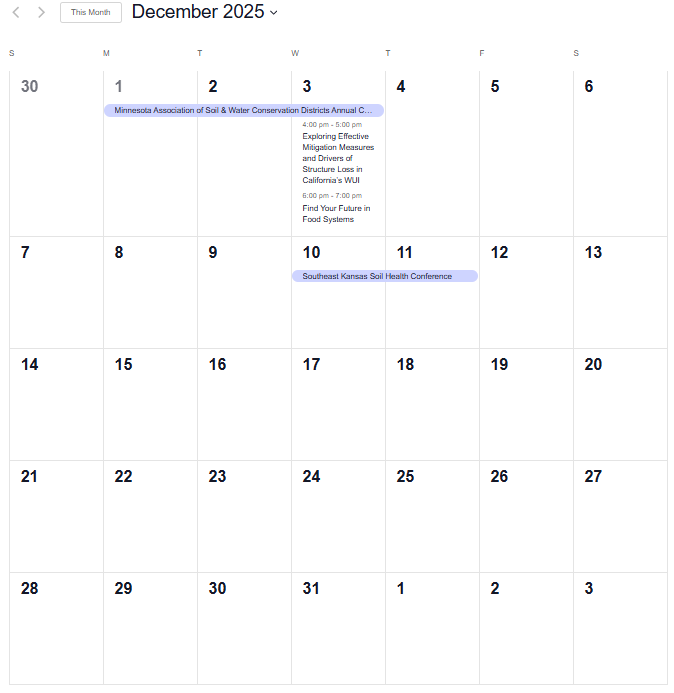
| Promote your conservation district or state association's tree sale, annual meeting, webinar, field day, or other events on NACD's Calendar of Events! | |