A Message from Chief Scientist & Observatory Director Dr. Paula Mabee |
Hello again! 2022 carries on, and across the Observatory we are enthusiastic about the return of warmer weather and the full sampling season. Our Airborne Observation Platforms are prepping for their flight season, and we are cautiously optimistic about a year of relaxing COVID-19 restrictions.
As we speak, I'm in Columbus, Ohio for Battelle's first Conference on Innovations in Climate Resilience. I'm excited to be at this meeting of great minds, hear thoughts about steps being done to mitigate climate change, and to represent NEON and Battelle. If you find yourself there, please seek me out!
As a reminder, we are still hiring our seasonal field positions across the Observatory! We hire hundreds of seasonal Field Technicians (TFTs) each year to assist with observational sampling and data collection. These positions are a fantastic opportunity to gain ecology field experience with our continental-scale network. Learn more here, and search our TFT positions on Battelle Careers.
As always, I hope this finds you safe and well!
Sincerely,
Paula
|
|
|
|
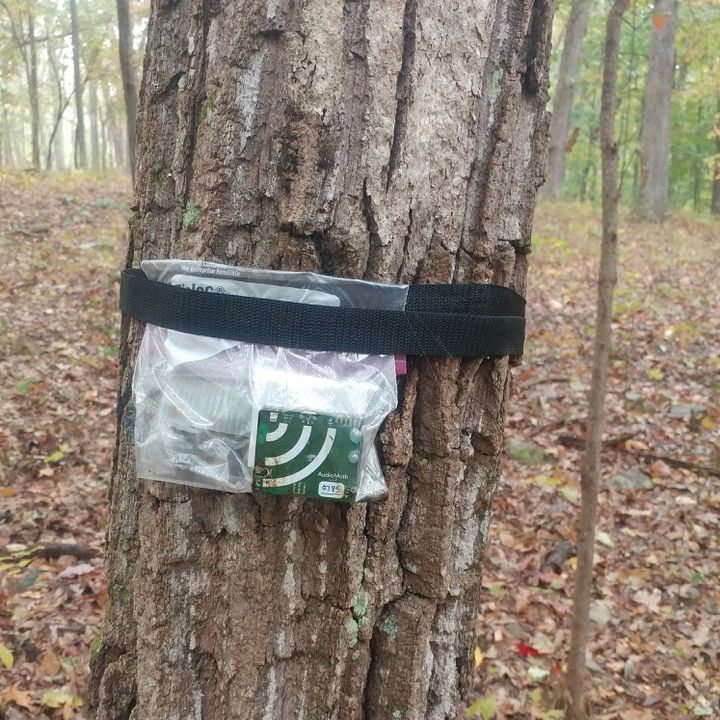
Modern instrumentation and machine learning methods are increasingly used in the ecology community to supplement human effort. Could some of these methods be applied at the NEON field sites? A recent paper in Ecosphere explores the possibilities.
|
|
|
|
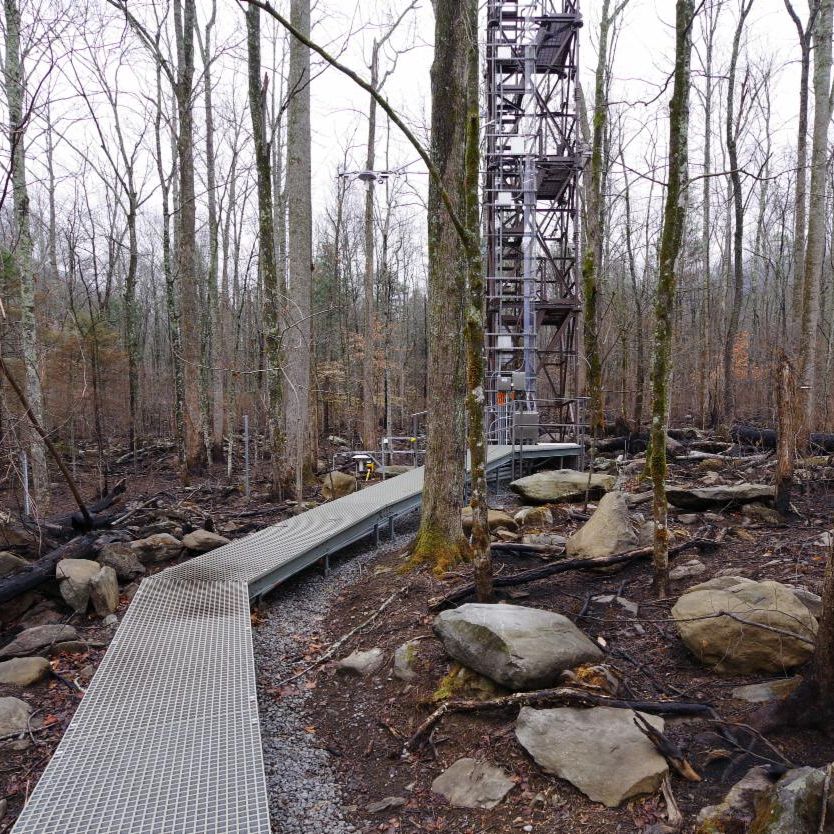
NEON field sites are no stranger to the effects of increasing wildfires. Field sites that have experienced burning provide a unique window for research on wildfire in small ecosystems, and on how a site may recover and change post-fire. A few of our field ecologists share how their sites (D07 and D17) have been affected by fire over recent years.
|
|
OTHER RECENT BLOGS
We spoke with Shalane Frost, one of NEON's assistant Domain managers for field operations in Alaska, about her unique career path and balancing her ecology studies with her athletic career. Frost believes that a career in ecology should not be one-size-fits-all, and that people in STEM—especially women—should feel empowered to explore a variety of paths that incorporate ecology into their academic and professional journeys.
Six teachers and more than 50 students across Puerto Rico had the opportunity to explore ecological questions using NEON data as part of the 2021 PR NEON Data Jam. The event, coordinated by Forward Research and sponsored by Battelle, was built on the LTER model using NEON data from the Guánica Dry Forest (GUAN) site in Puerto Rico (D04).
NEON collects aquatic data in wadeable streams. A study shows that measurements taken by stream sensors mounted on an overhead cable are as good as measurements taken using the standard in-water monopod design. The new overhead cable mounting infrastructure provides improved sensor uptime and reliability in streams prone to extreme flow changes and shifting channel morphology.
Thanks to the neonMicrobeR package, researchers can now automate much of the work of downloading, processing, and assembling microbial data from NEON terrestrial field sites.
We spoke with Dr. Corinna Gries, one of the Environmental Data Initiative (EDI) leads at the University of Wisconsin with decades of experience in data management, about the benefits of digitizing data and making it more publicly accessible. Her unique career path provides a window into the increasingly critical—yet often overlooked—intersection of technology, scientific research, and data management in STEM fields.
IN MEDIA
Science Friday, March 25, 2022
|
|
Each year, NEON hires hundreds of seasonal (temporary) field technicians (TFTs) to assist with observational sampling. NEON field sites are located in some of the nation's most pristine and wild areas. These seasonal opportunities are perfect for scientists who want to explore fieldwork and gain experience collecting data for a continental-scale ecology program.
These positions start in spring and end in autumn. Exact dates are based on sampling schedules in each Domain and vary by location. Learn more.
|
|
RESOURCES, UPDATES, EVENTS, & OPPORTUNITIES |
|
UPDATES
Hosted by the Ecological Society of America, NEON scientist Claire Lunch led participants through the NEON website and NEON data portal to learn about the online resources and how to download data. Participants learned how to use the neonUtilities R package to format NEON data into a format that is easier to work with and to download data directly into R. View the recording.
NEON operations and restrictions due to safety impacts (e.g., COVID-19, wildfires, etc.) vary across the Observatory. NEON Leadership is continually assessing conditions across the Observatory. Read current operational status updates.
RESOURCES
Did you know NEON has over 103,000 samples from over 700 taxa stored at the NEON Biorepository? These samples are available upon request to support research studies and analyses. Discover and access NEON's archived samples on the NEON Biorepository Data Portal. Explore the portal.
Need soil samples from across the U.S.? Request samples from the NEON Megapit Soil Archive! The archive is a community resource established by NEON to provide free access to soil samples for science and education purposes. It consists of air-dried soil archived by horizon from all 47 NEON terrestrial sites located throughout the U.S. Over 2000 subsamples have been provided to researchers to date and additional data about the samples are becoming available as their findings are published. Explore the Megapit Archives.
NEON offers a variety of tools and resources for instructors and faculty moving to online teaching. We realize that these are challenging times for our communities around the globe to delivery high quality education in novel online teaching environments. The data and resources from NEON are naturally suited for teaching ecological concepts and skills in both synchronous and asynchronous learning situations. Browse NEON's Learning Hub.
The NEON program generates ecological data on an unprecedented scale. Making sense of that data often requires sophisticated analytical techniques and computer programs. But if you’re not a coder, don’t worry—open source coding resources and community-made custom programs make NEON data more accessible to the ecology community. These resources are now being compiled in the NEON Code Resources Library.
EVENTS
At the JASM2022 meeting, this workshop will focus on NEON biodiversity data collected from our 34 aquatic sites, including 24 wadeable streams, 3 rivers, and 7 lakes. Instruction will include an overview of the breadth of NEON organismal data available for taxonomic groups such as fishes, benthic macroinvertebrates, and algae, before providing code-along instruction on how to access and work with NEON organismal data products. We will provide guidance on how to convert NEON data into standardized formats that can be used with a variety of R packages commonly used to analyze biodiversity data. Pre-registration is required for all workshop/professional development sessions. Learn more.
At the JASM2022 meeting, this workshop will focus on NEON aquatic instrument data collected from our 34 aquatic sites, including 24 wadeable streams, 3 rivers, and 7 lakes. This workshop will teach participants how access, interpret, manipulate and visualize this data; a basic familiarity with R is required. Pre-registration is required for all workshop/professional development sessions. Learn more.
OPPORTUNITIES
NEON's STEAC is an advisory body to the NEON Program that provides strategic advice to Battelle, the NEON Principal Investigator (PI), and NEON Program staff on the planning and operation of the NEON Program and other relevant programs. We are seeking nominees that represent a diversity of institution types, expertise, backgrounds, perspectives, identities, and career stages. Please consider nominating yourself or a peer by April 15!
"The Joint Aquatic Sciences Meeting (JASM) will be the world’s largest gathering of aquatic scientists, students, practitioners, resource agency staff, and industry representatives in history. JASM’s parent organization, The Consortium of Aquatic Science Societies (CASS), is comprised of 9 groups representing various interests within the aquatic science realm. The JASM 2022 meeting is designed to bring together deep, multidisciplinary subject-matter expertise to collaboratively educate one another and solve the complex environmental problems facing our society and our planet today.
The meeting will be held at the DeVos Place convention center and it is organized by the Consortium of Aquatic Science Societies (CASS)." Learn more.
"The EFI 2022 meeting is a 3-day community-wide meeting aimed at bringing together scientists, agencies, industry, and stakeholders to build a community of practice and advance research, applications, and collaboration around near-term (subdaily to decadal) ecological forecasts. The meeting will provide opportunities to network, short presentations or posters on the state of the field, and longer workshops and tutorials focused on skill development. Registration for giving talks, posters, and workshops will close on April 25, 2022. Registration to attend the meeting for those not giving a talk, poster, or workshop will close on May 18 at 5pm U.S. Eastern." Learn more.
|
|
More and more researchers are using NEON data! Publications that use NEON data and resources are identified and imported into a public Zotero library, where they are tagged to make them easy to query.
View the newest publications here.
Learn how to find papers of interest here.
Knowing how NEON’s data, samples, and infrastructure are used in research is important to measure the program’s success. Please report your publications and related projects here and learn how to cite NEON here. If you know of a publication not included in the list, please notify us.
|
|
Follow NEON on social media!
|
|
|
|
|
|
|