EAB Information Network Beneath the Bark June 2026


EAB Infestation Map

Below is the current map of emerald ash borer (EAB) infestation across North America. Mississippi was added on Nov. 14, 2025. EAB is now present in 38 states and six Canadian provinces. An up-to-date map is available on our website.

map of north america
 

Mapping EAB Emergence

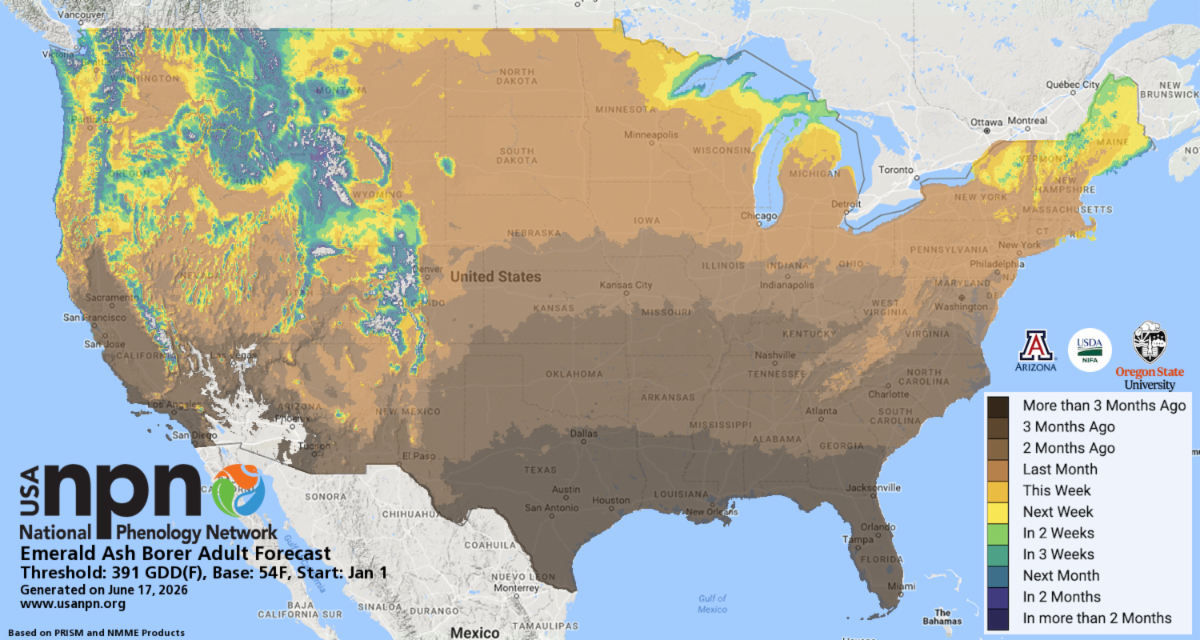
Late spring often marks the start of the most visible EAB activity, making detections more common during this time. To help track and anticipate emergence, the USA National Phenology Network has developed a tool that predicts when adult EAB will appear across the U.S.

national phenology network adult eab emergency map


Recent EAB News


Preserving the Legacy of Black Ash


A narrative from the Cable Natural History Museum in Wisconsin follows volunteers harvesting black ash trees and walking step by step through the traditional basketmaking process. Guided by April Ogimaakwe Stone of the Bad River Band of Lake Superior Chippewa, the piece highlights the cultural importance of black ash to Indigenous basketmakers.


EAB confirmed in six Texas counties in June


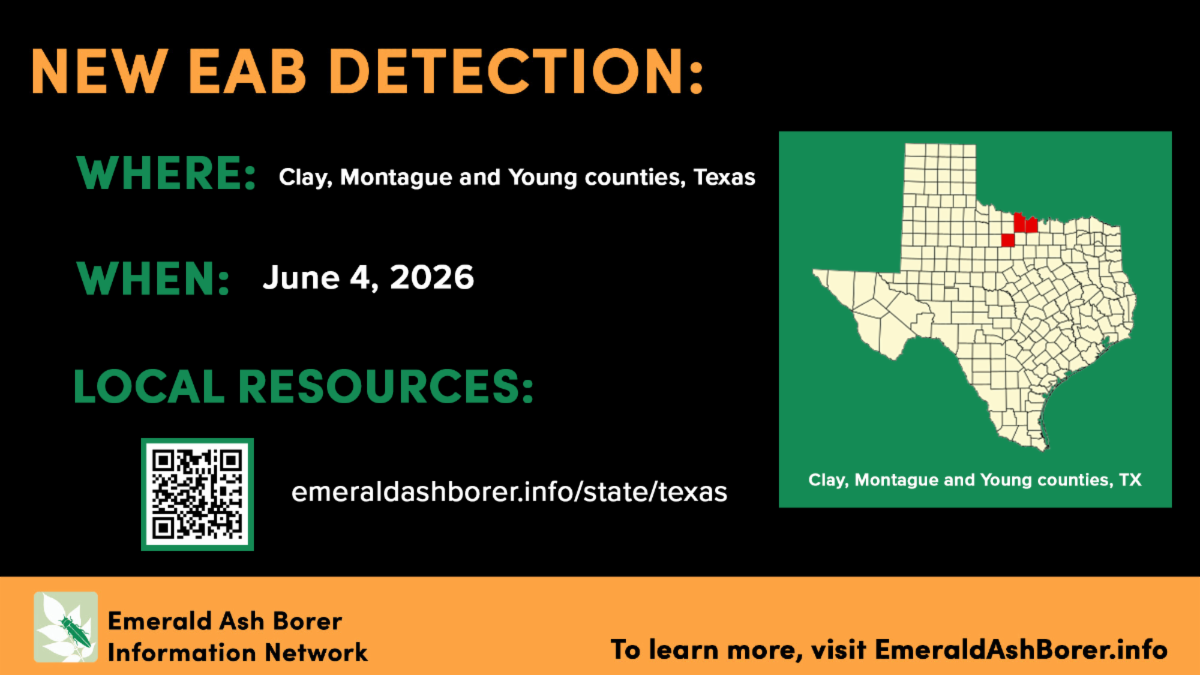
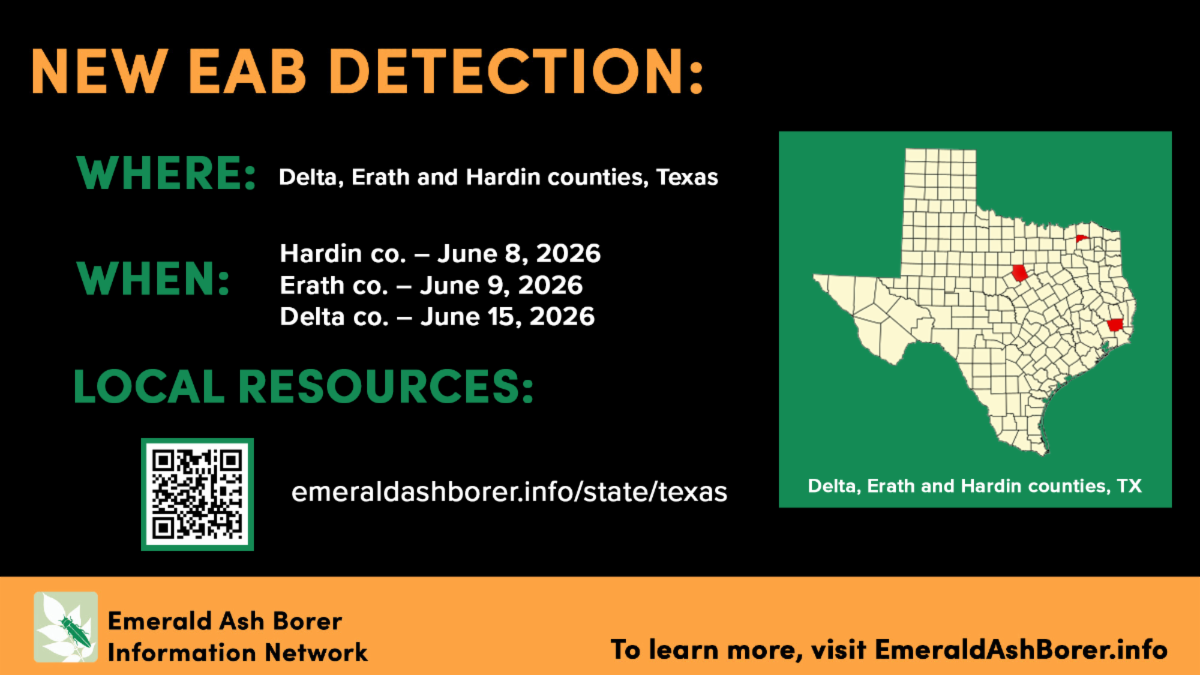
Texas A&M Forest Service has confirmed EAB in Young, Montague and Clay counties after adults were captured in monitoring traps. Three additional counties were also detected in June, with infestations in Delta, Erath and Hardin counties confirmed by the Texas Department of Agriculture.

New EAB detection: Where: Clay, Montague and Young counties, Texas When: June 4, 2026 Local resources: emeraldashborer.info/state/texas  Emerald Ash Borer Information Network To learn more, visit EmeraldAshBorer.info
Hardin County (June 8, 2026), Erath County (June 9, 2026), and Delta County (June 15, 2026). A map of Texas highlights the three counties in red. A QR code and link to emeraldashborer.info/state/texas are included, along with Emerald Ash Borer Information
 

Ash population dynamics after two decades of EAB infestations in Canada


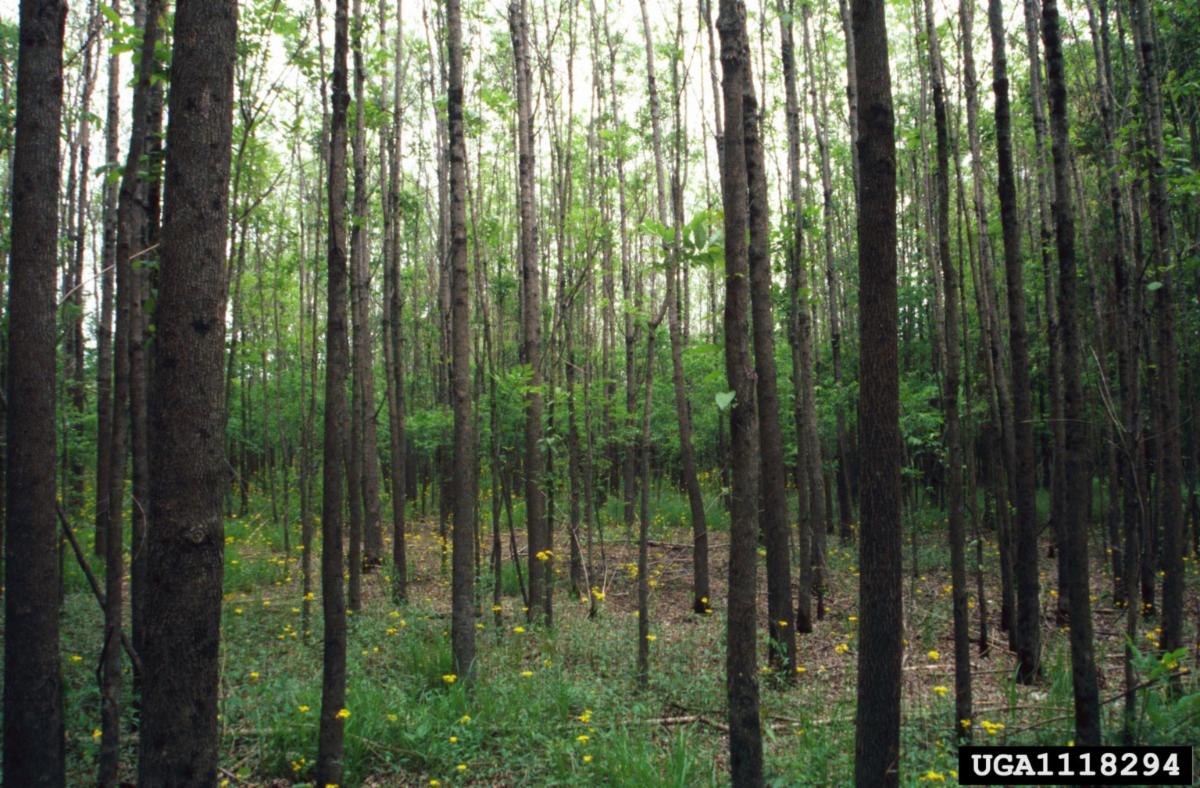
A recent Canadian study found that after two decades of EAB infestation in Canada, no ash trees larger than 10 cm in the monitored plots survived more than seven years after initial attack. While many sites showed strong regeneration, nearly half of new stems were infested at least once, with repeated attacks common. Researchers found beetles shifted to smaller trees only after larger hosts were depleted, and lower larval densities suggest reduced populations in post-invasion forests.


It's never too early to begin EAB outreach efforts


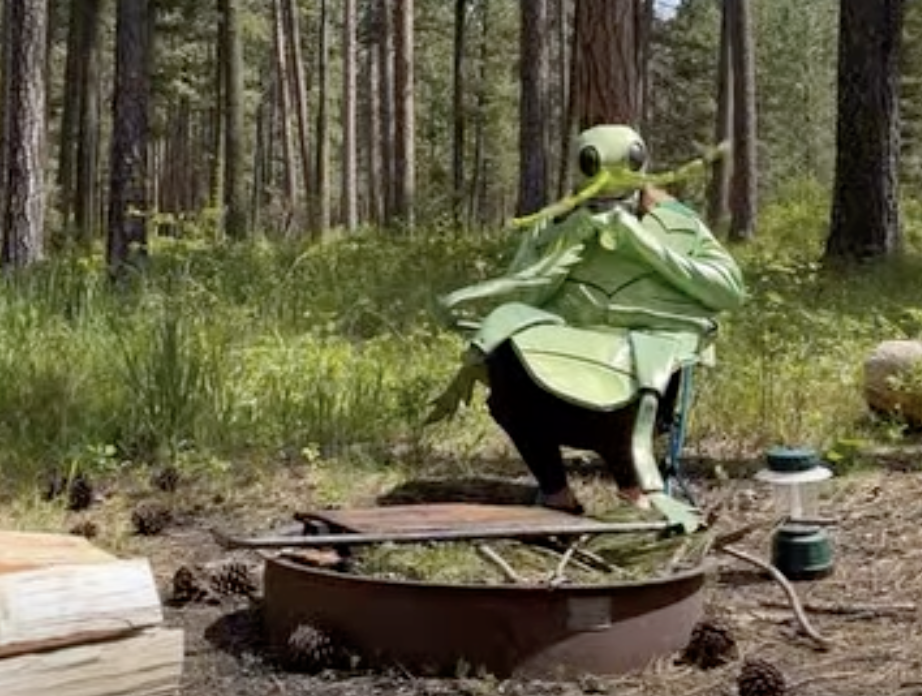
The Don’t Move Firewood (DMF) campaign offers a range of outreach materials to help raise awareness about EAB and the risks of moving firewood. DMF is now sharing an EAB costume to help groups create eye-catching outreach content and raise awareness about the invasive pest. Montana DNRC recently put the costume to use in a memorable video that balances a bit of humor with a serious message about the damage EAB can cause to ash trees and forest ecosystems if it is brought to the state. If you're interested in borrowing the costume, you can contact the DMF team here.


Other News


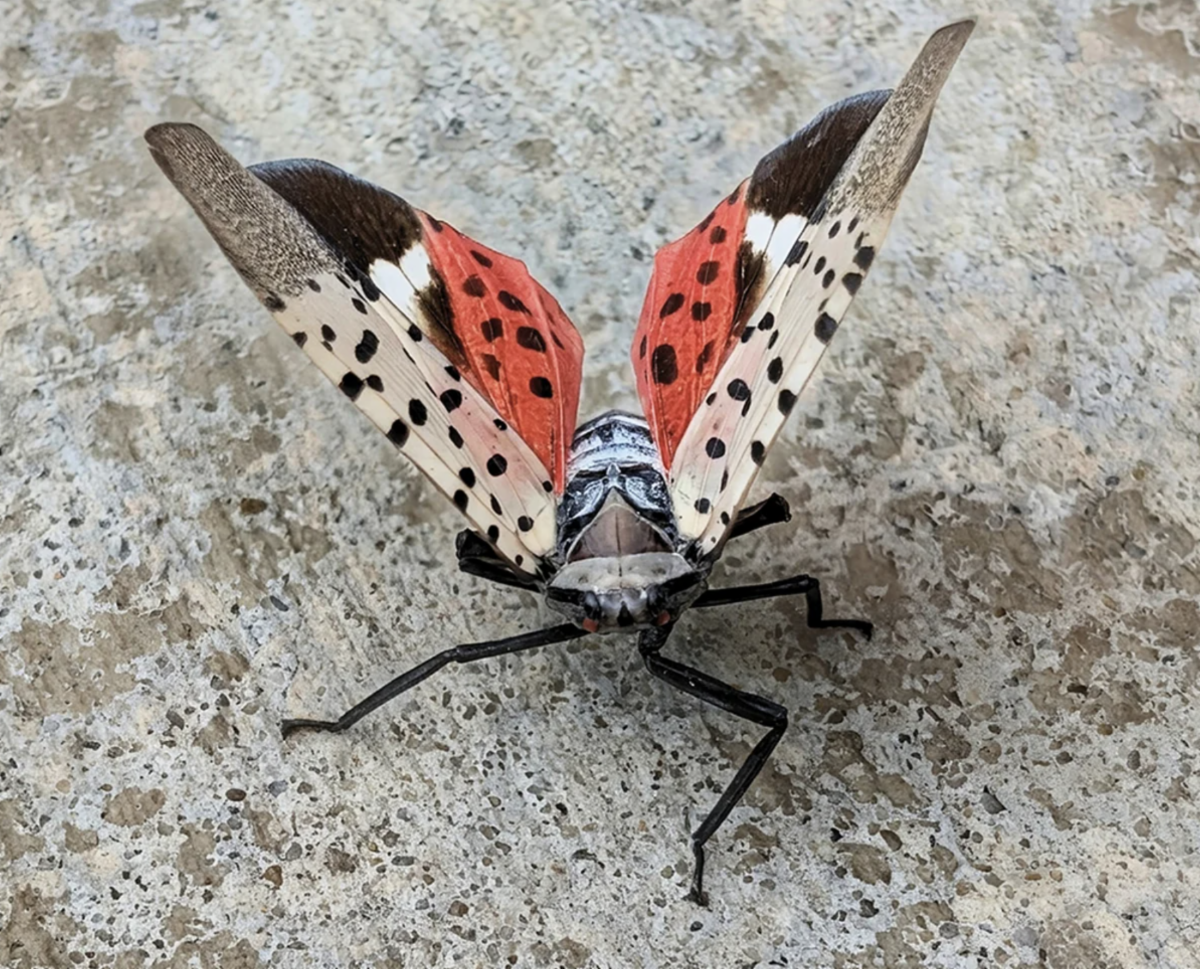
Spotted lanternflies’ love of cities may be the secret to their invasion success


New research suggests the spotted lanternfly’s rapid spread in U.S. cities may be driven by prior adaptation to urban environments. Scientists say connected city landscapes provide ideal conditions for dispersal and growth, helping populations expand quickly.


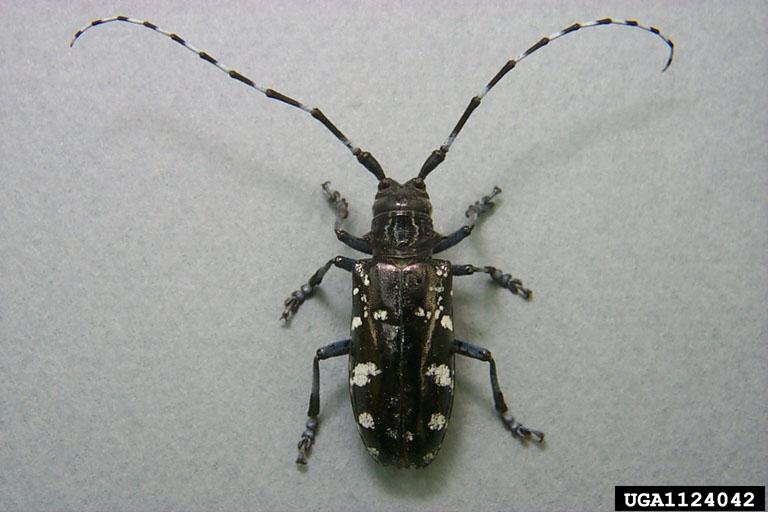
New research: Local dispersal and growth in an island population of Asian long-horned beetle in South Carolina


An analysis of a localized Asian longhorned beetle infestation in South Carolina found that population growth varies widely at the individual tree level, even as overall beetle density increases rapidly across a landscape. Researchers documented more than 14,000 egg-laying sites and found that damage severity was a poor predictor of how long a tree had been infested. While this challenges a key assumption used in spread models, overall beetle movement patterns were still consistent with current risk predictions.


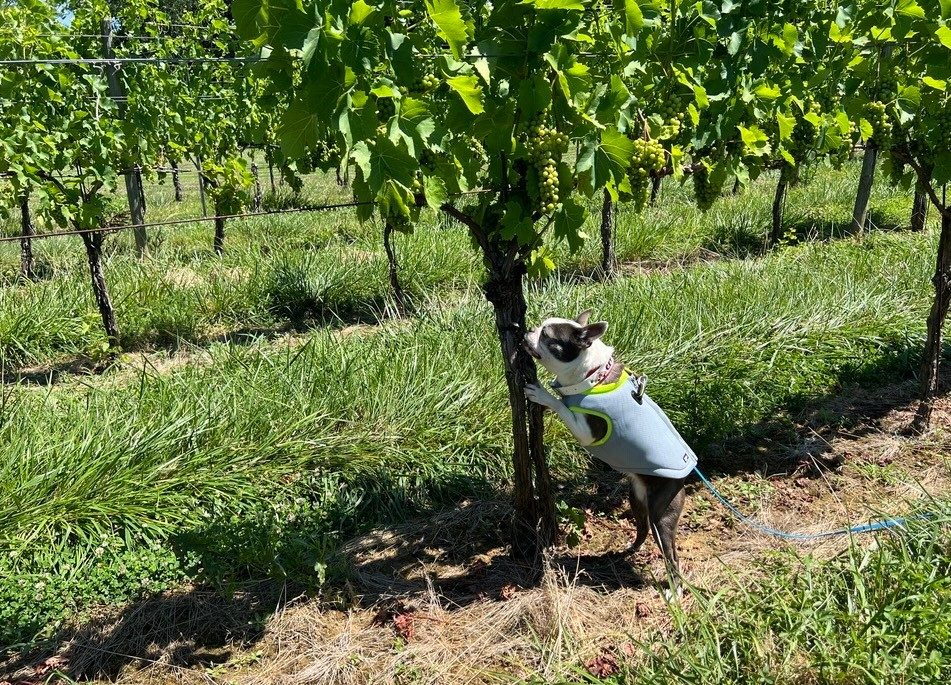
Could your dog help fight the spotted lanternfly? A new study makes the case


A Virginia Tech study found that trained pet dogs and their owners can outperform human experts in detecting spotted lanternfly egg masses in the field. In densely vegetated areas, dogs located more than twice as many egg-mass sites as trained searchers, highlighting their potential as an early detection tool.


MDARD and DNR remind Michiganders to use safe firewood practices during camping season


With camping season underway, Michigan officials are reminding residents and visitors that invasive pests and diseases can easily spread through untreated firewood. Agencies urge campers to buy heat-treated firewood or source it locally and avoid moving it more than 10 miles.

 
The bugs were coming from INSIDE the untreated firewood!
 

Not subscribed to Beneath the Bark? Join our newsletter-only mailing list to get monthly updates right to your inbox.

Web
bluesky icon
Emerald Ash Borer Information Network