The voice for pharmacy compounding | April 30, 2021
|
|
 |
Help Us Celebrate 40 Years at International Seminar 2021
Each year, PCCA delivers the biggest compounding event in the industry and this year promises to be no exception. Join us October 20-23 in Houston, Texas, for International Seminar 2021! We can’t wait to celebrate our 40th anniversary with you in person this year. And we’re lining up some amazing speakers that you won’t want to miss – covering clinical, business and technical topics, as well as emerging trends and ground-breaking advancements in personalized medicine. Plus, there will be lots of memorable throwback surprises in store! For a sneak peek, check out our new 40th anniversary video.
Save the date – full details are coming soon!
|

From APC’s President
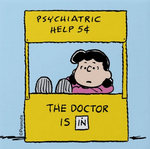
The Doctor Is(n't) In
Dear A4PC,

Michael Blaire, RPh, FIACP
APC President
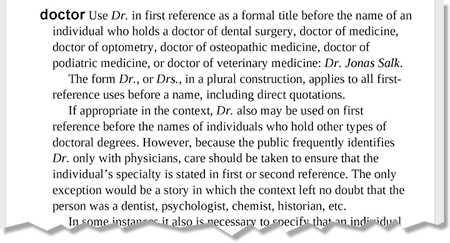
A recent Wall Street Journal op-ed entitled “Is There a Doctor in the White House? Not if You Need an M.D.,” took First Lady Jill Biden to task for preferring to be addressed as "Doctor."
The op-ed has been roundly criticized, primarily for being "outrageously sexist." Although the article was patronizing, the overall thrust of the piece was not so much anti-female as anti-academic pretentiousness. A wise man once said that no one should call himself "Doctor" unless he has delivered a child. In fact, standard AP Style urges caution about using "Dr." for those with non-medical doctorates, to avoid confusion.
(Interestingly, the article never mentioned pharmacists or the PharmD degree. But heck, people were calling me "Doc" more than 15 years before the PharmD was introduced.)
As a pharmacist, the only doctors that matter to me are the ones who can write a prescription.
That’s why we all work so hard to develop relationships with the doctors/prescribers who understand the value we provide to our mutual patients. As compounding pharmacists, we have the added opportunity to work side by side with our prescribers to translate their therapeutic wants into pharmaceutically elegant solutions.
Compounding.com: It’s up … and it’s good!
Now it’s time to leverage your prescriber relationships to advocate for our profession. If you have not already visited Compounding.com, you should do so immediately (finish reading Compounding Connections first). There you’ll find gripping testimonials from more than 3,000 patients using compounded bioidentical hormones, along with a wealth of information about bias in the NASEM report and the adverse effects on patient access should FDA use it as a basis to restrict cBHT.
But there aren't enough doctors in the house! We have few testimonials from prescribers of cBHT. If our cBHT Media Campaign is to be successful, we must have buy in from the people who order the therapy on a daily basis. I urge each of you to reach out to your prescribers and ask them to get involved with our campaign. APC has plenty of resources to help make that ask easier, including this four-page brochure for prescribers. Mention it every time you take a prescription or take a few minutes a day to make a call. Work it into your marketing program. Our campaign is their campaign too. You know how to do this, so do it today.
Michael Blaire is APC’s president, but his day job is vice president for government and regulatory affairs at Wedgewood Pharmacy in Scottsdale, Arizona. You can reach him at mblaire@wedgewoodpharmacy.com.
This Week
Here are four big things you need to know —
and a handful of things you need to do —
to protect your compounded hormone patients.
1. Read (and share) the Berkeley white paper
We knew the NASEM report on compounded hormones was flawed, but now it's officially been debunked thanks to an independent, non-partisan, third-party review by the Berkeley Research Group (BRG), commissioned by the Pharmacy Compounding Foundation.
2. Send your patients to Compounding.com (to tell their stories)
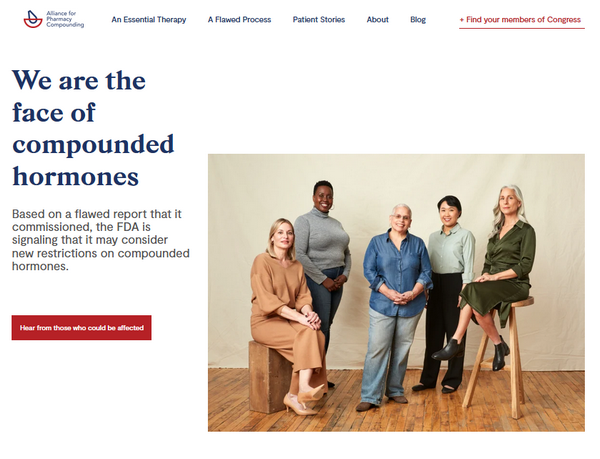
We’ve launched Compounding.com, a new website showcasing for policymakers the value of compounded hormone therapy. The site is the pace to send your patients to share their compounded hormone stories, which are archived on the site and viewable by state. And after those patients share their testimonial, they can send a message to their members of Congress asking them to protect compounded hormones.
3. Use these in-store (and more) tools to tell the cBHT story
We need your help to get the message not only to your patients, but to the prescribers you work with as well — not just that compounded hormones are threatened, but that we need their stories if we're going to protect them.
That’s why we've created a bunch of great members-only resources you can use – in-store, on social media, and with prescribers – to help get the word out about the threat to compounded hormones. You'll find them all through our cBHT campaign support page. (Hint: Click and bookmark it!)
They include....
- Posters
- Rack cards and bag stuffers
- Graphics for social media
- Sample letters for patients and prescribers
And more.
Go to our cBHT campaign support page, download, copy, print, order — and use them to share the threat to cBHT with your patients, the prescribers you work with, and your representatives.
4. Be a part of the one percent solution
Saving compounded hormone therapy is the biggest initiative in APC's history. The campaign is expected to cost about $1.5 million — including design, website, photography and video production, and of course the placing of targeted ads across the country to get the message to policymakers.
We’ve raised about $900,000 of the needed funding. That’s the good news. But we are still about $600,000 short of the funds we'll need, and if we don’t raise that amount by June, all bets are off.
Here’s the ask: Some of you made an initial investment in the campaign late last year. Thank you. But if we may be so bold: We need more.
Consider investing just one percent of the value of your cBHT business — a tiny fraction. Make a one-time investment or spread it out as a monthly contribution. And don’t forget to lean on the vendors who supply your pharmacy or facility. They need to have some skin in the game, too — but many have not yet given.
Help us fund this effort. Please contribute to help save cBHT — and the other 99 percent of your business. And share that link with your vendors.
Because together is the only way we’ll save compounded hormone therapy.
BRIEFING FOR OWNERS:
The MOU, reporting shipments, and you
APC has asked FDA for a postponement of the enforcement deadline for the MOU on interstate shipments of compounded medication but for now, October 26, 2021 is the deadline for states to sign.
If your state DOES sign, there’s the question of how reporting of inordinate shipments will be handled by your state board of pharmacy — and what may be required of you.
So APC is offering a free one-hour, members-only webinar briefing for owners: "NABP’s Data Collection Tool for MOU Compliance: What Will It Mean for You?" on May 6, 2021 at 3:00pm EDT. You'll hear from NABP staff about the information sharing network they’re creating to facilitate that reporting, and how your pharmacy will access it.
It's free, but registration is required. Click here to sign up.
Organizations ask pharmacy boards to contact FDA
APC, with our partners the American Pharmacists Association, the National Community Pharmacists Association, and PCCA, has sent letters to the states boards of pharmacy.
Those letters strongly urged those boards "to take action immediately in determining if [they] can sign the FDA’s Memorandum of Understanding Addressing Certain Distributions of Compounded Human Drug Products (MOU) before the October 2021 deadline."
We want those boards to contact FDA as soon as possible if they can't sign the MOU, and "express your state’s concerns and to request at least a two-year extension of the signing deadline, to October 2023."
Click here to read a sample letter (PDF).
Don't forget the survey
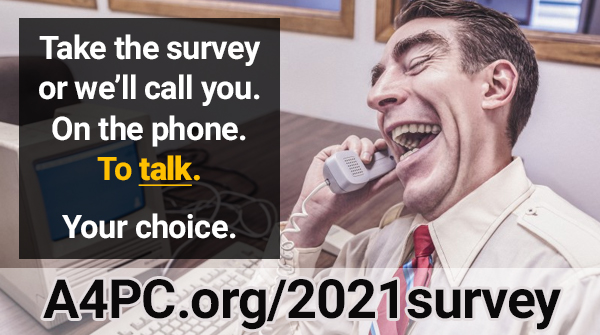
If you haven't yet taken the APC/University of Mary Washington Compounding Profile Survey — we still need your help. We're working to paint the the first comprehensive picture of the breadth and depth of compounding in the U.S.
Go to A4PC.org/2021survey, and it should take about 10 minutes.
Don't wait! The survey closes next Friday, May 7, at 5:00pm EDT
Coming Up
May 6, 2021 — NABP’s Data Collection Tool for MOU Compliance: What Will It Mean for You? (a free briefing for compounding pharmacy owners)
June 10–11 — PCCA ACT Conference (virtual)
June 16–17 — Compounding Pharmacy Compliance Virtual (APC members: Use code APC10 for 10% off registration!)
July 13 — APC CE: Reading a Certificate of Analysis: Calculations Based on C of A Data
September 14–15 — Compounders on Capitol Hill (mark your calendars!)
September 22–24 — Compounding Pharmacy Compliance East
Short Takes
Thank you to Daved Rosensweet, MD, for writing about the threat to compounded hormones in Townsend Letter: "If We Lose Compounded Bioidentical Hormone Replacement Therapy"
A bill introduced in Congress would be a small but important step toward that frustratingly elusive goal of full provider status for pharmacists. The Pharmacy and Medically Underserved Area Enhancement Act would have Medicare pay pharmacists for the services they provide, on a state-by-state basis. (So, for example, whatever services Arizona authorizes pharmacists to provide, Medicare would cover in Arizona.) It wouldn’t expand pharmacists’ scope of practice — it simply authorizes Medicare to pay pharmacists for the same services they already legally provide.
Congratulations to APC member Richard Rhodes of University Compounding in San Diego, who is the recipient of the California Pharmacists Association 2021 Steven C. Feldman Compounding Award — "an individual who is a leader in California pharmacy by virtue of his activities to advance the practice of compounding."