|
NEW ORLEANS, LA (Nov 6, 2026) - Political analysts will spend years debating the causes of the historic voter participation and surprising election outcomes witnessed across the South during the 2026 midterm elections. Much of the discussion will focus on candidates, campaign spending, economic conditions, and voter demographics. Yet one factor may prove to be equally significant: the growing public response to redistricting battles and the continuing struggle over political representation.
What began as a legal dispute over congressional district boundaries in Louisiana may have evolved into something much larger. The controversy surrounding Louisiana v. Callais, which culminated in a landmark U.S. Supreme Court decision, became a highly visible symbol of a broader Southern struggle over voting rights, representation, and political power. The Court ruled that Louisiana's second majority-Black congressional district constituted an unconstitutional racial gerrymander and imposed significant new limits on the use of the Voting Rights Act to support such districts.
The ruling came only a few years after the Court's decision in Allen v. Milligan, which affirmed Voting Rights Act protections and upheld the requirement that Alabama create an additional congressional district in which Black voters would have an opportunity to elect candidates of their choice. Together, these cases transformed redistricting from a legal issue discussed primarily by attorneys and political insiders into a highly visible public debate throughout the South.
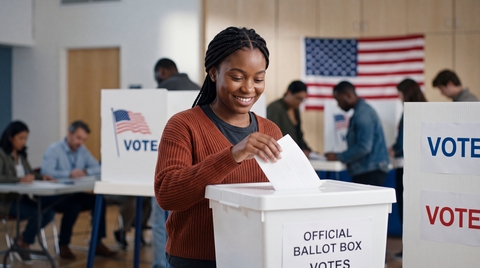
In Louisiana, the consequences were immediate. Rather than discouraging voter participation, the controversy appears to have energized it. Reporting during the 2026 election cycle found that Black voters participated in early voting at levels exceeding their share of registered voters. Political observers suggested that many voters viewed the battle not simply as a dispute over maps but as a direct challenge to their political voice. Robert Collins, a political analyst at Dillard University, observed that when communities feel under attack, they often become more engaged in the political process.
The impact may have extended well beyond Louisiana. Across Georgia, Texas, Alabama, Mississippi, Tennessee, North Carolina, and much of the South, battles over congressional maps evolved into larger debates about representation, voting rights, and political power. What occurred in Louisiana was not viewed as an isolated dispute. Rather, many voters saw it as part of a regional struggle over who gets represented, who gets heard, and who ultimately holds power in a rapidly changing South.
Following the Callais decision, renewed efforts to redraw districts emerged in several states, triggering public opposition, civic organizing, and increased voter awareness. In communities stretching from the Mississippi Delta and the Gulf Coast to Atlanta, Houston, Charlotte, and Nashville, voters increasingly recognized that political power is often shaped long before Election Day through court decisions, legislative actions, and the drawing of district lines. That realization appears to have helped transform concern into participation and participation into political influence. In Georgia, organized opposition to proposed redistricting efforts generated sufficient public pressure that Republican leaders stepped back from immediate plans to redraw congressional maps. In Texas, debates over redistricting and representation became major public issues affecting Latino- and Black-majority communities.
Yet it would be a mistake to attribute the heightened civic engagement solely to court decisions and redistricting controversies. Behind the increased participation stood an infrastructure of civic engagement that has been built over decades by organizations dedicated to protecting voting rights and encouraging political participation.
The National Coalition on Black Civic Participation continued its nationwide voter engagement efforts through grassroots organizing, voter registration drives, community education programs, and outreach initiatives designed to increase civic participation in Black communities. Through its extensive network and the work of the Black Women's Roundtable, the coalition worked to ensure that voters understood both the issues at stake and the importance of making their voices heard.
“The overwhelming turnout and organizing could not have happened without the deep work, leadership and vision of Black organizers who have been sounding the alarm for decades about the need for investment in our communities, especially in the South. They have shown what it takes to fight back against partisan gerrymandering, direct attacks on the Voting Rights Act, the erasure of our history, assaults on diversity, equity and inclusion, and attacks on our bodily autonomy" says Melanie L. Campbell, NCBCP President and CEO and Convener of the Black Women’s Roundtable
“The powers that be thought they could redraw the lines, dilute our voices and gerrymander their way out of accountability. But Black voters had a different plan. We refused to be intimidated. We organized, we voted early, we brought our neighbors to the polls and we protected one another’s right to participate. Black voters made a difference—and our leadership must be recognized in the telling of this election."
The National Urban League, working through its national office and local affiliates, intensified efforts to connect voting participation with economic opportunity, education, healthcare, public safety, and quality-of-life concerns affecting communities throughout the South. Its voter education and empowerment initiatives helped transform civic awareness into electoral action.
Equally important was the work of the NAACP Legal Defense Fund (LDF), whose attorneys and advocates remained on the front lines of voting-rights litigation and election-protection efforts. As challenges to district maps and voting access intensified, the organization continued to advocate for fair representation while educating voters about their constitutional rights and helping safeguard access to the ballot.
The work of Black Voters Matter also played an important role in strengthening civic engagement throughout the South. Through grassroots organizing, voter education, leadership development, and community-based mobilization efforts, the organization focused on increasing political participation in often-overlooked rural, small-town, and historically underserved communities. By helping local organizations build lasting civic infrastructure and encouraging year-round engagement rather than election-season activism alone, Black Voters Matter contributed to the broader effort to ensure that voters remained informed, engaged, and prepared to exercise their political power.
These organizations did not create the controversy surrounding redistricting. They did, however, help create the conditions for a meaningful response. They provided the infrastructure, relationships, voter education, legal advocacy, and grassroots organizing necessary to transform concern into participation.
Viewed through that lens, the story of 2026 becomes clearer. The redistricting battles may have supplied the spark, but organizations committed to civic engagement supplied the fuel.
The irony is difficult to ignore. Efforts designed to secure political advantage through redistricting may have produced an unintended consequence. Instead of diminishing political participation, they may have strengthened it. Instead of generating voter apathy, they may have inspired voter activism.
From Louisiana to Georgia, Texas, Alabama, Mississippi, Tennessee, and North Carolina, citizens appeared determined to prove that while politicians can redraw district lines, they cannot redraw the will of an engaged electorate.
History may ultimately record that the struggle over representation in Louisiana did more than shape congressional maps. It helped awaken a regional electorate. And in election after election, Southern voters responded with the one instrument of political power that remains available to every citizen: the vote.
|