FEBRUARY 2021

In this edition: MERS Recognized in World Economic Forum Report | Experience SG2020 | Blog: Artificial Intelligence & Women's Empowerment | Member Spotlight |
Jobs in the Network
Time for action & commitment before an apology is needed: Alex Sardar
In this last week of Black History Month, and on the eve of Women’s History Month (in North America) I’ve been having contentious thoughts about apologizing and apologies.

Truth be told, it all started with a passing headline about a male pop star first declaring himself an ally of the LGBTQI+ community, and then apologizing for offenses he had committed, let stand, and remained quiet on, against female friends and colleagues, a decade earlier. With my pop star days well behind me, I was surprised that a rather deep annoyance with these headlines lingered and preoccupied me for a while.  

A quick rewind to explain why. Last October many powerful voices, particularly voices of female leaders, beamed through Zoom sessions at the SEEP Annual Conference. These women warriors got their message across not because they had a pop star platform to issue overdue apologies, but because they take action and responsibility for their own and their communities’ wellbeing, even though the plight they see is the result of others’ (often men’s) ineffective leadership or effective oppression.  

Three young women across southern Africa explained to dozens of session participants that they have taken their own futures in their hands when it comes to passing on a healthy planet to the next generation. They organize and seek out media outreach opportunities, not to declare that they are allies of marginalized groups but because as young activists, they understand the urgency of solidarity.

Juliana Y. Conteh of Sierra Leone electrified the audience, especially this audience member at 2 a.m. in my time zone when after an hour-long session she declared “I want to help women be in any key position at the forefront of this country.” Juliana isn’t out for herself and her next top hit, but she’s in it for the women of her community. And we all know that when a woman succeeds her family and community succeed.  

So, as we get ready at SEEP to mark International Women’s Day by doubling down on our work in Women’s Economic Empowerment, we also recognize and remind ourselves that we need to continue to challenge the entrenched lynchpins that hold up structural and cultural inequities. That means, we need to challenge behaviors and narratives that steal airtime from the women and stories we will be featuring over the next few weeks.
WEF Categorizes the MERS as Highly Relevant for Humanitarian and Resilience Investing
In their newly published white paper, the World Economic Forum listed the Minimum Economic Recovery Standards (MERS) as highly relevant for humanitarian and resilience investors.

Focusing on Unlocking Humanitarian and Resilience Investing through Better Data, the report creates a compelling case to mobilize capital for conflict-affected communities and people living in fragile contexts.

Take a few minutes to engage with MERS and reach out to us if you would like to find out about our specialized training sessions.
Experience SG2020: The Future of Savings Groups
After making the difficult decision to cancel SG2020 last March, we committed to repurposing large parts of the conference agenda at our next big learning event, #SEEP2020.

Now, you can experience SG2020 through 11 dynamic Learning Spaces focused on Savings Groups at the Frontlines of COVID-19 and the Savings Groups Technology Fair featuring 12 exhibitors and 120+ contributors from 20 organizations.
New Blog

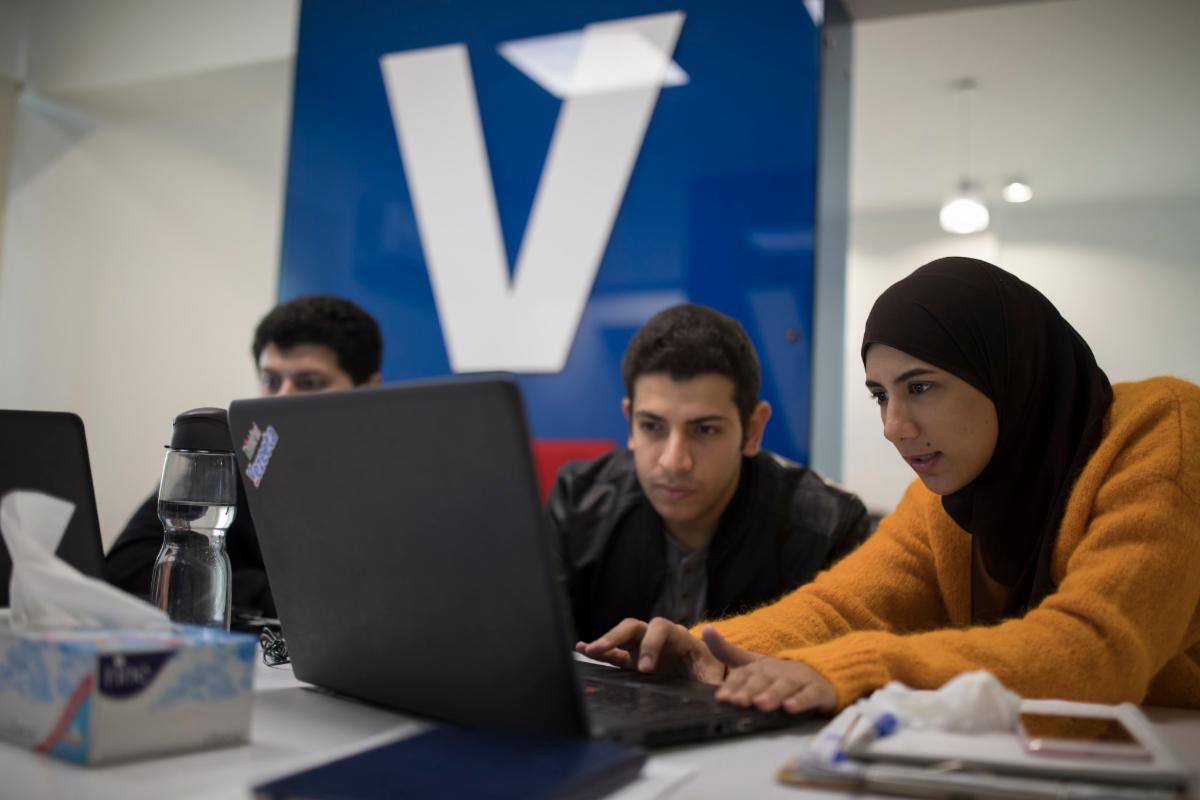
Caroline Rubin, Julia Hakspiel and Bobbi Gray from our WEE Working Group speak with Alexa Roscoe, Disruptive Technology Lead at IFC’s Gender and Economic Inclusion Group, and Lana Graf, Principal Industry Specialist for Artificial Intelligence and Machine Learning at IFC.
Photo by Dominic Chavez (IFC)
What are SEEP Members Doing?
MEDA's new Jordan Valley Links Learning Series offers technical guidance on equality and economic empowerment in Jordan and shares good practices and learnings from their partnerships and programming in the country. It also emphasizes the voices and perceptions of their women and youth clients. Key pieces of the learning series include Improving Businesses: Inclusive Market Systems; Reducing Barriers: Community Engagement and Gender Equality and Training materials: Tools & Approaches.
As part of their PRO-WASH initiative, they're hosting a four-part webinar series starting on March 2 that will share lessons learned from USAID partners focusing on innovative advances in approaches to operation and maintenance (O&M) of water, sanitation and hygiene (WASH) infrastructure. Join them on March 2 & 16 and April 6 & 20.
Yemen Kuwait Bank’s newest working paper (published in Arabic) highlights the role of commercial banks in providing digital services to expand financial inclusion and shares their own experience with e-wallets. The paper emphasizes the importance of banking via mobile phones to increase inclusion among segments struggling to access financial services. It further calls for government and private sector cooperation to help overcome challenging barriers to mobile banking, including misconceptions around security and lack of experience with the platform.
Jobs & Opportunities

Members, have any job openings or learning opportunities at your organization? Simply fill out this form and let us help you recruit qualified professionals!