REMOTE WORK
Say hello to the Worker Productivity Score
Stop clicking on your keyboard? Stop using your mouse or posting in the online forums? You’re penalized!
| |
|
POST 2008, GROWTH in worker productivity in the west has, broadly, slowed and, most recently, seen sharp drops. And as a recent investigation by the New York Times found, white-collar managers are taking a page out of the industrial playbook and increasingly turning to the kinds of surveillance and tracking technologies first trialed in industrial settings and applying them to knowledge-based work.
Enter the new stat that you might be worrying about in the next few years: the Worker Productivity Score. It’s worth a read ― it even includes a rudimentary tracking system of its own to give you a taste of how it works.
“Digital productivity monitoring is also spreading among white-collar jobs and roles that require graduate degrees,” the story reads. “Many employees, whether working remotely or in person, are subject to trackers, scores, ‘idle’ buttons, or just quiet, constantly accumulating records. Pauses can lead to penalties, from lost pay to lost jobs.”
At times, this comes up in wild contexts: one hospice chaplain, for instance, got a point for visiting the dying, nearly two points for participating in a funeral and quarter-point for calling grieving relatives.
These types of technology are, to say the least, controversial among the employees subject to them. Bosses who have gravitated towards them have done so in an explicit bargain over remote work. “If we’re going to give up on bringing people back to the office, we’re not going to give up on managing productivity,” said one exec. But many see it as a poor response on the part of management to the changing world of work.
“It draws a bead on the big problem in today’s technologized management. Bosses are obsessed with what they can measure ― but not what actually matters,” writes Clive Thompson. “What’s so maddening about this trend towards productivity spyware is how damn lazy it is. CEOs who actually care about whether their employees are being productive would inquire about the entire job, the entire workers. They’d know that a job isn’t just typing and mousing.” Kieran Delamont
| |
WORKFORCE
Out of the spotlight
Why your invisible employees might be your most valuable
| |
|
WHILE THINGS LIKE worker productivity scores may reward employees who do a lot to stand out, there’s another group of workers who manager may want to look more closely for: the so-called “invisible employees,” whose value to a company comes precisely from their comfort working in the background, as a support player, and doing their job quietly and effectively.
Inc.com contributor Jeff Haden recalls the employee that changed his thinking on this, a worker named Bob, whose main attribute seemed to be that he didn’t say much, and just did his job. “Bob didn’t just create zero headaches; he also eliminated potential headaches,” Haden writes. “He handled problems before they became issues. He smoothed customer feathers before they became ruffled.”
That, he argued, is a more valuable employee than most bosses will give credit for.
There’s been more interest in invisible employees in recent years. For a 2014 piece in Harvard Business Review, David Zweig researched the phenomenon around the world, concluding not just that invisibles were a value to a company, but that they were often poorly understood ― and thus poorly managed ― by managers.
“They are a management challenge,” Zweig wrote. “Because they don’t crave recognition, they don’t spend time on self-promotion, so it’s easy to take them for granted. But fail to understand and give them what they do crave, and you will lose them, along with the tremendous value they deliver.”
What can managers do to tap this invisible talent? Zweig has some suggestions. “Managers should start simply by recognizing who their invisibles are ― and by assuming that there are more of them than it might appear,” he writes. That alone can have an impact. From there, better decisions can be made about where to deploy invisible workers and ensure they’re fairly rewarded for their work.
“Don’t mistake their lack of self-promotion for a lack of understanding of what they are worth. It might even make sense to invert your assumptions about the relative pay your fame seekers and fame shunners need.” Kieran Delamont
| |
|
|
Terry Talks: Outplacement and managing the employer brand | As we work in an environment of constant change, many organizations will need to restructure their employee teams as part of their HR strategy. Good career transition support does more than show the organization is concerned about the proper treatment of those impacted; it goes a long way to reassuring others that the business takes care of employees. | | | |
STRUCTURE
Stuck in the middle
Middle management was already the corporate scapegoat of choice before the pandemic. Will remote work make middle managers unnecessary or more critical than ever?
| |
|
TO BE A middle manager is to be the symbol of stuffy corporate culture to many ― a job not quite as noble as being a worker but not quite as splashy as being an executive, a no-man’s land on the way to the top of an organization.
Whether true or not, that’s the perception, so it may not be surprising to know that middle manager is no longer a job to which many aspire ― in part because it has gotten so much harder to do.
“With so much in flux, managers are understandably overwhelmed,” said HR firm Humu in a recent report on middle management. When it comes to the return-to-office debate, it’s middle managers who often carry out the heavy lifting. Ditto for staffing issues or working conditions ― all big issues that fall in the lap of the humble middle manager. Stress levels among this group are up.
“Is it any wonder that managers are twice as likely to be looking for new jobs as nonmanagerial employees?” asked an article in Fast Company last week.
Some experts are imploring businesses to think about their middle managers and the important role they play in many organizations. “I think middle management is part of the fabric of your leadership pipeline. These roles should be coveted and nurtured and curated, not eliminated,” said McKinsey & Company’s Bill Schaninger.
On the other hand, those who advocate for flatter workplace hierarchies have suggested that they aren’t really serving a clear purpose and can be moved somewhere else.
“Think of the countless hours that team leaders, department heads, and vice presidents devote to supervising the work of others,” writes HBR’s Gary Hamel. “Most managers are hardworking; the problem doesn’t lie with them. The inefficiency stems from a top-heavy management model that is both cumbersome and costly.” Kieran Delamont
| |
WORKSPACE
Catering to the creatives
With offices being redesigned to reflect how the purpose of work has changed, the “content room” is the latest must-have feature
| | |
|
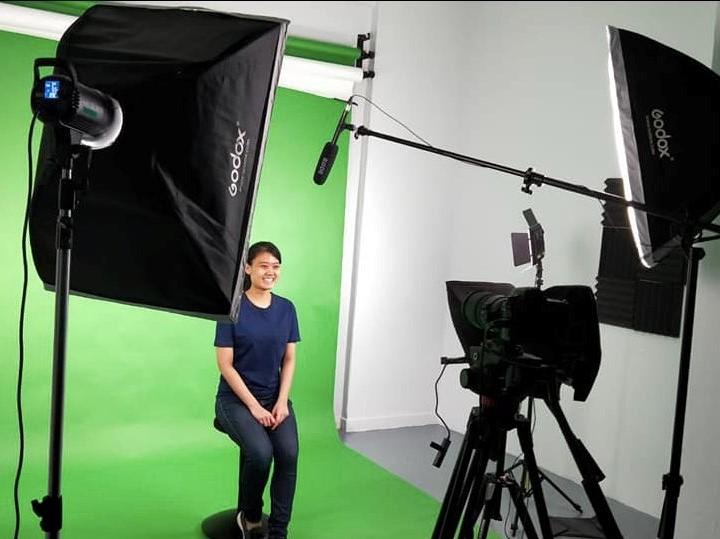
IF YOU’RE AT all familiar with NPR’s popular Tiny Desk concert series, you likely already know ― and can recognize ― their distinctive concert set, dressed up to look like the band is playing right at someone’s cubicle. It’s a cute branding gimmick, and has been for years, but in the age of content the idea of a specific space for content-creation is becoming a must-have for many offices.
First off, what is the content room? Simply, it’s the room from which you produce content. But to an office that leverages social media videos, for example, it can be an essential part of the branding, since they form the background to a TikTok Live or a recorded Q&A session. They can say a lot about who your company is.
It’s given rise to an industry of content room designers, who specialize in optimizing this part of the office. “The shorter, more palpable content being created here benefits from a more authentic non-produced environment where a good amount of flexibility is possible,” said one; another noted that modular furniture, like bar carts, are really useful because they can be moved around and customized.
Those in the content industries are gradually starting to encode that in the very DNA of their offices. At the Washington Post, where TikTok has been a major area of investment, there’s a content room being built with input from the tech, video and audio departments to create something that hits all their employee’s needs.
And coworking spaces are increasingly adding dedicated rooms for this as well, with equipment like podcast recording gear or video and photo gear to make it a useful place not just for desk workers but for creators. No more searching for blank white walls; no more awkwardly squeezing in a camera between office chairs; and best of all for anyone who’s ever been a podcast guest, no more having to record from the comforts of your closet. Kieran Delamont
|
| | | | |