September 2025 | Rooted in Community | |
Tsundoku
Tsundoku is Japanese for the act of acquiring reading materials and letting them pile up in one’s home. We thought it a perfect heading for this section, as we’ll feature books that are new or popular in the store. If you’re like us, tsundoku is a constant state of being.
The Poppy War trilogy is an epic fantasy filled with treachery and magic by R. F. Kuang. This grim, dark fantasy plot draws from the history of the Sino-Japanese War. It follows war orphan Fang Runin ("Rin") as she rises from poverty to become a powerful shaman at an elite military academy, only to be swept into a brutal conflict involving violence, war crimes, genocide, drug use, and vengeance.
Babel: An Arcane History is another historical epic fantasy that grapples with student revolutions, colonial resistance, and the use of language and translation as the dominating tool of the British Empire. Robin Swift, the novel's primary protagonist, orphaned by cholera in China and then abducted and brought to London by Professor Lovell where he trains for years in Latin, Ancient Greek, and Chinese. He then enrolls in Oxford University’s prestigious Royal Institute of Translation—also known as Babel. For Robin, Oxford is an utopia until he realizes that serving Babel means betraying his homeland.
Yellowface is a satirical story about June Hayward, a white author who steals her deceased Asian friend Athena Liu's manuscript and publishes it under the ambiguous pen name Juniper Song to achieve literary fame. The novel explores cultural appropriation, class, privilege, and the toxic world of publishing.
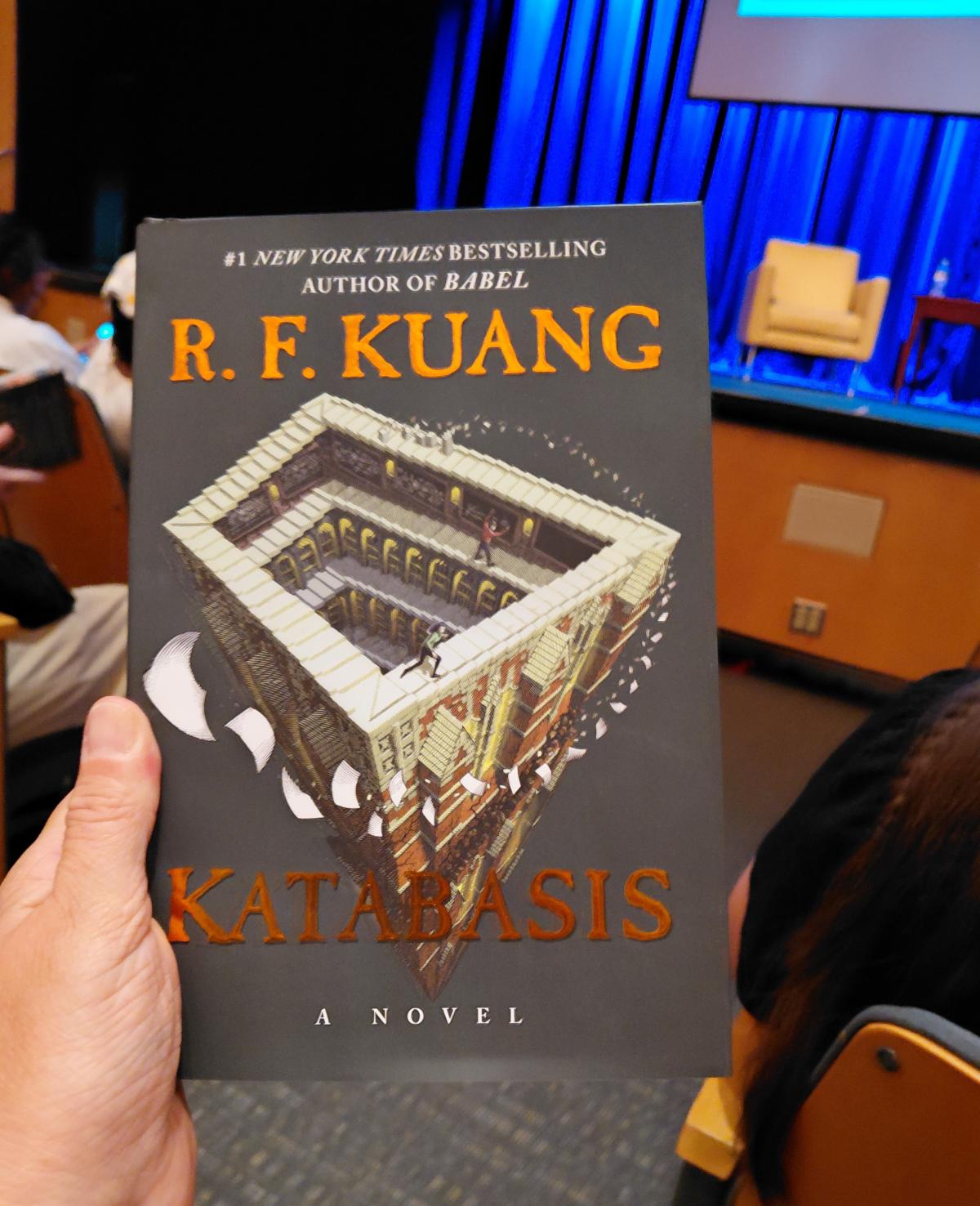
Katabasis is a dark historical fantasy which draws from classic and modern literary works, with direct inspiration from Dante's Inferno, and also references Homer's Odyssey and Virgil's Aeneid for the theme of journeying to the underworld (katabasis). Other influences include Euripides' Alcestis, Ovid's Metamorphoses, and T.S. Eliot's The Wasteland. Alice and Peter, two graduate students must set aside their rivalry as they journey to hell to save their professor’s soul in order to secure a good letter of recommendation. There, they are faced with unsolvable paradoxes which form the basis for the novel's magic system.
| | |
|
Sara's Staff Pick
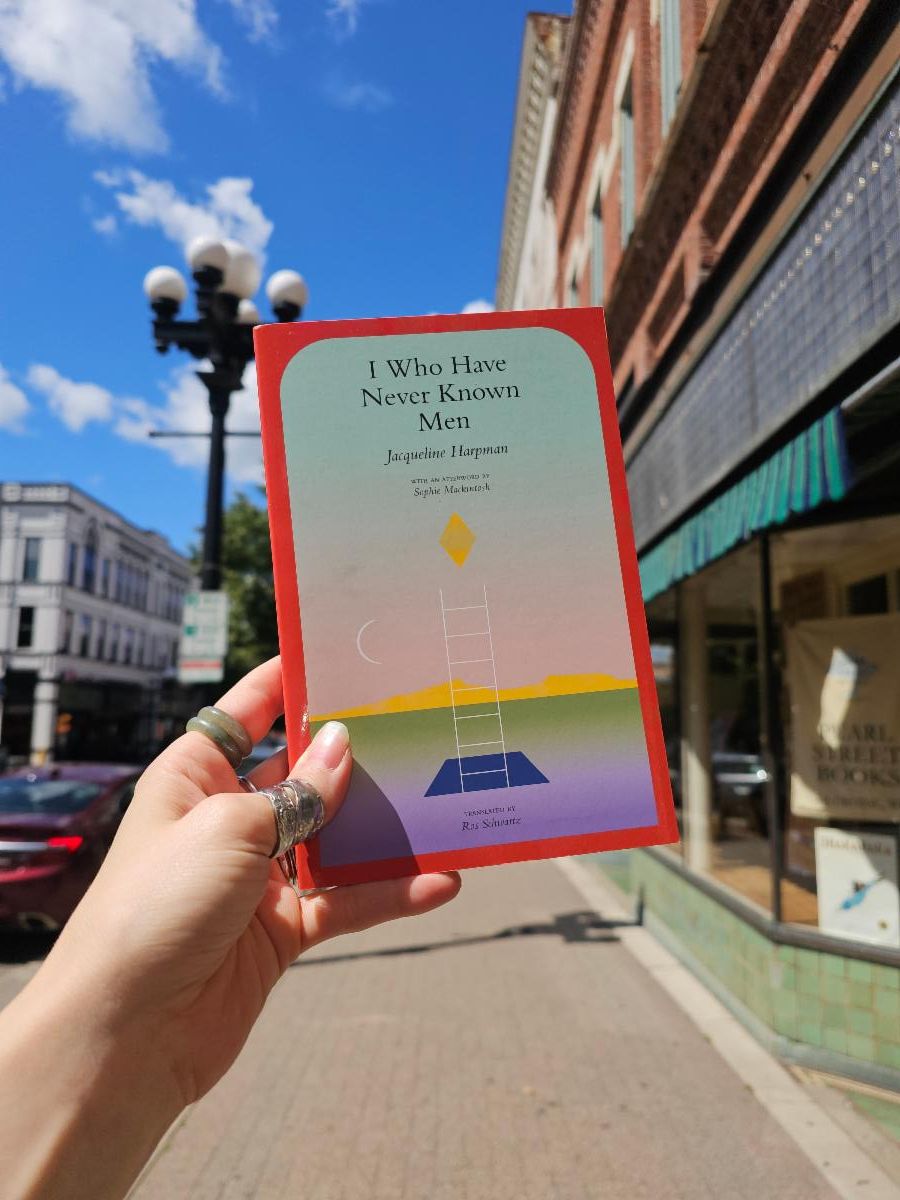
I Who Have Never Known Men is a beautifully haunting dystopian novel by Jacqueline Harpman. Originally written in French in 1995, it was the first of her works to be translated into English — and it's clear that her writing was far ahead of its time. Harpman's sparse, lyrical prose cuts deep, offering a story that is both devastating and strangely hopeful.
The novel follows a young girl who has known only life in confinement, isolated with thirty-nine other women under mysterious and unexplained circumstances. With no memories of a world beyond the cage, she begins to question the silence that surrounds her — and what might lie outside the walls. As her inner world expands, so does the novel’s scope, transforming into a profound meditation on freedom, identity, memory, and the raw ache of human longing.
Both deeply introspective and philosophical, I Who Have Never Known Men examines what it means to be human in the absence of history, love, or even language. It's a quiet, powerful novel that lingers long after the final page — a story that lives in the questions it refuses to answer.
Image: Image of Sara's hand holding book outside of PSB.
| |
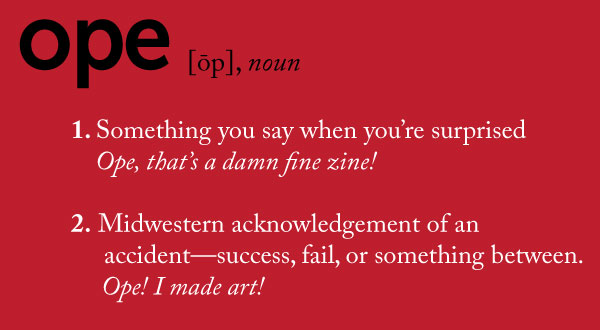
Monthly Pearl from Ope!
Roxanne and I met recently to have our semi-irregular existential small press crisis, in which we lament our inadequacies and throw questions like darts without a board. Are we not pouring our time, efforts, and souls into this local press/local culture venture? How are we still barely eeking by, let alone making a profit? How does capitalism even work? (That last question is fraught with cynicism, but still).
Okay, so we do have some understanding of our struggle. We are two introverted, odd women, trying to sell zines with a general local government slant. It’s not exactly Coca Cola or a Dodge Ram.
But how do we define this elusive success? For me, it still feels beyond the wilds to imagine Ope! as a full-time gig, but I know Roxanne sees that with clearer vision. The place where our visions overlap, though, is in the potential power of collaboration. We want to publish ideas and visions about community and city involvement that we then get to actually see and feel ripple out. We love the idea of working with and publishing a wide range of people in varieties of fields and visions, not all of whom would call themselves writers. And we want readers, lots of readers!--people who get excited to read our work and pass zines around and talk about the ideas and stories and concepts that we publish, so much so that there are sparks, and then change–beautiful, necessary change. I swear, it could all be so much cooler than big, big trucks.
We just don’t know how to get there, with our weird old machines, zines, and darts.
But for the sake of wishing, I will put this here: check out our webpage www.ope.pub, contact us with ideas, buy a zine or two, and/or consider becoming a Patreon https://www.patreon.com/opepublishing. Thanks for reading!
| |  | | | | | | | | | |