The Procurement Pulse

April 2026 Edition

INSIDE THE PROCUREMENT PULSE

NEWSLETTER

How German Manufacturers Are Using Strategic Sourcing to Strengthen North American Supply Chains

Eighty six percent of German companies operating in the United States say current U.S. tariff policy is hurting their business. As a result, 67% still plan to increase U.S. investment in 2026.


That is a powerful signal for procurement leaders: companies are not stepping back from the U.S. market, they are changing how they source, localize, and build supply chains to serve it more competitively.


German manufacturers are one clear example of a broader trend. Faced with tariff pressure, geopolitical risk, and margin compression, they are putting more weight on strategic sourcing, supplier discovery, cost benchmarking, and supply chain localization across the U.S. and Mexico. The lesson for procurement leaders is that localization is no longer just a footprint decision. It is increasingly a sourcing execution challenge.

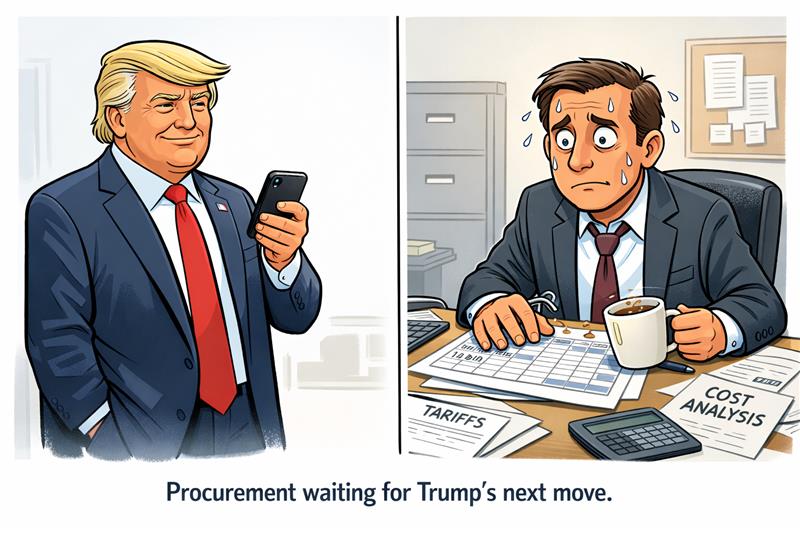
Disclaimer: The above image is not intended as political commentary or a judgment on right or wrong, but simply an observation of the rapid pace of change.

Thailand Global Sourcing Strategy in 2026: Procurement Opportunity, Supplier Cost Reduction, and RFP Value

Global sourcing strategies continue to shift in 2026, and Thailand is earning a more serious place in that conversation. For procurement teams focused on supplier cost reduction, supply chain resilience, and stronger RFP outcomes, Thailand stands out as a market worth evaluating closely.


U.S. goods imports from Thailand rose 44% in 2025 to $91.3 billion, one of the sharpest single-year increases among any major U.S. sourcing market, which reflects how quickly sourcing momentum has moved toward the country.


This article examines why Thailand deserves serious consideration in a 2026 global sourcing strategy, covering the country's manufacturing breadth, current tariff position, business culture factors that affect supplier relationships, and the key risks procurement teams should manage before awarding business. For sourcing leaders focused on cost reduction, supply chain diversification, and stronger RFP outcomes, Thailand offers a compelling case when approached with the right process and preparation.

Client Success Story - Reverse Auctions in Strategic Sourcing: How One Manufacturer Saved 16% on Plastic Resins

A reverse auction is not a workaround for weak procurement. It is a force multiplier for strong teams.

When a midsized manufacturer needed to source plastic resins across multiple injection molding lines, they did not have a broken process.


They had a capable strategic sourcing function, qualified suppliers, and solid category knowledge. What they wanted was the most effective negotiation method to reach true market value faster.


They chose a managed reverse auction. In 45 minutes, four prequalified suppliers submitted more than 65 counteroffers. The top savings exceeded 16%.


This post explains why that outcome is repeatable and what procurement teams need to get right before running a reverse auction of their own.

Did you enjoy this newsletter? Forward it to colleagues and friends so they can subscribe too.


For strategic sourcing support

Contact Us Today!

+1 (877) 824-9809

LinkedIn    Email    Web