|
On March 29, NACD and a coalition of agriculture and conservation organizations sent a letter to the leaders of the U.S. House and Senate appropriations committees requesting at least $1.2 billion for NRCS Conservation Operations and fully authorized funding for farm bill conservation programs in Fiscal Year 2025 (FY25). More than 85 conservation and agriculture groups signed the letter to support the requests. Conservation Operations funds Conservation Technical Assistance (CTA), which facilitates the implementation of on-the-ground conservation by supporting our conservation workforce, conservation planning, and the extension of specialized technical assistance to producers.
“Funding for NRCS Conservation Operations was reduced in the final Fiscal Year 2024 spending bill, so it is critical that we make a strong case for reversing course as Congress develops FY25 appropriations bills,” said NACD President Kim LaFleur. “Nearly one hundred conservation and agriculture groups signing this letter sends a clear message to Congress that increasing funding for CTA is vital to supporting our conservation delivery system and putting effective conservation practices on the ground in all parts of the country.”
Providing strong funding for CTA is now more important than ever as NRCS and partners work to administer historic investments in voluntary conservation programs, including the Environmental Quality Incentives Program and Conservation Stewardship Program. The letter also urges Congress to reject any reductions in mandatory spending for these important USDA conservation programs. Maintaining funding is required to reduce persistent backlogs in these programs and help an increasing number of producers voluntarily implement conservation of their lands.
Read NACD's full press release here.
| FSH SEEKING FARMERS FOR COVER CROP ASSISTANCE |  | |
Farmers for Soil Health (FSH) is on a mission to improve soil health and farm profitability. Working with farmers to expand their adoption of cover crops, FSH aims to have 30 million U.S. acres in cover crops by 2030.
As a partner, NACD is excited to share that FSH is currently accepting enrollments from farmers seeking assistance planting cover crops in 20 states: Delaware, Illinois, Indiana, Iowa, Kansas, Kentucky, Maryland, Michigan, Minnesota, Missouri, Nebraska, New York, North Carolina, North Dakota, Ohio, Pennsylvania, South Dakota, Tennessee, Virginia, and Wisconsin.
If you are a farmer interested in this opportunity, visit FSH’s enrollment page. Funding for technical and financial assistance is made possible by the USDA’s Partnerships for Climate-Smart Commodities initiative.
More information, including an extensive Frequently Asked Questions (FAQ’s) are available on FSH’s enrollment page. The online initial enrollment step is relatively short, with a follow up step to provide more farm information later in the process. Each of the states also has a designated Technical Assistance organization to provide help to producers.
Please help spread the word and share this opportunity with farmers in eligible states!
| |
WHAT'S UP IN WASHINGTON:
GOVERNMENT AFFAIRS UPDATE
| The U.S. Fish and Wildlife Service announced the release of three final rules to amend regulations implementing key sections of the Endangered Species Act (ESA). These revisions alter sections of the ESA that regulate the listing of critical habitats, consultation requirements, and prohibitions for threatened species. NACD signed a signed a comment letter highlighting concerns that the rules may not provide regulatory clarity nor improve certainty. | JEFFERSON CONSERVATION DISTRICT LEADS FORESTRY RESILIENCE INITIATIVE | |
Jefferson Conservation District (JCD) in Colorado, in collaboration with partners, has secured federal grants totaling over $19 million to address forest restoration, wildlife habitat preservation, and wildfire mitigation across the Northern Front Range.
This initiative will tackle the issue of dense forests, a consequence of historical wildfire suppression, which has exacerbated wildfire management challenges. By selectively removing trees, the project seeks to decrease the intensity of future wildfires, benefiting both communities and ecosystems.
| 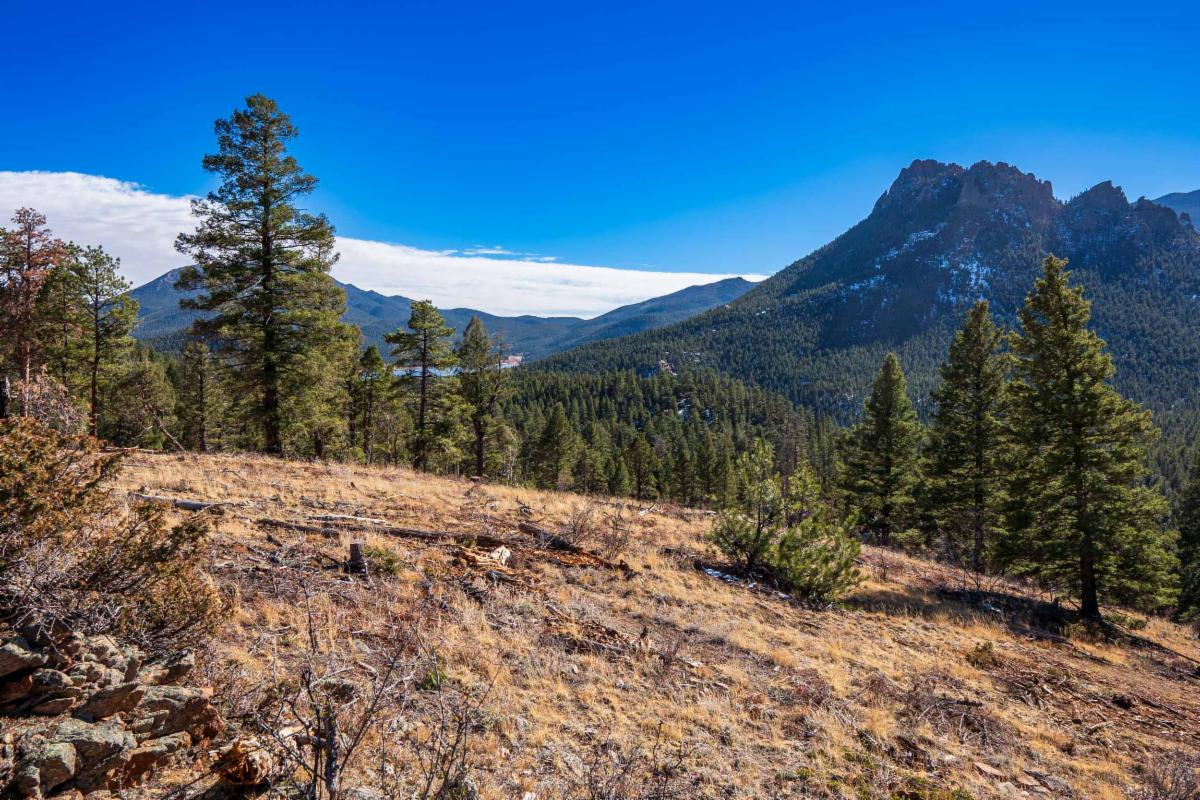 | |
The forests of the Northern Front Range have undergone significant changes over the past century due to the suppression of natural wildfires. Prior to human intervention, wildfires occurred periodically, maintaining diverse forest habitats and preventing excessive fuel buildup.
However, with the suppression of these fires, forests have become densely populated with trees, leading to more intense and damaging wildfires, such as the Hayman Fire of 2002 and the Cameron Peak Fire of 2020. The increasing population residing in these forests amplifies the impact of wildfires, affecting not only rural areas but also urban communities along the Front Range corridor.
The JCD’s forestry programs play a crucial role in helping landowners manage their forested lands to mitigate wildfire hazards and restore ecological balance. Looking ahead, JCD aims to expand its capacity by adding two new forestry staff members and expand their acres treated. As leaders on the Front Range, JCD and its partners are committed to promoting conservation practices essential for healthy, well-managed forestlands in collaboration with active involvement from landowners and the community.
Read the full story on NACD's blog. Get more stories like this delivered to your inbox monthly by subscribing to Forestry Notes!
| |
|
Share Your Feedback on NACD's Spring
Fly-In!
| Participants of NACD's Spring Fly-In are invited to complete this short survey to provide feedback and help us improve future Fly-In events and materials. | Join us for Conservation Coffee | |
Join NACD and our District and Partner Relations Committee for the next Conservation Coffee, a virtual learning and networking opportunity for districts and their partners!
On April 11 at 3:00 p.m. ET via Zoom, learn from Aimee Figgatt, NACD’s Stewardship and Education Coordinator, about NACD’s Stewardship Week (April 28-May 5) and the variety of free resources available to districts to support their programming. Aimee will also share information on other educational resources available through NACD.
Registration for the session is free and open to anyone with an interest in joining! If you're unable to attend live, the session will be recorded and shared later. Check out the previous coffees, as well as a variety of other recorded learning and networking sessions, on NACD’s YouTube here.
| USDA Seeks Projects to Expand Conservation on Grazing Lands | |
USDA is investing up to $22 million in partnerships that expand access to conservation technical assistance for livestock producers and increase the use of conservation practices on grazing lands.
Project proposals for Grazing Lands Conservation Initiative (GLCI) Cooperative Agreements will identify and address barriers to accessing grazing assistance for producers. These partnerships are encouraged to include outreach and support for reaching underserved producers.
USDA's NRCS is accepting proposals through its GLCI until Sunday, May 26, 2024. For more information and to apply, visit the funding opportunity on grants.gov.
| Complete NCPP's Survey on Conservation Planning | |
The National Conservation Planning Partnership (NCPP) is asking for your feedback! All partners are invited to share their opinions by completing a survey on conservation planning certification, advancement, and the overall conservation planning process.
The deadline to complete the survey has been extended to April 19!
The survey should only take 8-10 minutes to complete. Your feedback will help the partnership evaluate new and ongoing challenges and set priority tactics moving forward.
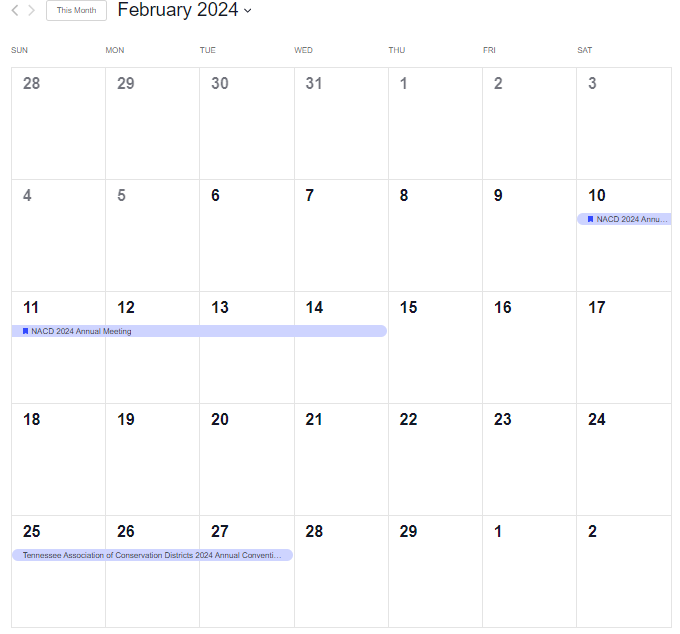
| Promote your conservation district or state association's tree sale, annual meeting, webinar, field day, or other events on NACD's Calendar of Events! | |