|
All is Flow
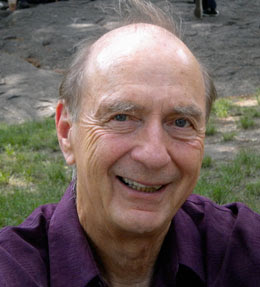
By Ken Gergen, Taos Institute President
| | |
Written over 2,000 years ago, Heraclitus words aptly characterize today’s accelerated pace of change. I am particularly conscious of this flow in reflecting and reporting on the activities of the Taos Institute this past year. Adaptation and creative transformation have been bywords.
At the outset, this is the first full year in which the remaining founders of the Institute―Sheila McNamee, Harlene Anderson, and myself―have turned over the major decision-making responsibilities to the new Board members of 2024. We are greatly indebted to this new crew―Saliha Bava from the U.S., Emerson Rasera from Brazil, and Loek Schoenmakers from the Netherlands―as they have diligently and creatively devoted themselves to the future wellbeing of the Institute. As the year progressed, the trio began to fill out the new Board, including Deborah Nathan from the U.S. and Premysl Ulman from the Czech Republic. This emphasis on global representation will continue to mark our future expansion. Together, the group updated the organization’s structure, operating procedures, Board members and staff responsibilities, and fundraising activities.
As in the past, careful attention was given to offering high-caliber programs to further the mission of the Institute. A series of eight online webinars devoted to Pulsating Practices was launched, featuring presentations by prominent Associates working on issues in community therapy, collaborative democracy, conflict reduction, action research, appreciative living, educational innovation, and indigenous research practices. These open-to-all presentations continue into the coming Spring, with our next event, Supporting Resistance, Building Community: Hope and Sustenance in these Difficult Times, on February 11. Two Dialogue with the Author webinars were also offered (recordings are available in the Event Replays library in the Commons). These contributions were complemented by the launch of our first self-paced, online course, Co-creating Futures: An Introduction to Social Construction. Celiane Camargo Borges facilitated our real time offering, Introduction to Social Construction, in a new format this Spring.
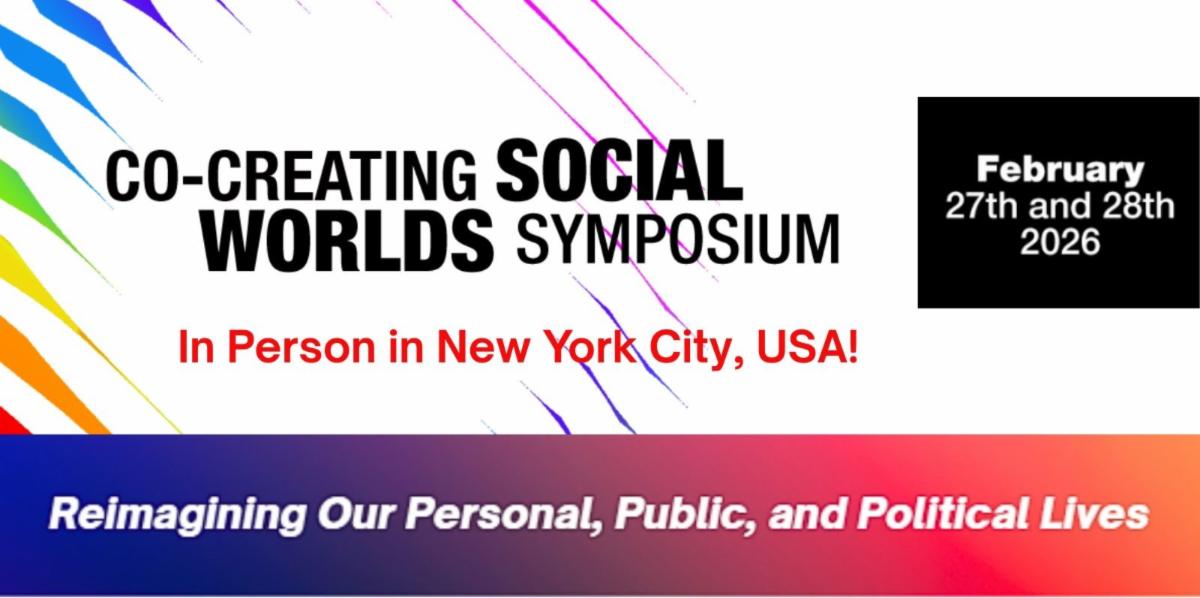
Perhaps most significantly, the Taos Board has been carefully considering the possibility of a face-to-face conference for several years. Such events are expensive to attend, have a high carbon footprint, present health risks, and require intense administrative efforts. However, they are invaluable in solidifying relations and inspiring innovation. Therefore, we are pleased with our decision to mount a smaller, location specific event. This symposium, Co-creating Social Worlds, will take place in New York City, USA, this February 27-28. We look forward to reconnecting with many of you and sparking new relationships and ideas in person again!
The Board is making a concerted attempt to decentralize the offerings of the Institute, providing Associates with more opportunities to create and share. New ideas are warmly invited. Examples of our networks’ activities in 2025 include the Relational Research Network hosting three Worlds in Conversation webinars, Taos Institute Japan holding an in-person festival in October, the Associates Council offering two virtual Tea, Story, and Play sessions, Taos Institute Europe launching an Embodied Constructionist Anecdotes blog, and an ambitious trilingual book project led by the Taos Institute Latin America, Spain & Portugal Council (TILAC). Significantly, we are now accepting online candidacies for Associate status and hope many will join in. Associates join with other interested parties on the Taos Institute Commons―a free online community available for dialogue, attending events, and sharing information and publications―which now counts almost 3,000 members. On other fronts, we shifted 14 books previously published in print to the WorldShare Books series. Over 110 titles in 15 different languages are now free for downloading. Proposals for new books are always welcome. A new edition of the International Journal of Collaborative Practices was issued in November. We were delighted, as well, to be able to continue our small grants funding for Associates. This years’ awardees were the ICCP Network (to produce a new podcast, The Relational Turn: Stories of Connection and Change) and Taos Institute Japan (for the Japanese translation of four Taos publications and free dissemination through WorldShare Books).
Finally, we must express our deep appreciation for all who have made financial donations―both small and large―to the Institute this past year. The Institute requires no fees for Associate membership, and attempts to make most of our offerings available free or at minimal charge. Thus, your donations are the lifeblood of our continuing.
Our work of building brighter futures through social construction is essential and we look forward with enthusiasm to connecting with you in the year to come.
| | WE ARE AT CAPACITY! WELCOMING WAITLIST REQUESTS. | | This is the first in-person Taos event since the pandemic and we look forward to gathering in New York City, USA, February 27 & 28, 2026! This symposium is for anyone—changemakers, scholars-practitioners, therapists, healers, artists, educators, or simply the curious—seeking to make change through dialogue, collaboration, and relational practices in times of division. We are thrilled by the enthusiastic response of our community and are happy to report that we are already at full capacity! Let us know if you wish to be added to our waitlist. | | |
Self-Paced Course, Start Anytime
Provocative, unsettling, liberating, inspiring…all have been applied to the dialogues on the social construction of knowledge. The ideas have swept across the academic world and into personal and professional life. For many, they contain the ingredients for a promising life together on this planet.
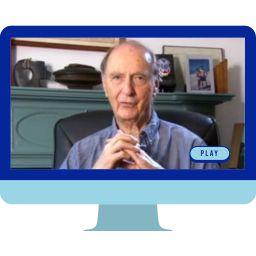
We are pleased to introduce the Taos Institute's first online self-paced course! In six modules, each with 3 short videos and questions for reflection, Ken Gergen introduces basic premises of social constructionist theory and how they apply to professional practices in all domains as well as everyday life. More details here.
| |
Includes six modules with videos by Taos Institute Co-founder & President Ken Gergen! | | |
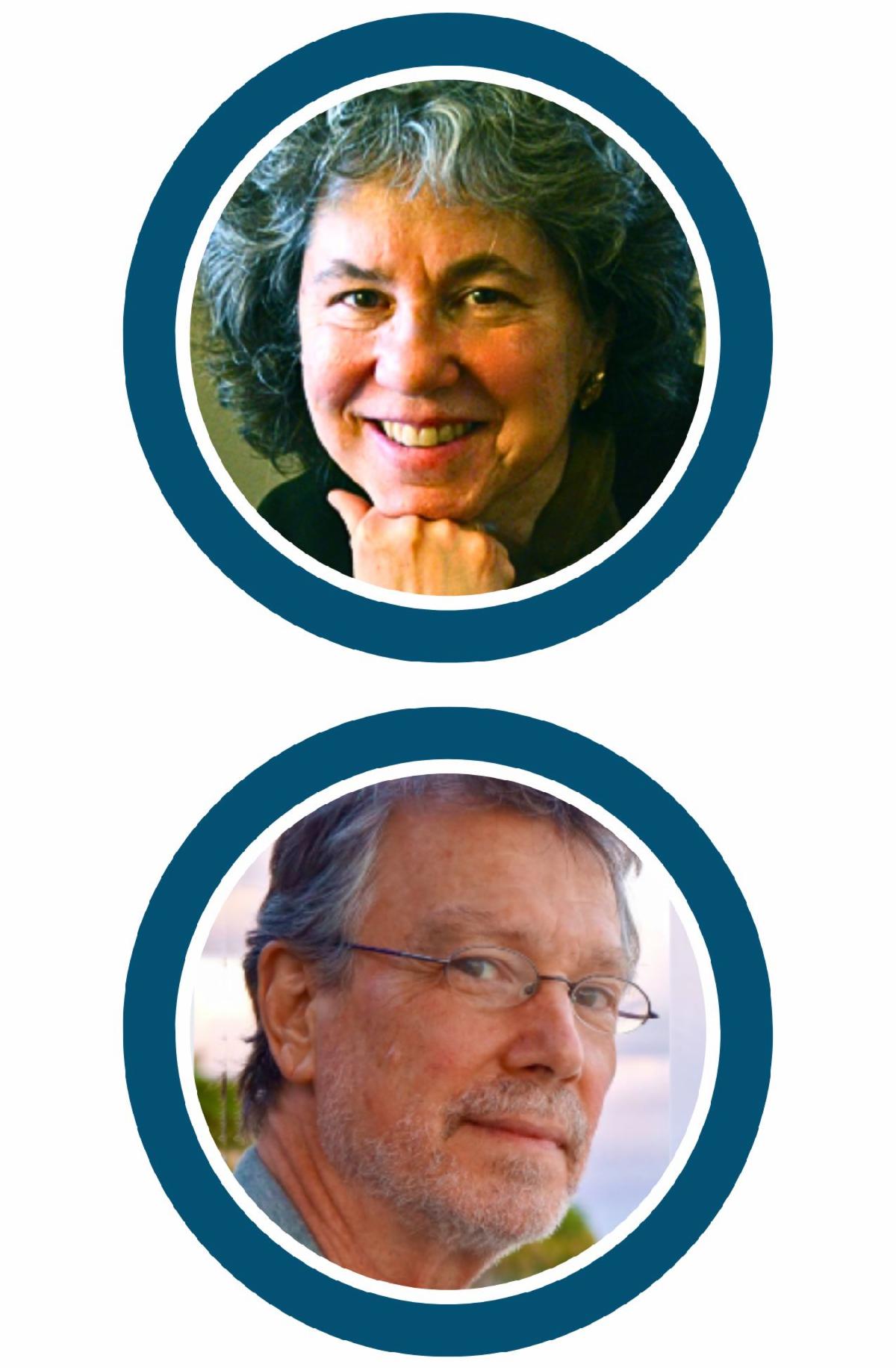
With Jill Freedman & Gene Combs, United States
February 11, 11:30am-1:00pm EST
Many of us are struggling with despair, discouragement, and cynicism as we face the multiple challenges of our current world: rising authoritarianism, climate crisis, xenophobia, economic inequality, and more. This affects us both personally and in our work. How do we keep going?
In this session, Jill and Gene share two narrative practices: The absent but implicit is based on the notion that a negative experience such as despair has to do with the betrayal or seeming impossibility of expression of something we give value to, such as hope. Collective documents can be written in many ways and used for many purposes and they will describe the process they have used in gathering entries from a variety of people. These approaches co-create hope through language, relationship, and collective meaning-making—refusing to individualize what are fundamentally social problems. More details.
| |
| If you can't join us live, all session recordings are available in the Taos Commons! | | |
Join with over 2800 members from around the world in the Taos Institute Commons online community (free) as we explore social constructionist, relational, and appreciative theory and practices. You will instantly get access to free webinars, free books, event replays, announcements, workshops and courses, special interest and language groups, and meaningful connections with others interested in creating more promising futures, one conversation at a time.
Join in the Taos Institute Commons — it's free, quick and easy, to become a part of our global family!
| | | |
Honoring the Human Moment
January 11, 1-5pm EST
We invite you to our next gathering in the Humanizing Ourselves for the Other series—an ongoing international conversation among practitioners, advocates, families, and individuals with lived experience who seek ways of accompanying suffering that honor dignity rather than diagnosis. Our work continues to demonstrate that when people are believed in and supported in their voice and agency, strength-based, personalized dialogue reduces distress, restores identity, and promotes thriving—without conventional interventions. At its heart, this work is a celebration of what is possible in each of us, rather than a search for what is wrong. Details.
| | |
Everything is Negotiation / Negotiation is Everything: Building Self-Awareness, Creating Relationships, and Storying Conflict
January 21, 11:30am EST
In this 90-minute interactive webinar, Beth Fisher-Yoshida will share insights that have emerged from her years of experience researching, teaching, and consulting around negotiation, communication, and conflict resolution. Everything is Negotiation. All communication is a form of negotiation- requiring us to coordinate across different perspectives, experiences, and stories to create shared meaning together. How do we equip ourselves to navigate the negotiation of everyday communication effectively? Negotiation is Everything. The skills required to achieve a successful negotiation are applicable beyond the confines of formal negotiations. How do we apply negotiation approaches to improve all areas of our lives? Details.
| | |
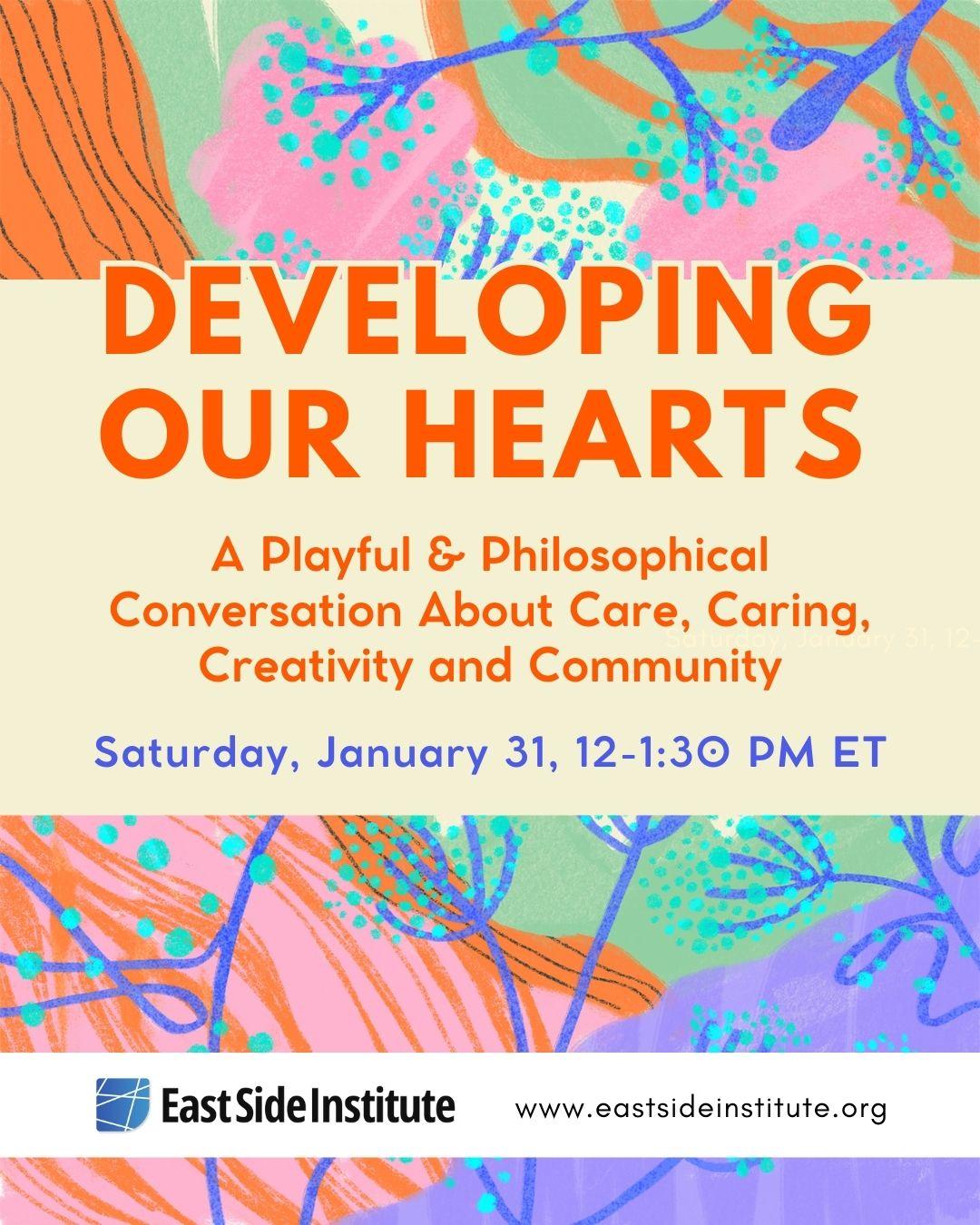
Developing Our Hearts:
A Playful & Philosophical Conversation About Care, Caring, Creativity and Community
January 31, 12-1:30pm EST
In a world where it’s tempting to harden our hearts in the face of crisis, pain, fear, and uncertainty, people across the globe are searching for more powerful, and more human, ways to care. For our clients, friends, family and loved ones. For our communities. For our world. Guided by the discoveries of those reimagining aging, dementia, end-of-life, wellness, healing, spirituality and community, we invite you to join us in a playful, philosophical exploration of care and caring as something we create together. More details here.
| | |
January 17, 9:30-11:00am EST
In these challenging times, sharing your perspective and the lived experiences of your clients and colleagues is more important than ever. Join us to learn about how to reach a wider audience through publication. Details.
| | |
February 21, 11:30am-2:00pm EST
Brief Narrative Practices offer “quick streamlined access” to help that is characterized by rapid engagement. They provide a time-sensitive, rather than a time-driven approach. They are well suited for addressing high stakes conversations by offering help that people need, when they need it. Details.
| | One way the Taos Institute carries out its mission to create brighter futures through social construction is by creating and disseminating a wide variety of resources for scholars, practitioners, and students interested in dialogic and relational approaches. These free resources span many disciplines and languages. To suggest a resource, email info@taosinstitute.net. | | |
| |
This month's feature: The Qualitative Report
TQR is a peer-reviewed, on-line monthly journal devoted to writing and discussion of and about qualitative, critical, action, and collaborative inquiry and research. The Qualitative Report, the oldest multidisciplinary qualitative research journal in the world, serves as a forum and sounding board for researchers, scholars, practitioners, and other reflective-minded individuals who are passionate about ideas, methods, and analyses permeating qualitative, action, collaborative, and critical study. Visit the journal website..
| | | | The Taos Institute is a non-profit educational organization. We strive to keep our offerings free or at low cost to make social constructionist, relational, and appreciative ideas available to as many people as possible around the globe. Please consider supporting our mission of creating brighter futures through social construction by making a donation. For small, convenient monthly contributions, consider becoming a sustaining donor. | | | | |