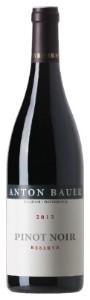
Pinot Noir:
“In Austria the variety was first mentioned in 1394 in connection with the Freigut Thallern near Gumpoldskirchen, the estate of the Cistercian monastery in Heiligenkreuz. Thus, one can right
call it “indigenous”, an Austria native grape.
The Pinot Noir or Blauer Burgunder, as it is called here in Austria, places high demands on climate,
soil and site. It is susceptible to various grape and vine diseases, sensitive to late frosts, berry los
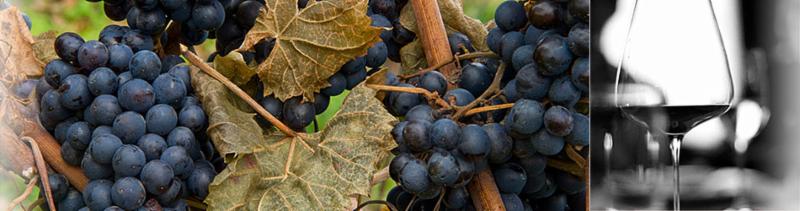
and, because of its thin grape skin, also tends to rot. Therefore, to press Pinot Noir poses an interesting challenge. A challenge also for me.
The wines, clearly reflecting the great examples from Burgundy, show a delicate berry fruit, fine and elegant,
but they also have power and backbone for a long maturing period. The variety manages to cope well with the Wagram conditions. This is why I am regarding the Pinot Noir, along with the Gruner Veltliner, as the most important grape variety for the future.“
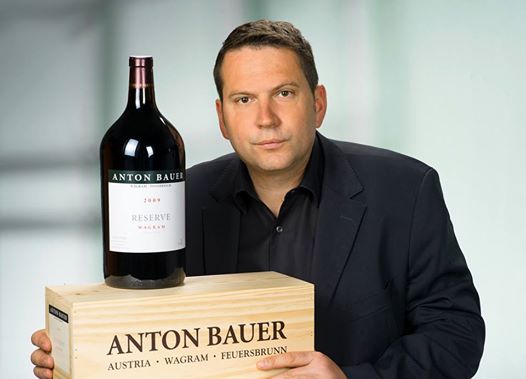
Anton Bauer
Gmörk: Pinot Noir clones 777/115/20-13/M1,
planted in 1992
T
he Gmörk vineyard, located between the wine cellar streets of Feuersbrunn and Fels, is a southern-facing site at the foot of the Hengstberg. The top layer of the very deep soil is of humus, and beneath this a loam-loess mix – the best conditions for the typical classic Grüner Veltliner of Wagram, and Pinot Noir is also very much at home here.“The vineyards are flatter and receive less strong sunlight, so they are somewhat cooler. At the same time the site is relatively exposed to the wind, which is an advantage for Pinot Noir especially, as the grapes always dry quickly and no rot occurs. The wines display more minerality and are noticeably more acidic – creating a racier Grüner Veltliner and a Pinot Noir that stays in the foreground not through sheer force, but rather through its finesse and spicy flavors.”