Paul V. Sherlock Center on Disabilities

RIMAC & Sensory Connection Newsletter 

Supporting Students with Complex Needs 

Fall 2026

Second Edition 


Produced by the RI Dual Sensory Impairment Project and RIMAC


Welcome to the second issue of RIMAC Resource Round Up & Sensory Connection Newsletter. We are excited to combine these two newsletters into one shared space for resources, updates, and ideas that support students with complex needs. We hope to provide educators, families, and service providers with helpful tools to support meaningful access and engagement for all students.  

AT in Action 


Are you new to digital accessibility? This guide from CAST is your starting point for building a more inclusive curriculum using Google Docs, Microsoft Word, and PowerPoint. 


What is the SETT Framework? 

Dr. Joy Zabala developed the SETT Framework to promote collaborative decision-making during: 


  • Consideration of assistive technology services for students with disabilities 
  • Implementation of assistive technology services within a school setting 
  • Evaluation of effectiveness of the assistive technology services provided to the student 


SETT is an acronym that stands for: Student, Environment, Tasks, Tools 


Learn more about the SETT Framework. 

New and Noteworthy Kits at the RIMAC Library 


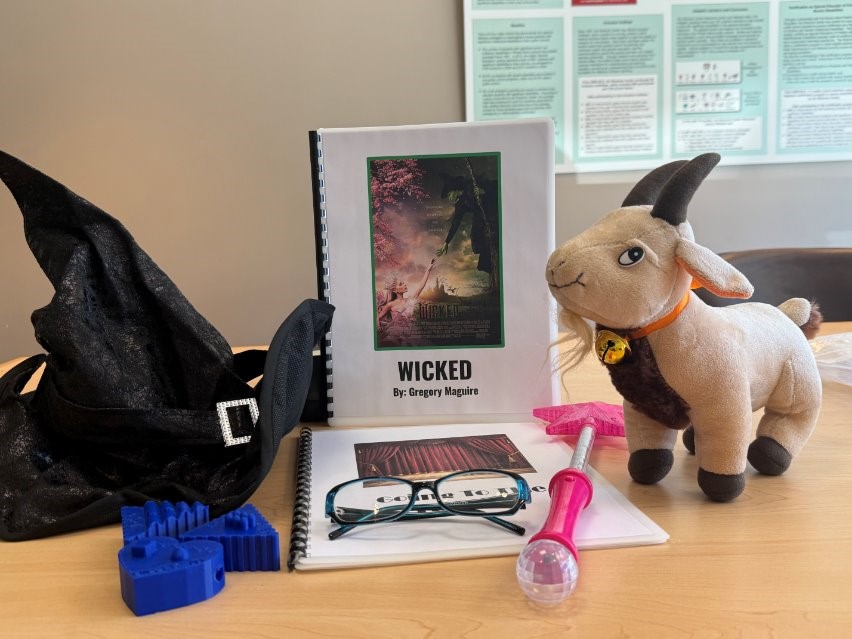
Wicked Grades 8-12


Standards: RL.9-10.10 (ELA.EE.RL.9-10.10); L.9-10.4 (ELA.EE.L.9-10.4)

A kit for the book Wicked

The Wicked Kit includes an adapted book, character objects and 3D objects to use throughout the story. It includes a bubble recipe and “Going to the Movies” social story. 

Fractions Grades 4-5


Standards: 4.NF.1 (M.EE.4.NF.1-2); 4.NF.3 (M.EE.4-NF.3); 5.NF.1 (M.EE.5.NF.1); 5.NF.2 (M.EE.5.NF.2)

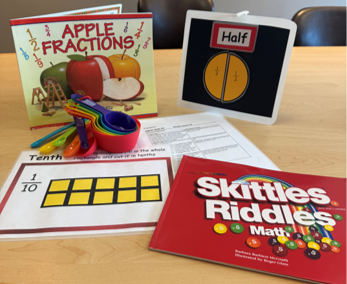
A kit about fractions

The Fractions Math Kit supports learning concepts such as whole, half, third, fourth, and tenth, and includes differentiated materials designed to accommodate a range of learner abilities including high contrast vocabulary cards, a no-cook playdough recipe, and matching and sorting activity. 


Ecosystems Science Kit Grades 9-12 


Standards: SCI.EE.12.LS.EcoHlth-1; RI.11-12.7(ELA.EE.RI.11-12.7)

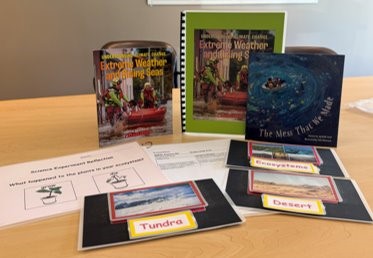
A kit about the ecosystem

The Ecosystems Science Kit includes the adapted text Understanding Climate Change, Extreme Weather and Rising Seas by Karina Hamalainen with interactive vocabulary cards and three adapted science experiments.


RIMAC Info 


The RIMAC Library will soon be relocating to the Adams Library at Rhode Island College. Additional information about our new location, borrowing procedures, and available services will be shared in the coming weeks. In the meantime, please visit our website to borrow materials and find information about delivery and pickup options.


New Adapted Literature Titles 


Online Adapted Literature & Lessons from Paul V. Sherlock Center on Disabilities offers a collection of adapted books and instructional materials designed to support students with complex needs in accessing the general education curriculum.


New titles include: Seedfolks by Paul Fleischman, The Most Magnificent Thing by Ashley Spires, Great Gatsby by F. Scott Fitzgerald, The Great Kapok Tree by Lynne Cherry, To Kill A Mockingbird by Harper Lee, All Creatures Great and Small by James Herriot, The Miracle Worker by William Gibson, Wicked by Gregory Maguire, Of Mice and Men by John Steinbeck, and The Adventures of Tom Sawyer by Mark Twain.

Does Your Student Use A Lightbox?


Here are three websites with different ways to use a lightbox in the classroom!


Sensory Exploration Activity Idea 

🍂 Explore the Smells and Textures of Fall! 🍎

Fall is here! It is a wonderful time to explore the season using our senses. Children can discover fall through smelling, touching, and exploring real objects.


👃🤲 Create Your Own Fall Sensory Containers

Gather a few clean, empty plastic containers with secure lids. Recycled containers, such as spice containers or small plastic containers, work well.


First, wash the containers thoroughly and make sure they are clean and dry.

Add one fall item to each container. Here are some ideas:


🍂 Cotton balls with a little cinnamon or a cinnamon stick

🍎 A piece of fresh apple with a small amount of apple pie spice

🍁 Leaves gathered from outside

🎃 A spoonful of canned pumpkin


Give the child time to explore each container at their own pace. They can smell the container, touch the objects when appropriate, and feel the differences between the materials.


Adults can help by offering simple choices and describing what the child is experiencing:


“This smells like cinnamon.”

“The leaf feels dry and bumpy.”

 “The apple feels smooth and cool.”

“Do you want to smell this one again?”


The child can communicate their likes and dislikes in whatever way works best for them—through gestures, facial expressions, signs, symbols, AAC, movements, or other familiar forms of communication.


📚 A Book to Pair With the Activity


This activity pairs beautifully with The Smell of Fall: A Smells of the Seasons Book by Mary Ann Hake.


The story follows April, a blind girl who experiences autumn through her sense of smell. It provides an opportunity to talk about how people can experience and learn about the world in different ways.


For a child who is deafblind, consider making the story even more interactive by pairing it with real objects and scents from the story. As you read, offer an apple, a leaf, cinnamon, or another familiar item for the child to explore.


Fall is full of things to discover. Let's slow down, explore together, and experience the season through our senses! 🍂🍎🎃


Join our Professionals Supporting Complex Needs Community Network!


Resource Highlight


15 Principles for Reading to Deaf Children

The Laurent Clerc National Deaf Education Center has identified 15 best practices to read aloud to Deaf and Hard of Hearing children, based on research on how Deaf parents read to their Deaf children. Visit this website to learn skills and strategies for reading aloud in American Sign Language.


Want to learn more about teaching children with dual sensory impairments?

The National Center on Deafblindness has free online professional development for educators, with modules about learning, early intervention, communication, and transition for students with dual sensory impairments.


RI Dual Sensory Impairment Project 

The Sensory Connection newsletter is one of many ways the Rhode Island Dual Sensory Impairment (DSI) Project can assist educational teams and families supporting learners with deafblindness. For additional information on the DSI Project, to refer a new child, to contact project personnel, or view or additional resources, visit the project website.


The contents of this publication were developed under a grant from the US Department of Education, # H326T230002. However, these contents do not necessarily represent the policy of the U.S. Department of Education, and you should not assume endorsement by the Federal Government, Project Officer. 

Logos for Sherlock Center, RIDE and U.S. Department of Education
Facebook  LinkedIn