Weekly Digest Number 16 - April 19th, 2022 |
|
(Editor's Note: In an ironic twist, the long and heavy train issue may just aid and assist in the preservation of the 2-person crew. But labor activists would be wise to argue the case for the 2-person crew on a train of any length, as train length does not determine a host of safety and efficiency issues. Our demand should remain: A minimum of 2 persons on every train - a certified engineer and a certified conductor, whether the train be "long" or "short".) |
|
FRA Administrator Sees Longer Trains as Rationale for 2-Person Crews |
|
BALTIMORE – Autonomous trucks are beginning to roam highways with the blessing of the Department of Transportation, yet the Federal Railroad Administration wants to mandate two-person train crews.
Why is the regulatory playing field different for trucks and trains, FRA Administrator Amit Bose was asked at a shippers’ conference on Thursday.
“We think having a consistent standard for crew size across the country benefits the rail industry, benefits safety, and gives certainty on the regulatory environment when it comes to train safety,” he told the North East Association of Rail Shippers. “Also, coupled with that, don’t forget: the trains are running longer. The length of trains is growing.”
Longer trains, he says, demand more than just the engineer in the locomotive cab.
“Those longer trains in my mind require a level of crew size that is proportional to the length of the train,” Bose says. “There are issues that happen on those trains – emergency situations – and having more than one person, or having humans associated with those trains, is to the benefit of the community, if safety issues arise.”
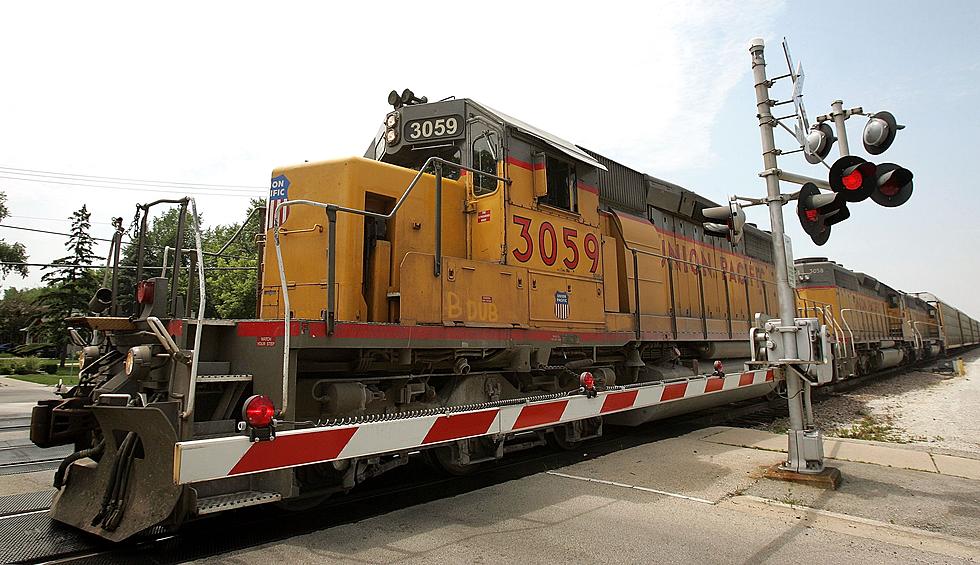
One of the top complaints the FRA receives from the public, Bose says, is blocked grade crossings. Elected officials across the country tell the FRA that longer trains are part of the blocked crossing problem.
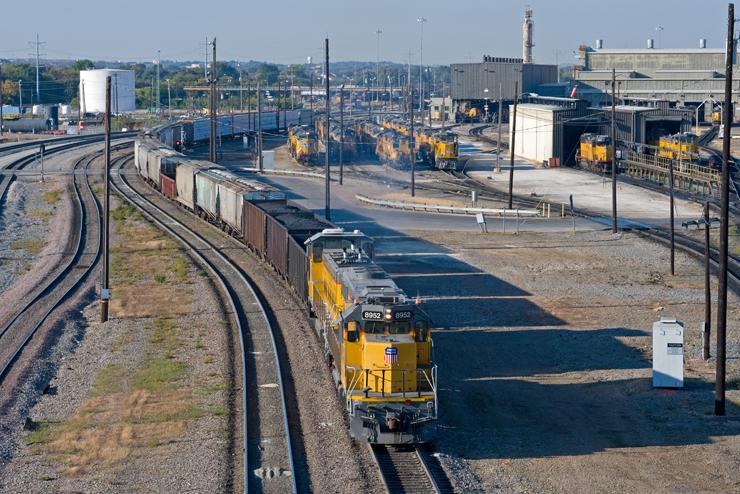
Railroads have been increasing train length in recent years as a way to cut costs by moving tonnage on fewer, but longer trains. Union Pacific, for example, has boosted its average train length by 30% since adopting a Precision Scheduled Railroading operating model in 2018.
Crew size is among the contentious issues that are part of national negotiations between the Class I railroads and rail labor. Labor unions have sought a national two-person crew rule and also have lobbied for state legislation mandating two-person crews. They argue that having two people in the cab improves safety.
|
|
(Editor's Note: This is a re-print of last week's RWU Special Bulletin. All railroader workers are encouraged to voice their concerns based upon their real life experiences on the property. We live first-hand the effects of unregulated corporate power and its detrimental effects upon our lives, our jobs, shippers, passengers, communities, and the economy at large. Speak out!) |
|
Fight Back Against the Power of Monopoly Power!
Deadline is Thursday, April 21st
|
|
Corporations have become more and more powerful in recent decades, as they amalgamate, take-over and otherwise merge their assets. The railroad of course is no exception. In 1980, there were 33 Class One railroads in the U.S. Today there are just 7 and soon to be 6 by the looks of things. As the video here explains, this has a negative effect upon workers, wages, employment, prices, safety, consumer protection and more. As railroad workers, we have experienced these negative effects directly. Many of our issues and concerns can be traced to the ever increasing economic and political power of these giant corporations in this modern unregulated unchecked environment.
The good news is that there are calls to reign in these corporations and to return us to a time when they were not so all powerful. Watch the video (especially starting around minute 16.00) and make sure to comment to the feds your views of what is happening in the rail industry and why we need the feds to act now. NOTE: Deadline is Thursday, April 21st.
|
|
(Editor's Note: Just the latest of a long line of shippers' associations that are fed up and disgusted with the level of service they are receiving under the new railroad regime known as Precision Scheduled Railroading.) |
|
Ethanol Producers Complain About Snarled Rail Service |
|
WASHINGTON – The trade group representing ethanol producers has told federal regulators that its members are experiencing significant rail service delays and disruptions that could lead to higher gasoline prices.
“While we certainly understand that a variety of factors have contributed to these rail disruptions, it is imperative that all possible actions be taken by the nation’s railroads to ensure that these critical fuel supplies are immediately prioritized and reach markets as quickly as possible. Further delays could not only impact our industry but could ultimately increase fuel costs for American drivers,” Growth Energy, which represents 89 producers of ethanol, wrote in a Friday letter to the Surface Transportation Board.
Ethanol shipments moving in manifest service are taking two to four days longer than usual, the group said, while in extreme cases shippers have experienced delays of 10 to 14 days.
Unit train service has been inconsistent, as well, with railroads failing to pick up loaded trains on schedule. Delays range from three days to 12 days.
As a result, biofuel refineries whose storage is full have had to curtail production while awaiting the arrival of empty tank cars, and destination fuel terminals have run out of ethanol while awaiting loaded shipments.
The STB last week scheduled a two-day hearing on rail service, with BNSF Railway, CSX Transportation, Norfolk Southern, and Union Pacific ordered to attend. Canadian National, Canadian Pacific, and Kansas City Southern were invited to participate in the April 26-27 hearing at the board’s office.
The hearing announcement came after public complaints from grain and feed shippers and the secretary of agriculture and private complaints from a range of shippers.
|
|
(Editor's Note: All railroad workers are encouraged to support Amtrak's funding request. If Amtrak can prevail in the coming months and years, it will mean thousands of good union jobs in various crafts for railroad workers, and a move towards bringing rail back to millions of Americans.) |
|
Amtrak Makes $3.3B Grant Request for FY2023 |
|
Amtrak is seeking $3.3 billion in total grant funding for fiscal-year 2023, as part of the national intercity passenger railroad’s annual appropriation request from Congress.
With the recent enactment of the Infrastructure Investment and Jobs Act (IIJA), Amtrak is entering a new era with a historic level of federal investment for capital projects and “a clear plan to transform and grow our business,” Amtrak President and CEO Stephen Gardner said April 8 in a statement after submitting to Congress the railroad’s general and legislative annual report.
In addition to directly providing guaranteed one-time funding to Amtrak under the IIJA, Congress also used the new law to authorize additional annual funding for Amtrak’s Northeast Corridor and National Network grants for FY2022-2026, Gardner noted.
"Our requested FY2023 annual grant will allow Amtrak to continue operating our long-distance trains, which connect communities across the nation; to continue partnering with states to provide short-distance corridor service; and to continue normalized replacement (necessary maintenance and sustainment) of aged assets on the Northeast Corridor, all while facing new levels of uncertainty and disruption from the ongoing COVID-19 pandemic," Gardner said.
Of the total grant request, $1.1 billion would be allocated to the Northeast Corridor and $2.2 billion to the National Network in FY2023.
Amtrak is projecting that its FY2023 ridership will be 28.8 million customer trips, compared with actual ridership of 32.5 million in FY2019, 16.8 million in FY2020 and 12.2 million in FY2021. The railroad’s planned ridership in FY2022 is 23.2 million.
Also in FY2023, Amtrak is projecting $1.98 billion in gross ticket revenue; $3.1 billion in total operating revenue; and an adjusted loss of $1 billion.
According to its request to Congress, Amtrak’s FY2021 highlights included the following:
• Total capital expenditures amounted to $2.2 billion, including investments such as the Hudson Tunnel project property acquisit
|
|
(Editor's Note: In the bad old days of the 1970s, the rail industry was ridding itself of capital and physical assets. Rail carriers felt that in the regulated environment of the times, that investment was just not worth it. Then the Staggers Act changed things and the rail industry began to rebuild and by the 1990s seemed to be expanding and regaining freight traffic, especially intermodal. It seemed to have a bright future. But in the last 15 years or so, the industry has lost freight traffic, has reduced investment in the physical plant, and more recently appears headed towards a total meltdown. The industry seems incapable of handling almost anything. Void of any optimism, the industry has sunk back into an attitude of "we can't do it." ) |
|
Has the Railroads’ ‘Get Up and Go’ Spirit ‘Got Up and Gone’? |
|
My take on the STB Gulf Coast hearings, so far: There seems to be little question that the ongoing campaign to bring Amtrak trains to the Gulf Coast between New Orleans and Mobile is among Railway Age’s biggest stories of the past two-plus years, second-only to coverage of the Canadian Pacific-Kansas City Southern merger.
The count of Gulf Coast stories and commentaries so far seems to be riding a clear signal toward the twenty-mark. TwoRailway Age staff editors and three contributors have been covering it, and I think this is my ninth piece about it. I’ve lost count. William C. Vantuono, Editor-in-Chief, told me that he hoped I could stay awake through all of this. I have so far, but it hasn’t been easy, and there will be lots more to come. That also means lots more to report to you.
While it’s often dull, it is also fascinating in an unusual way. As a lawyer, I am interested in how the case is being presented, since it is a case of first impression. As a reporter on the passenger beat, I have never had occasion to cover a “Surf Board” hearing before. I’m impressed so far, especially with Chair Martin Oberman. He is keeping the hearing going and standing his ground when necessary. He asks probing questions, good for eliciting the information that he and his colleagues need. The other Board members have asked good questions and made thought-provoking comments.
All of us who are rendering our opinions come from different backgrounds regarding the railroads. While my professional background is legal, my interest in rail comes from extensive riding, on Amtrak and elsewhere. I rode the Gulf Coast line at issue before Hurricane Katrina killed the plodding, tri-weekly Gulf Coast segment of the Sunset Limited in 2005. Amtrak has officially listed it as “suspended” since then, but I can’t imagine it coming back. CSX doesn’t want it, and Amtrak won’t force the issue.
|
|
Webinar: "Electrifying Rail: Best Practices and Future Opportunities"
|
|
Virginians for High Speed Rail and the Virginia Rail Policy Institute present "Electrifying Rail: Best practices and future opportunities" featuring:
Alan Fisher, ArmChair Urbanist
Jim Blaze, Railway Age Contributing Editor
The next quarter century will see the world largely transition from carbon-based fuels to renewable energy sources. Rail transportation offers the biggest opportunity to move the most people and goods, using the least amounts of renewable energy. Our speakers are going to make the case for electrifying railroads; looking at pilot initiatives and the sound economic basis that will inform transportation policies and benefit passengers, shippers, and stockholders.
Friday, April 22, 2022 01:00 PM EST
|
|
(Editor's Note: STB chair Oberman has called the Class One CEO's to come visit him in Washington, DC. Could this be his crowning moment? Will he lay down the law? Will he wimp out? Stay tuned!) |
|
Rails and Regulators Battle Publicly Over Service Issues |
|
The spring meeting of the North East Association of Rail Shippers (NEARS) saw three Class I railroads seeking to persuade rail shippers and other stakeholders that they are working hard to improve rail service.
For instance, the Class I railroads all told rail shippers that they are taking aggressive steps to increase their ranks of train and engine crews so that they have the capacity to meet demand. Absences due to the COVID-19 pandemic exacerbated service issues, they said at the gathering last week in Baltimore.
The Surface Transportation Board doesn’t appear convinced. At the same time this meeting was underway, the STB announced that it will conduct a two-day public hearing in late April to gather testimony not only from the railroads but other stakeholders, including shippers and even unions, over whether deteriorating rail service stems from deeper issues related to precision scheduled railroading (PSR), an approach that seeks to streamline operations.
Indeed, service metrics have fallen in 2022 compared with other years, according to FreightWaves SONAR data. Weekly average train speeds of the Class I railroads in 2022 are down from 2021 and 2020, although rail traffic was much lighter in 2020 due in part to the quarantine restrictions at the onset of the pandemic.
Meanwhile, terminal dwell has increased year-over-year, meaning that trains are spending more time at rail terminals compared with previous years.
|
|
(Editor's Note: This article has a curious title. Logistics Professor Peter Swan has been highly critical of PSR, and he is again in this article. Where he suggests briefly that it is not all PSR's fault, even then he seems to suggest implicitly that it is, through its hallmarks of cost cutting, sidelining of locomotives, staff cuts, draconian attendance policies, etc. Let's face it - the rail industry has been subject to floods, heat waves, blizzards, bumper grain harvests, and booms and busts of capitalist production for nearly 200 years now. Shouldn't they be a little better prepared for these phenomena by now???) |
|
Logistics Expert: PSR Shouldn’t Shoulder All the Blame for Rail Service Problems |
|
BALTIMORE – The blame for ongoing railroad service problems can’t be placed entirely on cutbacks related to Precision Scheduled Railroading. The pandemic, a surge in freight demand, and a labor shortage were a recipe for disruption all on their own.
That’s the message that Peter Swan, associate professor of logistics and operations management at Penn State Harrisburg, delivered at the North East Association of Rail Shippers conference last week.
“Any system that’s designed for maximum efficiency doesn’t do well with disruption,” Swan says of railroads as well as the global supply chains that stretch across continents and oceans.
Sudden increases in demand – like the tsunami of containers landing at U.S. ports beginning in late 2020 – quickly overwhelm an optimized system and cause delays, Swan explains.
When the supply chain slows down, it results in longer trip times, which require more resources. For railroads, that means more locomotives, crews, and freight cars. For intermodal operators, that means more chassis.
Labor shortages at warehouses had an impact at ports, railroads, and intermodal terminals. Chassis that carry international containers are in short supply because of longer turn times between intermodal terminals and warehouses. “If it takes eight days instead of six days, that means you need another 30% of chassis, which we don’t have,” Swan says. “As a result, we get congestion because containers are sitting at ports, they’re sitting at rail terminals. That lowers driver productivity. So, now we need more drivers than we had before.”
|
|
CP Rail Claims Workers Are Already ‘Paid Well’. Their CEO’s Pay Increased 920% During Same Time Period |
|
During CP Rail’s labour battle with railway workers, management at the multibillion dollar company has attempted to sway public opinion against workers by suggesting their railway workers are overpaid.
However, experts say this talking point is “smoke and mirrors,” overlooking the fact CP Rail’s own CEO is one of the highest paid executives in Canada.
CP Rail cited that figure to argue unionized workers are already “paid well” enough.
But according to 2020 shareholder reports, the CP Rail CEO’s total compensation increased by 920% during the same time period – from $1.8 million in 2007 to $16.8 million in 2020.
“There’s a lot of focus on what skilled, knowledgeable, experienced workers make – and companies make these comparisons – but we never seem to turn the attention to executive compensation which we know has been problematic for decades and it’s outpaced the average workers pay in many countries,” Occupational Health and Safety Researcher Sean Tucker told PressProgress. “It’s all a smoke and mirrors show,” Tucker added. “There’s a pie and they’re getting a disproportionate piece of the pie, the executive leadership team. There’s just no doubt about it, the numbers don’t lie – and especially in the last three years, it’s an enormous increase.”
|
|
(Editor's Note: Regardless of what the issues were in the conflict between union members, the carriers has NO business whatsoever in sticking its nose into the affairs of off-duty employees, especially on the question of union issues. In a rare court victory, the judge agreed.) |
|
BLET Wins in Court Over Union Pacific’s Antiunion Tactics |
|
INDEPENDENCE, Ohio, April 14 — The Brotherhood of Locomotive Engineers and Trainmen (BLET) secured a major court victory over the Union Pacific Railroad (UP) on April 13 as the U.S. Court of Appeals for the 5th Circuit upheld a district court’s 2021 ruling granting the BLET a preliminary injunction stopping the railroads’ indefinite suspension of six members of BLET Division 192 in El Paso. The district court had found that the BLET was likely to prevail in showing that UP had illegally interfered in union business and wrongfully suspended the members in violation of the Railway Labor Act.
The court victory stems from a 2021 incident where UP unlawfully suspended the six members of the BLET — five of whom were elected officers of BLET Division 192 in El Paso, Texas. UP suspended these union members for a physical altercation at a private union meeting that was off-duty and completely off company premises.
Immediately after the 2021 suspensions, the BLET sued the railroad. In a June 2, 2021 ruling, which overturned the suspensions and put the members back to work, the U.S. District Court for the Western District of Texas, El Paso Division, condemned UP for its illegal interference in union business and further prohibited the railroad from spying on union activities....
Facts of the case that show Union Pacific’s antiunion animus are as follows: “(1) Union Pacific indefinitely suspended all of Division 192’s active-duty leadership because of a dispute they had with an employee who favored the company’s position in a policy dispute; (2) Union Pacific premised the discipline on a fight that occurred off-duty and outside the workplace, even though four of the suspended union officials did not participate in the fight; (3) the pro-company employee who started the fight was not disciplined, despite the company’s policy of disciplining all participants in a physical altercation; and (4) Union Pacific took a statement from the pro-company employee but did not take a statement from the union officials before suspending them.”
|
|
BMWED Encourages FRA to Continue Stringent Human Visual Track Inspection Frequencies |
|
Despite misleading commentary from the Class 1 railroads and grandstanding by Republican members of Congress, the Federal Railroad Administration continues to do right for public safety and require visual track inspection frequencies as presently mandated in their track safety standards.
Currently, the railroads are not precluded in any way from using new forms of technology, including unmanned Geometry Cars, to aid in the identification of dangerous track defects. In fact, they have utilized this inspection technology frequently and ably for many years.
The BMWED agrees with the FRA in its support of the increased use of these Track Geometry measurement systems. The systems are impressive and any inspection-related technology that helps prevent train accidents is a win for the American railroad system. We do not stand opposed to the utilization of new tech. However, only a quarter (25%) of all §213 track safety defects identified by FRA in their track safety standards can be found by these Track Geometry measurement systems.
The railroads are being dishonest when they claim the FRA is curtailing the use of new inspection technology. There is no FRA regulation that prevents the railroad carriers from using unmanned Geo cars to assist in track inspection. The complaint from the Class 1 railroads regards the reduction of essential required human track inspection frequencies.
|
|
Jail Time for Train Driver Who Targeted U.S. Navy Vessel |
|
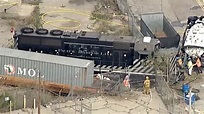
The incident happened in the Port of Los Angeles in March 2020. The man, 46-year-old Eduardo Moreno, ran the locomotive off tracks at high speed in an effort to hit the U.S. Navy hospital ship Mercy, which was docked at the port to provide medical relief in the early days of the COVID-19 pandemic.
In his statement following the incident, Moreno claimed the vessel was “involved in a government takeover”. The train driver subsequently pleaded guilty to one count of committing a terrorist attack, as well as violence against railroads and transportation systems.
“[Moreno’s] offense was extraordinarily serious, and he used his unique access as a licensed train conductor to derail a multi-ton train toward a government hospital ship whose purpose was to treat vulnerable patients in the midst of a global pandemic,” prosecutors wrote.
|
|
German Regions Order 63 Battery Trains |
|
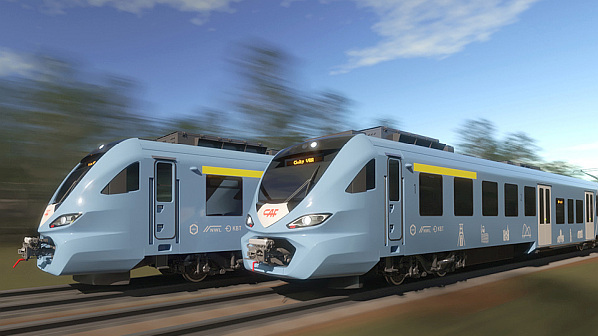
German regional public transport authorities Rhine-Ruhr Transport Association (VRR) and Westfalia-Lippe Local Transport (NWL) have signed a contract to order 63 BEMUs from CAF.
The manufacturer was selected in June 2021 for the contract, which was signed on April 4 in Kempen, Germany. The deal also includes 30 years maintenance. The trains will replace class 648, 643 and 632 DMUs used on the Niederrhein - Münsterland network (NMN) from 2025. The full fleet will be in service by December 2028.
This is the largest BEMU order in Germany and NMN will be the first SPNV network with alternative power. Funding is being provided via loans from the European Investment Bank (EIB) and NRW.Bank.
The order includes 15 45m-long trains with seating capacity for 120 passengers, and 48 55m-long trains with 160 seats. The battery range will be 220km for sub-network 1 (RE 10 and RB 37) with a recharge option for 10 minutes after 110km. For sub-network 2 (RE 14, RB 31, RB 43, RE 44 and RB 36), the range is 90km for trains on RE 14, RB 36 and RB 43 and 65km for trains on RB 31 and RE 44. It must be possible to switch between the two range types within six hours.
|
|
|
|
|
|
|