Weekly Digest Number 34 - August 24, 2021 |
|
(Editor's Note: This study which was released earlier this year makes a good case for a genuinely "scheduled" railroad, not to be confused with the current operating model favored by Class One railroads known as "Precision Scheduled Railroading" which has nothing to do with scheduling freight trains. By scheduling freight trains on mainlines, passenger trains would greatly benefit, track capacity would be increased, railroads could regain truck traffic by making good on promises of "just in time", rail employment and rail traffic would expand.) |
|
Expanding American Rail Capacity |
|
Amtrak recently released a map outlining a $25 billion proposal for expanded passenger rail service in the US. With a focus on improving corridor services, this map would increase Amtrak’s focus on the sorts of short and medium-distance markets where well-operated rail services can be most competitive with driving and flying. Though certainly too limited an intervention relative to the overwhelming need for low-carbon, car-free transport in this country, the map does identify a number of important corridors for rail service expansion in the US, providing a useful starting framework for further improvement.
The largest barrier to realizing this vision is the fact that Amtrak does not own most of the routes on which they seek to improve service. Outside the Northeast, the national passenger carrier relies on rights to run its trains over freight trackage. This saves Amtrak the hassle of maintenance, but the resulting freight-passenger mixing (which takes place on the freight railroads’ terms) is a major source of delays. It also presents a limit on network growth: if adding (more) passenger service to a line will have a significant negative impact on freight operations, freight railroads may deny Amtrak operating rights for that additional service. Amtrak seemingly is testing a more aggressive approach towards these operating rights, but it seems a fair assumption that Amtrak will perpetually face some level of frequency and reliability constraint from freight intermingling in the current rail operations paradigm.
This begs the question: how do we go about implementing Amtrak’s map? Though the median rail mile in the US is lightly utilized, commencing service on a number of key corridors (for example the Los Angeles-Phoenix-Tucson line) will require Amtrak to gain access to extraordinarily busy freight arteries. If the passenger carrier is to run trains at any reasonable frequency over these routes — much less expand beyond them — it will either have to pay its own way with new infrastructure, or find some way to ‘expand the pie’ of rail capacity. We currently tend to accept the former approach, but in the latter there lies massive, unrealized potential. Undertaking national rail capacity planning and beginning to shift America’s railroads towards fully scheduled operations could facilitate a massive expansion of medium-speed passenger service without the construction of much new infrastructure.
|
|
(Editor's Note: The author, Fritz Edler is a retired rail worker after many years with Amtrak, and is an RWU member. The measures suggested below - if implemented - would undoubtedly make for a safer railroad.) |
|
Simple Solutions Can Safeguard Against Catastrophic Train Events |
|
“Just because an industry can do something doesn't mean an industry should be doing it!” says Fritz Edler, a veteran railroader and railroad safety activist based in Washington, D.C.
Edler should know: He has broad knowledge about infrastructure, energy, environmental impact, and economics for heavy (freight) and light (passenger) rail in national and international contexts. He also headed the international defense effort for rail workers who were scapegoated after the horrific 2013 Lac-Mégantic, Quebec, volatile oil train wreck.
-
Oppose precision scheduled railroading (PSR). PSR jeopardizes engineer and public safety by encouraging risky industry decision-making and focusing exclusively on lowering the operating ratio to satisfy Wall Street and hedge fund investors. PSR is now the subject of Congressional inquiries.
- Demand sane scheduling and uninterrupted rest time. This will mitigate out-of-control crew fatigue.
- Oppose longer trains. Technological advances allow the operation of longer and heavier trains than ever before, yet safety standards do not address these changes. Longer, heavier trains shift costs to trackside communities in multiple ways. They greatly increase wear and tear on rail infrastructure without requiring increased inspection and maintenance. Longer trains (100+ cars, over 1 mile long) also are significantly more likely to block railway crossings—which inconveniences the public and risks delaying first responders up to 15 minutes.
- Require emergency response plans (including fire and hazmat) for all changes in freight traffic, and publicly review the adequacy of the plans.
- Demand a minimum of a two-member crew on every train. Some operations require more workers to adequately protect both crew and trackside communities. The optimal number is three to five engineers on a train.
|
|
Editor's Note: Perhaps if the Class One carriers would start to expand capacity rather than contract it, and run a real scheduled railroad (see lead article above), this congestion and gridlock would not be happening. |
|
California Congestion Nears New High, East Coast Gridlock Worsens |
|
Port congestion on both coasts is likely to cap second-half US import capacity
It’s only mid-August — the early days of peak shipping season — but the record for container ships anchored off California is already on the verge of being broken. Port congestion is simultaneously building along the East Coast, with anchorage numbers off Georgia well into the double digits and, for the first time this year, a growing queue offshore of the Port of New York and New Jersey.
California congestion previously peaked in the first quarter. On Feb. 1, the Marine Exchange of Southern California reported an all-time-high 40 container ships at anchor in San Pedro Bay, awaiting berths in Los Angeles or Long Beach. The highest number of container ships in the entire port complex, including those at anchor and at berth — 67 — was set on Jan. 28. On Friday, there were 125 ships of all types (including tankers and cruise ships) either at berth or anchor in Los Angeles/Long Beach. That’s a new record. The Q1 high was 113.
On Saturday, there were 68 ships of all types at anchor, yet another record. There were 66 container ships either at berth or waiting offshore, just one short of the all-time high. And there were 37 container ships waiting offshore, three short of the February peak. All regular and emergency anchorages were full, forcing the overflow to drift in designated areas. As of Sunday, five container ships were drifting off Santa Catalina Island.
|
|
TSA Extends Face Mask Requirement |
|
The Transportation Security Administration (TSA) is extending the face mask requirement for individuals across all U.S. transportation networks — including at airports and on planes, commuter-rail systems and buses — through Jan. 18, 2022. In January, the TSA announced the initial face mask requirement with an expiration date of May 11. On April 30, the administration extended the face mask requirement through Sept. 13. All commuters and travelers should check with the Centers for Disease Control and Prevention website for additional guidance. The face mask requirement is exempted for travelers under the age of 2 and those with certain disabilities. Civil fines remain in place for violators, TSA officials said in a news release.
|
|
Coalition Against Bigger Trucks is Winning Victories |
|
Now over the past few weeks, Congress has been wrapping up discussions on the infrastructure bill. The results of the actions you have taken are in…
During the crucial weeks of the past month: 17,901 messages were sent by our Citizen Force to their Representatives and the U.S. Senators expressing opposition to longer and heavier trucks! The result of your advocacy speaks for itself: Every amendment to put longer, heavier trucks that would spew more emissions has been rejected. But the fight is not over. It is in these moments, when a must-pass bill is nearing completion, where controversial amendments can still be slipped in, where we need to be most vigilant. Mobilizing the public at this level is expensive, especially when the Bigger Truck Lobby includes some of the most powerful and politically influential companies in the world.
You have helped successfully hold the line against putting these behemoth trucks on our roads. BUT… the fight is not over and our continued public mobilization is essential to victory. With your help, we can ensure that public safety, infrastructure and environmental protection take priority over the special interests and their profits.
Thank you.
Brad Roseberry and the entire Coalition Against Bigger Trucks Team
|
|
(Editor's Note: The orgy of wealth making - while the country's workers suffer - knows no bounds. This article does not document it specifically, but the nation's rail CEOs have made out like bandits the last few years. How do you feel about this Joe Railworker? While thousands of rail jobs disappeared, while union contracts were torn up, while they want givebacks at the bargaining table, and while freight traffic is down 10% from 15 years ago, these bloodsuckers get double digit increases!) |
|
Even a Pandemic Can’t Close CEO Pay Wage Gap |
|
Corporate pay for the nation’s top big business bosses has been out of control for a while now. And a new report from the Economic Policy Institute (EPI) shows it didn’t take a break during the coronavirus either – it actually got worse.
While millions were jobless due to the pandemic-driven recession in 2020, CEO compensation at the top 350 U.S. firms grew 18.9 percent to $24.2 million on average, according to a new EPI analysis. As a result, the CEO-to-worker compensation ratio rose to 351-to-1, up from 307-to-1 in 2019 and 21-to-1 in 1965.
The authors—EPI Distinguished Fellow Lawrence Mishel and research assistant Jori Kandra—reveal how CEO pay cuts announced during the pandemic, as corporations laid off millions of workers, were largely symbolic. CEOs saw increased pay largely from vesting stock awards and cashing out stock options at a time of high stock prices.
“The escalation of top CEO compensation further exacerbates the inequalities that have grown for four decades and been amplified in the pandemic. CEOs offering pay cuts during the pandemic yielded favorable headlines, but were symbolic at best and a head fake at worst,” Mishel said. “Rising pay for CEOs and other executives is income that would otherwise have gone to others—what these executives earned was not available for broader-based wage growth for typical workers.”
Since 1978, CEO compensation has skyrocketed 1,322.2 percent, growing roughly 60 percent faster than stock market growth during this period and far exceeding the modest 18 percent compensation growth for the typical worker. The message is clear – in good times or bad, CEOs are coming out on top.
When companies struggle, workers bear the brunt – not so for all too many bosses who chase short-term unsustainable goals, inspired by exorbitant sums of cash, equity and perks. The lack of investment going back into companies for employees, research and development, destruction of morale and motivation for front-line workers and a dangerous always escalating expectation of compensation at the top. Long-term shareholders such as pension funds suffer as companies can’t sustain growth, creating more risk and uncertainty for working families.
|
|
For Transport Canada, C$100MM to Advance Rail Safety, Security |
|
Minister of Transport Omar Alghabra on Aug. 13 reported that the funding, to be provided over five years starting in 2021-22, would allow Transport Canada to:
• Invest in railway oversight “to better address new and evolving risks to the safety and security of railway operations, which includes updating legislation, developing new approaches to improve railway safety data collection and analysis, evaluating new technologies for rail inspection and safety oversight, and supporting the safer transportation of dangerous goods.”
• Engage with Indigenous communities as the government works “to ensure our rail system operates as safely and securely as possible across Canada.”
• Undertake research and analysis “to better identify risks and strategies to mitigate the impacts of climate change and severe weather on the integrity and safety of critical railway infrastructure.”
Minister of Transport Omar Alghabra
“Today’s [Aug. 13] announcement will strengthen the safety and security of our rail system, protecting communities who use, live near, and work on our railways,” Alghabra said. “These investments are important to ensure that Canada’s rail system continues getting people and goods to their destinations safely and securely, for now and the future.”
|
|
(Editor's Note: This bidding war 'aint over till it's over. Hey, the longer the KCS stockholders, the CEO's, and the boards of directors can hold out and protract this shenanigans, the more likely they are to make even MORE money. Both CP and CN know that whoever loses this war stands to lose market share and stock value. Each carrier is desperate. And the profits from this merger - whichever way it goes - will go to shareholders, leaving the carrier cash poor for things like infrastructure improvements. Hell of a way to run a rail industry; hell of a way to run society.) |
|
KCS Reschedules Stockholder Meeting for Sept. 3 |
|
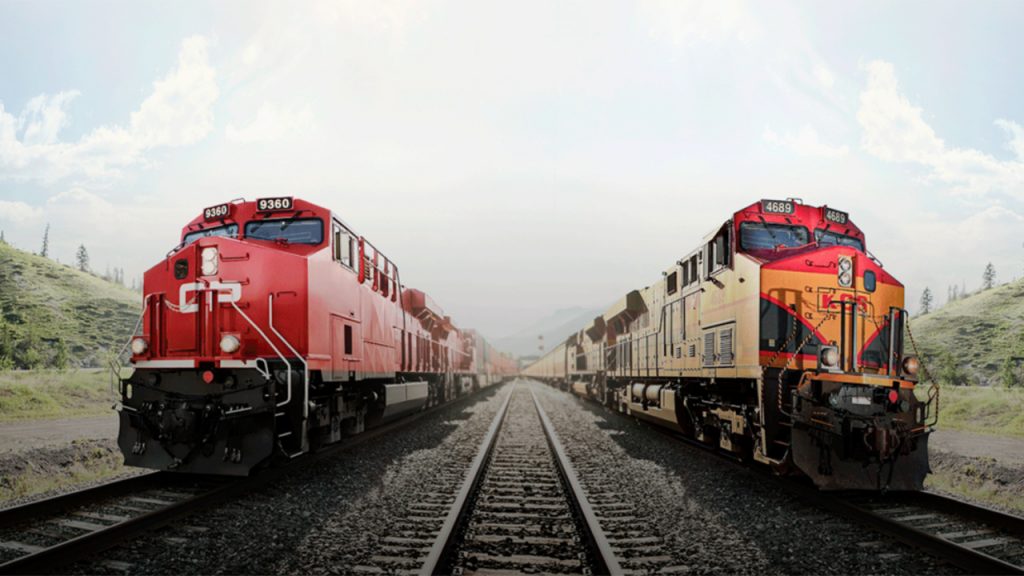
The meeting was originally set for Aug. 19, 2021, but was postponed pending the Surface Transportation Board’s (STB) review and ruling on CN and KCS’s joint voting trust application, which the Class I railroads filed last month. On Aug. 13, 2021, KCS announced that if the STB had not released a public decision by Aug. 17, 2021, at 6 p.m. CT, the meeting would be adjourned to give all stockholders and the KCS Board time to receive and consider the STB decision. That decision, according to STB, will be delivered no later than Aug. 31, 2021.
“All stockholders of record of KCS common stock and KCS 4% non-cumulative preferred stock as of the close of business on July 1, 2021 will be entitled to vote their shares at the special meeting,” KCS said.
The Class I railroad also stated: “KCS and CN are confident that the voting trust meets all the standards and the public interest test set forth by the STB and believe that it should be approved. KCS stockholders will receive the merger consideration immediately upon the closing of the voting trust, which is also subject to receipt of KCS stockholder approval and Mexican regulatory approvals.
“As previously announced on May 21, 2021, KCS and CN entered into a definitive merger agreement, unanimously approved by the Board of Directors of each company, pursuant to which CN agreed to acquire KCS in a stock and cash transaction valued at $325 per common share, based on CN’s May 13, 2021 offer, implying a total enterprise value of $33.6 billion, including the assumption of approximately $3.8 billion of KCS debt. Under the terms of the agreement with CN, KCS stockholders will receive $200 in cash and 1.129 shares of CN common stock for each KCS common share.
“The KCS Board of Directors recommends stockholders vote FOR the pending merger with CN.”
|
|
(Editor's Note: One of the authors - Thomas White - is a Solidarity Member of RWU and has spent 47 years in the rail industry.) |
|
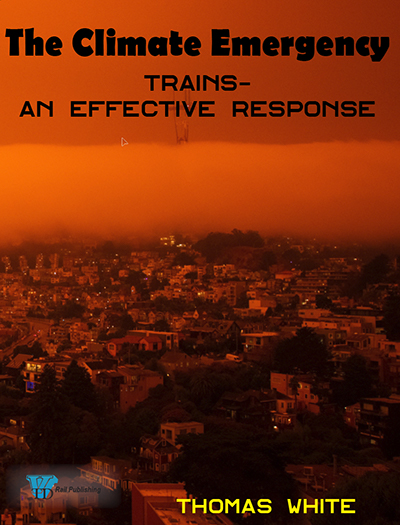
NEW BOOK - Climate Crisis - Trains: An Effective Response
|
|
Global warming and climate change are two terms for the same phenomenon. The temperature of the planet is steadily increasing. That doesn’t mean that winter doesn’t happen. The earth will still have parts that are colder and wetter than others. Some places will still be hot in the summer and cold in the winter. But the global temperature increase is changing the patterns to which we have become accustomed. Summers can be ‘unseasonably’ hot and dry, winters can be ‘unseasonably’ cold and wet. Summer might act like winter. Winter might act like summer. These changes have been going on for long enough that they can no longer be called unseasonable.
Global warming became climate change to offset criticism that some places still have winter and some have more severe winter than ever before. That point of view is a local perspective. However, averaged globally, the temperature of Earth’s atmosphere is rising.
The connection between human activity and global warming has been documented for over 80 years. Conditions now meet or exceed projections of severity that were made decades ago.
Humans can adapt to many changes, but climate change cannot be one of them. As human activity continues to fuel the fires of climate change, its severity increases. Our climate will eventually reach the point of being beyond adaptability. There is already ample evidence of cataclysmic change: drought, floods, fires, extreme heat, and extreme cold. The number of hurricanes is increasing. They are more severe than in the past. People are killed or displaced by floods, wildfires, or hurricanes: people are hospitalized, or die, from simple temperature extremes. If we don’t stop this trend, more places will become unlivable, and more people will die.
For some, the change has been uncomfortable. For many, the change has been life-changing, life-threatening, or lethal. That will be the story for an increasing number of people if the trend isn’t stopped.
Railroads are an important part of stopping climate change. To an average person in the US, that doesn’t make sense. Everyone knows trains are big, slow, have polluting diesel locomotives, and carry coal, oil, and other freight that contributes to climate change. In most of the country, if there is a train for people to ride, it is not a viable alternative to driving. However:
- Trains use two-thirds less energy (fuel) than highway transportation and produce two-thirds fewer emissions.
- Highway transportation produces 82 percent of transportation greenhouse gas emissions. Rail transportation produces two percent.
Trains appear to be making greater emissions because the power to move the contents of hundreds of cars or trucks is concentrated in one place. The appearance is deceptive.
The US is decades behind the rest of the world in the use of rail transportation. The belief that trains have limited usefulness is a uniquely American perspective, a result of American politics and business practices, rather than any technical limitation. These political and economic limitations must be overcome, so that a transition from road to rail can be made quickly.
|
|
(Editor's Note: While this is a Report from the BMWED, the issue of national bargaining and the accompanying RLA Flow Chart are universal to all rail labor.) |
|
National Negotiations Informational Documents |
|
The following attachments are informational documents regarding the current status of National Negotiations for the BMWED and SMART-MD Coalition and a Railway Labor Act bargaining process flow chart.
Note that we are currently in the “Mediated Negotiations” step of the bargaining process, as identified in the light green box of the flow chart. These documents are not meant to be an exhaustive description of what has transpired thus far in negotiations, but to instead provide a succinct description of the status of negotiations, and where it could potentially lead under the proscribed processes of the RLA.
While there have been multiple conversations with the assigned Mediator, no future mediation dates have been scheduled. However, it is anticipated that mediation dates will be scheduled in the near future and information regarding such will be provided as it develops.
|
|
Homendy Becomes NTSB Chair |
|
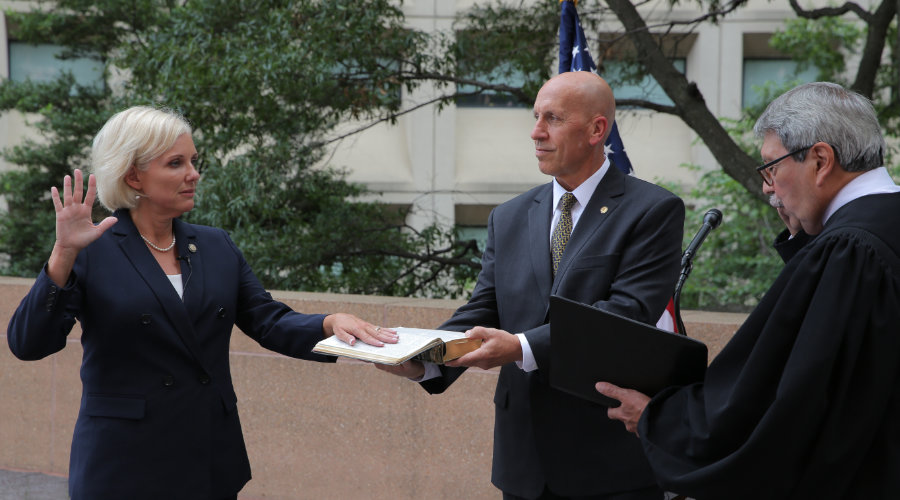
Homendy joined the NTSB Aug. 20, 2018, after 14 years of service as the Democratic staff director of the House Subcommittee on Railroads, Pipelines and Hazardous Materials.
She previously held various positions with the International Brotherhood of Teamsters, the Transportation Trades Department of the AFL-CIO, and the American Iron and Steel Institute. She is the fourth woman to lead the NTSB and one of 11 women who have served as board members.
"The country needs a robust and energetic NTSB to ensure safety is well represented in all modes of transportation. I look forward to supporting our outstanding staff and their work as we endeavor to make transportation safer for all," Homendy said in a press release.
As NTSB chair, Homendy succeeds Robert Sumwalt, who retired last month.
|
|
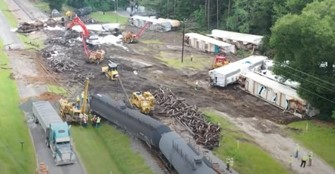
'Cars on Top of Cars': Train Derailment Jolts People Awake in Washington County |
|
OCONEE, Ga. — Norfolk Southern crews have worked since early Monday morning to clear out and put down new railroad tracks in Oconee in Washington County.
32 cars derailed just before 1 a.m., and although no one was injured, it made for a frightening morning jolt for some folks who live nearby.
"It was pretty loud. I knew when I first heard it it was probably a derailment because nothing would make that much noise and it was pretty loud and then it got real quiet," said Farris Tompkins. "There was cars on top of cars for probably about 150 yards."
He’s lived in the area for decades and saw cars turned sideways on the trucks, or crunched up like an accordion.
Sheriff Joel Cochran says people told him the scenario was terrifying.
"I have a deputy that lives in the vicinity and he thought someone had come in his house," he said.
According to a statement from Norfolk Southern, the train was passing through from South Carolina.
When the sun came up, crews managed to clear the area, tossing wheels in a pile like discarded dumbbells. Cranes moved in and gently laid down new tracks.
|
|
|
|
|
|
|