Call Us:
(800) 435 3550

FEARLESS INVESTOR

Align your investments with your comfort level and invest fearlessly.

FINANCIAL ROADMAP

Organize, analyze, and plan your way to financial independence.

WEEKLY QUOTE

“It is a capital mistake to theorize before one has data. Insensibly one begins to twist facts to suit theories, instead of theories to suit facts.”


 – Sir Arthur Conan Doyle, author of the canon of Sherlock Holmes 

WEEKLY RIDDLE

What kind of band never plays music?

Last Weeks Riddle:


What starts with T, ends with T, and has T in it?


Answer to last weeks riddle - TEAPOT

DID YOU KNOW?

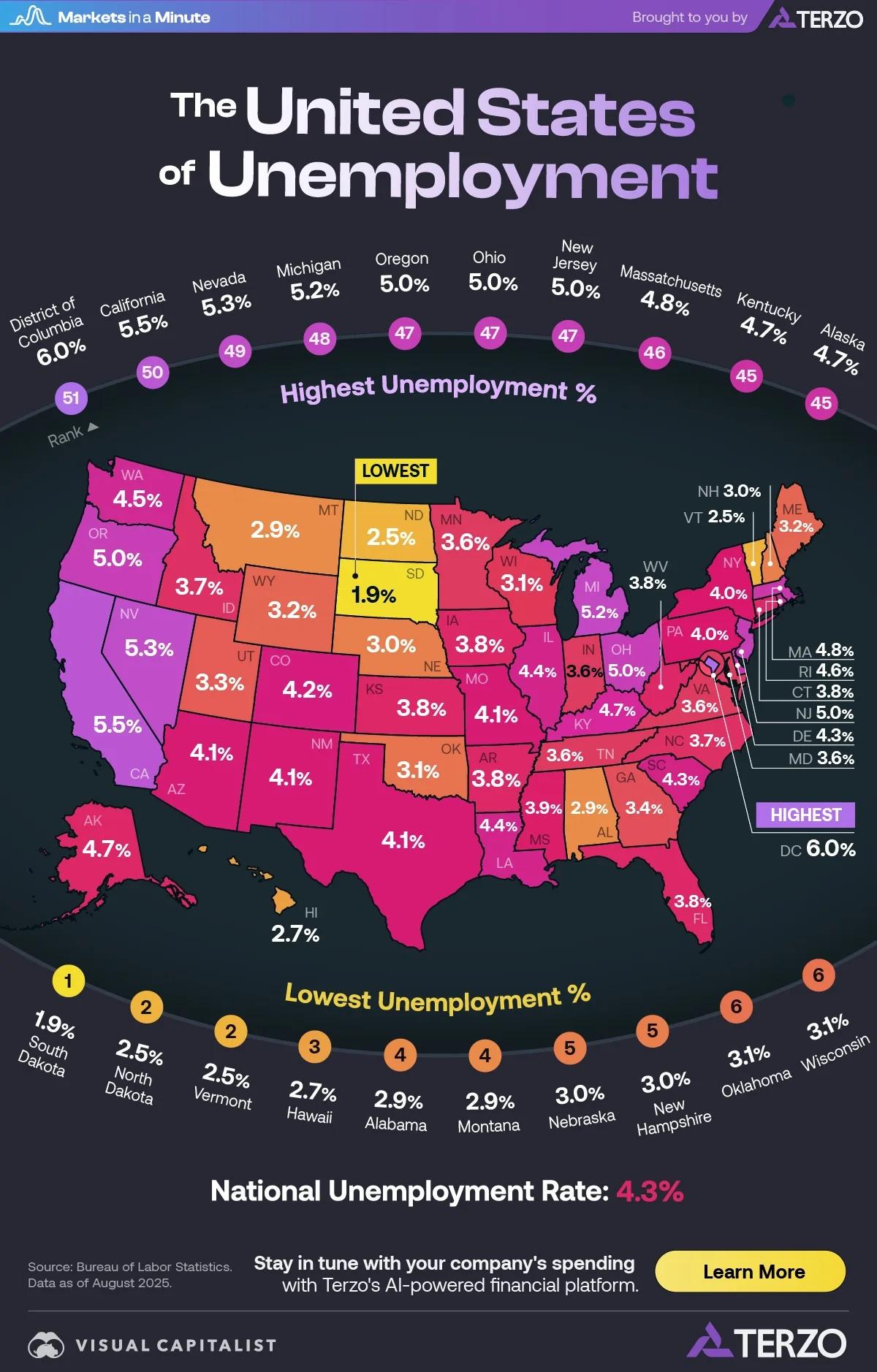
The United States of Unemployment

November 10, 2025

THE MARKETS

There were bearish undercurrents in the bullish sea. 


While there are many reasons to be optimistic about the long-term prospects for U.S. stocks, investor concerns about artificial intelligence (AI) spending and the possibility of a market correction roiled markets last week. 


“All eyes were on the parade of earnings reports from the technology behemoths this past week. But what grabbed the markets’ attention were the implications of their massive capital investments in artificial intelligence on their balance sheets and cash-flow statements,” reported Randall W. Forsyth of Barron’s.


Investors wondered whether and when the enormous amounts of money companies are committing to AI data centers will generate a return, according to John Miley of Kiplinger’s. In addition, there were questions about whether these investments are economically sustainable. 


“To meet the expected demand for data centers, it will require $500 billion in annual global capex spending on new data centers…AI companies will have to find $2 trillion in new yearly revenue by 2030 to arrive at an economically sustainable model,” reported Miley.


Investor caution was heightened when the chief financial officer of one large AI research and deployment company suggested the government “backstop the guarantee that allows the financing [for AI data centers] to happen,” reported Bloomberg.


Another sustainability issue is energy usage. AI data centers consume a lot of power. Increasing demand is pushing energy prices higher, and they could go even higher as utilities upgrade power grids to meet new energy demands, reported Pew Research.


“It seems like we have finally reached the point of maximum optimism around artificial intelligence,” commented a source cited by Carmen Reinicke, Alexandra Semenove, and James Crombie of Bloomberg.


While that may prove true, there are many reasons to remain enthusiastic about AI. Advancements in the field have the potential to deliver gains in automation, decision-making, efficiency, and innovation that could reduce costs across diverse industries and generate immense wealth. Already, excitement about AI has “added trillions of dollars to the equity market’s value,” reported Phil Serafino, Carmen Reinicke, and James Crombie of Bloomberg.


AI spending was not the only issue that gave investors pause last week. Other concerns included consumer sentiment hitting a three-year low and the government shutdown having a negative effect on the U.S. economy, reported Jeff Cox of CNBC.


Major U.S. stock indexes gained a bit on Friday but finished the week lower. In addition, yields on most maturities of U.S. Treasuries moved lower over the week.

WHAT IS AI GOOD FOR?


Americans have mixed feelings about artificial intelligence (AI). In September, Brian Kennedy, Eileen Yam, Emma Kikuchi, Isabelle Pula, and Javier Fuentes of Pew Research reported on a September 2025 survey that asked about the risks and benefits of AI for society. The survey found:


  • 50 percent of respondents were more concerned than excited about AI being used more frequently in daily life,
  • 38 percent were both concerned and excited,
  • 10 percent were more excited than concerned, and
  • 2 percent did not respond to the question.


Regardless, many Americans are using AI to make informed decisions when buying goods and services. For example, Americans have been turning to AI for help when:


Negotiating a better price for a car. Younger generations are using AI to identify the best times to buy cars (with a focus on price fluctuations, deals, or incentives), reported Eileen Falkenberg-Hull of Newsweek. They’re also using AI to review contracts and negotiate better deals, according to The Economist.


Identifying the best value on a wine menu. Unless you are very knowledgeable about a wide range of wines, it can be challenging to know which bottle on a restaurant menu is well-priced. Now, you can upload a photo of the menu’s wine list and ask AI.


Understanding plumbing and household repair issues. AI may be able to diagnose a problem and suggest a low-cost solution or negotiate a better price with the plumber. A recent survey found that “homeowners who followed AI’s guidance…reported an average 47 [percent] reduction in repair or maintenance costs and 29 [percent] felt less stressed about managing home repairs,” reported Anna Baluch on Realtor.com. She emphasized that it is important to double-check the advice offered by AI before taking action.


“As AI goes mainstream, it will remove one of the most enduring distortions in modern capitalism: the information advantages that sellers, service providers and intermediaries enjoy over consumers. When everyone has a genius in their pocket, they will be less vulnerable to mis-selling—benefiting them and improving overall economic efficiency. The ‘rip-off economy’, in which firms profit from opacity, confusion or inertia, is meeting its match,” reported The Economist.


2555 Westlake Drive, Ste 300
Westlake Village, CA 91361
(800) 435 3550
Facebook  Linkedin