-
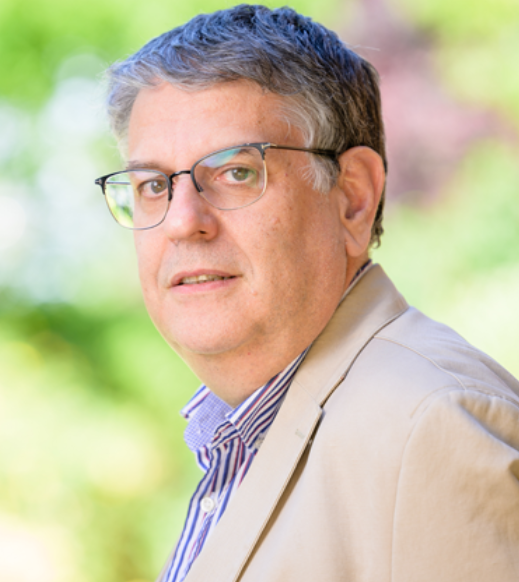
Researchers led by Ludwig Princeton’s Lydia Lynch report in Nature that IL-17 signaling mediated by γδ T cells plays an important role in keeping fat metabolism in tune and on time.
-
A team led by Ludwig Harvard’s Galit Lahav describes in Science Advances how, in the response to double stranded breaks in DNA, the interplay of pulsed expression and acetylation of p53 may help the transcription factor temporally organize the many different downstream processes it orchestrates in cells.
-
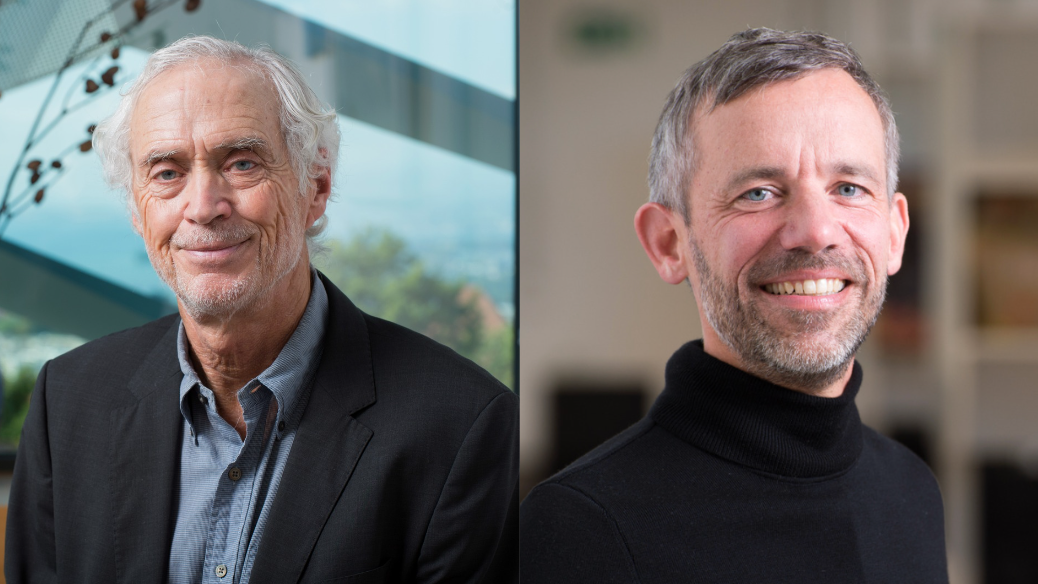
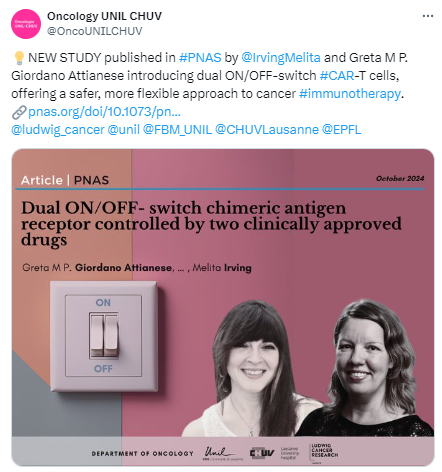
Researchers led by Ludwig Lausanne's Melita Irving and Greta Maria Paola Giordano Attianese report in PNAS new types of CAR-T cells that can be switched on to varying degrees of intensity and then switched off on demand using existing drugs.
| |
 |  | Researchers led by Ludwig Princeton's Lydia Lynch report in this open access paper that innate IL-17-producing T cells—including γδ T cells, invariant natural killer T cells and mucosal-associated invariant T cells—express clock genes (which mediate circadian rhythms) at especially high levels. IL-17-producing γδ T cells, in particular, rely on the molecular clock to maintain fat tissue homeostasis, and these immune cells make IL-17 every night, even when mice are in a healthy state. The rhythmic production of IL-17 is required to maintain fat metabolic rhythms, linking the immune system to maintaining the metabolic clock. When this response is disrupted, mice are cold and don’t use energy properly. Specifically, IL-17 is required for de novo lipogenesis—or the production of fat from sugar—in fat tissue. A lack of IL-17 disrupts circadian body temperature regulation and the time-of-day at which sugars or fats are burned for energy. Overall, the researchers found that IL-17 signaling is an important biochemical pathway that keeps fat metabolism in tune and on time.
| |
 | | One of the most frequently mutated genes in cancer, the transcription factor p53 orchestrates a multitude of vitally important processes in response to DNA damage, such as DNA repair, cell cycle arrest and apoptotic cell suicide. Post-translational modifications to p53 are known to play a central role in determining which of the various gene expression programs it initiates in any given circumstance. It is also known that cellular levels of p53 oscillate in response to double-stranded breaks to DNA. Less clear is how p53 temporally coordinates downstream cellular responses with its pulsed expression. Researchers led by Ludwig Harvard’s Galit Lahav show here that acetylation at two sites on p53 is altered between the first and second pulses of p53 expression in this context, and a reduction in acetylation in the second pulse alters the menu of gene expression programs p53 activates. The interplay of pulsed expression and chemical modification, they propose, might permit p53 to temporally organize multiple processes in individual cells.
| |
 | | Chimeric antigen-receptor (CAR) T cell therapies face a couple of major challenges when deployed against solid tumors. First, many solid tumor antigens are found on healthy cells as well, raising the risks of so-called “off-tumor, on-target” effects. Second, the immunosuppressive conditions of the solid tumor microenvironment can push CAR-T cells into a state of dysfunction known as “exhaustion”. A team led by Ludwig Lausanne's Melita Irving and Greta Maria Paola Giordano Attianese reports here the design and preliminary evaluation of new types of CAR-T cells that could address both these challenges. Named “inducible-ON” (iON) CAR and iON/OFF CAR (iONØ-CAR), the cells can be switched on to varying degrees of intensity and then switched off on demand—to stem toxicity—using drugs that are already employed in the clinic. The possibility that this could improve their efficacy stems from previous studies led by Ludwig Stanford's Crystal Mackall showing that giving CAR-T cells periods of rest between bouts of tumor-targeting can reverse exhaustion and improve their functionality.
Additional coverage: Ludwig Cancer Research
| |
|
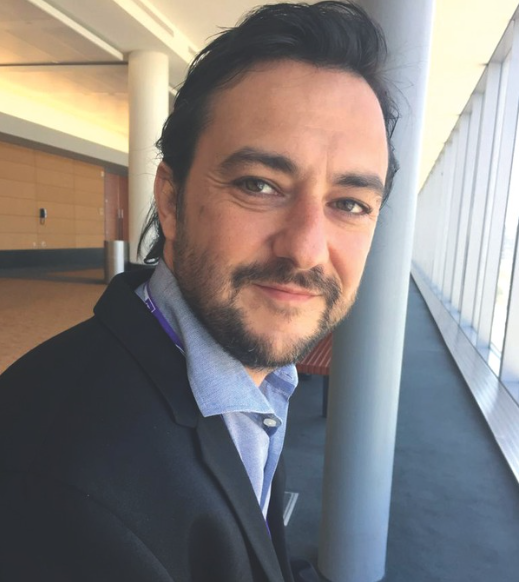
BCR::ABL1-negative myeloproliferative neoplasms (MPNs) can evolve into secondary acute myeloid leukemia (sAML) or blast-phase (BP) MPN, which is a severe leukemia-like disease that is very difficult to treat. Researchers led by Ludwig Oxford’s Stefan Constantinescu explored the genetic aberrations and patterns of clonal evolution that underlie transformation to BP-MPN using samples taken from patients over six years at three hematology units in Romania. Aside from tracing the patterns of clonal evolution leading to BP-MPN, the researchers report in this Correspondence that epigenetic alterations—and TP53 mutations—play a dominant role in the progression to BP-MPN and stress the importance of regular genetic screening of patients to predict disease transformation.
| |
|
Current Opinion in Immunology — December 2024
| |
|
Intrinsic, age-associated changes in immune cell metabolism—which affect mitochondrial health and vital processes like autophagy, among other things—significantly compromise immune function. Extrinsic factors, such as chronic inflammation linked to aging (inflammaging), are also associated with immune dysfunction and have a variety of physiological effects. Researchers co-led by Ludwig Lausanne’s Nicola Vannini discuss in this review the interplay between metabolic dysfunction and immune decline, how a healthy lifestyle (i.e. exercise, nutrition) can support immune health and interventions to protect immune function and promote health during aging.
| |
|
Nature Reviews Cancer — October 24, 2024
| |
|
This review, co-authored by Ludwig Lausanne’s Douglas Hanahan and Mikaël Pittet, with Swiss Cancer Center Léman colleague Olivier Michielin, discusses the complexities of the tumor microenvironment (TME) that support evasion of T cell-mediated immune responses. Most of the cells in the TME, including cancer cells, fibroblasts, myeloid and blood-vessel cells can be stimulated to activate gene expression programs that regulate immune responses, and some of the factors involved have broad and varying effects on cells. This complexity poses a challenge to immunotherapeutic interventions. It also illustrates how extensively tumors adapt to avoid immune clearance by exploiting cellular programs that protect healthy cells from inappropriate immune targeting.
| |
|
Ludwig Cancer Research — October 21, 2024
| |
|
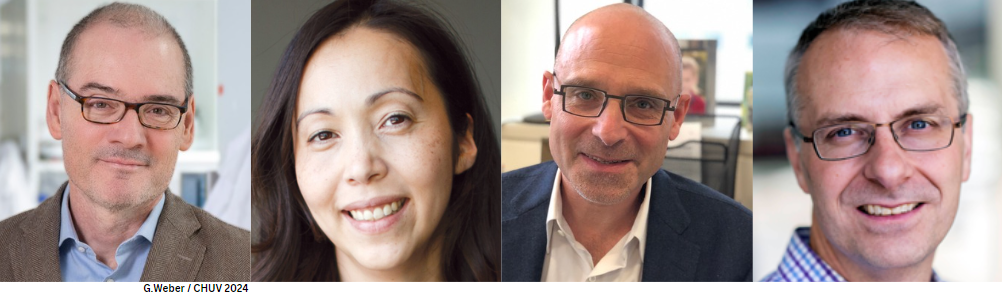
We congratulate Ludwig Lausanne Director George Coukos, Ludwig Harvard’s Marcia Haigis and David Pellman, and Ludwig MIT’s Matthew Vander Heiden on their election to the U.S. National Academy of Medicine (NAM). Among the highest honors issued to clinicians and scientists, membership in the Academy recognizes exceptional achievement and commitment to service in the fields of health and medicine. The NAM cited Coukos for his many contributions to tumor immunology and immunotherapy. Haigis and Vander Heiden were both recognized for their pioneering studies of cellular metabolism and its connection to processes ranging from aging to cancer initiation and progression. Pellman, meanwhile, was honored for his many contributions to our understanding of chromosomal abnormalities, their origins and contributions to cancer.
Additional coverage: The ASCO Post | Medinside
| |
|
Immigration systems can significantly influence the ability of cancer institutes to attract talent from overseas. This article discusses how the byzantine and expensive process of obtaining visas to the UK and the United States may be hampering global efforts to reduce the burden of cancer. The article extensively quotes Ludwig Institute Deputy Scientific Director and Communications Director Pat Morin, who previously co-authored a report on the importance of immigrants in cancer research.
| |
ICYMI: In case you missed it... | |
|
Get involved
Events, careers and collaboration opportunities
| |
|
PhD position in Computational Biology applied to T cell Engineering
Ludwig Lausanne seeks candidates for a PhD position in Computational Biology to be involved in developing computational methodologies to model and effectively interrogate single-cell CRISPR-based perturbational datasets and identify novel gene targets for T-cell engineering and developing AI/ML models to systematically explore the transcriptional and epigenetic space of CD8+ T cell states and identify novel strategies for T-cell enhancement.
Assistant, Associate or Full Professor
Princeton University seeks applications for an assistant, associate or full professor to contribute to a major new initiative at the interface between cancer, immunity, and metabolism (Ludwig Princeton Branch). We welcome applications from candidates using biological, chemical, physical, engineering and/or computational approaches to tackle questions at this interface.
Postdoctoral Research Associate - AI/Machine Learning for Mass Spectrometry
The Skinnider Lab at Princeton University aims to recruit between 1 to 2 postdoctoral or more senior research positions to work on projects related to machine-learning for mass spectrometry-based metabolomics data.
| |
Do you know of any news, studies or events that would be relevant to the Ludwig community? Please contact us! | |
Ludwig Cancer Research | www.ludwigcancerresearch.org | |
Please note these clips are not intended to be a comprehensive overview of the news, but a compilation of Ludwig coverage, as well as topics and issues considered to be most relevant to our scientific community. Any views or opinions presented in the news clips are solely those of the cited news sources. When available, a link to the original study is provided. *Asterisk indicates a subscription or login may be required.
| | | | |