|
|
Navigating Excellence - Parent Center Assistance & Collaboration Team
Region A E-News
|
|
 |
“If there is no struggle there is no progress. Those who profess to favor freedom and yet deprecate agitation are men who want crops without plowing up the ground; they want rain without thunder and lightning. They want the ocean without the awful roar of its many waters…Power concedes nothing without a demand. It never did and it never will.”
~ Frederick Douglas
|
|
|
|
|
Message From Diana & Michele |
As Black History Month draws to a close, we are reminded of the words of Frederick Douglas and the reality that change, progress, freedom, and equity will not occur without struggle, hard work, commitment, and passion. Thank you for all you do every day to bring that change, progress, freedom and equity to fruition. We are privileged to support you - and ourselves - in that journey. Black History Month resources from our partner at the Region 1 Equity Assistance Center.
|
|
|
|
PEAL Youth Advisory Council: The PEAL Center is accepting applications for their Youth Advisory Council. The mission of the Youth Advisory Council is to enhance youth voices within schools, communities, and parent organizations. Joining the youth council will allow these members to advocate for themselves and others. They will develop leadership skills to improve services related to mental health, disability, medical needs, transition to adulthood, and much more. Read more and apply.
INCLUDEnyc: Join INCLUDEnyc in person on March 11 for the free Staten Island Camp, Recreation & After School Resource Fair for families of children with disabilities! Speak with representatives of local programs, learn about recreation options, and receive information and answers on the spot for kids ages 3-21! This free event is hosted in partnership with the United Federation of Teachers Staten Island and Parent to Parent of New York State. More information.
|
|
|
|
Upcoming Events/Dates to Remember |
Region A Drop-In Call: The March Drop-in call will take place on Tuesday, March 7th, 10:00 am - 12:00 pm, EST. Our featured technical assistance presenter will be Megan Cote from National Center on Deaf Blindness who will discuss key takeaways from our National Conference to continue building deeper partnerships. Please let us know if you have any agenda items. Join here.
2023 NE-PACT Follow-up Forum: Bringing Equity to Life: This is an opportunity for Parent Center Directors to continue and expand on the discussions from our Regional Conference. There will also be a session for youth leaders to attend. On Monday, April 24th at 11:30 am the Follow-up Forum will begin with a session and panel discussion focused on youth (REAL Day). This session is open to Parent Center Directors and Youth Coordinators. On Tuesday, April 25th, the Directors only session will begin at 8:00 am. Click here for more details.
OSEP Leadership and Project Directors’ Conference: Get ready! The 2023 Office of Special Education Programs’ conference returns in person! OSEP will hold a combined Leadership and Project Directors’ Conference, July 24 – 26, 2023, at the Crystal Gateway Marriott Hotel in Arlington, Virginia. Conference registration and Call for Proposals are anticipated to open later this month. Click here for more information.
|
|
|
|
Non-Profit Management Resources |
How Can Non-Profits Improve their Finances? The Wallace Foundation has a site with resources on budgeting and planning, estimating costs, consistently reviewing progress, and more! Learn more.
|
|
|
|
Family-Centered Services Resources |
Strategies for Equitable Family Engagement: Check out this guide (for schools, but relevant to our work) from the State Support Network: Partnering for School Improvement.
|
|
|
|
Youth-Centered Services Resources |
CPAC's Where are you at?: Developing communication skills and improving expressions of emotion is necessary for every youth and young adult's upbringing and education. However, these individuals face challenges and barriers; expressing feelings doesn't come easy. The "Where are you at?" wheel is a tool that youth can use to express themselves and how satisfied they are with areas of their life. Find it here. |
|
|
|
Staff Development Resources |
How to Create an Equitable Employee Development Strategy: Why is it important to ensure that your employee development policies and practices are equitable? Find out why - and how to achieve this - in this article that explores the value of equitable employee development and how your Parent Center can ensure it is providing all employees with access to growth opportunities. Read more.
|
|
|
|
Chronic Absenteeism: Research shows that chronic absenteeism is associated with a number of negative consequences for students, including lower achievement, disengagement from school, course failure, and increased risk of dropping out. Read more to learn how chronic absenteeism is different from other measures.
|
|
|
|
Dual Language Learning Among Infants and Toddlers: Addressing Misconceptions About Babies’ Brains: Parents of dual language learners (DLLs) are often advised not to speak to their infants and toddlers in more than one language. This advice is rooted in outdated notions that speaking to a child in multiple languages, especially when they are infants and toddlers, will confuse them and cause delays in their speech and language development. This belief could not be further from the truth. Learn more. |
|
|
|
New Claims of Bullying At NJ School Where Attack Caught on Video Led to Teen's Suicide, NBC News 2/14/23. See the report here. |
|
|
|
Child Welfare/Foster Care |
Guidance for Immigrant and Refugee Families: The Child Welfare System: This factsheet aims to help immigrant and refugee families understand what the U.S. child welfare system is and how it can help keep their children safe. It also discusses some of the issues immigrant and refugee families may encounter if they become involved with the child welfare system and their rights in child welfare scenarios. Find it here. |
|
|
|
Choice/Charter Schools/Virtual Schools/Voucher Programs |
Questions and Answers on Serving Children with Disabilities Placed by Their Parents in Private Schools, US ED (rev. Feb 2022): This Q&A document is intended to provide guidance regarding the IDEA requirements applicable to children with disabilities placed by their parents in private schools, who are not enrolled in the LEA, and for whom the provision of FAPE is not at issue. This Q&A updates and supersedes the Department’s guidance, titled Questions and Answers on Serving Children with Disabilities Placed by Their Parents in Private Schools, was first issued in April 2011 and includes additional questions and answers that address topics that have arisen as the field continues to implement the applicable provisions of IDEA and its implementing regulations. Click here for more information. |
|
|
|
Organizational Self-Assessment on Supporting and Advocating for Parents with I/DD: People with intellectual disabilities aspire to relationships and the same full lives as other people. This includes the important role of becoming parents. To assist agencies and organizations in assessing their current work, and planning for future work, The Association for Successful Parenting (TASP) has developed an agency self-assessment tool around supporting and advocating for parents with IDD. Read more. |
|
|
|
Applying an Equitable Lens to Evidence-Based Research: Over the past few years, a heightened awareness of the importance of racial equity and justice has permeated the political conversation. American institutions, businesses, and communities are taking a closer look at their roles in this context. Increasingly, policymakers are applying an equity lens to their decision-making processes. Evidence-based research has become a prevailing tool in providing state leaders with the data to evaluate programs and policies and to best allocate resources to the most efficient policy strategies. However, it is becoming increasingly vital to take into context the sources from which the data derives, how it is being collected and analyzed, and which populations have access to the research. This emerging field of data equity is growing in importance. Read more. |
|
|
|
Discipline & Positive Behavior Supports |
Racial Equity in School Discipline: Starting in the Classroom: We all know that Black students are suspended or expelled from schools at disproportionately higher rates than other students, and data shows the problem is progressively getting worse. The issue, researchers argue, starts in the classroom where teachers make disciplinary referrals to the office. A team at Michigan State University hopes it can help change this pattern by increasing teachers’ empathy and critical race consciousness. Learn more.
Reducing Exclusionary Discipline Practices: This resource guide connects educators, administrators and families with evidence-based resources to help reduce exclusionary discipline. Find it here.
|
|
|
|
IDEA Early Intervention Family Guides & Videos: Family guides (available in multiple languages), companion videos on Part C dispute resolution processes, a comparison chart, commonly used terms, and more! Find it here. |
|
|
|
A Parent’s Playbook for Keeping Kids in School: With more than 85 schools, Learn4Life often becomes a last option for teens who need more attention and a program that fits their learning style. Read these tips for parents of students who may be falling behind.
|
|
|
|
Early Childhood/Early Intervention |
The Understanding Evidence-Based Literacy Practices PreK-3: Family Edition toolkit: The National Center on Improving Literacy has released new resources! This toolkit helps families learn about evidence-based literacy practices in preschool through 3rd grade and how they can be used to support all children’s literacy needs in schools. A new infographic on the 5 Big Ideas of Beginning Reading highlights the essential components of reading instruction and how they are linked. And, an infographic on Curriculum-Based Measurement summarizes recent research on the validity evidence of early reading CBM tools for kindergarten through grade 2. View the toolkit here. |
|
|
|
How ESSA Provides the Opportunity to Target Inequitable Practices and Outcomes: Our friends at the Region 1 Equity Assistance Center have an Exploring Equity Issues series, one of which examines the Every Student Succeeds Act and some of its key provisions that provide opportunities for states and districts to forge a path towards equity. It includes strategies that educators can use to reinforce educational equity on the state, district, and school levels. Learn more.
|
|
|
|
Organizing Toolkit: Ending the School-to-Prison Pipeline: This toolkit, by the Dignity in Schools Campaign, has everything you need to start or grow your own local organizing work to build safe, supportive, police-free schools. Resources include training manuals and guides, workshop materials, fact sheets, and sample reports, policies and campaign strategies from successful organizing efforts across the country. Read more here. |
|
|
|
Grandparents as Caregivers |
Grandparenting a Child with an Autism Diagnosis: Grandparenting is joyful and difficult work. A grandparent shares how they walk on an imaginary tightrope, maintaining a precarious balance between being a font of wisdom, experience, and advice while teetering on the edge of overstepping, meddling, and being annoying. Read their story here. |
|
|
|
How Schools Can Improve Health Equity: Check out this module focused on how using the Whole School, Whole Child, Whole Community approach can improve health equity for children and their families.
|
|
|
|
The issues that arise when federal agencies define child homelessness differently: The U.S. Department of Education and the U.S. Department of Housing and Urban Development define homelessness differently. This has serious consequences for children. Read or hear the article. |
|
|
|
OSEP Director Highlights Discipline Policies as Reflective of OSEP Priorities, Two TA Centers Share Preventative Models, Resources: Valerie C. Williams, director of the Office of Special Education Programs (OSEP), released the second blog in a blog series on discipline and behavior. The newest blog addresses OSEP’s priorities of calling on “state and local leaders to double down on their efforts to reduce their reliance on exclusionary discipline practice,” and “creating safe, predictable learning environments for students and educators”. In addition to sharing how OSEP’s discipline policies reflect the office’s priorities, Williams asked two OSEP-funded technical assistance centers about preventative models early childhood programs, schools and families can use to address the behavior of young and school-aged children with disabilities. The National Center on Pyramid Model Inventions answered questions through an early childhood lens while the Center on Positive Interventions & Supports addressed questions about school-aged children. For the most up-to-date information from the blog series, visit OSERS Blog.
|
|
|
|
Accommodation Rubric: The following steps reflect quality standards for determining the need for selecting accommodations and assisting each student and his or her teachers in using the selected accommodations correctly and consistently. With these steps in place, the use of these selected accommodations should be reviewed at regular intervals. Check out this rubric from Stetson and Associates.
|
|
|
|
Juvenile Delinquency/Juvenile Justice |
'Children of the State' examines the American juvenile justice system, a book review: Children of the State: Stories of Survival and Hope in the Juvenile Justice System provides background on the evolution of America's juvenile justice system — but it is primarily about people, not statistics. Read more here. |
|
|
|
Gender Triangle Education Guide: Here is an educational tool that breaks down three pivotal parts of gender identity: body, expression, and attribution. The guide further explains how these components work together to explain the complexity and natural subject of gender identity. Find out more here. |
|
|
|
Break Negative Thinking With These 6 Mental Health Exercises: We all fall victim to negative thinking loops. Here's how to break them. Thought exercises are a simple and no-cost way to break negative thinking patterns and boost your mental health. You'll change how you perceive things and regain control with thought exercises. Learn more. |
|
|
|
Military Families & Youth |
Affordable, available child care for military families proving to be a challenge: A Government Accountability Office report says waitlists can exceed 6 months and that costs are too high for some junior personnel. Read or watch the report. |
|
|
|
Find a Pow Wow near You: The Pow Wow Calendar from PowWows.com features hundreds of Native American Pow Wow listings from across North America. Find Pow Wows near you. |
|
|
|
Parent/Family Engagement (and Youth!) |
Six Strategies to Build Empowering Youth Engagement: Read this report issued by the Institute for Educational Leadership and Coalition for Community Schools which highlights clear recommendations and examples of how different communities have been able to address and meet the needs of youth, and provides a clear process to help develop and implement empowering youth engagement strategies.
|
|
|
|
Economic Security Programs Reduce Overall Poverty, Racial and Ethnic Inequities: The Center on Budget and Policy Priorities released a report document how economic security programs such as Social Security, food assistance, tax credits, and housing assistance can help provide opportunity by ameliorating short-term poverty and hardship and, by doing so, improving children’s long-term outcomes. Over the last half-century, these assistance programs have reduced poverty for millions of people — including children, who are highly susceptible to poverty’s ill effects. At the same time, barriers to opportunity, including discrimination and disparities in access to employment, education, and health care, remain enormous and keep poverty rates much higher for some racial and ethnic groups than others. While government programs have done much to narrow these disparities in poverty, further progress will require stronger government efforts to reduce poverty and discrimination and build opportunity for all. Read more. |
|
|
|
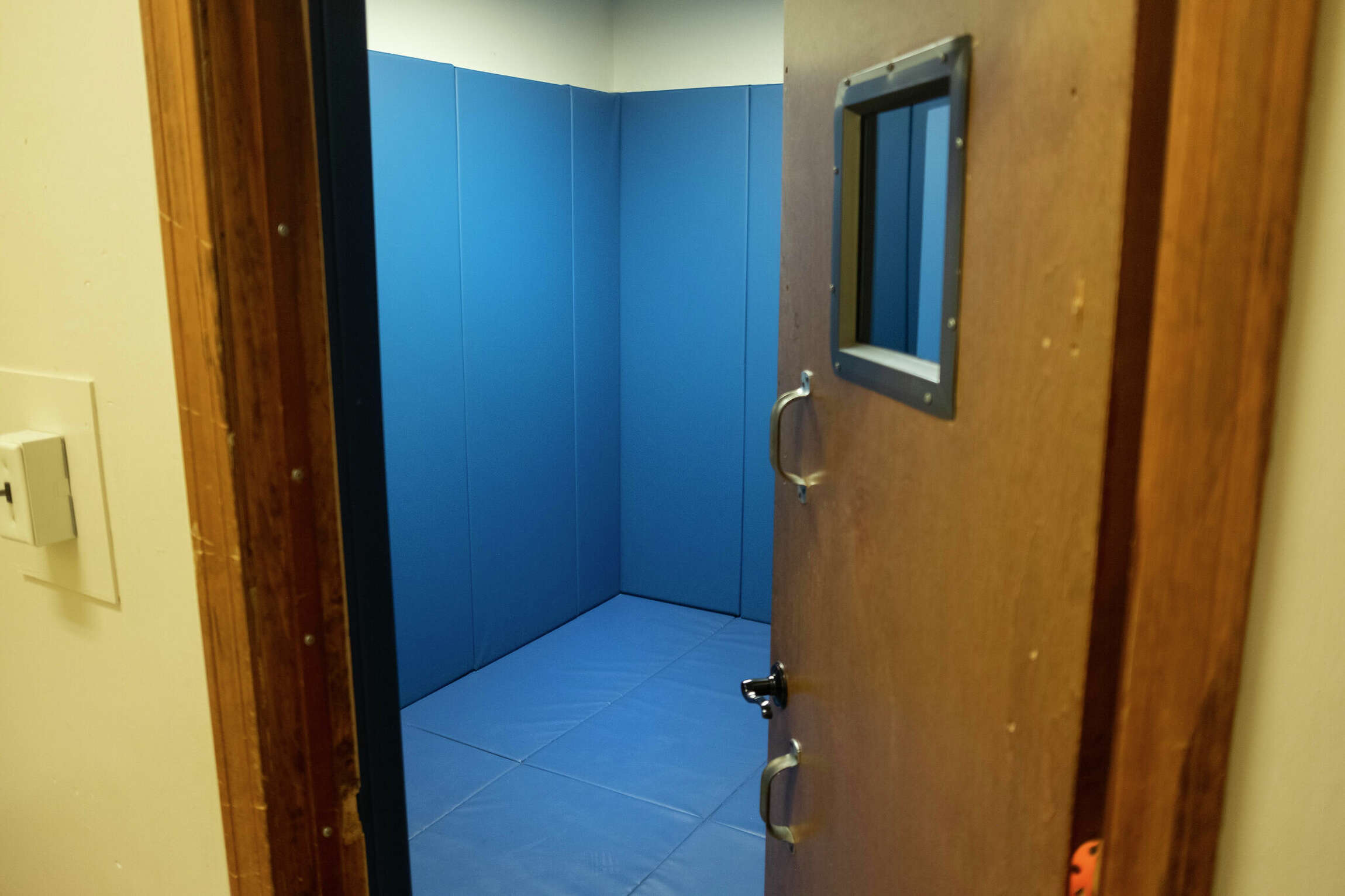
Bill would restrict restraint and ban seclusion in New York schools: A NY Assemblywoman wants to regulate and limit use of controversial methods after Hearst investigation found dangerous problems. Read the details here.
|
|
|
|
Social-Emotional Learning |
Educators Say ‘Social Emotional Learning’ Linked to Higher Test Scores: Educators have been talking more about the rise of "social-emotional learning" post-pandemic and how it has helped students perform better on tests. See the news report here. |
|
|
|
Communicate and create your way: What’s new in Microsoft 365 Accessibility: Microsoft 365 has been obsessing over new ways to help everyone communicate, create, and comprehend in the way that works best for them. Over the past few months, they’ve launched new capabilities for sign language and captioning, expanded the ways users can express themselves without using words, introduced more ways to customize their view of their work, and made it easier to pull in content from elsewhere. Learn more. |
|
|
|
Transition to Adult Life/Youth |
2022 was a remarkable and historic time for the employment of people with disabilities: Employment trends in 2022 built upon the 2021 recovery from the pandemic recession—where people with disabilities reached beyond pre-COVID-19 levels and even pre-Great Recession levels. Learn more here. |
|
|
|
Racial Disparities in Adverse Childhood Experiences Tied to Brain Changes: Black children are both more likely to face adverse childhood experiences and to see lower volumes of gray matter in certain parts of the brain, with possible impacts on mental health. The disproportionate amount of childhood adversity Black children face - mostly racism and socioeconomic burden - has been linked to changes in the parts of the brain associated with PTSD. ACEs like racism can work as a “toxic stressor” to the brain. These findings contribute to the “weathering” hypothesis, which states that chronic exposure to social and economic stressors such as racism can have a cumulative impact on physical health outcomes. In this case, researchers found that childhood adversity faced more often by Black children has a cumulative impact on the brain. Read more. |
|
|
|
ABOUT THE REGION A PARENT TECHNICAL ASSISTANCE CENTER
The Navigating Excellence-Parent Assistance and Collaboration Team (NE-PACT), the Region A Technical Assistance Center, provides technical assistance to federally-funded parent centers -- Parent Training and Information Centers (PTIs) and Community Parent Resource Centers (CPRCs) - NEPACT Logolocated in the states of CT-AFCAMP, CT-CPAC, DC-AJE, DE-PIC, MD-PPMD, ME-MPF, MA-FCSN, NH-PIC, NJ-SPAN, NJ-ASCF, NY-AFC, NY-CIDA, NY-LIAC, NY-UWS, NY-Starbridge, NY-INCLUDEnyc, NY-Sinergia, NY-PNWNY, PA-HUNE, PA- ME, PA-PEAL, PR-APNI, RI-RIPIN, VI-DRVI and VT-VFN. These Parent Centers are independent non-profit organizations. We also provide support to emerging parent centers and parent organizations serving families of children with or at risk of being identified as having disabilities. In addition, we work with early intervention and education agencies (local, state and federal level) seeking information regarding best practices in involving parents of children with disabilities in systems improvement.
The center activities are specifically designed to:
- Enhance the capacity of parent centers to provide effective services to families of children with special needs and to work effectively with their states to improve special education and early intervention systems; and,
- Facilitate their connections to the larger technical assistance network that supports research-based training, including educating parents about effective practices that improve results for children with disabilities. For more information click here.
|
|
|
|
|
|
|