Innovation Outlook 

NEWSLETTER | 2026

SBIR/STTR • Research Partnerships • Emerging Technologies


Welcome to our October Newsletter

Inaugural Edition

Introducing CT APEX Innovation Outlook


Welcome to the first edition of CT APEX Innovation Outlook, our new quarterly newsletter covering federal innovation opportunities, SBIR/STTR programs, research partnerships, and emerging technologies.


Each quarter, we'll highlight opportunities worth watching, federal resources businesses should know about, and ways CT APEX counselors can help Connecticut companies prepare for what's ahead.


A Message from Andres Calvache,

CT APEX Accelerator Counselor


Andres Calvache

Procurement Specialist


There is something exciting happening in Connecticut. From established aerospace and defense manufacturers to startups tackling difficult technical problems, we have the experience and ingenuity to help shape the next generation of American innovation.


I see that potential in the businesses I work with. A precision manufacturer, materials specialist, or software developer may already have capabilities relevant to a technology that is only beginning to find its market.


The Department of Energy Quantum Genesis Q Competition, whose application recently closed, with up to $215 million in planned funding, and QuantumCT's push for industry participation in quantum sensing are reminders that the seeds of new industries are being planted today.

These developments are about more than winning an award. They are chances to gain experience, build relationships, and establish a place in emerging markets.


Although this newsletter arrives quarterly, the commitment behind it is daily. CT APEX and APEX counselors nationwide work to connect innovators with federal opportunities and resources, strengthen the defense industrial base, and ultimately support the warfighter.


The tide is changing. I want Connecticut businesses to recognize where they fit and have a path to act.


~ Andres Calvache

CT APEX Accelerator Counselor

acalvache@ctapex.org

Featured Industry Collaboration: QuantumCT

Where Connecticut Industry Fits in Quantum Sensing


Quantum technology may seem far removed from everyday manufacturing, but developing practical quantum sensors requires more than breakthroughs in physics. These systems also need precision components, specialized materials, electronics, engineering expertise, and reliable production methods.


Connecticut already has a robust manufacturing and technology supply chain. The opportunity isn't necessarily to build something entirely new, but to extend that existing expertise into a growing quantum ecosystem.


QuantumCT's Phase 3 Quantum Sensing Challenge, developed with RTX Research Center (RTRC), illustrates how university researchers and established industries can work together to move quantum technologies toward practical applications.


Vibration, temperature changes, environmental interference, and limitations on size, weight, and power can all affect sensor performance. Companies already solving similar problems in aerospace, defense, and precision manufacturing may have the expertise researchers need.


Four research areas are being explored:

  • Magnetic-Aided Inertial Navigation: Navigation technologies for GPS-limited environments. Relevant capabilities include magnetometers, electronics, navigation software, and sensor integration.
  • Rydberg Atom RF Sensing: Quantum-based detection of radio-frequency signals. Relevant capabilities include photonics, lasers, optics, RF engineering, and signal processing.
  • Quantum-Enabled Distributed Sensing: Coordinated sensor networks requiring precise timing and reliable operation. Relevant capabilities include telecommunications, optical systems, electronics, and advanced manufacturing.
  • Biological Systems with Quantum Processes: Exploring quantum phenomena in biological systems. Relevant capabilities include biotechnology, materials science, bioengineering, and scientific instrumentation.


An Opportunity for Industry Collaboration

A distinguishing feature of this initiative is its requirement for industry participation.

Eligible proposals must be led by qualifying UConn or Yale faculty and include an unfunded industry partner. Businesses may contribute engineering expertise, materials, specialized equipment, testing capabilities, or other technical resources.


This is an industry collaboration opportunity, not a direct funding source for participating businesses. Pilot-grant funding is awarded to eligible university-led research teams.


Key details:

  • Proposal deadline: November 30, 2026, at noon
  • Joint UConn-Yale projects: Up to $150,000 in direct costs
  • Single-university projects: Up to $75,000 in direct costs
  • Industry participation: Required; industry partners are unfunded


Even for businesses not participating in this particular challenge, QuantumCT's broader initiatives offer ways to engage with researchers and explore where existing products and expertise could support quantum technologies.


Explore QuantumCT:

Quantum Sensing RFP

Industry Engagement Opportunities


How CT APEX Can Help

We can help businesses research federal programs, identify potential government customers, and explore contracting pathways that may become relevant as quantum technologies mature.

Sometimes entering a new industry starts by looking at something your company already does and asking where else it might be useful.


Save the Date: CT APEX & QuantumCT Webinar — December 8, 2026


CT APEX and QuantumCT will host a joint introductory webinar covering QuantumCT's initiatives and ways Connecticut businesses can participate.


Time and registration details to follow.

Exploring the Federal Laboratory Consortium

What If the Technology You're Looking for Already Exists?

Federal laboratories have spent decades developing technologies, solving technical problems, and conducting research. Some of that work is available for commercial licensing or collaboration with private industry.


The Federal Laboratory Consortium for Technology Transfer (FLC) helps businesses explore this nationwide research network and find federally developed technologies, laboratory expertise, and potential research partners.

For Connecticut businesses developing products, improving manufacturing processes, or exploring new markets, it's worth asking whether a federal laboratory has already done some of the groundwork.


What can businesses explore through the FLC?

  • Technology Licensing: Federally developed technologies and intellectual property that may be available for commercial use.
  • Collaborative Research: Opportunities to work with federal laboratories through mechanisms such as Cooperative Research and Development Agreements (CRADAs).
  • Specialized Facilities: Scientific equipment, testing capabilities, and laboratory expertise, subject to availability and applicable agreements.
  • Commercialization: Technologies that could improve existing products or support new commercial applications.


Consider a materials manufacturer looking to improve a production process or an engineering startup trying to validate a new design. A federal laboratory may already have research or expertise relevant to that challenge.


Not every opportunity to work with the federal government begins with a contract announcement. Sometimes, it's a technology waiting for the right industry partner.


Where to Begin

Businesses can use the FLC Business platform to search for technologies, patents, federal facilities, and research capabilities.

We can help identify relevant federal organizations, research potential government customers, and examine related contracting opportunities.

Technology licensing and research agreements are handled through the participating laboratories and their technology transfer offices.


Explore FLC resources:

Federal Laboratory Consortium

Search FLC Business

Federal Funding Watch:

FY2027 DoW SBIR/STTR Schedule

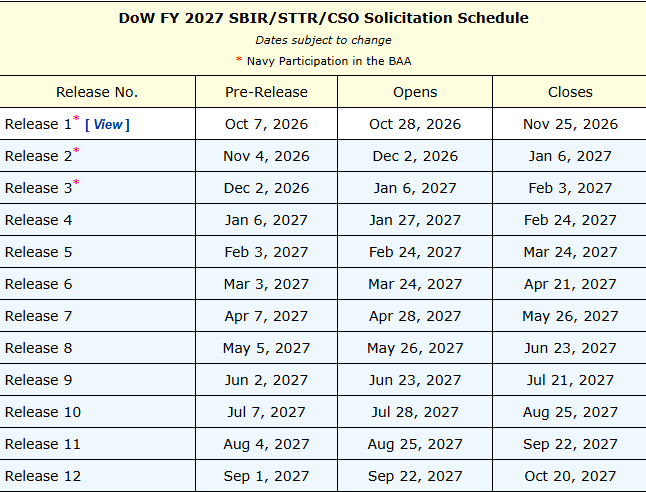
Upcoming Solicitation Cycles shown above


For businesses developing new technologies, the Department of War's FY2027 Small Business Innovation Research (SBIR) and Small Business Technology Transfer (STTR) schedule provides advance notice of upcoming federal research opportunities.


A strong technical idea is only one part of a competitive proposal. Companies also need time to understand agency requirements, assess eligibility, identify partners, and develop a credible research and commercialization approach.


The Department has published monthly solicitation windows that businesses can use for planning.


Release 1 opened October 28, 2026, with proposals due November 25. Release 2 enters pre-release November 4.


The full FY2027 schedule includes additional monthly cycles through October 2027.

View the Full FY2027 DoW SBIR/STTR Solicitation Calendar

Dates are subject to change. Individual agencies may not participate in every release. Review official solicitation instructions for topics, eligibility, deadlines, and submission requirements.


Preparing for the Next Opportunity with CT APEX

During certain pre-release periods, businesses may communicate with technical topic authors, subject to solicitation-specific rules.

Before pursuing an award, companies should consider whether their technology addresses a defined federal need, whether they have the resources to perform the research, and how the technology could transition into government or commercial use.

We can help businesses navigate federal market research, procurement requirements, and SBIR/STTR readiness resources.

Innovation Watch: Three Federal Opportunities Worth a Look


The following solicitations illustrate the technical challenges federal agencies are asking businesses to address.


Opportunities listed as open as of October 29, 2026.


1. Autonomous Systems and Artificial Intelligence

Opportunity: Counter-Unmanned Aerial Systems Rapid Maturation

Agency: Department of War — Office of the Secretary of Defense

Program: FY2027 SBIR, Solicitation 27.BZ

Topic: OSW27BZ01-DV002

The Department is seeking technologies that improve the detection, tracking, identification, and defeat of hostile unmanned aircraft. Emphasis includes systems capable of supporting tactical forces without relying on permanent infrastructure.

Who it fits: Companies developing sensors, AI-enabled detection, edge computing, electronic systems, or counter-drone technologies.

Deadline: November 25, 2026

View details: SBIR Topic OSW27BZ01-DV002


2. Advanced Manufacturing and Defense Supply Chains

Opportunity: Watervliet Arsenal Industrial Base Modernization

Agency: U.S. Army Contracting Command — Watervliet Arsenal

Type: Commercial Solutions Opening

Notice: W911PT26SC001

Area: A006 — Automated Manufacturing Line of Minor Cannon Components

The Army is seeking commercial solutions to modernize and automate the production of smaller artillery cannon components.

Who it fits: Precision manufacturers, industrial automation companies, robotics integrators, and firms experienced in CNC machining, production systems, and automated inspection. Teaming may be an option for businesses offering part of the overall solution.

Deadline: November 20, 2026

View details: Watervliet Arsenal CSO — SAM.gov


3. Quantum-Adjacent Technologies and Photonics

Opportunity: Low SWaP, 2-Micron Fiber Amplifiers

Agency: Department of War — U.S. Air Force

Program: FY2027 SBIR, Solicitation 27.BZ

Topic: DAF27BZ01-DV010

The Air Force is seeking ways to reduce the size and weight of high-power 2-micron fiber amplifier systems while maintaining performance. These technologies have applications in advanced sensing, directed energy, and precision materials processing.

Who it fits: Companies specializing in photonics, laser systems, optical materials, precision components, and compact system integration.

Although not specifically a quantum sensing solicitation, this opportunity highlights federal demand for enabling photonic technologies relevant to advanced sensing applications.

Deadline: November 25, 2026

View details: SBIR Topic DAF27BZ01-DV010


Opportunity details may change. Confirm amendments, eligibility, and submission instructions with the issuing agency before responding.

Let's Put Connecticut's Capabilities to Work

There isn't a single path into federal innovation. Some businesses may be ready to pursue an SBIR award, while others may find their entry point through a prime contractor, research partnership, or federally developed technology.


If an opportunity in this edition caught your attention, or you're wondering whether your company's capabilities could serve a federal need, we'd welcome that conversation.


You don't need a finished proposal or a complete strategy to get started.


We can help you assess where your capabilities fit, identify potential federal customers, and determine practical next steps toward entering or expanding within the government marketplace.


Connect with CT APEX


No-cost government contracting counseling for eligible Connecticut businesses.

Follow us on social media:

Not working with us yet? Sign up for free assistance here!

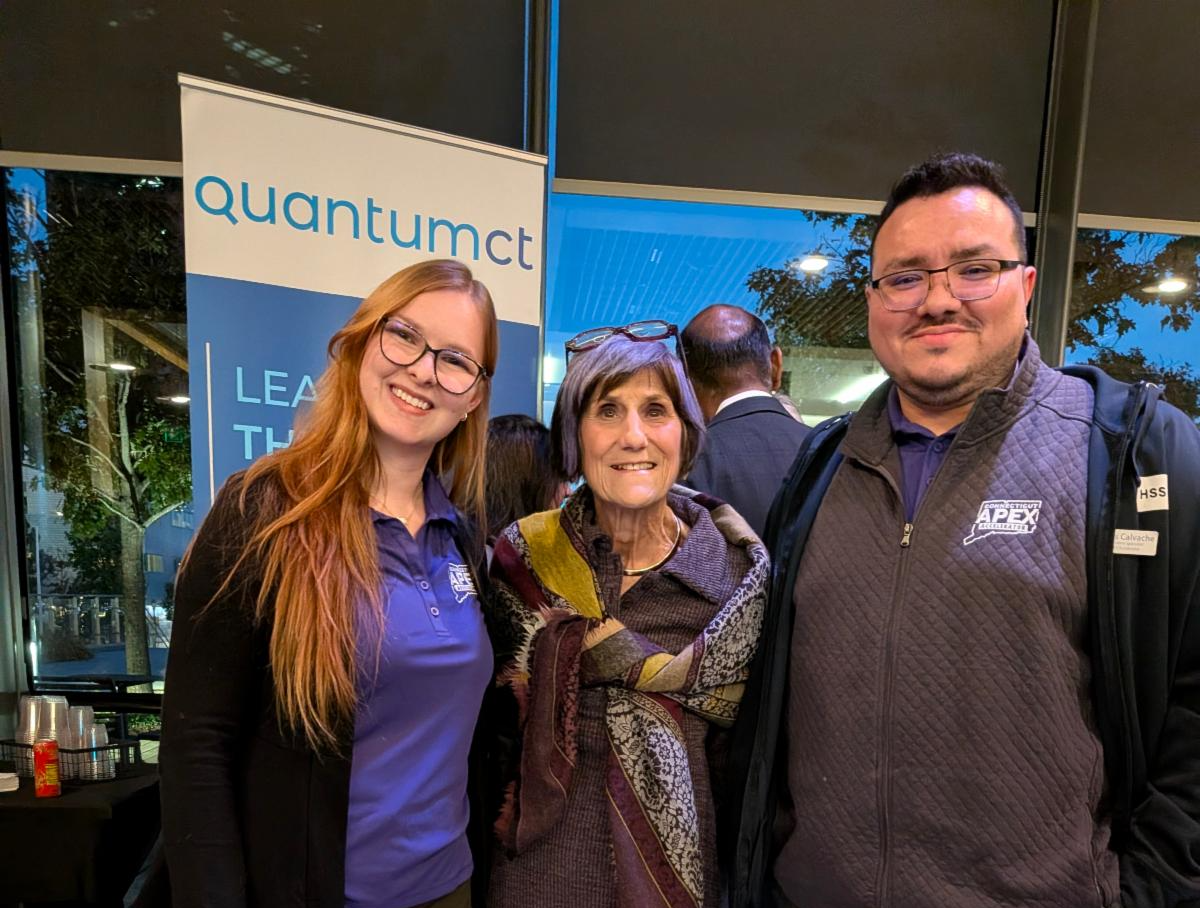
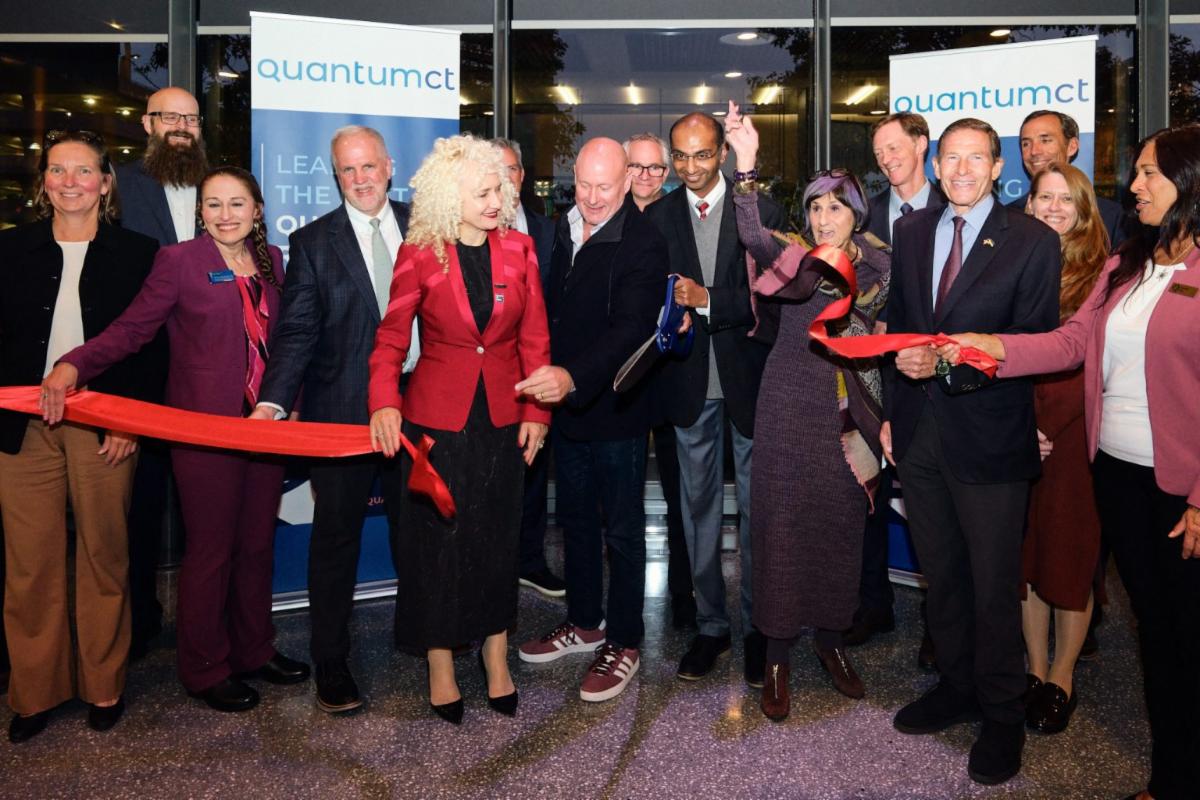
QuantumCT officially opened its new 4,500-square-foot innovation headquarters on October 6, 2026, at 101 College Street in downtown New Haven, Connecticut.


Stay Informed! Follow us!

Visit our website: https://ctapex.org/

Email us at: info@ctapex.org