|
LHS E-STAR training program selects 3 new scholars
Trainees will lead learning health system research at Kaiser Permanente Washington and VA Puget Sound Health Care System
| | | The Washington Learning Health System Embedded Scientist Training and Research (LHS E-STAR) Center is excited to announce 3 new scholars! Kaboni Gondwe, Lily Shapiro, and Mayuree Rao will partner with leaders from Kaiser Permanente Washington and Veterans Affairs Puget Sound Health Care System to conduct research aimed at transforming primary care. | | Learning Health System Program spotlight | | How the ACT Center is working with health system leaders to improve patients' return access to mental health services | | |
The objective
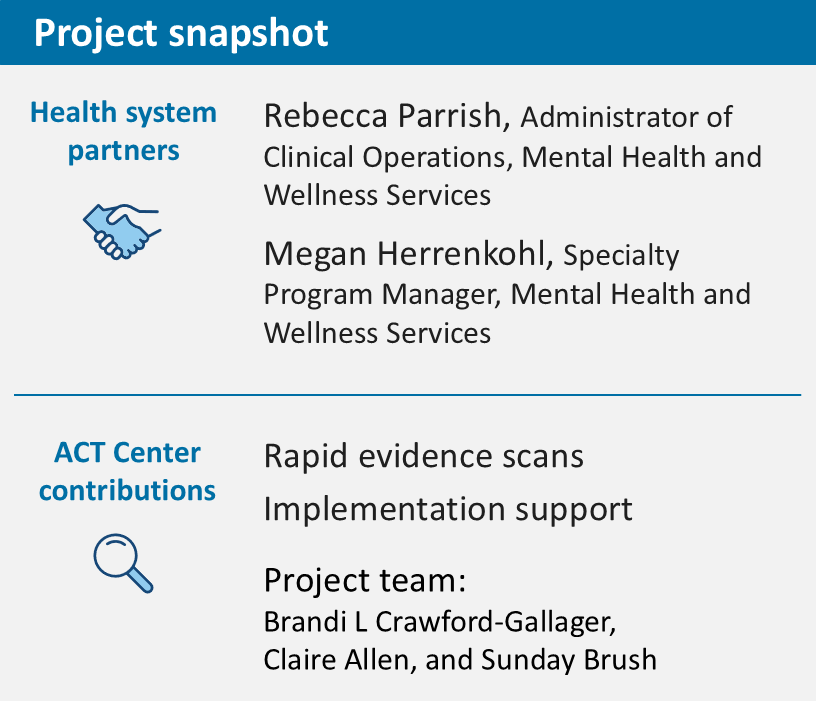
Kaiser Permanente Washington’s Mental Health and Wellness (MHW) department is prioritizing timely return access for members engaged in episodes of mental health treatment. One component of this project is to develop and implement predictable, evidence-based mental health care pathways for specific diagnoses, beginning with anxiety disorders and depression — which are the most common diagnoses among members in Washington. Having clear pathways for episodes of care will support collaborative, goal-oriented treatment planning and care.
The work
The ACT Center is supporting MHW department leaders in developing and implementing care pathways in specialty mental health by: (1) conducting rapid evidence scans on existing mental care pathways and average treatment duration, (2) identifying best practices for implementation of clinical care pathways, and (3) supporting implementation by developing provider, care team, and patient resources and by creating visualizations of workflows.
What we’re learning
In early 2025, the ACT Center team completed a rapid evidence scan of care pathways, treatment duration, and implementation recommendations for anxiety disorders and shared the results with MHW leaders. The evidence suggests that most episodes of care for anxiety disorder that use evidence-based therapies consist of 12 to 18 sessions and should be consistently monitored for progress. Many care pathways for anxiety exist and are based on treatments with proven efficacy. However, care pathways themselves have not yet been tested rigorously for efficacy.
What we’re hoping to achieve
In the coming months, the ACT Center will support MHW implementation of the anxiety care pathway and collaborate to develop and implement a depression care pathway. We are working to create clinical care pathways that are predictable yet flexible. MHW seeks to continue delivering high-quality, feedback-informed, evidence-based treatments while having greater focus on achieving patient goals and symptom reduction. The overall goal is to successfully move patients through care and thereby create greater clinician availability for return appointments.
| | 4 new papers dive into various aspects of social health, including links to utilization and cost | | Results from Kaiser Permanente Washington’s Social Health Integration pilot | | |
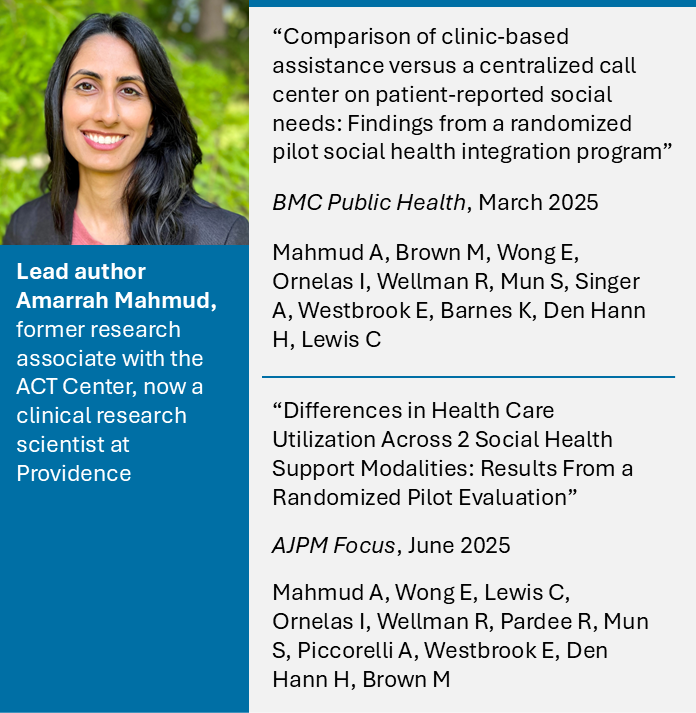
Two recent papers reported findings from the ACT Center’s evaluation of Kaiser Permanente Washington’s Social Health Integration pilot program. Published in BMC Public Health, the main study findings examined the effects of the pilot program on patients’ social needs over time. Participants in 2 primary care clinics were offered social health support from either the Community Resource Specialist (CRS) program, consisting of clinic-based health workers, or the Connections Call Center (CCC), a centralized call center program. By the end of the 5-month study period, members in both the CRS and CCC groups identified more social needs overall, and the authors found no significant differences between participants’ social needs across the 2 groups. Exploratory analyses within the CRS group suggested that receiving a resource referral was associated with fewer needs over time.
The second paper, published this month in AJPM Focus, assessed differences in health care utilization between participants in the CRS and CCC groups. Unadjusted results showed no significant differences in utilization — but in adjusted results, CRS participants had approximately one more primary care encounter than CCC participants. Additional analyses showed that participants who received CRS support had higher counts of primary care encounters, specialty care encounters, and messages with their care team than those who did not — an outcome that may be linked to clinic-based CRSs being better able to connect patients with necessary follow-up care after primary care appointments.
| | SONNET study links social risk and increased use of emergency care | | |
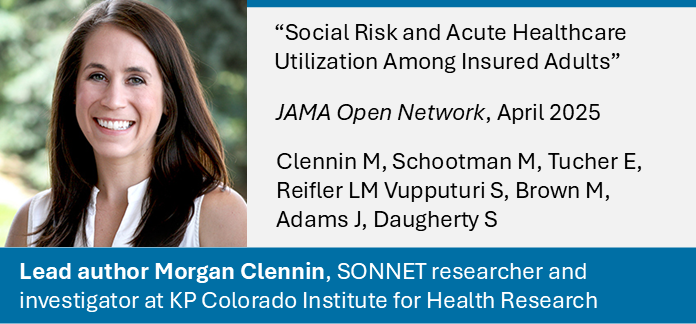
This recent paper in JAMA Network Open explored the link between health-related social risks — such as financial strain, housing instability, and food insecurity — and acute health care utilization. Using data from Kaiser Permanente’s National Social Health Surveys, the authors found that people who reported social risk were 21% more likely to visit the emergency department. Social risk was not associated with hospitalizations.
| | Study led by SONNET mentee explores barriers to accessing social services | | |
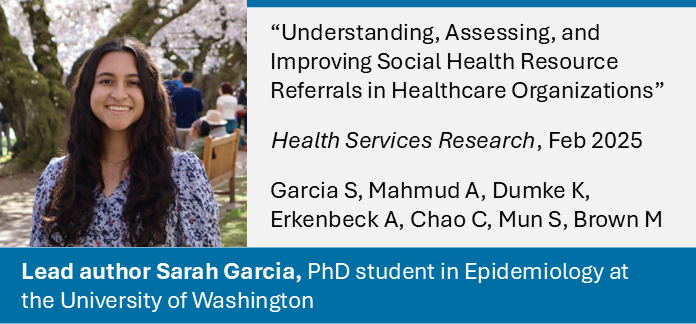
Published in a special issue of Health Services Research focused on social care, this recent paper used a modified asset mapping approach to assess the utility and accuracy of Kaiser Permanente's online community resource directory. Led by a doctoral student with mentorship from SONNET leaders and researchers, the study explored the number and types of food insecurity resources within 5 miles of a large primary care clinic in Kaiser Permanente’s Washington region. The authors found that the directory included inaccurate and inadequate information that limited its effectiveness. Other common barriers to accessing social services included eligibility criteria, a mismatch between services provided and individual needs, and a lack of capacity among service organizations.
| | |
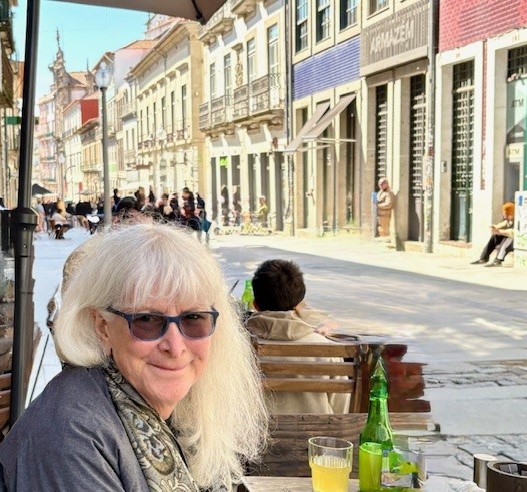
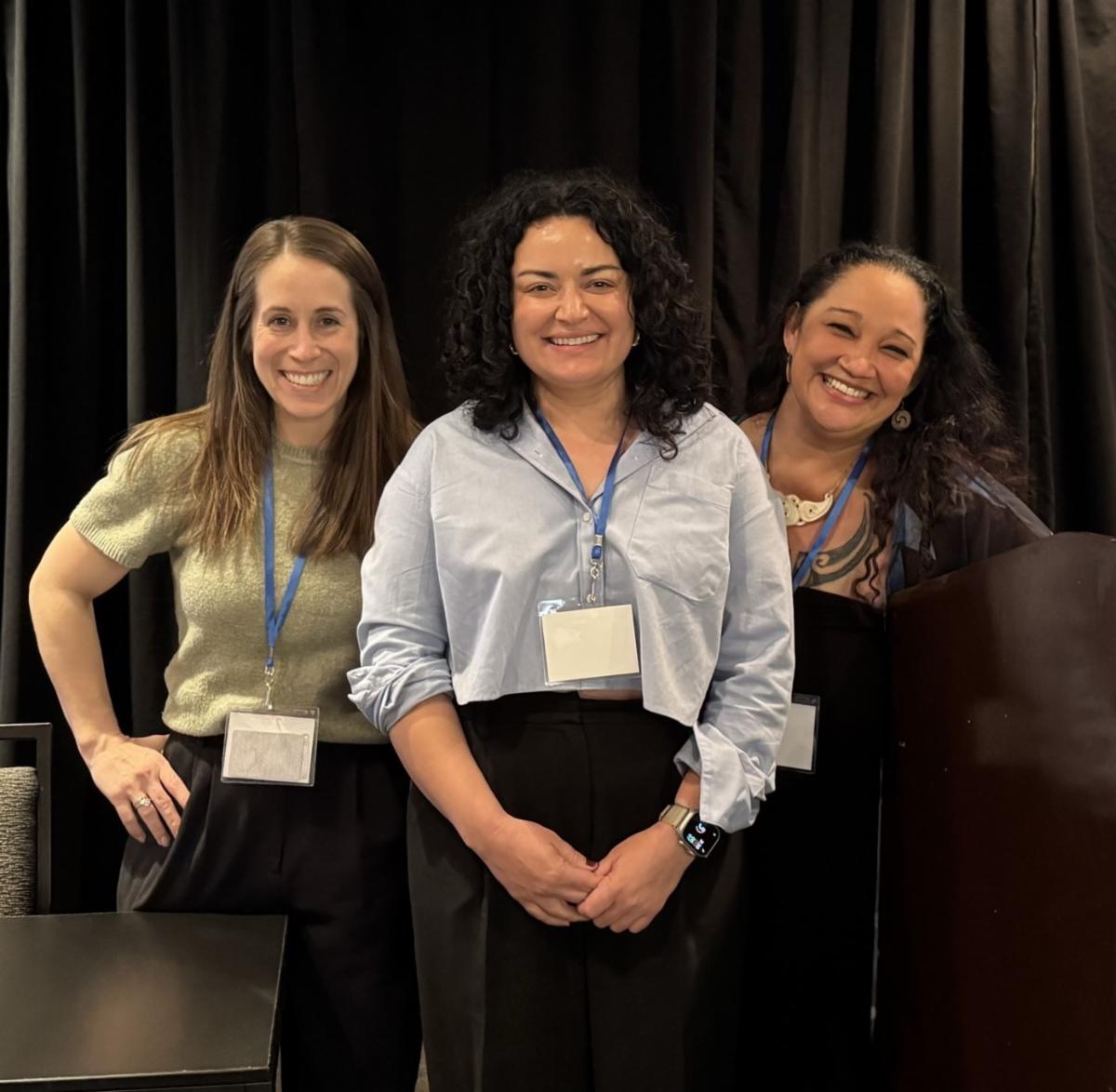
ACT Center partners share innovations in cervical cancer screening, social health, and learning health systems | | In March, the EUROGIN International Multidisciplinary HPV Congress featured a presentation by ACT Center partner Bev Green, who shared results from the ACT Center’s evaluation of a new self-collect HPV screening program at Kaiser Permanente Washington. The evaluation found that screening rates increased for people with different cervical cancer screening histories, with the largest increases among those coming due for screening in the next 3 months. Held this year in Porto, Portugal, EUROGIN has brought together international scientists to share translational research on HPV and associated cancers in an annual congress for 3 decades. (view PDF of presentation slides) | | Bev Green at breakfast in Porto | | Kaiser Permanente’s Social Needs Network for Evaluation and Translation (SONNET), led by ACT Center team member Meagan Brown, presented on SONNET’s efforts to build and implement a social health research infrastructure across Kaiser Permanente. The panel showcased how SONNET uses an LHS approach and internal data to evaluate social health, as well as patient perspectives and provider training to help improve social health screening. Other panelists included SONNET researchers from other Kaiser Permanente research centers: Morgan Clennin from Kaiser Permanente Colorado Institute for Health Research, Teaniese (“Tina”) Davis from Kaiser Permanente Georgia Center for Research and Evaluation, and Maile Tauali’i from the Center for Integrated Health Care Research at Hawai’i Permanente Medical Group. (view PDF of presentation slides) | | |
SONNET panelists (L-R) Morgan Clennin, Meagan Brown, and Maile Tauali'i
(not pictured: Tina Davis)
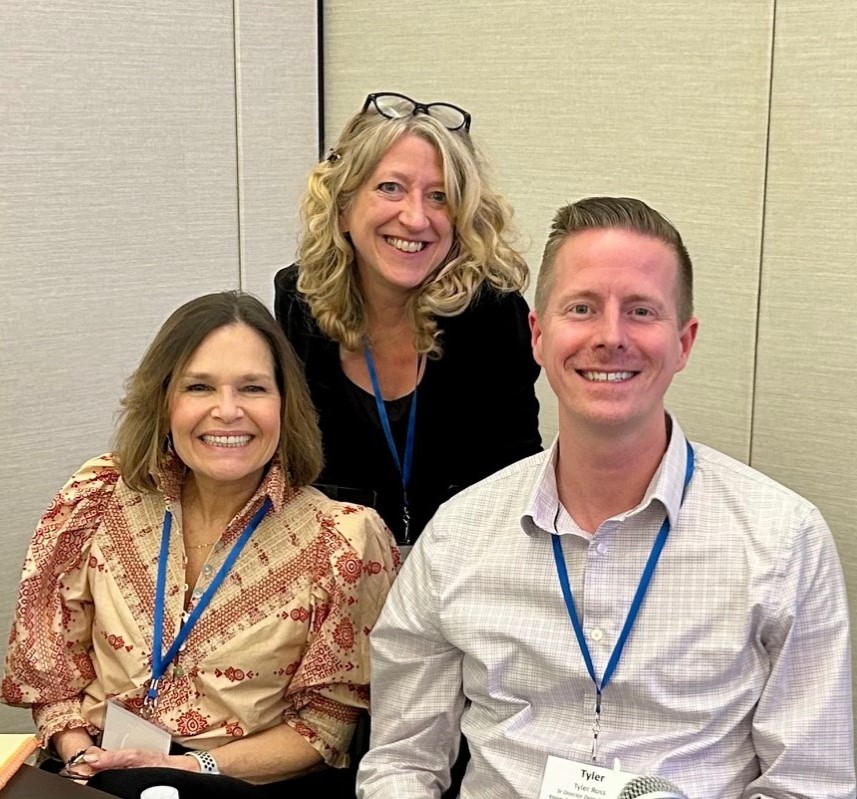
| | ACT Center team member Tyler Ross presented on Kaiser Permanente Washington’s LHS data model as part of a panel presentation that explored how to transform care and improve outcomes at a national scale by learning from early adopters of the LHS model. Led by longtime ACT Center collaborator Sarah Greene, the panel included researchers from various HCSRN organizations: Nico Pronk from HealthPartners Institute, Katherine Sanchez from Baylor Scott & White Health Research Institute, and Steve Waring from Essentia Institute for Rural Health. (view PDF of presentation slides) | | Tyler Ross (R) with co-panelists Katherine Sanchez (L) and Sarah Greene |
|
ACT Center team volunteers at Seattle/King County Clinic
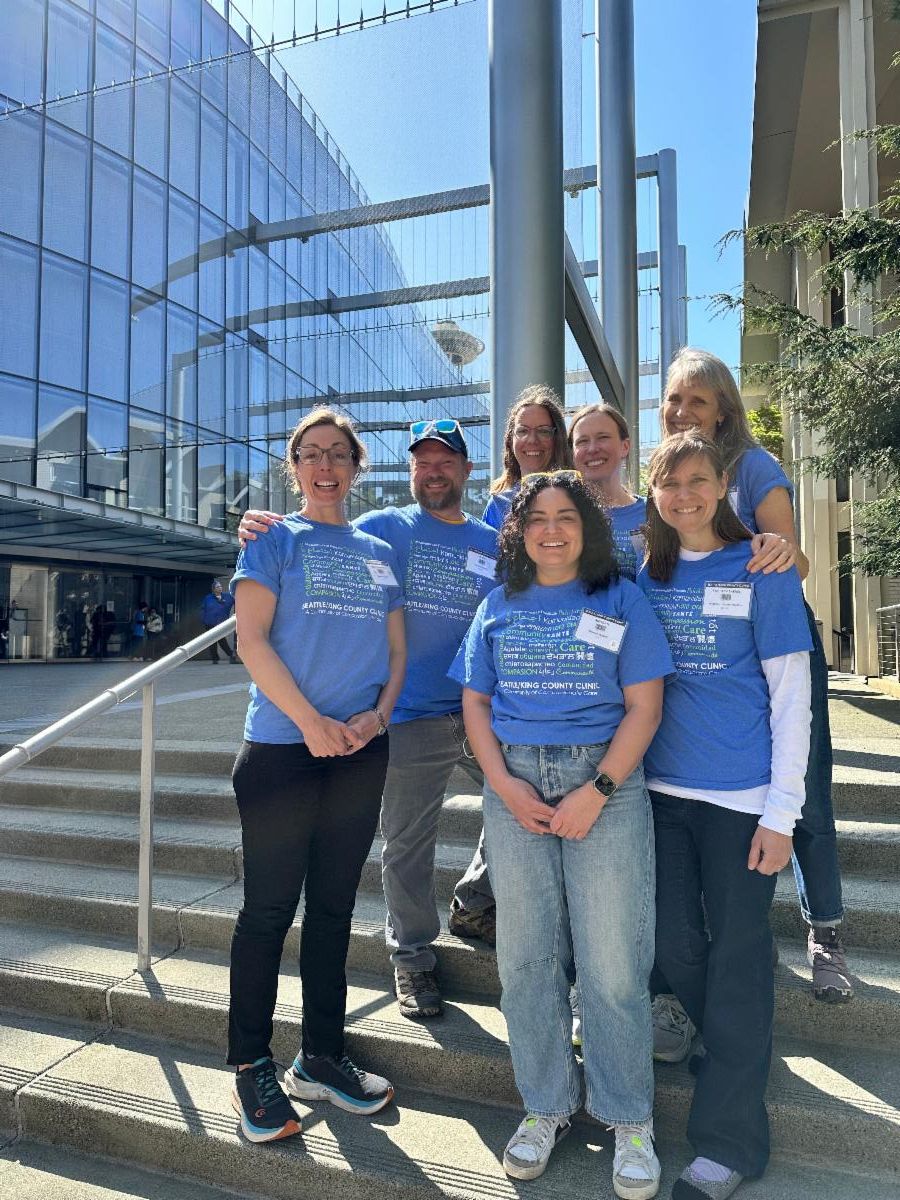
On April 24, the ACT Center showed up in our community to volunteer at the Seattle/King County Clinic (SKCC), the largest community-driven free health clinic of its kind in the United States. During this 4-day, low-barrier clinic, approximately 3,000 clinical and non-clinical volunteers donated 40,000 hours, valued at more than $1.5 million, to transform Seattle Center's event and performance venues into a fully functioning health care operation. The 3,000+ patients seen each year include families, older adults, low-income wage earners, immigrants and refugees, college students, and others who are unable to receive care due to systemic disparities in access. SKCC is a community project of Seattle Center and the Seattle Center Foundation and is sponsored in part by Kaiser Permanente Washington.
| | ACT Center team members (clockwise from left): Emily Westbrook, Robert Frazier, Jess Mogk, Claire Allen, Paula Lozano, Kat Barnes, and Meagan Brown | | We at the Center for Accelerating Care Transformation would like to acknowledge that we are on the ancestral lands and traditional territories of the Puget Sound Coast Salish People. | |
© 2025 Center for Accelerating Care Transformation (ACT Center)
Masthead photography and design by Robert Frazier.
| | | | |