|
September Newsletter Highlights:
Learn how the Coordinated Access System serves Sacramento, review the updated Regional Action Plan, check out SSF's redesigned website and our 2024 Annual Report, and much more!
| | | |
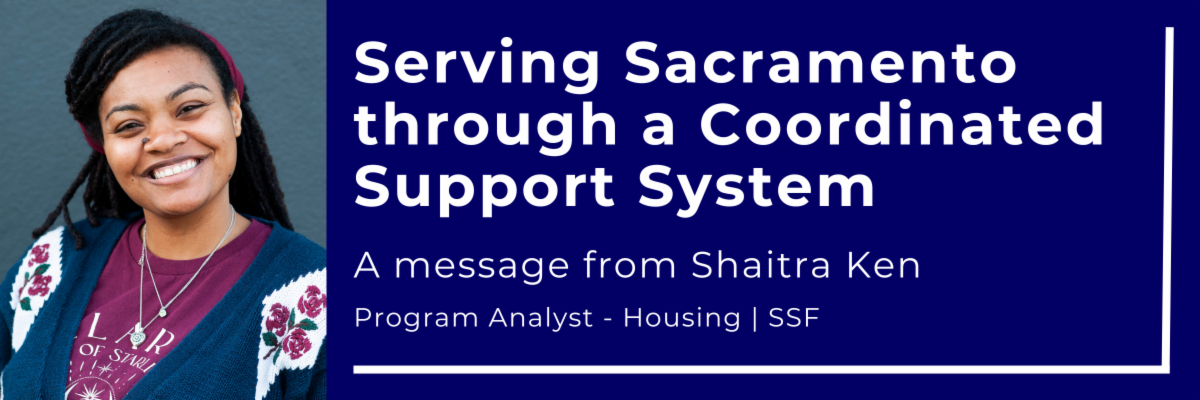
Every day in Sacramento, seniors, families, and young adults are finding stability through the Coordinated Access System (CAS), a regional partnership that has evolved over the years. CAS aims to ensure that the most vulnerable individuals who seek support are connected to the right housing and services, and that our community’s limited resources are directed to where they will make the biggest impact.
Accessibility is core to CAS. For years, 2-1-1 Sacramento has provided a range of services and information for our community. Building on this foundation, CAS reinforces fairness and transparency by ensuring that housing opportunities are offered through a single, coordinated process. Previously, resources were fragmented and scattered, leaving clients unsure of how to navigate the system, let alone access the full range of available services. The CAS uses the Continuum of Care (CoC) housing list to match people to available housing. This list is built from individuals actively working with navigators or outreach staff in CAS, so placements are based on consistent assessments and real needs. The result is a system where every housing opportunity is intentional and fair.
Another key strength of CAS is its commitment to consistency. Through standardized CAS Assessor Training, service providers have been equipped to represent clients equally and consistently. Once a client is connected to a CAS Assessor, they participate in a structured intake process guided by the Housing Conversation Tool. This tool helps assessors understand each client’s vulnerabilities, barriers to housing, and overall circumstances. Together, the assessor and client create an Individual Support Plan that outlines personalized goals and needed support that will prepare the client for housing opportunities. By recording this information in the Homelessness Management Information System (HMIS), a secure shared database used by CAS, frontline teams align services more effectively while safeguarding sensitive client information.
These consistent practices add up to a larger picture of how Sacramento’s housing system is working. To track that picture, Sacramento Steps Forward publishes monthly and annual reports on shelter and housing programs within CAS. These reports track utilization rates and provide point-in-time insights into how programs are functioning. This data helps inform decision-making, strengthen accountability, improve coordination, and provide a clearer view of bed availability and program use.
The outcomes of this coordinated approach do not just live in reports, though; they’re visible across Sacramento. For example, Sacramento’s Foster Youth to Independence (FYI) voucher program, funded by SHRA and coordinated through CAS, has provided housing vouchers to more than 148 young adults. Of those, 88 have secured stable housing, giving them the foundation they need to successfully transition into adulthood.
Similarly, new housing communities like Powell’s Landing, Hope Landing, and the Pardes Apartments are reaching full or near-full occupancy through CAS referrals, bringing 120 senior, family, and single households into stable and safe housing.
These milestones demonstrate how coordinated referrals translate into life-changing outcomes.
Together, these commitments and impacts illustrate the true value of the Coordinated Access System. Whether it’s a senior moving into permanent housing, a family stabilizing in a new apartment, or a young adult exiting foster care with a voucher in hand, CAS is delivering results that ripple across our entire community.
In partnership,
Shaitra Ken
Program Analyst - Housing, Sacramento Steps Forward
|
| | | |
Continuum of Care Meetings
August 2025 Board Meeting Recap
In August, the Sacramento Continuum of Care Board signed off on new HHAP-6 funding priorities—ranging from youth sheltering to permanent housing subsidies—while updating its regional homelessness plan. Members also approved changes to Community Standards, advanced committee appointments, and received briefings on the 2026 Point-In-Time Count and the upcoming CoC funding competition. The session closed with a candid exchange on Housing First, mental health crisis response, and Sacramento County’s evolving partnership structure.
Upcoming CoC Meetings
Discover more about our local Continuum of Care (CoC), which leads our regional planning, coordination, and funding to resolve homelessness:
-
CoC Board (September): Wednesday, September 10 at 8:00 am. The primary agenda topic for this meeting is the future structure of Sacramento's Continuum of Care and will include time for Board and community discussion, input, and questions and answers.
-
Coordinated Access System Committee: Thursday, September 11 at 2:30 pm
-
CoC Board (October): Wednesday, October 8 at 8:00 am
-
HMIS & Data Committee: Thursday, October 9 at 10:00 am
-
Community Accountability Committee: Wednesday, October 15 at 9:00 am
-
Point-In-Time (PITC) Count Committee: Thursday, October 16 at 9:00 am
-
System Performance Committee: Thursday, October 23 at 9:00 am
Your local CoC has a new committee, as you may have noticed in the list above: The CoC Community Accountability Committee (CAC). This new meeting will focus on ensuring a continuous, client-focused accountability framework that strengthens the robustness, functionality, transparency, nondiscrimination safeguards, and responsiveness of the homelessness response system. Interested in attending or want to learn more? Fill out the CoC CAC guest form to receive updates and details.
| | | |
Upcoming Trainings for Service Providers
CalAIM Informational Session: September 30
Learn how CalAIM is connecting housing and healthcare in Sacramento. This virtual session will walk through Enhanced Care Management (ECM) and housing-related Community Supports (CS), with practical guidance for service providers to understand their clients' eligibility, referrals, and resources. Register now!
Note: We have a new training calendar as part of our newly revamped website. You can explore updated training resources and materials online, with more features and additions coming soon.
Help Shape Future Trainings
We’re exploring new ways to present trainings so they are easier to navigate and meet funding-, contract-, or role-based requirements. Share your ideas, suggestions, and questions with our team at trainings@sacstepsforward.org
| | | |
The Frontline Learning Collaborative
Mark your calendars for the Frontline Learning Collaborative on Thursday, September 25, 10:00 a.m.–12:00 p.m. at the Rose Family Creative Empowerment Center. This meeting will include an overview on the Survivor Coordinated Access System (SCAS) tailored to an audience of both Victim Service Providers (VSPs) & Non-Victim Service Providers. SCAS is a system built to support survivors & their unique needs. We will be going over VSPs in the area & how to connect your clients to a provider who can best serve them. Please come prepared with any questions you may have.
| | | | |
Community Event: Sacramento Stand Down
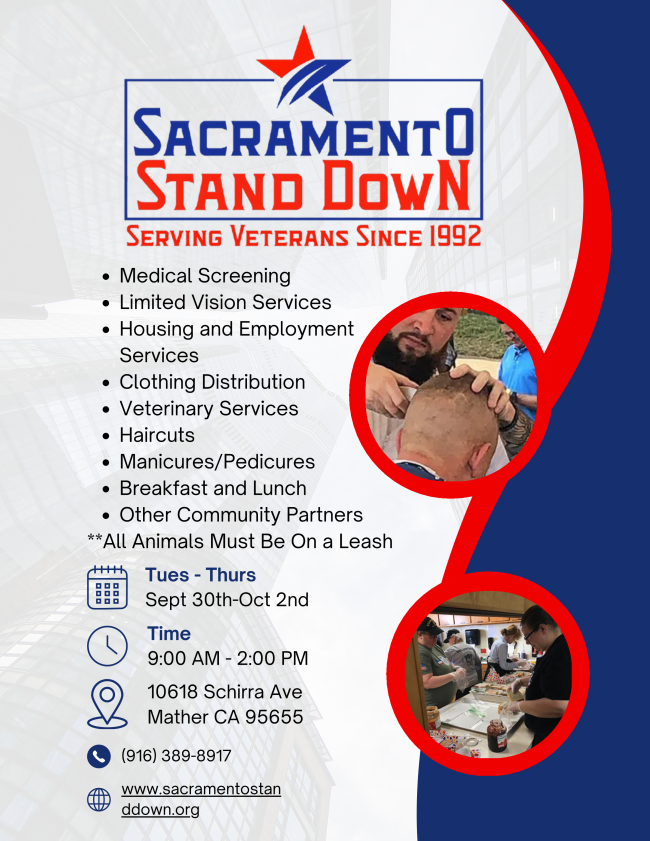
Sacramento Stand Down will take place Tuesday through Thursday, September 30–October 2, from 9:00 a.m. to 2:00 p.m. at 10618 Schirra Ave, Mather, CA. The event offers free on-site services for Veterans, including medical screenings, limited vision care, housing and employment resources, clothing distribution, veterinary services, haircuts, manicures and pedicures, and meals. Learn more at sacramentostanddown.org or call (916) 389-8917.
| | Updates & Progress Points | | | |
Updated Regional Plan Anchors Application for State Funding
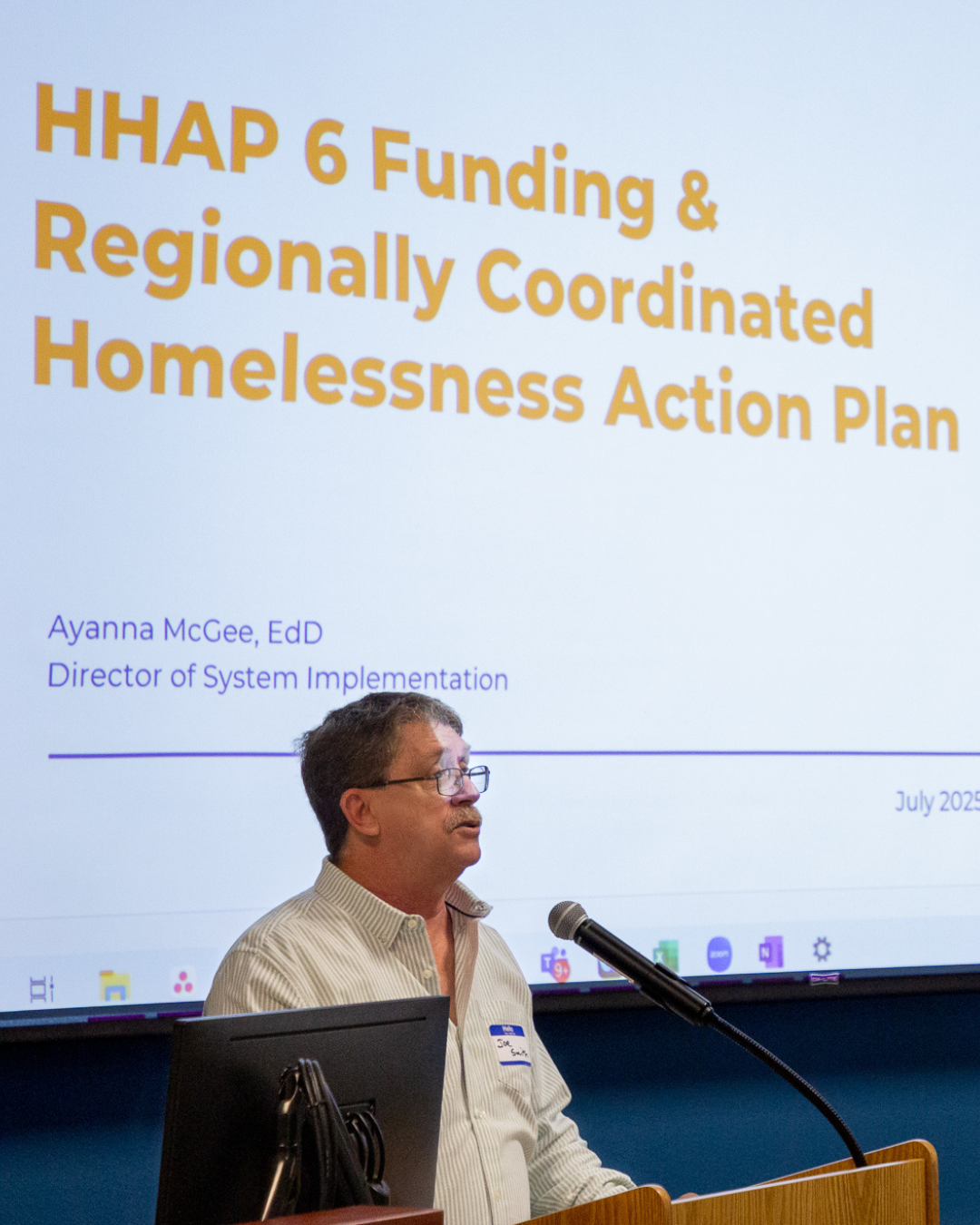
Sacramento’s framework for addressing homelessness has been updated to reflect shifting community needs, funding realities, and policy priorities. At the Continuum of Care (CoC) Annual Meeting in July, providers, agency staff, community members, and the CoC Board came together to review and provide input on the Regionally Coordinated Homelessness Framework & Action Plan to Prevent and End Homelessness (RCHAP). A follow-up leadership forum then brought together elected officials and key regional partners to further refine the plan.
Participants emphasized the need for stronger collaboration and innovative approaches to sustain services amid shrinking budgets and heightened accountability. In response, the 2025 plan focuses on targeted investments and strategies to prevent and respond to homelessness.
Additionally, the plan is the foundation of Sacramento’s application for nearly $32 million in Homeless Housing, Assistance & Prevention (HHAP) funding, submitted to the state in late August. Learn more by clicking below.
| | | | |
A Better Website is Here
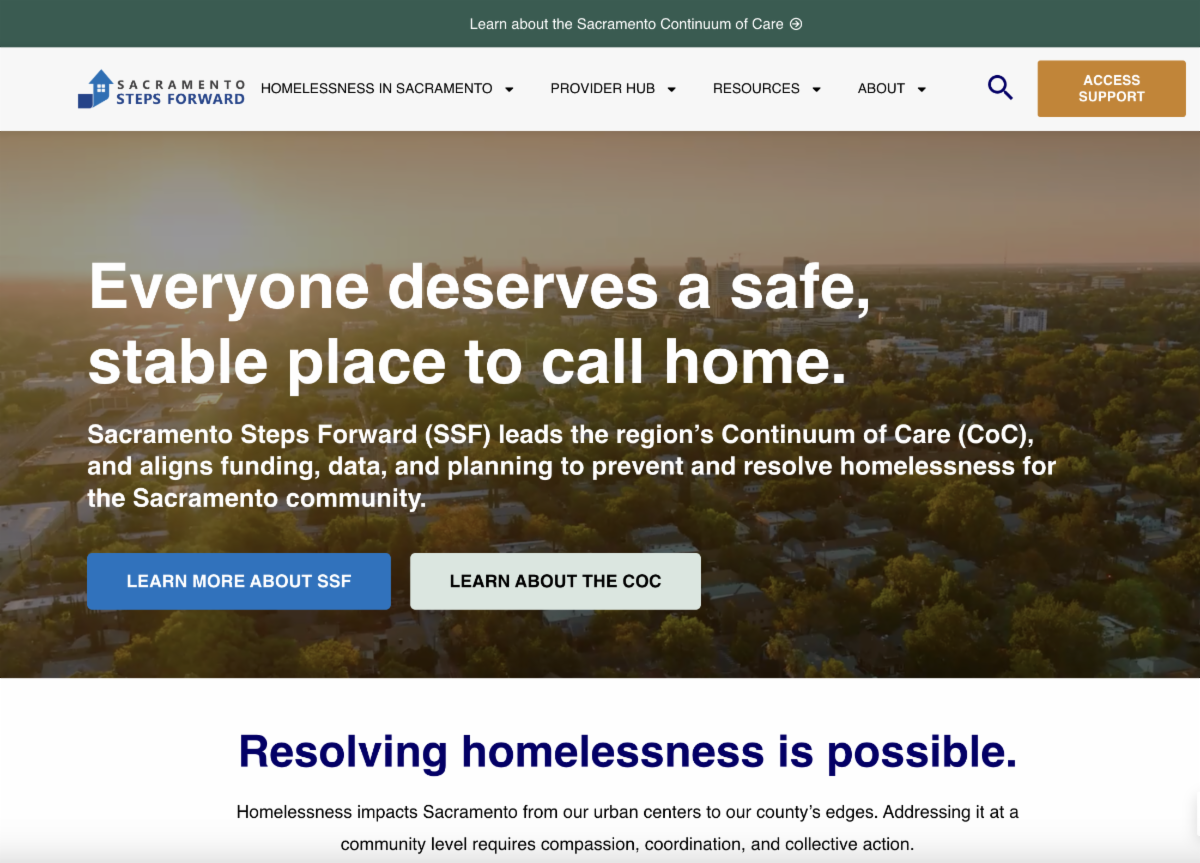
Sacramento Steps Forward is excited to share that our redesigned website launched in August. The updated site features refreshed content, visuals, and functionality, offering a clearer picture of Sacramento’s homelessness response system. Visitors will find new pages (alongside familiar content), easier navigation to data, funding, plans, and programs, and improved access to resources, tools, and training.
We’ll be adding more content and features in the months ahead, and welcome your feedback to help us improve, fix issues, or explore new tools. Share your input using the form below.
| | | |
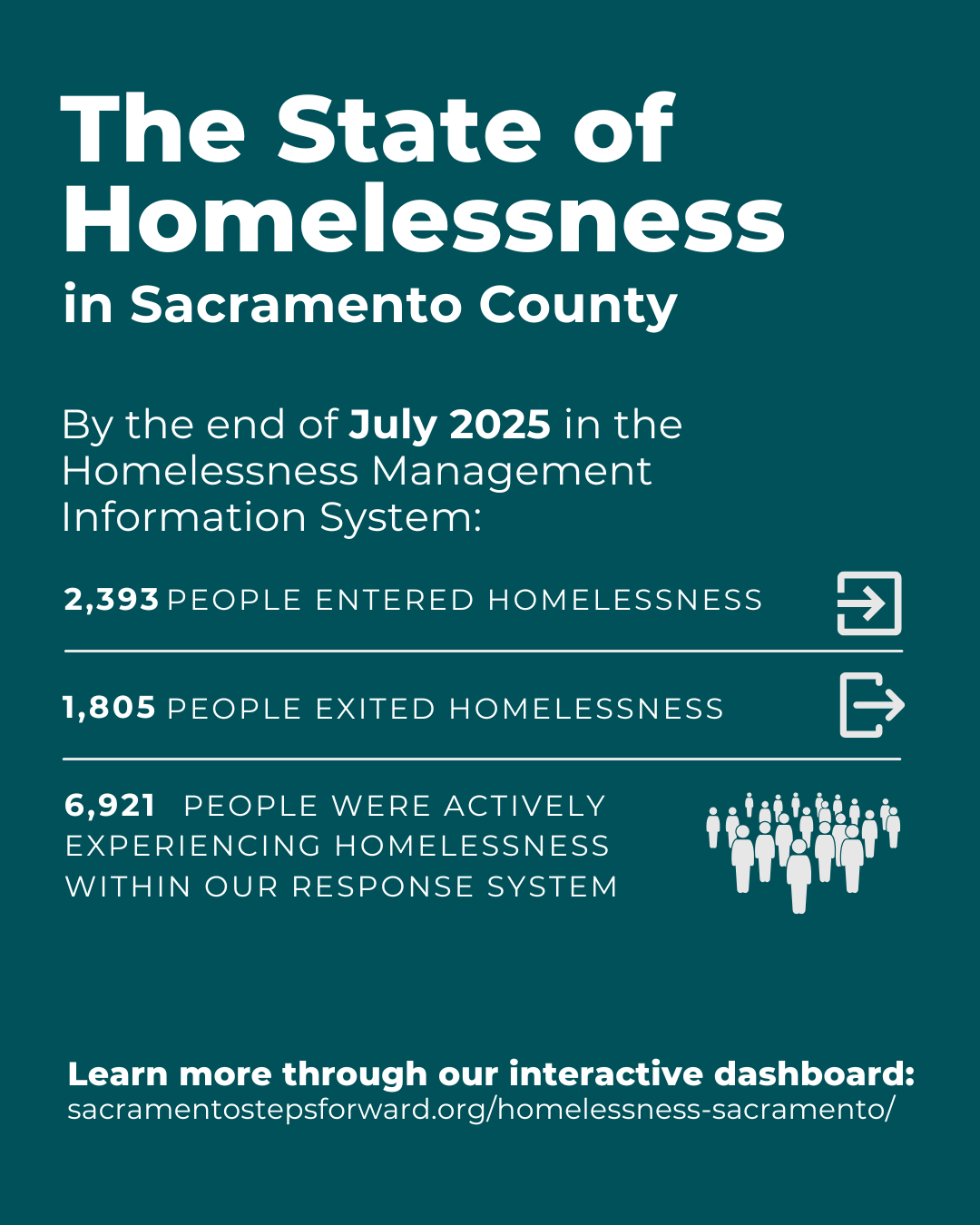
Sacramento's State of Homelessness: July 2025
According to data gleaned from our Homeless Information Management System, by the end of July 2025:
-
2,393 people entered homelessness,
-
1,805 people exited homelessness,
-
6,921 people were actively experiencing homelessness, and
-
588 was the net increase of people experiencing homelessness within Sacramento.
To get the most out of the dashboard, check out the how-to video to discover functions you might not notice at first glance.
| | | |
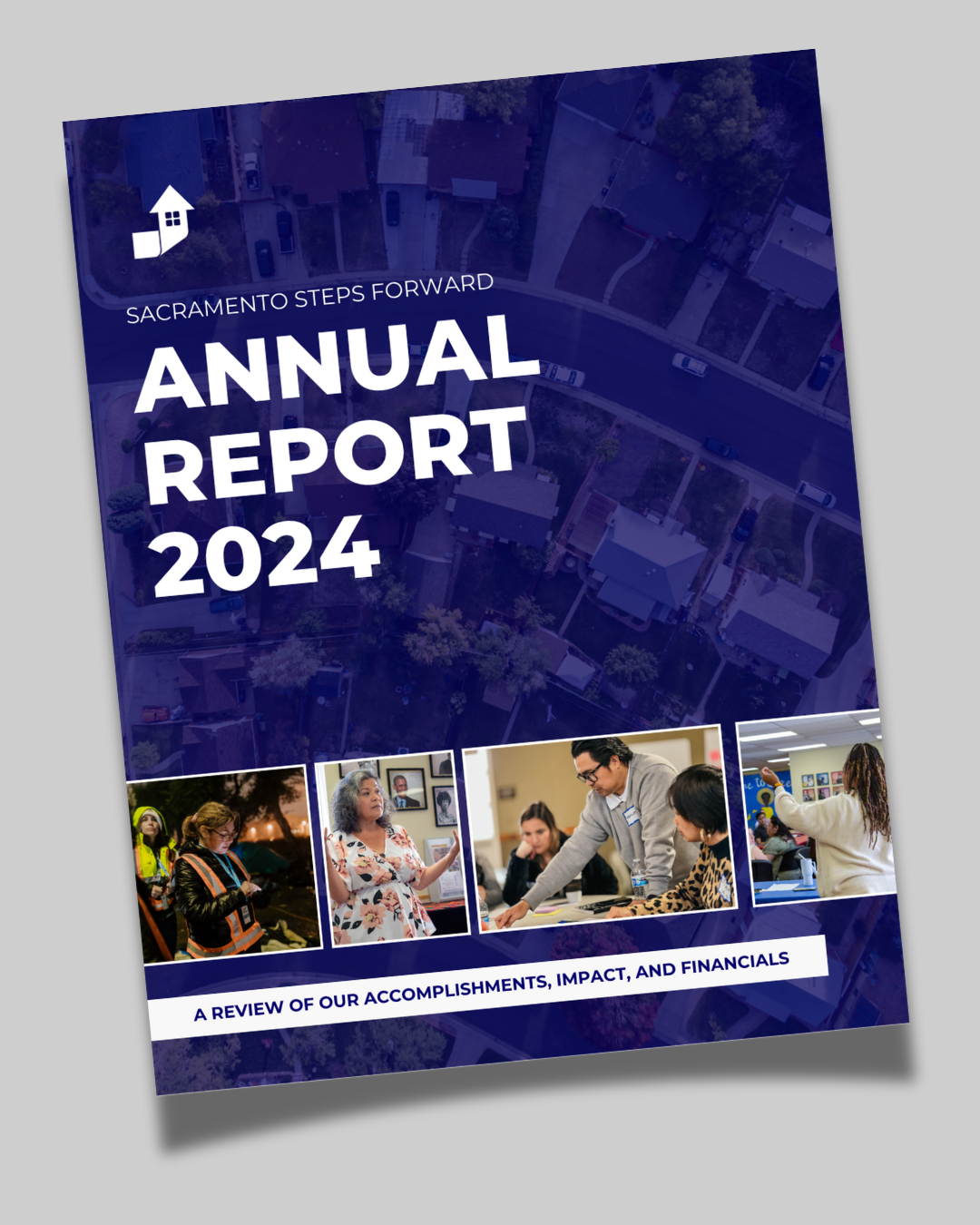
Our 2024 Annual Report: Impact Made Possible by Partnership
“I’m honored to present Sacramento Steps Forward’s 2024 Annual Report, highlighting key programs and impacts.
Collaboration is central to the mission and vision of Sacramento Steps Forward. On the following pages you will read how we unite partners to align strategies, share resources to increase capacity, and coordinate services, all to build a community that has the capacity to prevent and resolve homelessness.
Despite progress in building a stronger homelessness response system, too many in our community still face housing instability, driven by a shortage of affordable housing, rising rents, stagnant wages, and systemic inequities. With fewer public resources and restrictive policies ahead, our region must continue to act together.
Thank you for your partnership.”
Lisa Bates
CEO, SSF
| | | | |
The Path to Her Very Own Apartment
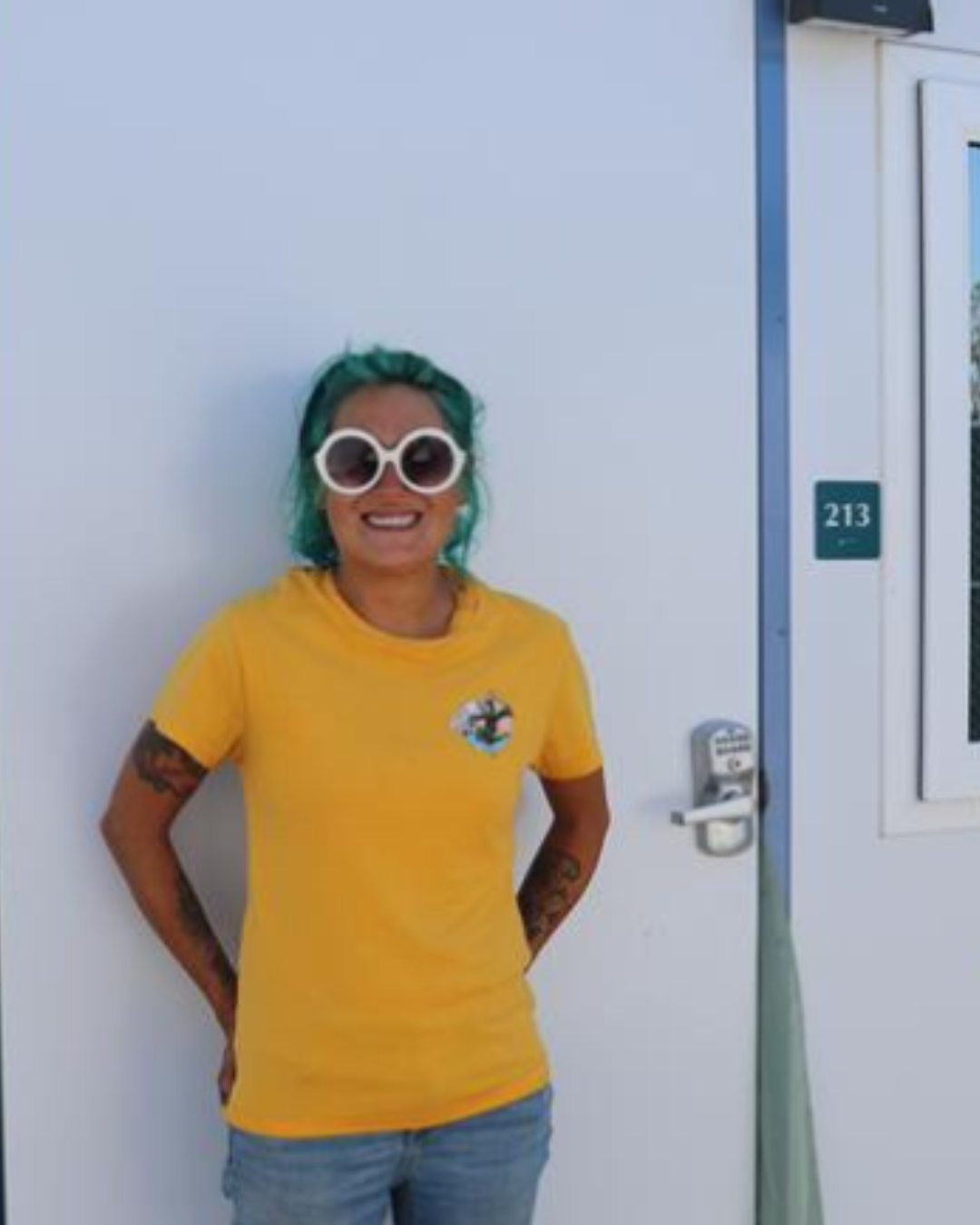
After years of navigating the streets, Krystal recently spent her first night in her very own apartment. Her journey began at the Stockton Blvd Safe Stay, where she and her dog found stability through the Behavioral Health Bridge Housing program. With support from Turning Point and First Step Communities, Krystal was able to heal, prepare for housing, and finally open the door to a place of her own.
Read the full story from Sacramento County below.
| | | | |
City of Sacramento Expands 311
Sacramento has reworked its 311 system, the main channel for residents to flag concerns about homelessness and help the City's outreach reach the right places. Instead of choosing from a list of categories, people now answer a brief questionnaire that guides the request to the right mix of services—whether that’s engagement services, behavioral health support, or other forms of outreach. The result is quicker responses, fewer missteps, and a clearer line of communication between the City and its residents.
| | Opportunities & Information | | |
Share Your Work: Be Featured as a Provider
Help us highlight the great work happening across Sacramento! We’re inviting providers to share their progress, challenges, and opportunities for collaboration to be featured in our upcoming newsletters and other communications. This is a chance to showcase your impact, inspire new partnerships, and help shape the conversation around homelessness response. Fill out the form below to share your story and connect with the broader community.
| | | |
New Grant Opportunity: Ann Land and Bertha Henschel Memorial Fund
The City of Sacramento is now accepting applications for the 2026 Ann Land and Bertha Henschel Memorial Fund. Approximately $190,000 is available to support nonprofit 501(c)(3) organizations with offices or facilities in Sacramento that provide direct aid to residents in need. Awards are up to $12,500, with 20–30 grants distributed annually. Applications are due by September 29 at 2 p.m.
| | | |
2026 Community Health Improvement Grants
Dignity Health has opened the 2026 Community Health Improvement Grants cycle for its Greater Sacramento Market, offering up to $1.1 million in total funding for 501(c)(3) organizations serving Sacramento and Yolo Counties. Grants of $20,000–$100,000 will support 12-month projects beginning in April 2026 that address: access to care and resources, mental health and substance use, and chronic disease prevention and management. Proposals must include at least two collaborating partners and emphasize prevention, unmet needs, and community capacity-building. Full applications are due by 5:00 p.m. PT on Thursday, September 12, 2024. Visit the Community Health Improvement Grants webpage for details or email communitygrantssacramento@commonspirit.org.
| | | | | |