Weekly Digest Number 22 - June 01, 2021 |
|
Please note: The verbal rendition of this week's Summary will be delayed until the PM of Tuesday, June 1st. Thank you for your patience and understanding. |
|
NTSB explains timeline for fatal rail car accident investigation in Newington |
|
The investigation into the rail incident that killed a Seabrook man last week could take as long as two years to complete, according to spokesperson for the National Transportation Safety Board. “The full investigation can take about 12-24 months and a final report will be posted to the NTSB website which will contain a probable cause,” NTSB spokesperson Keith Holloway said in response to questions about the incident that killed Dale Jenkins, 61, of Seabrook.
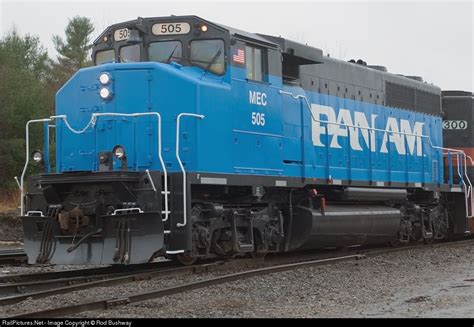
Jenkins, a Pan Am employee, died from injuries he sustained May 19 during an incident at SubCom, an under-sea fiberoptic cable company, where he was pinned between two rail cars at the 100 Piscataqua Drive facility.
Newington police and fire responded and transported Jenkins to Portsmouth Regional Hospital, where he died Wednesday night from his injuries, according to Newington Police Chief Michael Bilodeau.
Holloway noted “an NTSB investigation is a long thorough process and information is not readily available.”
When officers got to the scene Wednesday, they saw that Jenkins had been “pinned between two knuckles of the rail cards,” Bilodeau said. The knuckles are the things that connect the rail cars, Bilodeau said.
He “was conscious and breathing and actually on his cell phone” when officers arrived, and was able to talk to both officers and firefighters, who also responded to the scene, Bilodeau said.
|
|
Cult of the Operating Ratio may be loosening its grip |
|
If you believe that railroads have sacrificed volume growth on the altar of the Cult of the Operating Ratio, then here’s some good news: A Wall Street analyst says major investors are growing weary of cost-cutting and want to see railroads attract more traffic.
Credit Suisse analyst Allison Landry says some institutional investors are shifting away from their obsession with the operating ratio. This is a dramatic turn for Wall Street, which for years has been pushing for ever-lower operating ratios. The result has been that the publicly traded Class I railroads have focused on only the most profitable traffic – and have ignored or intentionally shed less-profitable business.
Four years ago I asked eight analysts whether their investors were concerned that railroads’ earnings growth has been propelled by a combination of rate increases, cost-cutting, and share buybacks rather than volume. Growth in the underlying business of moving freight, I pointed out, was virtually non-existent. Yet not a single analyst said their investors cared that railroad volume peaked in 2006.
Now, it seems, investors are beginning to see Precision Scheduled Railroading as a one-trick pony. “While there is still plenty of room (particularly for the U.S. rails) for margin expansion, at some point, expense cuts will … bottom out; whereby the O.R. will approach a number for which it will not go below,” Landry wrote in an outlook note to clients earlier this year. “The bottom line is that long term rail valuation will be dictated by growth; the margins at which the growth comes; and how much it costs to maintain the asset base.”
|
|
Mass Shooting Leaves 8 Dead at VTA Yard in San Jose |
|
Eight people were killed and one person was in critical condition Wednesday morning after a shooting at a Valley Transportation Authority yard north of downtown San Jose, according to authorities.
The Santa Clara County Sheriff's Office confirmed eight people died, seven at the scene and one at Santa Clara Valley Medical Center in San Jose. One other person was taken to the hospital and was in critical condition, a hospital official confirmed.
The gunman also died at the scene, officials said.
Several law enforcement officials identified the gunman as Samuel Cassidy, 57, an employee of VTA. A motive for the shooting was still under investigation.
|
|
SMART TD LOCAL 17 VICE PRESIDENT PASSES AWAY FROM INJURIES |
|
Brother John Pohle, vice president of Local 17 (Marshalltown, Iowa), passed away in the hospital on May 25, 2021, nearly a month after he suffered a critical injury while working April 30 in Union Pacific’s Marshalltown Yard.
Brother Pohle, a member of the union for more than 13 years and a local officer since 2012, had been in a medically-induced coma in the weeks since the accident amputated his right leg.
LCA-953B had established an online fundraiser for Pohle, his wife and their three sons after Brother Pohle’s injury. That fundraiser remains open to continue to assist them in this time of devastating loss.
The SMART Transportation Division extends its deepest condolences to Brother Pohle’s family, his friends and especially his brothers and sisters of Local 17, which he helped to lead for nearly a decade.
|
|
Amtrak Releases 15-Year Vision, Calls on Congress for $75B in Support |
|
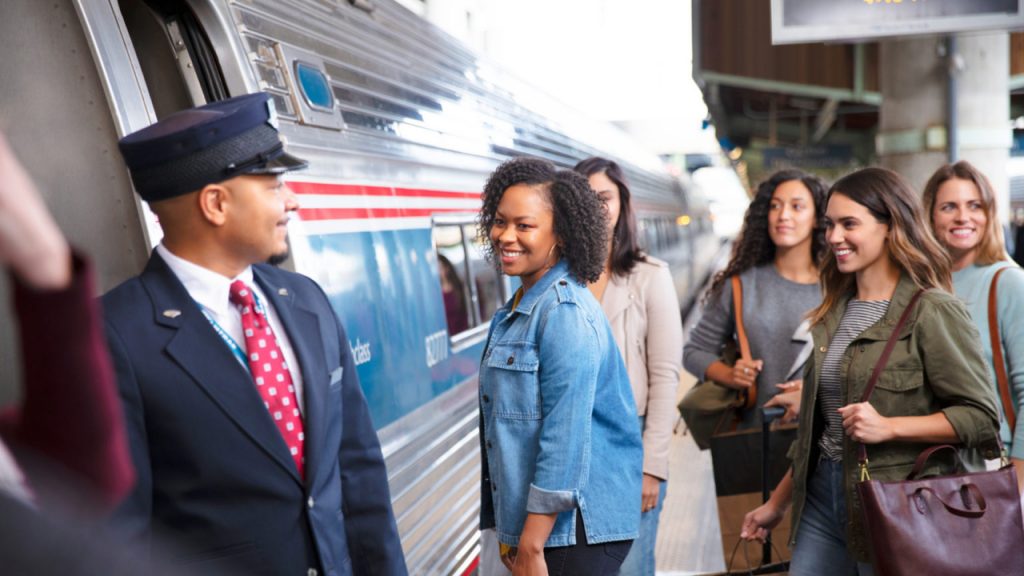
Amtrak has released a report detailing its 15-year vision to improve 25 existing routes, add 39 new routes, and bring service to more than 160 new communities, which CEO William J. Flynn submitted to Congress, along with a letter calling on legislators to consider the railroad’s top priorities to support that vision.
Amtrak’s new report, Amtrak’s Vision for Improving Transportation Across America (download below), is described as “a comprehensive plan to develop and expand our nation’s transportation infrastructure, enhance mobility, drive economic growth and meaningfully contribute to reducing greenhouse gas (GHG) emissions.”
It calls for “improved service in major cities currently underserved by rail like Houston, Atlanta and Cincinnati and new intercity passenger rail service to cities such as Las Vegas, Nashville, Columbus, Phoenix, and Wichita, with increased access for many towns and cities in between.” The plan also creates the potential to expand or improve rail service for 20 million additional riders annually, Amtrak says.
|
|
STB rejects CSX application for review of Pan Am acquisition |
|
The Surface Transportation Board (STB) yesterday announced it rejected CSX’s proposed acquisition of Pan Am Systems Inc. and its short-line subsidiaries because the Class I’s application was considered "incomplete." The board found that the application did not include all of the information necessary for purposes of a "significant" transaction under its regulations, STB officials said in a press release. "The boards decision expresses no conclusions about the ultimate merits of the proposed transaction, expressly permits the applicants to file a revised application and provides guidance on the informational requirements," they said.
The STB's decision can be read here. CSX is proposing to acquire control of seven rail carriers owned by Pan Am Systems Inc. and Pan Am Railways Inc., and to merge six of those railroads into CSX.
|
|
Solutionary Rail Upcoming Webinars not to Miss! |
|
Introducing the Big Sky Passenger Rail Authority and its Work
Dave Strohmaier, Chair of the Missoula Board of County Commissioners and Chairman of the Big Sky Passenger Rail Authority, will share the work and vision of passenger rail expansion efforts in Montana and across the Greater Northwest.
Wednesday, June 2nd
Time: 2pm Pacific / 3pm MT / 4pm Central / 5pm Eastern
|
|
Passenger Rail Service in a Privatized Rail System
Tuesday, June 8th
TIME: Noon Pacific / 1pm Mountain / 2pm Central / 3pm Eastern
|
|
Railway Unions Want Minimum Crew Numbers |
|
Cars are learning to drive themselves on U.S. highways. Unmanned aerial drones are fueling the expansion of e-commerce. Railways have been trying to automate as well, but they are likely to find the Biden administration and Congress standing the way.
If any form of transportation should be on the leading edge of automation, it should be railways. Trains don’t utilize public roads or the skies and therefore have an in-built safety advantage. Many of their systems have been automated for decades. Railways have long used a technology dubbed “deadman’s switches” that stops the train if the engineer becomes incapacitated or even dies.
Democratic lawmakers and the Sheet Metal, Air, Rail and Transportation Workers (SMART) union have repeatedly pushed for mandates to require trains to have a minimum of two workers at all times for safety reasons. The mandate would help the 202,000-member SMART, which has lost almost 5,000 members in the last five years, staunch those losses. But it also would effectively end the industry’s ability to move toward full automation.
President Biden has promised the unions that he will make the rule a reality, though it has yet to begin the process. SMART’s endorsement of Biden was based mainly on his “strong support of the concerns most important to our members, including the need for two-person railroad crews.” The Obama administration had attempted to implement a two-crew minimum as an official rule in 2016, but the Trump administration dropped it three years later.
|
|
Management of In-Train Forces – Challenges and Directions |
|
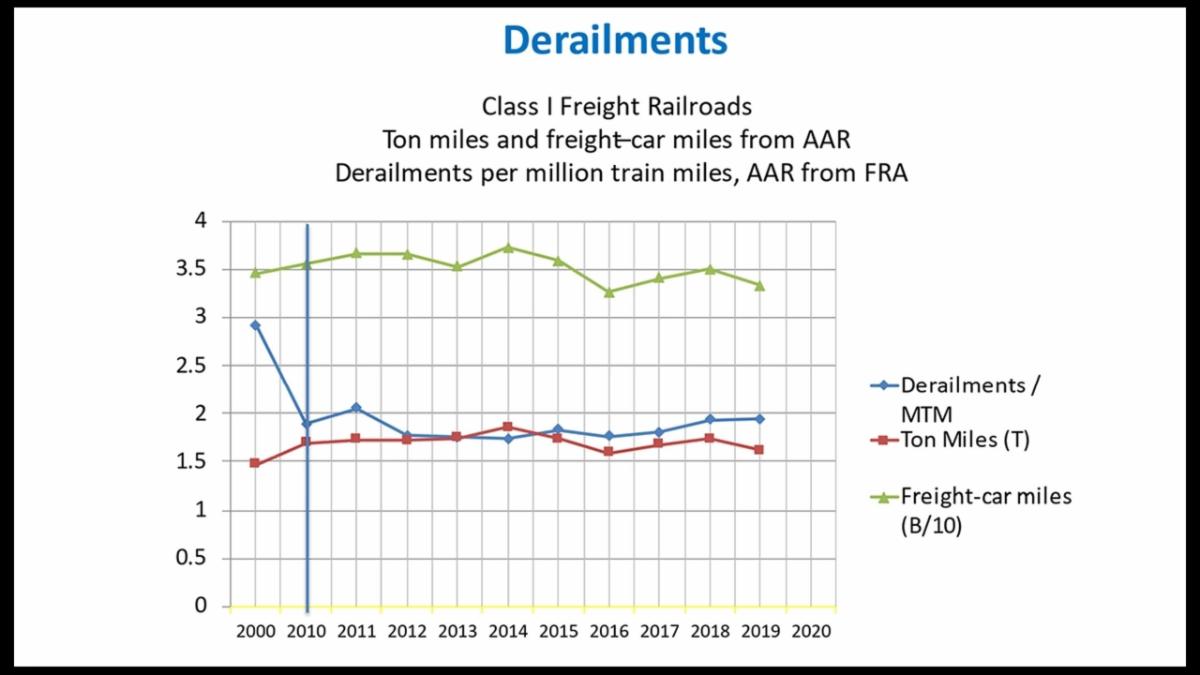
Effective management of in-train forces has always been important for the safety of railroad operations. Although improvements in braking technology have greatly reduced the incidence of run-away trains, accidents involving buff and draft forces within trains continue to occur. The development of advanced tools to assist in ascertaining and managing those forces presents an opportunity to reduce derailments. Better control of risks to persons and property can also yield greater confidence in the ability of the railroads to handle a variety of hazardous materials.
Unfortunately, short-term financial incentives have driven major railroads away from operating strategies that focus on customer needs, and toward strategies that appear to place operating efficiency alone at the top of priority rankings. Among other impacts, this has resulted in decisions to operate fewer and longer trains and to skip train marshalling practices that limit risk.
Initial implementation was not accompanied by appropriate measures to manage in-train forces, even by traditional standards. The railroads are now inching toward implementation of more effective measures, but adherence is not assured. At the same time, supported by government research, the railroads claim to be moving toward fully automated operations.
Review of discrete rail accident data sets bearing most directly on this category of risk indicates that recent safety performance is unacceptable. Trial-and-error learning is likely occurring throughout the Class I railroads, and performance in Calendar Year 2020 seems to have improved (a picture rendered quite blurry by drops in volume in major categories of traffic). However, excess risk continues to generate concrete examples of events that have had the potential for catastrophic consequences.
|
|
Merger update: CP critiques CN plan to divest KCS line; unions file concerns
|
|
CN's plan to sell Kansas City Southern's line between New Orleans and Baton Rouge, Louisiana, is "inadequate" and fails to eliminate anticompetitive issues, Canadian Pacific officials said today.
"CN's commitment to divest this 70-mile line is clear recognition by CN that it and KCS have always been head-to-head competitors, contrary to CN's repeated claims that the combination was ‘end-to-end,'" they said in a statement. "However, CN's commitment does not come close to solving the anti-competitive problems inherent in the proposed CN/KCS transaction."
Meanwhile, four rail labor unions, referring to themselves as the Allied Rail Unions (ARU), have submitted comments to the Surface Transportation Board regarding the potential CN-KCS merger.
The unions expressed concern over the "nonproductive, and potentially destructive, competition" between CN and CP, and the way the two are pursuing a KCS merger.
"As CN and CP compete for KCS they may negate any potential transportation benefits of a consolidation with KCS, and there is a likelihood that innocent bystanders — employees of CP, CN and KCS, and shippers which use those carriers — will pay a price for this exercise in one-upmanship," ARU officials said. "A bidding war has consequences."
|
|
Will Biden Repair Trump's Damage to the NLRB? |
|
One of Donald Trump’s less-documented abuses of power has been his subversion of the National Labor Relations Board. The NLRB was created by Franklin D. Roosevelt as part of the New Deal in 1935 to encourage collective bargaining through the administration of the National Labor Relations Act. This federal law enforcement agency is tasked with investigating allegations of interference with employee rights to representation and prosecuting offenders.
The NLRB is governed by a five-person panel appointed by the President of the United States, with Senate approval, for staggered five-year terms. They oversee twenty-six regional offices and adjudicate cases not resolved locally.
Starting in 2017, Trump created a majority on the Board consisting of anti-union attorneys, with the reverse mandate of discouraging collective bargaining through biased decision making and more importantly, by neutering the Rules and Regulations used by the agency to interpret the National Labor Relations Act.
Joe Biden talks a good game when it comes to unions and backed it up by firing the NLRB’s right-wing General Counsel Peter Robb and appointing Lauren McFerran, the one remaining Democrat on the Board, as its chairman. Unfortunately, these actions remain mostly symbolic, while Trump’s majority retains control until their terms expire. A discussion of their anti-union rulings could fill a book. They’ve overturned key precedents protecting workers’ rights for decades,
|
|
Bipartisan group of senators introduces surface transportation bill |
|
A bipartisan group of senators Saturday announced it is introducing a bill to provide new funding for transportation priorities as Congress debates a broader infrastructure package.
Sens. Tom Carper (D-Del.) and Shelley Moore Capito (R-W.Va.), the top two lawmakers on the Senate Environment and Public Works Committee, along with Sens. Ben Cardin (D-Md.) and Kevin Cramer (R-N.D.) announced a surface transportation reauthorization bill that will be marked up by the panel on Wednesday.
|
|
Editor's Note: This viewpoint from Transportation for America |
|
At Transportation for America, often our efforts to enact policies that actually connect people to jobs and services—not build new roads to nowhere—are stymied by “bipartisanship.” Or what people think is bipartisanship.
To us, bipartisanship isn’t passing transportation policy that just makes our problems worse, even if it undermines Republican and Democratic priorities equally as the status quo approach does. The Senate Environment and Public Works Committee is proposing more of the same. And where this new, bipartisan bill does seek to solve problems, it does so through several new and exciting, but toothless and/or underfunded programs.
Bipartisan legislation should solve problems, not make existing ones worse. And bipartisan transportation policy is possible—just ask the House Transportation and Infrastructure Committee, where freshmen members on both sides of the aisle joined together to pack their reauthorization proposal with programs that would fundamentally improve the federal transportation program.
|
|
Complaints about a labor shortage ignore 5 decades of declining wages |
|
What is a labor shortage, after all? Maybe it's just a shortage of labor at a low wage.
As the American economy reopened, numerous businesses that found it difficult to hire are raising their minimum wages to attract talent. For the better part of five decades, that was not the norm.
While job openings stood at record highs at the end of March, April data showed a sharp deceleration in hiring. Businesses, particularly those in the service industry, said it was hard to find workers despite about 10 million Americans still being jobless.
Republicans quickly blamed the federal supplement to unemployment insurance for the disappointing jobs report, saying the program disincentivized work. Democrats maintained their support for the benefit and pointed to expensive childcare and COVID-19 fears for the shortfall.
|
|
|
|
|
|
|