WEL NEWSLETTER October 2024, Vol. 14, No. 7 | |
|
Dear Kenneth,
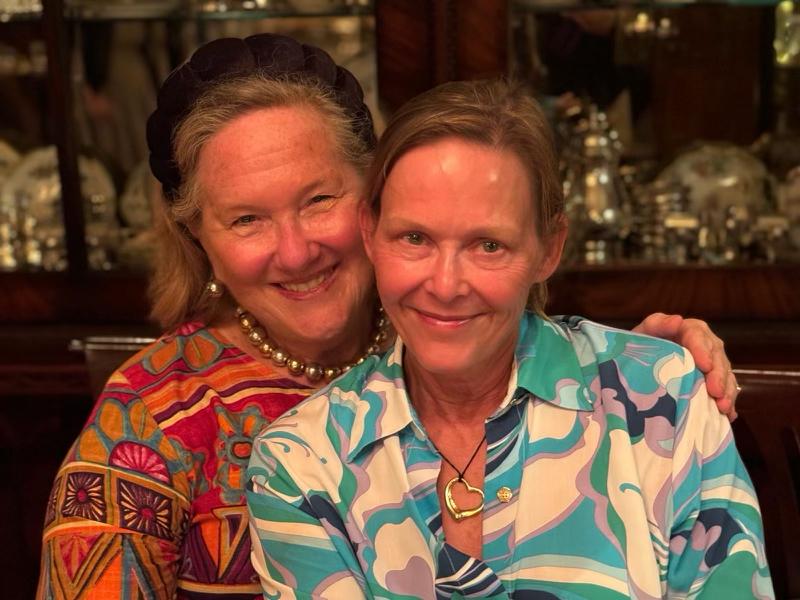
Happy Belated Thanksgiving & Have a Spooky Halloween. I know that you know that I love Halloween, but this year Sammi came home from England for Thanksgiving for the first time in 3 years. It was so much warmer with her here and so perhaps this year Thanksgiving may be better than Halloween! Just this once! Though, we are having a Halloween Party, so the jury is out on this one.
I went to Cayman (yes, during hurricane season!) to give a talk on Predatory Marriages for the local STEP Branch and presented at Ogier for their team as well. I met some great people and had some interesting discussion about elder abuse and predation in Cayman. Abuse and predation is everywhere, and this beautiful Island is no different! The weather was stormy compliments of Helene, but some remote work combined with a couple of warm days on the beach was such a treat. Thankful to the folks in Cayman for making it happen.
I also journeyed to Chicago and participated in a cross-border talk on powers of attorney and guardianship with STEP joining, Kathleen Cunningham, LLB, MPS, TEP, Vancouver, and Shelley Rhoads Perry, JD, TEP, Naples, Fiduciary Associates. It was a very informative and successful cross-border conference -sold out- and well put together by the STEP CANADA-USA Cross-Border Conference Program Committee. Well done!
I also travelled to the STEP Bermuda Conference joining Michael Armstrong, Counsel, FORSTERS LLP, London U.K., for a fun-filled talk on Predatory Marriages. What a fantastic conference in a beautiful place! I had never been to Bermuda and found it a unique island with great atmosphere and gorgeous beaches. All the food I ate was exceptional and the national drink-the Rum Swizzle also a treat! I also was grateful to meet up with a friend from my Bristol law days who was from Bermuda and still lives there.
| |
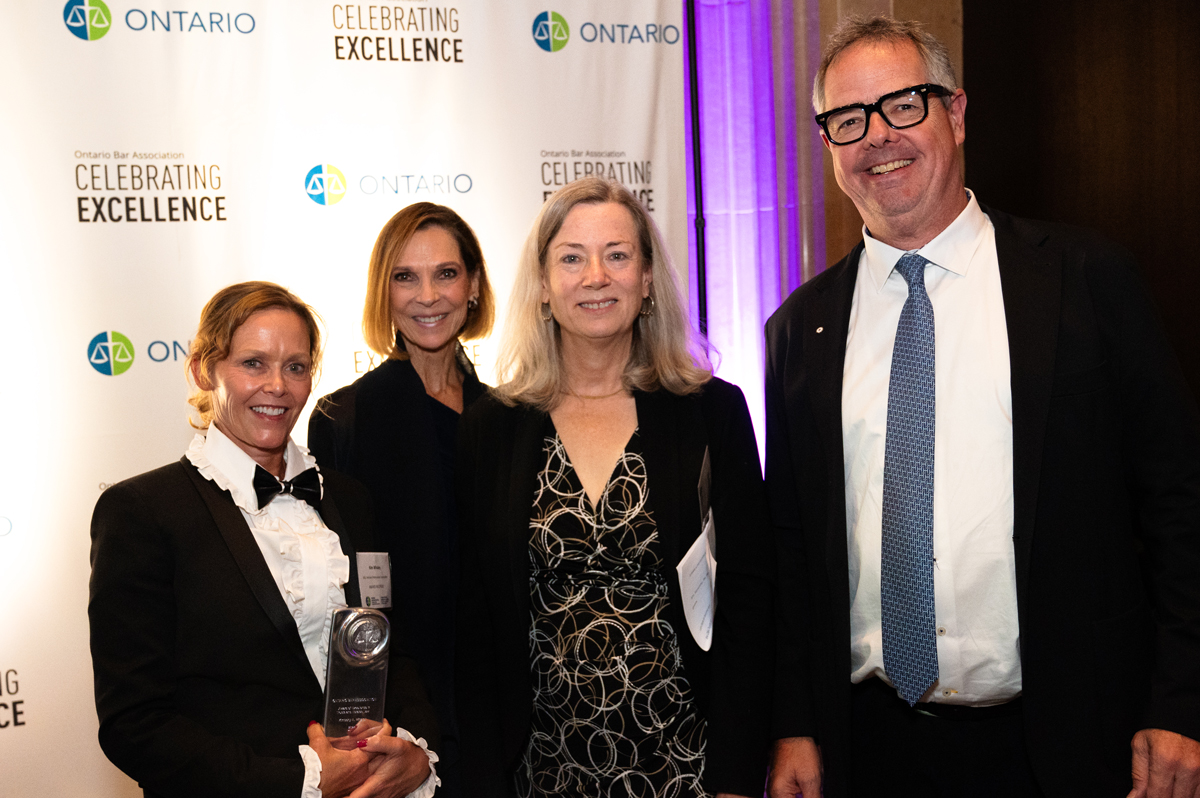
This month, I received the “red” but actually “purple carpet” treatment from the OBA-the Award of Excellence in Trusts & Estates. Thank you to all my friends and colleagues who nominated and supported me both in this wonderful recognition and throughout my career. I am sincerely touched. Thank You to Jan Goddard, Hilary Laidlaw, and Ian Hull for their kind and generous words and sentiments as well as for a perfect evening. Thank you Suzana, Ian, and the Hull Team, Deb & Ken for all the purple! The lights, flowers, cookies, Kimtini’s, and the signed signature board were over the top. It was quite overwhelming to be given so much love and attention. The WEL & Hull team organized a little pre-party for firm members at the King Edward beforehand which was such a celebration. I was given gifts: flowers, bottles, cookies, jewellery, and sharing a once in a lifetime night with some of my favorite people. A Big Thank You Everyone! | |
|
I also spoke on 2 days of the Osgoode Certificate in Estate Litigation, LSO on an ethics panel, and finally, STEP ITALY this month on issues touching our communities near and far.
On my reading update: Sammi gave me a copy of THE GOLDEN MOLE And Other Vanishing Treasure, By Katherine Rundell to read. I loved this unique piece of work divided into chapters named after certain living creatures. My favorite chapters were The Wolf, The Seahorse, and The Crow. This book is a little bit of history, a little bit of human over-consumption and destruction of our habitat and our collisions with living things, oh, and art. It is really an impressive, enjoyable read-highly recommend! Fittingly, a portion of the proceeds from book sales go to climate change charities. She also thrust another upon me which just made it in at the last minute, SECOND FIRST IMPRESSIONS, BY SALLY THORNE.
| |
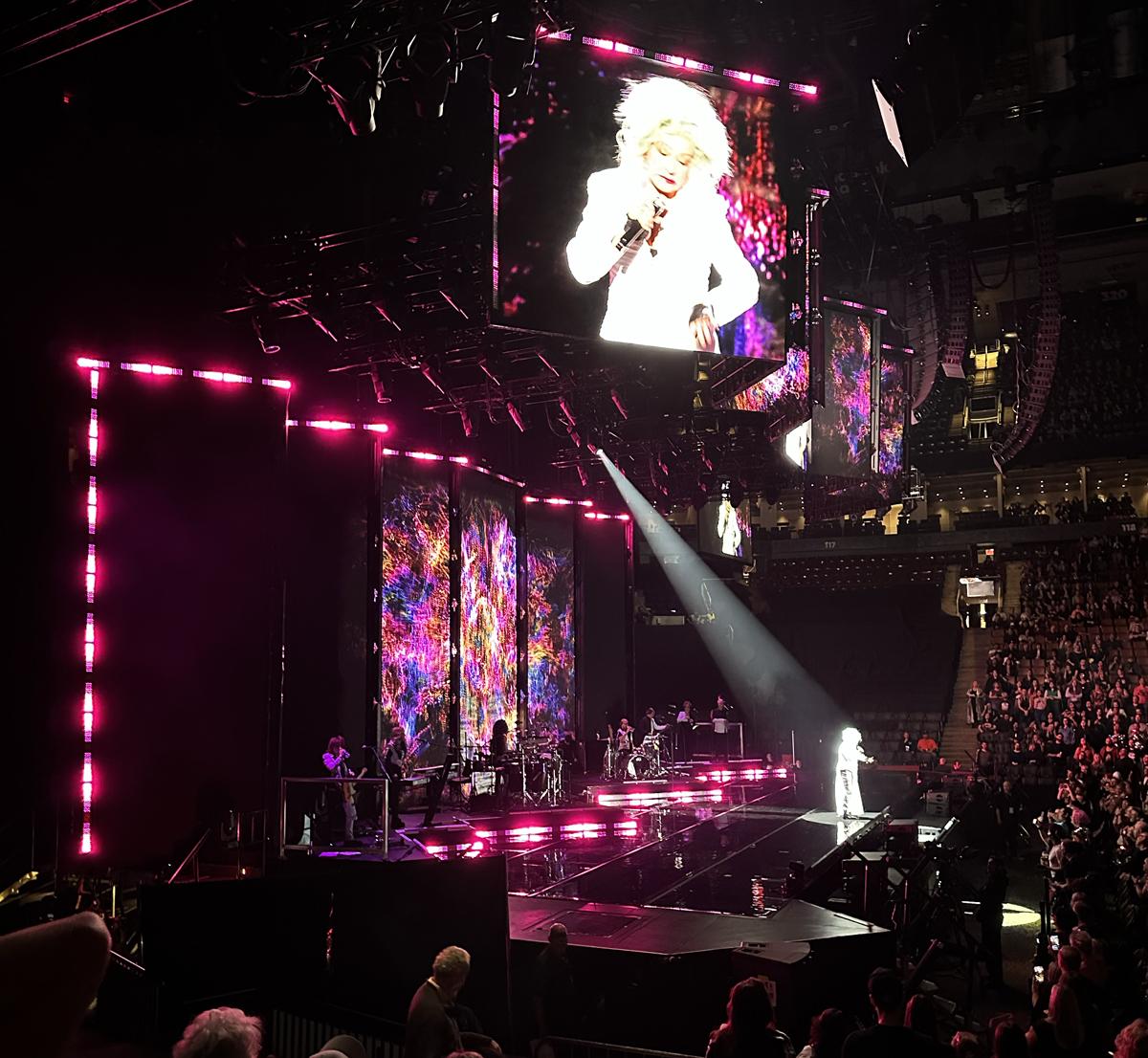
Finally, on a recap of this months activities, I went to a Girl’s Anglican school (true story), and we went to chapel every morning. There were announcements for the day, a talk by Reverend George Arnold Ruskell, hymns, and reflection, but on the last day of school in Grade 13, we blasted (likely against the rules) Cindi Lauper-GIRLS JUST WANT TO HAVE FUN. I went to see Cindi (American singer, songwriter, actress, and activist) at the Air Canada Center, she is now 71, and as funny and entertaining as ever (if not more so) and she was belting out that tune! It was a nostalgic experience and great to see her living a healthy life and still rocking a stadium full of fans! | |
|
Next month is equally busy with presentations, client work and a little learning at Harvard with Bryan… “like its hard” (for anyone who does not know what I am referring to-think Legally Blonde!).
Still looking for senior litigation lawyers with litigation experience drafting and attending court in a busy practice. Contact me if you know anyone.
See you next month,
As ever, enjoy the read
Kim
| |
1. KIMBERLY WHALEY’S OBA AWARD OF EXCELLENCE IN TRUSTS & ESTATES LAW | |
Kimberly Whaley was grateful to have received the Ontario Bar Association (OBA) Award of Excellence in Trust and Estates Law. The Award was created to recognize exceptional contributions and/or achievements by members of the OBA to the area of wills, trusts and estates. Kim was honoured at the Grand Banking Hall in Toronto on October 15, 2024.
See link for more details: https://www.oba.org/About-US/About-Us/Awards/Section-Awards/OBA-Award-of-Excellence-in-Trusts-and-Estates-Law
| |
2. JOHN POYSER RECIPIENT OF THE WIDDIFIELD AWARD FROM THE OBA | |
John Poyser was elated to be the recipient of the Widdifield Award from the Ontario Bar Association on October 15, 2024, for his co-written article, “The Impact of Alcoholism on Testamentary Capacity, Installment One - The Legal Picture and Installment Two - The Medical Picture and Practice Recommendations” published in volume 42 of the Estates Trusts and Pension Journal. The Award was presented to the author/authors of the best original article in each volume of the Estates Trusts & Pensions Journal. John co-wrote the article Ryan Gorlick, and the late Dr. Arlin Pachet.
See link to learn more about accessing the Estates Trusts and Pension Journal: https://www.thomsonreuters.ca/en/westlaw-canada/estates-trusts-and-pensions-journal.html
| |
3. STEP CANADA-USA 2024 CROSS-BORDER CONFERENCE | |
Kimberly Whaley had the opportunity to speak on Capacity Planning at the STEP Canada-USA 2024 Cross-Border Conference 2024. Kim was joined by Kathleen Cunningham and Shelley Rhoads Perry, in a session which focused on deceased persons domiciled in either the USA or Canada who have bank accounts and or real property in Canada or USA. The Conference was held in Chicago, IL on October 6, and concluded October 8, 2024.
Link to WEL materials
| |
4. STEP BERMUDA CONFERENCE | In mid October, Kimberly Whaley had the opportunity to present at STEP Bermuda, alongside Michael Armstrong from Forsters LLP. Kimberly and Michael presented on Predatory Marriages, focusing on the requisite decisional capacity to contract in marriage, examine what predatory marriages are and their consequences, and a review of court & legislative treatment in Bermuda, the Caribbean, Canada, and England & Wales. | |
5. COLLOQUIUM LEGAL EDUCATION CONFERENCE | |
Bryan Gilmartin spoke at and helped organize the Colloquium Legal Education Conference in Sudbury, Ontario. The Conference, which covered an array of topics, covered Estates on October 18, 2024, which Bryan not only chaired, but held a discussion on Navigating the Substitute Decisions Act, including the Role of Section 3 Counsel.
Link to WEL materials
| |
6. OSGOODE ESTATE LITIGATION CERTIFICATE PROGRAM | |
Kimberly Whaley and Bryan Gilmartin spoke at the Osgoode Estate Litigation Certificate Program on October 21, 2024. Bryan presented on Costs in Estate Litigation, and Kimberly on, Finding Missing Beneficiaries.
Link to WEL paper: Finding Missing Beneficiaries
Kimberly further presented with Osgoode on October 25, 2024, on Capacity Proceedings, with a focus on Guardianship, Power of Attorney Disputes, Acting for Children and OCL considerations and Capacity and s. 3 Counsel under the Substitute Decisions Act (SDA).
Link to WEL presentation: Capacity Proceedings
Link for more details on the program: https://osgoodepd.ca/wp-content/uploads/2024/03/2024-Certificate-in-Estate-Litigation-Brochure.pdf
| |
7. LSO TRUSTS AND ESTATES SUMMIT | |
WEL Partners was thrilled to have Bryan Gilmartin, Nima Hojjati, and Kimberly Whaley participate in this year’s Law Society of Ontario Trusts and Estates Summit. On day one of the Summit, Bryan spoke on the conflicts of law in guardianship proceedings, and Kim spoke on an Ethics Panel with Ian Hull, and Suzana Popovic-Montag. On day two, Nima was a panelist on the topic of complex capacity issues regarding granting and acting on powers of attorney, which was held on October 23, 2024.
Link to WEL presentation
| |
8. STEP ITALY MENTAL CAPACITY SIG SEMINAR | On October 23, 2024, Kimberly Whaley had the privilege of speaking at STEP Italy Mental Capacity SIG Seminar, in Milan, Italy on Predatory Marriages with Martina Moscardi of Caldara & Associates. Kimberly was further accompanied by Avvocato Marco Accolla (Studio Legale Accolla, Milan), Dott. Giuseppe Mannella (Busani Quaggia & Partners, Milan), Avvocata Maria Cristiana Felisi (Maisto e Associati Firm, Milan) and Avvocato Giovanni Briola (Studio Legale Briola, Milan). | |
9. WHAT WE’RE WATCHING: FISK | |
By: Joanna Weiss
Fisk, the Australian comedy series that centers around a small Melbourne law firm specializing in wills and probate law delightfully captures quirky lawyers, eccentric clients, and small-firm culture. It is wonderfully relatable and wildly funny. Reminiscent of The Office and the Australian workplace comedy series Utopia (internationally titled Dreamland), the show portrays Estates-related solicitor work in a charming and heartwarming way. It is well worth the watch. Seasons 1 & 2 are currently streaming on Netflix. Season 3 just started airing in Australia.
| |
10. A MESSAGE FROM MARK HANDLEMAN, WEL PARTNERS | After five years serving the Consent and Capacity Board as its most frequently sitting Member, I am returning to the practice of law, same Practice areas as before: appearances before the Consent and Capacity Board, before the Health Services Appeal Review Board and the Health Professions Appeal Review Board; advice about involuntary detention, Community Treatment Orders and The Mental Health Act generally; advice about substitute and informed consent to treatment; treatment decisions for, and disputes about treatment for, incapable persons; disputes about treatment for incapable persons and The Health Care Consent Act generally, and; Wills and Powers of Attorney, particularly for persons of diminished and diminishing capacity. | |
11. IN MEMORIAM – DR. ARLIN PACHET (1971-2024) | |
Dr. Arlin Pachet passed away on October 5, 2024, at the young age of 53, after a twenty-three-year career as a neuropsychologist. He generated capacity assessments across multiple Canadian provinces while working with the medical and legal communities. He had completed over 1900 capacity assessments by the time of his death. Based primarily in Calgary, he provided services through Pachet Assessment and Rehabilitation Services and, more recently, worked as a principal and provided services through The Capacity Clinic, out of Toronto. He was a regular expert witness. He was also extensively involved in training lawyers, doctors, and social workers in how to conduct strong and useful capacity assessments, giving more than 2000 training sessions. He was an accomplished author as well, most recently recognized by the presentation of the Widdifield Prize by the OBA. The lawyers at WEL Partners are grateful for having had the opportunity to collaborate with Arlin in litigation, as co-authors, and on the podium.
He is survived by his wife, Jenny, and two children, Leah and Emmet.
| |
12. JOHN POYSER PRESENTATIONS THIS MONTH | John Poyser gave a series of presentations on farm-based estate litigation to lawyers and accountants engaged in estate planning for farm families as part of an in-person lecture series. The series was presented by Agriculture Update, a western Canadian organization, in Saskatoon on October 21, 2024, Edmonton on October 23, Red Deer on October 24, and Calgary on October 25. A “virtual only” session is set for October 23. | |
CONGRATULATIONS TO ALBERT OOSTERHOFF ON HIS LATEST EDITION OF “OOSTERHOFF ON TRUSTS” | |
This month, WEL Partner’s very own professor Albert Oosterhoff's, “Oosterhoff on Trusts, 10th Edition” was published by Thomson Reuters, co-written with Professor Mitchell McInnes and Professor Robert Chambers. “Oosterhoff on Trusts" provides students, practitioners, and judges with a clear structure for understanding the basic law of trusts, while also providing further insight into the complexities of trust law. It is a testament to the longevity and seminal nature of Albert’s book that it is regularly quoted in Canadian courts and read by law students throughout Canada. “Oosterhoff on Trusts” was first published over four decades ago and the latest edition explores the developments that have occurred in trusts law since 2019. Many congratulations to Albert on another fantastic milestone. | |
HOFFSTEIN BOOK PRIZE: OBA’S TRUSTS & ESTATES LAW SECTION AWARDS | |
WEL Partners wishes to congratulate Cecile Ko Brock of McCarthy Tétrault LLP, on receiving the award for the Hoffstein Book Prize from the OBA. The Hoffstein Book Prize was created to recognize contributions and/or achievements by younger members of the Ontario Bar Association to the area of wills, trusts and estates. Congratulations again, Cecile! | |
FOUNDATION’S WOLFE GOODMAN AWARD: OBA’S TRUSTS & ESTATES LAW SECTION AWARDS | |
WEL Partners wishes to congratulate Baruch Wise of Gardiner Roberts LLP for receiving the OBA Foundation’s Wolfe Goodman Award. The Award was established in honour of the late Wolfe Goodman's many accomplishments and contributions to Estates and Trusts law. The Award recognizes annually the best article or case comment published in the Estates, Trusts and Pensions Journal by a Canadian lawyer who has been called to the Bar for six years or less. Congratulations again, Baruch! | |
GABRIELLA BANHARA’S ARTICLE IN THOMSON REUTERS’ ESTATES TRUSTS & PENSION JOURNAL | |
Congratulations to WEL Partners’ Gabriella Banhara on her article in Thomson Reuters’ Estates Trusts & Pension Journal, titled “A Gift, Trust, or Joint Tenancy? Understanding the Presumptions of Advancement and Resulting Trust and Principles Associated with Joint Tenancy”. Gabriella’s article can be found in Volume 43 Number 4 of the Thomson Reuters’ Estates Trusts & Pension Journal. | |
CANADIAN LAWYER’S TOP 25 MOST INFLUENTIAL LAWYERS IN CANADA | |
WEL Partners wishes to congratulate all those who have been awarded winners for the 15th edition of Canadian Lawyer’s Top 25 Most Influential Lawyers. The award celebrates the most deserving legal professionals making immense contributions nationwide through their leadership in 2024. View recipients | |
(i) APPLICATION BY SOLE EXECUTOR FOR HIS OWN REMOVAL | |
|
By Albert H. Oosterhoff
1. Introduction
It is not common for an executor to ask the court to remove him from his office, but it does happen. If the applicant is the sole executor, the court will normally insist that he makes provision for a substitute to be appointed. Only in exceptional cases will the court remove a sole executor without a provision for a substitute. In Hill v Hill[1] the court discusses the law on this issue
2. Facts
The testator died in 2009, survived by his two children, Bryan and Solange, and his five grandchildren, Devon, Aaron, Bryan Jr, George, and Jordan. He made specific bequests to various persons. The testator left his house in Markham to his common law wife, Celia. He left his house in England in trust for his grandson Devon until he turned 25 and directed that the house then be sold and the proceeds paid to Devon. He held a number of other properties in the Caribbean. He devised his land known as the Pickard Estate on the Island of Dominica to be divided among a friend, his neighbour’s son, his grandchildren, and Solange. He devised his house known as Grand Savannah, also on the Island of Dominica to his son Bryan, and the land he owned on the Island of Antigua to his grandson Aaron. He left the residue of his Estate equally to his children, Bryan and Solange.
The Will appointed three executors. Two of them, his brother Rowland and Celia obtained probate in 2011. In 2012 Celia made an application for dependants’ support. The parties settled the application, which was approved by the court in 2013. The Minutes of Settlement noted that there were insufficient assets in the Estate to satisfy all the bequests and devises and to pay Celia’s claim. The order approving the settlement removed Celia as Executor, directed that Rowland would be discharged from his obligation to pass his accounts, except to demonstrate that he complied with the Minutes of Settlement and his administrative obligations from the date of the order to the wind-up of the estate. The order directed Rowland to sell the house in England to pay the estate’s liabilities, with unspent monies to be paid into court and paid to Devon when he turned 18.
Rowland, who was 75 years old and was not a beneficiary under the will, brought this application for an order removing himself as executor and seeking the court’s directions regarding his informal accounting. The testator’s son Bryan opposed the application. The application was supported by an affidavit from a medical doctor which stated that the protracted duties of administering the estate caused Rowland severe emotional distress and that he was diagnosed with severe anxiety and depression. The application was also supported by the Applicant’s affidavit in which he described the deleterious effect the administration of the estate, as well as family disharmony, had on his health. In his opinion, he would not be able to continue the administration. Among other things, he noted that the beneficiaries have been disinterested in the administration, even though he sought their engagement. He waived compensation for acting as executor but did not provide any suggestions for the appointment of a substitute. Bryan disputed the Applicant’s assertion that he had tried for years to engage the beneficiaries and to seek their positions and views. He also objected to the Applicant’s request to discharge him from his duty to provide a formal accounting and insisted that only a formal accounting would suffice.
The Applicant did provide an informal accounting consisting of extensive documentary evidence about the estate’s assets and their value.
3. Analysis and Judgment
Justice MD Faieta began his analysis by noting that removing a sole executor without the appointment of a replacement is highly unusual. He relied on Gonder v Gonder Estate,[2] which stated that the retiring executor ordinarily has the obligation to locate a replacement, and that removal of an executor without the appointment of a replacement can happen only when no other option is available. It went on to state that to ensure the proper administration of an estate the court has an inherent jurisdiction to make provision for a replacement by ordering an appropriate mechanism to locate a replacement.
His Honour accepted the fact that professional trustees would be unwilling to accept an appointment of substitute executor, since the Estate was complex and lacked funds. He concluded that the Applicant, not having created the problem, was not required to sacrifice his health to administer the Estate. He suggested that the parties ought to explore an arrangement to vary the Will. Meanwhile he adjourned the application to 10 September 2024, at which time an order would be issued to permit the Applicant to resign on 30 September. Meanwhile, he directed the Applicant to ask the beneficiaries to provide their views about who should be appointed as substitute executor and on any other issues related to the administration of the estate. He expressed the hope that this may lead to an exploration of a deed of arrangement to vary the will and an offer from one of the beneficiaries to act as executor.
His Honour also ordered that the Applicant provide an informal accounting as contemplated in an endorsement by Sanfilippo J approving an amendment to the Application in May 2023.
--
[1] 2024 ONSC 3023.
[2] 2010 ONCA 172.
| (ii) ENGLISH WILL RECTIFICATION CASE | |
|
By Albert H. Oosterhoff
1. Introduction
In the past courts took a very strict approach when asked to rectify a will because of drafting omissions and errors. They insisted on clear certainty about what the testator intended,[1] and often rejected extrinsic evidence that explained the omission or error.[2] However, later cases have taken a more lenient approach. They require only a ‘reasonable inference if not necessary implication’ and a ‘reasonable certainty’.[3] Consequently, it is now fairly common for an Ontario court to grant an order rectifying a will for a number of reasons, including a failure to carry out the testator’s instructions.[4] The courts usually refer to and rely on the following statement of Justice Belobaba in Robinson Estate v Robinson.[5]
Where there is no ambiguity on the face of the will and the testator has reviewed and approved the wording, Anglo-Canadian courts will rectify the will and correct unintended errors in three situations:
(1) Where there is an accidental slip or omission because of a typographical error or clerical error;
(2) Where the testator’s intentions have been misunderstood; or
(3) Where the testator’s instructions have not been carried out.
English courts have not had to rely on the common law since Parliament enacted the Administration of Justice Act 1982,[6] section 20(1) of which provides:
If a court is satisfied that a will is so expressed that it fails to carry out the testator’s intentions, in consequence –
(a) of a clerical error; or
(b) of a failure to understand his instructions,
it may order that the will shall be rectified so as to carry out his intentions.
Alberta and British Columbia have enacted similar legislation.[7] It truly beggars’ belief that Ontario has not engaged in a full revision of the Succession Law Reform Act,[8] and for that matter of not enacting the Uniform Trustee Act, 2012.[9]
A recent English case, Angelova v Kershaw,[10] a decision of Master Clark, addresses the issue and applies the English Act mentioned above.
2. Facts
The testator died in December 2020, having made his Will some six months earlier. Gorvins LLP, a firm of solicitors, drafted the will. It was complex and included a discretionary trust (‘the BCT trust’). Clause 15.11 of the Will named several beneficiaries of this trust. Subclause a. named ‘My said wife Nina Angelova provided that we were married at the date of my death’.
Nina was the claimant, and she sought an order that subclause a. be rectified to read, ‘Nina Angelova, whether or not we are married at the date of my death’. The Gorvins Will file was in evidence at the initial hearing but there was no evidence from the solicitor who drafted the final version of the will, Christine Thornley. The Master granted an adjournment to permit counsel to obtain evidence from Ms. Thornley. In her witness statement Ms. Thornley stated that she had no recollection of the matter and relied entirely on the Gorvins’ Will file. In April 1920 she took over from the previous solicitor at the firm who had been dealing with the Will and who had become ill. Thereafter she had several communications with the testator by telephone and email. These included a lengthy telephone conversation on April 22, 2022. Then, based on those communications, she sent him a revised draft will, a draft Letter of Wishes (‘LoW’) regarding the discretionary trust, and a document explaining the Will. She had removed the condition that Nina be married to the testator from the Will and the LoW. Later, the testator asked Ms. Thornley in an email whether it mattered if he were married to Nina, but she was not a UK national. It seems that he was concerned about the effect of domicile on the spouse exemption for inheritance tax. However later in May he sent Ms. Thornley a revised plan for beneficiaries under the discretionary trust. In it he named three beneficiaries, including Nina, with the notation for each, ‘As if married’. Ms. Thornley then prepared revised drafts intended as the final versions. However, she changed the gift to Nina in clause 15.1.a. to contain the words, ‘provided that we were married at the date of my death’. In contrast, the revised LoW stated, ‘Regardless as to whether or not we are married’.
The final draft of the will clearly did not reflect the testator’s instructions, and Ms. Thornley admitted as much in her witness statement, as did Gorvins. The testator signed the revised version of the will.
3. Analysis and Judgment
The Master reviewed the law on will rectification by quoting section 20(1) of the statute, reproduced above. On the question of the nature of a clerical error, the Master referred to Bell v Georgiou[11] in which Blackburne J stated at para 8:
The essence of the matter is that a clerical error occurs when someone, who may be the testator himself, or his solicitor, or a clerk or a typist, writes something which he did not intend to insert or omits something which he intended to insert. … The remedy is only available if it can be established not only that the will fails to carry out the testator’s instructions but also what those instructions were.
In Marley v Rawlings,[12] Lord Neuberger described this as, ‘The best judicial summary of the effect of the cases so far decided on section 2(1)(a)’.
The Master dismissed the arguments of the defendant executors, holding: (1) that the testator had not read the Will with care and attention to the details; (2) he must have assumed that Ms. Thornley had given effect to his instructions; (3) while his intentions changed in a number of respects, they did not change after his telephone conversation with Ms. Thornley on 22 April 2020; (4) it cannot be inferred that the testator would have disregarded the clear inconsistency between the Will and the LoW had he noticed it; and (5) the fact that he had the draft Will for some time before he executed it is not proof that he noticed the fact that the Will failed to reflect his instructions.
Accordingly, the Master allowed the application and made an order rectifying the will in the terms requested by Nina.
--
[1] See, e.g., Re Craig Estate (1978), 149 DLR 3d 483, 2 ETR257 (Ont CA).
[2] See, e.g., Re MacDonnell, 1982 CarswellOnt 606, 133 DLR 3d 279 (CA).
[3] See, e.g., Re Freeman Estate, 1975 CarswellNS 464, 58 DLR 3d 541 (NSSC).
[4] See, e.g., Daradick v McKeand Estate, 2012 ONSC 5622; Robinson Estate v Robinson,; Bank of Nova Scotia Trust Company v Haugrad, 2016 ONSC 8150 Kurt v Kurt and Sullivan, 2023 ONSC 6599; Gorgi v Ihnatowych, 2023 ONSC 1803, affirmed sub nom Ihnatowych Estate v Ihnatowych, 2024 ONCA 142.
[5] 2010 ONSC 3484, para 24 affirmed 2011 ONCA 493.
[6] 1982 (UK), c 53.
[7] Will and Succession Act, SA 2010, c W-12.2, s 39; Wills, Estates and Succession Act, SBC 2009, c 13, s 59.
[8] RSO 1990, c S.20.
[9]https://www.ulcc-chlc.ca/ULCC/media/EN-Uniform-Acts/Uniform-Trustee-Act_1.pdf. Both New Brunswick and Alberta have enacted this Act: Trustees Act, SNB 2015, c 21; Trustee Act, SA 2022, c T-8.1.
[10] [2024] EWHC 1830 (Ch).
[11] [2002 EWHC 1080 (Ch).
[12] [2014] UKSC 2, para 71.
| |
(iii) CASE SUMMAY: KOZIEY v. KOZIEY | |
|
By Chhavi Monga
KOZIEY v. KOZIEY, 2024 MBKB 5
Introduction
In the case of Koziey v. Koziey, the Manitoba Court of Appeal addressed a dispute between Peter Koziey and his son, Kevin Koziey, regarding the ownership of a residential property on Waterloo Street in Winnipeg. The key issue was whether Peter’s transfer of property to joint ownership with Kevin constituted a gift or a trust arrangement intended to benefit Peter until his death. The court ultimately upheld the original ruling, finding that the transfer was indeed a gift to Kevin.
Background
Peter Koziey purchased the property, known as Waterloo, in September 2004 and registered it solely in his name. In 2007, he transferred the title to himself and Kevin as joint tenants. This transfer raised questions about Peter's intentions—whether he intended to gift the property to Kevin or if Kevin was merely holding it in trust for Peter’s benefit.
Peter argued that the transfer was part of his estate planning, asserting that Kevin's interest was a trust meant to pass to him only upon Peter's death. To support his claim, Peter presented handwritten notes dated September 2006, which he believed demonstrated his intention to create a trust. However, Kevin contested this interpretation, asserting that the transfer was a gift.
Key Issues in the Case
- Trust vs. Gift: The court needed to determine whether the transfer of the property was a completed gift or a trust arrangement.
-
Admissibility of Evidence: The relevance of Peter’s handwritten codicils and whether they could be admitted as evidence of his intention. Among other words, these notes include the words “Held in Trust for Kevin”. Kevin’s objection is that these notes constitute prior consistent statements which are generally inadmissible because of their self-serving nature and “oath helping” qualities.[1]
- Use of Post-Transfer Evidence: The court evaluated whether evidence of events occurring after the transfer could inform Peter’s intentions at the time of the transfer.
Court's Findings
The court's analysis focused on several key points:
-
Peter’s Handwritten codicils: The trial judge found Peter's handwritten notes were not admissible as strong evidence because they were copies, not “original documents”.[2] Although they could be considered for limited purposes, the judge determined they did not substantiate Peter’s claims about the nature of the transfer.
Peter argues that these notes are admissible based on s. 58(1) of The Manitoba Evidence Act, C.C.S.M. c. E150, which provides as follows:
58(1) In any legal proceedings where direct oral evidence as to a fact would be admissible, any statement made by a person in a document and tending to establish that fact is, on production of the original document, admissible as evidence of that fact,
(a) if the maker of the statement either
(i) had personal knowledge of the matters dealt with by the statement; or
(ii) where the document in question is, or forms part of, a record purporting to be a continuous record, made the statement (in so far as the matters dealt with thereby are not within his personal knowledge) in the performance of a duty to record information supplied to him by a person who had, or might reasonably be supposed to have, personal knowledge of those matters; and
(b) subject to subsection (2), if the maker of the statement is called as a witness in the proceedings.[3]
-
Post-Transfer Evidence: The trial judge examined evidence from after the transfer, such as who paid for property renovations and how the property was maintained, to assess Peter's credibility and true intentions. The judge found that the actions and circumstances following the transfer were relevant and indicated that the transfer was more likely a gift.
-
Credibility Assessments: The judge determined that Peter and his wife, Phyllis, were not credible witnesses, while Kevin’s account of the situation was more reliable. The judge concluded that Peter’s actual intention was to gift a half-interest in the property to Kevin, effectively rebutting any claims of a resulting trust.
Concluding Comments
The Manitoba Court of Appeal dismissed Peter Koziey’s appeal, affirming that the property transfer to Kevin was a gift since Peter’s actual intention was to gift a half -interest in the property to Kevin. The court had found the presumption of a resulting trust had been rebutted, and the property was to remain owned by Peter and Kevin as joint tenants. The court held that the trial judge correctly considered both the handwritten notes and post-transfer events when determining the parties’ intentions.[4] This case highlights the importance of clear evidence and credible testimony in property disputes and the complexities involved in establishing the nature of ownership transfers in family contexts.
--
[1] Koziey v. Koziey, 2024 MBKB 5 (CanLII), at para 9
[2] Koziey v. Koziey, 2024 MBKB 5 (CanLII), at para 12
[3] Koziey v. Koziey, 2024 MBKB 5 (CanLII), at para 10
[4] Koziey v Koziey, 2024 MBCA 78 (CanLII)
| |
(iv) RECENT OSCJ CASE REVIEW: CANALE v. ZICCARDI | |
|
By Fabiana Araujo Monteiro da Silva Kennedy
CANALE v. ZICCARDI, 2024 ONSC 5393
In Canale v. Ziccardi[1], a recent decision by the Ontario Superior Court of Justice, the Honourable Justice Faieta ordered an Applicant to vacate a family property due to contempt of the Court’s Order.
On April 9, 2018, Giacomo Antonio Canale (“Jim”) commenced an application challenging the validity of his mother, Elena Canale’s (“Ms. Canale”), Last Will and Testament dated November 2, 2005 (the “2005 Will”), claiming a previous will dated June 3, 2003 (the “2003 Will”) is the deceased’s valid will.
Ms. Canale died in July 2019. She was predeceased by her husband and was survived by her four adult children including Jim, the Applicant, the respondents, Rosemary Ziccardi, Rita Conklin and Gianna Canale.[2]
Under the 2003 Will, the Property was bequeathed to the Applicant.[3]
The 2005 Will appoints Rosemary Ziccardi as the sole estate trustee and divides the Estate as follows:
a. Gianna Canale is to receive a specific cash bequest of $10,000.00; and
b. The remainder of the Estate is to be divided into 20 equal shares:
i. The applicant is to receive 8 shares;
ii. The respondent Rosemary Ziccardi is to receive 7 shares; and
iii. Rita Conklin is to receive 5 shares.[4]
Since Ms. Canale’s death the Applicant has occupied the Property, rent-free, to the exclusion of the other beneficiaries.[5]
On March 7, 2022, the Honourable Justice Kimmel issued an Endorsement that appointed Rosemary as the ETDL and ordered Jim to pay $25,958.36 to cover outstanding property expenses and required him to make monthly payments of $950.
On August 17, 2023, and on consent of the parties, the Respondents were found by the Honourable Justice Gilmore to be in contempt of this Court’s Order dated March 7, 2022, and was provided an opportunity to purge his contempt.
The Applicant remains in arrears in the amount of $12,138.38.
As a result, the Court ordered the Applicant to vacate the family property by November 30, 2024, and to removing only his own personal belongings.
In addition, the Court ordered that any unpaid amounts be deducted from his share of the Estate and dismissed the sale of the property aspect of the respondents’ motion.
--
[1] Canale v. Ziccardi, 2024 ONSC 5393
[2] Ibid at para 2
[3] Ibid at para 4
[4] Ibid at para 5
[5] Ibid at para 8
| |
(v) THE ANALOGUS TREATMENT OF A PREDATORY MARRIAGE IN A CIVIL LAW JURISDICTION UNDER THE QUEBEC CIVIL CODE | |
(vi) COMPELLING A PASSING OF ACCOUNTS FROM ATTORNEYS WHERE THE GRANTOR WAS NOT FOUND TO BE INCAPABLE | |
|
By Evan Pernica
In the recent decision of McArthur v. McArthur, 2024 ONSC 5806, the Honourable Justice Faieta: 1) granted leave for a residual beneficiary of a deceased’s estate to apply for a passing of accounts from the deceased’s prior attorney who subsequently became their estate trustee; and 2) further required the attorney to prepare an informal accounting of their conduct despite the grantor having never been found to be incapable.
Background
The deceased (“the “Deceased”) executed continuing powers of attorney for property and personal care in favour of one their children (the “Attorney”). The continuing power of attorney for property could only be used in the event of the Deceased’s incapacity.
The Deceased’s remaining child was a residual beneficiary to their will (the “Beneficiary”).
There was no evidence that the Deceased had undergone a capacity assessment, and despite some health issues and periods of confusion, a finding of incapacity to manage property was not supported.
As further detailed below, the Attorney nevertheless represented themselves as the Deceased’s attorney to institutions, including care facilities and financial institutions, and was involved in, amongst other things, the sale of the Deceased’s home.
On consent, the parties obtained an order requiring the Attorney to pass their accounts in their capacity as the Deceased’s estate trustee (the “Accounts”), which Accounts were provided.
Position of the Parties
The Beneficiary filed a Notice of Objection to the Accounts, and further sought that the Attorney pass their accounts for the period they acted as the Deceased’s attorney for property.
The Attorney refused to account for any conduct prior to the Deceased’s death for reasons including that she never acted under the powers of attorney; the Deceased was always capable; she was not involved in the sale of the Deceased’s home; she had “little to do with property management; and she carried out tasks under the Deceased’s capable instructions.
Analysis
Under s.42(1 The Basis for Compelling a Passing of Accounts) of the Substitute Decisions Act, 1992, S.O. 1992, c. 30 (the “SDA”), the court may, on application, order that an attorney or guardian for property pass their accounts. Under s.42(3) and (4) of the SDA, the persons who may bring such an application include "Any other person, with leave of the court."
As set out in Spar Roofing & Metal Supplies Ltd. v. Glynn, 2016 ONCA 296, jurisprudence in Ontario interpreting the SDA has found that “following the grantor's death and where the attorney and estate trustee are one and the same person, there can be no true accounting as between the attorney and estate trustee. As a result, courts have permitted beneficiaries and others in this circumstance to seek leave, as "any other person" under s. 42(4) of the SDA, to apply to the court for a passing of the attorney's accounts for the period the attorney acted prior to the grantor's death.”[1]
Granting Leave to the Beneficiary to Apply for a Passing of Accounts
In granting leave to the beneficiary under s. 42(4) of the SDA as “any other person”, Justice Faieta considered the necessary requirements set out by the Ontario Court of Appeal in Lewis v. Lewis, 2020 ONCA 56 (“Lewis”) that:
(1) the applicant has a genuine interest in the grantor’s welfare; and
(2) it is reasonable to believe that a court hearing the matter may, under s. 42(1), order the attorney to pass his or her accounts[2].
Given the Attorney’s status as both attorney and estate trustee, Justice Faieta found that the first prong of the test had been met.
Given the reasons subsequently provided for determining that an accounting be ordered, Justice Faieta further found that the second test of the prong had been met such that the beneficiary was entitled to obtain leave to apply for a passing of accounts.
Ordering of the Passing of Accounts
In determining that the Attorney ought to pass their accounts, Justice Faieta applied the necessary considerations set out in Lewis and Dzelme v. Dzelme, 2018 ONCA 1018, being:
(a) The extent of the attorney's involvement in the grantor's financial affairs; and
(b) Is there a significant concern in respect of the management of the grantor's affairs that warrants an accounting?[3]
a) The Attorney’s Involvement in the Deceased’s Financial Affairs
The Attorney was found to have been sufficiently involved in the Deceased’s affairs and to have acted under the power of attorney document appointing them, despite claims to the contrary, because they, amongst other things, executed agreements in their capacity as attorney for “Property/Guardian/Trustee”; provided copies of the attorney document to relevant institutions; signed numerous cheques from the Deceased’s account, including a blank cheque provided to a care facility; were involved in the management of the Deceased’s investments and had the statements mailed to their own home; and arranged for the sale of the Deceased’s condominium and disposed of the contents.
b) The Significant Concerns Regarding the Attorneys Management of the Deceased’s Affairs that Warranted an Accounting
Sufficiently significant concerns were found in the Attorney’s management of the Deceased’s affairs because, amongst other things, portions of the funds obtained from the sale of the Deceased’s home were claimed to have been used for uncorroborated repayments; a significant cheque, that also raised concerns with the authenticity of the Deceased’s alleged signature, was written to the Attorney for repayment for alleged contributions towards renovations for the deceased’s home as part of an alleged agreement; the Deceased’s credit card was used for expenses that could not have been for her benefit; and there were uncharacteristic and unexplained withdrawals and transfers from the Deceased’s bank accounts.
Concluding Comments
This decision speaks to the necessary requirements for, and increasing willingness of the courts in Ontario to:
- Empower beneficiaries to compel a passing of accounts, whether formal or informal, from an attorney who subsequently acts as Estate Trustee; and
- Require attorneys for capable grantors to account for their conduct where they were sufficiently involved in the grantor’s financial affairs and there are sufficient concerns regarding their management of same.
--
[1] McArthur v. McArthur, 2024 ONSC 5806, at para 18, citing Spar Roofing & Metal Supplies Ltd. v. Glynn, 2016 ONCA 296 at para 52; De Zorzi Estate v. Read (2008), 38 E.T.R. (3d) 318 (Ont. S.C.J.), at paras. 11-13; McAllister Estate v. Hudgin (2008), 42 E.T.R. (3d) 313 (Ont. S.C.J.), at para. 9; Carfagnini v. White Estate, 2014 ONSC 3575 (Ont. S.C.J.[Estates List]), at paras. 17-18; Testa v. Testa, 2015 ONSC 2381, 10 E.T.R. (4th) 192 (Ont. S.C.J.), at para. 39; and Lacroix v. Kalman, 2015 ONSC 19 (Ont. S.C.J.), at para. 40
[2] Lewis v. Lewis, 2020 ONCA 56, at para. 5
[3] Lewis, para. 15; Dzelme v. Dzelme, 2018 ONCA 1018, at para. 7
| |
(vii) CAN AN ESTATE TRUSTEE REPRESENT AN ESTATE IN LITIGATION WITHOUT A LAWYER? | |
|
By Gabriella Banhara
Facts
In the decision of Scarangella v. Oakville Trafalgar Memorial Hospital[1], 2024 ONSC 5518, Ms. Scarangella (the “Applicant”) sought a motion for her act in a representative capacity on behalf of the estate of her late partner, Mr. Carew Kaiser (the “Deceased”), without a lawyer. The Applicant was also the estate trustee of the Deceased’s estate. The Deceased died on February 26, 2021, while in the care of the doctors (the “Defendants”) at Oakville Trafalgar Memorial Hospital. The Applicant, as a representative of the Estate initiated a medical negligence action under the Family Law Act. The Applicant was unable to find a lawyer who would be willing to act as her counsel. Over four lawyers declined to act, however, it was clear that the Applicant made reasonable efforts to retain counsel.[2]
The Applicant went ahead and served the Defendants with a statement of claim, without representation. Counsel for the Defendants sent the Applicant a letter stating, “Rule 15 requires a party bringing an action on behalf of an estate to be represented by a lawyer”.[3] The Defendant’s offered the Applicant additional time before they filed their statement of defence for her to retain counsel. The Applicant unsuccessfully brought a motion, for authority and an order to represent the estate without a lawyer. The Court sided with the Defendants and dismissed the motion, thus reinforcing Rule.15.01(1).[4]
The Law[5]
Rule 15 of the Rules of Civil Procedure, RRO 1990, Reg 194 (the “Rules”) states:
Where Lawyer Is Required:
Rule 15.01 (1) A party to a proceeding who is under disability or acts in a representative capacity shall be represented by a lawyer.
However, it is clear this rule conflicts with Rules 2.03, and 9.01 which provide as follows:
Court May Dispense with Compliance
2.03 The court may, only where and as necessary in the interest of justice, dispense with compliance with any rule at any time.
…
Proceedings by or against Executor, Administrator or Trustee
General Rule
9.01 (1) A proceeding may be brought by or against an executor, administrator or trustee as representing an estate or trust and its beneficiaries without joining the beneficiaries as parties.
Rule 9.01 of the rules is supported by case law, as the court states:
“An estate trustee who acts for an estate in litigation does so in a representative capacity and is subject to Rule 15.01(1) that requires the estate to be represented by a lawyer: Herberman Estate (Re), 2003 CanLII 10801 (ONCA) at para 5”. The court goes on to state that it rarely permits the application of Rule 2.03 and thus rarely dispenses with compliance of any of the rules, such as Rule 9.01.[6]
Analysis
The court found that the Applicant did not successfully apply Rule 2.03 and was not able to dispense with the compliance of Rule 9.01. Therefore, the court did not permit the Applicant, as a representative of the estate, to not have a lawyer.[7]
The Applicant submitted two cases (Selkirk v. Trillium Gift of Life Network, 2022 ONCA 478, and Preiano v. Cirillo, 2024 ONCA 206,) where the courts applied Rule 2.03, and dispensed compliance with Rule 9.01. The court asserted that in both those cases the application of Rule 9.01 would have been unfair and not in the interest of natural justice because Rule 9.01 was not raised until after “after each case had been presented”. In other words, litigation had already unfolded and would’ve likely resulted in the litigants unwinding several years of litigation. [8]
Importantly, the court stated that the following public policy concern for allowing the Applicant to represent the estate without a lawyer. Additionally, neither case featured a non-lawyer seeking monetary damages for a beneficiary and on their own behalf, that would raise the sort of concerns that have been described as the “principal rationale” for the requirement under Rule 15.01(1) for representation by a lawyer: Selkirk at para 13.[9]
The court further identified additional reasons in respect of dispensing with the compliance of Rule 9.01. These reasons indicated that the Applicant was put on notice by the Defendants that representation by a lawyer would be advisable at the outset of litigation.
The court asserted that the Applicant did not prove why it was necessary to dispense with rule 9.01. The Applicant acknowledged that she had the funds to retain a lawyer, as she stated in her affidavit. Moreover, the Applicant was not able to point to the reason that she was not able to find a suitable lawyer, despite her numerous options. Therefore, the court found that the Applicant may not have been acting in the best interest of the estate. Moreover, the court considered the legal and monetary consequences of the medical negligence claims against the interests of the other beneficiaries of the Deceased’s estate. If the medical negligence claim had moved forward, it would have been important for the counsel of other beneficiaries to assess the risks and benefits of such action.[10]
The court goes on to state:
[17] Importantly, the “principal rationale” for Rule 15.01(1) that the court of Appeal identified in Selkirk at para 13 is engaged in this case. Ms. Scarangella seeks to act for the Estate on its claim for monetary damages while also seeking her own damages as an FLA claimant. Accordingly, the concerns with the risks associated with an unqualified or unskilled person seeking to represent the legal rights of others take on added significance in the circumstances of this case: …. In raising this point, I mean no disrespect towards Ms. Scarangella who is a thoughtful and well-intentioned person. That said, Rule 15.01(1) is clearly intended to avoid the pitfalls associated with having untrained and unqualified people act for others in litigation, for which much is written: Gagnon at para 31.[11]
For these reasons, the court dismissed the Applicant’s motion because she did not demonstrate why Rule 2.03 should be applied, and therefore why compliance with Rule 9.01 should be dispensed. Ultimately, the court ruled that the Applicant required a lawyer to represent the Deceased’s estate during litigation.
--
[1] Scarangella v. Oakville Trafalgar Memorial Hospital, 2024 ONSC 5518
[2] Ibid at para 3-6
[3] Ibid at para 6
[4] Ibid at para 11
[5] Ibid at para 7
[6] Ibid at para 8
[7] Ibid at para 11
[8] Ibid at para 14
[9] Ibid at para 14
[10] Ibid at para 18
[11] Ibid at para 17
| |
|
Canadian Lawyer Webinar
November 6, 2024
2024 Decisions That Have Changed the Canadian Estate Litigation Landscape
Speakers: Kimberly Whaley, Bryan Gilmartin, Ian Hull, and Suzana Popovic-Montag
https://us02web.zoom.us/webinar/register/4317273696723/WN_8pLAsucWTDWS7kHtPWfWEQ#/registration
Toronto Police Program
November 18-21, 2024
Elder Abuse: Civil v. Criminal
Speakers: Joanna Weiss and Oliver O’Brien
The Advocates Society
Mediation and Arbitration: Transforming Estates Law
December 2, 2024
New Character Alert: The Rise of Arbitration
Speaker: Kimberly Whaley
https://www.advocates.ca/TAS/TAS/Events/Showcase_Pages/Mediation_and_Arbitration_Transforming_Estates_Law.aspx?EventKey=ESTATES24
Osgoode Professional Development – Elder Law Certificate
February 12, 2025
Speaker: Kimberly Whaley
https://osgoodepd.ca/professional-development/certificates/the-osgoode-certificate-in-elder-law/
STEP Global Congress, Rome
February 25 - 26, 2025
LESA
April 12, 2025
Jointly Held Assets
Speaker: Kimberly Whaley
https://www.lesaonline.org/program/lesas-refresher-2025-wills-and-estates-victoria/
Osgoode Passing of Accounts & Fiduciary Accounting
April 15, 2025
Chair: Kimberly Whaley
Speakers: Albert Oosterhoff and Tracey Phinnemore
Cambridge Forum on Estate Planning & Litigation
April 27-29, 2025
https://www.cambridgeforums.com/forums/eplf/
Osgoode Powers of Attorney and Guardianship
April 29, 2025
Speaker: Kimberly Whaley
TIAETL – Greece
May 18 - 22, 2025
Kimberly Whaley
| |
VI. IN CASE YOU MISSED IT - RECENT BLOG POSTS | |
WEL NEWSLETTER October 2024, Vol. 14, No. 7 | | | | |