SoCo Correspondent delivers the latest news from the County of Sonoma, twice a month, to your email inbox. Subscribe in English or Spanish and share with your friends and neighbors. | | Voters pick two new members for Board of Supervisors, back parks tax extension | | |
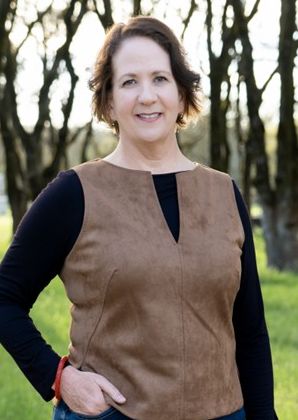
Supervisors-elect Joanna Paun, left, and Melanie Bagby.
Sonoma County voters have elected two new members of the Board of Supervisors and approved an extension of an existing sales tax that funds local parks, according to preliminary results from the Nov. 3 election.
In south Sonoma County, Joanna Paun will succeed District 2 Supervisor David Rabbitt, who has held the seat since 2011 and did not run for reelection. Paun, a Petaluma City Schools trustee who works as a foster and homeless youth education coordinator for the Sonoma County Office of Education, will become the first Black person to serve on the Board of Supervisors. She defeated Sylvia Lemus 61.9% to 38.1%, according to preliminary results updated Nov. 18.
In north Sonoma County, Melanie Bagby will succeed District 4 Supervisor James Gore, who was first elected in 2015 and did not run for reelection. Bagby, an IT consultant who previously served on the Cloverdale City Council, defeated Tom Schwedhelm 51.9% to 48.1%, according to preliminary results.
Meanwhile, voters approved Measure H, which extends an existing eighth-cent sales tax to fund improvements and maintenance at County and city parks. One-third of the revenue will go to cities for local parks and recreation, while the remaining two-thirds will support County regional parks, including trail improvements, maintenance, wildfire risk reduction and natural resource protection.
The tax, first approved by voters in 2018, was scheduled to expire in 2029. The extension was supported by 77.6% of voters, well above the two-thirds majority required for approval.
Election results remain preliminary until the vote count is certified, which must be completed by Dec. 3. More than 223,000 of the county’s 321,241 registered voters cast a ballot in the Nov. 3 primary election. County election officials estimated less than 3,200 ballots had yet to be counted or verified as of Nov. 18.
| | County rolls out new resources to help residents prepare for winter storms | | |
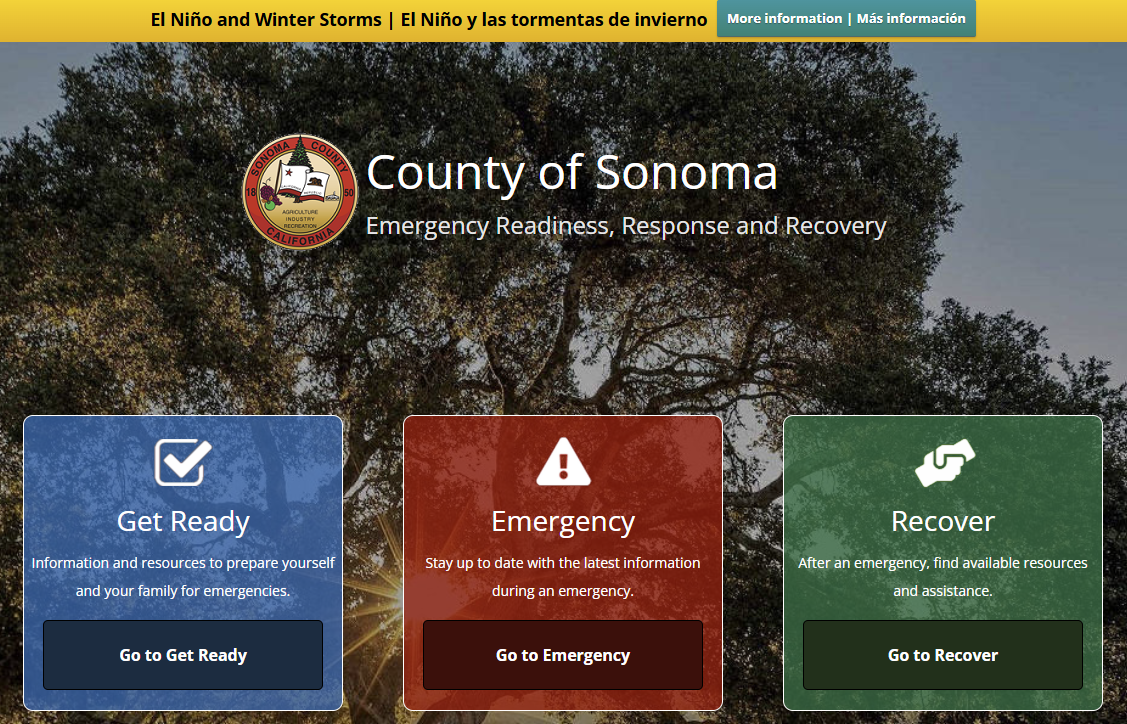
After an unusually dry fall, this week’s rains offer a timely reminder that the winter storm season is rapidly approaching. Two new County webpages can help residents prepare for severe weather and stay safe when storms arrive.
What’s different this year? Warming ocean waters in the tropical Pacific could produce one of the strongest El Niños ever recorded. While that does not guarantee a wet winter in Sonoma County, El Niño can alter storm patterns, bringing the possibility of heavy rainfall and flooding. The potential for severe storms prompted the Board of Supervisors to proclaim a local emergency in October, allowing the County to accelerate preparations.
Coastal flooding is another potential hazard. Federal weather forecasters predict unusually high King Tides during Thanksgiving and Christmas weeks, increasing the risk of flooding in low-lying coastal areas even without heavy rainfall.
Don’t wait for the next storm. Bookmark these two new County resources now for quick access when conditions change:
Prepare for winter storms: The Department of Emergency Management’s webpage offers guidance on flooding, landslides, high winds, power outages and extreme cold. It also connects residents with emergency alerts, evacuation maps, sandbag locations and other resources to help protect their families and property.
Check road conditions and closures: Sonoma Public Infrastructure’s webpage helps residents navigate wet-weather travel. Check County road closures, report road hazards, find sandbag locations and view a flood camera on Green Valley Road. The page also offers vehicle safety tips, state highway information and a phone number for urgent concerns on County-maintained roads.
Before the next storm, review your emergency supplies, make a family emergency plan and sign up for SoCoAlert. During storms, monitor weather forecasts and road conditions, follow official warnings and never drive through flooded roads.
| | Board approves $36 million in budget adjustments, prepares for tighter rules on federal benefits | | |
The Board of Supervisors approved $36 million in budget adjustments Tuesday, directing funding toward critical infrastructure while preparing for the growing impact of new federal rules that make it tougher for people to qualify for health care and food assistance programs.
The largest investments include $11 million for storm-damaged roads, $8 million to begin modernizing the County’s main jail and $4 million to complete the design of a permanent bridge across the Russian River near Asti. The Board also approved $2.2 million over three years to help stabilize the Sonoma County Fair and maintain fairgrounds buildings so they remain available for emergency sheltering during disasters.
During budget hearings in June, the Board agreed to revisit some spending decisions in the fall because of uncertainty over the state budget and changes in federal law. With $30.4 million in unspent General Fund money available from last year, supervisors on Tuesday directed most of it toward one-time projects rather than ongoing expenses.
“We have important needs in our communities today, from repairing roads to improving public facilities,” said Supervisor Rebecca Hermosillo, chair of the Board of Supervisors. “These investments allow us to make progress on these priorities while being careful not to take on expenses we may struggle to sustain in the future.”
The Board also received an update on H.R. 1, the sweeping federal tax and spending law that imposes stricter eligibility requirements for Medi-Cal and CalFresh. Medi-Cal, which covered more than 126,000 Sonoma County residents in July, will require some recipients to comply with new federal work requirements and more frequent eligibility checks beginning in January. Nearly 23,000 local residents are at risk of losing their health care coverage because of the new work requirements. CalFresh, which helps more than 42,000 local residents buy groceries, began implementing stricter eligibility rules for people who are not U.S. citizens in April and expanded work requirements in June. Since September, more than 350 people have lost their food benefits as a result of the new rules; the number is expected to grow every month as more residents’ eligibility comes up for renewal.
To help eligible residents maintain their benefits, the County is adding eligibility workers and employment counselors, coordinating with health care providers and working with local organizations to help residents access food and medical coverage.
| | New report identifies disparities in Sonoma County’s disaster preparedness | | |
More than one-third of residents surveyed by the County did not know their evacuation zone, and one in four said they did not know where to go or how to get there if a wildfire threatened their home.
Those findings are part of a new report examining how Sonoma County’s emergency preparedness and response systems can better serve residents who face the greatest challenges during disasters.
The Board of Supervisors received the report Nov. 3 following a three-year effort led by the County’s Office of Equity in partnership with the Department of Emergency Management, Human Services Department and community organizations.
The report underscores a fundamental inequity: Disasters don’t affect everyone equally. Low-income households, renters, immigrants, communities of color, older adults and people with disabilities can face additional obstacles to receiving emergency alerts, evacuating safely and recovering after a disaster.
“Being prepared for a disaster shouldn’t depend on how much money you have, what language you speak or whether you own a car,” said Supervisor Rebecca Hermosillo, chair of the Board of Supervisors. “This report gives us a clearer picture of the many barriers people face and where we need to focus our efforts to make our emergency systems and response networks work better for everyone.”
The project gathered input from 107 residents in 10 focus groups, 190 survey respondents and approximately 185 participants in community workshops. Their experiences helped shape 31 recommendations to improve access to the County’s disaster preparedness, response and recovery services. Of those recommendations, 12 are in progress or ongoing, two are planned and 17 remain pending.
High-priority recommendations focus on making emergency alerts clearer and more accessible, helping residents understand evacuation instructions and improving transportation assistance for people who need help getting to safety. The report provides a roadmap for addressing those gaps, although many of the proposed improvements will require further planning, coordination or funding.
Not sure which evacuation zone you live in? Visit SoCoEmergency.org to find your zone and learn how to prepare for an emergency.
| | Supervisors approve $360,000 plan to address airport noise | | |
Responding to a sharp increase in aircraft noise complaints, the Board of Supervisors is investing $360,000 in two initiatives aimed at reducing noise from planes flying in and out of Charles M. Schulz – Sonoma County Airport.
The action follows a surge in complaints this year, particularly from west Sonoma County residents who live under flight paths of departing airplanes. The Airport received 46,131 noise complaints in the first seven months of 2026, a 329% increase from the same period last year.
To help address the problem, the Board on Nov. 3 approved two contracts with Cignus Consulting, an aviation consulting firm. The first provides $90,000 to implement a voluntary Fly Quiet Program, which would educate pilots on ways to reduce aircraft noise and encourage airlines to reduce nighttime flights when practical. The program would also track noise complaints, recognize airlines that follow the voluntary guidelines and bring residents and aviation representatives together to discuss noise concerns and potential solutions. A similar program at Jackson Hole Airport in Wyoming has helped reduce nighttime flights and increase compliance with recommended flight procedures.
The second agreement allocates $270,000 to study alternative arrival and departure procedures that could reduce noise. Options include changing flight paths and adjusting how steeply planes climb after takeoff or descend toward the Airport. Consultants will evaluate up to 16 potential flight-path concepts and develop up to eight for submission to the Federal Aviation Administration.
Changes will not happen overnight. Fly Quiet implementation is expected to take about 12 months, while developing new flight-path proposals could take 12 to 15 months. The FAA, which has final say over any changes to flight paths, could take another two to three years to evaluate the proposals.
| | Help fill a patrol car with toys and food for local families | | |
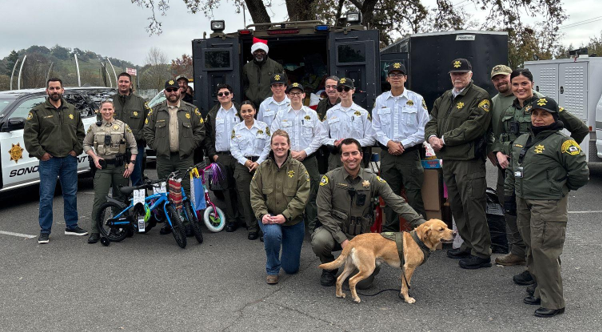
A single toy or a few cans of food can make a meaningful difference for a family in need this holiday season. You can lend a hand at Pack the Patrol Car, an annual event organized by the Sonoma County Sheriff’s Office that is expanding this year to collect both toys and food.
The event will take place Nov. 29 from 11 a.m. to 3 p.m. at Tom Schopflin Fields, 4351 Old Redwood Highway in Santa Rosa. Residents are encouraged to bring new, unwrapped toys for children of all ages or nonperishable food, including canned goods, boxed foods and holiday meal items. Glass containers will not be accepted.
Families can also get an up-close look at Henry-1, meet the helicopter’s flight crew and learn about their work during a demonstration. Other displays and activities will give visitors opportunities to meet deputies and staff, ask questions and learn more about the Sheriff’s Office.
“One of my priorities as sheriff has been strengthening the relationship between our office and the people we serve. That doesn’t happen only when someone calls 911 or needs our help. It happens when we take the time to get to know one another and work together to make our community better,” Sheriff Eddie Engram said.
Toys and food will be distributed before Christmas by The Salvation Army, the R-Hoops mentoring program in Roseland and other local organizations. Every donation, no matter how small, can help make the holidays brighter for a Sonoma County family.
| | Faces of Sonoma County: Meet Chandra Mollenhauer | | This is part of an ongoing series of profiles highlighting public servants across a variety of departments at the County of Sonoma. | | |
Name: Chandra Mollenhauer
Title: Senior Client Support Specialist, Homeless and Housing Support Services
Years with County: 1 ½ years
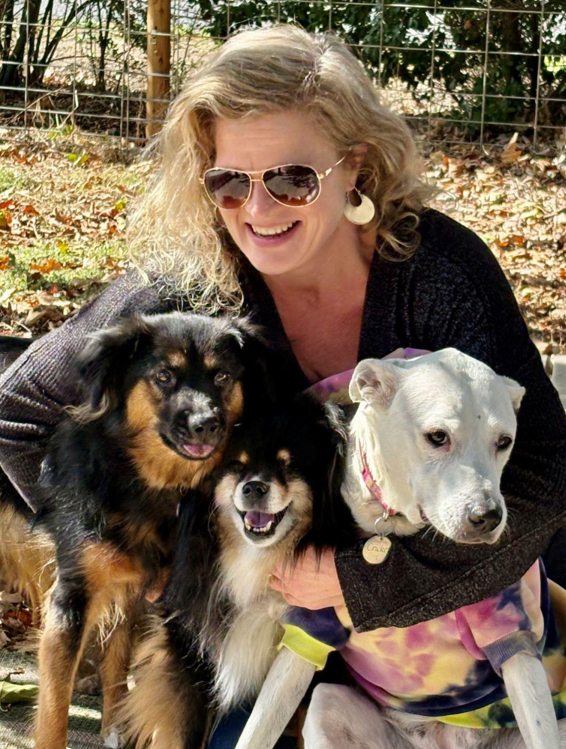
Personal side: I live in Graton in west Sonoma County. I’m admittedly a crazy-cat/dog-lady and a mama to four wonderful fur babies: three dogs ages 17, 13 and 3, and one 14-year-old kitty. I also “borrow” my neighbor’s horse Chili Pepper. I’ve been blessed to have traveled extensively, including trips to Japan, Costa Rica, Thailand, Nepal, Switzerland and Mexico, as well as many parts of the United States. I hope to travel more (maybe after retirement)!
Education: I hold a bachelor’s degree in gerontology from Sonoma State University and am a certified Peer Support Specialist.
What do you do? I am an outreach worker on the Department of Health Services’ SOUL team, which is short for Solving Obstacles for Unsheltered Lives. My work partner, Adrian Ramirez, and I work primarily in unincorporated Santa Rosa (outside the city limits) and along the Joe Rodota Trail, as well as the Sonoma Valley. We go directly into encampments – including those scheduled to be cleared by law enforcement – to connect people experiencing homelessness to vital resources. We frequently collaborate with outreach teams from other agencies, such as SAVS, Catholic Charities, the HOST team, and HomeFirst.
For clients who want shelter, we help them get onto waitlists for shelters operated by the County and our partners. Because waitlists can be long, we provide intensive case management while they wait. We also support clients who have a hard time navigating a traditional shelter environment or are not eligible.
We help clients address housing, income, healthcare, mental health and substance use treatment needs. This includes connecting them with benefits such as CalFresh, Medi-Cal and General Assistance, as well as treatment and other services through County programs and community partners.
What gives you fulfillment? I find fulfillment in helping clients move from a state of hopelessness to hope. Many of the individuals we serve have experienced a lifetime of severe trauma and deep disappointments while trying to access resources to improve their situations. Because of this, things that should be within reach – like obtaining stable housing, improving their physical health, or achieving sobriety – can feel unattainable.
By working step-by-step to achieve manageable goals, we can help clients believe that a better life is possible. Building rapport and momentum often starts with something as simple as helping a client get to a doctor’s appointment.
Focusing on “stacking small wins” builds the trust needed to change the path they are on and work on goals that can be life-changing. For me personally, being in a position where I can be of service helps me be well on my path.
What brought you to this work: My journey in behavioral health and advocacy began with Goodwill Industries, where I worked as a Peer Support Specialist helping people experiencing serious mental illness. From there, I spent nearly nine years at Santa Rosa Community Health as a Care Coordinator/Case Manager, helping people with complex medical needs who were experiencing homelessness or were newly housed. Transitioning into public service with the County’s Behavioral Health Division in April 2025 felt like a natural next step.
What’s a common misconception about homelessness? One of the biggest misconceptions is that unhoused people simply “don’t want help” or don’t want to improve their situation. People living unsheltered are surviving moment to moment, focusing on their most immediate needs like food, basic shelter and safety. Trying to simultaneously tackle long-term housing, income, healthcare, substance use and mental health needs while managing the weight of survival can be overwhelming.
These clients are not lazy. Being unsheltered is exhausting, and simply getting through each day takes an immense amount of work.
Passions outside of work? I love immersing myself in nature with my fur babies, reading, and singing. Spending quality time with my family and friends is important to me. I also host a weekly doggy playgroup where we get together, enjoy each other’s company, and let our dogs play!
| | Adopt the pet of the week | | |
Meet Snowball. This 4-year-old German shepherd, who was brought to the shelter in August, is past the puppy chaos and into his easygoing era. He’s the kind of guy who’s happy to cruise through life, whether that’s a walk around the neighborhood, a weekend adventure, or just hanging out at home. All he needs is someone willing to open their home – and their heart – to him.
Snowball is among dozens of cats, dogs, rabbits and other animals at Sonoma County Animal Services in need of adoption.
Animal Services helps match pets and families through an adoption process designed to support your lifestyle and the animal’s needs. Shelter staff are ready to assist with applications, answer questions and share details about each animal’s health, temperament and care. All animals adopted through the shelter go home spayed or neutered, microchipped and up to date on vaccinations, giving your new companion the healthiest start possible in your forever home.
| | Get involved with County government | | |
Government is only as good as the people who step forward to serve. There are many opportunities available now to support the community by serving on County boards, commissions and committees. Here are just three examples:
-
Maternal, Child and Adolescent Health Advisory Board – Promotes the physical and mental health of childbearing and parenting people, children and adolescents in Sonoma County by sharing resources, coordinating activities and advocating for community health needs.
-
North Sonoma Valley Municipal Advisory Council – Provides recommendations to the County on local community priorities, including transportation, housing, health and safety-net services, fire preparedness and neighborhood improvement projects in Glen Ellen, Kenwood and Eldridge.
-
Parks and Recreation Advisory Commission – Advises the Board of Supervisors and Regional Parks Department on public recreation, including the development, maintenance and operation of parks, open spaces and recreational facilities throughout Sonoma County.
Check out the full list of vacancies and discover how you can help shape the future of Sonoma County.
| | Volunteer and employment opportunities | | |
(stories may require subscriptions)
| | Upcoming meetings and events | | Upcoming meetings and events | | Getting outside and enjoying the county | | Follow us online or contact us via email | | | | |