Tales of the Alchemysts Theatre
|
|
A Jewish Literature & Music
Performance Company
|
|
Presents
"Somewhere Very Far Away: Stories From Honey On The Page"
Edited and Translated by Miriam Udel
A Virtual Audio Play
Adapted and Directed by Laura Ferri
|
|
To Access the Audio Play Please use the Pink Button |
|
|
Winter
It vas a colt, rainy, vinter mornink in Seattle………. I had set the alarm for 6 bells on three clocks to be sure I would rise and shine, coffeed and awake, for my first online class through the YIVO Center in New York. I would be attending a course on Yiddish Children’s Literature……. which I knew nothing about!
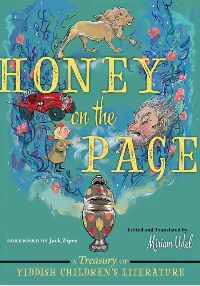
I am always drawn to writers that take me places, new stories to get lost in or illustrators that invite you in for a walk through time. I had a thought last year that I would wander through some Jewish children’s stories and see what might capture my attention and possibly that of our company's. Timing is everything. Our artistic director mentioned a notice she had come across for a course being taught in Yiddish Children’s Literature that might be of interest to me. It was of interest and I signed up quickly having no idea of the compass I would follow. I really wanted to explore something new, a light in the darkness during the shuttered period in Seattle a year ago. I also thought I just might learn something from this very scholarly instructor, Miriam Udel, who had quite a remarkable bio. Frankly, what caught my attention most among all her accomplishments, including our class book, Honey on the Page, A Treasury of Yiddish Children’s Literature, edited and translated by Miriam, was that “she was ordained in 2019 as part of the first cohort of the Executive Ordination Track at Yeshivat Maharat, a program designed to bring qualified mid-career women into the Orthodox rabbinate.” What??? I didn’t think that was allowed within the Orthodox community, after all, women had their side of the mechitza and men had theirs and yet here was a woman determined to shift that barrier and have her voice heard. Impressive, and rather frontier within that stream of Judaism. Yes, I thought, this would be worth getting up at 6:00 a.m.
It was a wonderful course that lured me in from the very first story, A Sabbath In The Forest by Yankev Fichman. The title alone is delicious and the story a beautiful winter majestic dream on the night of the Sabbath. As we worked our way through her anthology I started thinking, “this is children’s literature?” Not the fairy tales of the Brothers Grimm but certainly stories that would appeal to adult readers as well. It was a type of fiction I found thought-provoking with undertones of political ideologies not within my immediate background . A fantastical blending of polarized worlds: political, secular, and religious. The bridging of these diverse worlds and the coexisting of these worlds all moving in concert. Imagine that! Possibly they might serve as an example within the politics of our present day republic. And as the course was nearing its end........ I was just beginning. I wanted our company to take these stories on, but would Miriam agree?
Now a year later, and the second offering in our Pomegranate Projects virtual audio series, Somewhere Very Far Away debuts with the Alchemysts actors spinning their golden narratives of stories and poems from Honey On the Page with beautiful music and songs by Carl Shutoff and the Kesselgarden Klezmer Duo, and the haunting harmonies and flawless Yiddish of the all women's punk klezmer trio, Brivele. Sound engineering by the one and only Robertson Witmer, direction and vision by the gifted Laura Ferri, and the grand composer of our magic, rabba, "darshanit", and professor, Miriam Udel.
I hope you enjoy the journey of these tales as much as we enjoyed telling them.
Shellie Shulkin, co-founder
|
|
Notes From Somewhere
by
Miriam Udel
The Alchemysts Theater production “Somewhere Very Far Away” brings together two great traditions of modern Yiddish culture: children’s literature and the radio play.
A lively corpus of nearly one thousand free-standing books and several periodicals grew up in tandem with the Yiddish secular school systems in Europe and the Americas between the World Wars. While these texts span continents and ideologies (including socialism, communism, Zionism), they share in the overarching goal of their creators: to write a better world into being in a distinctively Yiddish key. These works helped families to locate themselves in Jewish modernity, offering a secure anchor during a period of dizzying social and political change that was complicated by secularization, urbanization, mass migration, and economic modernization. These stories and poems represented a global publishing phenomenon over six decades, with publishers following their readers from Warsaw and Vilna to Kharkov and Moscow, New York, Detroit and Montreal, Tel Aviv, Buenos Aires and Havana.
Sometimes the political messaging was explicit, as in Jacob Reisfeder’s pacifist story, “The Boy and His Samovar.” At other times, it was subtler, as when the socialist-Zionist Yankev (remembered fittingly by the Hebrew pronunciation of his name, Yaakov) Fichman wrote about a simple tailor’s magical Sabbath in an enchanted forest palace. The traditional Sabbath observance portrayed in the story offered a counterweight to the demands of modern capitalism. Some of the material offers whimsical fun, like the squabbling of stubborn spouses Mirtl and Avrohom about who should get up on a chilly fall night to shut the rattling door, or the plans of a class clown suddenly foiled by a kindred spirit in “The Teacher.” The program ends with a late story that gestures toward a feminist future: an excerpt from Dovid Rodin’s “An Unusual Girl From Brooklyn” (originally published in Tel Aviv in 1973). Protagonist Shprintse is an intrepid, independent-minded girl who wants nothing more than to read in peace.
The high tide of Yiddish children’s publishing corresponds almost exactly to the flourishing of American Yiddish radio—on about 180 stations from coast to coast, according to musicologist Henry Sapoznik. Like the work of theAlchemysts, the radio programs that ran from 1925-1955 helped Jewish cultural life to thrive far beyond the largest population centers.
Through my work as a translator and critic, I have tried to offer the wisdom and fun of Yiddish children’s literature to new generations. What a thrill it is to hear the Alchemysts bring them to new life—now accessible to English speakers, inviting for audiences of all ages, and even a bit less crackly than they sounded on the radio long ago!
Links to learn more:
|
|
Purchase your copy of Miriam Udel's Honey On The Page, and use the discount code Honey20
|
|
|
Reminiscences About Growing up In New York City – culturally, but not religiously, Jewish.
David S. Klein, Company Member
I was born in 1945 and grew up in a milieu that was left-wing and Jewish - though the only time I was ever in a synagogue was for my friends’ Bar Mitzvahs. I went to and worked at Camp Kinderland, a summer camp that was started in the 1920’s by Jews active in the labor movement as well as the Communist Party. In addition to the usual summer sports, hiking and camping, there was an emphasis on Jewish culture and the history of Jews in the labor movement. The music I learned is what has stayed with
me - songs, like “Zog Nit Keynmol” and “Mayn Rue Platz” (as well as “Binele,” of course, which came with a dance for little kids buzzing in and out, choreographed by Edith Segal). And whenever I need a Yiddish accent for a role, I recall the camp director, Herschel, waking us up every morning with “Gut morgen kempers end counselors. It iz time to gedap. It iz time to gedap now.”
At home there were books by Jewish authors, some translations from Yiddish, some not. I can remember reading Sholem Aleichem, I.L. Peretz, Yuri Suhl and Michael Gold. Suhl and Gold wrote about the immigrant world in New York City in which my father had grown up, which gave me a real connection to that time period. I was very glad to explore that when we did our show about immigrants two years ago.
I absorbed something from all this that gives me a sort of psychic affinity, I think, as an actor, for the Jews that I have played in Seattle. Especially the old guys - Solomon, in Arthur Miller’s “The Price,” Mordechai in “A Shayne Maidel,” among others – culminating in Salzman, the matchmaker, from the “Magic Barrel” by Bernard Malamud, in our show last year about Jewish immigration, “Dreaming in American.” I truly enjoy being in their skin for our brief time on stage.
They are all somehow related to my paternal grandparents, who came here from Poland and Rumania around 1906, and who I wish I could talk to now about how it felt, coming to this strange country, leaving their old world behind, and trying to survive here, raising five kids. My father, the eldest, started working in high school to help support the family. He talked about how at dinner, their father was always fed first, then Momma and the children, because Poppa had to be healthy and go to work – or they would all starve. They lived in various neighborhoods in the Bronx and Brooklyn (he was born in Williamsburg), and when times were good and they had money, they would move to a building with an elevator, so Momma did not have to schlep groceries and kids up several flights of stairs. But then when Poppa got laid off, they would have to move back to a walkup. Sometimes they must have been evicted – my father always had a fierce hatred of landlords.
|
|
Laura Ferri
As our theatre enters 2022 with renewed hope and dreams for a brighter, healthier year we also wish our Artistic Director, Laura Ferri, all our best as she begins work on her recently awarded US/UK Fulbright Scholarship in Northern Ireland. Laura will be in residence for 6 months at the Seamus Heaney Centre in Queen's University, Belfast in order to research and produce an original play, "Yanks in Ulster," on the impact of the American Military presence on the sectarian communities of Northern Ireland during WWII. Laura, success to you on your fabulous journey. We will all miss you while you are away.
|
|
For further information on our company and our virtual series,
"The Pomegranate Projects," please visit us at .....
|
|
Your thoughtful gifts
are always welcomed, appreciated, and very
helpful to the growth and sustainability of our theatre.
|
|
We leave you with a little Yiddish lullaby, bittersweet but beautiful,
Oyfn veg shtayt a boym (By the Road Stands a Tree)
|
|
Tales of the Alchemysts Theatre
|
|
|
|
|
Funding for the Tales of the Alchemysts Theatre was made
possible, in part, by the Jewish Federation of Greater Seattle
And
The Susie and Arthur Goldman Charitable Trust
This project was supported in part by an award from 4Culture
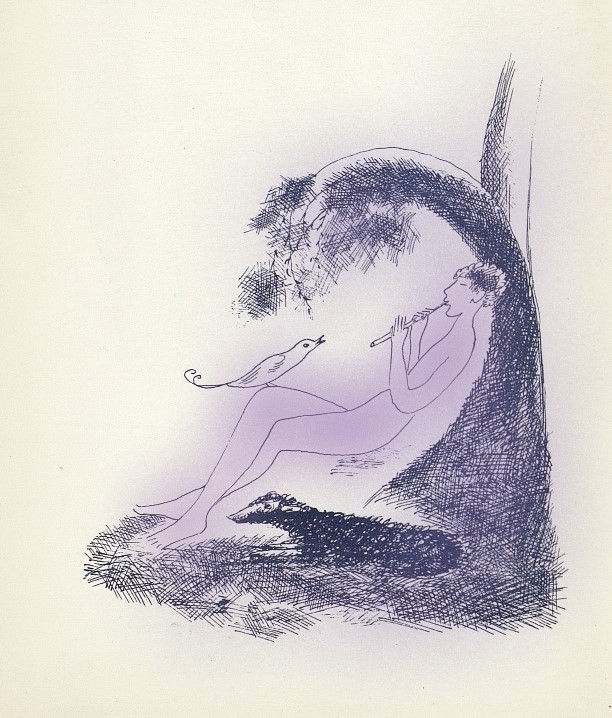
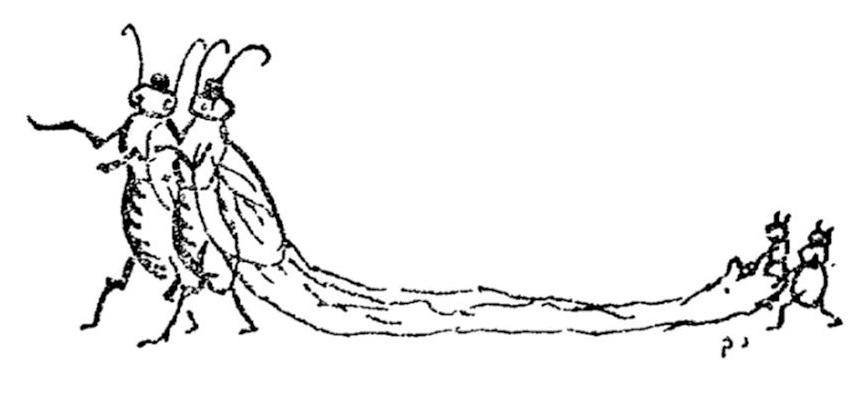
I. Lichtenstein, illustrator A moyd mit a tsepl farzukht an epl by Herman Gold 1941
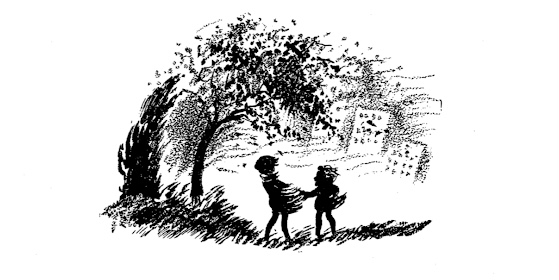
Note Kozlovski, illustrator, Trit nokh trit by Sarah Fell-Yellin 1937
Unknown illustrator, Teater far kinder by Baruch Lumet 1932
Note Kozlovski, illustrator, Likhtike minutn by Nochum Yood 1932
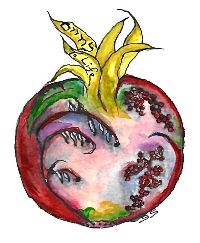
The Pomegranate, To Life, watercolor by Shellie Shulkin © 2021
|
|
|
|
|
|
|