Included in this issue of the newsletter:
- Message from Sasakawa USA's Chairman, Satohiro Akimoto
January Activities
- Policy Briefing: Requirements for Crafting Japan's New National Security Strategy with LtGen Koichi Isobe
-
Policy Briefing: Japan as Relevant as Ever: The Economist Special Report on Reiwa Japan with Mr. Noah Sneider
- Sasakawa USA Emerging Experts Delegation (SEED): SEED Discussion with Dr. Kenji Shibuya
- Japan-U.S. Military Program: JUMP Seattle
- Washington Kenkyu Group: A Discussion with Mr. Charles Freeman
- JETAA Florida Webinar on WWII Nisei Legacy
- JETAADC "Mentor Talks" Webinar
Publications
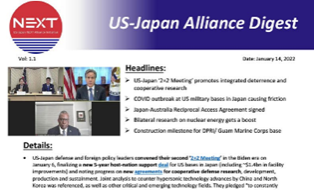
- The Alliance Digest: The First Two Issues of the US-Japan NEXT Alliance Initiative Digest
- Commentary and Analysis: The EU's Strategy for Cooperation in the Indo-Pacific (Mr. Cunningham)
- Japan Political Pulse: The Continuing Predicament of Japan's Opposition (Dr. Maeda)
- Japan Political Pulse: Prime Minister Kishida Must Solidify Support from Within the LDP (Dr. Akimoto)
External Engagements
- US-Japan NEXT Alliance Initiative: Mr. Schoff Joins "Japan in 2022: Japan's Foreign Policy and U.S.-Japan Relations" by the Brookings Institution
- Expert Presentation: Dr. Akimoto's Presentation at Japan National Press Club on the Biden Administration's First Year
- Interview: Dr. Akimoto on "Biz Square" (BS-TBS)
Upcoming Activities
- Japan-U.S. Military Program (JUMP): JUMP Quantico
|
|
Message from Sasakawa USA's Chairman, Satohiro Akimoto |
|
In December soon after Prime Minister Fumio Kishida reversed course on his request to airlines not to book any new reservations coming into Japan, I bought a ticket and flew there. Upon going through several checkpoints, I was assigned to Tokyu Inn in Mito, Ibaraki, which is roughly a 2-hour bus ride from Narita International Airport, to spend the first three days of the government’s 14-day quarantine period. The hotel room was small with a “unit bath,” as it was a typical “business hotel” for budget travelers. The hotel staff and public health workers were courteous and efficient. While the legal basis for requiring people coming from abroad to subject themselves to “self-imposed” quarantine is not clear, I complied with the requirements, as it was a firmly established and widely accepted system to help prevent the Omicron variant from further entering Japan, especially as the number of new cases in Japan was extremely low.
We have lost many important things in life, both personal and professional, since the COVID-19 crisis began two years ago. One of the most precious aspects we have lost in our professional lives is our freedom to go back and forth between the U.S. and Japan (and other Indo-Pacific nations) and our ability to exchange views and ideas with people abroad in person in formal and informal settings. We have supplemented lack of visits and discussions in person by increasing our use of virtual meetings. Use of virtual meetings has indeed increased our capacity to connect with people whom we had not reached out to before. Since March 2020 when the pandemic first halted in-person programming, Sasakawa USA has held 28 virtual meetings connecting people not only in the U.S. and Japan, but across the Asia-Pacific. However, there is no substitute for in-person discussions and exchanges in our professional field, which specializes in exchanging views and ideas with others.
Prime Minister Kishida must show strong results in the House of Councilors election slated in July. Barring possibility of a snap election called by Prime Minister Kishida, he would not worry about a national election till 2025. The three-year window would give him an opportunity to focus on his main policy goals and solidify his political leadership within the LDP. Preventing COVID-19 from exploding and ensuring to maintain trust of Japanese citizens in terms of public health are crucially important for Prime Minister Kishida to have a strong election campaign. After all, Prime Minister Kishida witnessed how former Prime Minister Suga’s political fortune was completely ruined by an increasing number of new infections last summer.
Under such circumstances, it is only natural for Prime Minister Kishida to do every measure possible to get new cases of COVID-19 under control, including essentially shutting out foreign visitors to Japan. As a result, the number of foreign visitors to Japan in 2021 dropped to 245,900, the lowest since 1964, when comparable data became available. The figure plunged 94.0 percent from 2020 and 99.2 percent compared with the pre-pandemic numbers. While the government previously set a goal of attracting 60 million foreign visitors in 2030, this new “Sakoku” policy is widely supported by the Japanese general public, particularly as the spread of the Omicron variant got out of hand in many countries.
The new “Sakoku” policy is hurting Japan in several important areas, including business, foreign affairs, and families. One critically important area, which has been damaged badly by the “Sakoku” policy, is its soft power because it prevents people, who have interest in Japan, from coming to Japan to study, research, exchange views, and have dialogue. It may not be an exaggeration to say Japan is facing the danger of creating a lost generation of foreigners, who might have been meaningfully connected to Japan and therefore play a role to bridge Japan and the international community together with their Japanese counterparts. Needless to say, Japanese counterparts living in Japan are also losing opportunities to interact with their foreign counterparts.
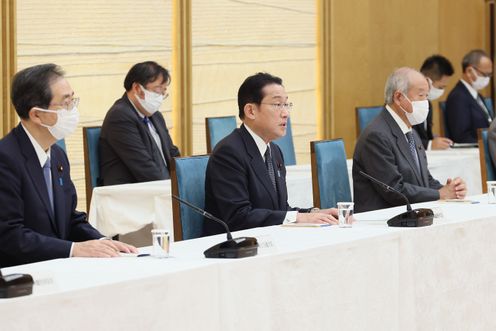
In his recent blog post, Taro Kono, a maverick LDP lawmaker and a competitor of Prime Minister Kishida in the LDP presidential election last September, pointed out there are 147,000 foreign students, who cannot enter Japan despite the fact that they received government approval to reside in Japan to attend Japanese universities and language schools. Japan, like any other country, has its own comfort level in public health. However, perhaps the new “Sakoku” policy is a bit too much, considering the negative effects it will bring to Japan. At the least, Japan would be wise to make its “opening of the country” steps known to foreign friends.
|
|
Policy Briefing: Requirements for Crafting Japan's New National Security Strategy with LtGen Koichi Isobe |
|
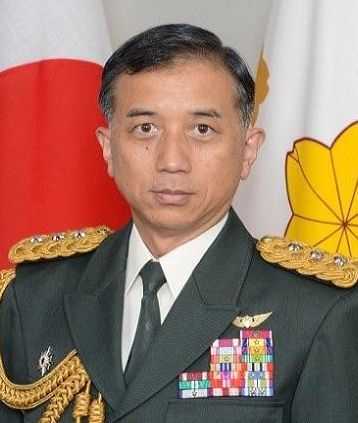
On January 27, Sasakawa USA hosted the virtual policy briefing, Requirements for Crafting Japan’s New National Security Strategy. This event featured LtGen Koichi Isobe for a discussion on the National Security Strategy Study Group’s (国家安全保障戦略研究会, Kokka Anzen Hoshō Senryaku Kenkyūkai) policy recommendation paper focusing on what the study group envisions for developing Japan’s National Security Strategy. The Hon. Randall G. Schriver provided commentary on LtGen Isobe’s remarks, welcoming the current trend in formulating a new strategic document in Japan. A lively Q&A discussion ensued featuring guest appearances by experts in the field, which was moderated by Dr. Satohiro Akimoto, Chairman and President of Sasakawa USA. The recap and video of the event will be available on our website in the coming weeks.
Photo: LtGen Isobe
|
|
Policy Briefing: Japan as Relevant as Ever: The Economist Special Report on Reiwa Japan with Mr. Noah Sneider
|
|
On January 6, Sasakawa USA hosted the virtual Policy Briefing, "Japan as Relevant as Ever: The Economist Special Report on Reiwa Japan." This event spotlighted Mr. Noah Sneider for a discussion on his recent special report, published by The Economist, "Japan as Relevant as Ever" on December 11, 2021. Mr. Sneider provided his sharp and balanced insights on the current state of Japan, delivering a comprehensive presentation on Japan's foreign and security policy, economy, demographic challenges, climate change, and immigration. An engaging Q&A discussion featuring guest appearances by experts in the field followed Mr. Sneider's presentation. The event was moderated by Dr. Satohiro Akimoto, Chairman and President of Sasakawa USA. The video and recap for the event are available here. |
|
Sasakawa USA Emerging Experts Delegation (SEED): SEED Discussion with Dr. Kenji Shibuya |
|
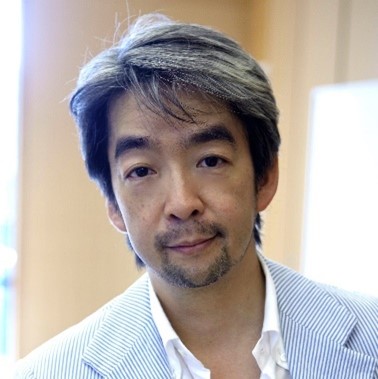
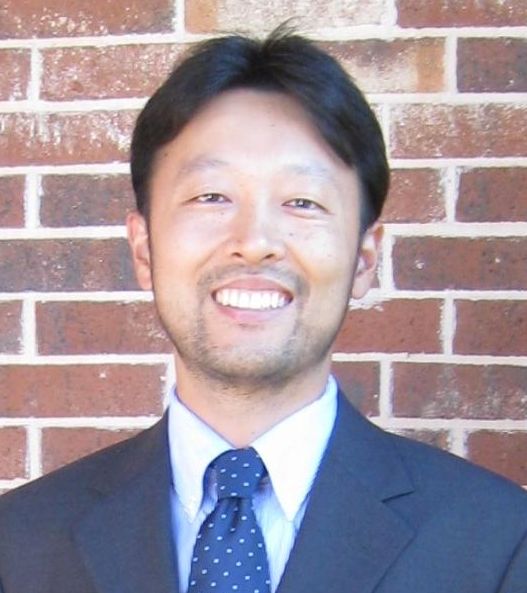
On January 11, Sasakawa USA hosted the second discussion for the current SEED cohort, featuring remarks by Dr. Kenji Shibuya, Research Director at the Tokyo Foundation for Policy Research, and Director of the Soma COVID Vaccination Medical Center. In his off-the-record remarks, Dr. Shibuya discussed Japan’s COVID experience and response including successes and opportunities for improvement and international collaboration. Dr. Atsushi Sunami, President of Sasakawa Peace Foundation, was also present to introduce Dr. Shibuya and provide opening remarks. The delegation has plans to virtually discuss Japan’s public health system with Dr. Michael R. Reich, Taro Takemi Research Professor of International Health Policy, Harvard T.H. Chan School of Public Health in February.
Photo: Dr. Shibuya
|
|
Japan-U.S. Military Program (JUMP): JUMP Seattle |
|
On January 29, JUMP hosted the virtual event, “Beyond Reconciliation: Celebrate Japan-U.S. Alliance and Honor Nisei Veterans of the Military Intelligence Service,” in Seattle, Washington in partnership with the Japan-America Society of the State of Washington, the Nisei Veterans Committee, the National Association of Japan-America Societies, and the Embassy of Japan. This event featured keynote remarks from LTG Xavier Brunson (USA), Rear Adm. Brad Collins (USNA), and Colonel Yusuke Kawachi (JGSDF) on the legacy of Nisei linguists and their important contribution to strengthening the U.S.-Japan alliance. JUMP continues to serve as a national program to connect past and present service members, families, and government civilians who have served in Japan through social networks and grassroots events. JUMP is the only national program to do so, providing a powerful foundation for sustaining the alliance between the United States and Japan. |
|
Washington Kenkyu Group: A Discussion with Mr. Charles Freeman |
|
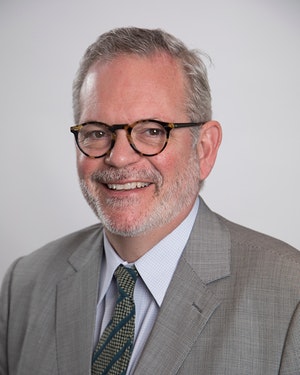
On January 18, Sasakawa USA’s Washington Kenkyu Group welcomed Mr. Charles Freeman, Senior Vice President for Asia at the U.S. Chamber of Commerce. For this virtual event, Mr. Freeman shared his insights on the political situation in the United States regarding free trade, against a backdrop of domestic economic strains and growing security tensions with China off-the-record basis. With special emphasis on the centrality of trade policy to the U.S.-Japan relationship, Mr. Freeman discussed some of the factors which are currently affecting the development of U.S. trade policy in the Indo-Pacific region. His remarks were followed by a lively Q&A discussion with Washington Kenkyu Group members.
Photo: Mr. Freeman
|
|
JETAA Florida Webinar on WWII Nisei Legacy |
|
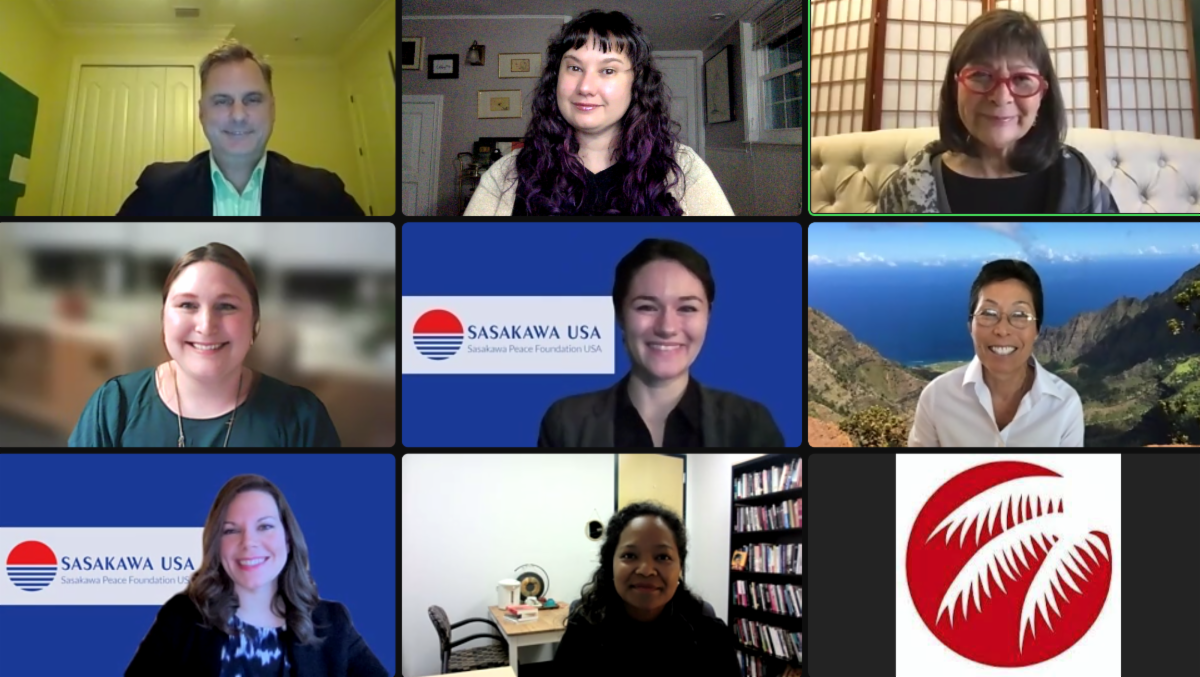
On January 25, the JET Alumni Association of Florida held its second webinar on the enduring legacy of the Japanese Americans "Nisei" who served in the U.S. military during WWII. Dr. Lynn Heirakuji, President of the Nisei Veterans Legacy provided keynote remarks on how the Nisei soldiers helped to build a stronger, more united, and more equal post-war society in America. Commentary was provided by Ms. Diane Hirabayashi Carter, Collections Assistant at the Morikami Museum and Japanese Gardens, and Dr. Mitzi Uehara Carter, Assistant Teaching Professor of Anthropology at Florida International University, who guided a discussion on the present-day significance of the Nisei’s contributions. This program was hosted through support from the Sasakawa USA/USJETAA Mini-Grant Program for JETAA Chapters & Sub-Chapters. A recording of the event will be shared by JETAA Florida in the coming weeks.
Photo: (from top left clockwise) Mr. Mike Daniels, JETAA Florida President; Ms. Bahia Simons-Lane, USJETAA Director; Ms. Hirabayashi Carter; Dr. Heirakuji; Dr. Uehara Carter; Ms. Shanti Shoji, Sasakawa USA Director of Programs; Ms. Erin Carney, JETAA Florida Vice President; and Ms. Isabelle Burke, Sasakawa USA Program Assistant
|
|
JETAADC "Mentor Talks" Webinar |
|
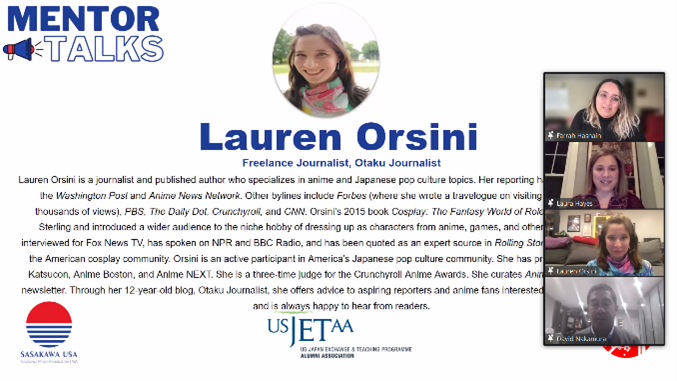
On January 19, the JET Alumni Association of Washington, DC (JETAADC) hosted the webinar, "Mentor Talks: JETs in Journalism," as part of its 2021-2022 Mentorship Program. It featured experienced JET Program alumni with careers in journalism and media, including Mr. David Nakamura, Staff Writer of The Washington Post, Ms. Farrah Hasnain, Contributing Writer of The Japan Times, Ms. Laura Hayes, Food Editor of Washington City Paper, and Ms. Lauren Orsini, freelance journalist. The panelists discussed how their experiences as JETs supported their career development and shared their insights on how JET alumni can apply their unique skills and experiences to pursue careers in journalism. JETAADC’s Mentorship Program is supported by the Sasakawa USA-USJETAA Mini-Grant Program for JETAA Chapters. Information about the Mentorship Program can be found on JETAADC’s website.
Photo: A screenshot taken from the "Mentor Talks" webinar, featuring images of the panelists (from top to bottom): Ms. Hasnain, Ms. Hayes, Ms. Orsini, and Mr. Nakamura
|
|
The Alliance Digest: The First Two Issues of the US-Japan NEXT Alliance Initiative Digest |
|
Our US-Japan NEXT Alliance Initiative published in January the first two issues of "US-Japan Alliance Digest," a one-page bi-weekly summary of news specific to the U.S.-Japan alliance. This publication provides concise summaries of both high-profile alliance news items, such as leadership summits and formal agreements, as well as lower profile but still important developments not covered by mainstream media. We will also provide occasional and exclusive summaries of "NEXT Alliance" dialogues or research. Our "Alliance Digest" can be accessed on our website or delivered every two weeks digitally. For sign-up, please contact us here. To help develop the "NEXT" U.S.-Japan alliance, we need to know what’s going on right now! |
|
Commentary and Analysis: The EU's Strategy for Cooperation in the Indo-Pacific (Mr. Cunningham) |
|
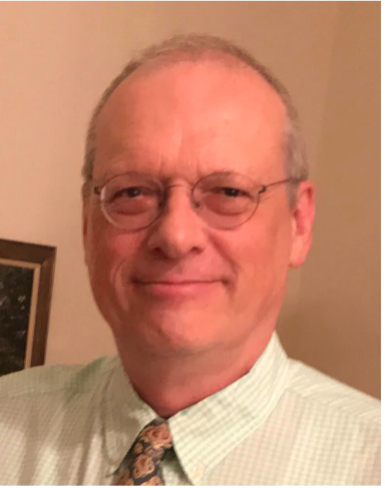
Kicking off a series of papers that analyze Europe’s evolving strategic vision for the Indo-Pacific is, "The EU’s Strategy for Cooperation in the Indo-Pacific," by Mr. George Cunningham, Former Strategic Adviser at the Asia-Pacific Department of the European External Action Service. Mr. Cunningham provides a thorough assessment of the European Union (EU) Indo-Pacific strategy and its implementation, highlighting how the EU is playing to its strengths and making significant advances in the Indo-Pacific, especially on trade and security in alignment with regional partners like Japan. Furthermore, Mr. Cunningham asserts that there is still the potential for greater opportunity, recommending that the EU needs to be more strategic and flexible in the application of economic and financial measures, especially for development assistance. You can read the paper here.
Photo: Mr. Cunningham
|
|
Japan Political Pulse: The Continuing Predicament of Japan's Opposition (Dr. Maeda) |
|
In a guest contributor Japan Political Pulse article, " The Continuing Predicament of Japan’s Opposition," Dr. Ko Maeda, Associate Professor of the Department of Political Science at the University of North Texas, analyzes the various challenges facing Japan’s opposition parties including ongoing fragmentation and competing interests. Dr. Maeda outlines a variety of reasons for why Japanese opposition parties have been unable to gain political traction as exhibited by last year’s lackluster results from the general election for opposition parties like the Constitutional Democratic Party. Those reasons include individual party agenda, ideological differences, and the problematic relationship with the Japanese Communist Party’s role in disrupting opposition consensus. You can read the article here. Photo: Dr. Maeda
|
|
Japan Political Pulse: Prime Minister Kishida Must Solidify to Solidify Strong Support from Within the LDP (Dr. Akimoto) |
|
In his latest Japan Political Pulse article, “Prime Minister Kishida Must Solidify Strong Support from Within the LDP,” Dr. Satohiro Akimoto, Chairman and President of Sasakawa USA, notes that Prime Minister Kishida’s popularity continues in the first month of 2022, even with a recent uptick in Japan’s new COVID-19 cases. Dr. Akimoto examines the unstable support amongst the various LDP factions which may cause challenges for Kishida in the House of Councilors election slated for July 2022. To conclude, Dr. Akimoto outlines Kishida’s key priorities for a win in the upcoming election this summer. You can read the article here.
|
|
US-Japan NEXT Alliance Initiative: Mr. Schoff Joins "Japan in 2022: Japan's Foreign Policy and U.S.-Japan Relations" by the Brookings Institution |
|
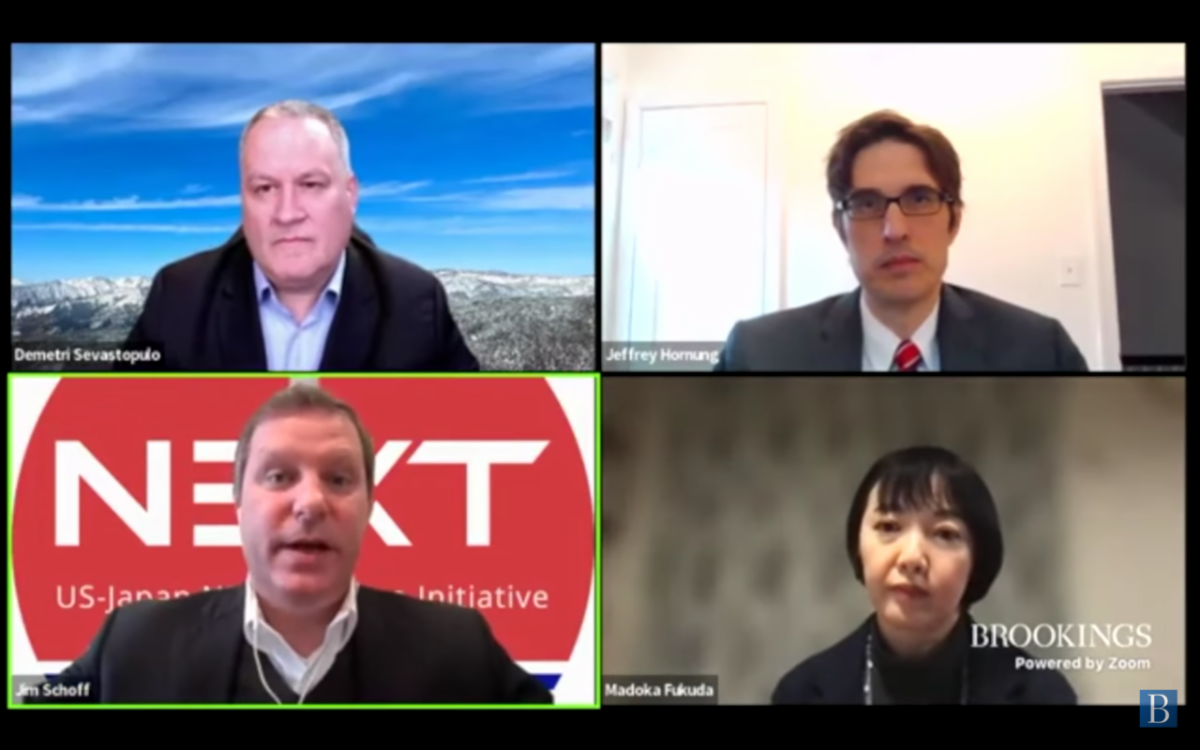
On January 18, Sasakawa USA Sr. Director Jim Schoff joined a select group of scholars and government officials (including Amb. Tomita Koji in Washington and Deputy Chief of Mission Raymond Greene in Tokyo) for the eighth annual " Japan in the Year" program on January 18 organized by the Japan-America Society of Washington DC and the Brookings Institution. Mr. Schoff was a featured panelist forecasting Japan’s foreign policy and U.S.-Japan relations in 2022, and he explained how Japan’s push to strengthen its economic security might impact the alliance and regional relations. He noted that Japan’s expected economic security legislation has the potential to improve its ability to protect critical technologies and promote innovation, but bilateral coordination will be complex and challenging. Mr. Schoff leads Sasakawa USA’s US-Japan NEXT Alliance Initiative, which will support this coordination in the coming year.
Photo: (clockwise from top left) Mr. Demetri Sevastopulo, U.S.-China Correspondent of The Financial Times; Dr. Jeffery Hornung, Senior Political Scientist at RAND Corporation and Former Sasakawa USA Fellow; Prof. Madoka Fukuda at Hosei University; and Mr. Schoff
|
|
Expert Presentation: Dr. Akimoto's Presentation at Japan National Press Club on the Biden Administration's First Year |
|
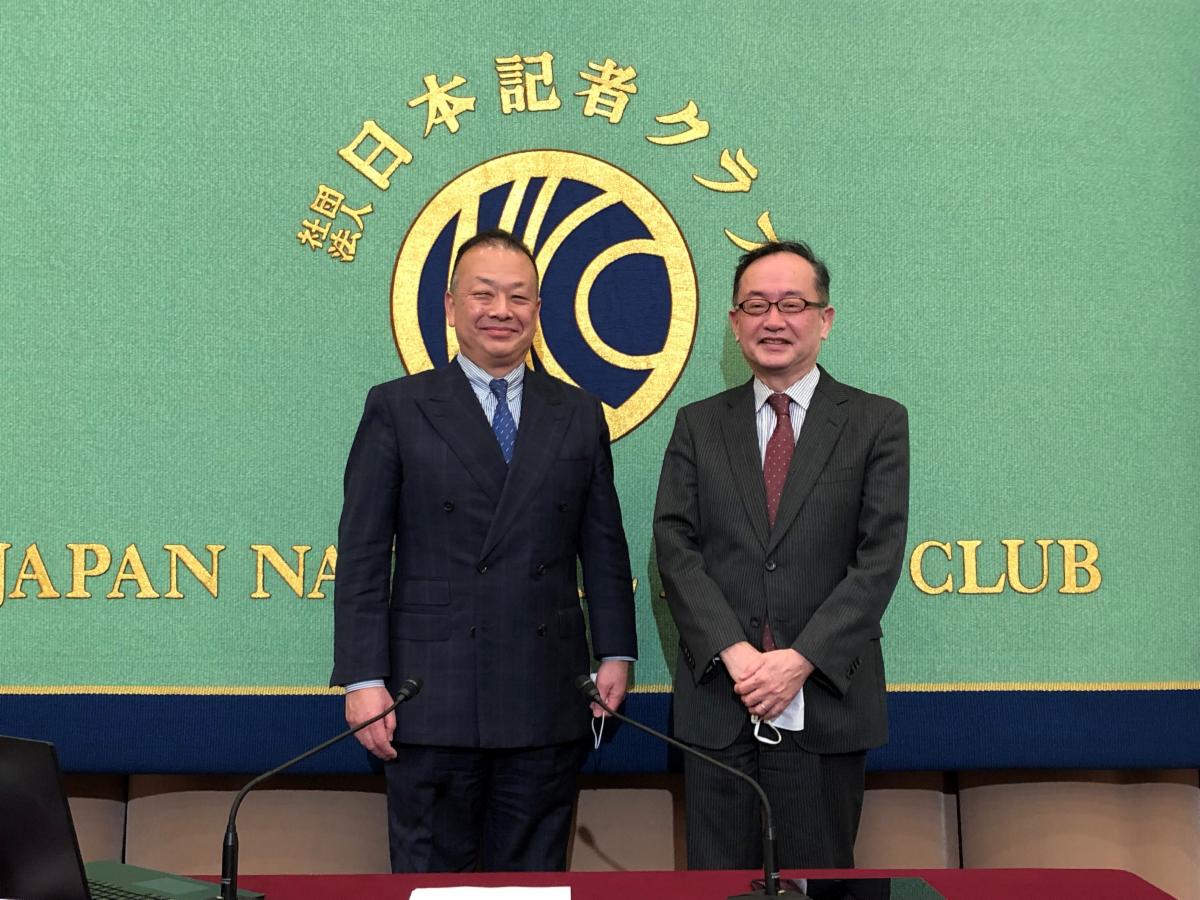
On January 13, Dr. Satohiro Akimoto, Chairman and President of Sasakawa USA, presented his views on the U.S. political landscape, as part of the series called "Biden's America," at the Japan National Press Club. His presentation focused on difficulties in the first year of the U.S. President Joe Biden’s administration and challenges ahead for the second year leading to the mid-term election, touching on sharp Democrat-Republican division, declining support among citizens, ineffective measures against COVID-19, and foreign policy and security challenges presented by China and Russia. The presentation, in Japanese, was followed by Q&A facilitated by Mr. Hiroki Sugita, Kyodo News Columnist, with distinguished members of the press club.
Photo: Dr. Akimoto and Mr. Sugita
|
|
Interview: Dr. Akimoto on "Biz Square" (BS-TBS) |
|
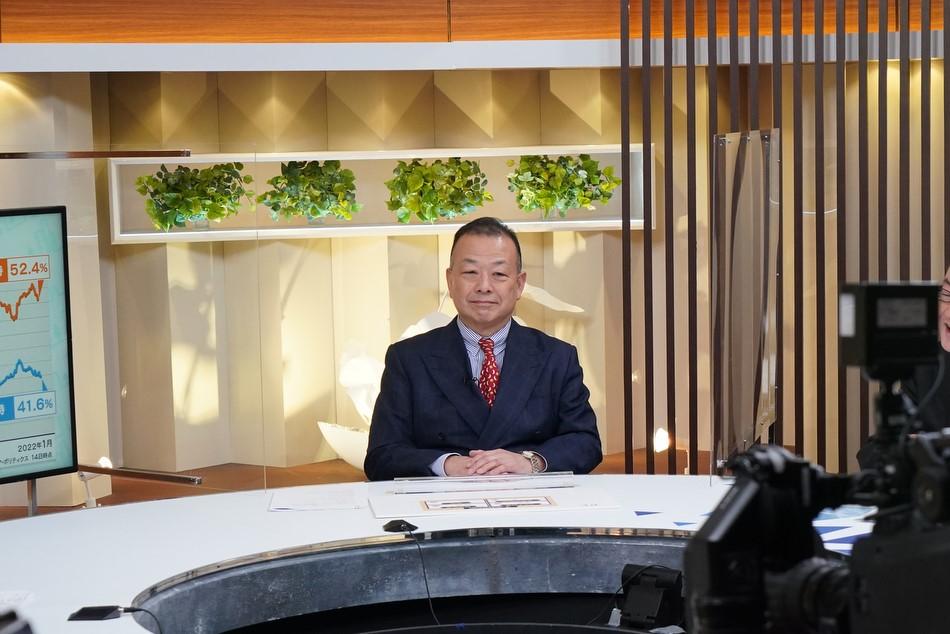
On January 15, Dr. Satohiro Akimoto, Chairman and President of Sasakawa USA, was interviewed live by BS-TBS on the Japanese TV news program, " Biz Square," where he offered his insights and analysis on the first year of the Biden administration. The interview was hosted by Mr. Takushi Harima, the former Tokyo Broadcasting System’s (TBS) Washington Bureau Chief. During the discussion, Dr. Akimoto reviewed the first year under U.S. President Joe Biden’s leadership and why his administration's approval ratings have been on the decline. Dr. Akimoto examined the results from Biden's domestic and international policies, ranging from combatting the COVID-19 pandemic, bolstering the American economy, to strengthening U.S. diplomacy abroad. Lastly, he shared his thoughts about the prospects of the Biden administration going forward and the role Japan should take in cooperating with the United States while both countries strive to advance their national interests. You can watch the interview here.
Photo: Dr. Akimoto
|
|
Japan-U.S. Military Program (JUMP): JUMP Quantico |
|
On February 11, JUMP will co-host an event in Quantico, Virginia with the Marine Corps University, and the Embassy of Japan. This event will include featured remarks on the U.S.-Japan security alliance as well as a panel of experts providing commentary on how to prevent the Taiwan contingency with the framework of the USMC Force Design 2030. JUMP continues to serve as a national program to connect past and present service members, families, and government civilians who have served in Japan through social networks and grassroots events. JUMP is the only national program to do so, providing a powerful foundation for sustaining the alliance between the United States and Japan. |
|
Sasakawa Peace Foundation USA
1819 L Street, NW
Suite 300
Washington DC 20026
202.296.6694
|
|
|
|
|
|
|