|
TCRP is dedicated to researching your transit challenges to provide practical solutions. Below, we are pleased to share eight reports with our latest findings:
|

Improving Transit Service in Rural Areas and Tribal Communities
TCRP Pre-Publication Report 251 provides a guide to help public transit agencies in rural and tribal communities initiate new or enhance existing public transportation services to improve mobility and accessibility, enhance performance, and consider appropriate innovations. Nine case studies are featured in the guide and detail services or strategies implemented to improve public transportation for rural or tribal communities.
|
|
|
|
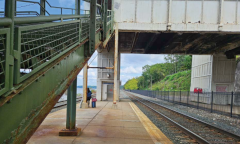 Improving Transit Customer Perception of Personal Security
TCRP Synthesis 184 documents the current state of the practice related to customer perceptions of safety and security on bus and rail transit.
Drawing from a literature review, a national survey of 35 transit providers, and in-depth case examples of five transit providers, this synthesis highlights strategies to improve customers’ outlook, the effectiveness of those strategies, how the strategies are communicated to the public, and the associated change in customers’ perceptions.
|
|
|
|
 Workforce Development for Zero-Emission Vehicles
TCRP Report 252 identifies and is organized around seven areas that transit agencies will need to address.
Each identifies the skills and knowledge needed by transit agency frontline employees to operate and maintain zero-emission vehicles in revenue service, specifically full-size, 40- to 60-foot battery-electric and fuel-cell buses.
|
|
|
|
|
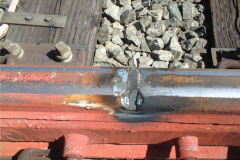
Investigation and Mitigation of Insulated Joint Electrical Failure
Transit agencies use overhead catenary or third rail electrical traction for the propulsion of trains. Running rails are used as part of the system to return negative power to substations. Insulated joints (IJs) are trackwork components installed in the rails to provide train control circuits and traction power segment separation between blocks.
TCRP Report 255 provides information on how to identify arcing at IJs, methods to diagnose the contributing factors/ underlying causes, strategies for investigating IJ failures, and examples of how others have mitigated arcing.
|
|
|
|
 Determination of Actual Derailment Loads on Transit Bridges
Derailment loads in nearly all U.S. transit design criteria documents are similar across agencies. However, it is unclear whether horizontal and vertical derailment loads for the efficient and safe design of transit structures are reasonably accurate.
TCRP Report 257 provides the transit industry with a reasoned basis for derailment loads on bridges. It also offers methodologies that bridge design engineers can utilize to calculate the horizontal and vertical derailment impact loading.
|
|
|
|
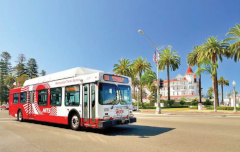 Use of Automatic Vehicle Monitoring, Vehicle Health Monitoring, and Diagnostic Systems
TCRP Synthesis 185 explores how technologies are utilized by transit agencies to monitor an array of onboard vehicle components in order to assist in the early identification of potential mechanical issues, thus supporting effective maintenance practices.
|
|
|
|
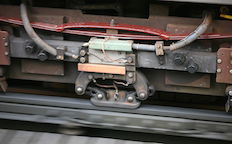 Low-Level DC Leakage & Fault Currents: A Prototype for Detection and Mitigation
Low-level electrical fault currents are a phenomenon found in direct current (DC) traction systems used in transit systems worldwide. These low-level currents are typically caused by small and sporadic failures of insulation within the electrification system, which makes them difficult to locate, measure, and control.
If these faults are left undetected, existing evidence shows extensive damage to infrastructure of transit systems and that of adjacent utilities could result.
TCRP Report 259 develops a prototype system that can detect low-level faults in electrified transit systems powered by third rails.
|
|
|
|
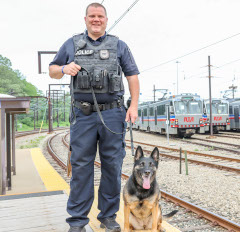 Strategies for Deterring Transit Assaults
Concerns about transit assaults and perceived safety play an important role in transit use and ridership. Research shows that if people felt more secure when traveling and waiting at railway stations, the ridership could increase by 10 percent.
TCRP Report 258 equips agencies with practical strategies and evidence-based recommendations to enhance safety and security in the transit environment.
|
|
|
Be Part of a TCRP Project Panel
|
TRB’s Transit Cooperative Research Program (TCRP), sponsored by FTA and conducted in cooperation with APTA, has approved a new slate of FY 2026 research projects. These projects were approved by the TOPS Commission on October 24, 2025. Nominate yourself or other qualified professionals to participate on a project by January 30, 2026. TCRP appreciates your continued support!
|
|
|
|
|
|
|
Help Shape the 2026 TCRP Synthesis Program
|
The TCRP Synthesis Program produces state-of-the-practice documents that summarize and synthesize current knowledge and experience for transit agencies on hot topics in the industry.
|
|
|
|
|
|
Tell Us How You Have Benefited from TCRP Research
|
Let us know how TCRP research has impacted your transit agency challenge. We would like to share your success story with the public transportation industry in a case study.
|
|
|
|
Webinar Archive
|
|
|
TCRP webinars in our library will always match up with your busy schedule. Tune in when it is convenient for you.
|
|
|
|
|
|
Follow Us on Social
|
|
|
Don't miss the latest TCRP news by following the #TCRP twitter hashtag and the official TCRP LinkedIn page.
|
|
|
|
|
|
 |
|
Distributed by the American Public Transportation Association
|