There is plenty of commentary around tariffs, it's the big buzz word at the moment.


The main challenge with assessing the impact of tariffs is nobody knows what or how severe they will be on the US economy.


If you see anyone on the internet or in real life who tells you with any certainty what the next six months are going to be like, I would ignore them. The executives of corporations are uncertain of how this will play out, I don't know that Jimmy on Facebook knows more than the CEOs of America's biggest companies.


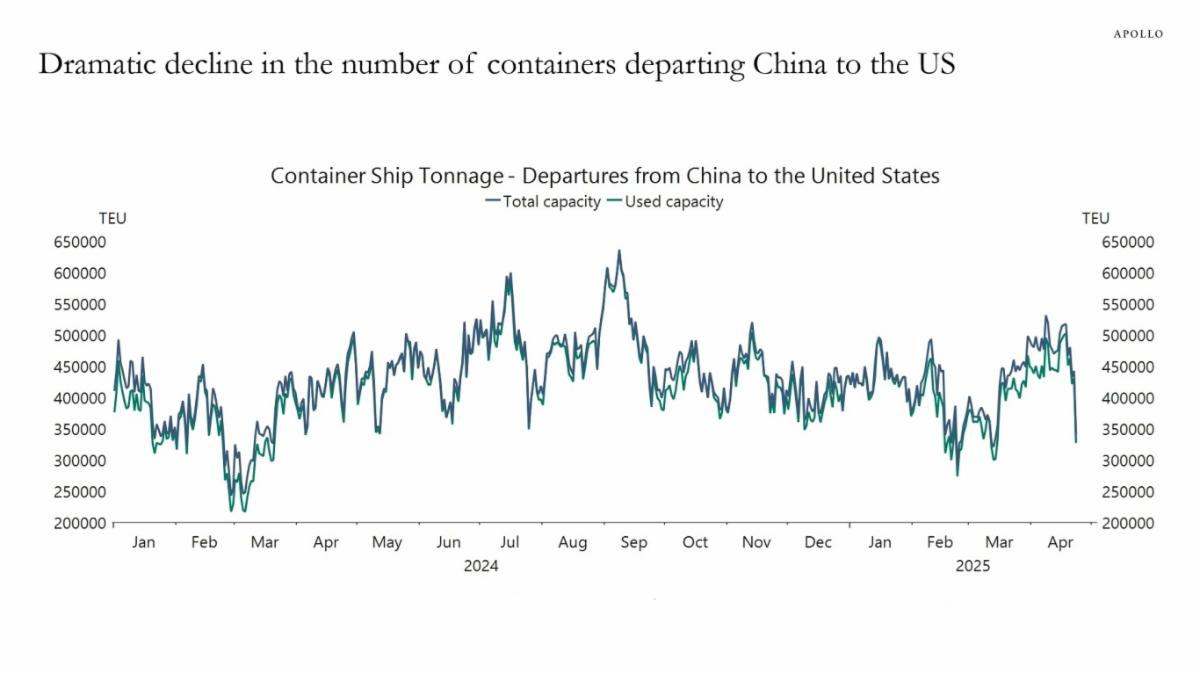
We do know that businesses stocked up on inventory ahead of tariffs going into effect. The chart above demonstrates that with a pickup in ships from China to the US then a steep drop in April. This reporting on Apple also illustrates the race to beat tariffs.


Businesses are now trying to ride out their inventory and hoping deals are struck before their inventory runs out. The idea here is trade deals are made and then they can order more goods and avoid the steep tariffs.


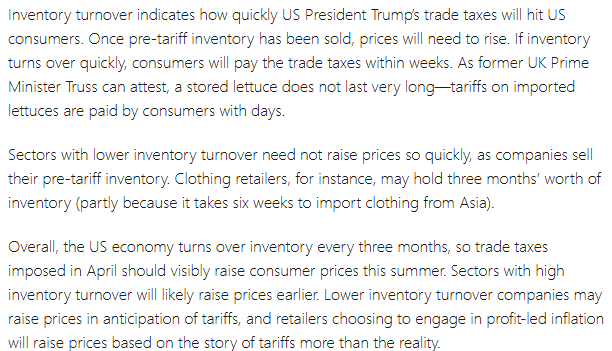
So when will the inventory run out? And what about goods with short shelf lives?


UBS Global Chief Economist Paul Donovan did some homework on the topic and his comments are below.

We will not get inflation data for April until May. It's unclear if there's been preliminary price hikes, and it's unknown if quicker turnover items, such as imported food, has seen big price increases.


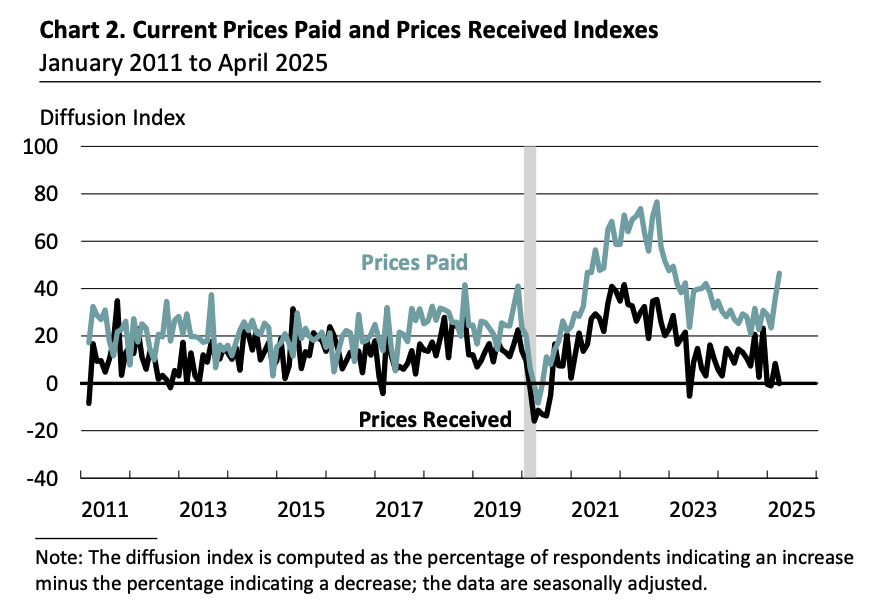
We do have survey data from businesses. There are organizations who survey businesses on different topics, including the prices they are paying.


Economists see this as a leading indicator. If businesses are paying more for inputs, the expectation is those costs will be passed along to customers down the line.


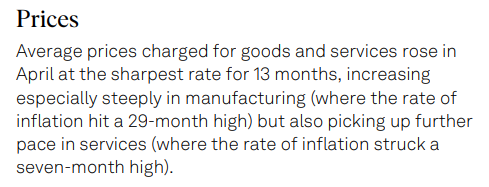
Here is commentary from a national survey of businesses conducted by S&P Global

We also have survey data from regional surveys.


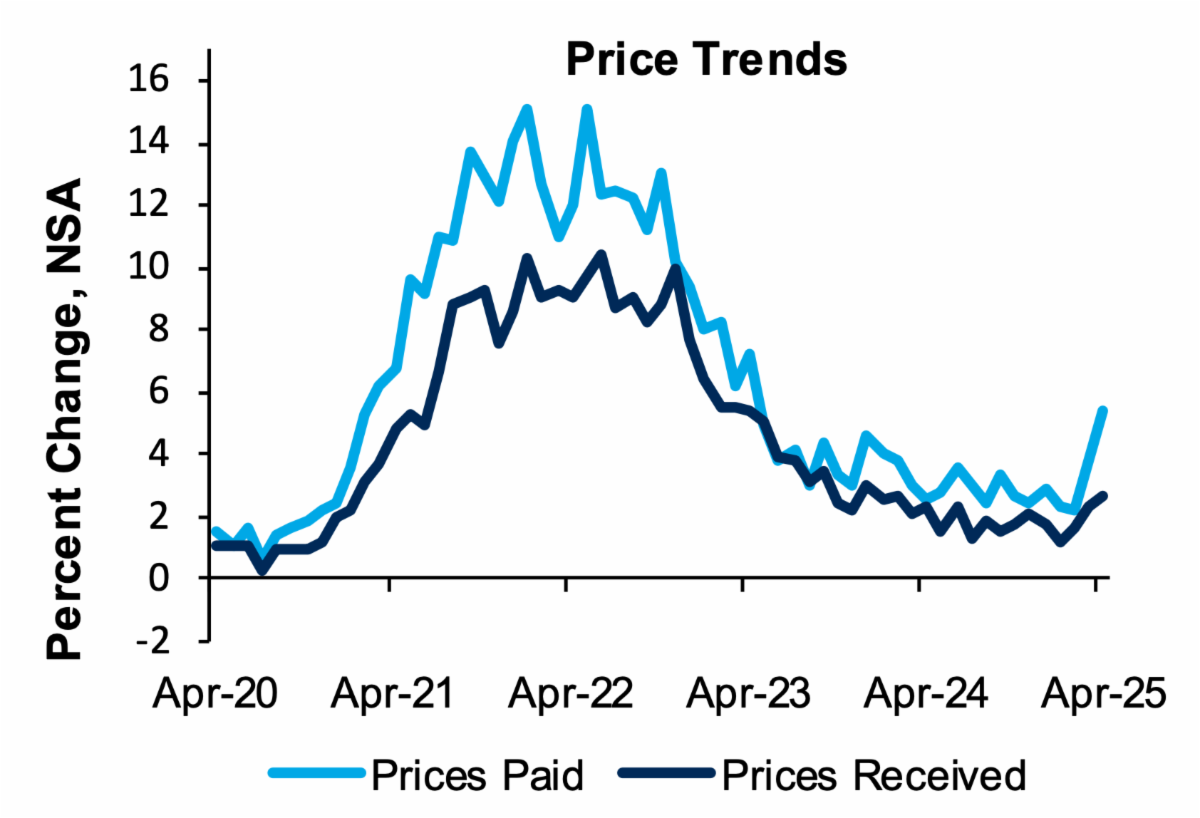
Here is a survey from the Federal Reserve of manufacturers in Richmond and surrounding areas.

We see similar data from a Federal Reserve survey of businesses in the Philadelphia region.


You can see the sharp rise of costs in April.

The surveys show businesses not raising prices on customers so far (the prices received line).


The problem there is it means either they will soon start hiking prices or they will have smaller margins. When companies have smaller margins, the concern is they will pull back on hiring to save money.


Manufactures may not be able to pass on the costs of tariffs if consumers pull back.


We do not have hard evidence of people reducing their spending. Retail spending, as measured by various different sources, show consumers continuing to spend through April.


The spending could be consumers bulk buying to try and get ahead of tariffs, it's difficult to know, but we do know spending has been consistent from consumers.


With that said, there seems to be an expectation that people will pull back soon.


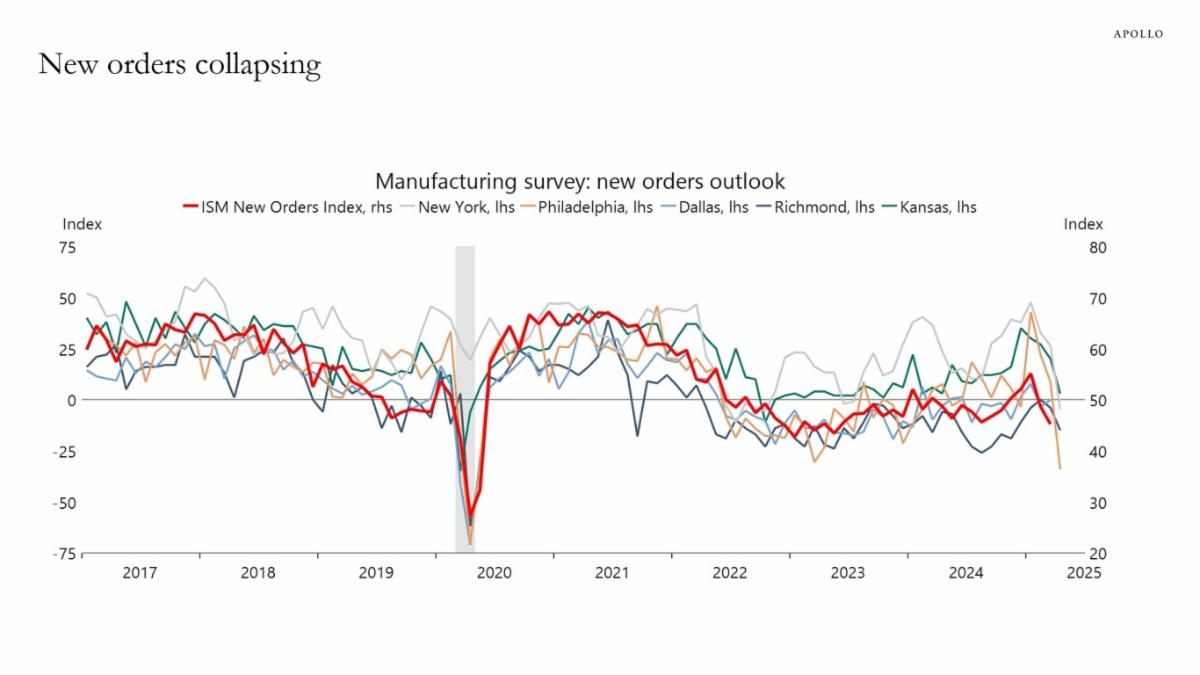
This chart from Apollo Chief Economist Torsten Slok shows manufacturers have fewer orders coming in.

And while the hard data on retail spending has been solid, the survey data on consumers is not good.


If consumers are worried about the economy, they may reduce their spending, which can contribute to an economic downturn.


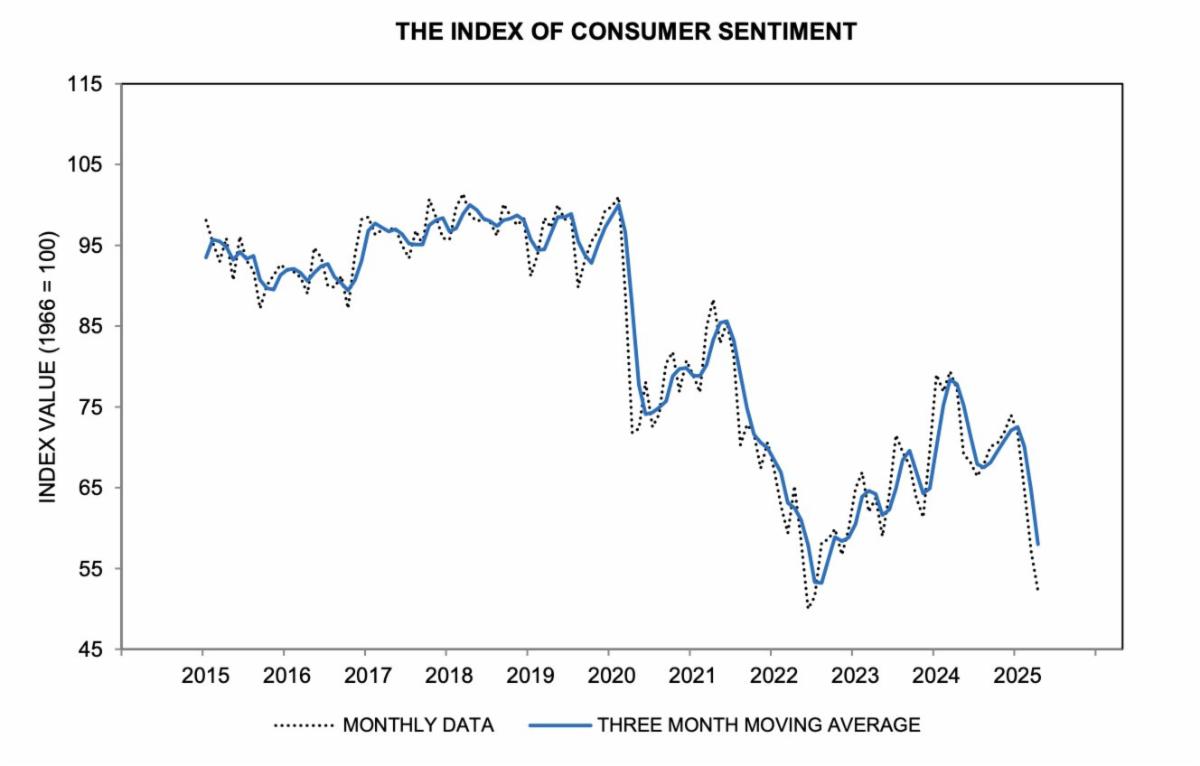
The University of Michigan does consumer sentiment surveys which are widely watched by economists.


The survey shows pessimistic views on the US economy.

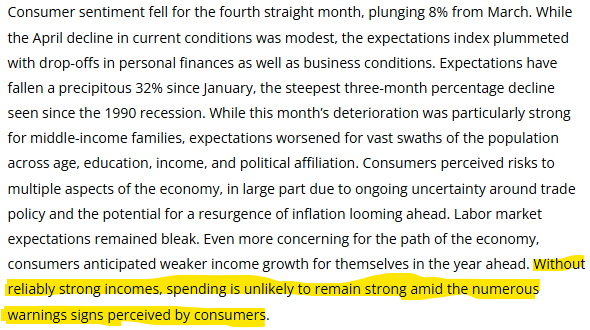
The commentary from the people who conduct that survey is also not encouraging.


They reported people surveyed were very negative.

I know this has been a bleak email.


There are serious concerns about the US economy and how tariffs will impact everyone. The survey data from businesses and consumers is poor.


Economists from many financial institutions have raised the probability of a recession.


However, the hard data is a positive in a sea of poor sentiment.


Jobless claims have not picked up, retail sales are still fine, and corporate earnings for the first three months were alright. Banks continue to say customers are paying loans and have money in their bank accounts, also a good sign.


We have seen the US economy survive a period of poor survey data.


In 2023, surveys of manufacturers and consumers showed very pessimistic opinions on the economy. But, consumer spending held up and we did not see weakness in the labor market.


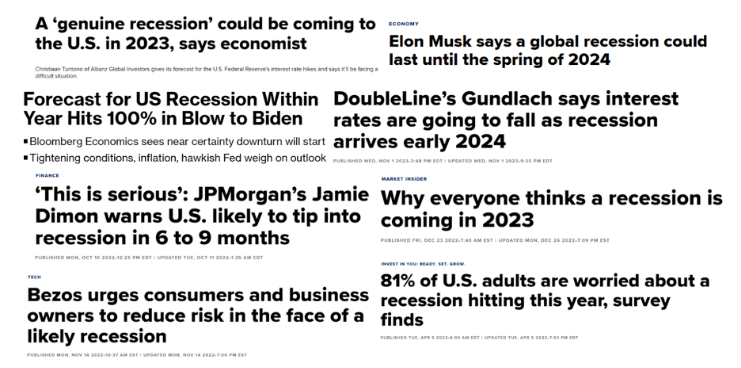
During that time, economists were also screaming that a recession was coming.

We did not have a recession, and the S&P 500 jumped by over 20% in both 2023 and 2024.


Predicting recessions is tough. They tend to come from surprise sources.


An unexpected pandemic caused the last recession. People believed single family homes were stable assets and not a source of concern until, surprise, the 08-09 recession happened.


The Trump administration has signaled optimism about trade deals. On Sunday, Treasury Secretary Scott Bessent struck a somewhat positive tone on talks with China.


A cooling of the trade war with China could quickly have a positive impact on business and consumer sentiment.


With the US economy, the main focus is the labor market and spending (we're a consumption economy). If people have consistent income, they will spend money.


The hard data I am interested in seeing over the next few months will be unemployment claims and retail sales. If we start seeing trouble in those data points, it is a negative sign for the economy.


If you have any questions or concerns, don't hesitate to reach out.