|
Firing For Suspected FMLA Fraud:
The "Honest Belief" Rule
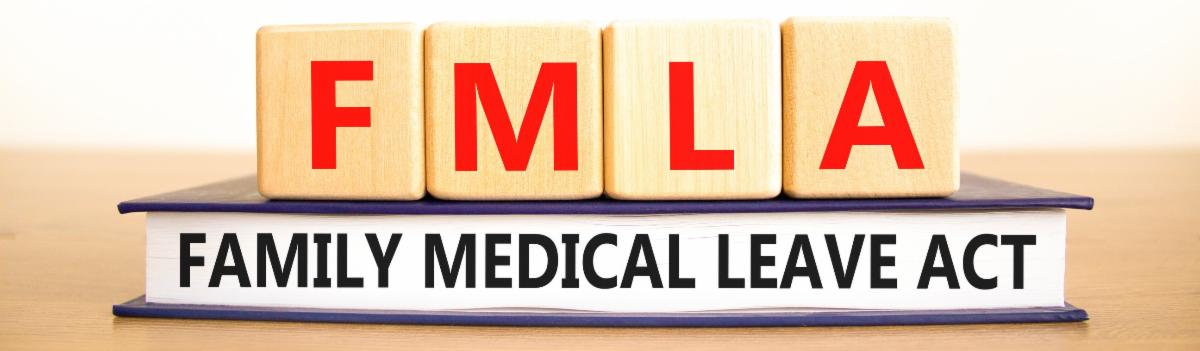
The Family and Medical Leave Act (FMLA) provides critical job-protected leave for employees facing serious health conditions or family needs. However, the protections of the FMLA are not absolute, and employees may find themselves without its shield when an employer honestly believes they have engaged in FMLA fraud.
A recent case from the U.S. Court of Appeals for the Sixth Circuit offers a cautionary tale for both employers and employees about the consequences of FMLA fraud and the importance of maintaining integrity in the administration of leave.
Quick Overview:
- The U.S. Court of Appeals for the Sixth Circuit has ruled that an employee on FMLA leave may be discharged based on the employer’s honest belief that the employee has lied about the need for such leave.
- The FMLA protects eligible employees from retaliation or interference when taking qualified leave, but it does not insulate employees from discipline for fraudulent or dishonest conduct.
- Employers may investigate suspected FMLA abuse, and, if fraud is substantiated, take appropriate action.
Implications for Employers:
This case serves as a reminder that while the FMLA provides important protections, it does not provide a shield for fraudulent or dishonest conduct. The court highlighted the balance between employee rights and employer responsibilities under the FMLA. Both parties must act in good faith: employees must use leave for its intended purpose, and employers should ensure that any disciplinary action is grounded in evidence and consistent with the law.
Read the entire case HERE as published by Ogletree Deakins
| | |
Guidance on $100K Payments for H-1B Petitions
On October 20, 2025, U.S. Citizenship and Immigration Services (USCIS) issued guidance on its website regarding the presidential proclamation, “Restriction on Entry of Certain Nonimmigrant Workers,” clarifying which H-1B petitions are subject to the $100,000 payment. USCIS also specified when and how the $100,000 payment must be submitted and how to request an exception from the payment requirement.
Overview
- USCIS issued guidance clarifying that the $100,000 payment applies to certain H-1B petitions filed on or after September 21, 2025.
- The proclamation impacts prospective H-1B beneficiaries seeking entry from outside the United States, but not current H-1B visa holders or those eligible for change of status within the United States.
- Multiple lawsuits have been filed challenging the proclamation, arguing it exceeds executive authority and violates the Immigration and Nationality Act and Administrative Procedure Act.
Although previous guidance focused on new H-1B petitions submitted pursuant to the H-1B cap/quota, the proclamation does cover both H-1B cap-exempt and cap-subject employers. Multiple lawsuits challenging the proclamation and seeking injunctive relief are currently pending. In the interim, employers seeking to file H-1B petitions subject to the proclamation may want to consider submitting requests for national interest exceptions.
Read more HERE
| |  | |
DOL Reestablishes Employer Self-Audits for FLSA and FMLA
The U.S. Department of Labor’s (DOL) Wage and Hour Division (WHD) announced it would once again oversee the Payroll Audit Independent Determination (PAID) program, allowing employers to self-report violations of the Fair Labor Standards Act (FLSA) and Family and Medical Leave Act (FMLA). Without such supervision, an employee cannot be made to waive his or her rights to pursue a private lawsuit against an employer for lost wages.
Using the PAID program may not be for every employer. Employers that qualify may want to consider state law claim/exposure, as well as the fact that WHD has complete discretion whether to accept an employer’s self-audit. As noted above, WHD is no longer enforcing liquidated damages under the FLSA, so whether the employer audits and corrects FLSA issues on its own, is part of the supervised PAID program, or is under investigation, WHD is not assessing liquidated damages except in litigation.
Thus, employers may want to consider whether the time, burden, and formality involved with participation in the program is beneficial for the waiver and release of wage claims—especially where a state or local law may still provide those employee rights. Employers may want to consider that they can use the PAID program only once every three years; if the issue is not significant, they may want to consider handling smaller issues on their own and using the PAID program for more significant matters. Further, even with the PAID program, an employee may choose to decline payment and litigate the wage matter directly.
More details HERE
| | |
| |
Pay-or-Play Changes May Impact Employers in 2026
We've seen the ongoing debate over health care, specifically the Affordable Care Act (ACA) and the expiration of the enhanced premium tax credits, as a top contributor to the longest government shutdown in U.S. history. The Affordable Care Act (ACA) requires applicable large employers (ALEs) to offer affordable, minimum-value (MV) health coverage to their full-time employees (FTEs) or risk paying a penalty. This employer mandate provision is known as the “employer shared responsibility” or “pay-or-play” rules. An ALE is only liable for a penalty if one or more of its FTEs receive a premium tax credit (PTC) to pay for health insurance through an ACA Exchange (or Marketplace).
Employers should be aware of the following changes related to the ACA’s pay-or-play rules for 2026:
-
An ALE’s health coverage is considered affordable for FTEs if their required contribution for self-only coverage does not exceed 9.96% of their household income for the year (up from 9.02% for 2025);
-
Pay-or-play penalty amounts significantly increase. For example, ALEs assessed with penalties because their coverage is unaffordable may be charged a monthly penalty of $417.50 for each FTE who receives a PTC (up from $362.50 for 2025);and
-
The enhanced PTC expires at the end of 2025 (unless extended by Congress), which means that fewer individuals will qualify for the PTC and subsidy amounts will be smaller.
| | | | | |
What the Latest Domestic Deployments Mean for Your Workforce
When President Donald Trump sent National Guard troops to Los Angeles and Washington, D.C., in recent months, some private employers faced unplanned leaves of absence. Here are some considerations for employers to keep in mind when employees take military leave.
Read more HERE
| | | |
Combatting Tech Neck
While not an official medical diagnosis, “tech neck” has become a familiar phrase in today’s workplace. As smart phones, laptops and tablets have become everyday tools, people spend more time hunched over screens. The result is a growing number of individuals who spend hours per day behind screens reporting stiffness, discomfort and pain in their neck and shoulders.
What Is Tech Neck?
Tech neck refers to the strain placed on the cervical spine (the part of the spine in the neck) when a person consistently looks down at a device or sits in poor posture while using technology. The human head weighs about 10 to 12 pounds in a neutral, upright position. However, when tilted forward at a 45-degree angle, the position many adopt while scrolling or typing, the effective weight on the neck can increase to nearly 50 pounds. Over time, this added pressure strains muscles, tendons and ligaments, leading to discomfort or pain.
According to the Mayo Clinic, common symptoms of tech neck include the following:
- Stiffness and soreness in the neck and shoulders
- Headaches, particularly tension headaches
- Reduced mobility or difficulty turning the head
- Tingling or numbness in the arms in more severe cases
The causes are not limited to smartphone use. Hours spent at a desk without ergonomic adjustments, craning toward a laptop screen or even lounging on the couch with a tablet can contribute to the problem. Tech neck is essentially a modern posture issue driven by repetitive movements and sustained positions that overload the upper spine.
What Can You Do?
- Improve ergonomics
- Follow the 20-20-20 rule
- Strengthen and stretch
- Mind your phone habits
- Prioritize movement
- Seek professional support
To download the helpful guide, click HERE.
| | | | |