|
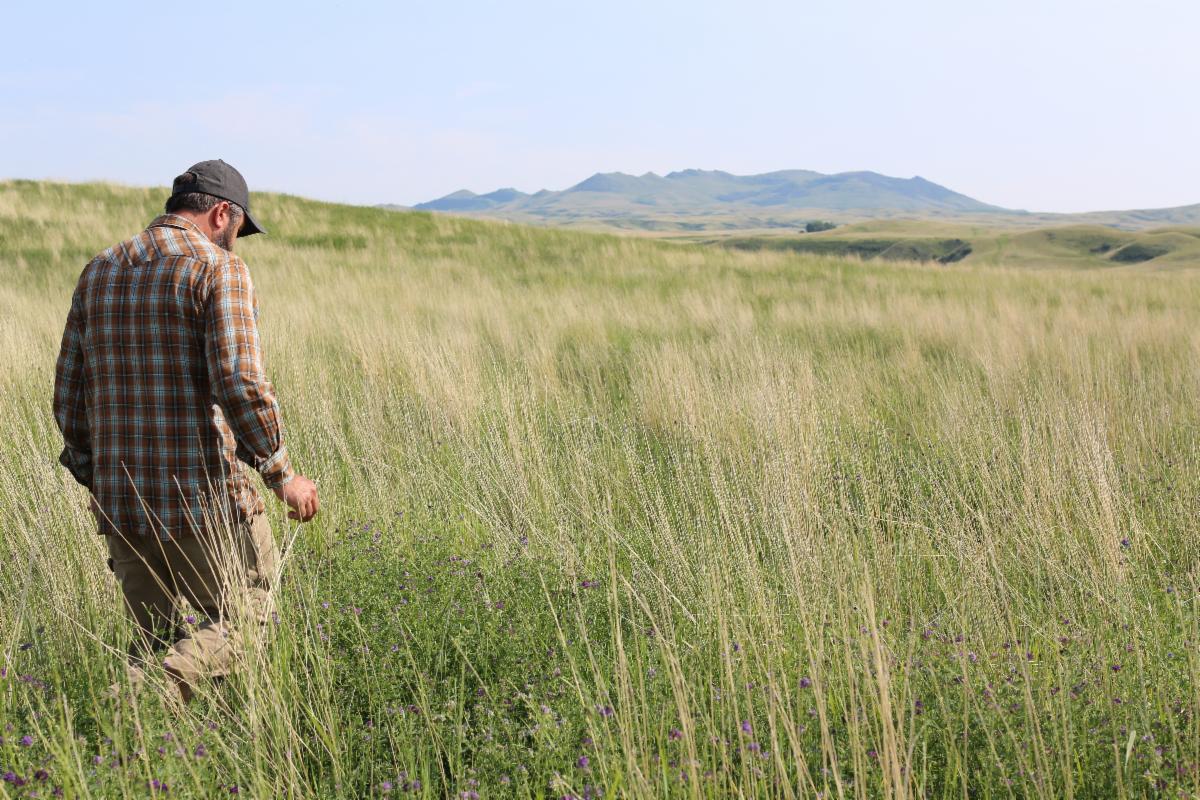
Did you know Iroquois Valley offers a way for landholders to transition from direct real estate ownership to owning shares in our diversified REIT? Farmland often carries both financial value and family legacy. But if the time comes to transition away from direct management, our 721 Farmland Exchange can help landowners plan to keep the land in agricultural use while still benefiting from a long-term investment.
| |
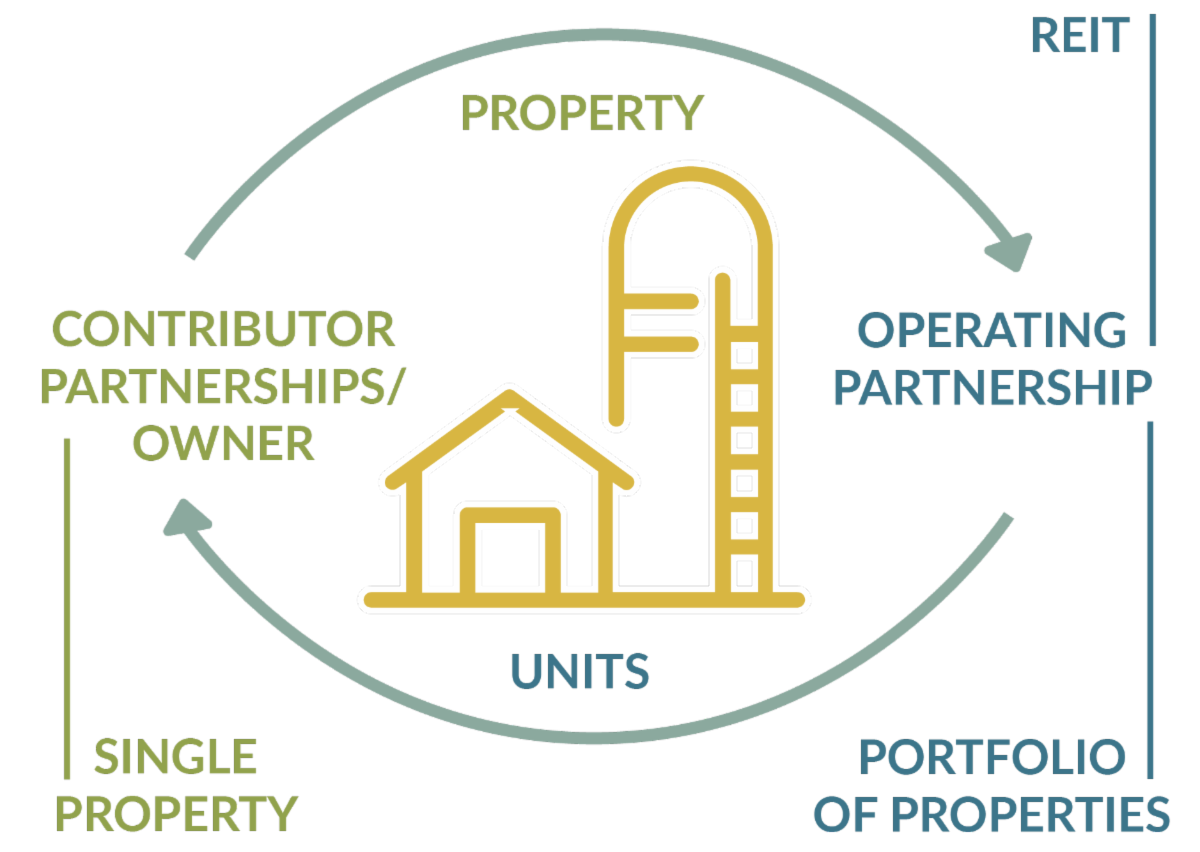
What is a 721 Farmland Exchange? It is a type of property acquisition transaction in which a property owner who is an accredited investor contributes their property to an Umbrella Real Estate Investment Trust (an “UPREIT”) in exchange for ownership in the UPREIT.
It is similar to a 1031 Exchange in that it can allow property owners to defer capital gains on appreciated real estate.
For many families, partnerships, and landowners, this structure can help address common challenges: succession planning, estate complexity, property management responsibilities, concentrated real estate holdings, or the desire for more passive income. Instead of selling land outright and triggering an immediate tax event, owners may be able to maintain exposure to real assets while participating in a portfolio focused on U.S. organic farmland.
At Iroquois Valley, this opportunity is rooted in the same long-term approach that guides our work with farmers and investors. A 721 Farmland Exchange can help landowners simplify ownership, create a path toward future liquidity, and align their land with a portfolio dedicated to building the organic future. If you or your family are considering the next chapter for your farmland, we invite you to reach out about whether a 721 Farmland Exchange may be the right fit.
| |
|
IN THE MEDIA
FOOD TANK FEATURES OUR INNOVATIVE FARMER SUCCESS SHARING PLAN
Through thoughtful stewardship, organic farmers build long-term land value. This month, the agricultural media group Food Tank featured a story on our Farmer Success Sharing Plan. The piece highlights how we are strengthening partnerships with organic farmers by creating a path for them to share in the value they help create.
As Drew Blankenbaker, VP of Farmer Relations at Iroquois Valley, shares in the piece: “Land access isn’t really a grit or an effort problem, it’s a system problem.” We’re grateful to see this work recognized, and even more grateful for the farmers whose skill, care, and stewardship make this effort possible.
| | |
WATCH THE RECORDING
2026 ANNUAL SHAREHOLDER MEETING
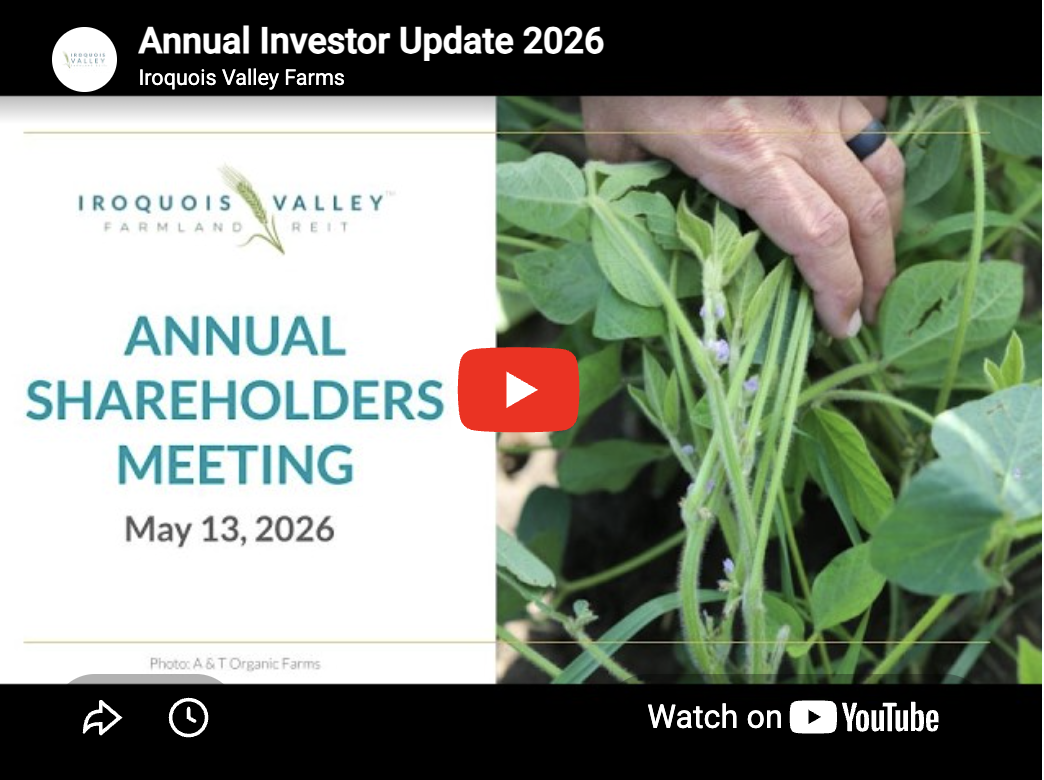
On May 13, Iroquois Valley convened our annual shareholder meeting for a thoughtful discussion of portfolio performance, strategic priorities, and opportunities ahead in organic agriculture.
The meeting opened with remarks from Board Chair Anna Jones-Crabtree of Vilicus Farms, who shared her perspective as both a board member and organic farmer. Her message was clear: this is a moment of real opportunity for organic agriculture.
CEO Christopher Zuehlsdorff shared updates on strategic direction, 2025 performance, financial priorities, and growth initiatives. Drew Blankenbaker, VP of Farmer Relations, followed with a portfolio update, highlighting strong performance across our core Midwest hubs and improved stability. We also discussed progress on our lease model, farmer pipeline, and held a robust Q&A with shareholders.
The meeting closed with a short video centered on a theme that continues to guide our work: organic is good business. Thank you to everyone who joined us, and to our investors, farmers, board, and team for helping us continue to build the organic future.
| | |
LEARN & GROW
INVESTOR QUESTION OF THE MONTH
Q: Why would a farmland property owner consider a 721 Farmland Exchange rather than a 1031 Farmland Exchange, and why should expanding organic farmers be aware of the potential for a 721 Farmland Exchange with Iroquois Valley?
A: A 1031 Farmland Exchange entails a property sale to a 3rd party, and a time-sensitive and often complex sourcing and exchange into a like-kind property of a similar value. Because farmland property owners often don’t have the expertise to source, diligence, and close on appropriate like-kind properties, they often opt for professional management, which may enable a sale and exchange for an interest in a professionally managed, larger, like-kind property or properties (such as an apartment complex or hotel), despite the often substantial fees.
In contrast to those often substantial fees, a sale to a 3rd party, and an exchange into an often unfamiliar property type, a 721 Exchange within an Iroquois Valley Farmland Hub, may enable the contributed farmland property to be leased in partnership with a neighboring organic farmer, keeping the land in active production while supporting the growth of the next generation of organic farmers, in addition to providing tax deferral, diversification, and professional farmland management to the landholder.
For expanding organic farmers within a Farmland Hub, a 721 Exchange may create opportunities to access additional farmland through long-term lease arrangements with Iroquois Valley.
Sources: Peterson, Jeff. “1031 Exchange Deadlines Explained: 45 Days, 180 Days, and What They Mean.” CPEC1031, LLC, 22 July 2025, www.cpec1031.com/blog/1031-exchange-deadlines-explained-45-days-180-days-and-what-they-mean. Chicagoland 1031 Exchange. “A Primer on Fees of DSTs.” Chicagoland 1031 Exchange, 3 June 2019, chicagoland1031exchange.com/a-primer-on-fees-of-dsts/.
| | |
JOIN US
IROQUOIS VALLEY AT THE US SIF FORUM
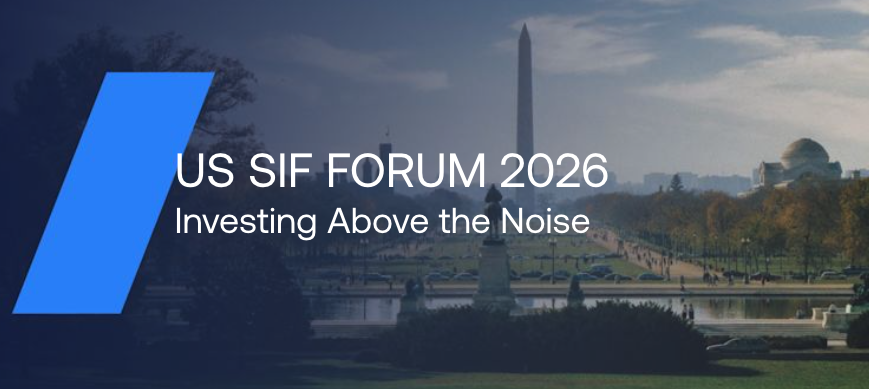
We are excited to announce that Matt Blackburn, Manager of Business Development at Iroquois Valley, will speak at the upcoming US SIF Forum, June 24 -26, as part of the panel Land, Power, and the Price of Food: Who Wins in America’s Agricultural Economy?
The session will explore how land ownership, capital flows, and stewardship models are shaping farmer economics, food system resilience, and long-term land access. Matt will bring Iroquois Valley’s perspective as the original organic farmland REIT: that by providing farmers with long-term stability and support to steward land well, capital can help build a stronger, healthier agricultural economy.
Planning to attend the US SIF Forum in Washington, DC? Please reach out so that our team can connect with you. We hope to see you there.
| | |
CONNECT WITH IROQUOIS VALLEY
Our team is attending these upcoming events. Reach out to connect!
| | |
RNR Notes are available to accredited investors only. You may only invest after careful consideration of our complete Private Placement Memorandum, verification of your accredited investor status, and the submission of any other information required by Iroquois Valley relating to your proposed investment. No offering of RNR Notes is being made to investors until the Company has complied with the applicable state law.
Iroquois Valley Farmland REIT, PBC is offering its common stock for sale pursuant to Tier 2 of Regulation A+ and as such intends to be exempted from state qualification pursuant to federal law. No offer to sell securities or solicitation of an offer to buy securities is being made herein or in any state where such offer or sale is not permitted under the blue sky or state securities laws thereof. Offerings are only made through our Offering Circular, available here. Some of the statements herein may constitute forward-looking statements under federal securities laws. Such forward-looking statements are subject to various risks and uncertainties, including those described in the Offering Circular.
| | |
THE ORIGINAL ORGANIC FARMLAND REIT
As a corporate guideline, we do not look for specific farmland to purchase or finance. We develop relationships with farmers who want to grow their businesses. We move forward when we have a ready, willing, and able farmer.
| |
Iroquois Valley Farmland REIT | Public Benefit Corporation
Certified B Corporation | Est. 2007
| | | | |