|
|
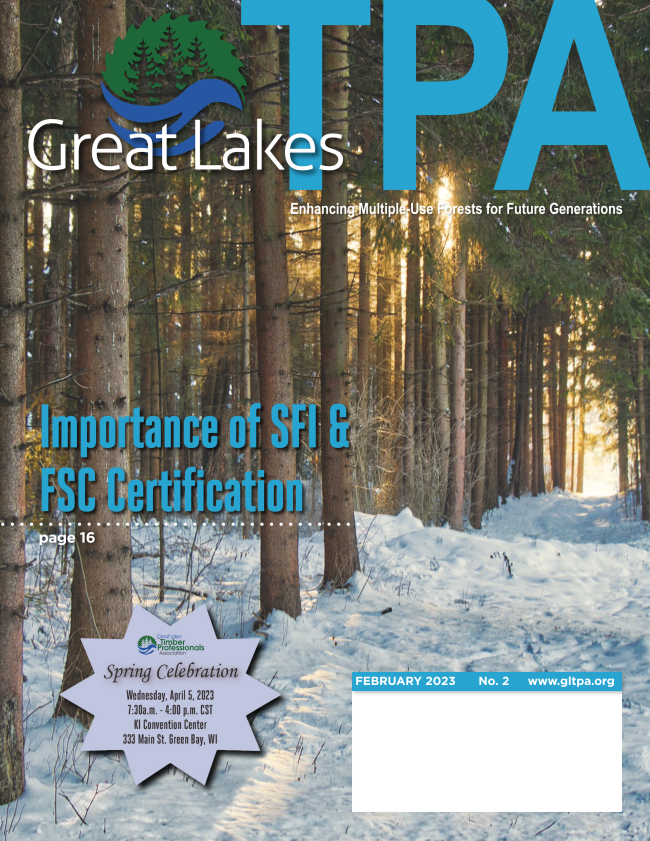
Six more weeks of winter brings hopes for frozen swamps and roads which are needed to get jobs done. The February TPA Magazine features the Importance of SFI & FSC Certification. Read Taylor Dorsey's article on page 16. Mike Monte writes: Necessity is the Mother of Invention, which all in the industry can relate to. Check out the new bi-monthly feature by Jeff Peters: Logging Through the Ages and let us know what you think. Finally, read about why logging and forestry is The Happiest, Least Stressful, Most Meaningful Job in America. I hope you will agree with at least most of that title, I do!
|
|
|
Visit our Website: www.gltpa.org |
|
|
|
|
From the President's Desk
Troy Brown
|
“A Great Void - Carbon Credits and Proper Silviculture”
This country prospers due to land ownership and the rights a landowner can exercise with the deed they possess. If a landowner decides to sell carbon credits from their land, so be it. There are various reasons a landowner may choose to sell carbon credits. One may be economics. Another may be preservation. At any rate, it is their choice as the landowner.
It has been two years since I heard that forest carbon credits exist. At first glance, I dismissed it as a west coast environmental extremist initiative to prevent timber harvesting. Naively, I thought it would stay out west and not affect our eastern forest area. Then, six months later, I was part of a presentation given by employees of a specific carbon exchange program. The program is available to small landowners. My initial reaction was emotional, and I was convinced carbon credits were a conspiracy to destroy the timber industry. Since then, a cooler head has prevailed, and I am now on a mission to understand forest carbon credits as well as I can. Then I will make a judgment.
What is a forest carbon credit? A forest carbon credit is a sale a forest landowner makes to a carbon exchange company where the landowner promises to sequester more carbon in their forest over a future period of time. In most cases, this means not harvesting existing timber on their property or meeting the harvesting parameters set forth by the exchange company.
|
|
|
|
GLTPA Director Notes
Henry Schienebeck
|
What's Normal?
Greetings,
The introduction of Covid created a great deal of havoc in the lives of millions of people and still has its grip on people in different parts of the world. Along with COVID came phrases such as the “new normal” and “we’re in this together.” What is the new normal anyway? The “Dictionary.com” definition of normal is “conforming to the standard or the common type; usual; not abnormal; regular; natural.” This definition covers anything I’ve ever come across. Another way of doing something might not be my normal but it was somebody’s normal.
In an article provided by the “Forest Data Network” (FDN) titled “A Look at housing market trends” the writers described the housing decline instigated by the “global financial crisis” from 2006 to 2010. The article stated, “During that period the graph of new single-family homes under construction showed a decline steeper than most any mountain in North America -almost 80% in a little over three years from an annualized rate of 2.3 million homes in January 2006 down to less than 500,000 in April 2009. The recovery in the number of new single-family homes was steady, but nowhere near as steep upward. The necessities to build supply were absent and returned slowly. Lenders left the mortgage business and loan standards tightened. Home builders and their subcontractors moved on to different businesses. So, a dramatic shortfall was created and what would be considered a normal number of new homes in the late 1990’s were not being built again until the current decade. That has left a big hole, which is partially filled by multi-family construction.”
|
|
|
|
|
Krueger Lumber Company Inc. is a family owned and operated company. Our father, Herb Krueger, started as a portable sawmill.
In the early years the sawmill would move from one logging area to the next throughout Northeast Wisconsin. We finally settled in Valders, Wisconsin, where Herb built a permanent sawmill.
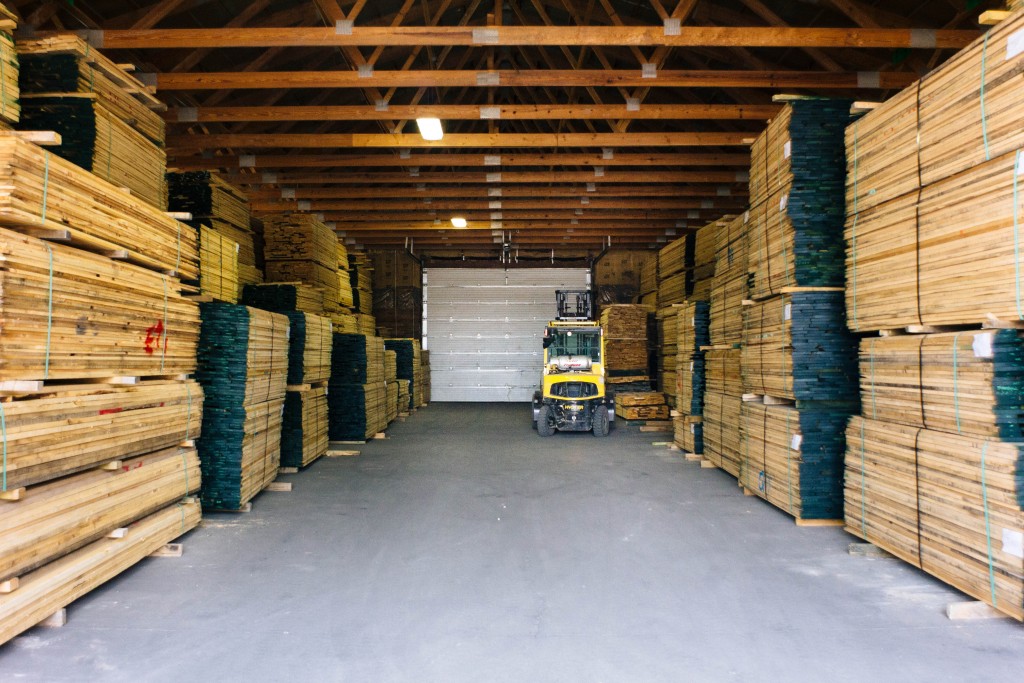
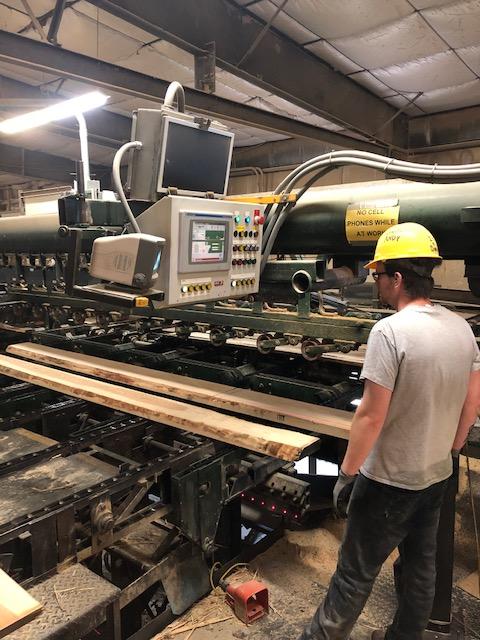
Krueger Lumber has modernized with the times. We do logging, have computer assisted optimizing sawmill equipment, and run our own dry kilns.
Krueger Lumber now has five warehouses that protect the precise drying completed by our three computer-controlled dry kilns. We are proud to produce over six-million board feet per year at our facility.
Today Herb’s sons Bruce and Larry carry on the tradition as second-generation leaders for Krueger Lumber.
In 1969 Krueger Lumber joined the National Hardwood Lumber Association (NHLA). We are a proud NHLA grade-certified sawmill.
|
|
|
A Look at Forestry Certification:
Education 101 and Industry Insight
|
|
By: Taylor Dorsey, Wood Sourcing Specialist with Ahlstrom
Forest products have become an increasingly important part of the global economy. In the past couple of decades, forest certification has increased in popularity. Forest certification is a voluntary process in which the forest management practices and fiber tracking methods of an organization, or individual, are evaluated and certified according to a set of environmental, social and economic standards.
Forest certification began in the early 1990s, when a number of environmental organizations and companies began to recognize the need for improved forest management practices. The concept was to create a system in which companies and individuals could demonstrate their commitment to responsible forest management. The goal was to create a system that would provide a standard of environmental, social and economic best practices and would be recognized and accepted globally.
Three Key Players
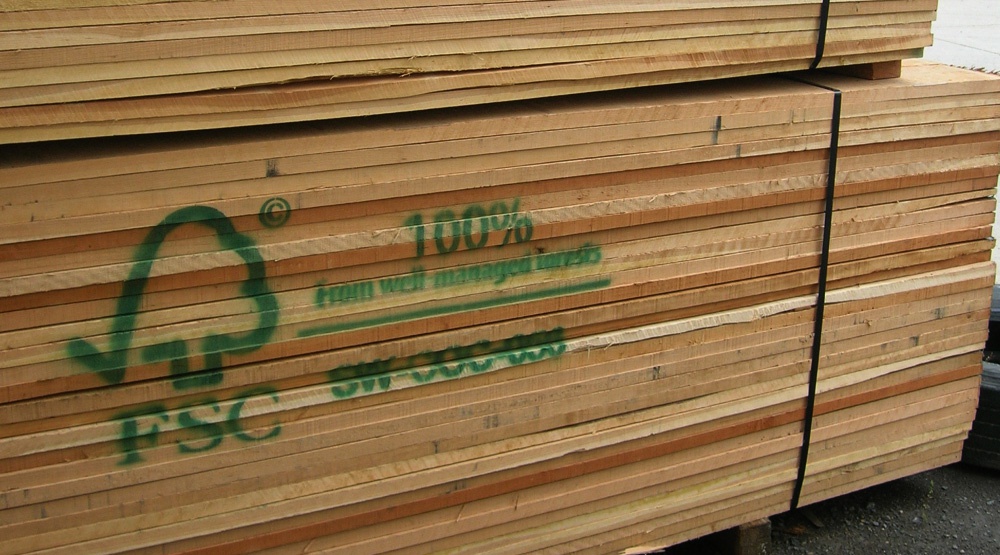
Today, there are three primary forestry certification schemes in place, those being the Forest Stewardship Council® (FSC®), the Programme for the Endorsement of Forest Certification (PEFC), and the Sustainable Forestry Initiative® (SFI®). Each scheme has its own set of standards designed to ensure forests are managed in a way that is respectful of the environment, socially beneficial, and economically viable.
FSC (https://us.fsc.org/en-us) is the most widely known certification system and was founded in 1993. FSC’s standards are based off of ten principles and recognized internationally. Their mission is to, “promote environmentally sound, socially beneficial, and economically prosperous management of the world’s forests.” FSC’s vision is to, “meet current needs for forest products without compromising the health of the world’s forests for future generations.”
PEFC (https://www.pefc.org/) is also internationally recognized and was founded in 1999. PEFC refers to itself as an umbrella organization that, “provides independent assessment, endorsement and recognition of national forest certification systems.” They feel forest certification needs to be addressed locally, but care for the health of all forests across the globe. Their mission and vision is to protect forests through the promotion of sustainable forest management via certification. PEFC believes all can benefit from the many products that forest provide now, while ensuring these forests will be around for generations to come.
SFI (https://forests.org/) is North American based scheme that was founded in 1995. SFI’s mission is to, “advance sustainability through forest-focused collaboration.” Their vision is, “a world that values and benefits from sustainably managed forests.” SFI has been endorsed by PEFC since 2005.
|
|
Great Lakes Timber Professionals Association
PO Box 1278, 3243 Golf Course Road Rhinelander WI 54501
PHONE # 715-304-2861
|
|
|
|
|
|
|