UT Energy Bulletin | November 2026 | | | | |
Two UT Physicists Receive DOE Early Career Research Awards
UT Austin physicists Junyeong Ahn and Joshua Burby have received Early Career Research Awards from the U.S. Department of Energy’s Office of Science. Ahn is exploring how light can be used to control electron motion and quantum states in chiral superconductors. Burby is developing better ways to model the turbulent forces affecting plasma confinement in stellarator fusion reactors. The competitive five-year awards support promising early-career scientists pursuing innovative research with the potential to advance U.S. scientific and technological leadership.
Learn More
| | | |
UT Hydrogen, Solar Power and Energy Storage Events
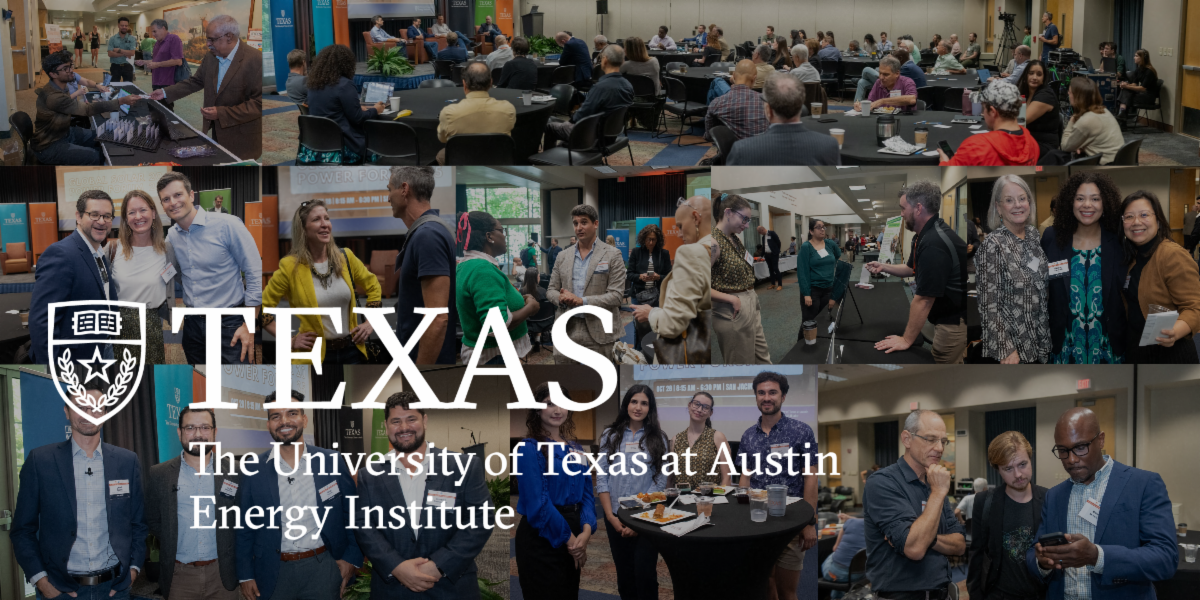
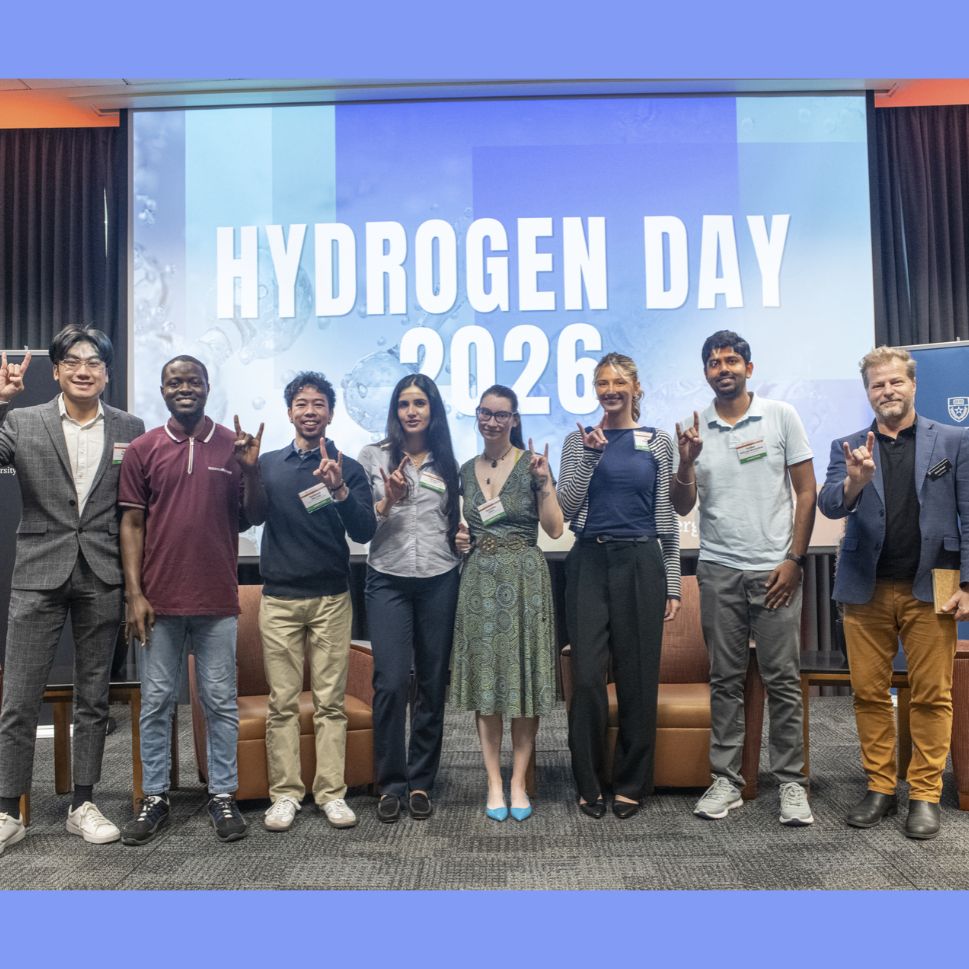
The Energy Institute convened industry, academia, and government participants at the Global Solar Power + Energy Storage Forum on Oct. 7 and Hydrogen Day on Oct. 8-9. GSP+ESF featured expert panels and technical talks on solar technologies, storage, grid integration, and policy, while Hydrogen Day focused on the technologies, partnerships, and policies advancing the hydrogen economy. If you couldn’t attend or want to revisit a session, recordings are available on the Energy Institute YouTube channel, which hosts more than 400 lectures from leaders in industry, academia, and government.
View the GSP+ESF and Hydrogen Day Playlists
| | | |
2027 KBH Energy Studies Minor Applications Open
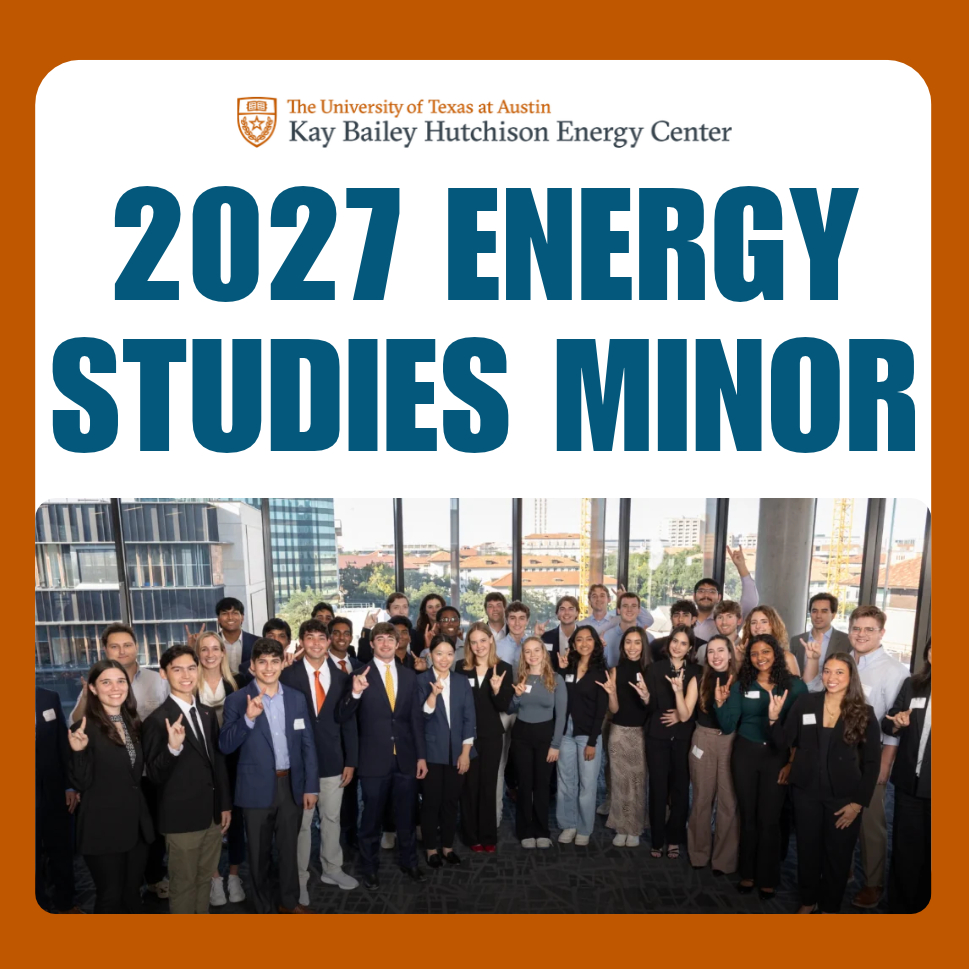
Applications are now open for the 2027 Energy Studies Minor, a summer program for undergraduate students from all majors at UT Austin administered by the KBH Energy Center. The minor offers an interdisciplinary introduction to the energy industry through business, geoscience, law, engineering, technology, and policy. Running from early June through mid-August 2027, it combines classroom learning with hands-on industry experience. Students complete coursework Monday through Thursday, while Fridays are reserved for industry treks, networking, and career preparation.
Learn More
| | | |
Rethinking Carbon Storage: UT Researchers Explore New Geological Solutions
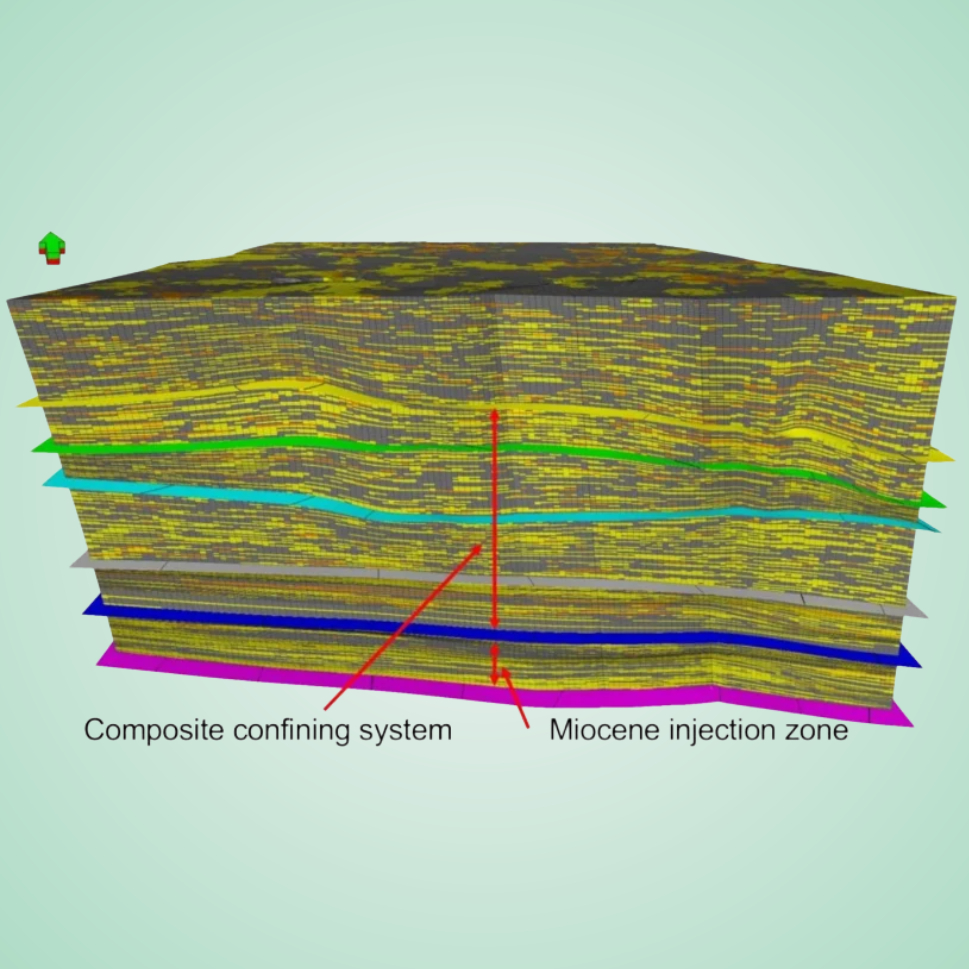
Companies looking to store carbon dioxide (CO₂) along the Gulf Coast face a limited supply of suitable underground storage sites. Traditional carbon storage typically relies on reservoirs sealed by thick, continuous layers of shale or mudstone, limiting the number of viable locations. At The University of Texas at Austin’s Bureau of Economic Geology, research associate professor Alex Bump and his research team are exploring an alternative approach: storing CO₂ in geological formations that lack traditional petroleum seals. Their research focuses on composite confining systems, which consist of multiple layers of sand, shale, and silt that may work together to prevent CO₂ from migrating upward, which could greatly expand the land available for carbon storage along the Gulf Coast.
Learn More
| | | |
Texas Advanced Computing Center Supports Research in Clean Energy and Carbon Conversion
The Texas Advanced Computing Center (TACC) provided researchers at Caltech and Washington University in St. Louis access to its Stampede3 supercomputer to model ways to make carbon conversion more economically viable. Led by Feng Jiao at Washington University, the team investigated how carbon monoxide electrolysis systems could adapt to fluctuations in electricity availability and cost. Using Stampede3, researchers modeled copper-based catalysts to understand how intermittent power cycles contribute to degradation. The simulations revealed chemical mechanisms behind carbonate and hydroxide formation, helping identify ways to preserve catalyst performance during reduced-power periods.
Learn More
| | | |
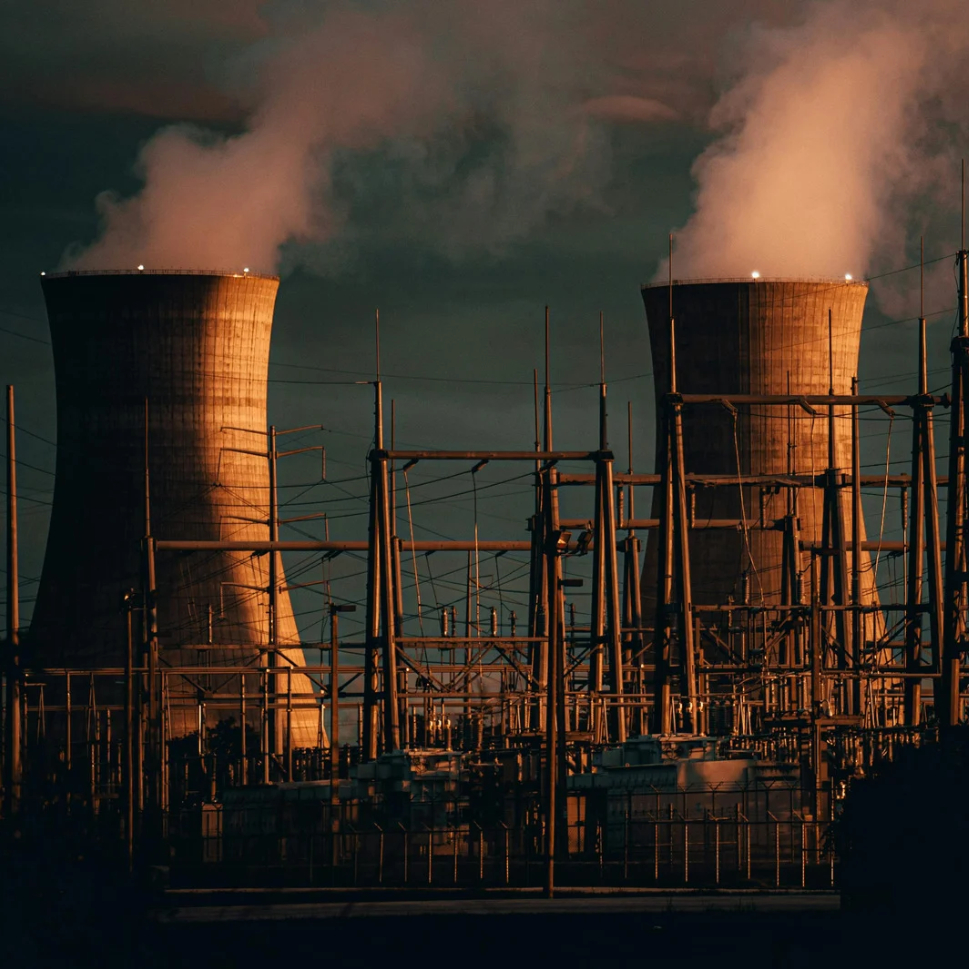
UT Hosts National Nuclear Engineering Conference
UT's Nuclear Engineering Teaching Laboratory (NETL) recently hosted the annual conference of the National Organization of Test, Research and Training Reactors, welcoming more than 150 nuclear professionals, researchers and students. The week-long event featured workshops, facility tours and nearly 60 presentations, including UT research on digital twin development, advanced testing and modeling, and isotope production. A digital twin forum also brought together institutions to discuss using research reactors as platforms for the technology.
Learn More
| | | |
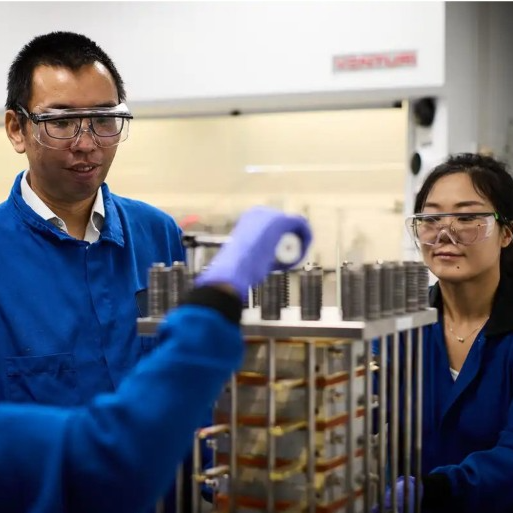
UT Researchers Develop Biomimetic Separator Membrane for Efficient Lithium Extraction
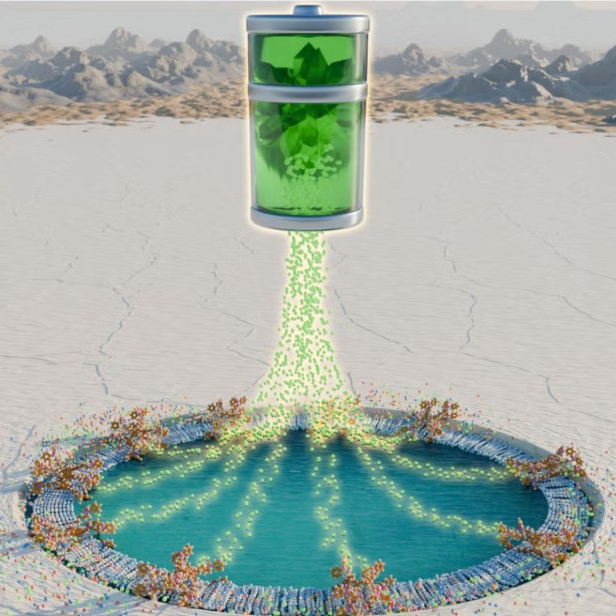
Lithium is essential to mobile phones, electric vehicles, and power grids, but extracting and refining it can be costly, time-consuming, and environmentally harmful. Traditional extraction methods often introduce contaminants that require additional filtration. To address these challenges, Professor Manish Kumar and his research group developed an artificial channel-based membrane inspired by the way living cells transport ions. The innovative membrane selectively lets lithium ions pass through while blocking unwanted materials, potentially reducing the need for costly, hazardous chemicals. Researchers are now evaluating its scalability and reproducibility for commercial applications, hoping to expand the technology to other materials.
Learn More
| | | |
UT Researcher Explores the Future of Smarter, More Efficient Railways
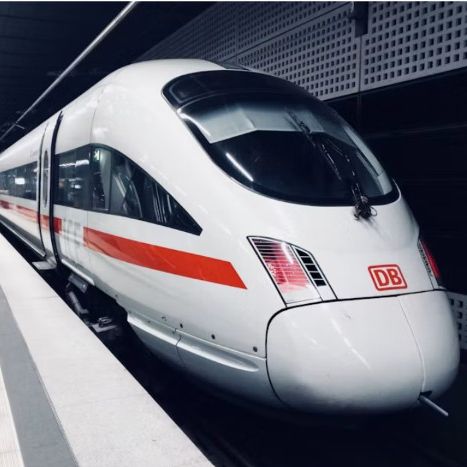
As the trucking industry advances through improvements in fuel efficiency, vehicle aerodynamics, and autonomous driving technologies, freight railroads are exploring new ways to remain competitive. One approach involves operating shorter, more frequent trains to improve flexibility and better meet shipping demands. C. Tyler Dick, an assistant professor in UT Austin’s Department of Civil, Architectural, and Environmental Engineering, explores this shift through the TEA Nexus, a combination of three technologies designed to improve railroad operations: train control systems, electrification, and automation. Together, these technologies could allow trains to safely operate closer together, increase track capacity, reduce emissions, and improve overall railroad efficiency.
Learn More
| | |
SoPhAr: Solar Phased-Arrays to Boost the Range of Electric and Hybrid Aircraft in a Solar-Rich World
International climate goals call for net-zero carbon dioxide emissions from aviation by 2050. Researchers have proposed Solar Phased-Arrays (SoPhAr) that could help electric and hybrid aircraft reduce carbon emissions. Instead of relying only on onboard batteries or alternative fuels, the system would use large solar farms on the ground to wirelessly send energy to aircraft during flight using focused microwave beams. The study found that this approach could provide significant amounts of power, lower fuel costs, and reduce aviation emissions. A case study in Texas showed that a single large solar farm could support more than 13 hours of electric flight and prevent over 86,000 kilograms of CO₂ emissions in one week. SoPhAr is proposed as a promising clean aviation technology
This research was funded in part by the Strategic Energy Seed Grant Program administered by the Energy Institute.
Read More
|
| |
Phases and Stages Season 2, Episode 1:
The Promise of Hydrogen Expansion
What if I told you that the most common element in the universe could also deliver a clean-burning alternative to oil and natural gas?
Technically…that’s all true.
Hydrogen… could do just that. And for a while, it seemed like an expanded hydrogen industry was set to be one of the winners of the emerging energy transition…complete with federal subsidies, tax credits for firms wanting to get in on the spoils…and much talk about an export market.
But developing a market for clean hydrogen has a chicken-and-egg problem. And that excitement among policymakers about developing a clean, abundant alternative to fossil fuels failed to hatch, too. The resources aren’t necessarily gone…they’re just “on pause.” Which…for some…is an even more difficult fate to negotiate.
Now available on Apple Podcasts, Spotify, Amazon Music, and more!
| | |
Energy Institute
Jorge Piñon shared his analysis in The Wall Street Journal🔒 on the causes behind Cuba’s power grid crisis.
Bureau of Economic Geology | Jackson School of Geosciences
Susan Hovorka was quoted in the Texas Tribune about the relative safety of carbon storage wells and the realistic impacts on local communities.
| | |
School of Law
David Spence was quoted in Deutsche Welle discussing how building new transmission lines could help add solar and wind power to the electricity grid.
Cockrell School of Engineering | Hildebrand Department of Petroleum and Geosystems Engineering
Kishore Mohanty was quoted in The Journal of Petroleum Technology, discussing the need for larger-scale, high-pressure testing facilities to improve new technologies for oil and gas recovery.
| | |
Cockrell School of Engineering | Walker Department of Mechanical Engineering
Guihua Yu was featured in Chemical & Engineering News, discussing the development of thin, flexible batteries and their potential applications in emerging technologies.
Michael Webber shared his insights with NBC DFW on the potential impacts of a moratorium on data center construction in Texas. He discussed what it could mean for local communities and the future of data center development across the state.
Webber also spoke with KUT News on how the change in political leadership in Texas is likely to affect current and future data center development projects in Texas.
He was also quoted in the Fort Worth Star-Telegram about the possibility that AI and data center companies could move to neighboring states like Oklahoma if Texas slows approvals.
Joshua Rhodes shared his perspective in the Houston Chronicle🔒 on how introducing stricter data center regulations in Texas could potentially weed out speculative projects while allowing more responsible developments to move forward.
Rhodes was interviewed on Texas Public Radio, where he shared his perspective on the future of energy policy under the democratic party in Texas.
Vaibhav Bahadur was quoted in KXAN on his research that could reuse wastewater from oil and gas production to cool data centers.
| |
Kay Bailey Hutchison Energy Center
Senator Kay Bailey Hutchison published an op-ed in The Dallas Morning News emphasizing the importance of investing in training and educational opportunities to prepare the Texas workforce for careers in AI.
Cockrell School of Engineering | McKetta Department of Chemical Engineering
Roger Bonnecaze was quoted by CBS Austin on how a UT-originated startup is developing innovative photonic chips that could reduce the energy costs of AI computing.
Cockrell School of Engineering | Fariborz Maseeh Department of Civil, Architectural and Environmental Engineering
Manish Kumar and Harekrushna Behera were quoted in InsideEVs on how their new membrane-based filtering technology can help reduce the cost and environmental burden of traditional lithium refinement.
Kumar was also quoted in SciTechDaily on the potential impact of their novel lithium filter on the lithium extraction process.
LBJ School of Public Affairs
Josh Busby co-authored a piece in Foreign Policy🔒 (republished by The Washington Post) on his research examining American voters' and foreign policy leaders' perspectives on President Trump's international policies.
Department of Physics | Department of Aerospace Engineering and Engineering Mechanics
Tan Bui-Thanh and David Hatch spoke with The Daily Texan about their research team’s recently awarded Google grant to advance nuclear fusion research using artificial intelligence.
| | | | |
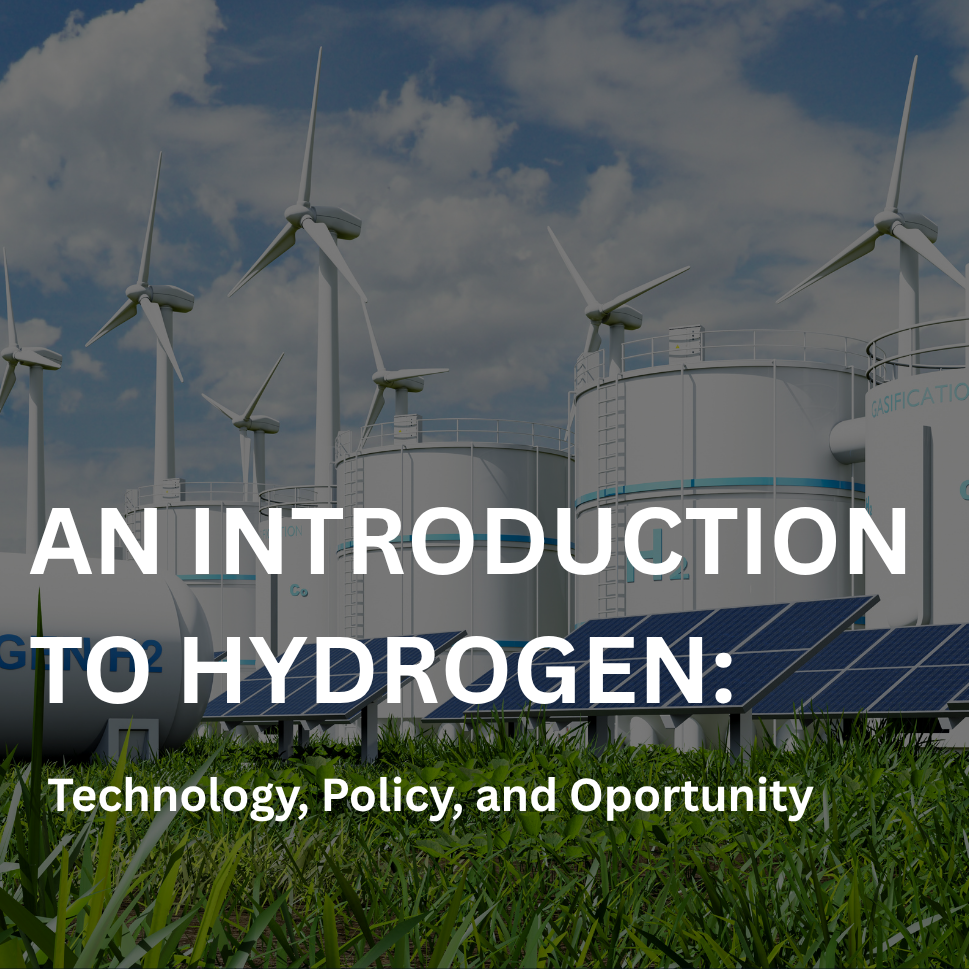
An Introduction to Hydrogen: Technology, Policy, and Opportunity
Start Date: December 1, 2026
The University of Texas at Austin
| | | |
Environmental and Energy Economics
Dec. 4, 2026
The University of Texas at Austin
| | | | |
Large-Load Development in Texas: Basics and Beyond Workshop
December 10-11, 2026
The University of Texas at Austin
For more information email compass@beg.utexas.edu
| | | | |
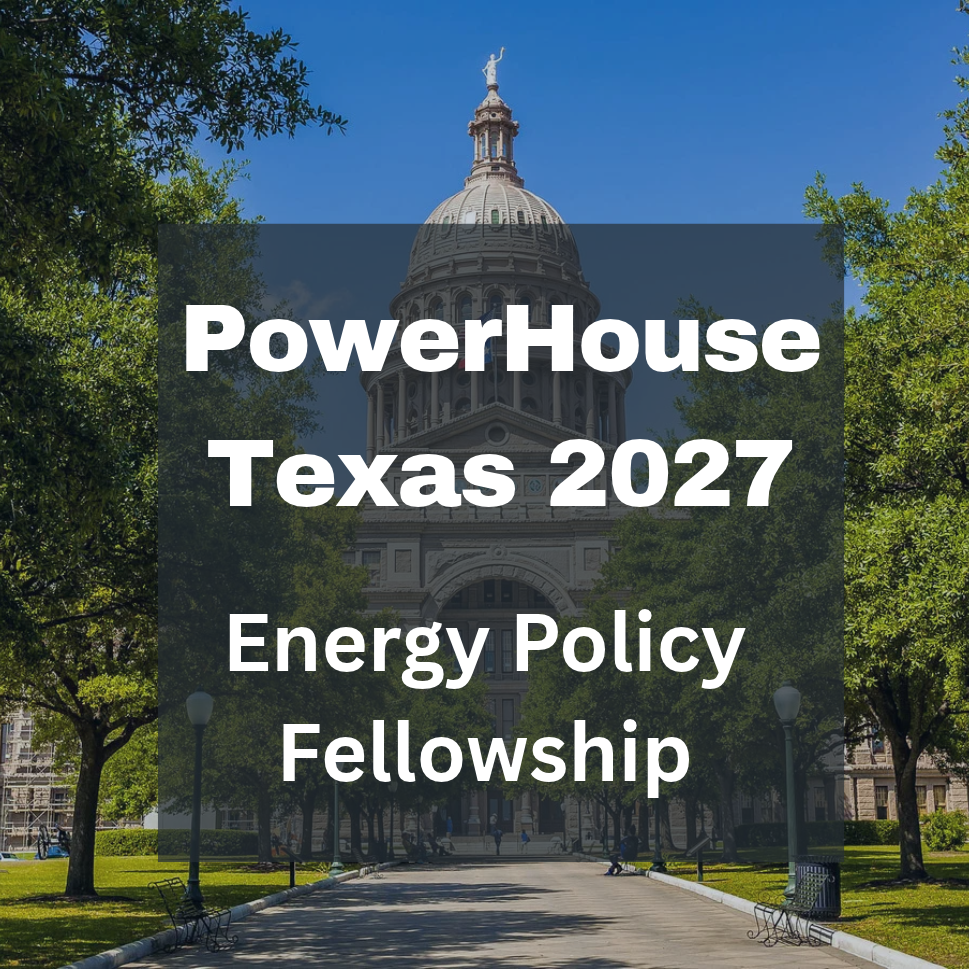
PowerHouse Texas 2027 Energy Policy Fellowship
Application Deadline: November 30, 2026
Fellowship Dates: January 11 – June 1, 2027
Apply Now
| | | | |
PGE’s Energy AI Hackathon
January 22-24, 2027
The University of Texas at Austin
Learn More
| | | | |
2027 Director-Executive Summit
February 25-26, 2027
The University of Texas at Austin
Register Now
| | Thank you to our partners and sponsors for supporting the UT Energy Institute | |
| | | |