Dear Friends,
Sleep is one of the foundations of health, supporting immune function and mental wellbeing. Perhaps that is why pediatricians are urging their patients to sleep train babies. Medical doctors are giving such advice with a sense of authoritative knowledge, providing very
specific instructions. Where are they obtaining such knowledge?
Unfortunately, from misleading articles published in their academy journal and elsewhere. See more:
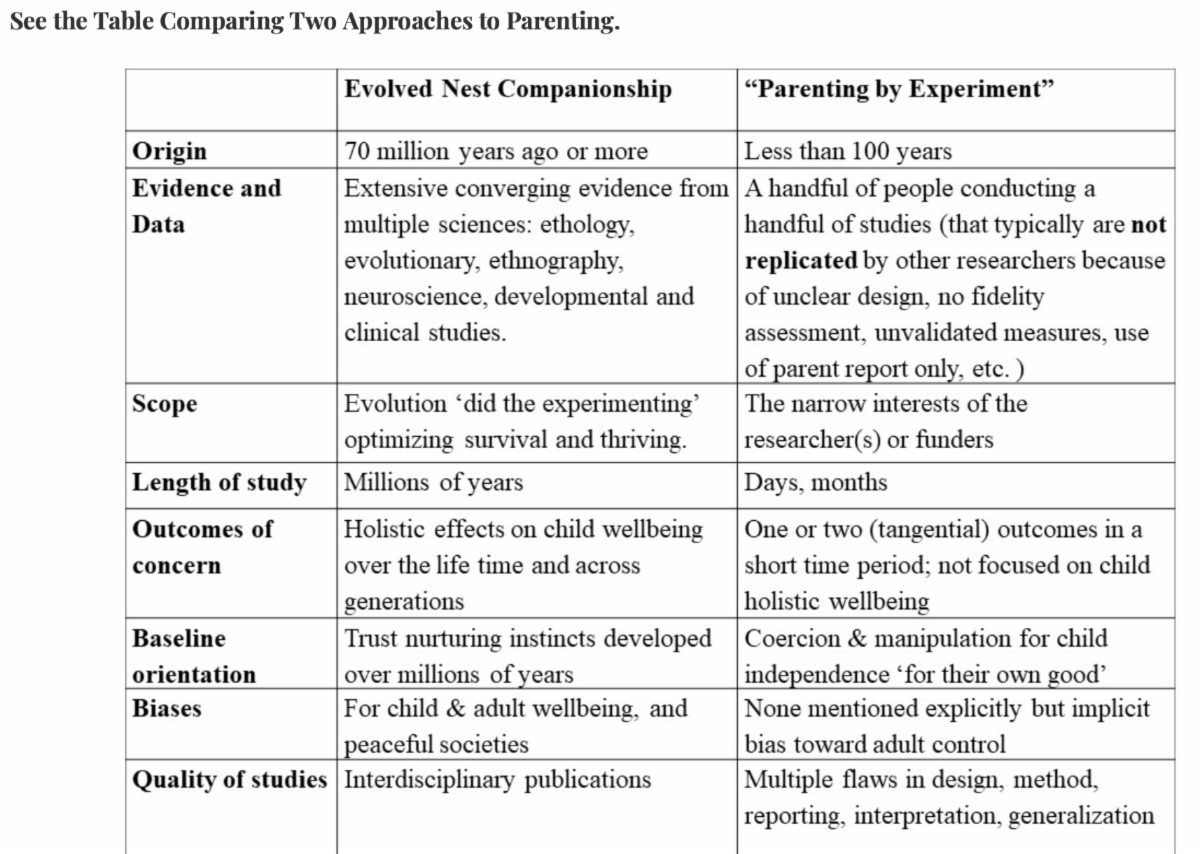
Recently, we held a discussion of sleep from the Evolved Nest perspective (see the video here). We discussed the two common approaches to making decisions about child raising: the evolved nest approach and the "experimental" approach. I put together a blog essay with some of the information we shared.
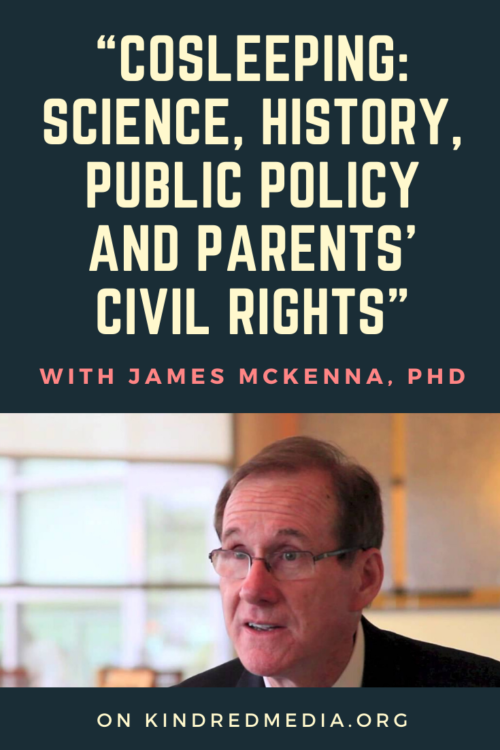
James McKenna, the renown research of mother-infant sleep patterns, is our admirable nester of the month. He has a recent book, Safe Infant Sleep, that guides parents through all the issues, addressing cultural myths and options for safe bedsharing, and a Kindred series of video interviews here. Please share these resources with new parents.
Peace be with you all,
Darcia
Darcia Narvaez, PhD
Evolved Nest, Founder
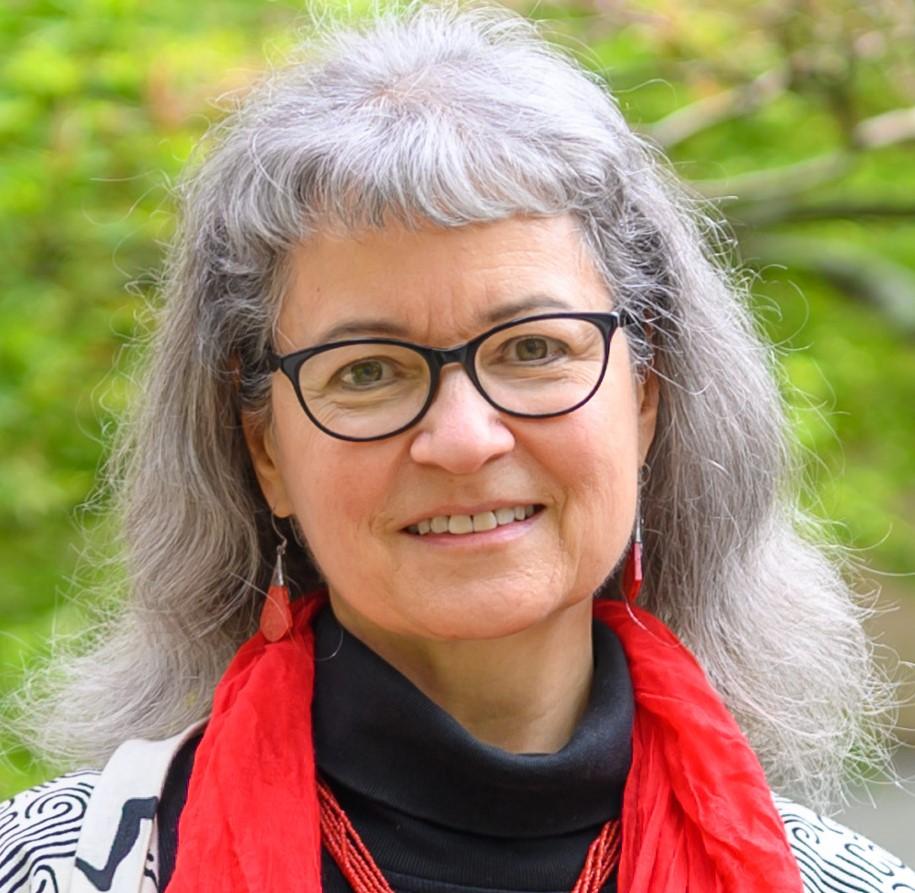
(Photo above: Darcia is pictured at the Gallery Besharat in Barbizon, France, on November 5, 2021, where she presented to the INSEAD Society for Progress.)_
|
|
"It is not possible to document biologically normal human infant sleep
|
|
Supportive early childhood environments can help decrease effects of trauma, study finds |
Researchers know that experiencing a high number of adverse events in childhood correlates with worse health outcomes in adulthood. These studies have led to an emphasis on trauma-informed practice in schools and workplaces in an attempt to mitigate the harm of early adversity.
At the other end of the spectrum, focusing on wellness, Darcia Narvaez, emerita professor of psychology at the University of Notre Dame, has helped identify humanity’s baseline for childhood care. She has developed the breakthrough concept of the evolved nest (or evolved developmental niche; EDN). EDN represents common practices for our species over its 6-million-year history that bear on child development, child raising and adult behavior.
Narvaez and colleagues have been measuring EDN experience in children and adults to find out its relation to well-being, sociality and morality. The adult measure, EDN-history, is a self-reported measure of the adult’s perception of their childhood experiences — e.g., how responsive their relationships were and how much free play, affectionate touch, family togetherness and positive climate they experienced. The measure also asks about corporal punishment and negative home climate, which are reverse scored. The more positive aspects and fewer negative, the higher the EDN-history score will be.
|
|
ETHICS of the Evolved Nest |
|
Toward an Interspecies Right to Breastfeed |
Mathilde Cohen,
University of Connecticut
Milk is young mammals’ primary food. Yet, lactating animals raised for their milk, such as cows and goats, are subject to extreme forms of violence and control preventing them from breastfeeding their own young. Numerous human parents also lack the legal, economic, social, and emotional support they need to nurse their children. At one level, the situation of humans and that of farmed animals is incommensurable in that the latter’s reproductive and lactating capacity is typically exploited and rewarded by death when unprofitable. At another level, lactating animals of all species are in a related social status. Lactating parents, typically gendered as female, produce a highly valuable resource in a position of subordination. Meanwhile, many infants are neither breastfed nor fed their species’ milk. While breastfeeding law and policy is usually presented as a human public health problem, this Article argues that it is also an interspecies food and environmental justice problem. Both humans and animals are under-protected or unprotected by the law when it comes to lactation. This Article proposes the idea of an interspecies right to breastfeed, that is, a right the central meaning of which would be similar across species, even though its full implementation might require different accommodations, depending on each species. At its core, the right should be understood as relational in that it protects the breastfeeding relation, rather than the breastfeeding parent/ caregiver or the breastfed child each taken in isolation.
|
|
Evolved Nest ANNOUNCEMENTS |
|
Psychologist Darcia Narvaez named a fellow of the American Association for the Advancement of Science |
Narvaez is being honored for her distinguished contributions illuminating typical and atypical development in terms of well-being, morality and sustainable wisdom. Narvaez examines how early life experience — the “evolved nest” — influences moral functioning and well-being in children and adults. She integrates evolutionary, anthropological, neurobiological, clinical, developmental and education sciences in her work.
|
|
|
|
Infant Sleep PRESENTATION |
|
Parenting By Experiment
Or Evolved Nest Companionship?
|
The presentation above was organized by faculty at the University of Massachusetts, Amherst, on infant sleep. Watch the video above and read the post accompanying the article below.
How do parents decide what research to follow in child raising?
KEY POINTS
- Adults need to understand the nature of a baby and her needs.
- The problem with experiments on babies.
- How to evaluate a research study.
- How to assess parenting books.
|
|
|
|
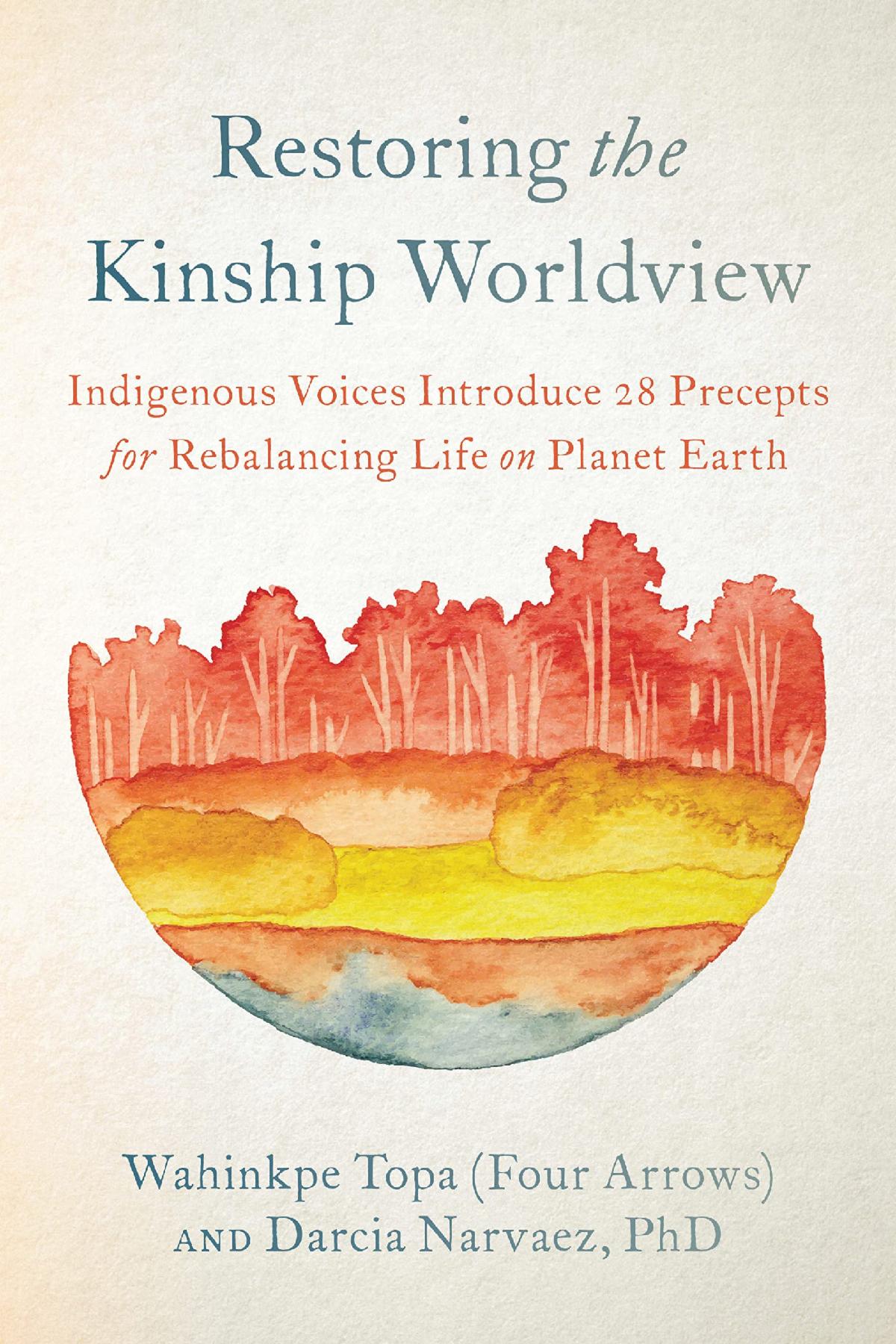
Restoring the Kinship Worldview: Indigenous Voices Introduce 28 Precepts for Rebalancing Life on Planet Earth |
"Humans have a particular ecological niche, a role as the custodial species of this earth. We must return our species to this niche within the next decade, or perish.This book, Restoring the Kinship Worldview, is a perfect place to start - the foundation is good relations, making kin both human and non-human - and here we have story from a gathering of some of the finest Indigenous thinkers in the world. Four Arrows and Darcia Narvaez have a particular way of bringing the right people together for such purposes."
– Tyson Yunkaporta, author of Sand Talk: How Indigenous Thinking Can Save the World
|
|
|
|
Professor James J. McKenna’s Mother-Baby Behavioral Sleep Laboratory examined how sleeping environments reflect and respond to family needs—in particular how they affect mothers, breastfeeding, and infants’ physiological and psychological well-being and development. As an anthropologist, he brings a broad understanding to human wellbeing, based in evolutionary sciences. He identifies the harmful effects of several cultural myths regarding infant sleep and coined the term "breastsleeping" as our evolved way of raising infants. We applaud his work that emphasizes the wellbeing of babies and mothers in the short and long term.
Read an excerpt from McKenna's book, Safe Infant Sleep. Discover McKenna's clinical term breastsleeping.
Watch the series of video interviews on science, history, public policy, and parents' civil rights here.
|
|
|
|
Darcia Narvaez IN THE NEWS |
|
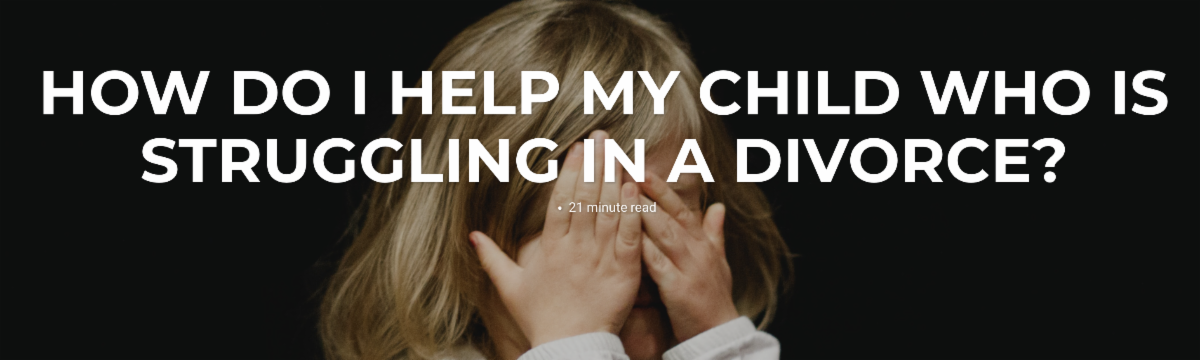
Relationship Magazine Asks: How Do I Help My Child Who Is Struggling In A Divorce? |
Darcia's Response:
Child age matters. But here is one general idea.
I would urge parents to allow the child to have time outdoors, in complex natural environments, to be able to make connections with the natural world, something greater than the self. (This should happen from the beginning of life.) What builds nature connection are hours of self-directed free play in a forest or beach, climbing trees and hills, sitting on the earth. The child needs to feel like they have a place on the earth, that the world is not falling apart completely, that they will be alright. Nothing works better than having a steady nature connection with familiar landscape(s), animal(s), and activities outdoors.
|
|
|
|
Opportunity for Kids: Create Kindness Media |
|
International Expressions of Kindness |
The International Expressions of Kindness invites children ages 3-18, individually or in a group with adults, to participate in this new multimedia showcase. Please, share your thoughts and feeling on kindness, a critically important value in the world which has become so complicated and so full of ongoing conflicts. Create media projects that will demonstrate your understanding and your own acts of kindness together with kindness you have recently experienced or witnessed in a local/national/ international community.
|
|
|
|
Spanish Languge RESOURCES |
|
Descolonizando La Crianza De Los Niños |
La crianza de los niños y niñas en el mundo occidental está fuera de control.
Le damos gracias a Levy Farias por su trabajo excelente en traducir del inglés al español.
Puntos clave:
- Los colonizadores sembraron traumas por todo el mundo.
- El tipo de crianza característica de la colonización europea traumatiza a los niños.
- La crianza tradicional indígena proporciona un “nido” adecuado y promueve el bienestar.
|
|
|
|
SOBRE “ROMPIENDO EL CICLO” |
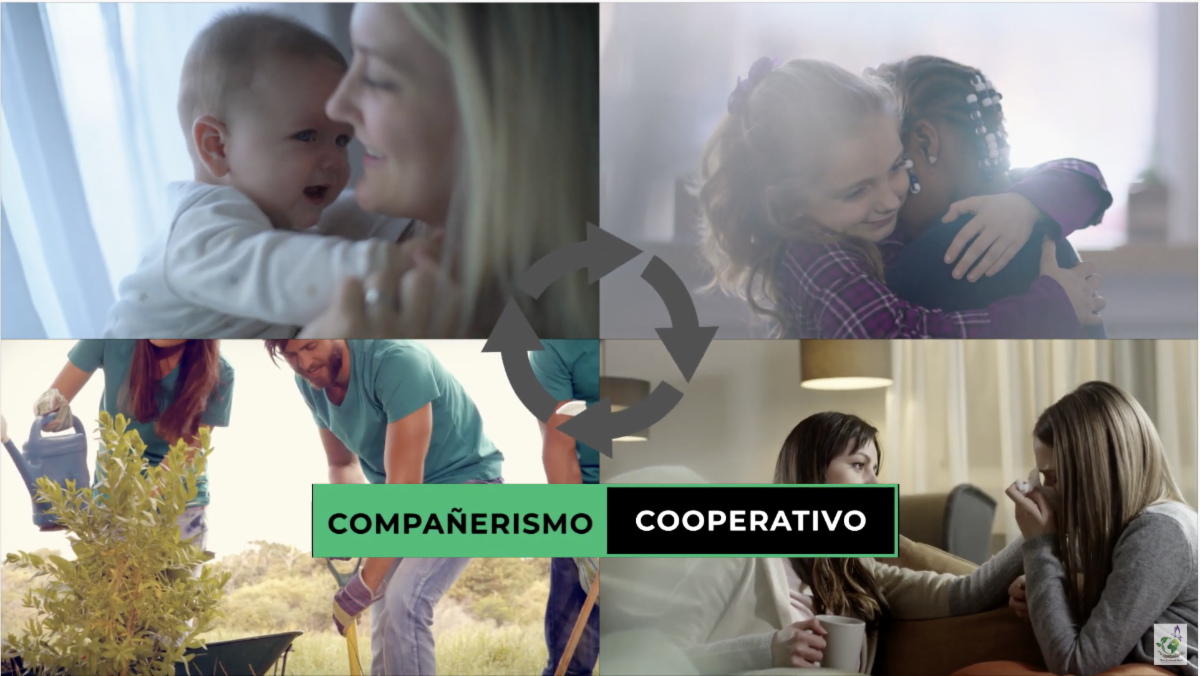
Un Mundo Fraternal se enorgullece de presentar el cortometraje educativo, preparado por El Nido Evolutivo, Rompiendo el ciclo. Esta emotiva e inspiradora película de seis minutos ilustra nuestra capacidad para romper con el Ciclo de Desapego Competitivo en el que nos encontramos actualmente y retornar al patrón que se mantuvo durante el 95% de la historia humana: un sano y pacífico Ciclo de Compañerismo Cooperativo. “Rompiendo el ciclo” se basa en el multipremiado libro Neurobiology and the Development of Human Morality: Evolution, Culture and Wisdom[Neurobiología y desarrollo de la moralidad humana: Evolución, Cultura y Sabiduría], por Darcia Narváez, PhD.
|
|
|
|
Alienation From Our Living Earth Is A Recent Phenomenon: What Our Western Worldview Is Missing |
Desired learning and behavior leave out traditional values.
KEY POINTS
- We are immersed in a life-alienating culture.
- Alienation from the living earth is a recent phenomenon.
- Cultural disconnection has roots in early psychic disconnection.
|
|
|
|
What Good Enough Mothers Do: And What Infants Need |
Infant health depends on specific kinds of help.
KEY POINTS
- If babies don’t receive particular types of care, they suffer.
- Young children need a supportive holding environment.
- Mothers need extensive support to be a good enough caregiver.
|
|
|
|
Getting Back To Our “Normal” Feeling Of Oneness |
Feeling oceanic connectedness is part of normal human nature.
KEY POINTS
- Freud thought growing up was moving away from oneness to individual ego consciousness.
- Ancestral societies bathed in oceanic consciousness, guiding their environmental behavior.
- Oceanic consciousness, represented as one mind, has increasing data support.
|
|
|
|
Technical-Industrial Cultures Do Not Meet The Most Basic Need Of Children: Connection |
One of the most damaging, although perhaps most common, experiences for children today is disconnection. Young children need more connection than the rest of us—the physical presence and comforting of stable caregivers.
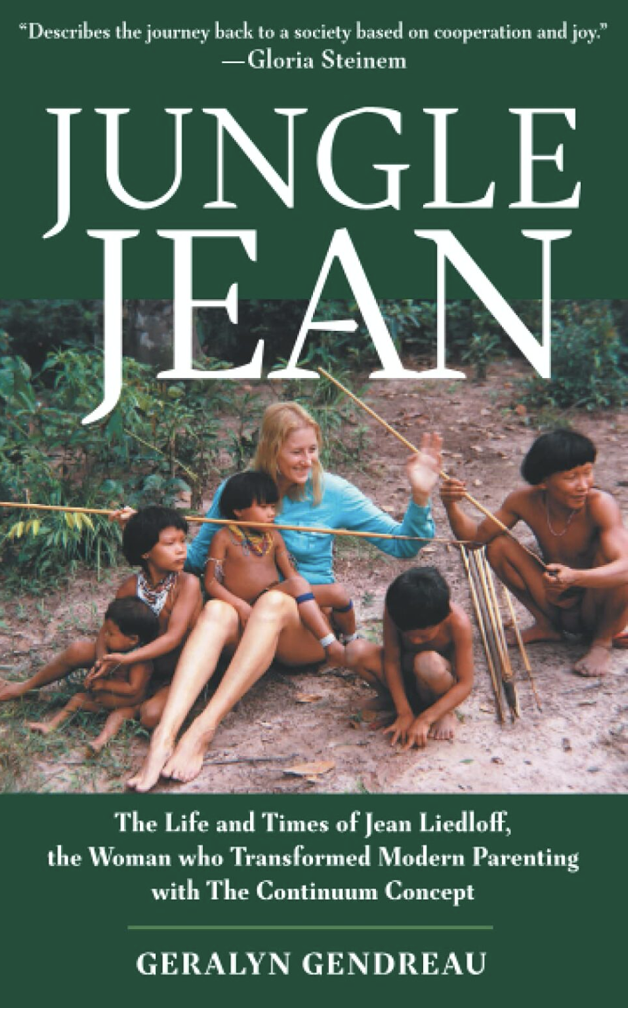
Liedloff shocked and inspired American parents by contrasting the lifeways and child raising of the Western world and peoples of the Amazon, whom she visited repeatedly for months at a time. The Amazon Yequana were happy and healthy (though aided by her first-aid kit), content to be alive, whereas she found her fellow New Yorkers (in the 1950s and 60s) tense, simmering constantly with hostility, fear, or dread. She lay the causal foundation at the foot of childraising differences.
|
|
|
|
Trauma-Proofing Your Kids: Addressing Grief And Trauma In Healthy Ways |
How to guide children after trauma.
KEY POINTS
- The body knows how to heal itself from shock.
- Children need adults to guide them in trusting their bodies and healing.
- Resilient people know how to process the emotions resulting from trauma.
.
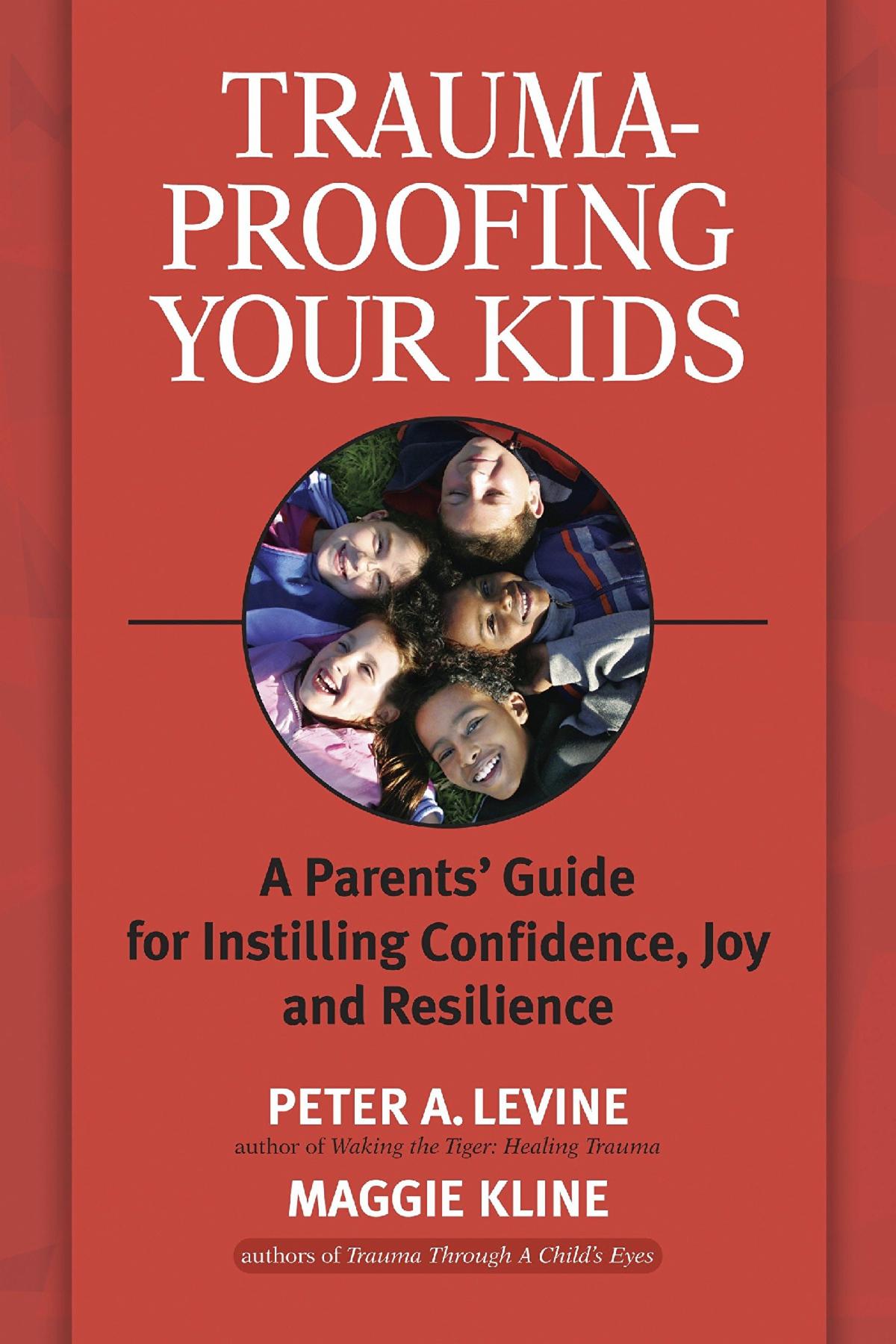
Peter Levine and Maggie Kline provide excellent guidance for parents in their book, Trauma-Proofing Your Kids: A Parents’ Guide for Instilling Confidence, Joy and Resilience. Trauma happens when we are overwhelmed by an experience and get disconnected to our bodies, our feelings, our psyches. It’s the opposite of empowerment.
|
|
|
|
Join Our LIVE Discussions! |
|
See the Evolved Nest's Short Film - Breaking the Cycle! |
|
Below is your invitation to LIVE discussion about Breaking the Cycle, the Evolved Nest's short film, with Darcia Narvaez, PhD, and Lisa Reagan.
About Breaking the Cycle
"Breaking the Cycle" contrasts the two basic ways societies can function: the optimal approach, which most human societies through time have followed, is the Cycle of Cooperative Companionship, where children’s basic needs are met, they grow into well-functioning, cooperative community members (from neurobiology and on up), and as healthy adults, they maintain the cooperative system. Currently in the United States, the opposite pattern is in place—children’s basic needs are not met and ill-being and dysregulation ensue, creating adults who are detached and distracted and keep this Cycle of Competitive Detachment going. Not surprisingly from a transdisciplinary perspective on childhood adversity and its effects, the United Nations ranks the United States as 41st out of 41 developed countries for child and adult wellness.
See the Evolved Nest's six minute film and discover resources, including a film guide and a Spanish version of the film, at www.breakingthecyclefilm.org
JOIN MONTHLY LIVE DISCUSSIONS
Join Darcia Narvaez and Lisa Reagan for a discussion of the Evolved Nest's short film, Breaking the Cycle. You can watch the film and find resources, including a film guide on this website.
April 3, 2022 from 5 to 6 p.m. ET, REGISTER
May 9, 2022 from 8 to 9 p.m. ET, REGISTER
The live discussions are free, but you must register to join.
|
|
The Evolved Nest's Self-Directed Learning Center |
What is our Evolved Nest?
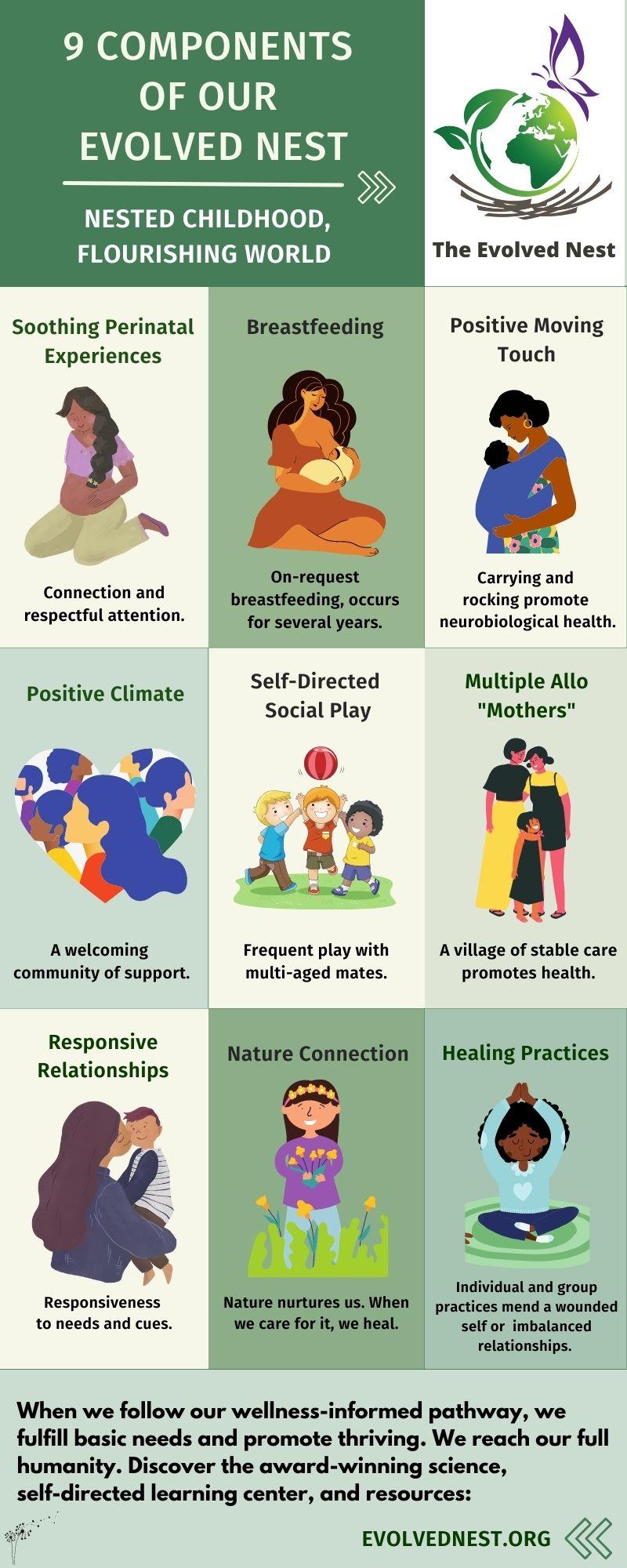
Children are biosocial creatures such that their biology is constructed by their social experience. The evolved nest or evolved developmental niche (EDN) is the ecological system of care provided by families, teachers and communities that aligns with the maturational schedule of the child, satiating the evolved needs of infants and children, allowing them to flourish and develop compassionate spiritualities. The EDN consists of soothing gestation and birth, on-request extensive breastfeeding and positive moving touch (no negative touch), a welcoming social climate, self-directed play with multiple aged mates, warmly responsive nurturing from mother and others, nature immersion and connection, and healing practices to repair miscommunication or hurts. Well-nested children and adults demonstrate social and moral flexibility, adapting to situations and others with emotional and spiritual intelligence
Below you will find links to each of the nine components of humanity's Evolved Nest.
Click on the links to go to each of the component's page to find articles, podcasts, and more, supporting that component.
Download the Evolved Nest's Nine Components in a PDF format here.
Download in a JPEG format here.
|
|
|
|
Join the Evolved Nest COMMUNITY |
|
Join Our Mighty Networks' Evolved Nest Community |
We are in the process of creating a safe, kind, and stimulating space to engage and connect with our Evolved Nest community through Mighty Networks!
This platform is ad-free, algorithm-free, and owned by us. You can download the app to the network and post and stay up-to-date with group discussions, research, and upcoming events.
Many organizations are charging a membership fee for these Mighty Networks' platforms, but we are opening up our group to you for free.
|
|
|
|
DONATE and Support the Evolved Nest! |
|
Read 88 Five-Star Reviews of Our Work and Kindred World! |
The Evolved Nest is an educational initiative of Kindred World, an American 501C3 nonprofit that has Served the Re-Generation Since 1996. Darcia Narvaez, PhD, is the founder of the Evolved Nest and the current president of Kindred World.
Learn more about what we've learned in a quarter century of exploring the creation of a wisdom-based, wellness-informed society, here.
Read our more than 88 five-star reviews here.
Thank you to everyone who has supported The Evolved Nest's work over these past four years.
|
|
The Evolved Nest - www.EvolvedNest.org |
|
|
|
|
|
|
|