Rail Workers Weekly News Digest
Number 10 - May 28th, 2019
|
|
Below is a series of article compiled over the previous week.
They are of interest to railroad workers
_____________________________________________
|
|
2019-10 Article 1
FRA, TRUMP ADMINISTRATION HALT ALL CREW SAFETY EFFORTS
Today the Trump administration did everything it could to stop all railroad crew safety issues.
In a Federal Register posting published at 4 p.m. today, the FRA formally withdrew the pending proposed rulemaking dating from 2016 that would have set a mandatory crew size on freight and passenger trains.
But the notice went much further than that. It announced that not only will FRA turn a blind eye to the unsafe practices of single-person or no-person trains, the agency claims that its notice also nullifies all state laws and regulations that establish minimum crew standards.
President Donald Trump, DOT Secretary Elaine Chao and FRA Administrator Ron Batory have taken sides, and it’s with the railroads that want to eliminate operating crew members to the detriment of rail safety and to the detriment of the communities through which our members operate trains. We are considering legal action and other avenues to protect our members and the American public from the prospects of driverless trains.
Read more ...
|
|
2019-10 Article 2
FRA Withdrawls Two-Person Crew Proposed Rule Making
BILLINGS, Mont. (AP) — The Trump administration said Thursday it was withdrawing a proposal for freight trains to have at least two crew members, nullifying a safety measure drafted under President Barack Obama in response to explosions of crude oil trains in the U.S. and Canada.
A review of accident data did not support the notion that having one crew member is less safe than multi-person crews, Department of Transportation officials said. The withdrawal also seeks to pre-empt states from regulating crew sizes.
Read more ...
|
|
2019-10 Article 3 -
Precision Scheduled Railroading News
Oregon Sens. Wyden, Merkley express concerns over UP layoffs
Oregon's two U.S. senators are raising concerns with
Union Pacific Railroad
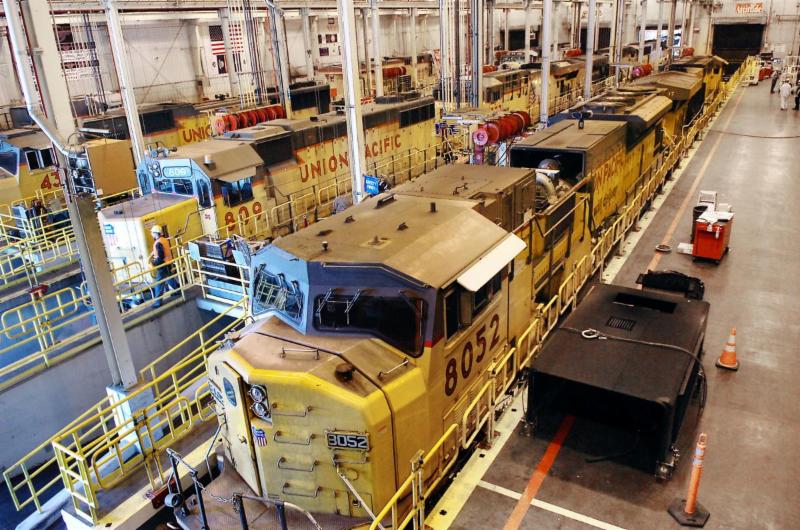
's reported plan to eliminate nearly 200 jobs from the Class I's Hinkle Rail Yard in Hermiston.
In a letter
sent this week to UP Chairman, President and Chief Executive Officer Lance Fritz, the senators wrote that the railroad's decision to reduce jobs at the yard and close the Hinkle supply warehouse and mechanical locomotive shop "will devastate this rural community by hamstringing the economic opportunities and stability of the entire region."
The Hinkle Locomotive and Service Repair Facility has served the locomotive and maintenance repair needs of UP's Pacific Northwest corridor since 1951, the letter from U.S. Sens. Ron Wyden (D) and Jeffrey Merkley (D) stated.
Read more ...
|
|
2019-10 Article 4 -
Precision Scheduled Railroading News
Analyst: Penny-pinching is behind prolonged service problems at Class I railroads
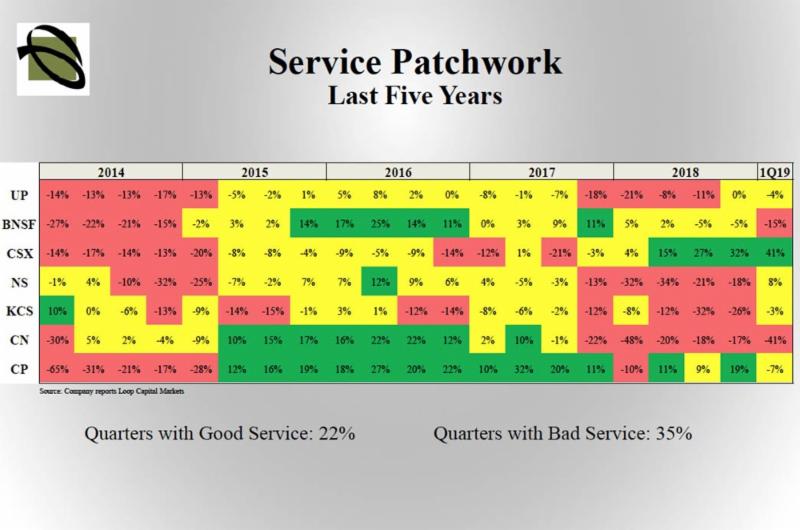
SAN ANTONIO, Texas – Rail service has been poor more often than it’s been good during the past five years because railroads run too lean and get caught short of crews, locomotives, or both and can’t recover quickly from the impact of unexpected events.
So says Rick Paterson, a one-time Australian railroader who is an analyst for Loop Capital Markets.
“A lot of railroads are really very, very fragile,” Paterson says. “And a Hurricane Harvey or a polar vortex are basically a gut punch to these systems.”
The problem is that Class I railroads, mindful of Wall Street’s focus on the operating ratio, try to perfectly match crew and power resources with their current traffic levels, Paterson says. And that leaves railroads with no margin for error.
Read more ...
|
|
2019-10 Article 5
How the U.S. Lost its Transit and Passenger Rail Systems
This short 15 minute video explains how the U.S. lost its rail system, to be replaced by highways and airlines, and explores why we need it and how we can get passenger rail back.
|
|
2019-10 Article 6
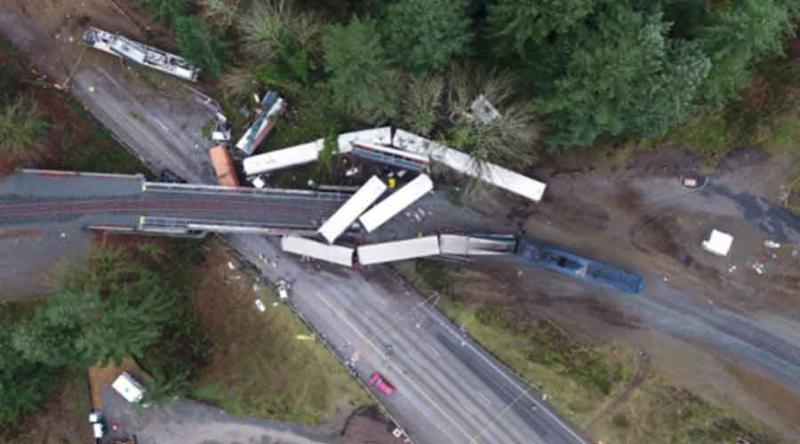
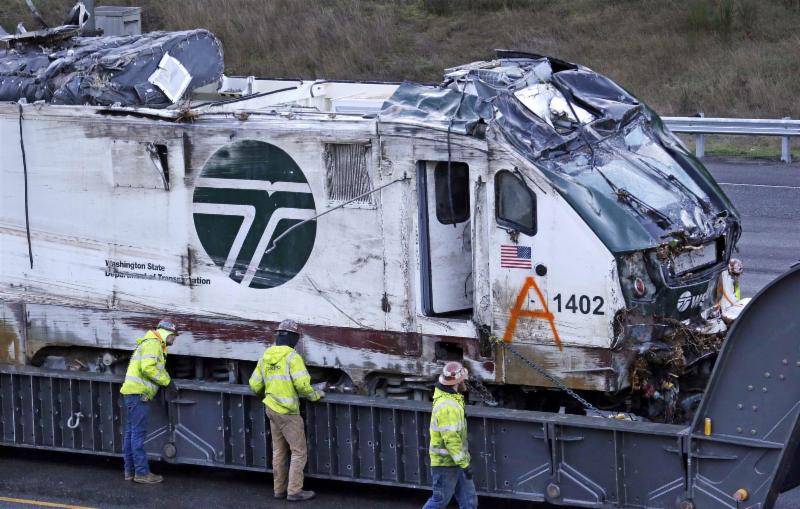
NTSB: Inadequate planning, training led to fatal Amtrak derailment
Failure to provide effective mitigation of a hazardous curve and the inadequate training of the locomotive engineer led to the deadly derailment of an
Amtrak
train near Dupont, Washington, in late 2017, the
National Transportation Safety Board
(NTSB) announced yesterday.
|
|
2019-10 Article 7
National Transportation Safety Board releases findings on deadly 2017 Amtrak crash
Sumwalt, in his opening remarks, pointed to similar derailments related to speed limit decreases going into sharp curves, including a 2013 Metro North train in the Bronx and a 2015 Amtrak train near Philadelphia,
“There is certainly a recent history of this type of accident,” said Sumwalt, “and it extends back decades as well.”
All these accidents, said Sumwalt, “failed to respond to significant speed changes. And reasons for this vary, but there is one common denominator: Necessary decreases in speed limits going into sharp curves with insufficient mitigation.”
Read More ....
|
|
2019-10 Article 8
"Railroad Collisions: A Deadly Story of Mismanaged Risk"
This book by George Swimmer was reviewed in the RWU newsletter in 2018. It is now available on Amazon for just $12.99 for the paperback. The e-book sells on Kindle for $2.99. If you buy the print version on Amazon, the e-book Kindle version is free. The book was updated about a year ago and contains 80 new pages.
|
|
Railroad Workers United
Solidarity -- Unity -- Democracy
|
|
|
|
|
|
|