RELIEVING PAIN IN AMERICA |
|
CACPR Member Spotlight
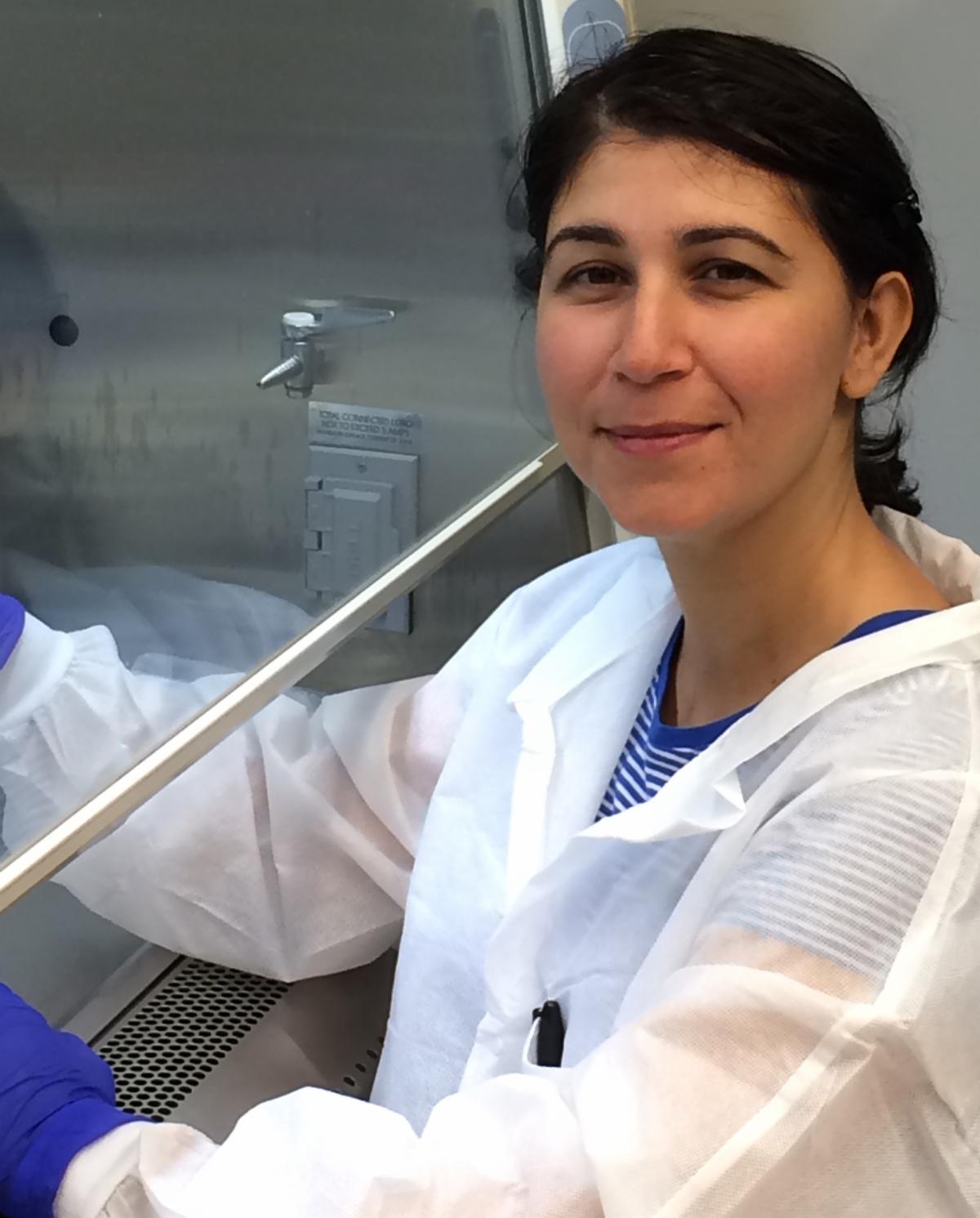
Jamila Asgar, a PhD candidate in the Program in Neuroscience, Graduate Program in Life Sciences, received a two-year NIH Ruth L. Kirschstein National Research Service Award (NRSA) Individual Predoctoral Fellowship. The awarded project titled “Gut Mechanisms of Stress-Induced Comorbid Visceral Pain” has been developed under the mentorship of Jamila’s thesis advisor, Dr. Feng Wei, PhD, professor in the Department of Neural and Pain Sciences at the University of Maryland School of Dentistry.
This project focuses on the pathogenesis of comorbid visceral pain. For patients suffering from more than one chronic pain condition, treatment options are often inadequate. This is mainly because the pathogenetic mechanisms underlying comorbid pain conditions are unclear. These conditions tend to affect more women than men. Persistent emotional stress is a common contributing factor. Unraveling other potentially shared mechanisms of comorbid pain conditions would help design targeted preventive therapies.
We found that in female rats with existing orofacial pain due to chronic nerve injury, additional exposure to repeated stress induces new, comorbid visceral pain. This pain refers to the lower back area. My preliminary findings suggest that this phenomenon may involve changes in the gut microbiome. In fact, dysbiotic changes in the gut microbiome may contribute to the development and maintenance of comorbid visceral pain. In order to test these hypotheses, I am adopting procedures for reciprocal fecal microbiome transfer in female rats. The other aspect of my project focuses on how the combination of nerve injury and stress disrupt the serotonin system in the primary sensory afferents innervating the gut. I am interested in the interaction of pathological changes in the gut microbiome and the dysregulation of the serotonin system. In my future work, I would like to examine clinical relevance of my current study. I would like to investigate the potential for gut dysbiosis to be a novel shared mechanism of several comorbid pain conditions. Future investments into the gut microbiome research may prove fruitful for advancing both pain diagnostics and personalized pain management.
The awarded project is a result of collaboration with Dr. Jacques Ravel, PhD, professor and associate director in the Institute For Genome Sciences, and Dr. Richard Traub PhD, professor and vice chair in the Department of Neural and Pain Sciences at the University of Maryland School of Dentistry.
|
|
Highlights of recent grant awards, publications, and presentations. |
|
Hoffmann J, Miller S, Martins-Oliveira M, Akerman S, Supronsinchai S, Sun H, Shi L, Wang J, Zhu D, Lehto S, Lui H, Yin R, Moyer BD, Xu C, Goadsby PJ. PAC1 receptor blockade reduces central nociceptive activity: new approach for primary headache? (2020) Pain. 161(7):1670-1681
The study is a summary of data, using a novel and highly selective PAC1 receptor antibody, demonstrating that it inhibits migraine-like dural-trigeminovascular neurons, binding to peripheral sites, and therefore may provide a novel mechanism with potential clinical efficacy in the treatment of primary headaches.
|
|
Colloca L.
Int Rev Neurobiol. 2020;153:167-185. doi: 10.1016/bs.irn.2020.04.001. Epub 2020 Jun 9.
PMID: 32563287
This article summarizes the placebo mechanisms across pain disorders.
Colloca L, Raghuraman N, Wang Y, Akintola T, Brawn-Cinani B, Colloca G, Kier C, Varshney A, Murthi S.
Pain. 2020 Apr 24. doi: 10.1097/j.pain.0000000000001900. Online ahead of print.
PMID: 32345915
This study explores the physiological and behavioral mechanisms of immersive Virtual Reality in healthy participants. We demonstrated that VR-induced analgesia is not merely due to distraction. Rather the VR immersive aspect modulates mood, situational anxiety and vagal responses supporting a multi-dimensional mechanism of action.
Okusogu C, Wang Y, Akintola T, Haycock NR, Raghuraman N, Greenspan JD, Phillips J, Dorsey SG, Campbell CM, Colloca L.
Pain. 2020 Aug;161(8):1872-1883. doi: 10.1097/j.pain.0000000000001876.
PMID: 32701846
We investigated the racial/ethnic differences in placebo effects demonstrating that AfroAmerican/Black have lower expectations of benefit and placebo effects that Whites. Yet, the placebo effect magnitude was large and robust in both races.
Editorial: Placebo and Nocebo Effects in Psychiatry and Beyond, by Katja Weimer, Paul Enck, Seetal Dodd, Luana Colloca, published in Frontiers in Psychiatry, section Psychosomatic Medicine.
|
|
Meeker, T. J., Jupudi, R., Lenz, F.A., Greenspan. New Developments in Non-invasive Brain Stimulation in Chronic Pain. Current Physical Medicine and Rehabilitation Reports. 2020. https://doi.org/10.1007/s40141-020-00260-w.
The goal of this review is to present a summary of the recent literature of a non-invasive brain stimulation (NIBS) to alleviate pain in people with chronic pain syndromes. This article reviews the current evidence for the use of transcranial direct current (tDCS) and repetitive transcranial magnetic stimulation (rTMS) to improve outcomes in chronic pain. Finally, this report describes novel stimulation methods that may improve therapeutic outcomes in chronic pain.
Miller VE, Chen DG, Barrett D, Poole C, Golightly YM, Sanders AE, Ohrbach R, Greenspan JD, et al., Understanding the relationship between features associated with pain-related disability in people with painful Temporomandibular Disorder (TMD): an exploratory structural equation modeling approach. Pain, in press (2020 Jun 24).
This research examined the relationship between clinical, psychological, and pain sensitivity factors and pain-related disability among adults with chronic temporomandibular disorder (TMD). A model of pain-related disability, jaw limitation, and psychological unease was created and refined with exploratory model revisions to account for correlation among variables. Jaw functional limitation and psychological unease were strongly related to pain-related disability, while experimental pain sensitivity showed only weak direct effects. The final model explained 78% of the variance in pain-related disability.
|
|
A novel cortical biomarker signature for predicting pain sensitivity: protocol for the PREDICT longitudinal analytical validation study.
Seminowicz DA, Bilska K, Chowdhury NS, Skippen P, Millard SK, Chiang AKI, Chen S, Furman AJ, Schabrun SM.
Pain Rep. 2020 Jul 27;5(4):e833. doi: 10.1097/PR9.0000000000000833. eCollection 2020 Jul-Aug.
PMID: 32766469 Free PMC article.
Protocol for our new study.
Enhanced mindfulness-based stress reduction in episodic migraine: a randomized clinical trial with magnetic resonance imaging outcomes.
Seminowicz DA, Burrowes SAB, Kearson A, Zhang J, Krimmel SR, Samawi L, Furman AJ, Keaser ML, Gould NF, Magyari T, White L, Goloubeva O, Goyal M, Peterlin BL, Haythornthwaite JA.
Pain. 2020 Aug;161(8):1837-1846. doi: 10.1097/j.pain.0000000000001860.
PMID: 32701843
First study to show efficacy of mindfulness for in migraine, with brain imaging revealing changes to cognitive networks.
Sensorimotor Peak Alpha Frequency Is a Reliable Biomarker of Prolonged Pain Sensitivity.
Furman AJ, Prokhorenko M, Keaser ML, Zhang J, Chen S, Mazaheri A, Seminowicz DA.
Cereb Cortex. 2020 Jun 27:bhaa124. doi: 10.1093/cercor/bhaa124. Online ahead of print.
PMID: 32591813
Validation of our previous work linking an EEG-based brain measure to future pain sensitivity.
Psilocybin acutely alters the functional connectivity of the claustrum with brain networks that support perception, memory, and attention.
Barrett FS, Krimmel SR, Griffiths RR, Seminowicz DA, Mathur BN.
Neuroimage. 2020 Sep;218:116980. doi: 10.1016/j.neuroimage.2020.116980. Epub 2020 May 23.
PMID: 32454209 Free article.
The first study in humans to show a link between claustrum function and psilocybin.
|
|
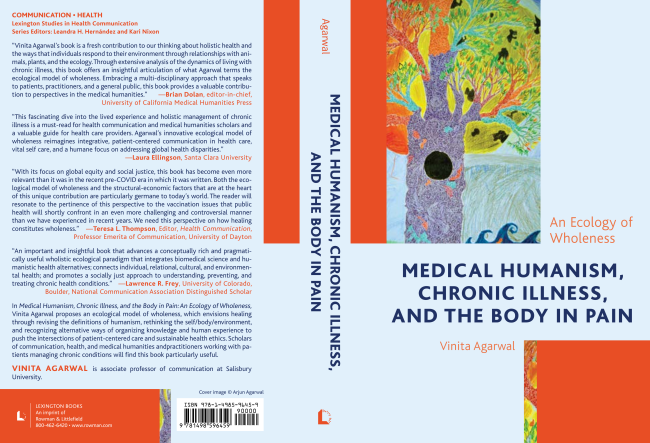
Dr. Vinita Agarwal, PhD is pleased to share the publication of her book (monograph) titled “Medical Humanism, Chronic Illness, and the Body in Pain: An Ecology of Wholeness,” by Lexington Books, an imprint of Rowman & Littlefield.
Abstract:
Medical Humanism, Chronic Illness, and the Body in Pain: An Ecology of Wholeness proposes an ecological model of wholeness which envisions healing through revising the definitions of humanism, rethinking the self/body/environment, and recognizing alternative ways of organizing knowledge and human experience to push the intersections of patient-centered care and sustainable health ethics for scholars of communication, health, and medical humanities, and practitioners working with patients
managing chronic conditions.
|
|
Dr. Marcela Romero Reyes, DDS, PhD has been re-elected for a second term as the Section Chair of the TMD, Cervical Spinal & Orofacial Pain Special Interest Section of the American Headache Society.
The American Headache Society features several Special Interest Sections designed to enhance the educational, scientific, and patient care goals of the society. Please click here to view the mission and goals of the section of TMD, Cervical Spine & Orofacial pain under Dr. Romero’s leadership.
|
|
Please see an important message below from Jennifer Haythornthwaite, Ph.D.
Dear Colleagues,
We appreciate the many critical issues vying for your time and money, but we hope you will still consider joining the United States Association for the Study of Pain (USASP).
Approximately one year ago, a small group started discussions about professional societies available for US-based pain researchers. Many hours and Zoom conferences later, the USASP was formed. We are thankful for the input, encouragement, and support provided by so many of you, as well as for the time so many of you took to complete the survey we distributed late last year to assess the needs of the pain research community. You told us what was important to you:
· a multi-disciplinary society dedicated to the study of pain
· a scientific meeting
· networking opportunities
· a journal for publishing your work
· early career programming and opportunities
The USASP, a 501(c)(3) corporation was formed to address these needs. Our new website is USASP.ORG and you will find there information about our mission, history, leadership and new Bylaws. As well as how to join!
Along the way, and with more of your help, we managed to purchase The Journal of Pain. If you have not yet heard, the journal portal is once again open for business and accepting your best work.
In upcoming months we will be holding an annual meeting (virtually, of course), supporting the continued growth of The Journal of Pain, developing early career programming and other networking opportunities, and creating Special Interest Groups. Once we become established, we will develop a plan for national advocacy for expanded pain research.
We are finally ready to accept members! Based on your input, the membership fee structure is tied to personal income and includes special status for trainees. We plan to remain lean, focus on member needs and interests, and maintain transparency in our governance and sources of financial support. We have gotten this far through the generous contributions from numerous donors and volunteers and none of this would have happened without these many individuals. It is time to expand our work and for this we need members. Please join now! And consider a donation, as there are many start-up expenses for us to navigate.
Regards to all of you in these unsettling times,
Jennifer A. Haythornthwaite, Ph.D.
Professor | Department of Psychiatry & Behavioral Sciences | Johns Hopkins University School of Medicine
5510 Nathan Shock Drive, Suite 100 | Baltimore, MD 21224 | T: (410) 550-7000 | F: (410) 550-0117
We encourage all CACPR members to join the USASP and submit your best work to The Journal of Pain.
|
|
The UM Center to Advance Chronic Pain Research (CACPR) is a multidisciplinary center composed of nationally and internationally renowned clinical and preclinical translational scientists whose principle research focus is on the physiological, genetic, and psychosocial underpinnings of the development and persistence of debilitating chronic pain conditions. |
|
|
|
|
|
|
|